High Efficiency Push Back Pallet Racking
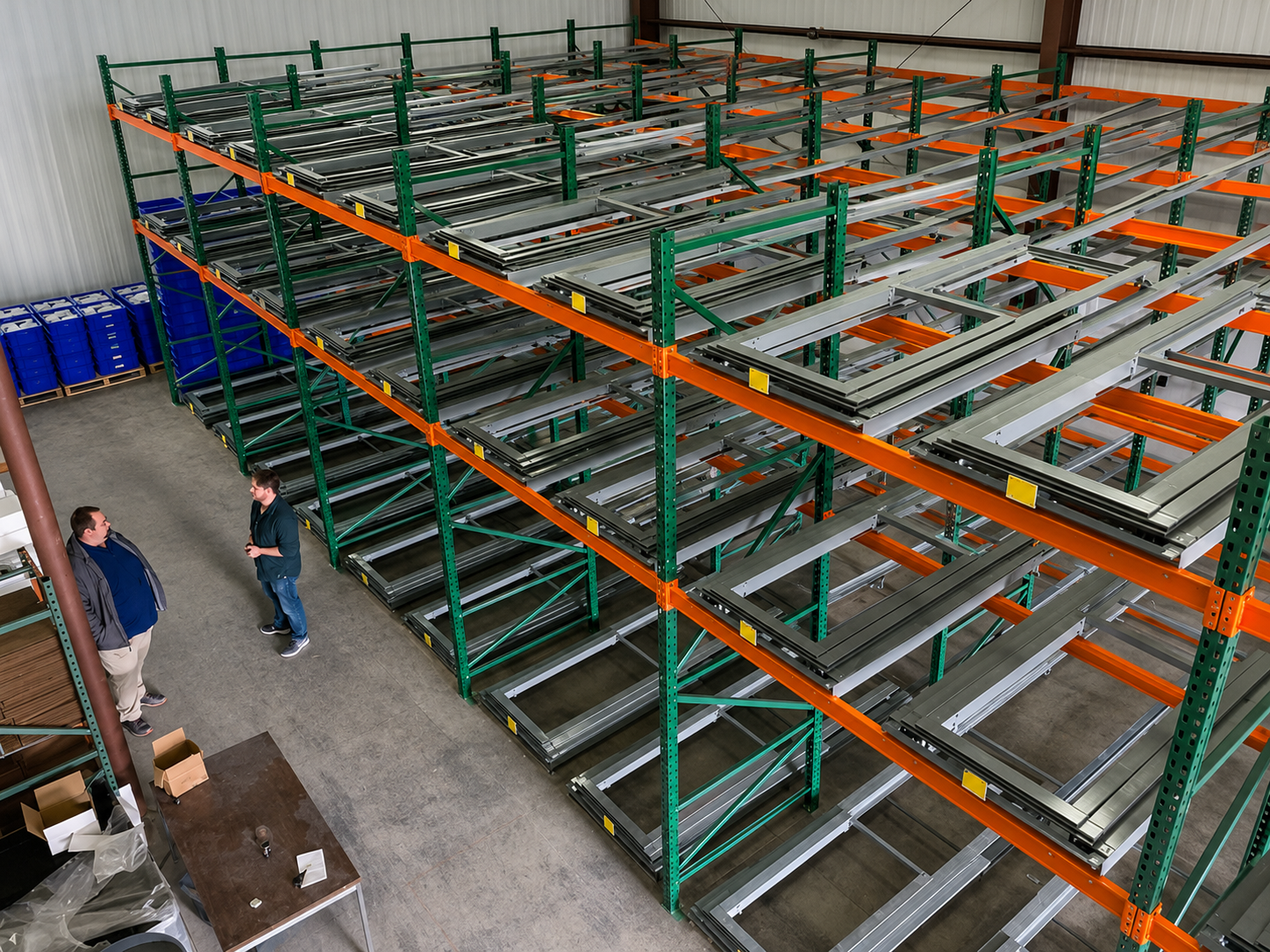
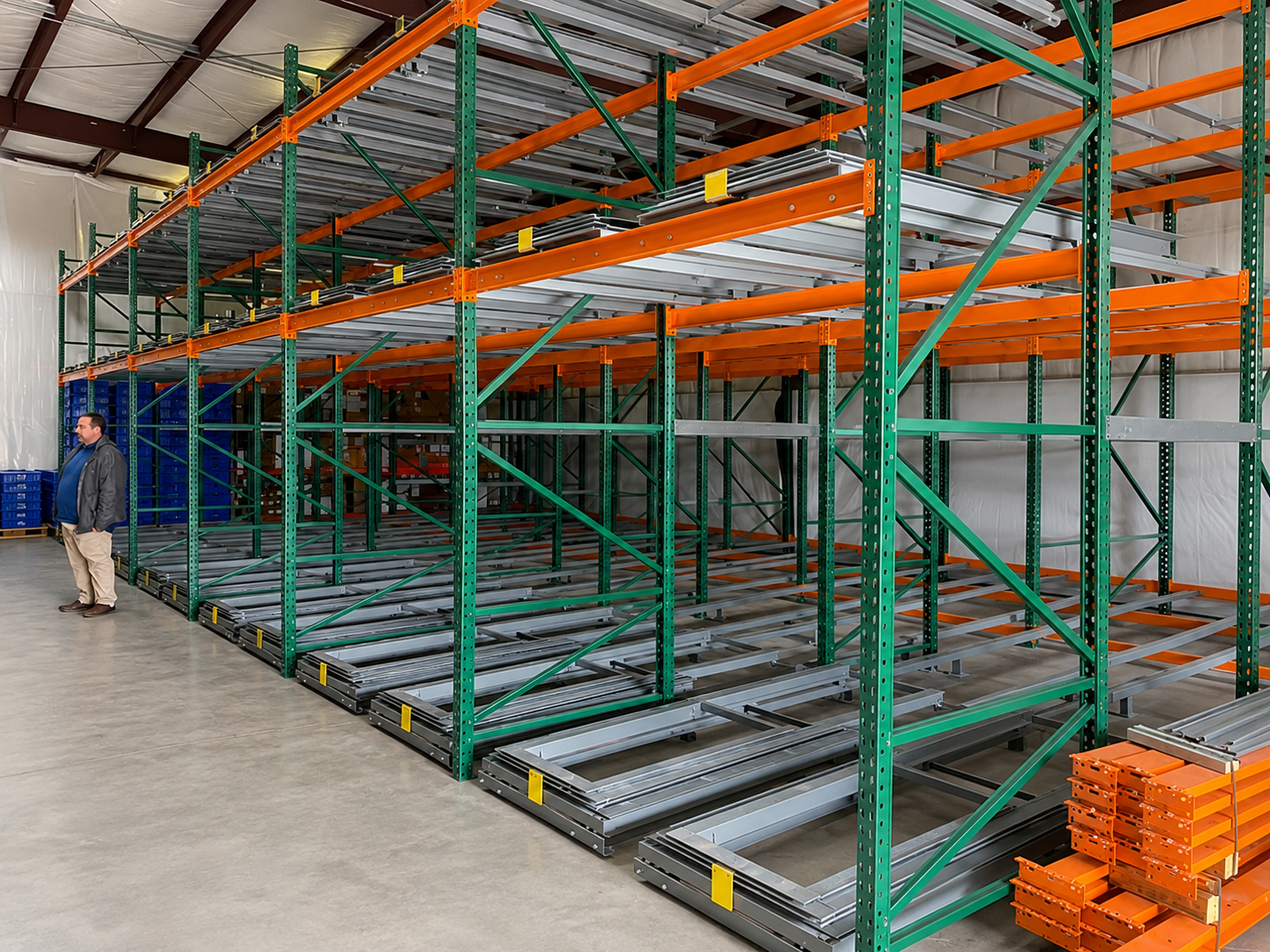
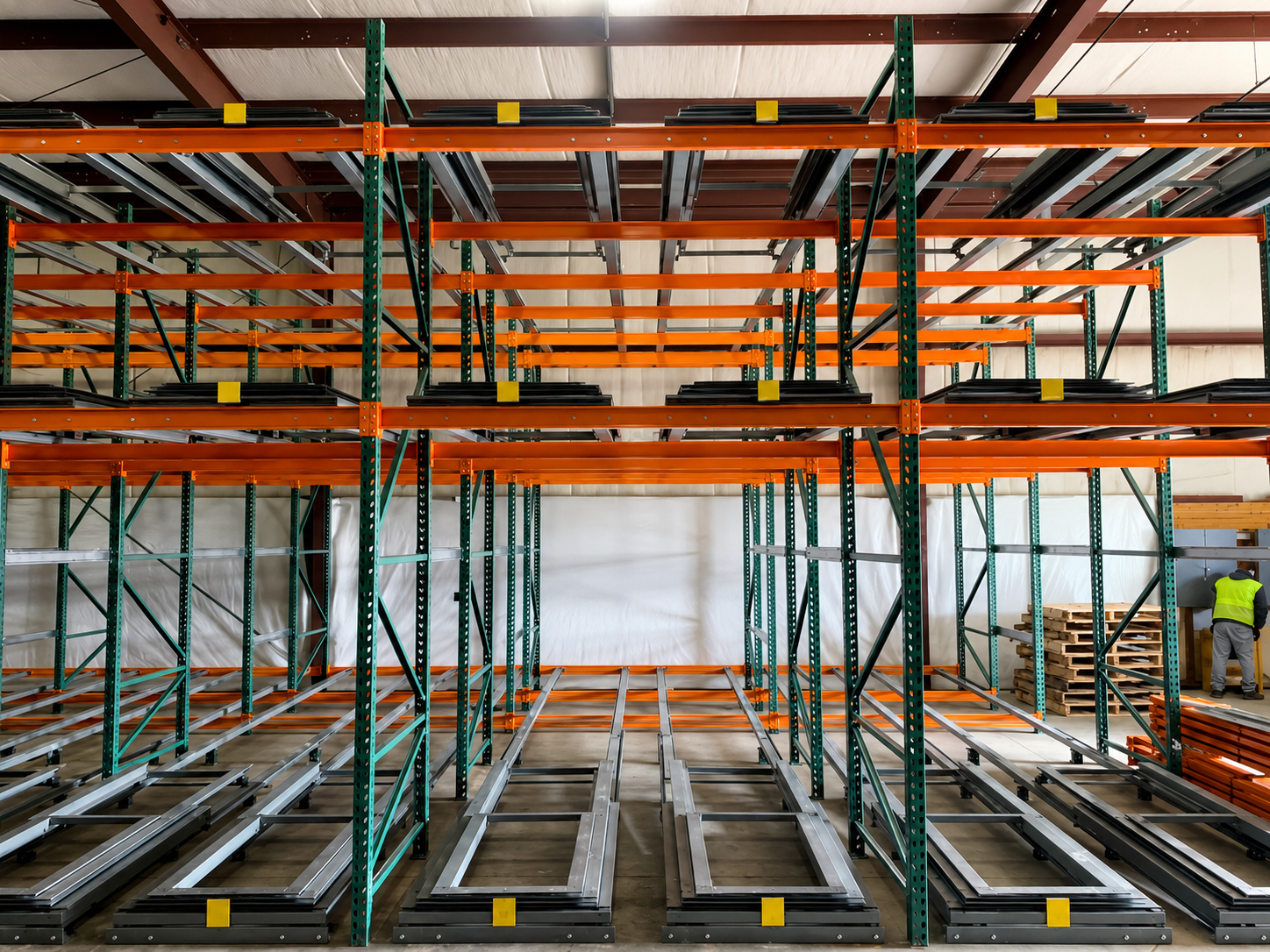
The greatest advantage to a push back racking system is that it is highly efficient. The pallets flow to the front of the rack for picking. This offers you much faster pick times than drive in rack. You are also able to store different SKU’s on each level within a single bay which gives you … Continue reading High Efficiency Push Back Pallet Racking
The greatest advantage to a push back racking system is that it is highly efficient. The pallets flow to the front of the rack for picking. This offers you much faster pick times than drive in rack. You are also able to store different SKU’s on each level within a single bay which gives you better selectivity than drive-in rack systems.
Push back pallet racking offers more storage per square foot by eliminating aisles that are required in selective pallet rack systems. The number of aisles you can eliminate depends on how many pallets deep you can store. Pushback rack allows you to store a larger number of pallets, larger number of SKU while giving you a larger number of pick faces.
Pushback sliding shelves are very popular with food distributors with high pallet through put. It allow them to push more pallets through the rack and out the door which increases profits. Push-back storage racks are ideal for coolers and freezers where you have a high cost per square foot because it helps you maximize your storage space and increase efficiency. Besides, nobody wants to spend any longer in a freezer than they have to.
We can design a push back pallet racking shelf system between 2-5 pallets deep. Some factories can even go 6 pallets deep. Keep in mind that a 5 deep system utilizes 4 carts with the 5th pallet in front setting on the rail. We often configure the pushback 2-3 deep around the perimeter walls and 4-5 deep pushback back to back to create an island in the middle which is accessible from both sides. This only requires 2 aisle.
The recommended number of pallets deep is dependent on the number of pallets per SKU. The smaller number of pallets per SKU the smaller the depth, the larger number of pallets per SKU the greater the number of pallets deep. If you stick to this rule it will help insure proper utilization of the system.
Typically there are two pallets wide in a pushback rack system. We can also supply pushback rack at one pallet wide per shelf. This just depends on the layout of the rack and the available space that you have as well as size and weight of your pallet loads. Sometimes you may not be able to fit that double wide bay of pushback at the end of the row and you may want to just have a single wide bay.
Pushback rack helps you eliminate aisle and store more pallets per square foot. The advantages of pushback rack over drive in rack is that the lift truck is not going into the rack which reduces the possibility of rack damage.
Yes, the cost of pushback rack more expensive then selective or drive in racks. But the payoff or ROI is worth the price. You will experience increased storage density while at the same time increasing picking speed and efficiency. The reason it is more expensive then the other rack systems is that with the uprights, beams, rails and carts you have a lot of steel in a small area.
TIP FROM THE PRO’S: The key thing about push back racks is that you must have high quality pallets because you are putting them on dynamic carts (in other words, they are moving).
FAQs about High Efficiency Push Back Pallet Racking
What is a pushback pallet rack, and how does it work?
Pushback pallet rack is a high-density storage system that stores pallets 2 to 6 deep on nested carts that ride on inclined rails. When a pallet is loaded, it pushes the pallet behind it back one position. When unloading, the front pallet is removed, and the pallets behind it automatically roll forward to the pick face. Pushback operates on a LIFO (Last-In, First-Out) system and offers excellent storage density while maintaining multiple picking faces.
What are the advantages of using a pushback rack compared to a selective or drive-in rack?
Pushback racking provides up to 90% more storage density than selective rack while offering greater selectivity than drive-in rack. Forklifts never enter the rack structure, which reduces rack damage and increases safety. The system provides multiple SKUs per aisle, fast load/unload cycles, and excellent space utilization, making it a popular choice for warehouses seeking higher density without sacrificing productivity.
What types of products or industries benefit most from the pushback rack?
Pushback rack is ideal for operations that need a balance of selectivity and density. It’s widely used in food and beverage, third-party logistics, grocery distribution, manufacturing, building materials, and consumer goods. Any warehouse storing multiple pallets of the same SKU per lane, without strict FIFO requirements, can benefit from the speed and efficiency of pushback storage.
Are pushback pallet racks safe, and what features help ensure reliable operation?
Yes, pushback systems are engineered with heavy-duty structural steel rails, high-strength carts, welded stops, and control mechanisms that regulate the pallet’s movement. By keeping forklifts out of the racking structure, pushback significantly reduces column and rail damage. As with any high-density rack system, operator training, pallet quality, and routine inspections are essential for safe, long-term performance.
What types of pallets work best with a pushback rack?
Pushback rack requires consistent, high-quality pallets, typically GMA-style or similar, that can safely rest on the carts. The pallet bottom must be strong enough to support the load and maintain stability during the pushback and gravity-roll process. Damaged or inconsistent pallets can cause uneven movement or operational issues, so it’s important to use good pallets and regularly inspect them for safety.


