Pallet Rack Styles
Pallet rack styles refer to the various structural and operational configurations available for storing palletized goods in warehouses, distribution centers, and manufacturing facilities. The most prevalent styles include selective rack, drive-in rack, pushback rack, and pallet flow rack, each offering unique advantages in terms of storage density, product accessibility, and operational efficiency. The choice of the right pallet rack style depends on factors such as inventory turnover, SKU count, pallet dimensions, forklift type, and the desired balance between storage density and product accessibility.
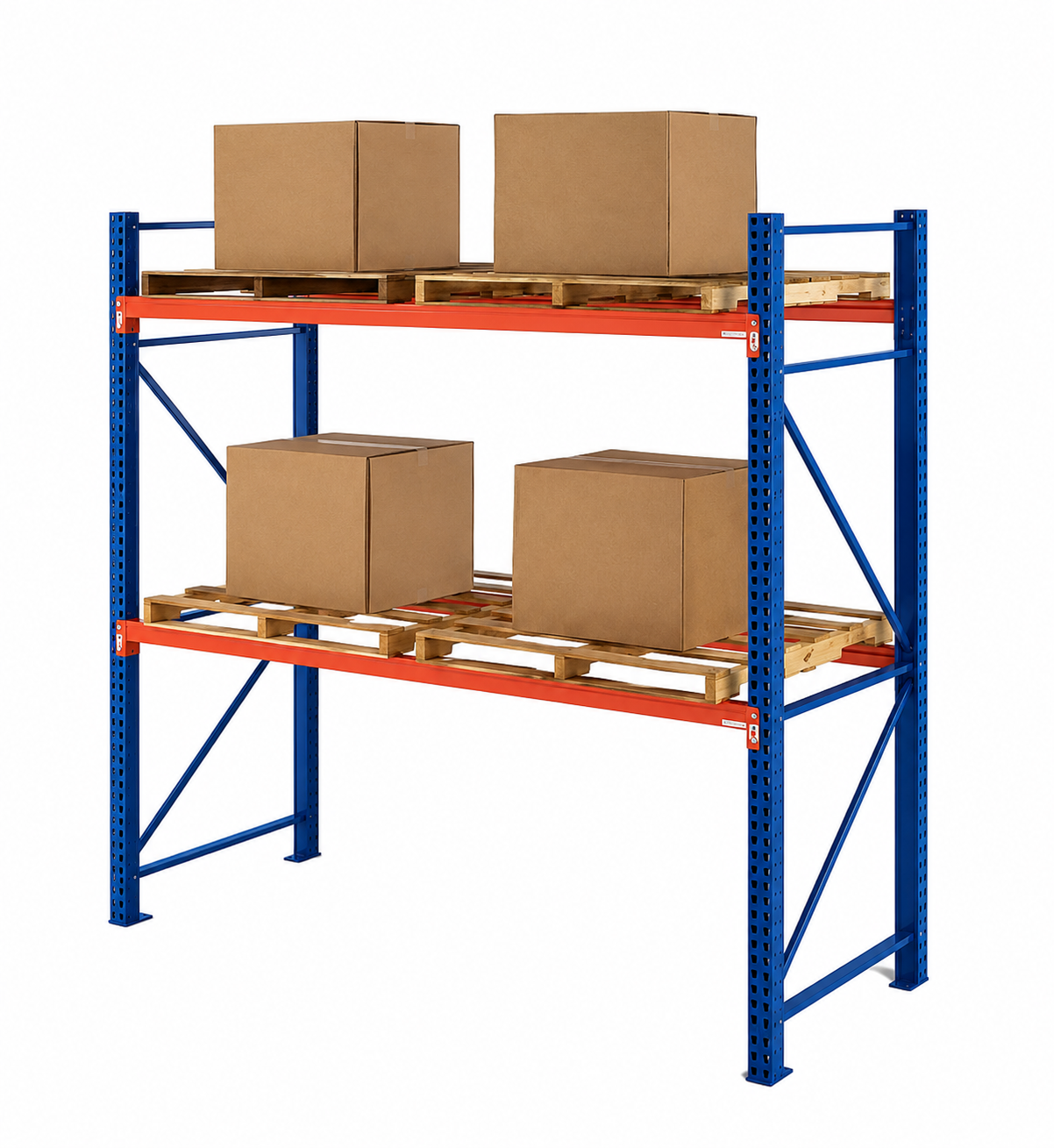
Selective pallet rack is the most widely used style in North American warehouses due to its straightforward design and direct access to every pallet position. In a selective rack system, each pallet is accessible from the aisle without the need to move other pallets, making it suitable for operations managing a large number of SKUs with varying turnover rates. While selective rack offers lower storage density compared to other styles, its flexibility and accessibility make it the standard choice for facilities that frequently need to pick, replenish, and rotate inventory.
Drive-in rack, on the other hand, increases storage density by eliminating individual aisles between each rack bay. This design allows forklifts to drive directly into the rack structure to store and retrieve pallets, enabling a last-in, first-out storage method. Drive-in rack is particularly well-suited for single-SKU products or materials where inventory rotation is not critical. As a result, it delivers significantly higher pallet positions per square foot compared to selective configurations. Pushback racks offer a compromise between the accessibility of selective racks and the density of drive-in systems. Pallets are stored on nested carts that glide along inclined rails, enabling multiple pallets to be stacked two to six positions deep from a single aisle face. When a pallet is removed from the front, the remaining pallets automatically roll forward, maintaining a consistent pick face without requiring operators to enter the rack structure.
Showing all 13 resultsSorted by latest
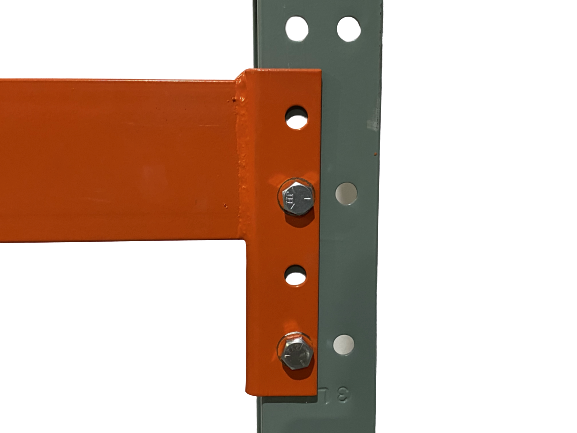
Structural Pallet Racking
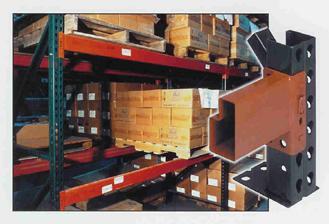
Teardrop Rack
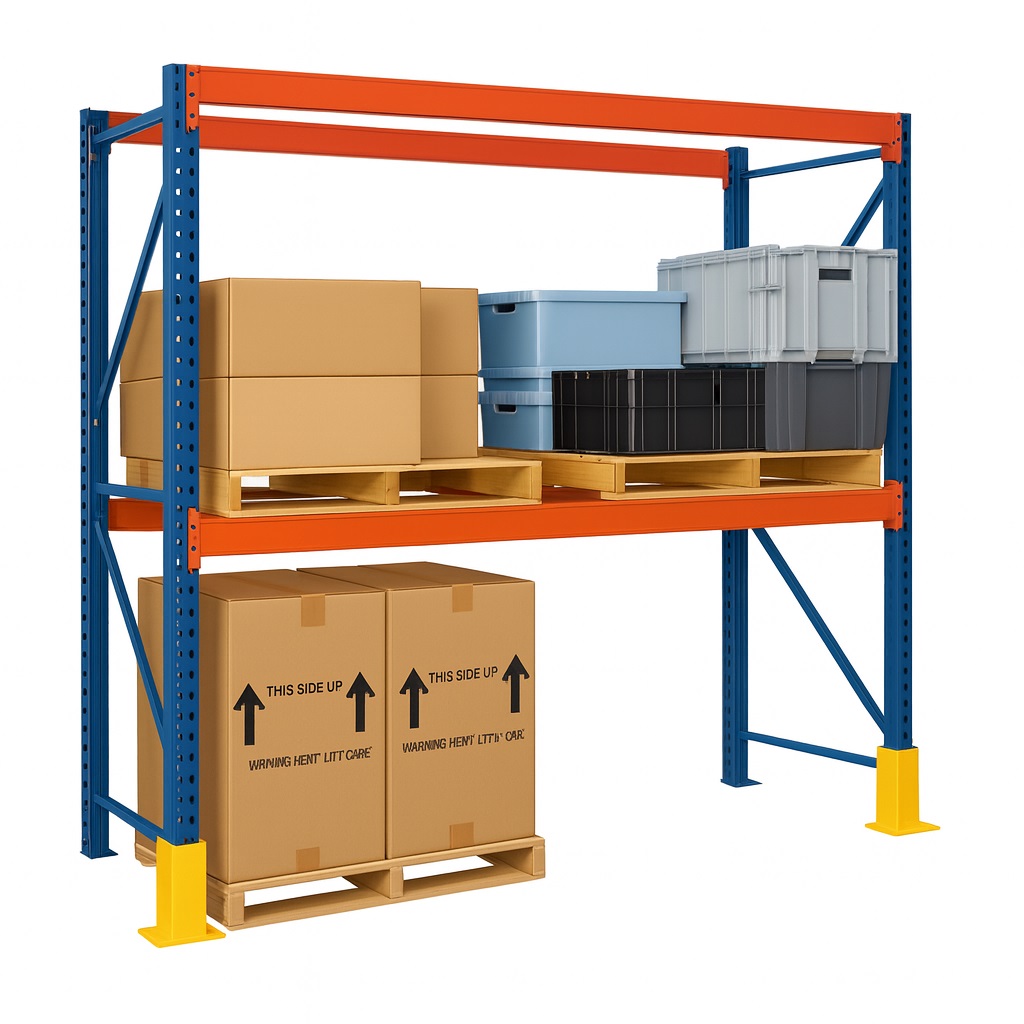
Teardrop Pallet Racks
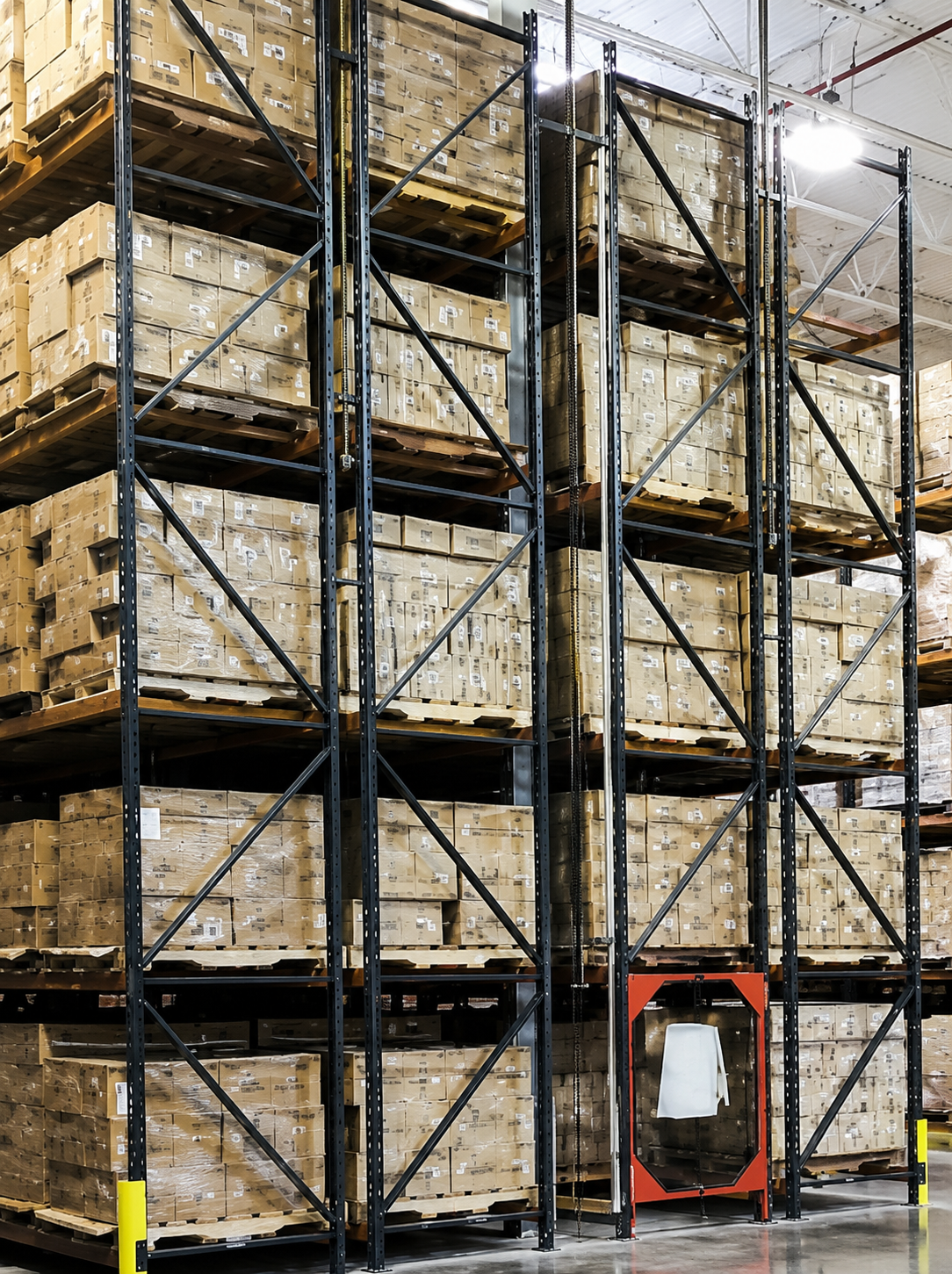
Double Deep Pallet Racks Increase Density / Reduce Aisles / Require 2 Deep Reach Trucks
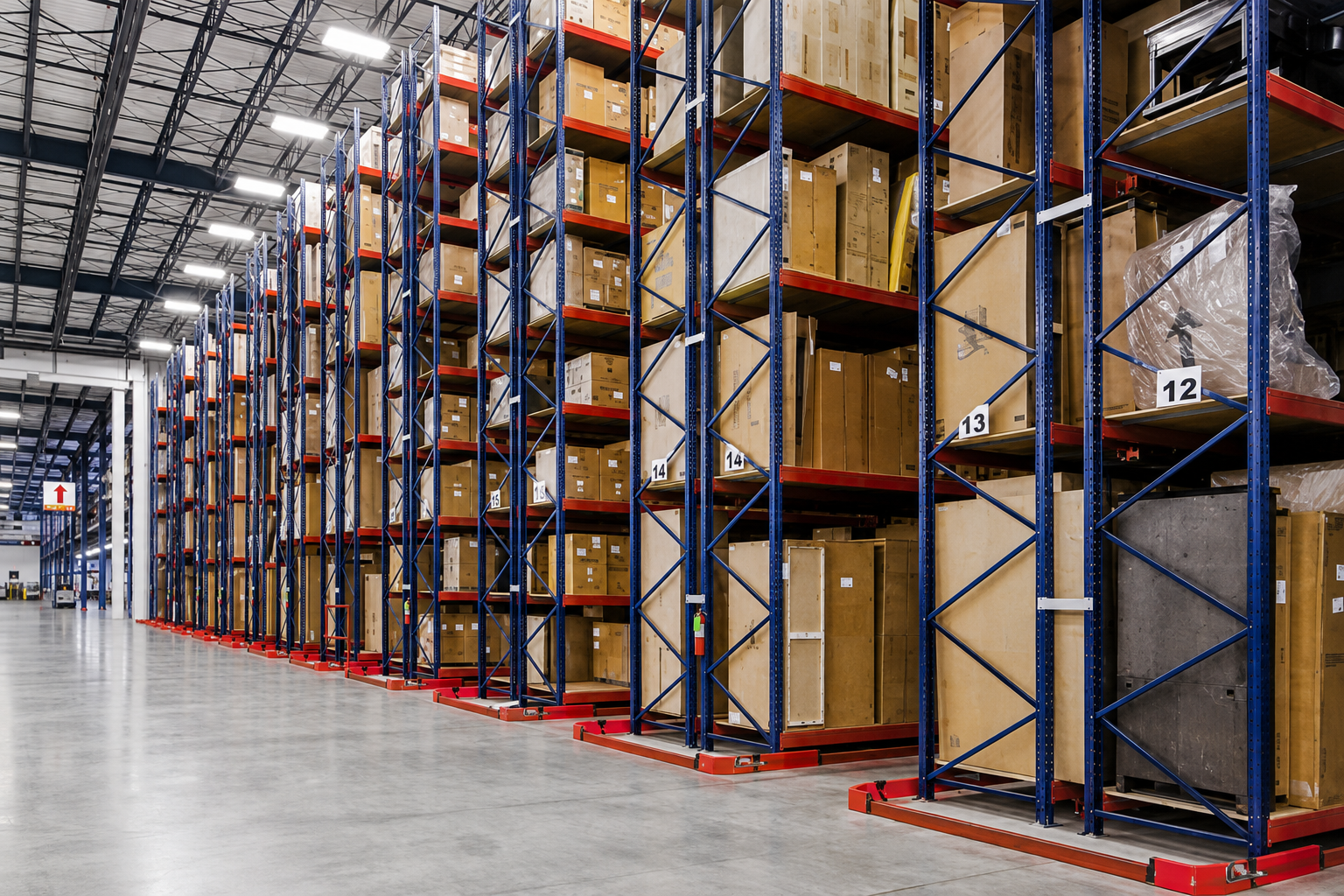
Very Narrow Aisle Racking System (VNA) Increases Density / Require Swing Mast Lifts
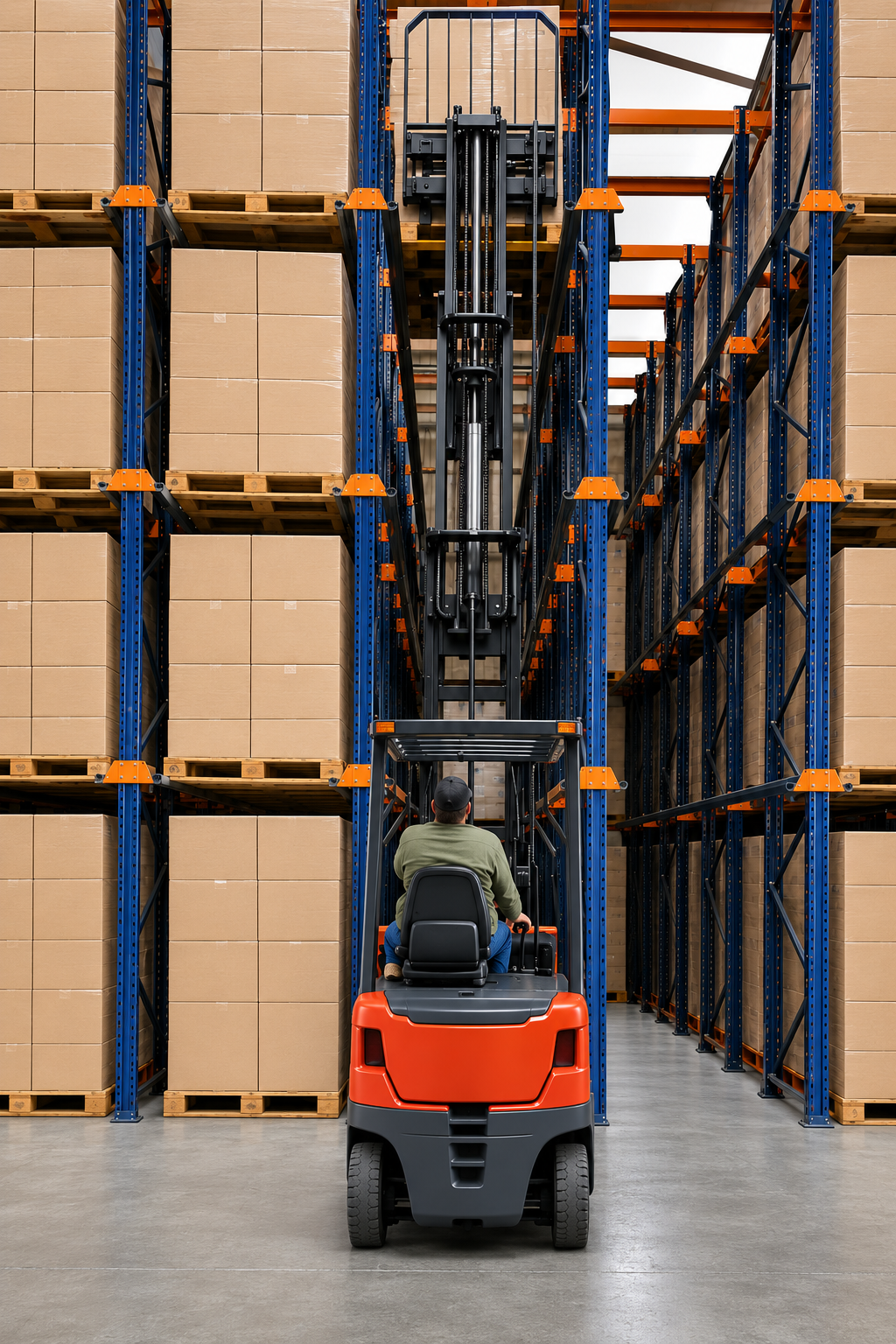
Drive-In Pallet Rack
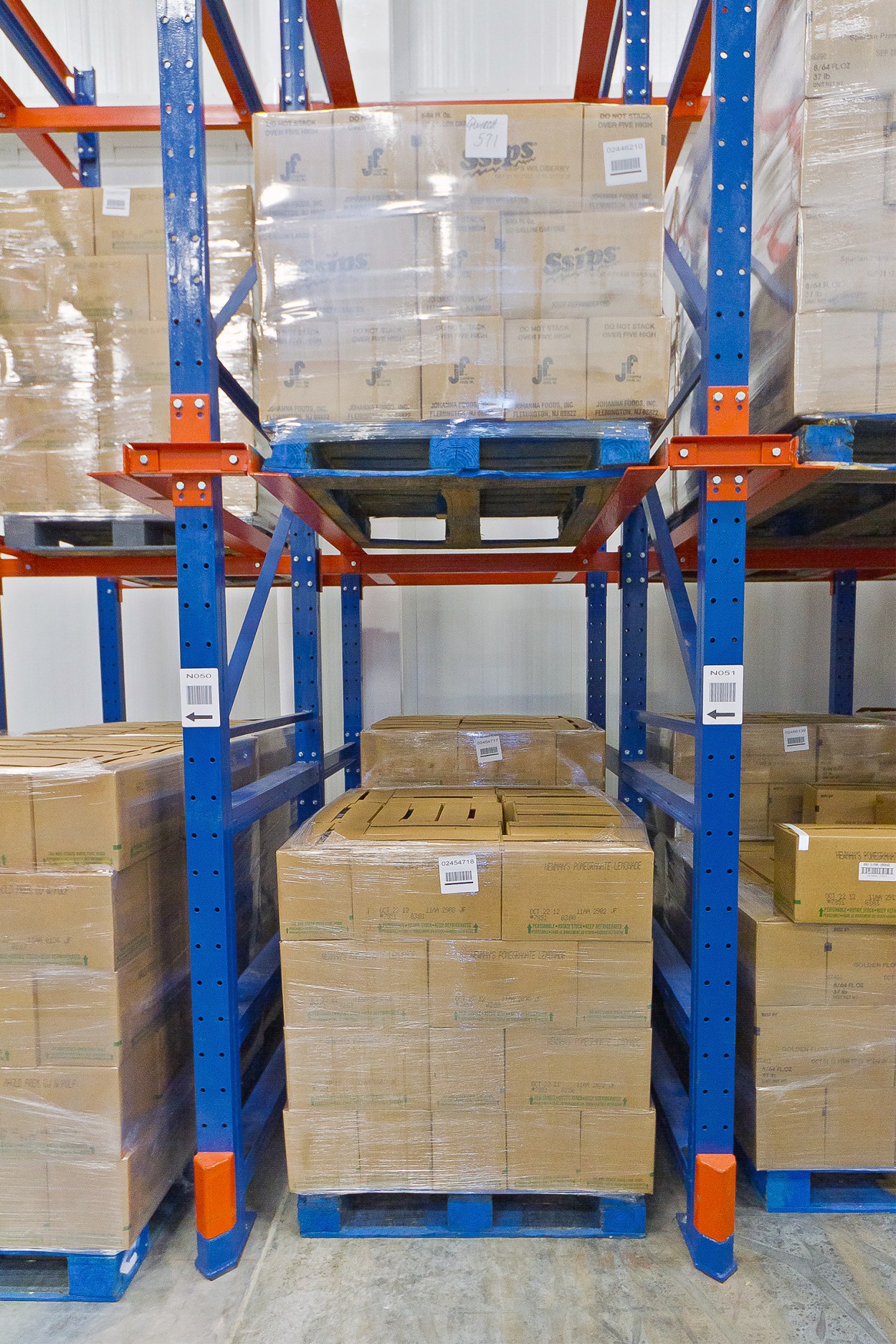
Structural Drive In Racking
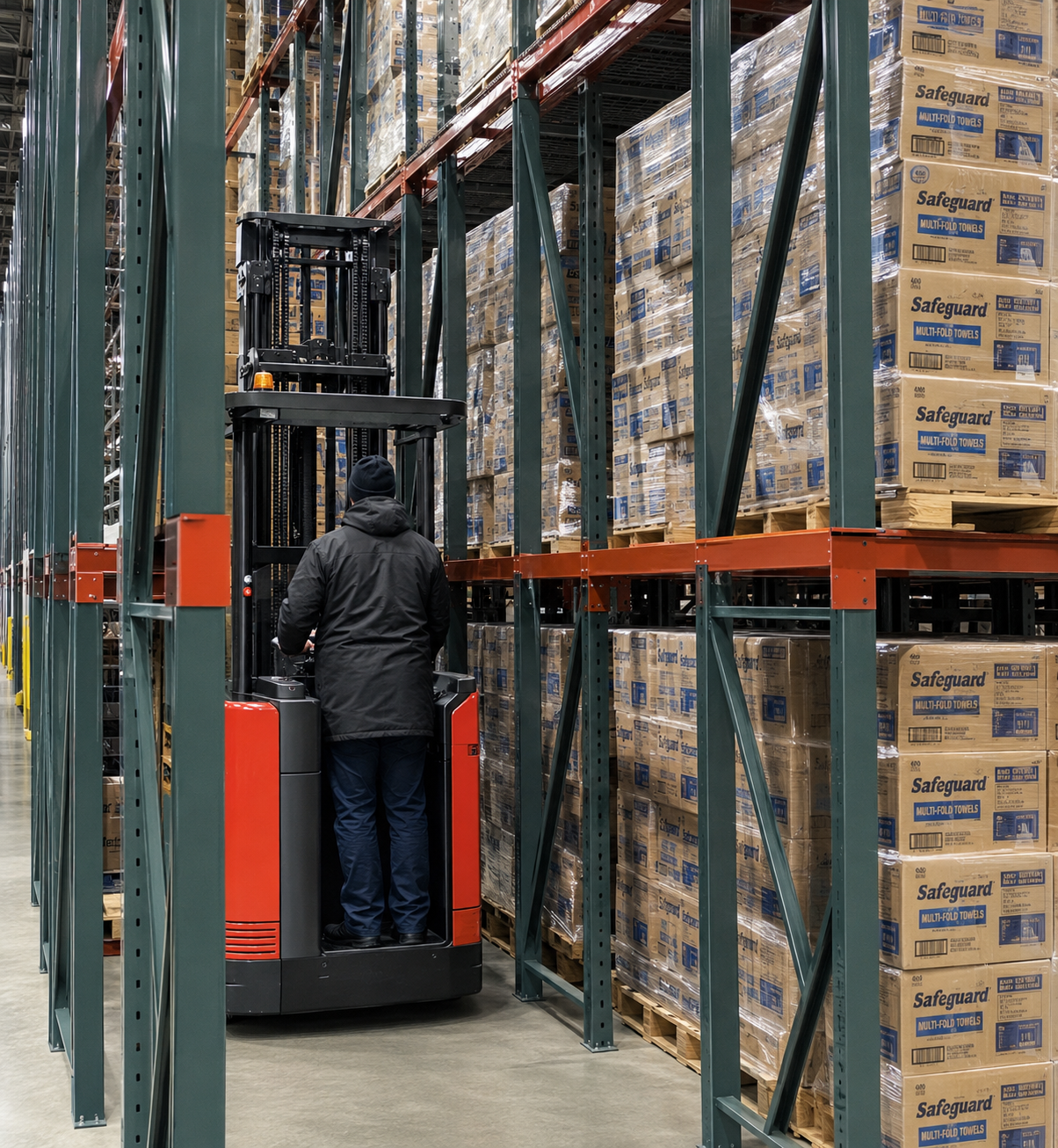
Drive-Thru Pallet Racking
Double Wide Drive-In Pallet Rack System
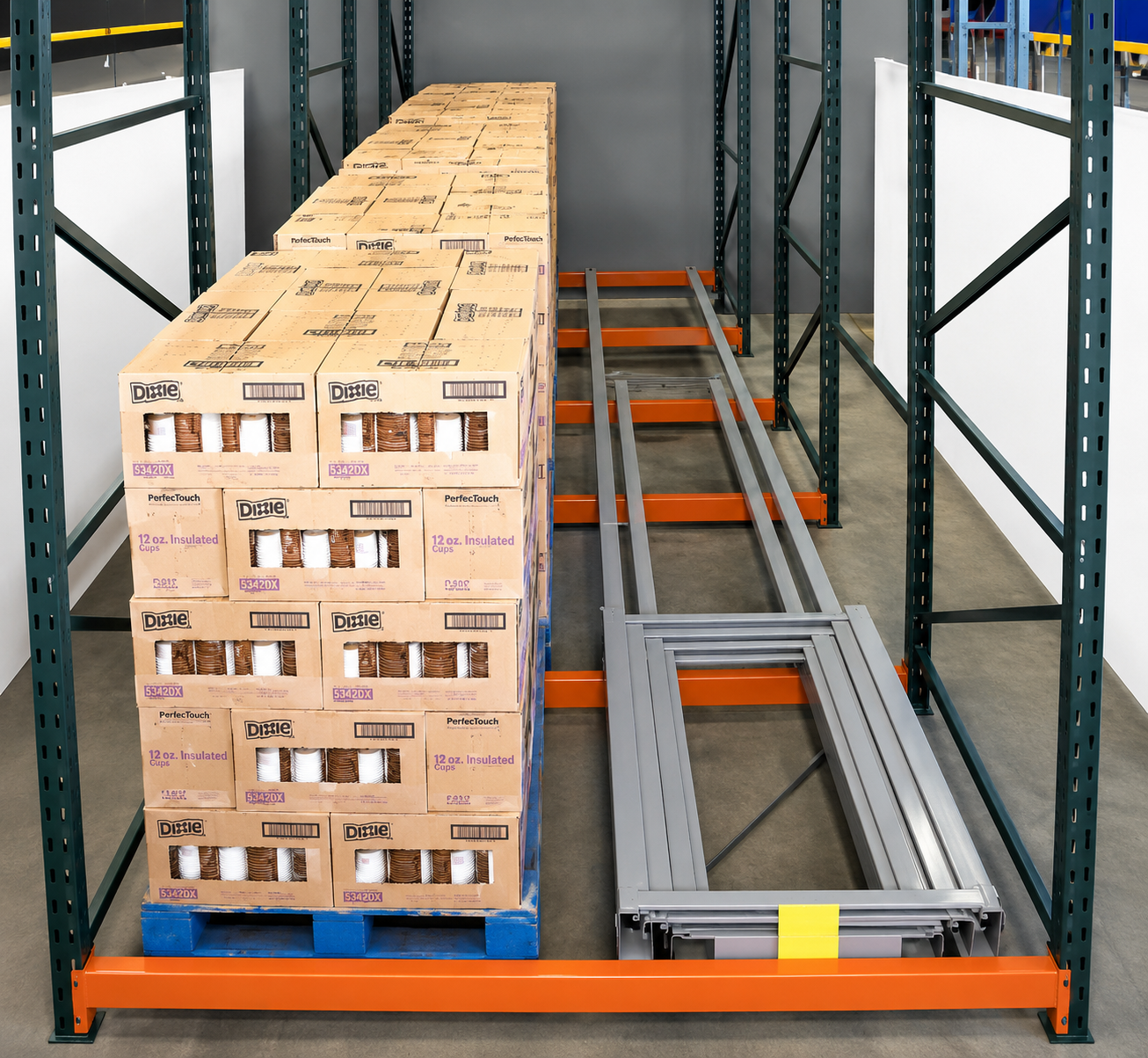
Pushback Pallet Rack
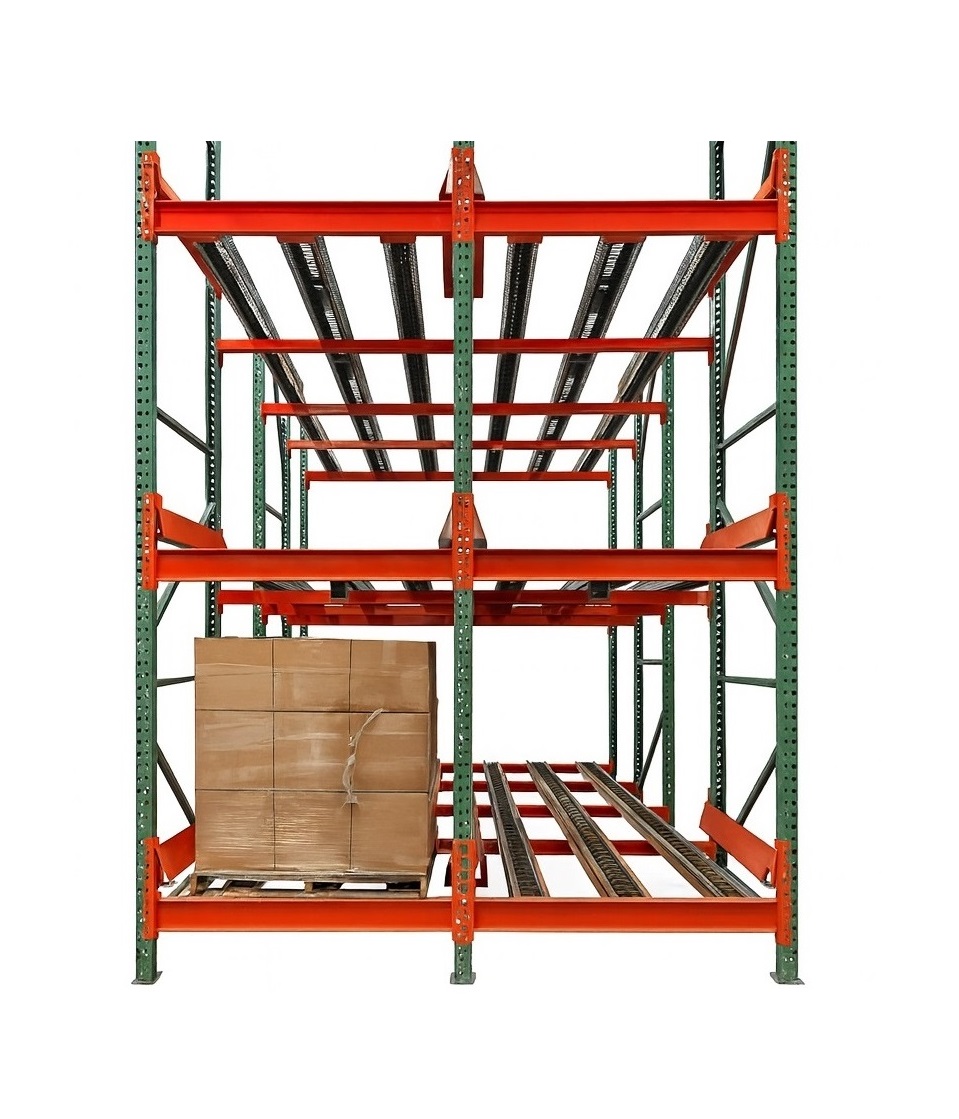
Pallet Flow Rack
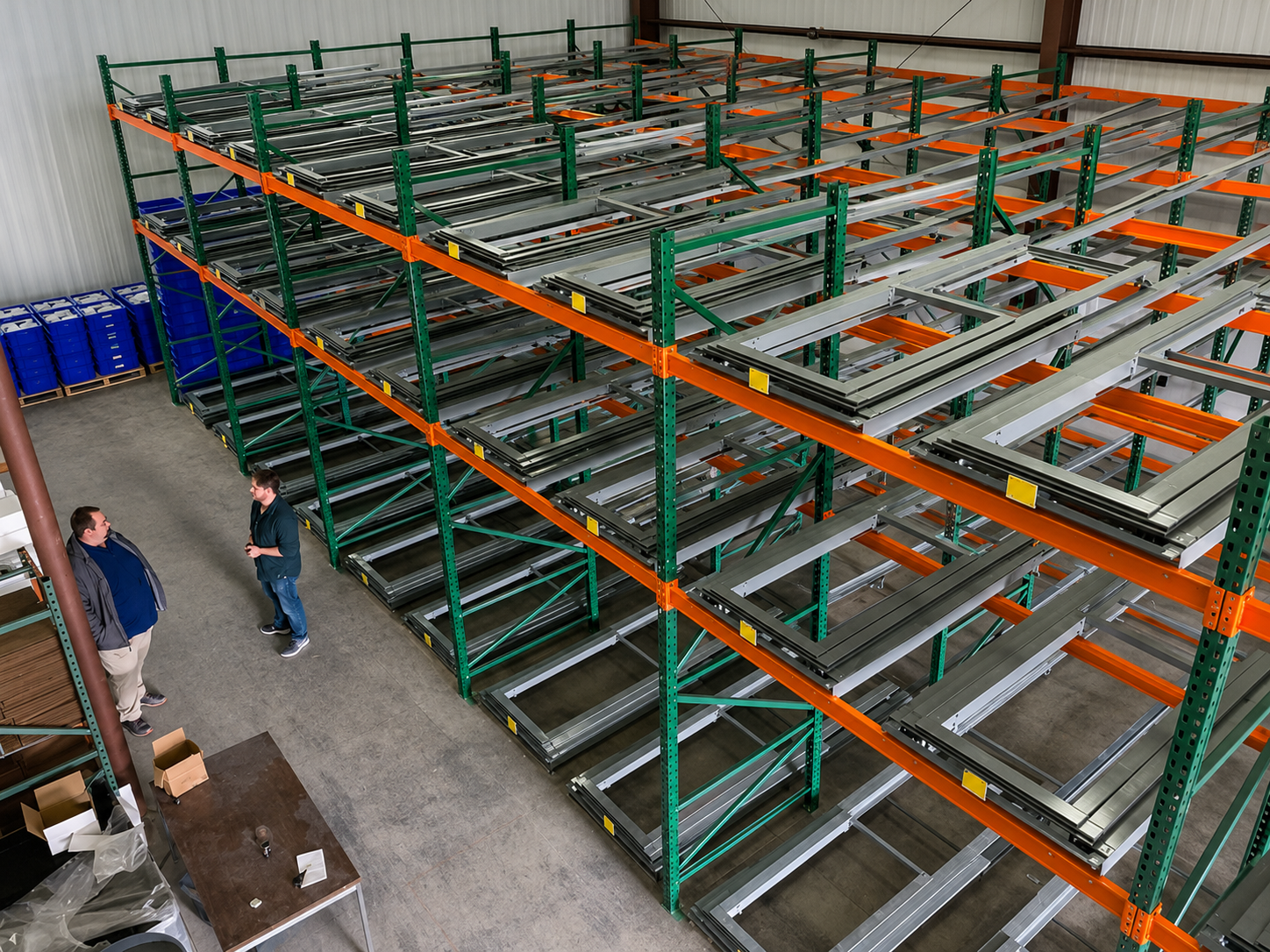
High Efficiency Push Back Pallet Racking
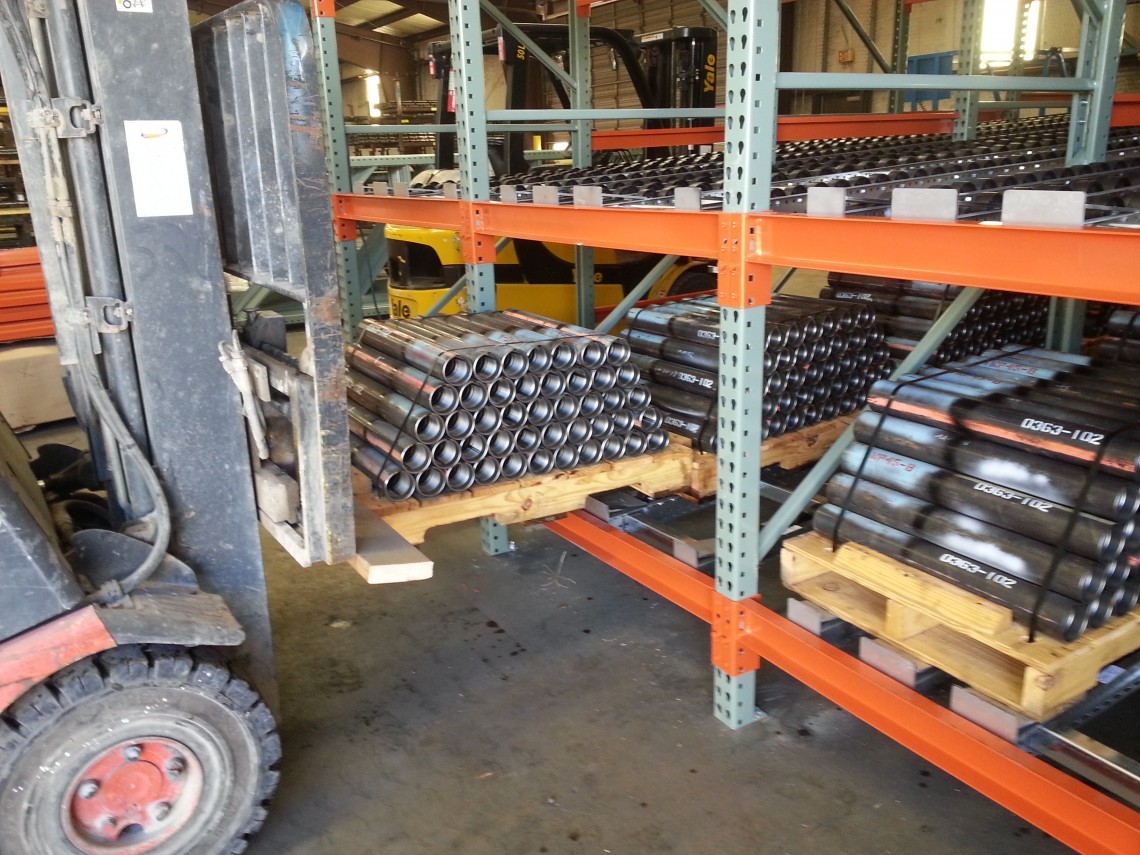
Reverse Pallet Flow | Pallet Flow Used as Pushback
Pallet flow racks, on the other hand, employ gravity-fed roller lanes that move pallets from the loading end to the picking end, creating a first-in, first-out inventory rotation suitable for time-sensitive products and perishables. Both pushback and pallet flow systems enhance storage density while providing superior inventory management compared to drive-in configurations. They are ideal for operations with moderate SKU counts and consistent product turnover. Selecting the appropriate pallet rack style involves careful evaluation of your inventory profile, handling equipment, and operational priorities. Facilities with diverse SKU counts and frequent picking activity benefit from the accessibility of selective racks, while operations storing large quantities of single SKUs can optimize space with drive-in configurations. Pushback and pallet flow systems cater to operations that require density without compromising inventory rotation. Many facilities combine multiple rack styles within the same warehouse to optimize different storage zones for their specific requirements.




