Wire Partition Applications
Wire partition applications use modular steel posts, welded or woven wire mesh panels, doors, gates, ceilings, lockers, and security hardware to create protective barriers and controlled-access areas inside warehouses, manufacturing plants, distribution centers, data centers, athletic facilities, apartment buildings, pharmaceutical operations, and other commercial and industrial facilities. Wire partitions combine the strength and security of steel with an open mesh design that maintains visibility, ventilation, lighting, and, where applicable, access for sprinkler systems. Systems can be configured as simple barriers, full-height cages, rack backing, machine guards, storage lockers, evidence enclosures, tool cribs, or custom security rooms. The big advantage is flexibility. Wire partitions install faster and are generally easier to expand, relocate, or reconfigure than permanent walls, allowing you to secure inventory, protect personnel, organize equipment, and control access without completely rebuilding your facility.
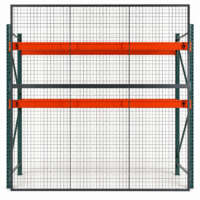
Rack Protection Guards, also called pallet rack backing or RackBack panels, are designed to stop boxes, cartons, pallets, and loose inventory from falling off the back of pallet rack and into aisles, work areas, or pedestrian zones.
These welded wire mesh panels combine a strong steel frame with an open mesh design. The steel provides the physical barrier while the wire mesh maintains visibility through the rack. You can still see inventory and light can pass through, but stored products have something standing between them and the aisle behind the rack.
Showing all 16 resultsSorted by latest
Rack Protection Guard | Pallet Rack Backing
Importance of Wire Mesh Rack Guard Safety Panels
High School & College Athletic Equipment Storage Lockers

Cannabis Cages
Mechanic & Technician Lockers
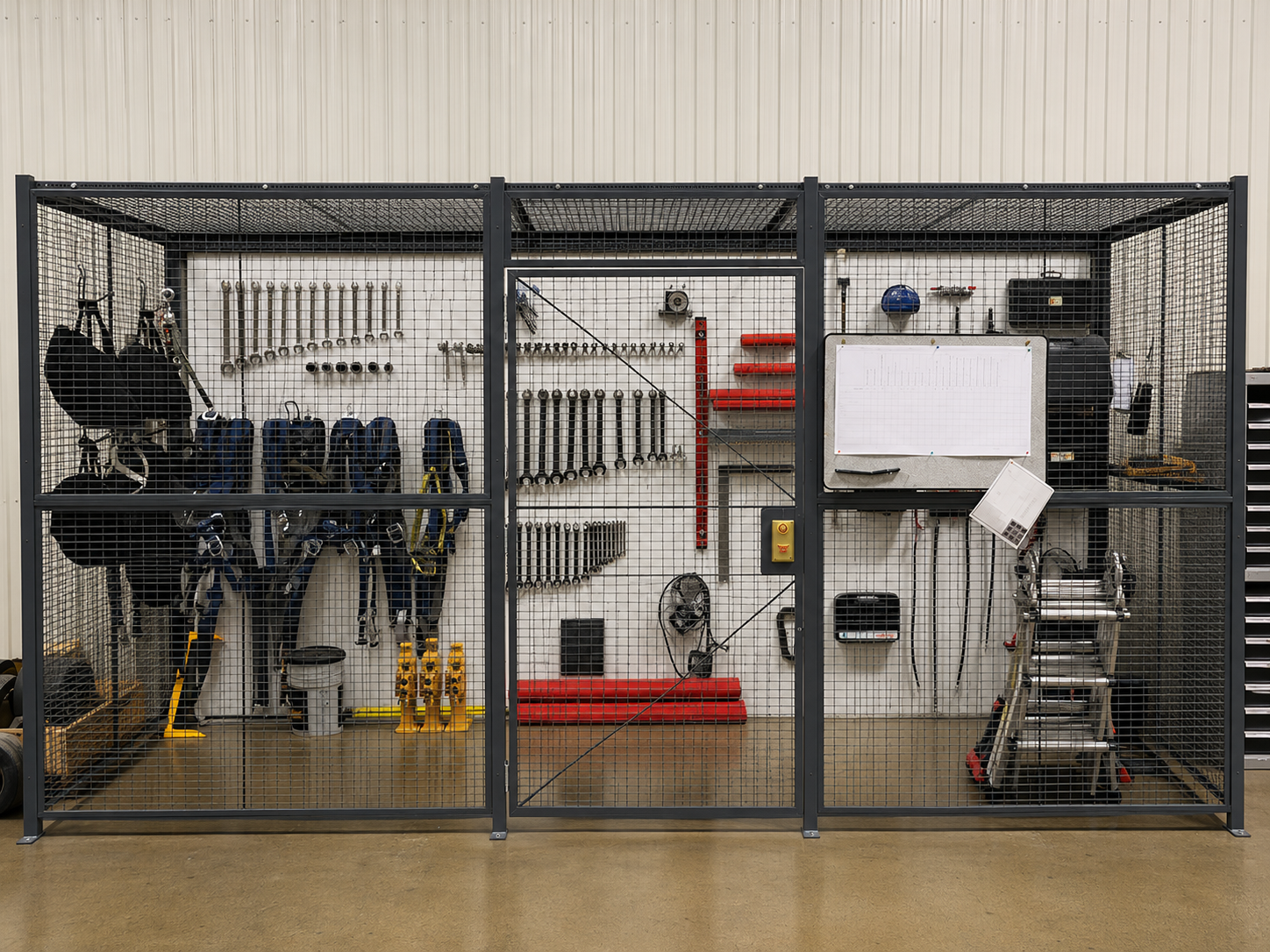
Wire Tool Cribs & Equipment Cages
AI Data Center Computer Server Wire Security Cages
Police Department Wire Evidence Lockers, Enclosures & Cages
Police Department Temporary Wire Holding Cells & Detention Cages
DEA Approved Wire Security Cages for Pharmaceutical & Cannabis Industries
Driver Entry & Building Access Security Check Point Cages
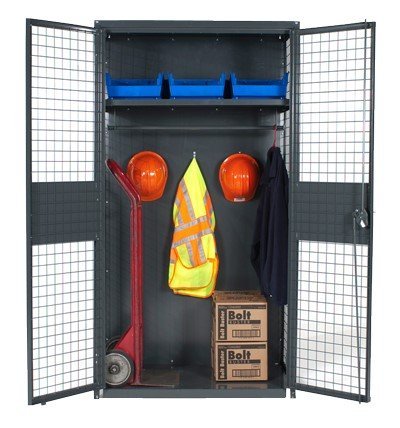
Wire Industrial Storage Lockers
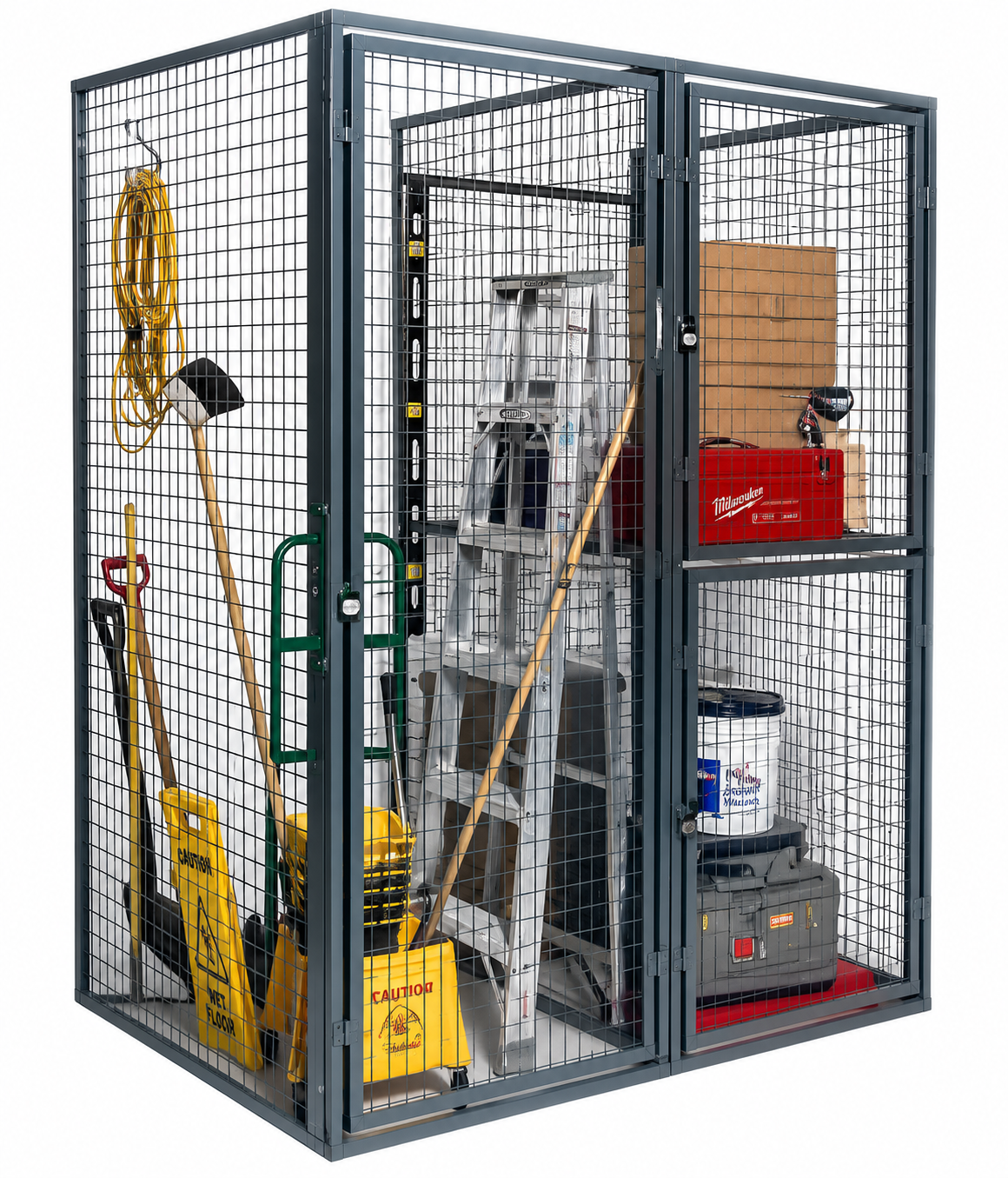
Wire Tenant Storage Lockers
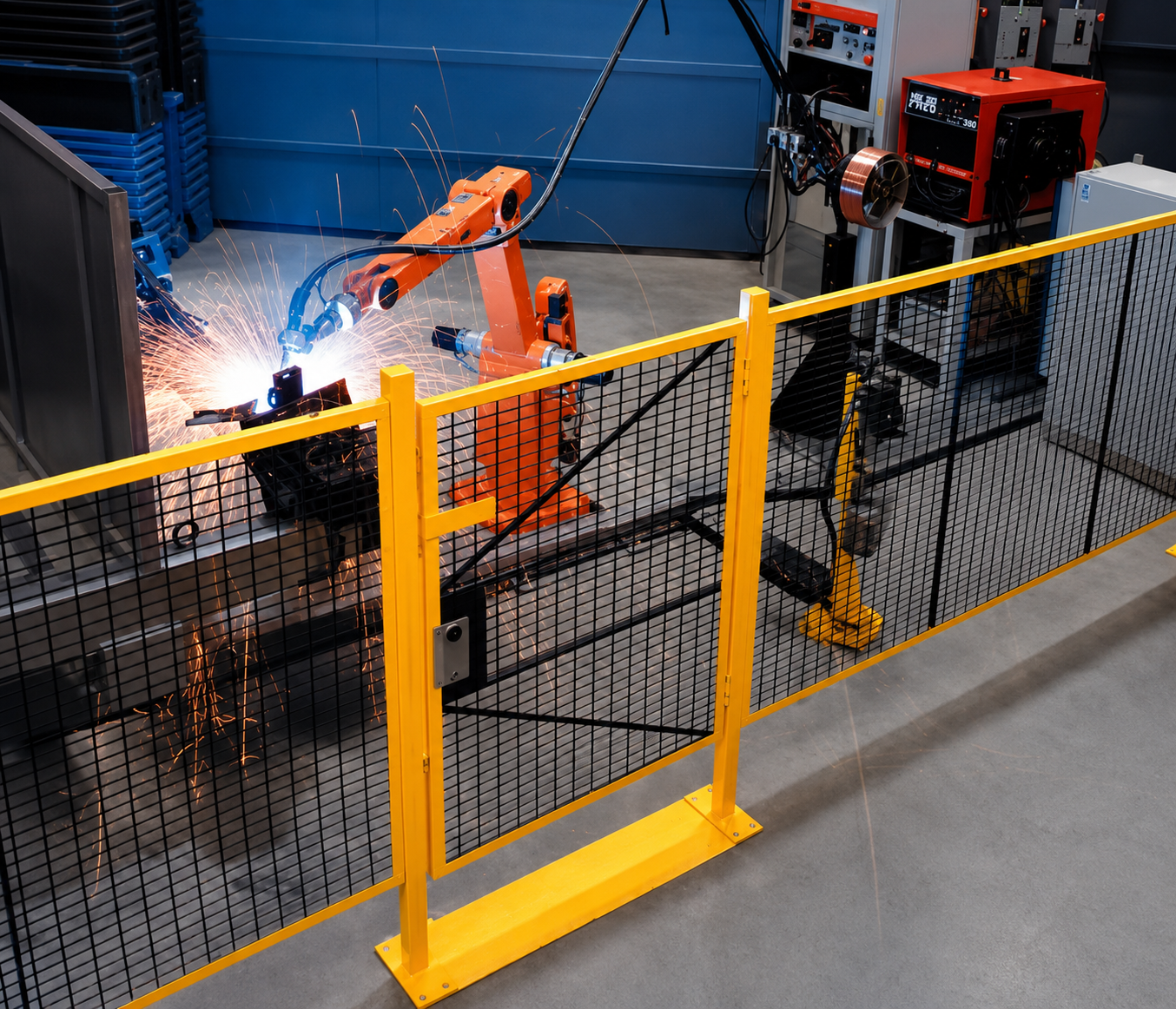
Wire Partition Robot & Machine Guarding | Machine Guards
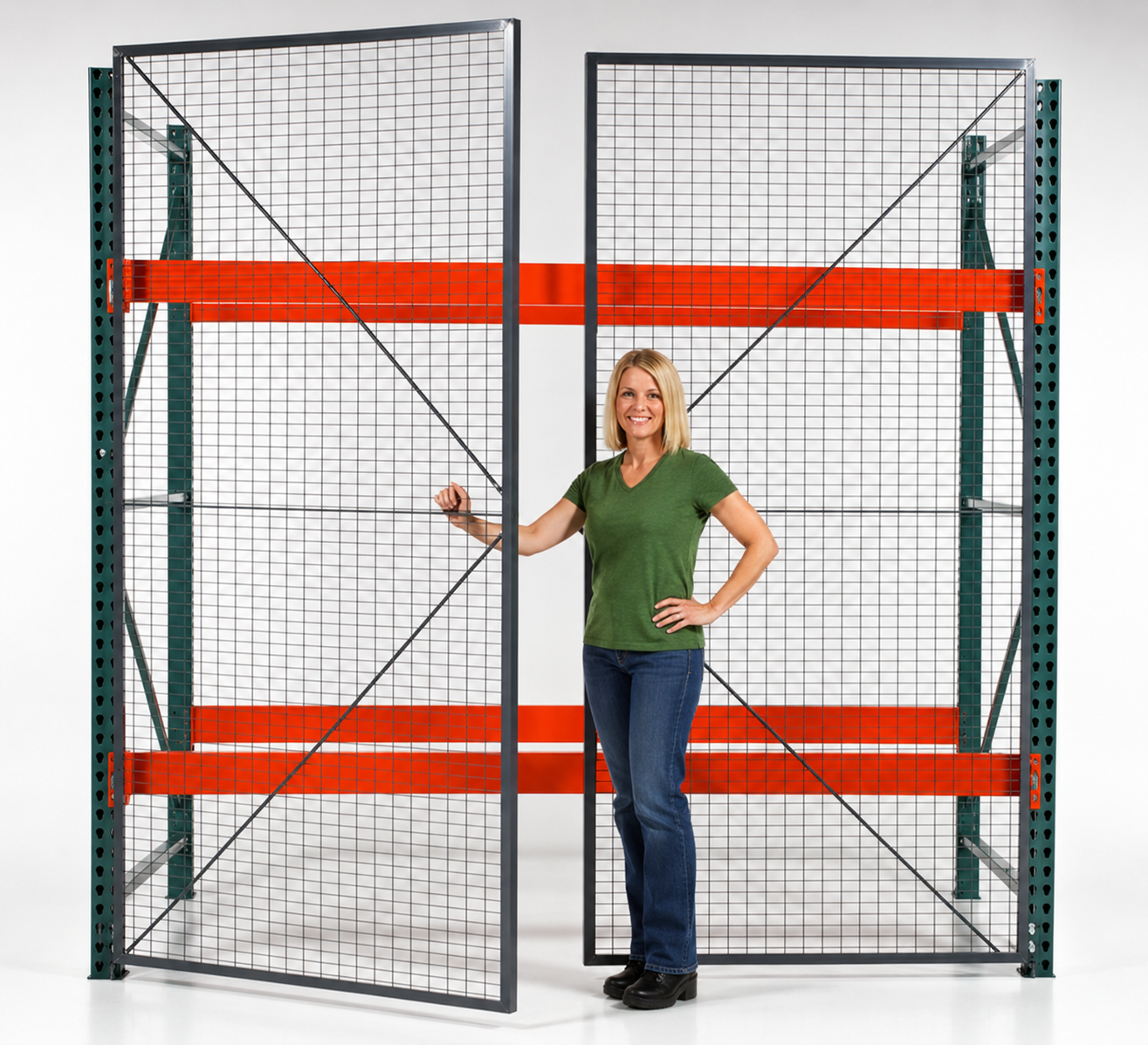
Pallet Rack Gates
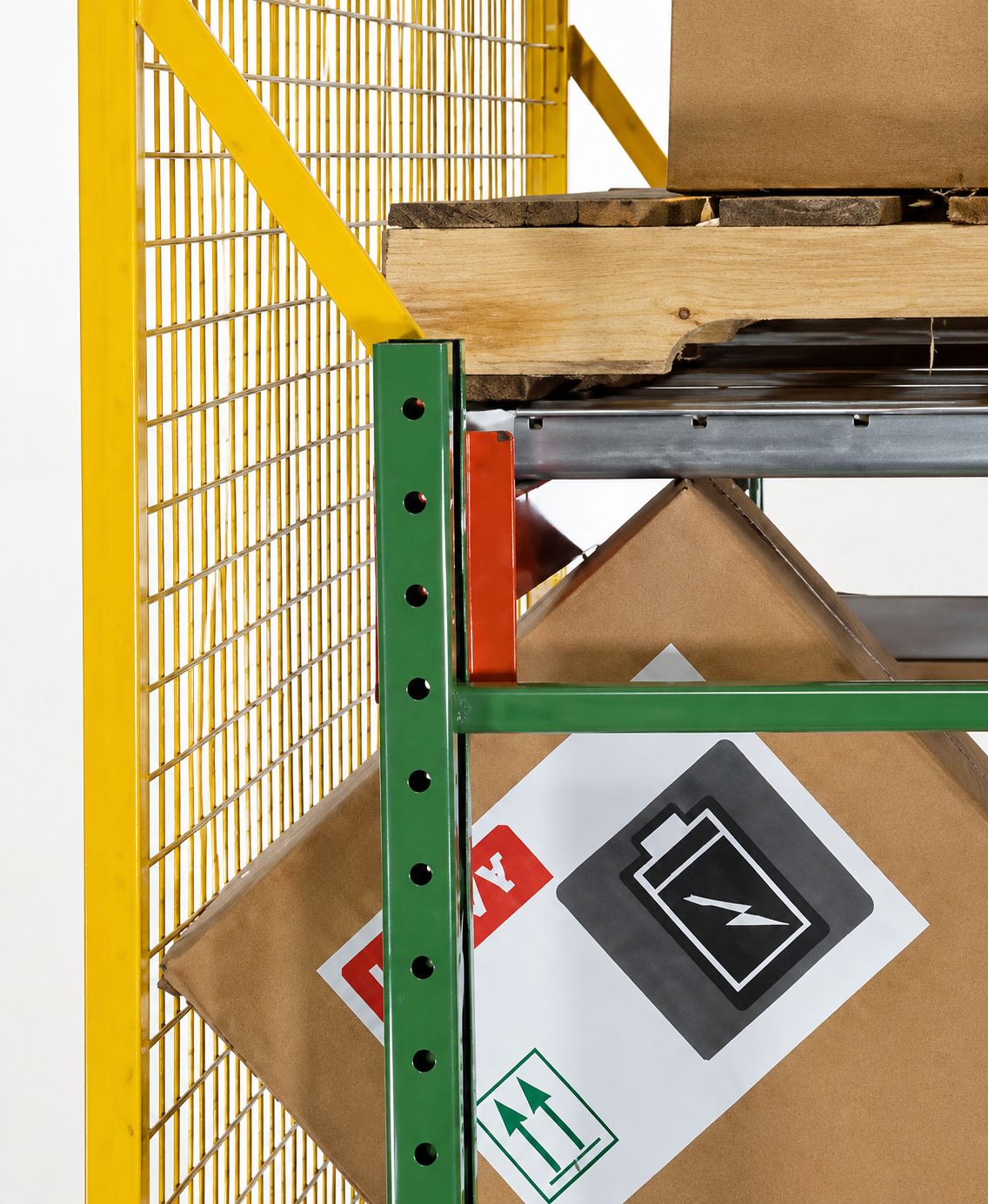
Pallet Rack Guard | RackBack | Rack Backing
Rack backing is available in different panel sizes to accommodate various pallet rack configurations. Offset brackets allow panels to be positioned behind the rack to accommodate pallet overhang where required. Depending on the layout, panels can also be mounted closer to the rack.
The advantage is simple: stop falling inventory before it becomes an accident. Rack backing can protect employees, customers, equipment, and inventory while helping keep aisles cleaner and better organized.
Importance of Wire Mesh Rack Guard Safety Panels
If there’s an aisle, walkway, work area, or equipment zone behind your pallet rack, you should be thinking about what happens if something falls off the back.
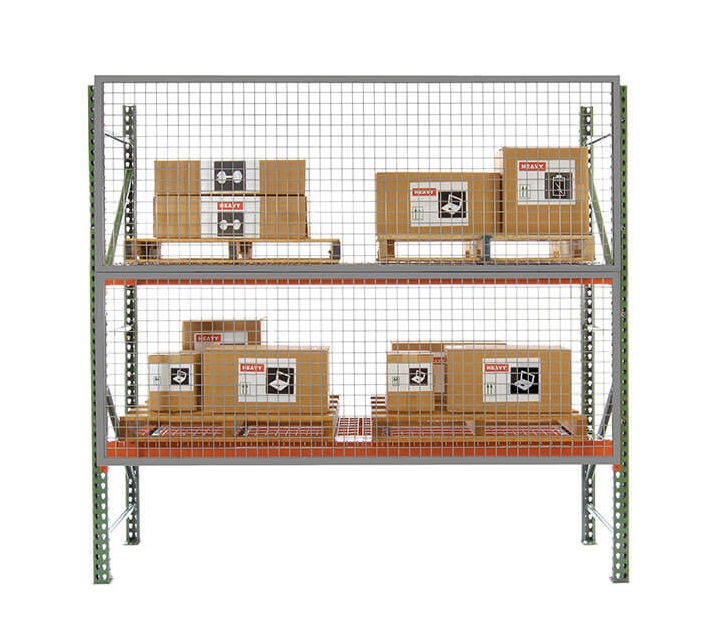
Wire mesh rack guard safety panels create a physical barrier between stored inventory and whatever is located behind the rack. Panels can be installed on the back or sides of pallet rack and configured to fit the storage system.
The modular panels can be mounted close to the rack or offset using brackets to provide clearance for pallet overhang. That flexibility makes wire rack guard useful on new rack installations as well as existing systems that need additional protection.
Another advantage is visibility. Unlike a solid wall, wire mesh allows employees to see through the rack and maintains airflow and existing lighting. Gates can even be incorporated where controlled access to stored inventory is required.
And don’t overlook installation. Wire panels are durable, modular, relatively easy to install, and easy to reconfigure when your rack layout changes. For many facilities, that’s a lot more practical than building permanent barriers behind every rack row.
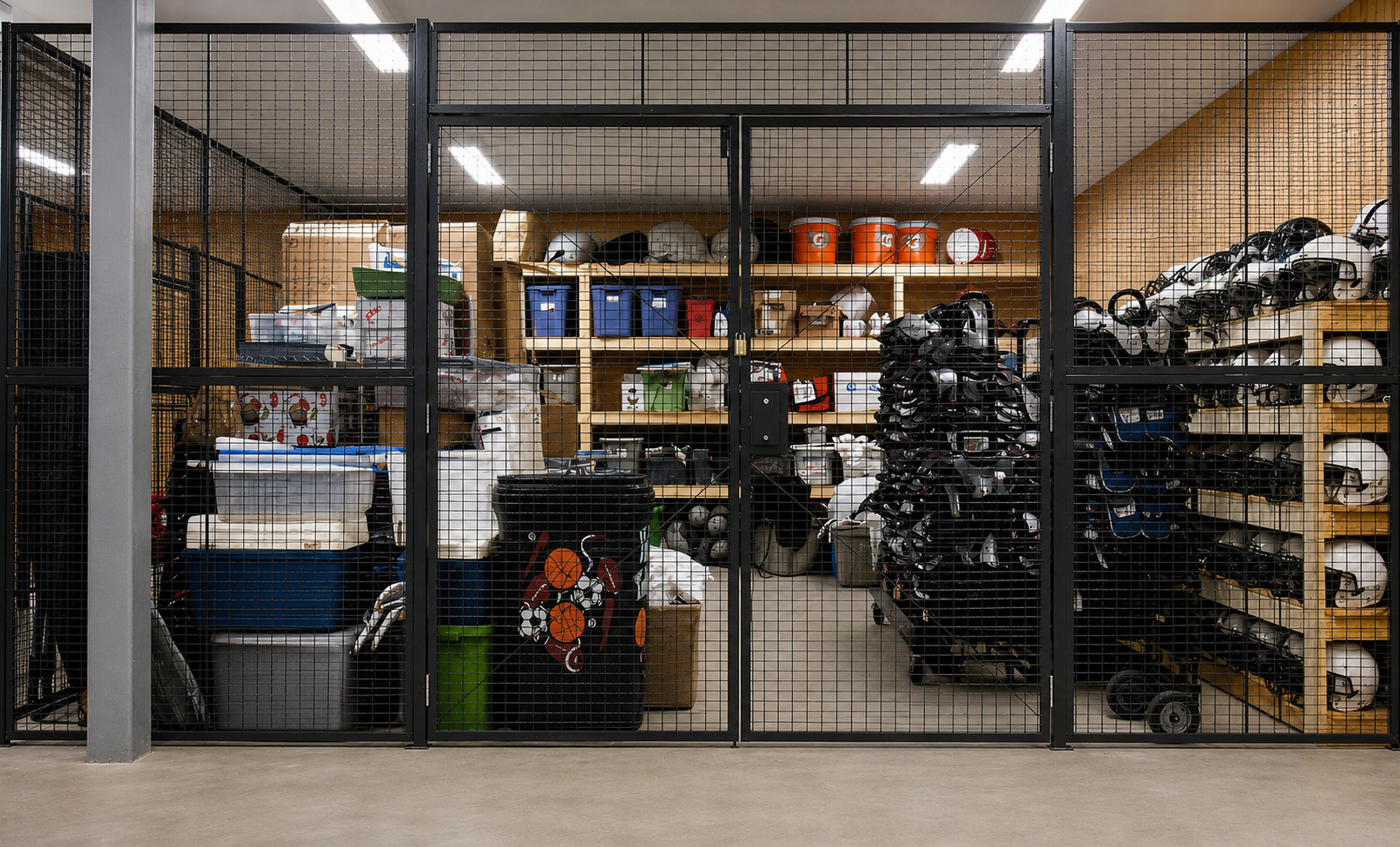
Athletic equipment takes up a lot of room. Football pads, helmets, uniforms, baseball bats, balls, tackling dummies, training equipment, and team supplies all need a place to go. Throw everything into one storage room and you’ll spend half your day trying to find it again.
High School & College Athletic Equipment Storage Lockers use wire partitions, lockers, shelving, and cages to create organized storage areas for individual teams, coaches, departments, or equipment categories.
You can build small lockers for balls, gloves, uniforms, and smaller equipment or larger walk-in cages for football pads, helmets, tackling dummies, and bulky training equipment. Light-, medium-, and heavy-duty shelving can be added for heavier items, while wire carts and lockable security carts provide mobile storage.
A standard wire partition storage area can include panels, posts, ceilings, hinged doors, double doors, or sliding doors. Panels can be stacked to create different heights and combined to form rooms in just about any practical configuration.
And yes, appearance matters in an athletic facility. Standard gray works fine, but custom colors can be used where you want storage cages to coordinate with school or team colors.
The result is a storage room where every team can have its own secure area and equipment managers can actually find what they’re looking for.
Cannabis inventory needs security, visibility, organization, and controlled access. Wire and steel security cages provide a way to create dedicated storage areas without completely closing inventory behind solid walls.
A Cannabis Cage can be configured using steel posts and wire mesh panels anchored to the floor. Depending on the application and surrounding construction, ceiling panels or other top security measures can be incorporated to help prevent unauthorized entry from above. Systems can also be designed around existing walls.
The open mesh construction provides visibility while allowing light and air to move through the secured area. That makes it easier to monitor inventory without giving unrestricted access to it.
Doors and locking hardware are another major part of the design. Self-closing and self-locking configurations can be incorporated where required, along with different lock and access-control options.
When a cage is being specified for regulated cannabis or controlled-substance storage, don’t assume that simply installing wire mesh makes the area compliant. Physical security requirements depend on the operation, substances being stored, applicable regulations, and installation. The cage and locking system should be designed around the specific requirements that apply to the facility.
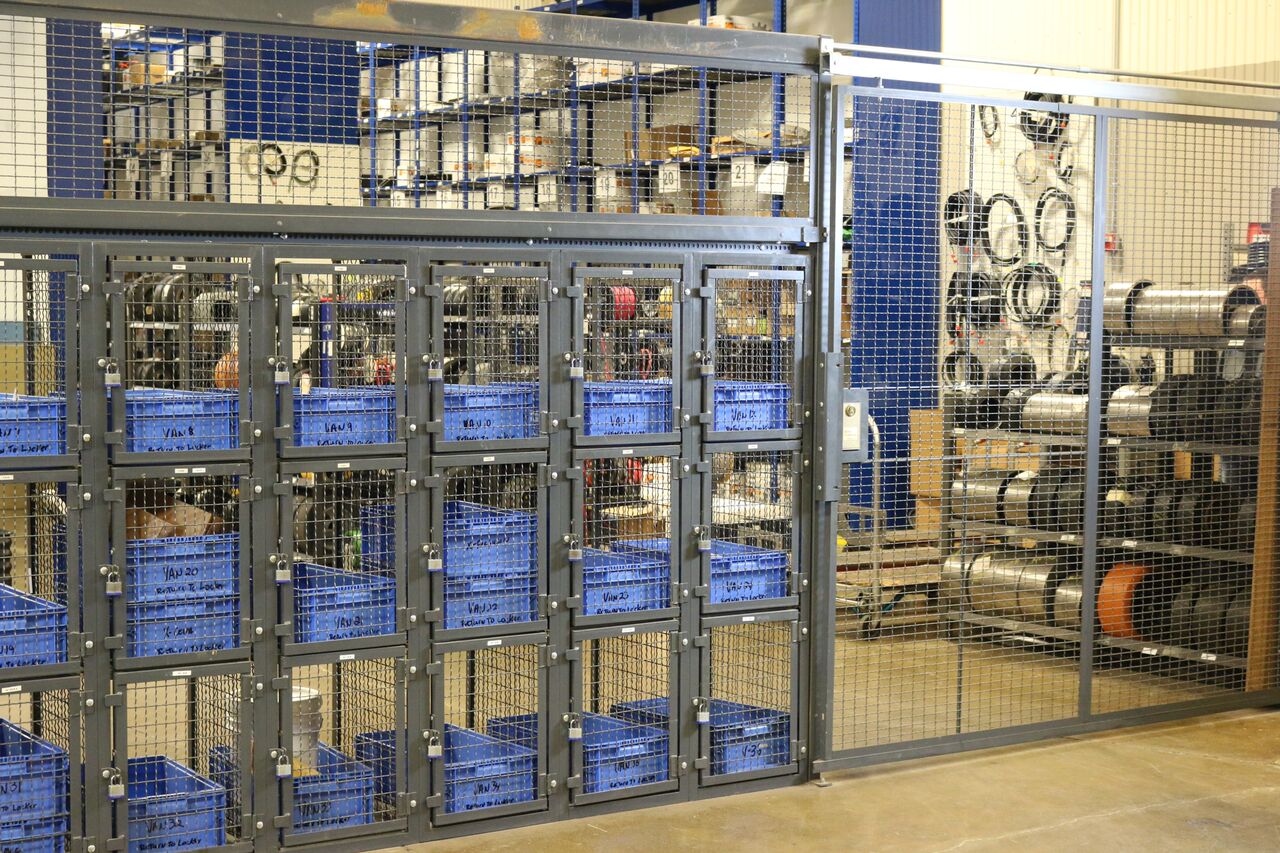
Mechanic & Technician Lockers are all about control. Who gets what parts? Who picked up that tool? Where did those supplies go?
These systems combine a larger wire partition security cage with individual wire mesh lockers. Inventory managers or parts personnel work from the secured side of the cage and load each technician’s assigned locker from the inside. The mechanic or technician then retrieves those items from the outside through his or her individual locked compartment.
It’s a simple idea that can solve a big inventory problem.
Parts, tools, and supplies remain inside the controlled cage until they’re assigned to a specific person. Technicians don’t need unrestricted access to the entire stockroom, and the inventory manager has a much better idea of what’s going out the door.
Systems can also incorporate plastic storage totes, shelving, and other organizational equipment to create a complete parts and equipment room.
Mechanic and Technician Lockers are especially useful for auto service operations, HVAC companies, electrical contractors, plumbing companies, cable companies, forklift service organizations, warehouses, and distribution centers. Anywhere you’ve got multiple technicians pulling parts and supplies, individual lockers can make life easier.
If nobody knows where the tools are, you’ve got a problem. If everybody has unrestricted access to them, you may have an even bigger problem.
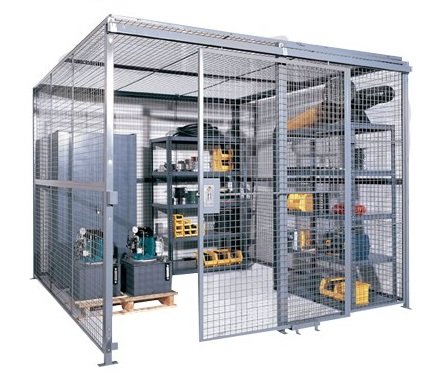
Wire Tool Cribs & Equipment Cages create a centralized, secured location for tools, equipment, replacement parts, and supplies. The wire mesh enclosure controls access while keeping the contents visible from outside the cage.
That visibility makes inventory easier to manage. Employees can see whether a tool is available without digging through cabinets, and supervisors can spot missing equipment more quickly.
Locking options allow access to be limited to authorized employees. That’s especially important when you’re storing expensive equipment or tools that could be dangerous in the wrong hands.
Wire tool cribs can be configured around the space you already have instead of forcing your operation into a one-size-fits-all storage room. Add shelving, counters, service windows, gates, or other components and you’ve got an organized equipment center instead of a pile of tools in the corner.
You can spend a fortune protecting a network electronically, but somebody still has to protect the physical servers.
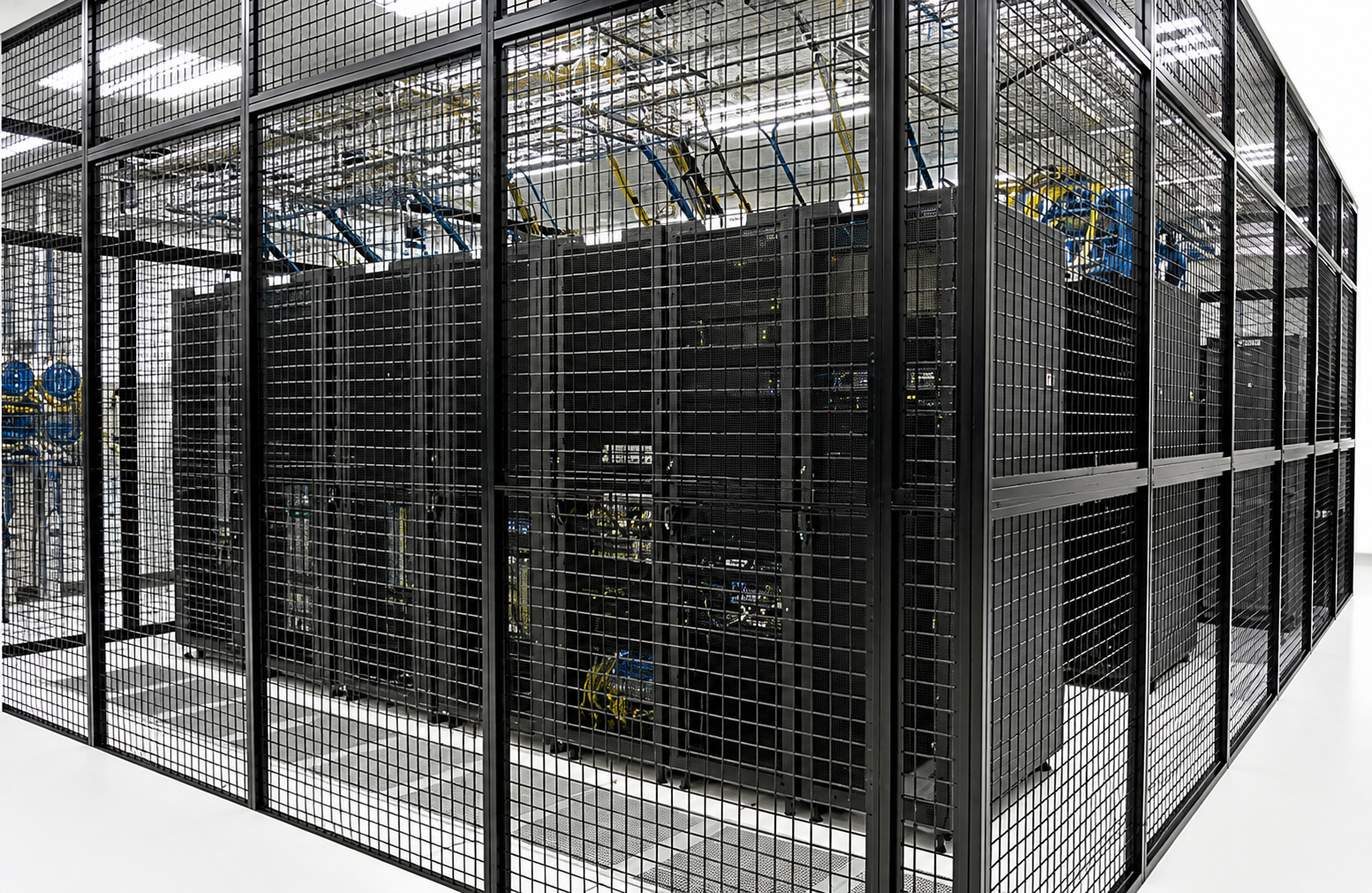
AI Data Center Computer Server Wire Security Cages create restricted areas around servers, networking equipment, storage hardware, and other critical infrastructure. They’re particularly useful in colocation and shared data center environments where different customers or departments may have equipment in the same building.
Steel wire mesh creates a strong physical barrier while maintaining airflow around heat-generating equipment. That’s a major advantage over building another solid room inside the data center.
Cages can be configured with hinged or sliding doors, optional ceilings, and different locking systems. Depending on the security design, access control can range from conventional keyed hardware to electronic or biometric systems.
Another advantage is flexibility. As equipment layouts change, modular wire cages can often be expanded or reconfigured more easily than permanent walls. In a data center where tomorrow’s layout may look very different from today’s, that’s important.
Evidence needs controlled access. Period.
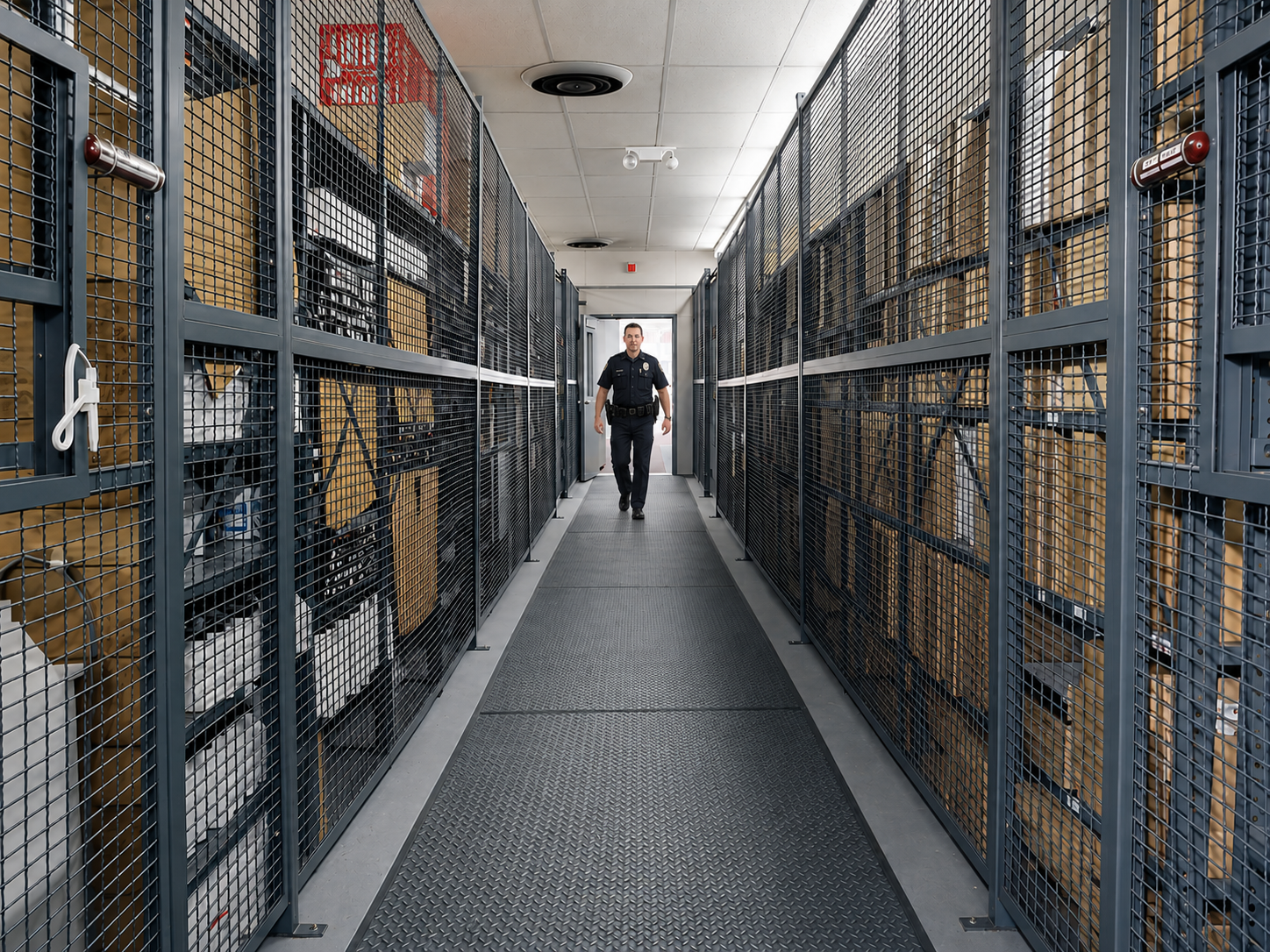
Police Department Wire Evidence Lockers, Enclosures & Cages create secure storage areas where departments can organize evidence while limiting access to authorized personnel.
Wire mesh lockers can be installed within an existing room or combined with partition panels to create an entirely enclosed evidence area. Depending on the layout, the system can include wall panels, ceiling panels, shelving, doors, lockers, and even service windows for controlled evidence check-in and check-out.
Heavy-gauge steel wire construction provides security while maintaining visibility into the storage area. The open design also allows existing lighting and ventilation to reach the enclosure.
Every evidence facility has different procedures, chain-of-custody requirements, and security policies, so the enclosure should be designed around the department’s actual workflow. The goal isn’t simply to put evidence behind a fence. It’s to create a storage system that supports controlled access and accountability.
Police Department Temporary Wire Holding Cells & Detention Cages
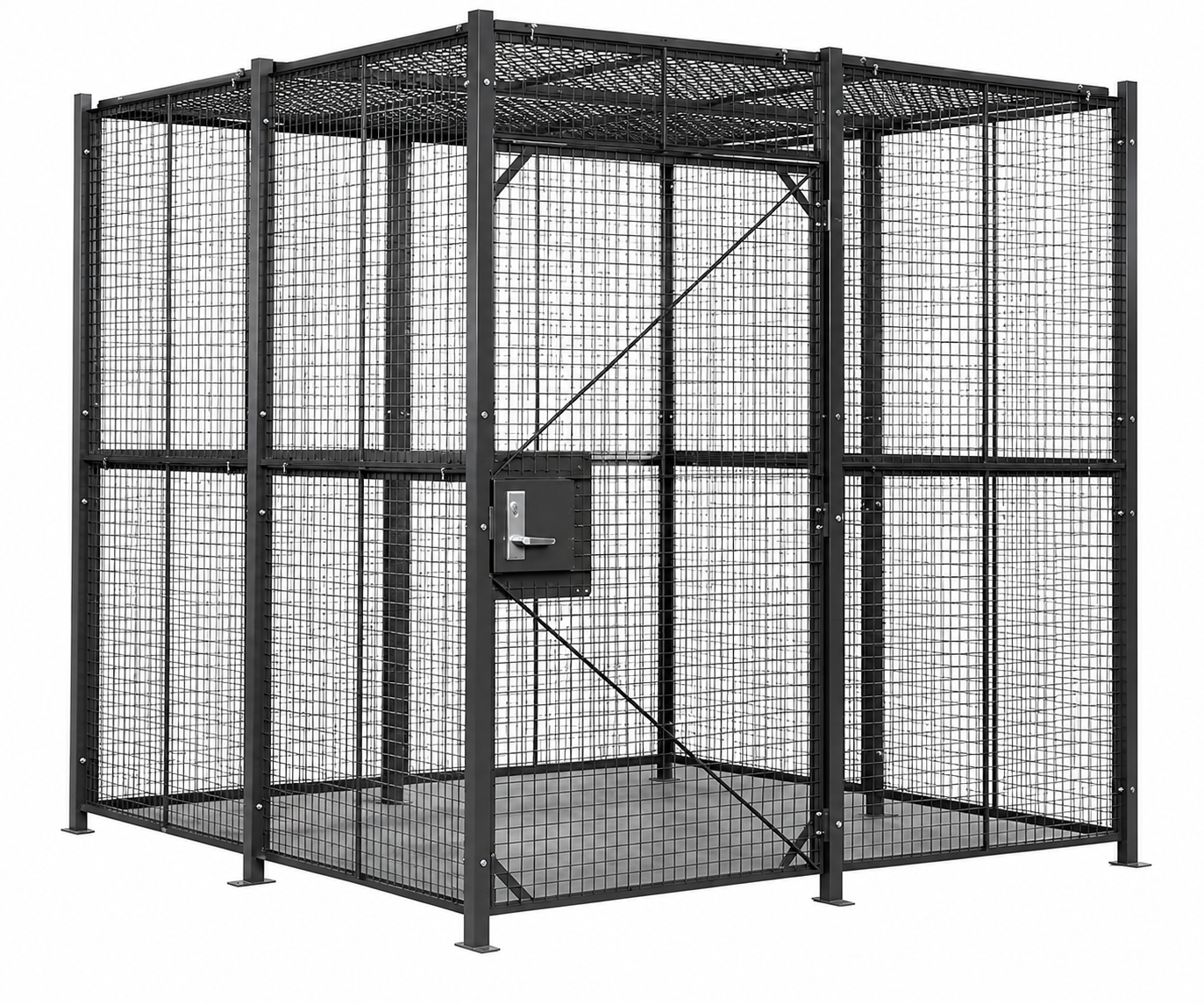
Temporary detention areas need security, durability, and visibility. Wire Holding Cells and Detention Cages provide all three while allowing police departments and other facilities to create enclosed holding areas without conventional permanent wall construction.
Steel panels, doors, ceilings, and locking components can be combined into customized temporary holding areas. The open wire construction gives personnel better visibility into the enclosure, making it easier to monitor activity from outside.
Wire construction also permits airflow through the enclosure instead of completely isolating the space from the surrounding environment.
Depending on the application, detention cages can incorporate hinged or sliding doors, benches, handcuff rails, specialized locks, and other security components.
Temporary detention is a specialized application, so the complete enclosure, anchoring, hardware, clearances, accessibility, and operational requirements should be reviewed against the standards and requirements that apply to the facility. This isn’t an application where you want to guess.
DEA Approved Wire Security Cages for Pharmaceutical & Cannabis Industries
Controlled substances require controlled storage.
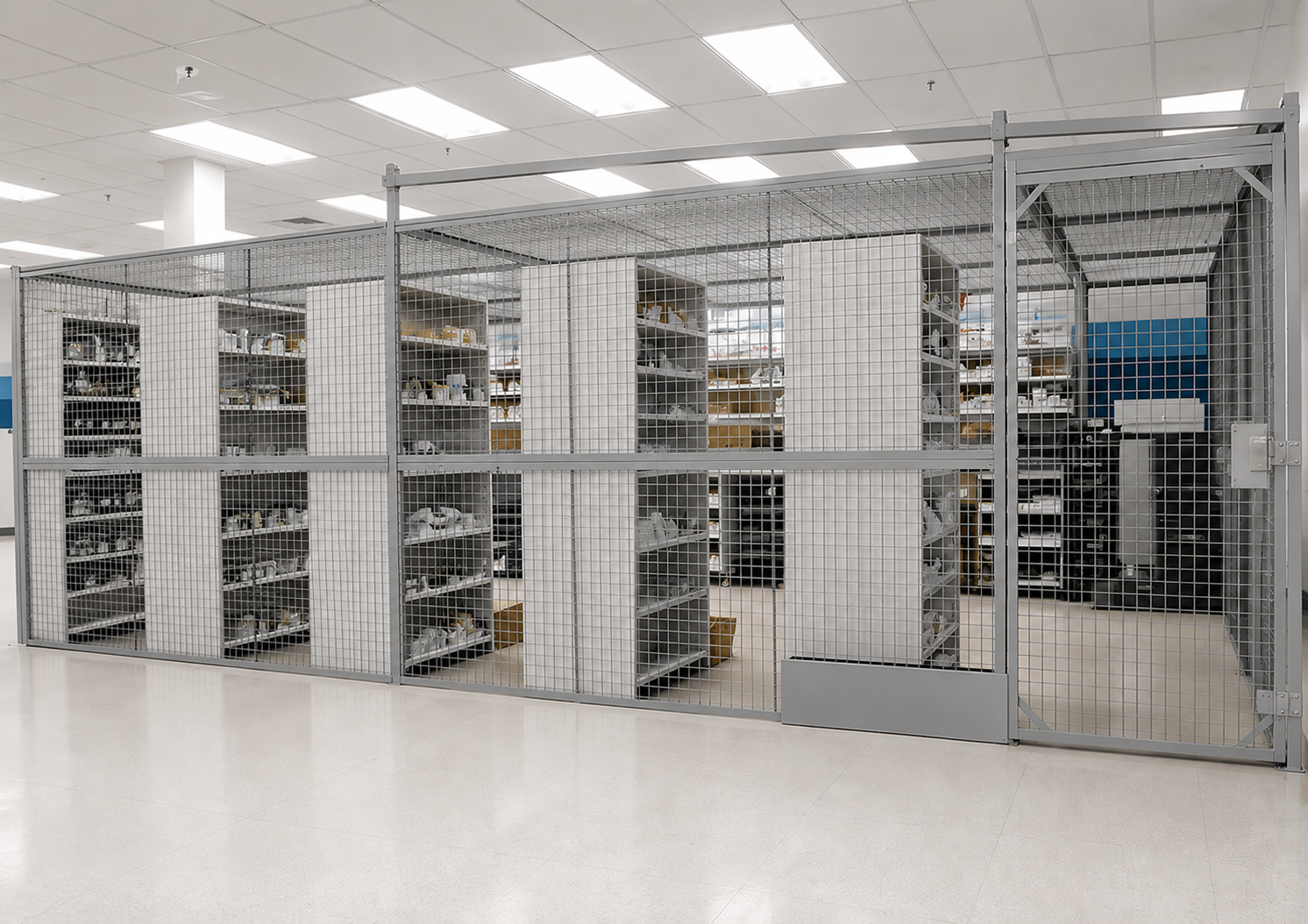
Wire Security Cages for pharmaceutical, healthcare, cannabis, and other regulated operations use steel posts, wire mesh panels, doors, ceilings, and specialized locking hardware to create restricted storage areas within larger facilities.
The open wire design provides visibility and ventilation without giving unrestricted access to inventory. That’s particularly useful for facilities where products have environmental storage requirements or employees need to visually monitor inventory without entering the cage.
Wire enclosures can be configured in different widths, lengths, and heights to work around existing buildings and storage layouts. They can also incorporate controlled-access doors and appropriate locking hardware.
Certain properly designed and installed wire mesh systems may be configured for controlled-substance storage requirements, including applications involving DEA physical security controls. But the details matter. The substances being stored, schedule, locking hardware, panel construction, ceiling, anchoring, access procedures, and installation can all affect the requirements.
If you’re building a pharmaceutical or cannabis security cage, start with the applicable regulatory requirements and design the enclosure around them. Don’t buy a generic cage first and hope it qualifies later.
Shipping and receiving areas can be surprisingly difficult to control. Drivers, vendors, contractors, service personnel, and visitors arrive throughout the day, often right next to active forklift traffic.
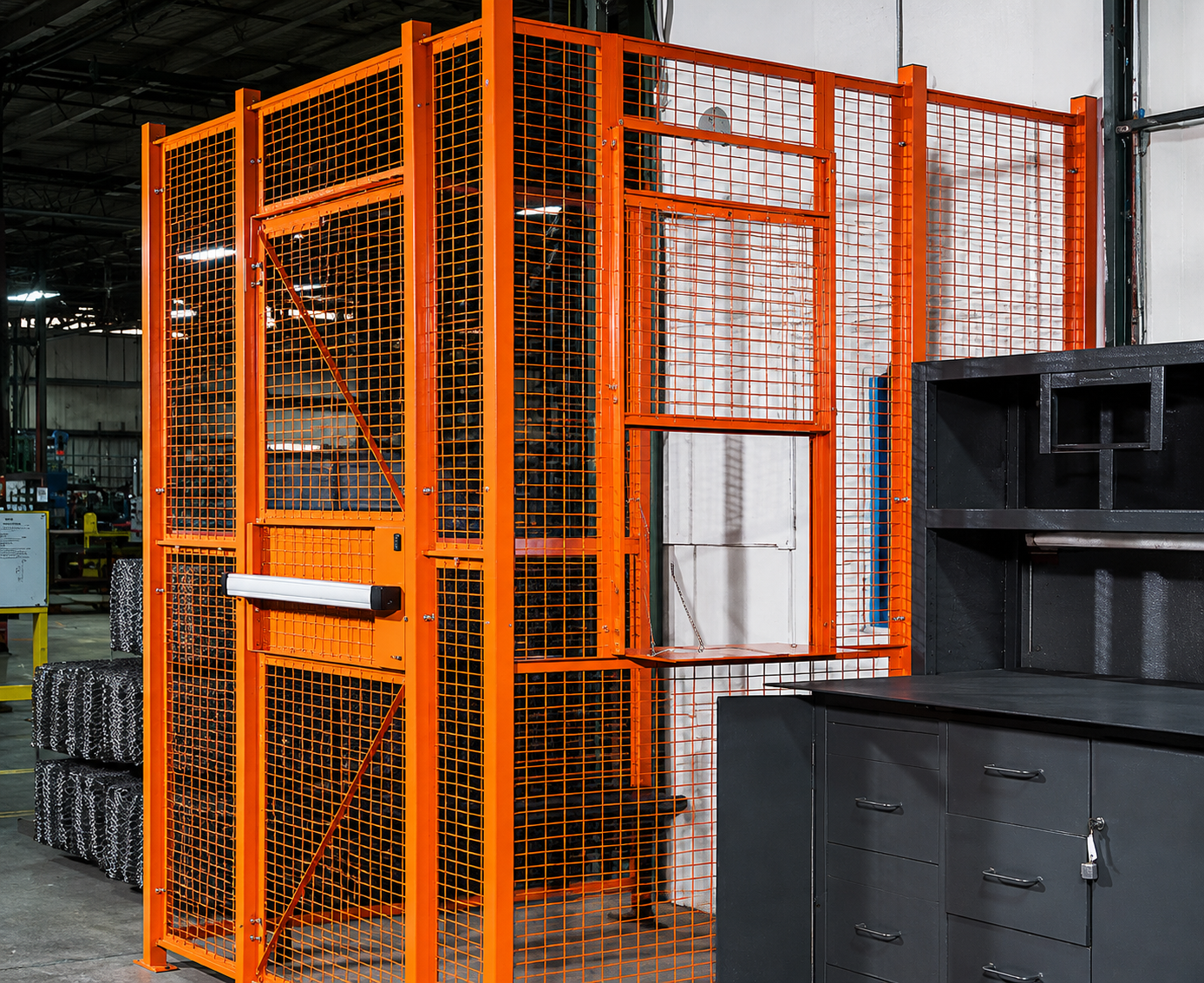
Driver Entry & Building Access Security Check Point Cages solve that problem by creating a controlled area immediately inside the building.
A typical driver cage uses wire mesh security partitions with a hinged access door, push-bar hardware, service window, and shelf where drivers can sign paperwork, exchange documents, or wait for instructions. Instead of allowing visitors to walk directly onto the warehouse floor, you give them a clearly defined place to stop.
That protects inventory, but more importantly, it separates visitors from forklifts and active material handling areas.
Wire mesh is ideal for the application because employees can see who’s inside the cage and communicate through the enclosure without opening unrestricted access to the facility. For busy warehouses and distribution centers, it’s a simple way to put some control back into the shipping and receiving entrance.
Wire Industrial Storage Lockers can secure employee belongings, tools, supplies, uniforms, equipment, and other workplace items while keeping everything visible.
That’s the beauty of wire lockers. You get restricted access without creating a dark metal box where nobody can see what’s inside.
The open mesh design allows existing lighting and ventilation to pass through the locker. Supervisors can quickly see whether equipment is present, and employees have a designated place to store personal belongings instead of leaving bags, clothing, or supplies on the floor.
Keeping items off the floor isn’t just about appearance. A cleaner work area can reduce clutter around machinery, aisles, and workstations.
Wire lockers can be arranged individually or in banks and customized around the available space. Different sizes, doors, shelves, and locking options make them useful in warehouses, factories, maintenance departments, distribution centers, and other industrial facilities.
That unused basement or storage room in an apartment building? It could be valuable tenant storage space.
Wire Tenant Storage Lockers divide larger areas into individual secure compartments for residents. The modular design allows lockers to be installed individually or grouped together to create rows of private storage areas.
The wire mesh construction is especially useful in shared storage rooms because it provides visibility, ventilation, and access to existing lighting. Unlike completely enclosed lockers, air can circulate around stored belongings instead of trapping everything inside a damp compartment.
Tenant lockers aren’t limited to apartments, either. The same concept works in offices, warehouses, factories, and employee areas where people need individual secured storage.
They’re also a great organizational tool. Assign every resident or employee a defined storage area and suddenly the basement, equipment room, or locker area becomes much easier to manage.
Wire Partition Robot & Machine Guarding | Machine Guards
Robots are great at doing repetitive work. They’re not so great at knowing when somebody has wandered too close.
Wire Partition Robot and Machine Guarding creates a physical barrier between employees and automated machinery. The same fencing can also help protect expensive machinery from forklifts and other material handling equipment.
Typical systems use steel posts and welded wire mesh panels positioned around robots, presses, automated pallet handling systems, conveyors, carousels, AS/RS equipment, and other machinery. Hinged or sliding access doors can be incorporated where authorized employees need to enter the guarded area.
The open wire design is a big advantage because employees can see the machinery while remaining separated from the hazard area. Bright safety finishes can make the barrier even easier to identify.
Machine guarding should be designed around the actual hazard. Required barrier heights, openings, distances from pinch points, access controls, interlocks, and other safeguards depend on the machine and applicable safety requirements. Wire fencing is a very useful physical barrier, but the complete guarding system needs to be designed around the equipment and its risk assessment.
The good news is that modular wire guarding can usually be installed with much less disruption than permanent construction. When the production layout changes, the fencing can often change with it.
Want to turn an existing pallet rack bay into a security cage? Add wire panels and gates.
Pallet Rack Gates can be combined with wire mesh back panels, side panels, top panels, and lockable doors to create secure storage directly within a pallet rack system. That means you can protect high-value or restricted inventory without giving up the vertical storage capacity you already have.
Hinged doors work well where sufficient aisle clearance is available. Sliding gates are a good alternative when you don’t want doors swinging out into the aisle. Depending on the system, sliding gates can be configured for openings ranging from standard rack bays to much larger enclosures.
Padlock lugs and other locking options allow access to be controlled.
Another advantage is modularity. Existing rack doesn’t necessarily need to be torn down or replaced. Panels and doors can be attached to compatible rack configurations to create an enclosure around a selected bay or section.
It’s a simple idea: you’ve already got the rack. Use it as the framework for secured storage.
Pallet Rack Guard | RackBack | Rack Backing all address the same basic warehouse problem: stuff falling off the back of the rack.
Stackable welded wire mesh panels attach behind selective pallet rack to create a protective barrier. Spacer brackets can provide clearance for pallet overhang, while extension supports can continue protection above the top rack level where required.
The open wire mesh design keeps inventory visible while helping prevent boxes and other stored products from entering the aisle behind the rack. Side panels and swinging gates can also be incorporated when the application calls for a more complete enclosure.
Rack backing is particularly useful where pallet rack borders pedestrian aisles, work areas, retail spaces, equipment, or other locations where falling inventory could create a serious problem.
Wire rack guard also has practical advantages over flexible netting in many applications. Steel panels are rigid, easy to see, and can be removed and reconfigured when the rack layout changes. There’s no complicated pulley arrangement or tensioning system to deal with.
It’s affordable protection for a very simple risk. If you don’t want inventory falling into the aisle, put something substantial behind the rack to stop it.
Frequently Asked Questions About Wire Partition Applications
How do I design a wire partition system for my facility?
Start with the purpose of the enclosure. Are you preventing falling inventory, restricting employee access, protecting machinery, securing tools, storing controlled products, or creating individual lockers?
Then measure the space and identify walls, columns, doors, pallet rack, machinery, sprinklers, utilities, and anything else that could affect the layout. Determine the required height, panel configuration, ceiling requirements, door type, and locking method.
Think about traffic, too. A hinged door might be perfect in a large storage room but annoying in a narrow aisle. A sliding gate can provide the same access without consuming valuable swing space.
The best wire partition isn’t necessarily the biggest cage you can fit into the room. It’s the one designed around how people and products actually move through the facility.
Are wire partitions easy to install and reconfigure?
That’s one of their biggest advantages. Modular systems generally use panels attached to steel posts, with the posts anchored according to the system’s installation requirements. Panels can be stacked or combined to create different enclosure heights and layouts.
Because the system is modular, it’s generally easier to modify than permanent wall construction. Doors can be relocated, additional panels can be added, and entire enclosures can potentially be expanded or reconfigured when operations change.
For specialized applications such as machine guarding, detention areas, or regulated security cages, professional installation may be appropriate because anchoring, clearances, hardware, and other details can be critical.
What maintenance do wire partitions require?
Not much, but don’t ignore them. Periodically inspect posts, panels, doors, hinges, tracks, anchors, locks, brackets, and other hardware. Look for loose floor anchors, bent mesh, damaged welds, misaligned gates, worn rollers, broken locking components, or damage caused by forklifts and other equipment.
Rack backing should also be checked for panels or brackets that have been damaged by pallets. Machine guarding needs particular attention because a damaged panel or gate can affect the integrity of the guarded area.
Fix problems when they’re small. A loose hinge is a lot easier to deal with than a gate hanging off the enclosure.
What codes or requirements apply to wire partitions and security cages?
That depends entirely on the application. A basic tool crib has very different requirements from a robot guard, evidence enclosure, detention cage, data center cage, or controlled-substance storage area.
Depending on the use, requirements may involve workplace safety, machine guarding, fire protection, emergency egress, accessibility, building codes, controlled-substance security, locking hardware, clearances, or facility-specific security procedures.
For specialized applications, don’t assume that buying a product described as a “security cage” automatically makes the finished installation compliant. Start with the requirements that apply to your operation, then select the panel construction, dimensions, doors, ceilings, locks, anchoring, and other components needed to satisfy those requirements.




