Stack Rack Applications
Stack Racks are portable steel storage racks designed to store, stack, transport, and protect products that are difficult to handle with conventional pallet rack or floor storage. A typical stack rack combines a heavy-duty steel base with corner sockets, removable posts or side frames, stacking targets, and forklift access, with decking, runners, cradles, casters, fork stirrups, or containment features added for specific products. Their biggest advantage is flexibility. Stack racks can create vertical storage without permanently anchoring a rack system to the floor, move loaded products through a facility, serve as reusable shipping racks, and knock down when empty. From sheet metal and steel coils to mattresses, windows, lumber, bulk bags, tires, pipe, fabric rolls, and furniture, stack racks let you design the storage around the product instead of forcing the product into a standard rack.
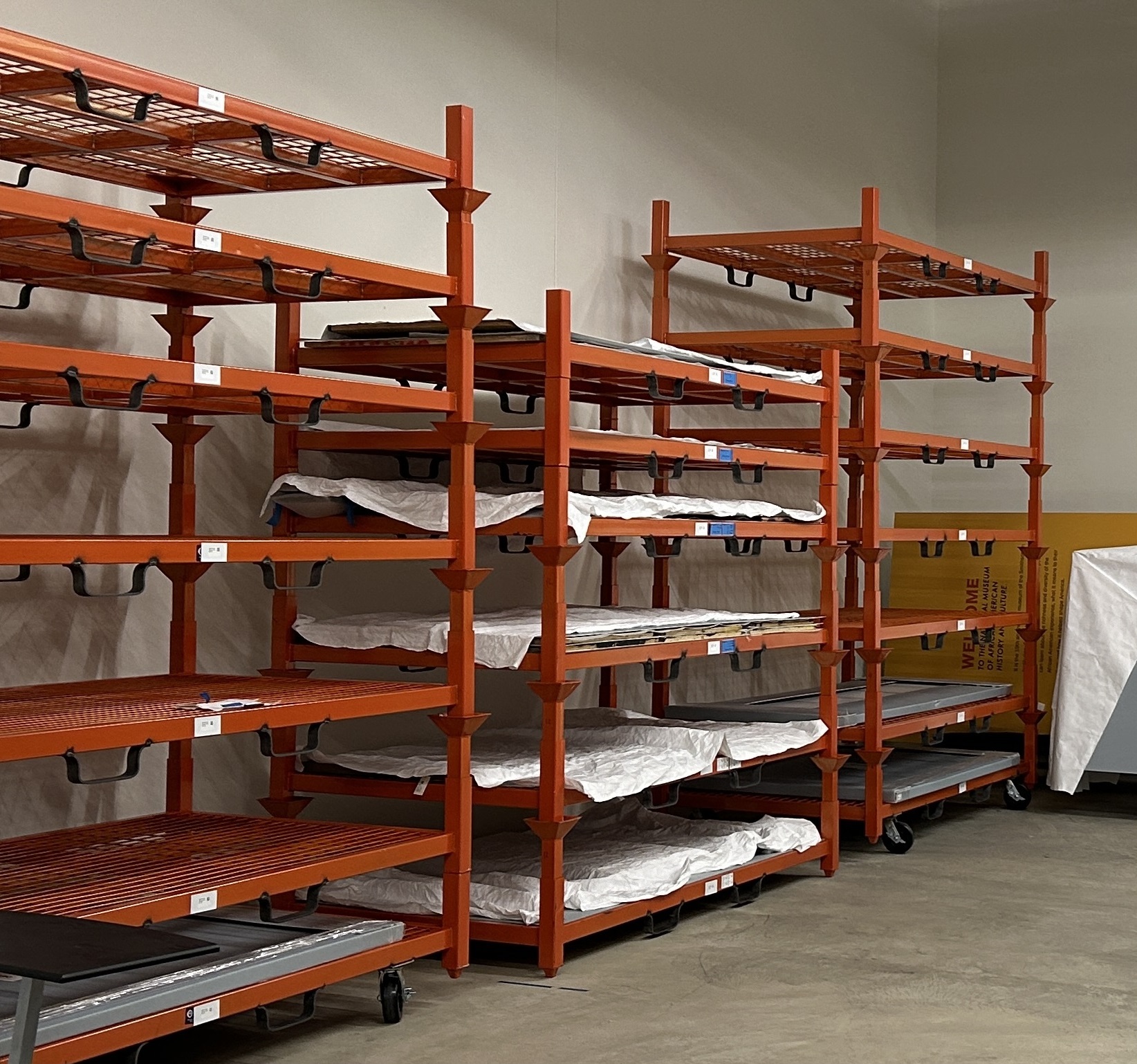
Stack Racks for Sheet Goods Storage provide a simple way to organize plywood, metal sheets, panels, and other flat materials. Instead of leaving sheets in floor-level piles, stack racks separate loads and allow compatible racks to use vertical warehouse space.
Standard models provide an economical starting point and can include wire mesh decking for continuous support and product visibility. When standard dimensions won’t work, custom racks can be manufactured around the sheet size, weight, and handling requirements. Fork stirrups, risers, and alternative decking can also be added where the application calls for them.
Showing all 29 resultsSorted by latest
48″ Wide x 144″ Long x 45.25″ High PIPE & HOSE TRANSPORT STACK RACK WITH FORK STIRRUPS ON ALL 4-SIDES
Stack Racks for Sheet Goods Storage
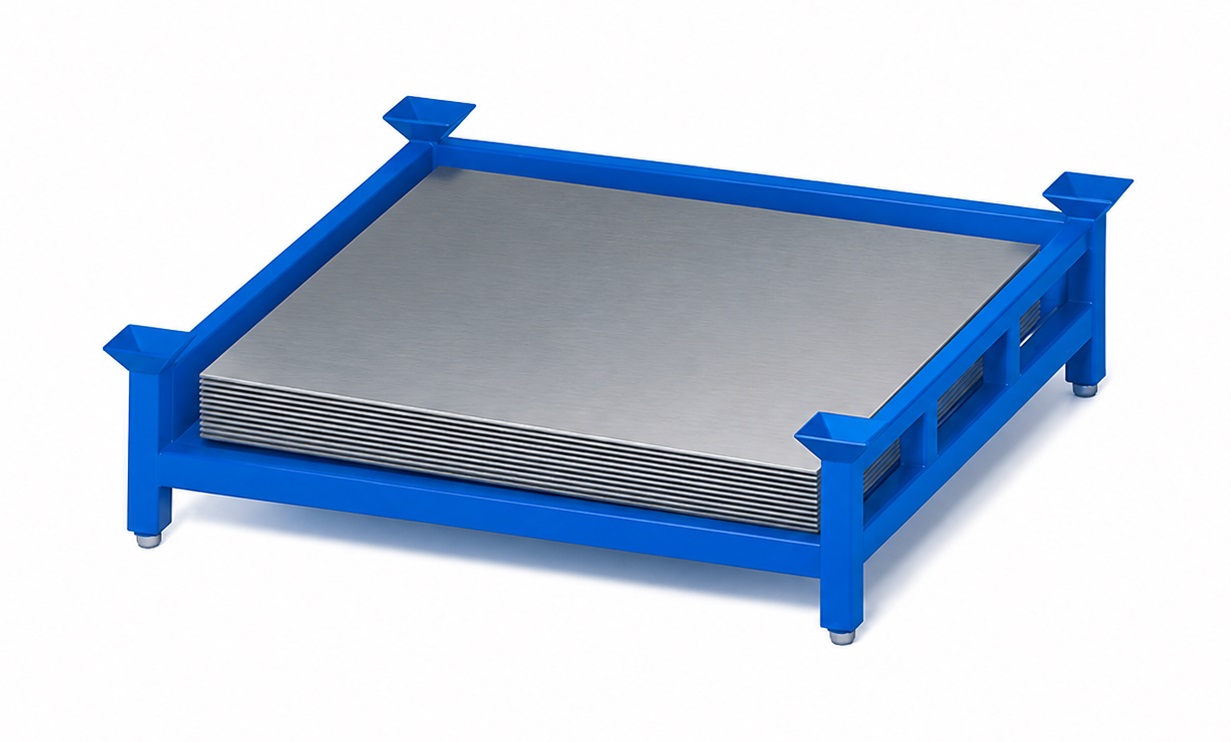
Sheet Metal Stack Rack with Side Walls
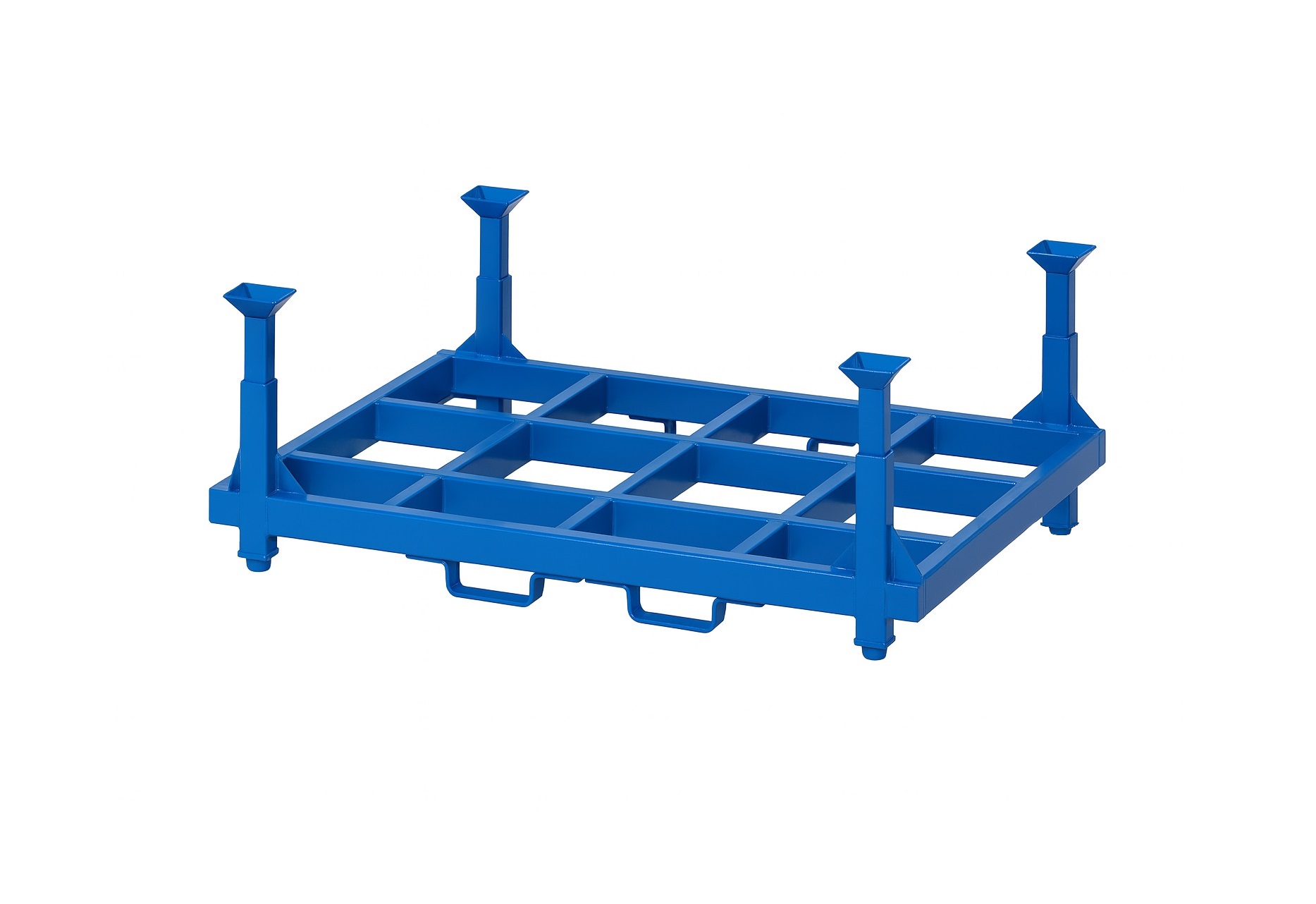
Heavy-Duty Sheet Metal Stack Racks
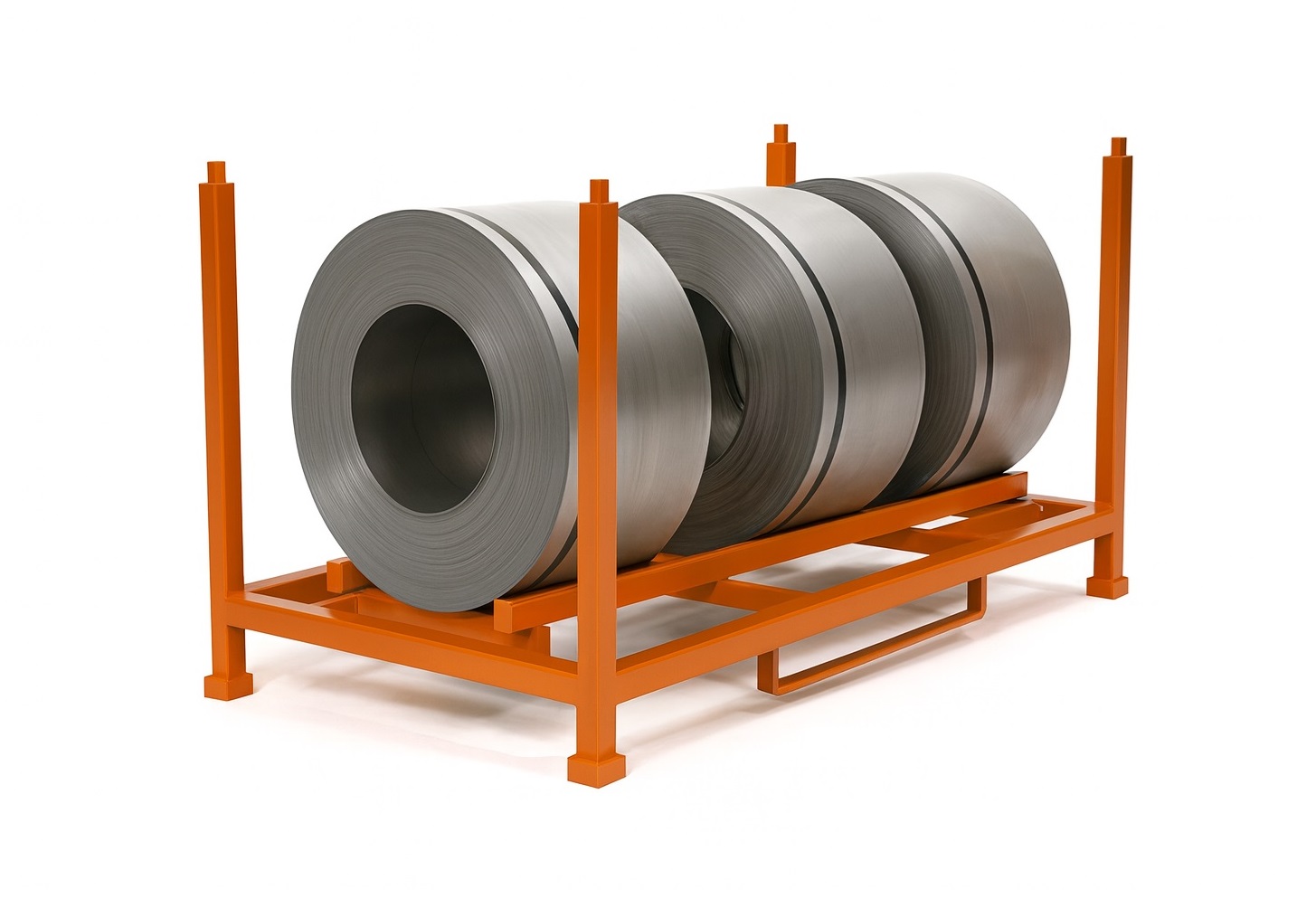
Stackable Coil Pallets | Coil Stack Racks for Steel Coil Storage
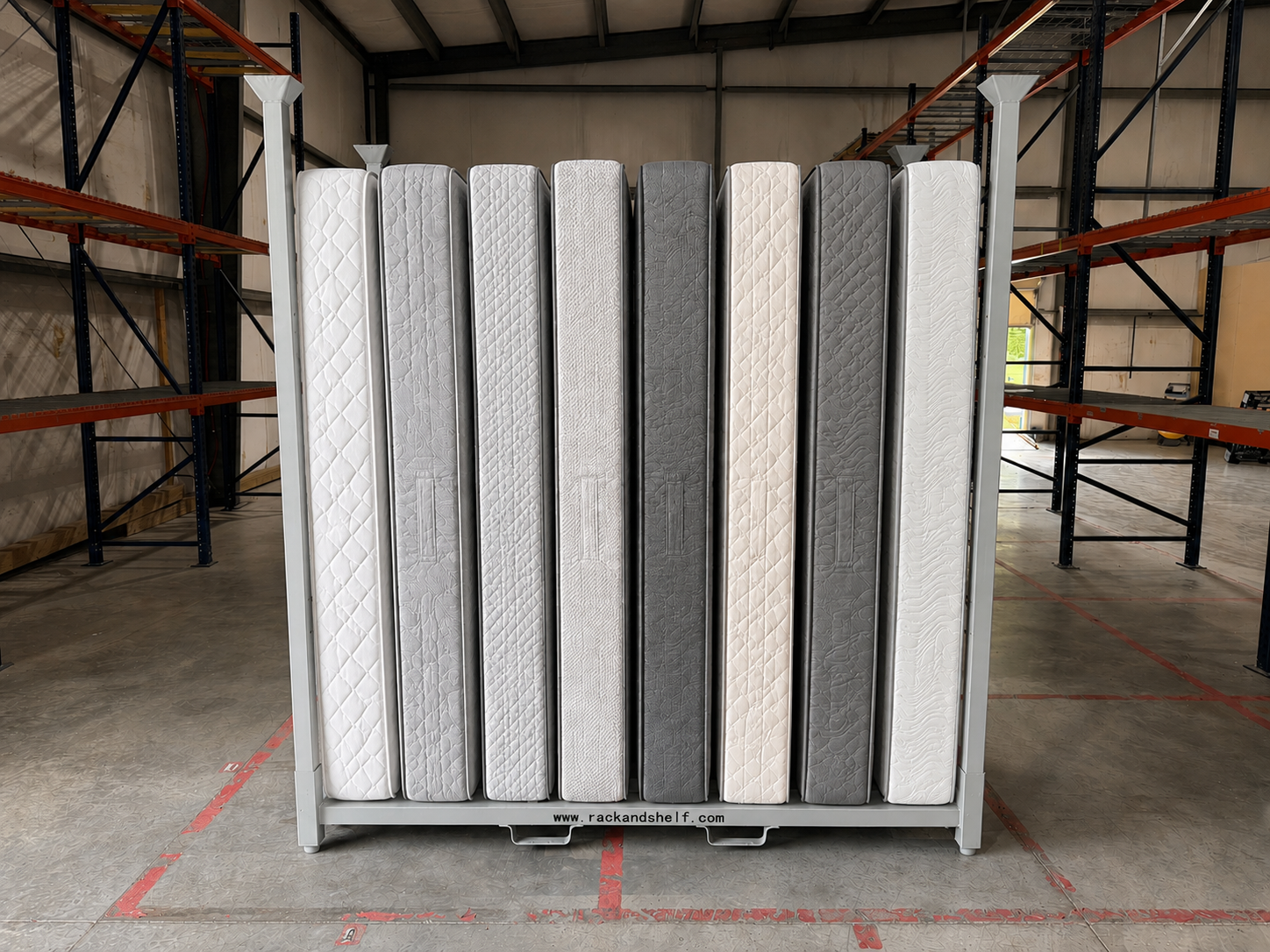
Mattress Stack Racks
Reel Storage Transport Stack Racks
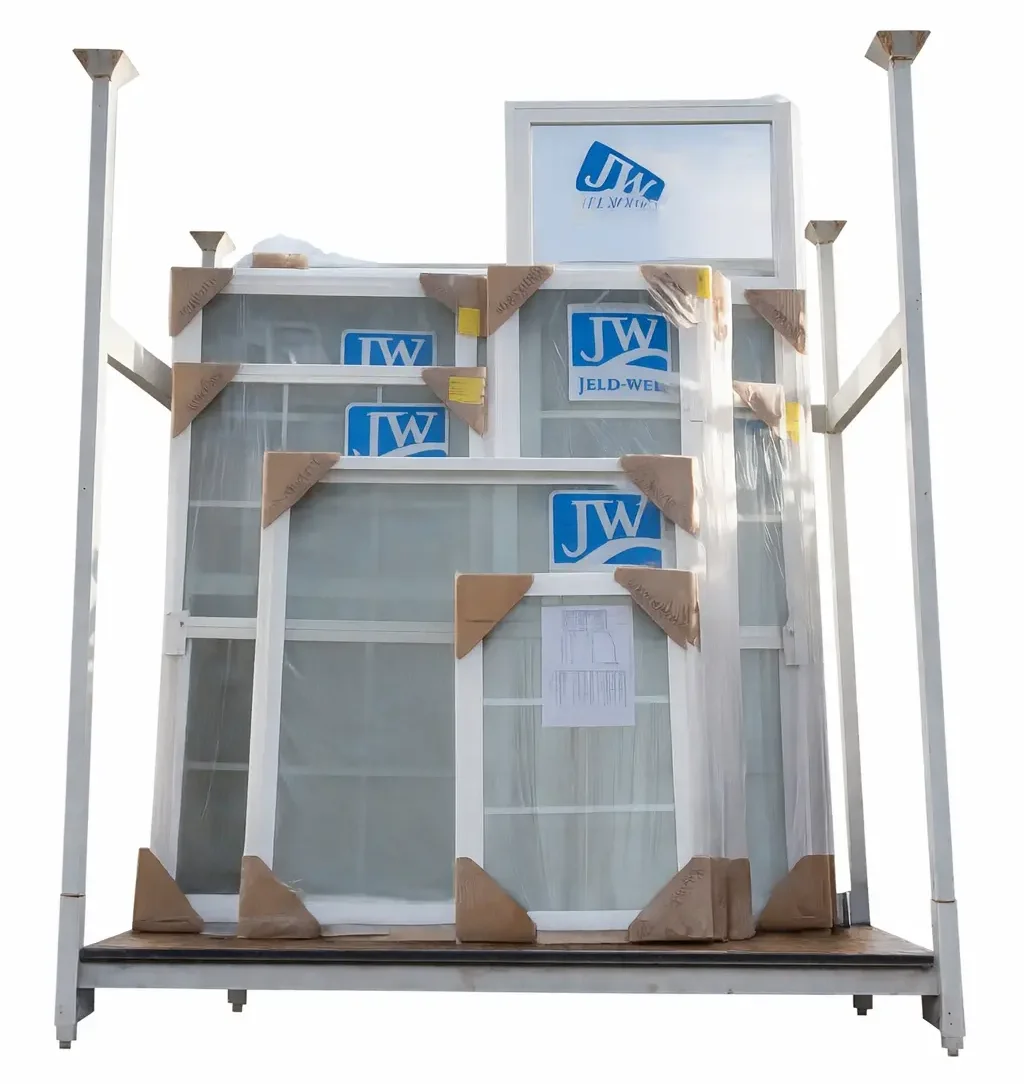
Rackable Window & Door Transport Racks Stored in Pallet Rack
Stackable Window, Door & Millwork Transport Stack Racks
Window, Door & Millwork Transport Stack Rack with Casters
HVAC Duct Pipe & Fittings Storage Stack Racks
Lumber Stack Racks | Stackable Lumber Transport Racks
Slit Coil Stacking Systems | Stackable Slit Coil Storage & Transport Racks
Super Sack Racks for Stacking, Storing & Transporting Bulk Bags
Bulk Bag Racks | Super Sack Storage Racks

Portable Stackable Industrial Hose Storage Racks
Stackable Coin Pallets
Garage Door Stack Rack | Stackable Garage Door Transport Rack
Carpet Roll Pad Rack with Casters
Portable Stackable Carpet Roll Pad Storage Racks
Fabric Roll Stack Racks | Portable, Stackable Textile Roll Storage Racks with Side Frames
Textile & Fabric Roll Stack Racks
Used Automobile, Car, Truck & Motorcycle Tire Stack Racks
Semi Truck Tire Stack Racks
Stackable Tire Racks
Canoe Stack Rack | Kayak Rack | Stacking Transport Racks
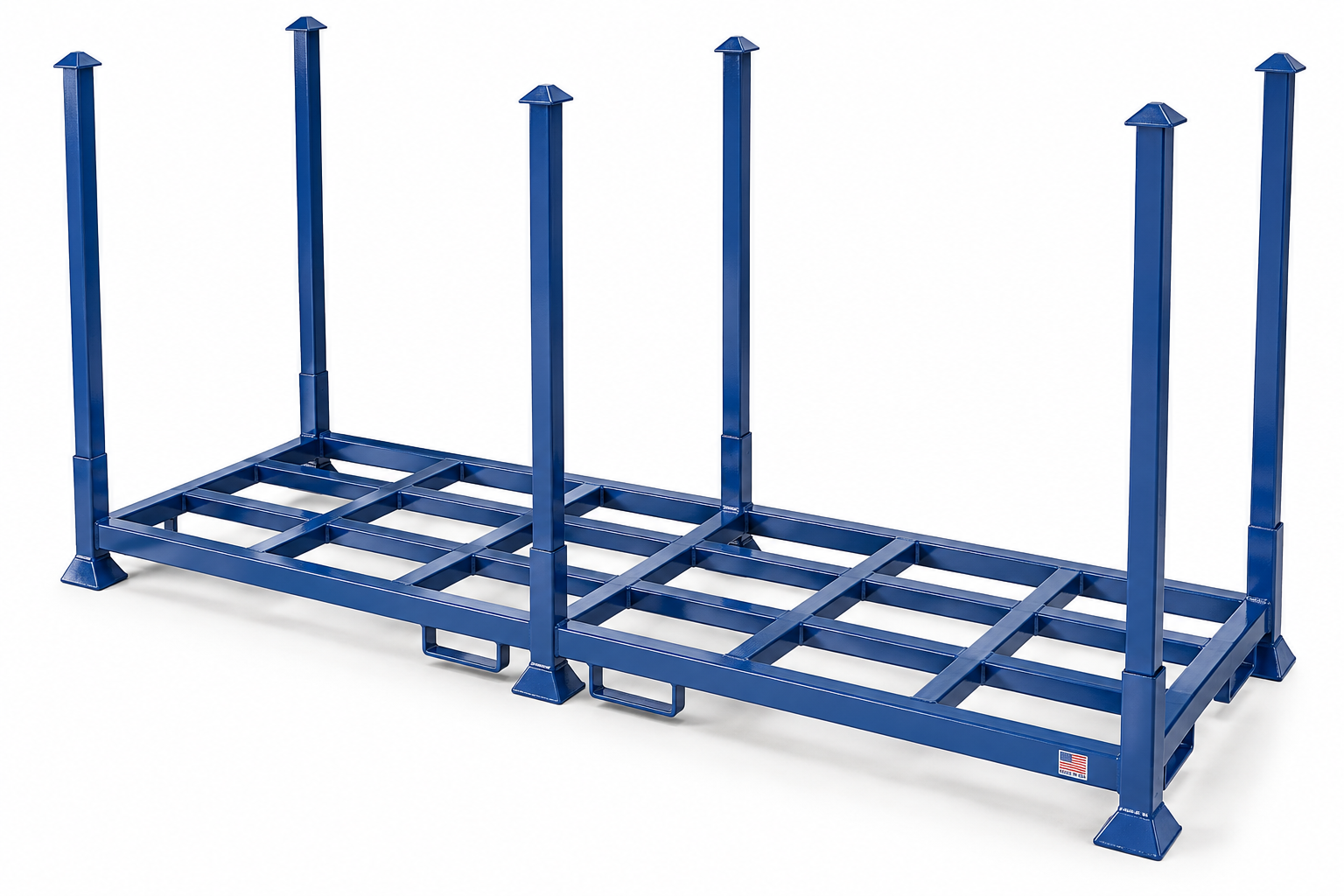
Pipe & Hose Transport Stack Rack with Removable Corner Posts
Portable Pipe Stacking Racks with Side Frames
Furniture Stack Racks
Sheet Metal Stack Rack with Side Walls provide additional containment for flat steel and other sheet goods. Three enclosed sides help keep the material positioned during storage and handling, while an open front gives employees and material-handling equipment direct access for loading and unloading.
These racks can include plywood decking to support the bottom layer and help protect finished sheet material from scratching or bending. Optional risers can provide additional forklift access beneath the load. By stacking compatible racks vertically, manufacturers and fabrication shops can organize sheet inventory while recovering floor space that would otherwise be occupied by bulk-stacked material.
When sheet steel gets heavy, the storage rack needs to be designed accordingly. Heavy-Duty Sheet Metal Stack Racks are portable steel racks built around the dimensions and weight of sheet metal, steel plate, aluminum, and other flat products.
The rack structure distributes the load through its base and feet while corner posts create the vertical stacking structure. Forklift handling lets an entire rack of sheet goods move from storage to production rather than requiring individual sheets or pallets to be repeatedly relocated.
Another advantage is adaptability. When inventory changes, these racks can be moved or, depending on the design, disassembled for compact storage. That makes them particularly useful for manufacturers whose sheet inventory changes with production schedules.
Stackable Coil Pallets | Coil Stack Racks for Steel Coil Storage are designed around a load that you definitely don’t want rolling around the warehouse. Their bases support and contain compatible steel coils while the rack structure allows loaded units to be vertically stacked according to the rated configuration.
Stackable coil racks can help steel processors, manufacturers, and distributors organize coils by size, grade, or production requirement while reducing the floor area devoted to storage. Because they’re portable, coils can also be moved with the rack rather than being transferred between multiple storage devices.
Coil diameter, width, weight, orientation, center of gravity, and required containment are critical design considerations. Some configurations are stackable up to four high, but actual capacity and stacking height should always be based on the specific engineered rack and load.
Mattresses are big, bulky, difficult to handle, and expensive to damage. Mattress Stack Racks provide a portable structure for organizing mattresses vertically throughout a warehouse without relying entirely on fixed storage rack.
Rack dimensions can be designed around twin, full, queen, king, or mixed mattress requirements. Mattress stack racks have capacities up to 2,500 lbs. per rack and configurations stacked three to four high. Those figures are model-specific and should be confirmed for the rack and load being used.
Decking can also be matched to the application. Decking can be plywood or solid steel, while an open support-bar base allows you to install your own decking. That flexibility makes it easier to balance cost, support, and product protection.
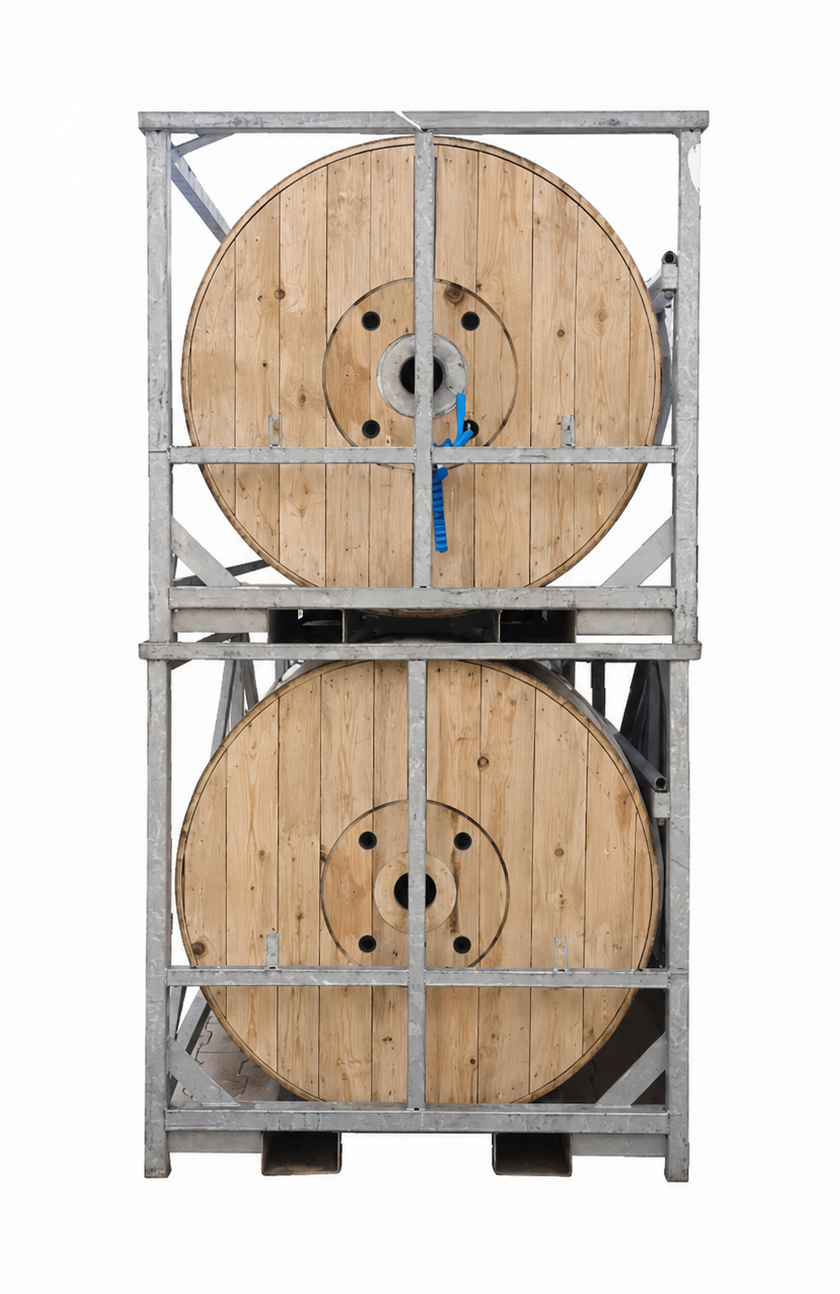
Reel Storage Transport Stack Racks combine a structural base, built-in reel or coil cradles, side frames, and corner stacking posts to store and transport large reels. Instead of letting reels consume floor space one level high, compatible racks can be stacked vertically to increase storage density.
Portability is just as important. A loaded rack can move through the warehouse as a unit, reducing repeated handling of individual reels. These racks are stackable four high and available with a powder-coated finish or optional hot-dip galvanized finish. The actual rack should be designed around reel diameter, width, weight, and handling method.
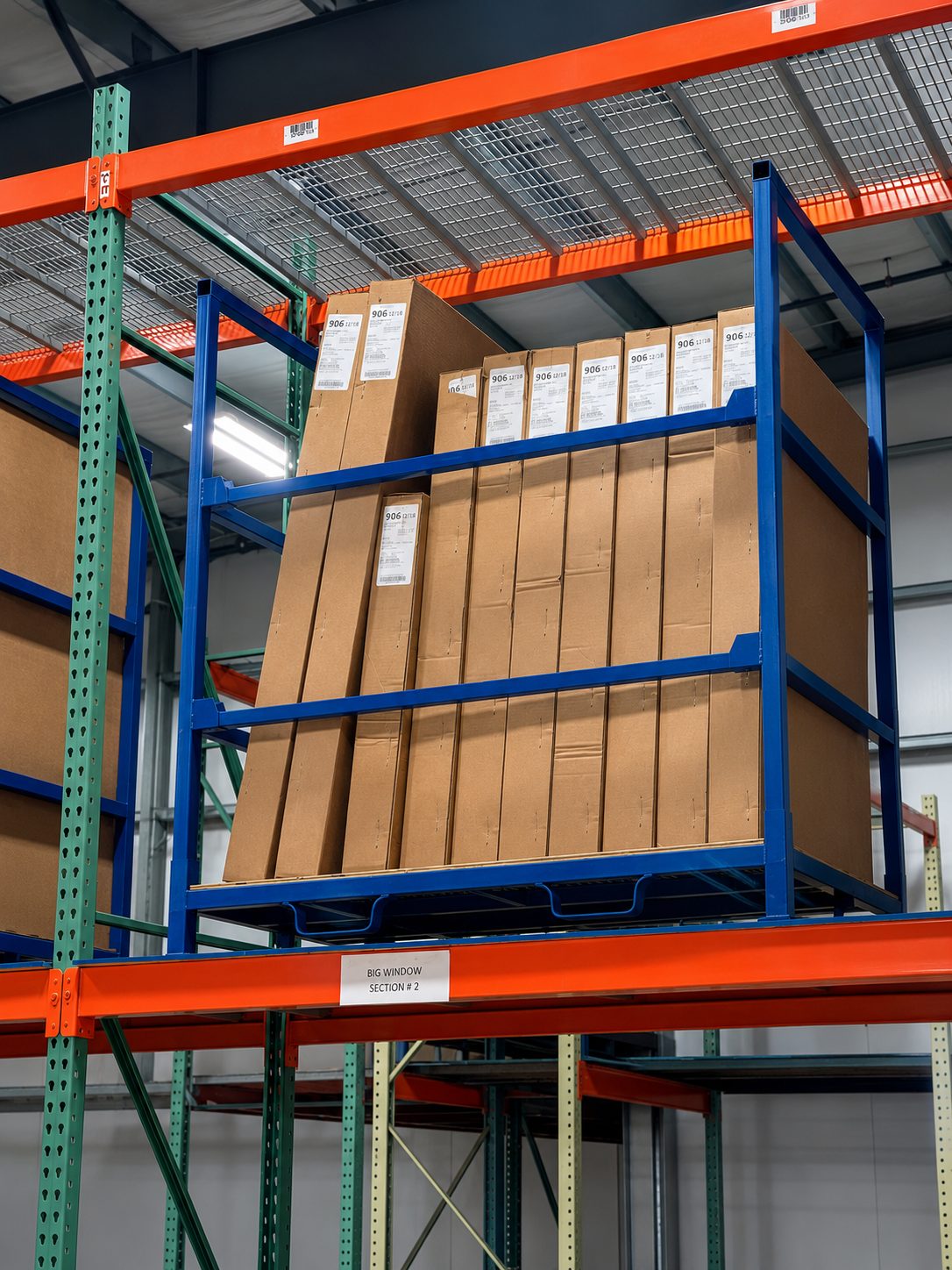
Not every portable window rack needs to stack on another window rack. Rackable Window & Door Transport Racks Stored in Pallet Rack are designed to be handled by forklift and placed directly into compatible pallet rack.
The big difference is underneath. Standard stack-rack feet can create concentrated point loads on pallet rack decking. Rackable window racks replace that arrangement with steel runners that distribute the weight over the supporting surface. The runners can also be designed to extend across the front and rear pallet rack beams so the load is supported where intended.
This approach gives you something stack racks normally don’t provide: direct selectivity. Instead of removing the upper stack racks to reach a rack underneath, a forklift can access an individual window rack from its assigned pallet rack position. Rack capacity, beam spacing, runner dimensions, decking, and load distribution all need to be checked together before putting a portable rack into pallet racking.
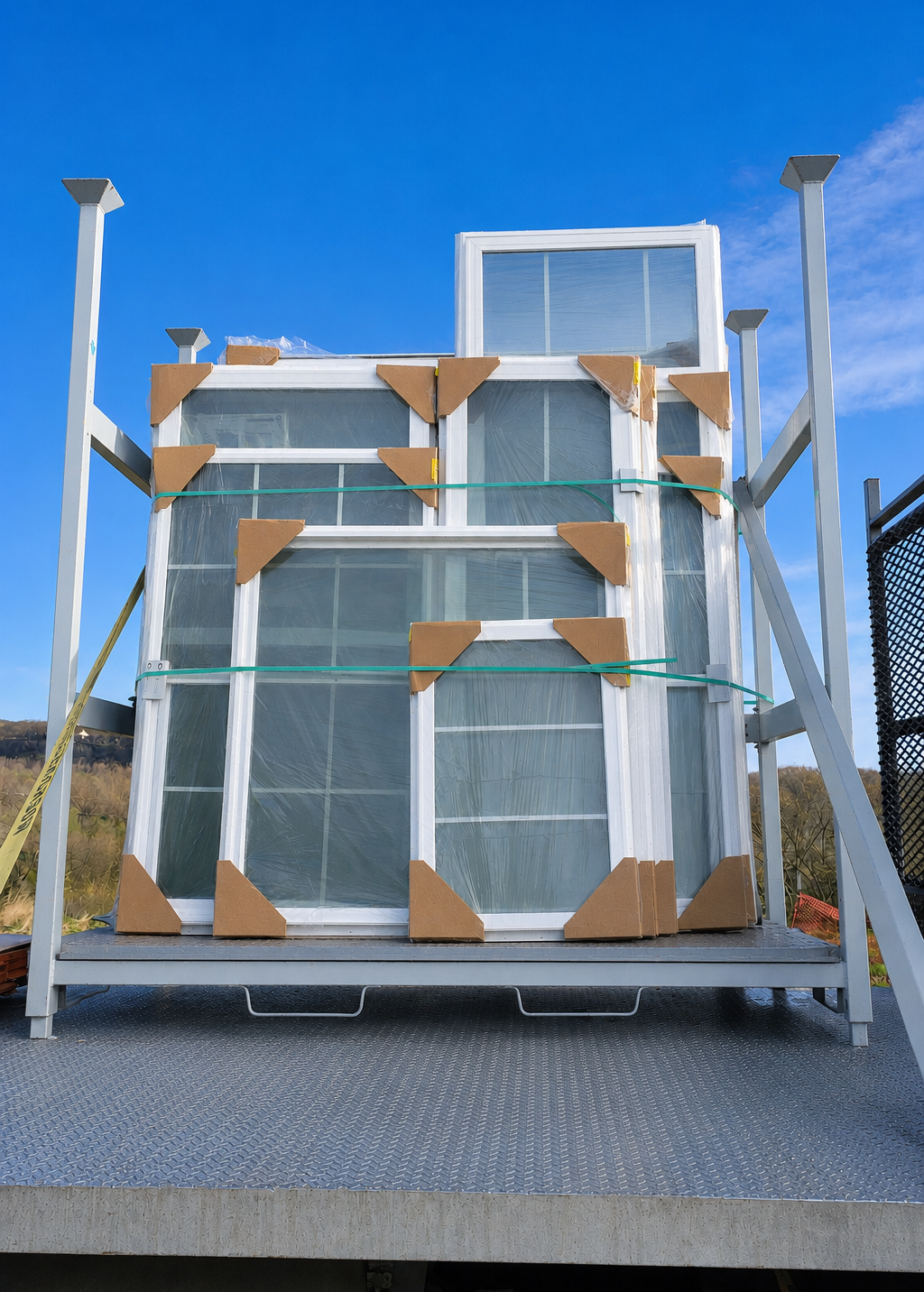
Stackable Window, Door & Millwork Transport Stack Racks are reusable storage and shipping racks for windows, doors, glass products, and millwork. Horizontal support bars along the back and sides help contain the product while the open front makes loading and unloading easier.
Products can be appropriately secured to the rack for transportation, allowing the same rack to travel from warehouse to truck and potentially all the way to the jobsite. That reduces repeated handling and can help protect finished windows and doors from damage.
Back in the warehouse, compatible racks can stack vertically according to their rated design. Removable corner posts and side frames allow many configurations to knock down when empty, saving space during slow periods or return transportation.
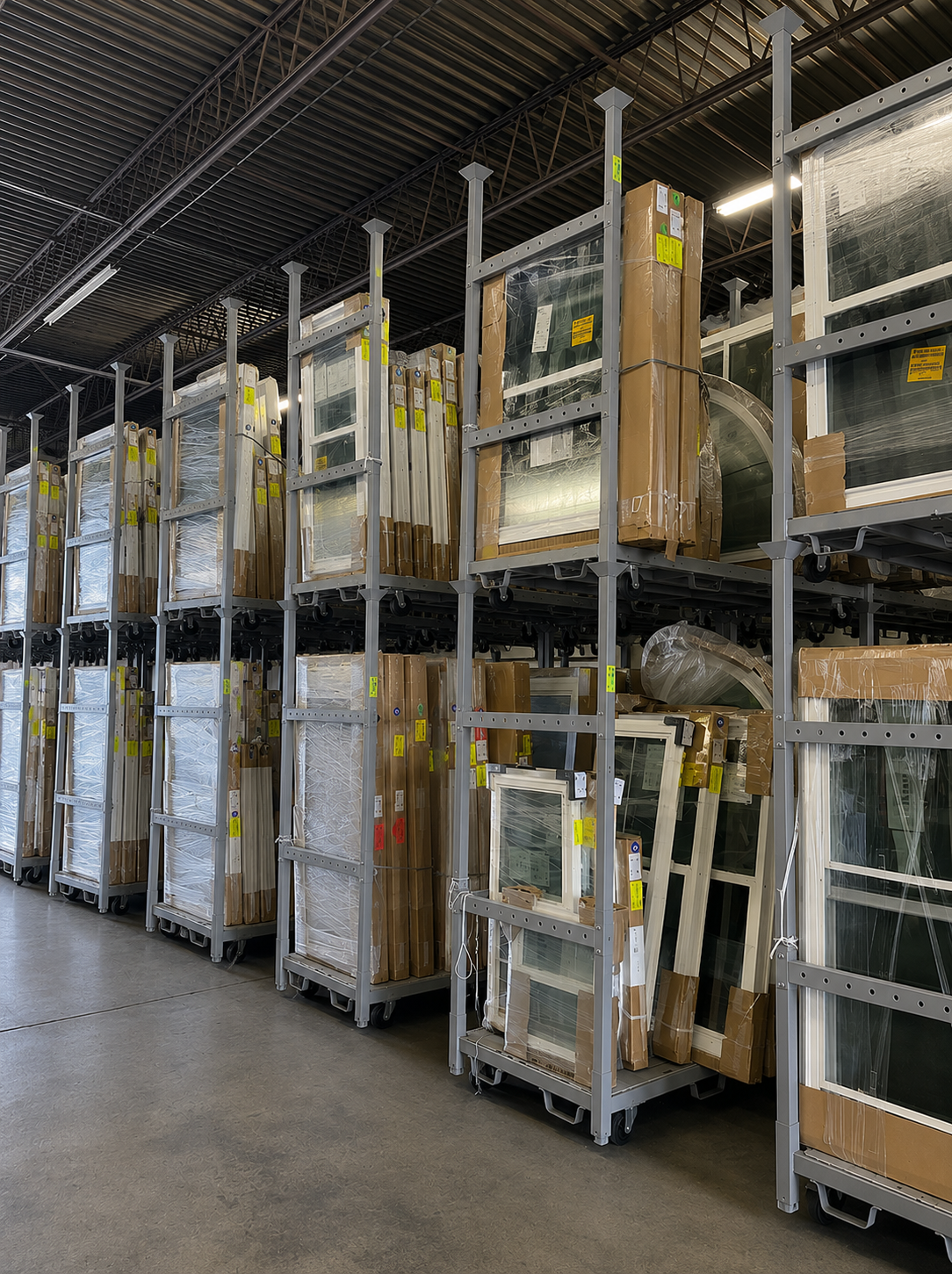
Take a portable window rack and put it on the right casters and you get even more flexibility. Window, Door & Millwork Transport Stack Rack with Casters can be rolled around a workshop, warehouse, loading area, or suitable jobsite while retaining forklift handling capability.
The typical configuration uses two swivel casters with locks and two rigid casters. The rigid wheels help the rack track when pushed, while the swivel casters provide maneuverability. Properly designed caster arrangements can maintain the stackability of the rack.
Caster capacity matters. The combined rating needs to account for the rack and loaded product, along with floor conditions and the forces created while moving the rack. Stacked racks generally shouldn’t be rolled unless the specific system is designed and approved for that operation.
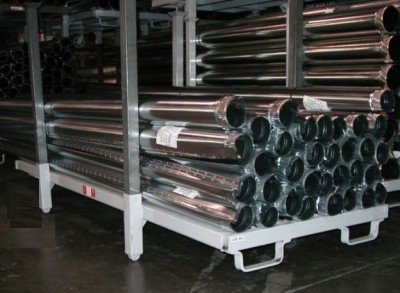
Got HVAC duct pipe? HVAC Duct Pipe & Fittings Storage Stack Racks give it somewhere better to go than an unorganized pile on the floor. Removable corner posts help contain round duct and fittings while also allowing the rack to knock down when empty.
The open design makes it easier to identify inventory by diameter or product type. Forklift handling allows an entire rack of duct to move between manufacturing, warehouse storage, loading areas, and jobsite transportation.
Standard and custom sizes can be supplied, with casters available for applications requiring rolling movement. The result is one rack that can store, organize, transport, and help protect HVAC products.
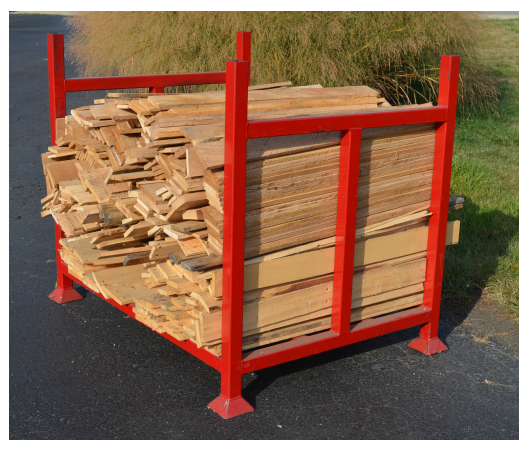
You got lumber? Lumber Stack Racks | Stackable Lumber Transport Racks provide a portable, stackable, and collapsible alternative to leaving boards and long products in floor-level piles.
Removable end frames or side rails help contain lumber, while stacking targets provide alignment between compatible racks. Bases can be supplied open with tubular support bars or configured with plywood, wire mesh, or solid steel decking. That lets the rack support lumber, plywood, millwork, doors, windows, firewood, and other long or flat products.
The racks can also serve as reusable shipping racks, traveling from mill to warehouse and potentially to the jobsite. When empty, removable components allow the rack to knock down for return transportation or compact storage.
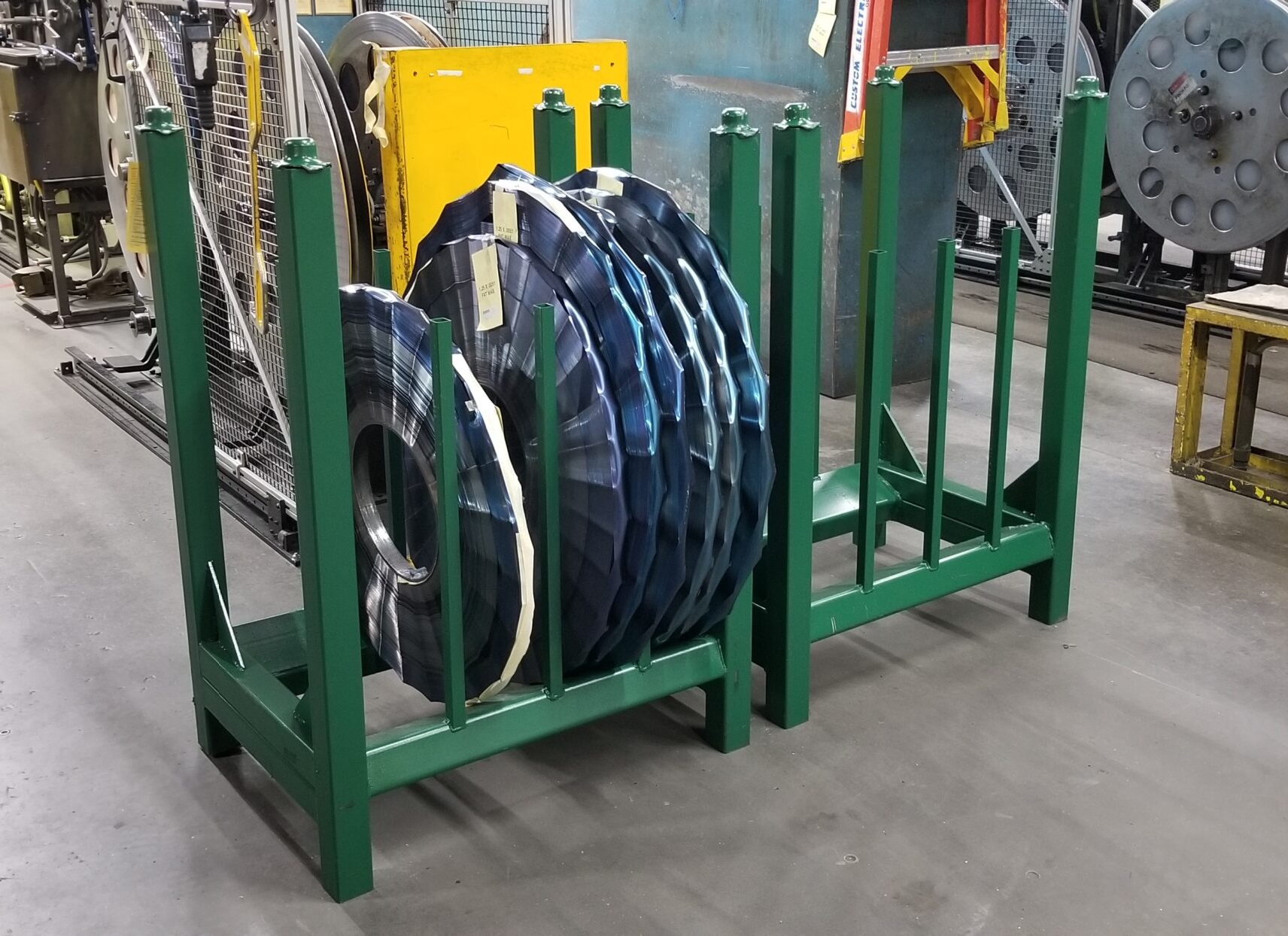
Slit Coil Stacking Systems address one of the more challenging metal-storage applications. Slit coils can be stored eye-to-the-sky or eye-to-the-aisle, and those two orientations create very different handling requirements.
Eye-to-the-aisle storage often requires a rack specifically designed to support and separate the coils. Portable stacking systems combine that containment with forklift mobility, allowing slit coils to move from warehouse storage to production while remaining in the rack.
Stackable and non-stackable configurations are available depending on whether vertical density or individual accessibility is more important. Coil diameter, width, weight, orientation, center of gravity, and handling equipment should drive the rack design.
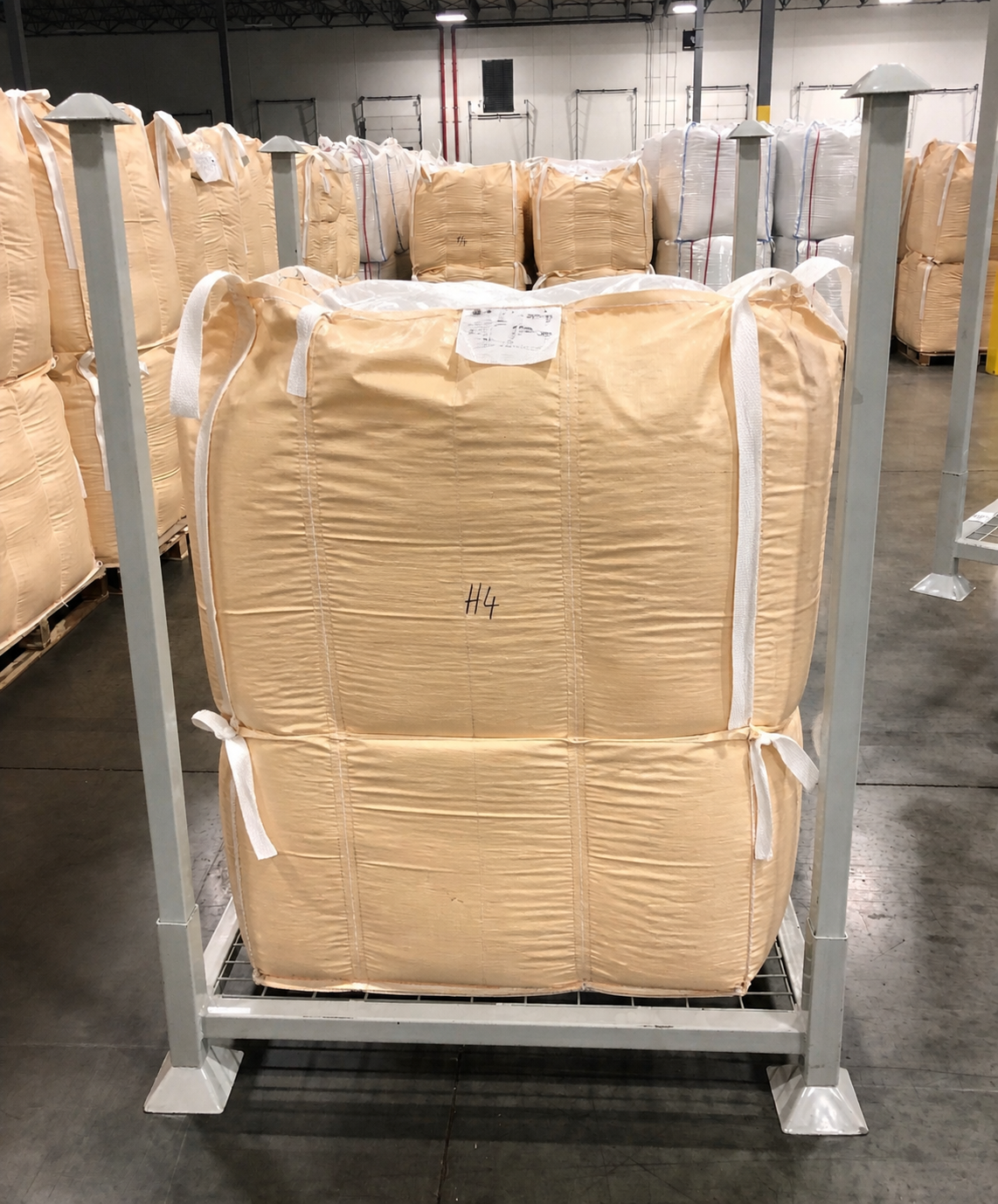
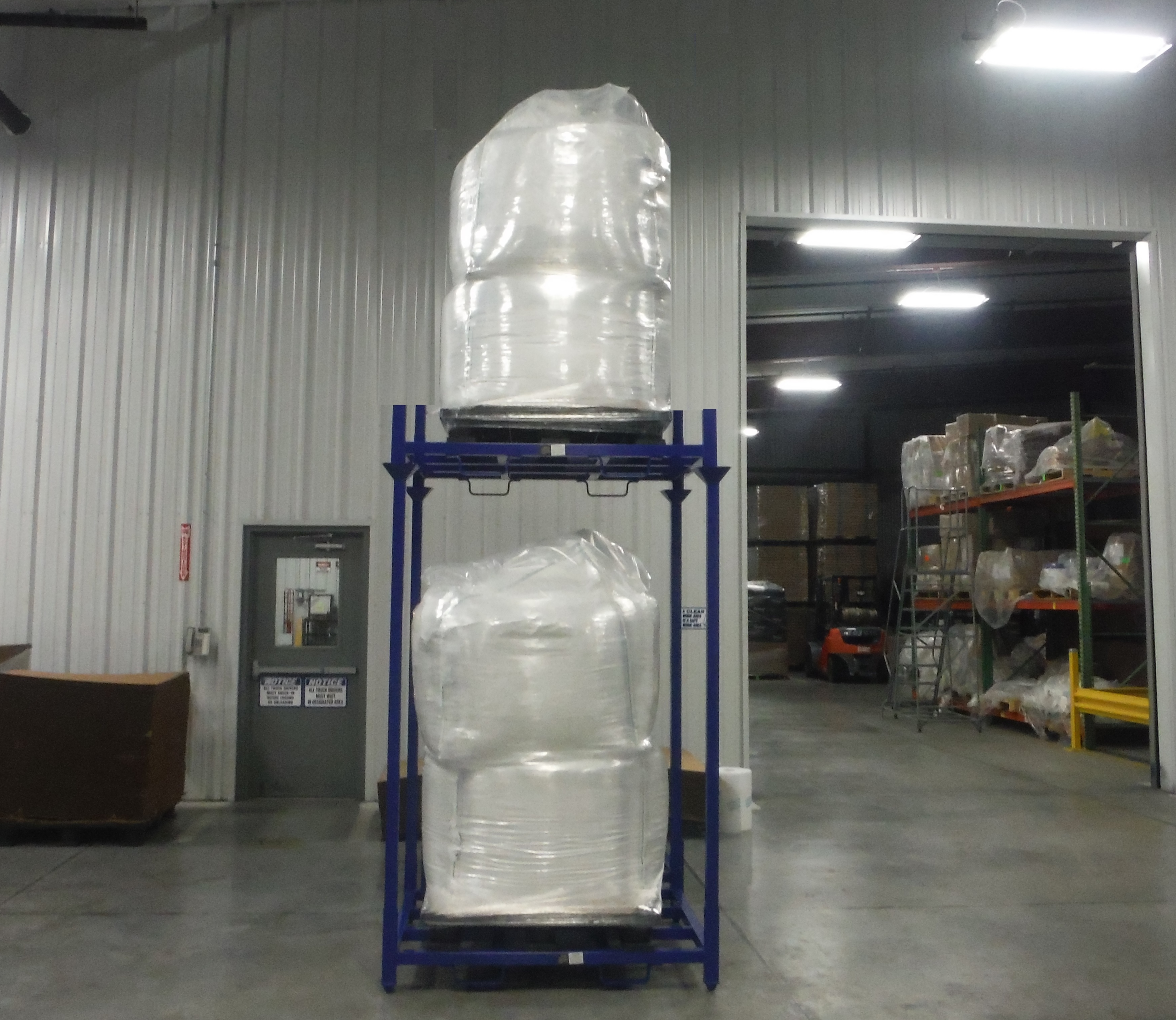
Super Sack Racks for Stacking, Storing & Transporting Bulk Bags are designed around soft-sided loads that don’t behave like ordinary palletized products. The rack structure supports the stacking load instead of requiring one bulk bag to carry another.
That allows compatible racks to use vertical warehouse space while keeping bulk bags organized and accessible. Four-way forklift access can simplify movement through a plant, warehouse, or shipping operation. Applications include agriculture, food processing, chemicals, construction materials, and mining.
As always, allowable stacking depends on the particular rack, bag dimensions, loaded weight, product behavior, floor conditions, and manufacturer rating.
Super sacks are big, heavy, soft-sided, and famous for taking up floor space. Bulk Bag Racks | Super Sack Storage Racks provide a portable steel structure that lets facilities organize these bags vertically rather than storing every bag one high.
The product line includes 2,000-, 3,000-, and 4,000-lb. capacities in configurations intended for different stacking heights. Removable corner posts allow the racks to collapse when they’re empty, making them useful for seasonal storage and returnable shipping programs.
Custom design is particularly useful with bulk bags because bag dimensions and load characteristics vary considerably. Fork stirrups, decking, and other accessories can be incorporated to make the rack work better with the bag and forklift operation.
Portable Stackable Industrial Hose Storage Racks are designed for long industrial hose, tubing, and similar products that can quickly become difficult to organize on the floor. A heavy-duty base and four removable corner posts create a simple structure that contains the load while allowing compatible racks to stack.
The same design works well for transportation. Loaded racks can move around the warehouse by forklift and can also serve as reusable shipping racks between manufacturers, suppliers, facilities, and jobsites.
When the hose is gone, remove the posts and knock down the rack. That’s one of the things that makes stack racks so useful: they create storage capacity when needed without permanently consuming the same amount of floor space when they’re empty.
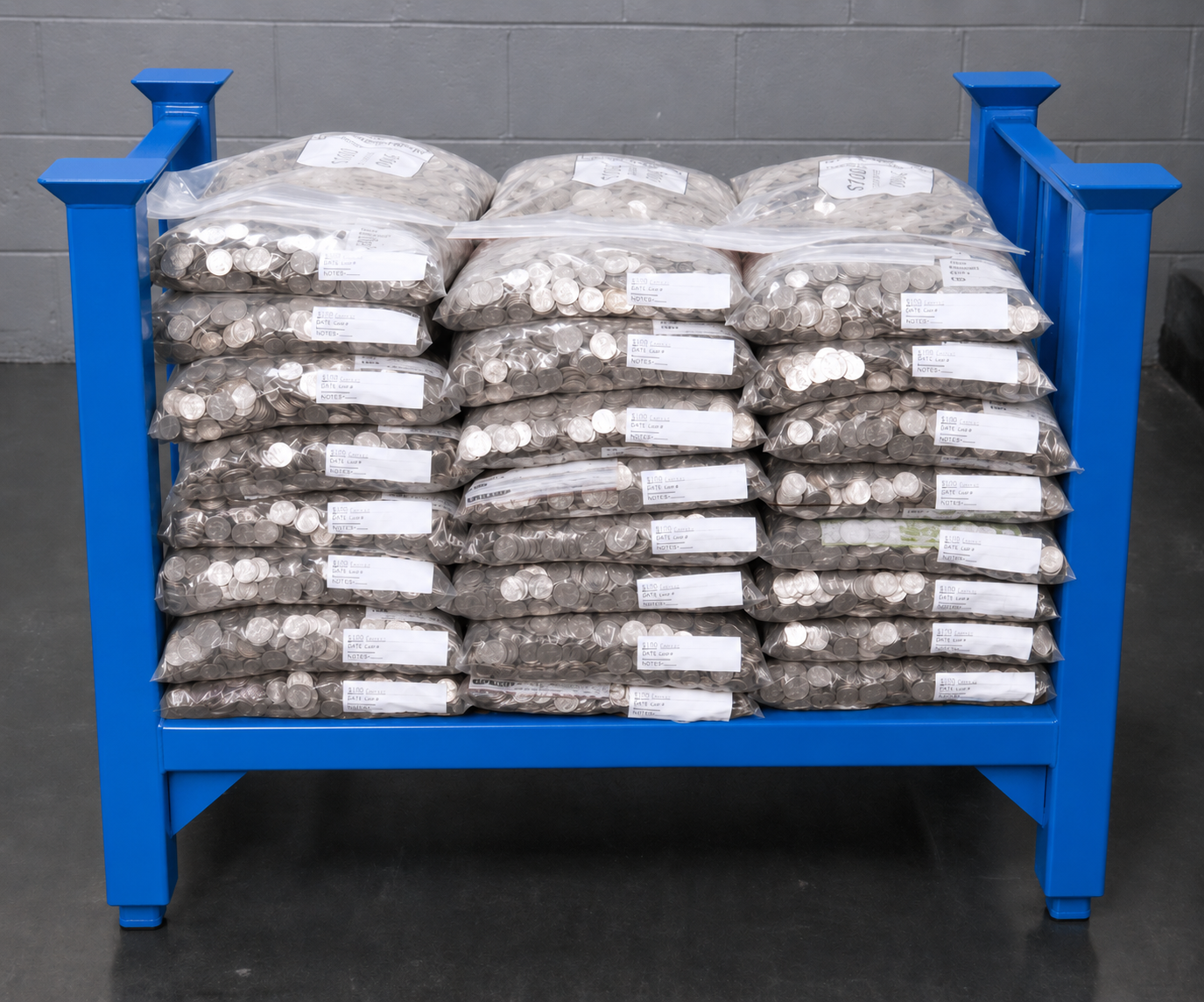
The Federal Reserve relies on heavy-duty, industrial Stackable Coin Pallets for the secure handling and storage of high-density coin bags. Designed as portable, stackable steel rack systems, these bulk coin pallets maximize vertical warehouse space by safely stacking up to five units high. When not in active service, their modular, knock-down design allows them to nest compactly, dramatically reducing floor footprint in the facility and minimizing freight costs on return shipments.
In addition to space optimization, these specialty coin racks streamline daily vault management and inventory control. The Federal Reserve Bank packages coins into plastic or canvas bags featuring color-coded seals, which are loaded onto the pallets with all identification labels facing outward. The open framework of the coin pallets allows staff to conduct fast, unobstructed visual inspections and counts of every stacked bag, improving both handling efficiency and regulatory security across the storage floor.
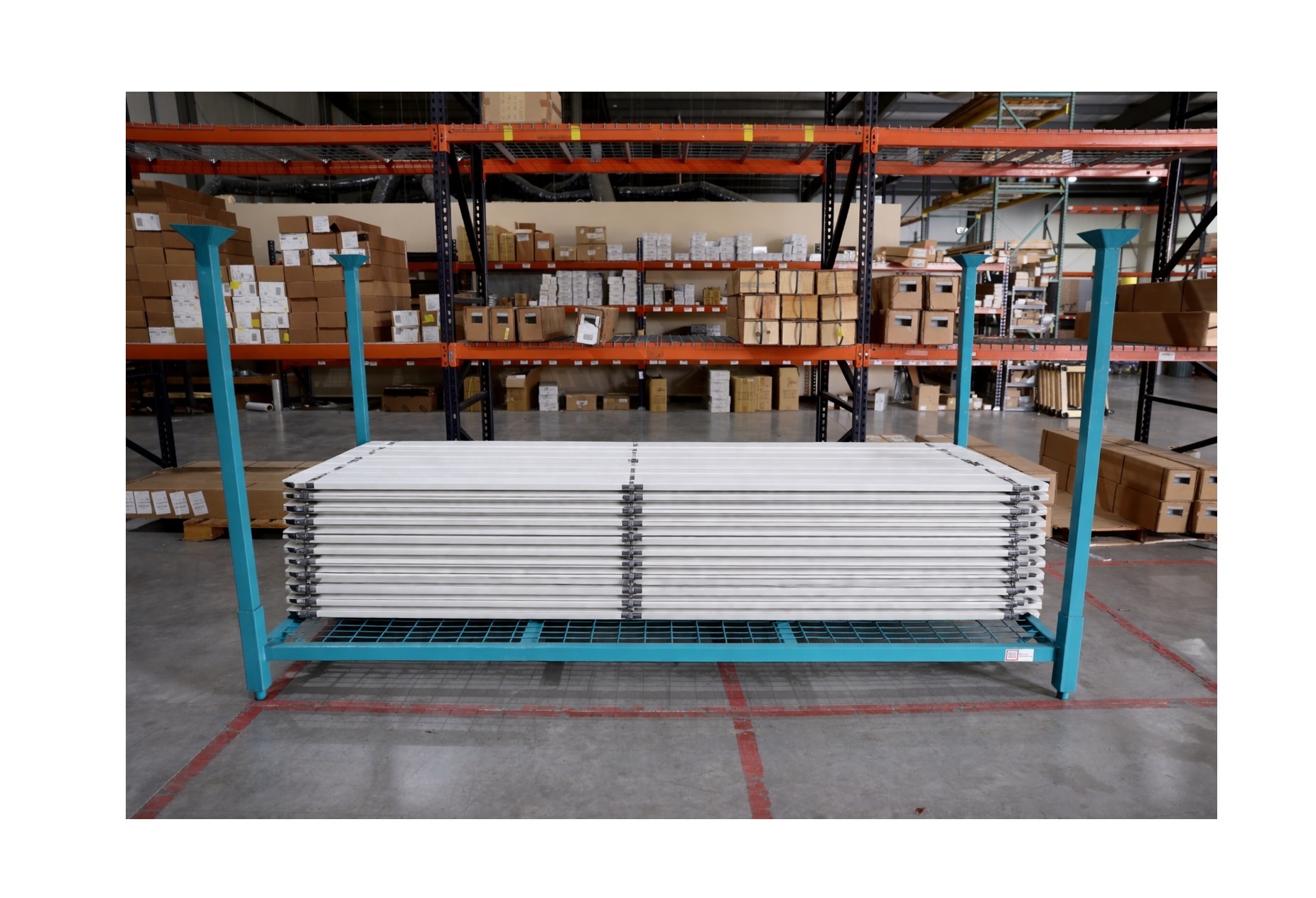
Garage door panels are large, awkward, and easy to dent or scratch. Garage Door Stack Rack | Stackable Garage Door Transport Rack provide a dedicated structure for protecting panels during warehouse storage and transportation.
Instead of spreading garage door inventory across the floor, compatible racks can stack vertically to organize products by size, model, order, or destination. Forklift handling also lets the entire load move through a manufacturing facility or warehouse without repeatedly handling individual panels.
These racks can continue working after they leave the warehouse. Load them onto a trailer or flatbed for delivery to another facility or jobsite, provided the rack and load are properly secured for transportation.
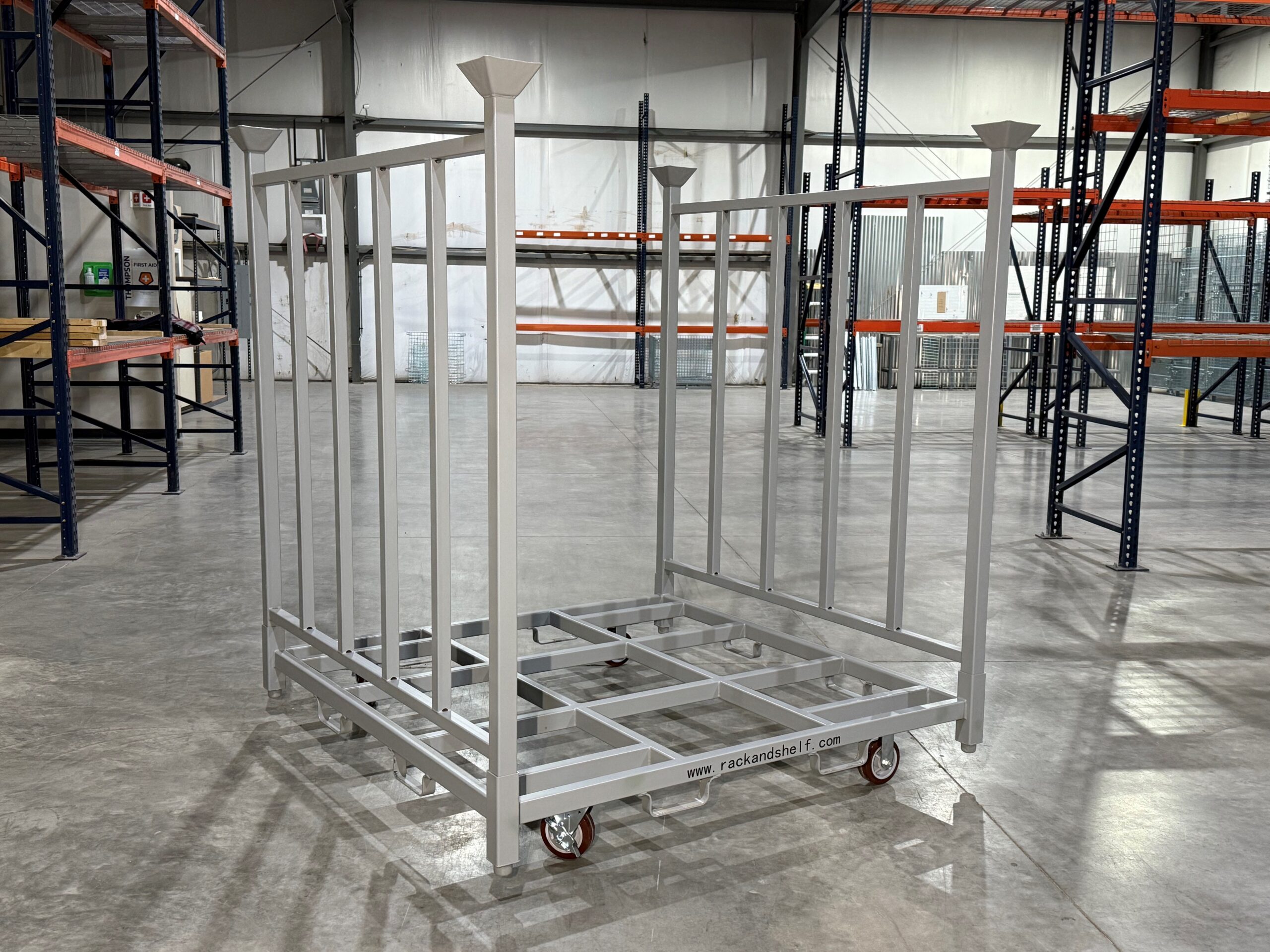
Carpet Roll Pad Rack with Casters combine vertical stack-rack storage with floor-level rolling mobility. They provide a convenient way to organize carpet padding and other bulky rolled goods while allowing loaded racks to move around a warehouse without requiring a forklift for every short repositioning move.
This rack has optional 6″ x 2″ polyurethane casters with two rigid wheels and two locking swivel wheels. This arrangement provides tracking and maneuverability while allowing the rack to be secured when parked.
Racks can also be forklift handled and transported by truck. When specifying casters, account for the combined rack and product weight, floor conditions, wheel material, desired maneuverability, and whether the rack must remain stackable.
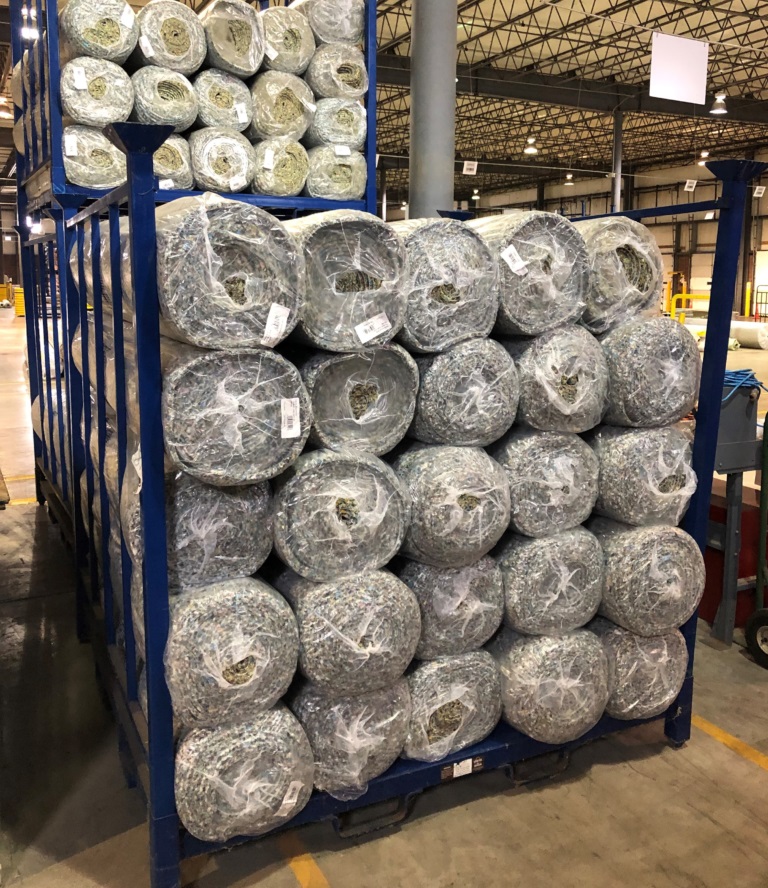
Portable Stackable Carpet Roll Pad Storage Racks are built around bulky rolls that otherwise consume a lot of floor space. A steel base and removable corner posts contain the rolls and create the structure needed to stack compatible racks vertically.
Removable posts also make the rack collapsible. During slow periods, knock the racks down and consolidate them instead of leaving empty frames spread across the warehouse. That makes them useful for seasonal carpet and flooring operations.
These racks can help reduce the damage associated with loose bulk stacking while making entire groups of rolls easier to move through storage and transportation. Standard sizes are available, but custom dimensions can be designed around particular roll sizes.
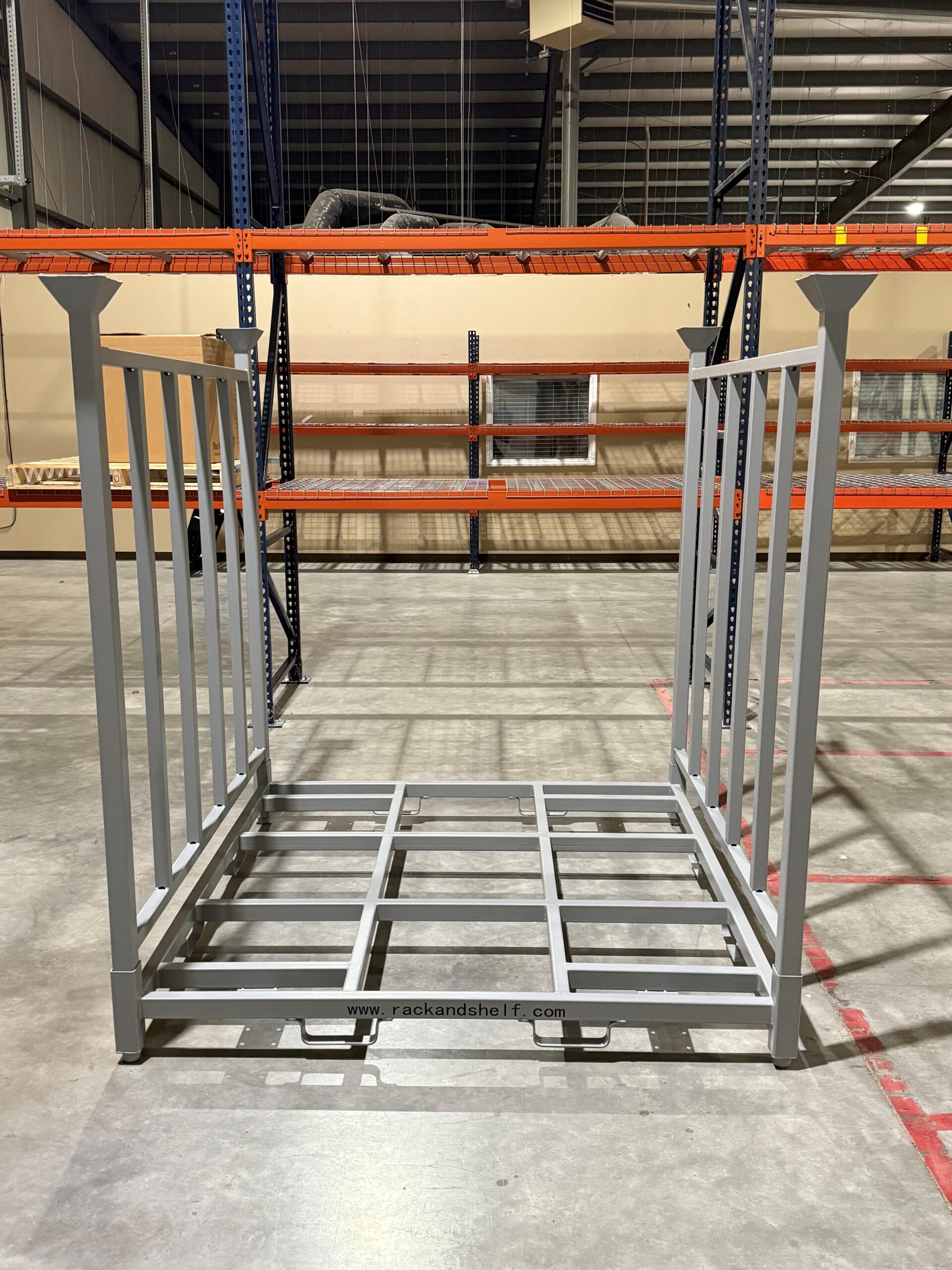
Fabric Roll Stack Racks use removable side frames to contain bulky textile rolls during storage, handling, and transportation. The side frames keep rolls from shifting while maintaining an open design that makes loading and inventory identification easier.
This design consists of a durable base and two removable side frames. Stacking pins and cups align compatible racks vertically, while fork stirrups help control the rack during forklift movement. The racks can also be disassembled when they’re empty.
For textile manufacturers working between mills, production departments, warehouses, and distribution operations, this design can reduce repeated handling. The same rack can organize rolls in storage, move them through the plant, and protect them during transportation.
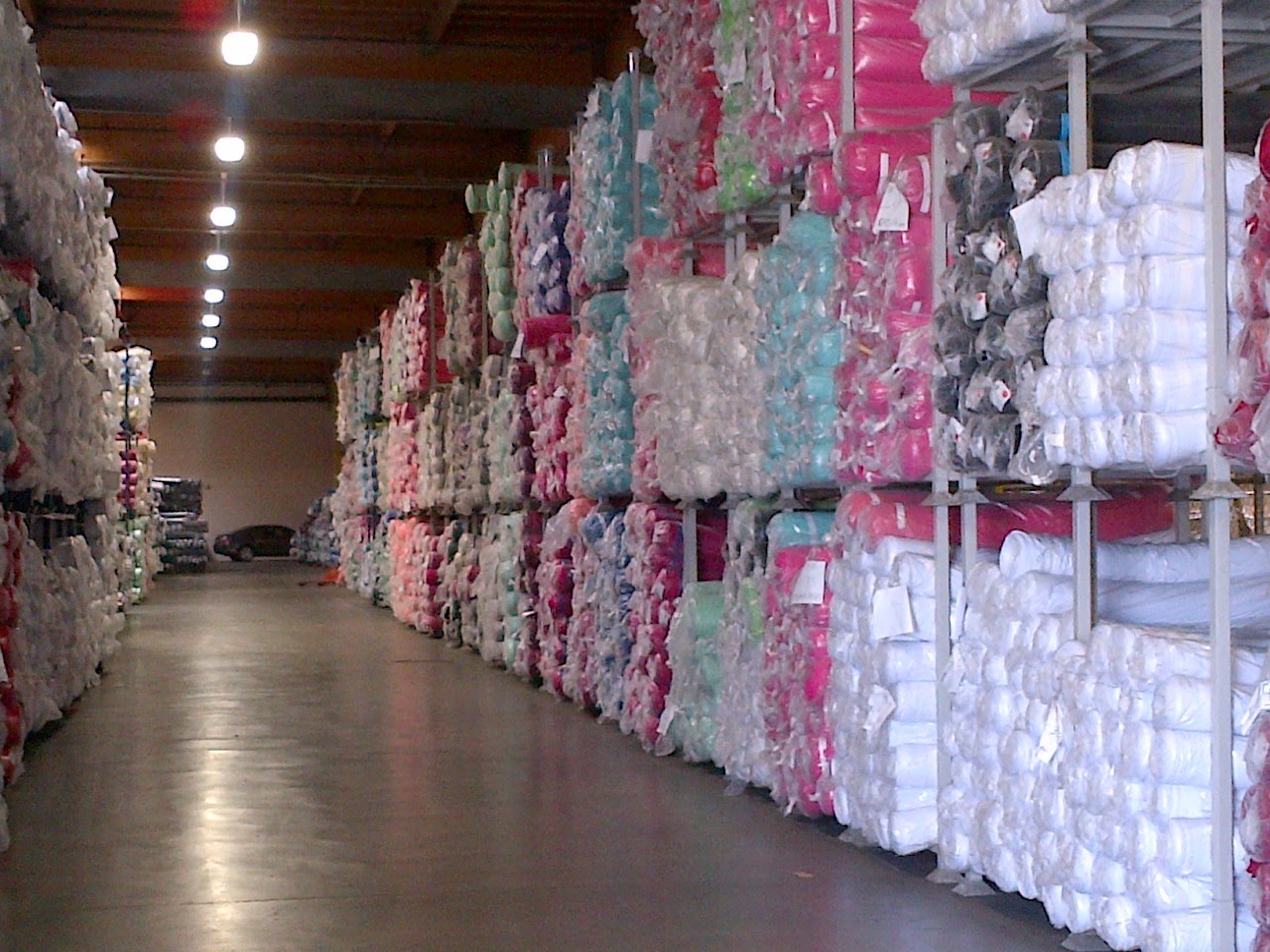
Textile rolls are heavy, bulky, and not much fun to dig out of a pile. Textile & Fabric Roll Stack Racks get those rolls organized and off the warehouse floor while making better use of available vertical space.
Keeping rolls in dedicated racks also improves inventory visibility. Employees can see what material is available without repeatedly moving piles of fabric, which can save time and reduce unnecessary product handling.
Rack dimensions and support spacing should be based on roll length, diameter, weight, and material characteristics. Proper support is especially important where long rolls could sag or become damaged during storage.
Used Automobile, Car, Truck & Motorcycle Tire Stack Racks provide flexible storage for tires that otherwise occupy large areas of warehouse floor. They can accommodate automobile, truck, motorcycle, and ATV tires depending on rack dimensions.
Used racks can also provide an economical alternative to buying new equipment. Condition matters, though. Used tire racks should be inspected for bent bases, damaged posts, cracked welds, distorted stacking targets, corrosion, and previous forklift impact before they’re returned to service.
Used inventory changes constantly, so dimensions, capacity, condition, and compatibility should be verified for the actual racks available rather than assuming every used tire rack has the same specifications.
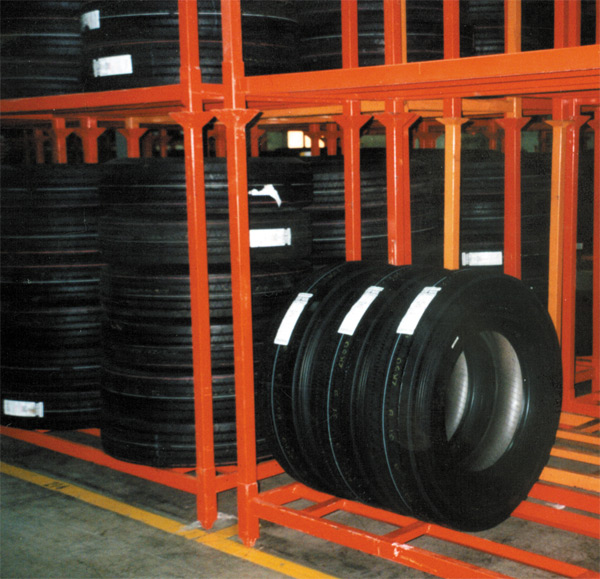
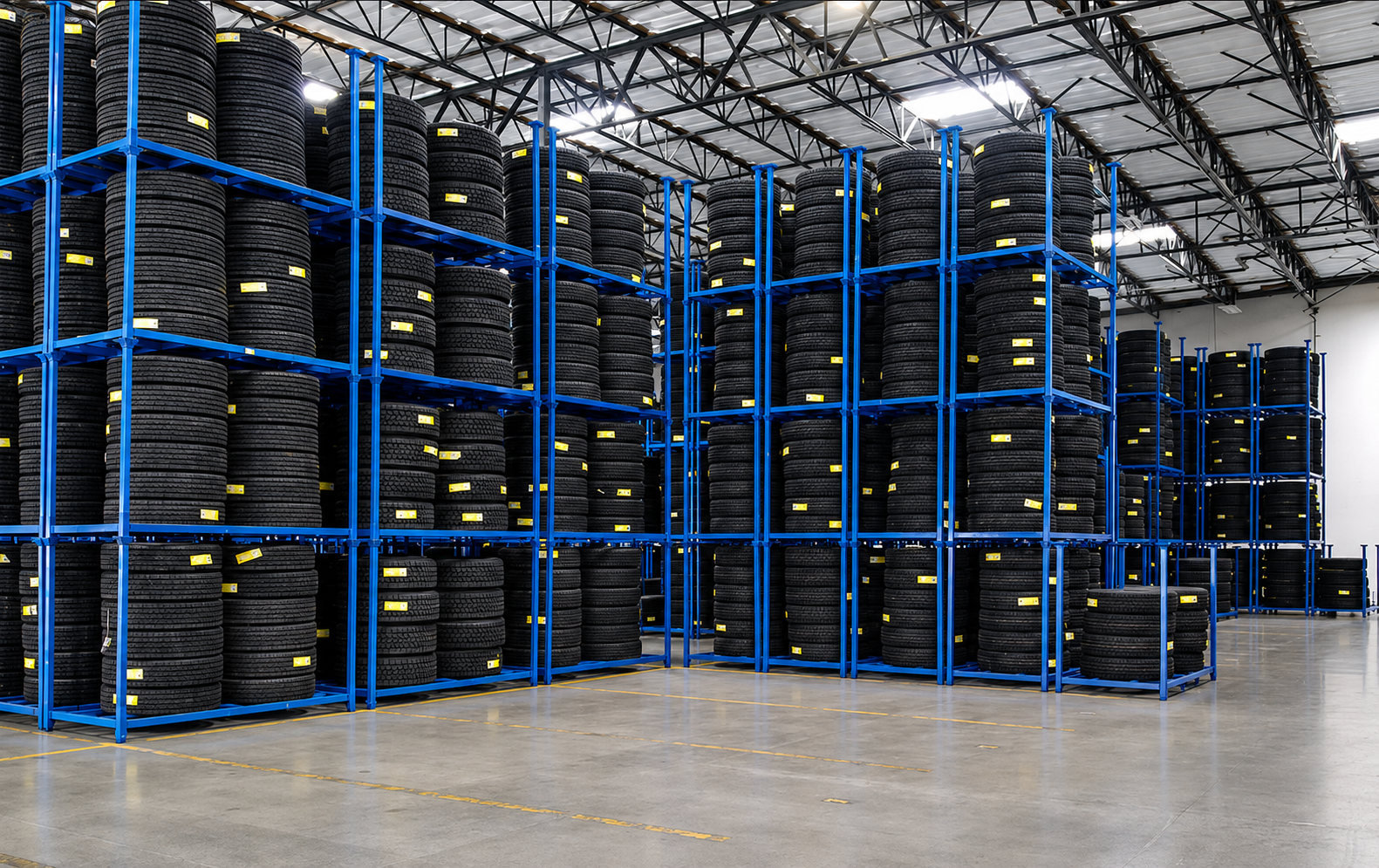
Semi Truck Tire Stack Racks are designed around the size and weight of commercial truck tires. Instead of storing tires one level high or allowing them to spread across the warehouse floor, stack racks contain them in organized groups and use available vertical space.
The open rack design gives employees good inventory visibility while keeping tires contained. Compatible configurations are stackable up to four high, increasing storage density without installing a permanent rack system.
Truck tires are heavy, so rack dimensions, capacity, stacking height, floor conditions, and forklift handling all need to be matched to the actual inventory.
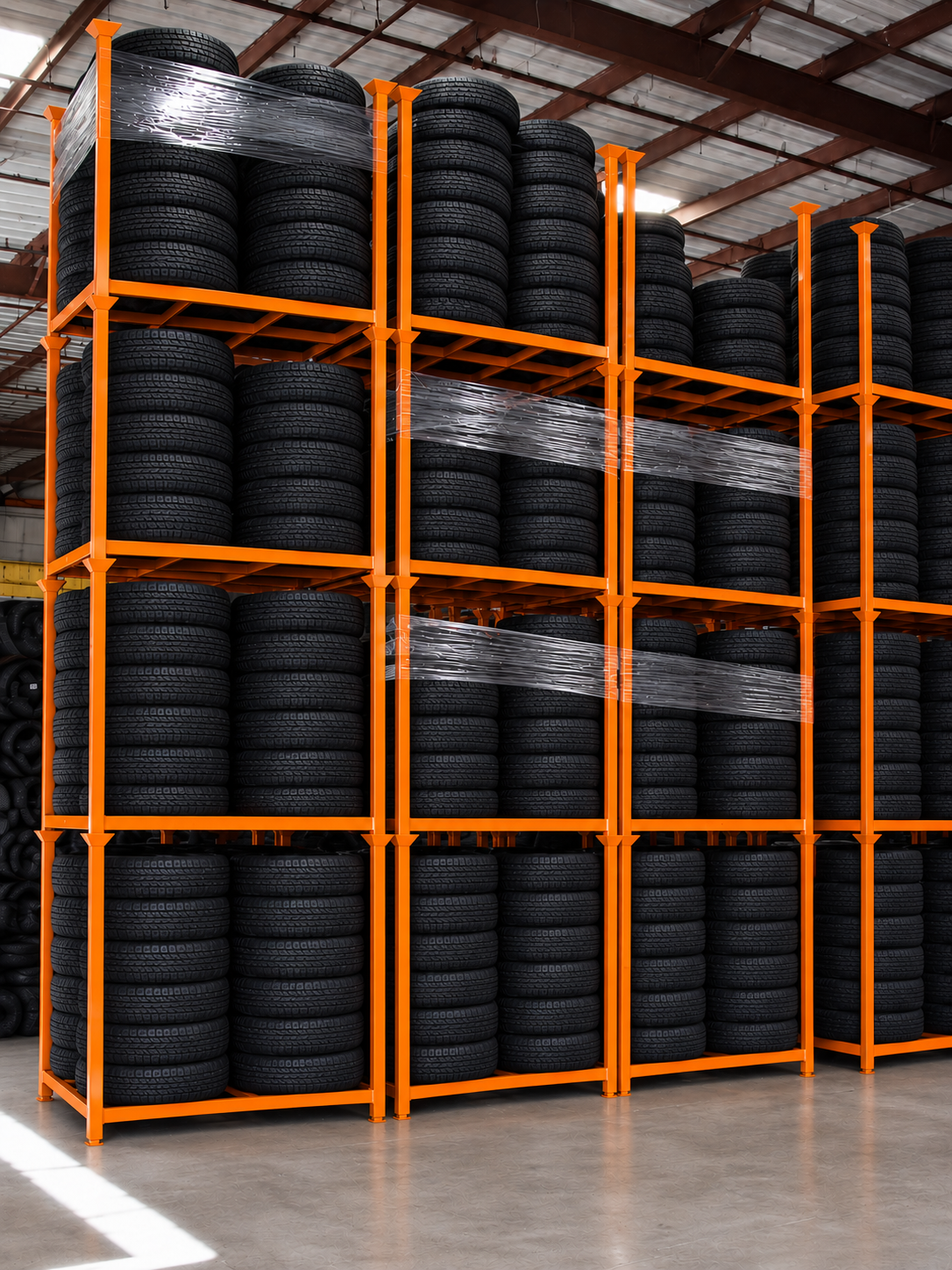
If you’re storing thousands of tires, Stackable Tire Racks are all about density, portability, and flexibility. The popular 60″ x 60″ x 60″ configuration consisting of a stackable base and four removable corner posts.
Tires are stored within the rack and compatible racks can be stacked vertically to take advantage of warehouse cube. When they’re empty, the posts come out so racks can be consolidated for storage or return transportation.
These racks are widely suited to high-volume tire manufacturing and distribution where storage requirements fluctuate. During peak season, put the racks to work. When inventory drops, knock them down and recover the floor space.
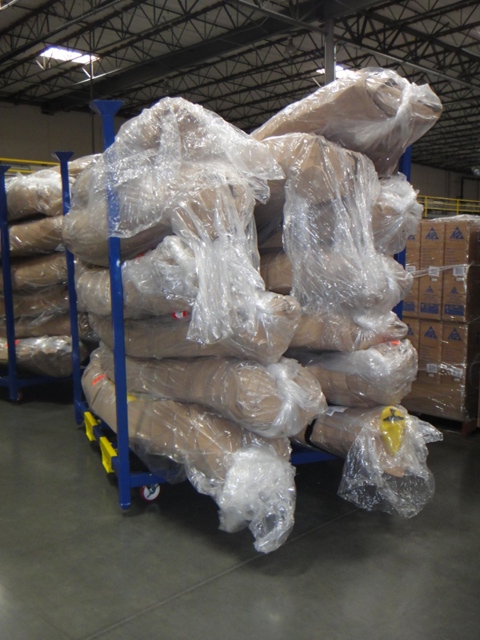
Where do you put a warehouse full of kayaks and canoes? Canoe Stack Racks | Kayak Racks | Stacking Transport Racks provide bulk storage and transportation for these long, bulky products.
These custom racks are capable of holding up to 12 canoes or kayaks per rack, with compatible configurations stacked four to five high. Removable corner posts allow racks to knock down during the off-season, an especially useful feature for seasonal sporting-goods inventory.
Options can include side rails, decking, fork stirrups, casters, and custom colors. Existing rack compatibility can also be considered during custom design. These aren’t car-top kayak racks. They’re warehouse storage and transportation systems built to handle boats in volume.
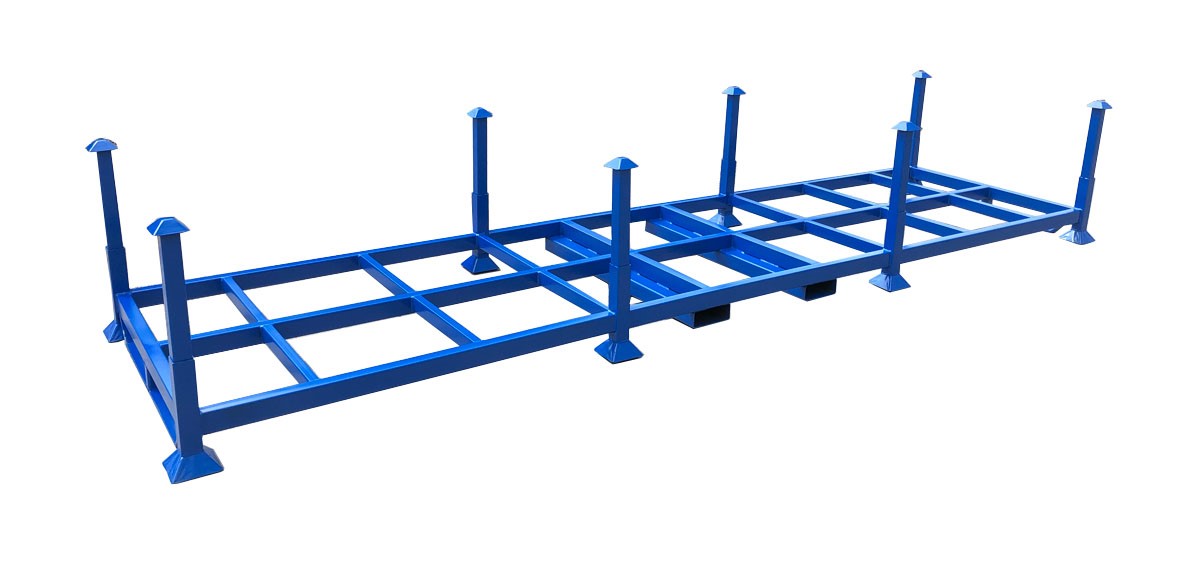
Pipe & Hose Transport Stack Rack with Removable Corner Posts provide portable storage for PVC pipe, steel pipe, tubing, bars, and industrial hose. Fork tubes along the long side give forklifts a controlled lifting location, while corner posts contain long materials during storage and movement.
The removable posts are what make the design especially flexible. Take them out for easier loading and unloading or remove them completely when the rack is empty. The same feature allows racks to knock down for return transportation and compact storage.
Actual support spacing, rack length, capacity, and stacking configuration should be designed around the length, weight, stiffness, and distribution of the stored material.
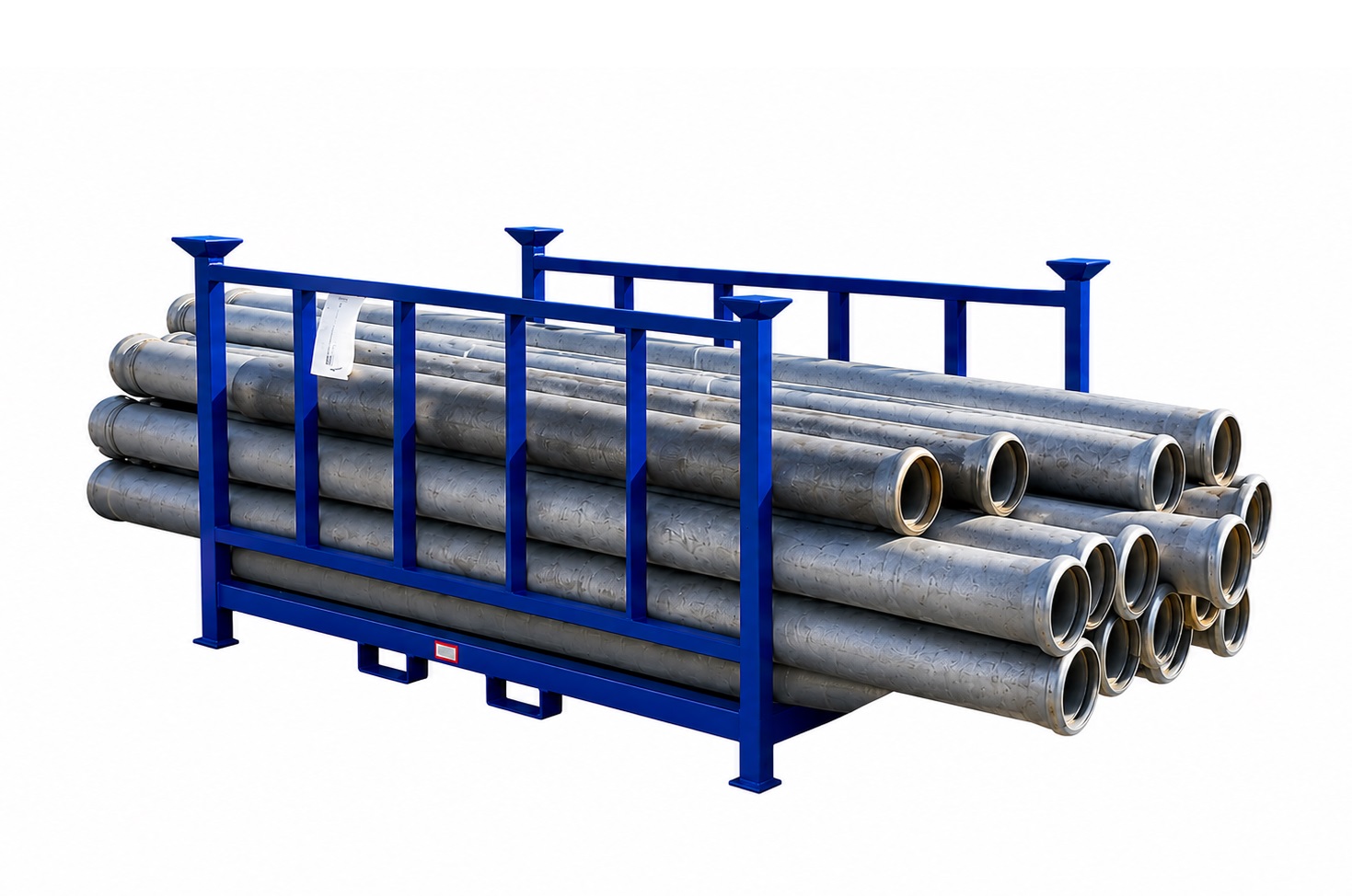
Portable Pipe Stacking Racks with Side Frames offer a different approach to long-material storage than fixed cantilever rack. Cantilever rack gives excellent individual load selectivity. Portable pipe racks trade some of that selectivity for mobility, seasonal flexibility, dense stacking, and returnable transportation.
The common 4′ wide x 8′ long x 48″ high configuration is rated for 4,000 lbs. It uses removable side frames with vertical support bars spaced 12″ apart along the long sides and removable crossbars on the short sides. Compatible racks can be stacked and collapsed when they’re empty.
They also make useful returnable shipping racks. Popular trailer configurations are two racks wide by two high for certain applications, helping utilize trailer cube. Transportation layouts, however, should always account for actual rack dimensions, vehicle limits, load securement, and the specific product being shipped.
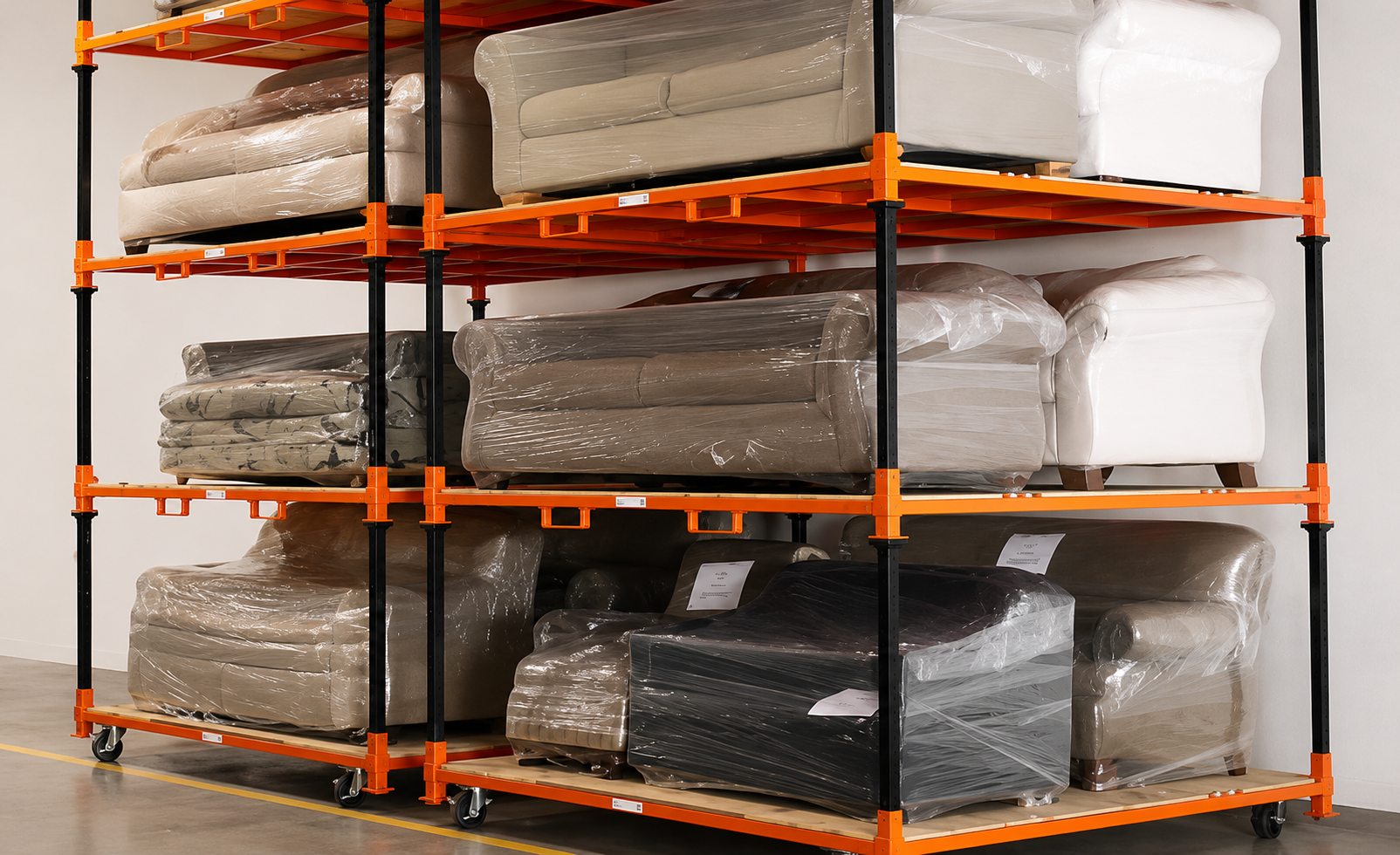
Furniture Stack Racks provide high-density portable storage for couches, loveseats, chairs, and other bulky furniture. Instead of dedicating large areas of floor space to furniture stored one level high, compatible racks create vertical storage while keeping the product supported by the rack rather than by the furniture underneath it.
The popular 80″ x 120″ x 46.75″ rack and configurations are intended to hold combinations such as two couches or two loveseats and two chairs. Fork stirrups allow compatible racks to be handled by forklift, and caster options can make floor-level movement easier.
Furniture racks are particularly useful for seasonal inventory because they aren’t permanently anchored in place. Stack them when demand is high, move them when the layout changes, and break them down when they aren’t needed. Most importantly, they can help reduce damage associated with uncontrolled bulk stacking of finished furniture.
Frequently Asked Questions About Stack Racks
How do I choose the right Stack Rack design?
Start with what you’re storing. Measure the product’s length, width, height, and weight, then consider how that weight is distributed. Next determine how the rack will be loaded, moved, stacked, shipped, and unloaded. Sheet metal may need continuous decking and side containment. Pipe needs properly spaced supports. Coils require cradles. Fabric rolls may need side frames. Windows and furniture need protection from contact and shifting. Designing around the load is usually better than trying to make a standard rack fit an unusual product.
How high can Stack Racks be stacked?
There isn’t one stacking height that applies to every Stack Rack. Allowable stacking height depends on rack capacity, load weight and distribution, rack dimensions, center of gravity, floor conditions, rack condition, and manufacturer rating. Never assume a rack can stack five high simply because another Stack Rack can.
Do Stack Racks need to be anchored to the floor?
Portable Stack Racks generally aren’t installed like permanent pallet rack because mobility is one of their main advantages. They need a suitable, level supporting surface and enough clearance for safe forklift handling and stacking. If a portable rack will be placed into pallet rack, mounted on casters, handled by unusual equipment, or incorporated into another storage structure, the complete system should be evaluated for compatibility and capacity.




