Pallets
Pallets are flat, horizontal transport structures used as a base for assembling, storing, stacking, and transporting goods as unit loads. They serve as the foundational interface for material handling equipment, allowing forklifts, pallet jacks, and automated storage and retrieval systems (ASRS) to lift and move heavy payloads efficiently. By standardizing the footprint of inventory loads, pallets optimize warehouse space, secure products during transit, and significantly reduce manual labor times across global supply chains.
The primary advantage of modern industrial pallets is their ability to streamline logistics while providing product protection and structural stability. Depending on the material composition, they offer businesses a reusable, long-term solution for high-density warehouse storage and heavy-duty shipping. Selecting the right pallet material allows facilities to meet strict sanitation rules, eliminate the risk of wood-boring pests, and reduce product damage caused by splintering or protruding fasteners common in traditional wood alternatives.
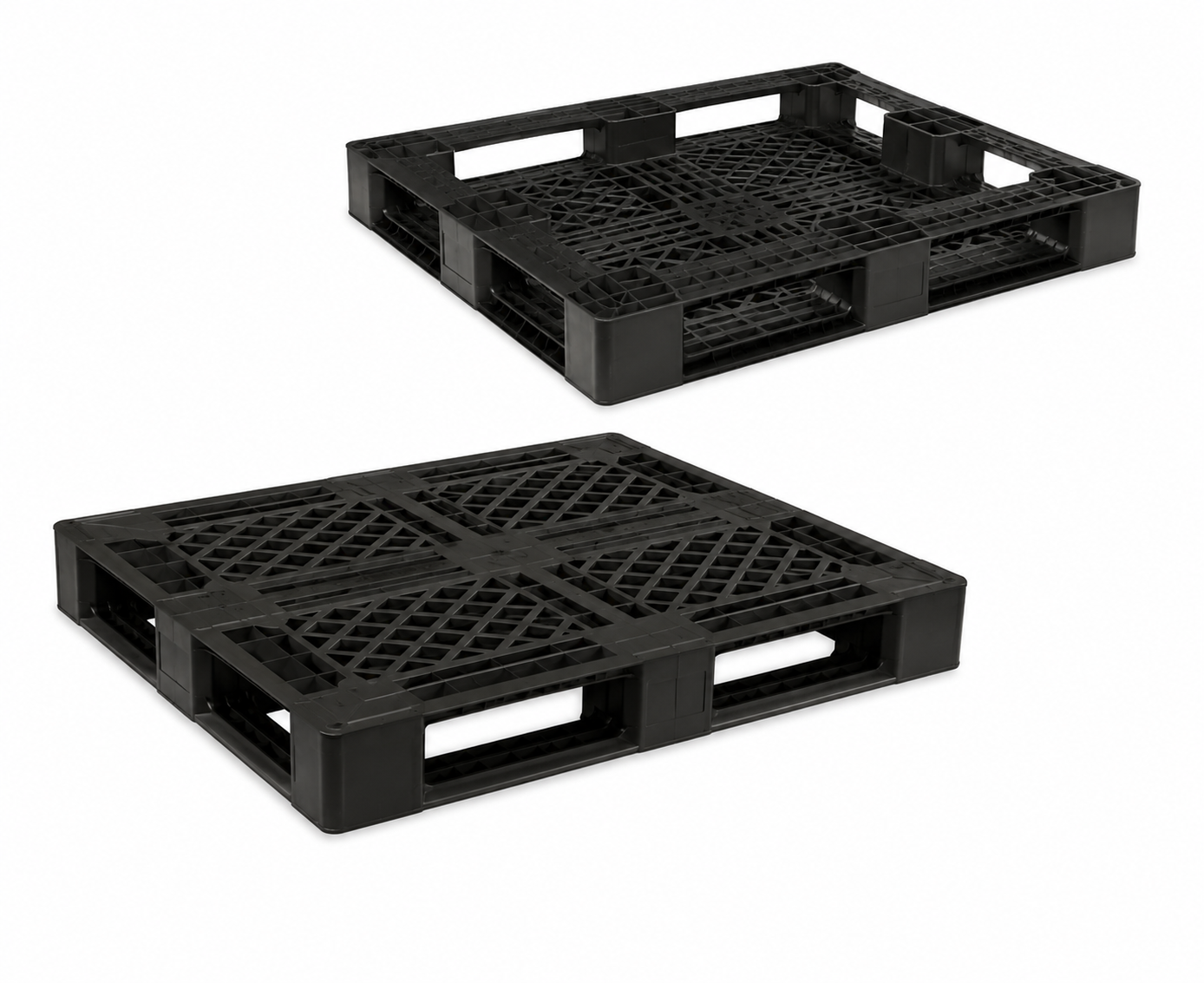
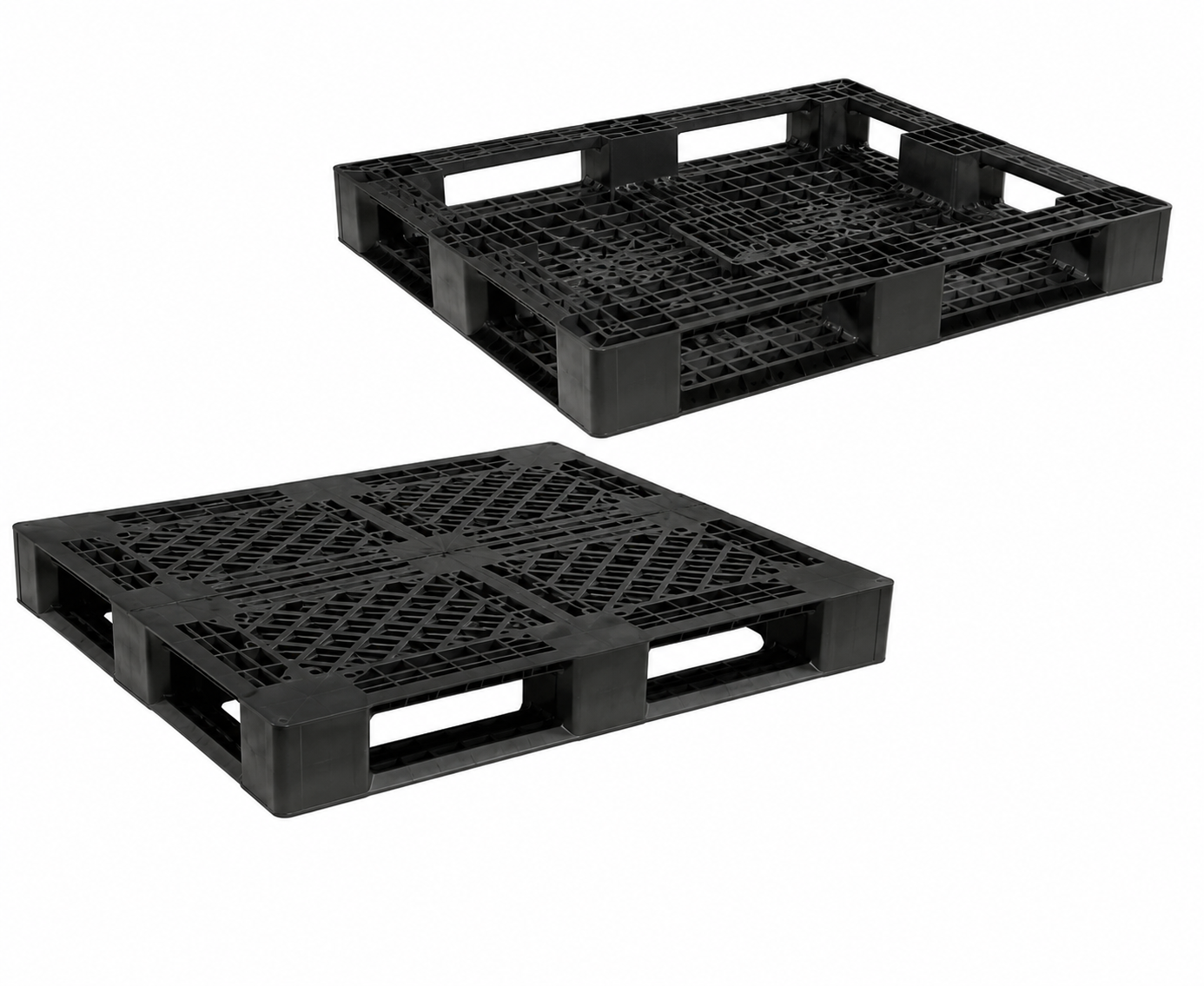
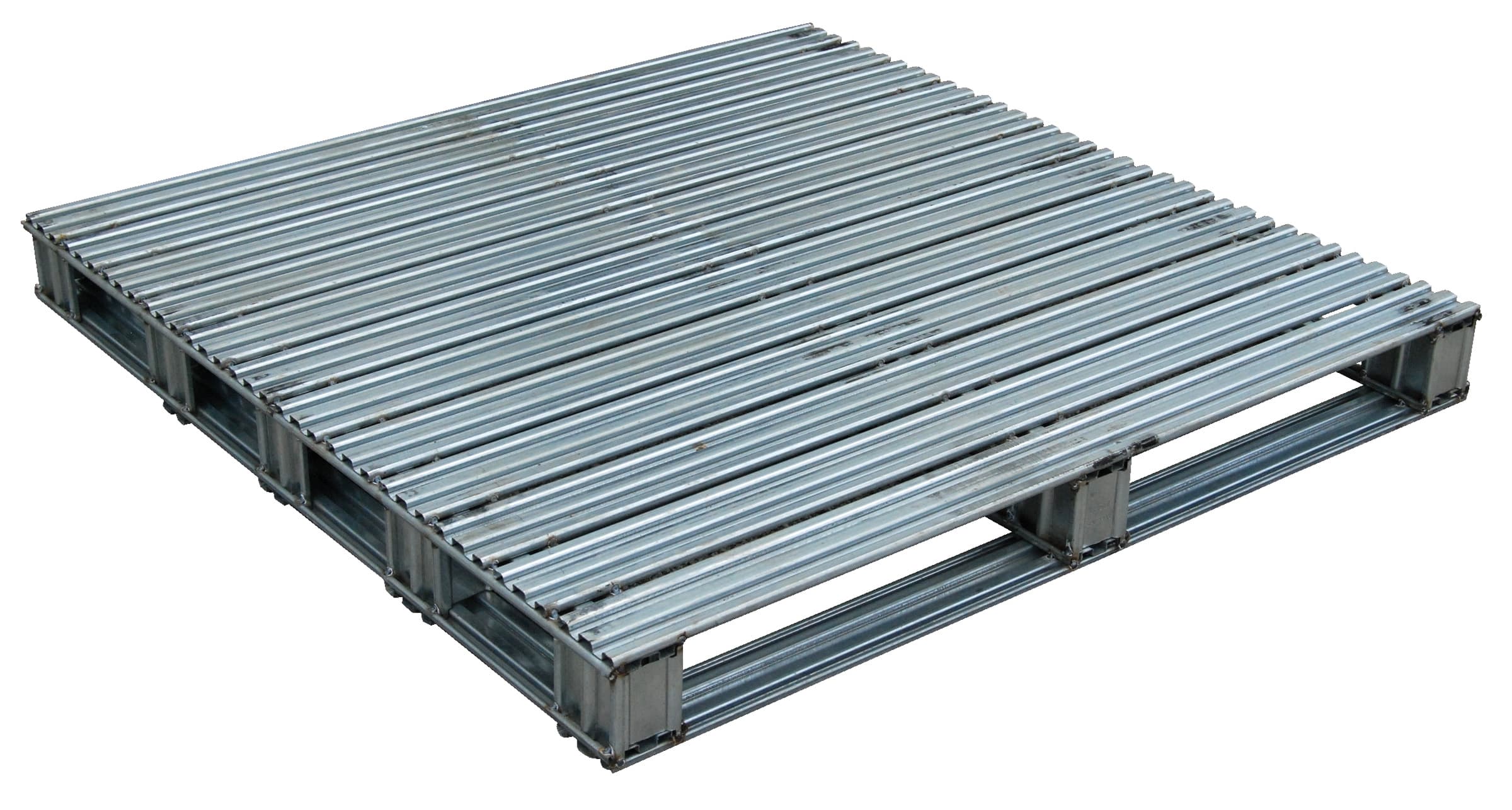
Plastic Pallets are widely favored in closed-loop logistics, food processing, and pharmaceutical applications due to their non-porous, easily sanitizable surfaces. They are lightweight yet durable, resisting moisture, chemicals, and impact without degrading. For heavier industrial applications requiring extreme durability, Steel Pallets offer immense load capacities and can withstand the harsh environments of foundries, scrap recycling facilities, and heavy manufacturing centers without warping or breaking.
Showing the single result
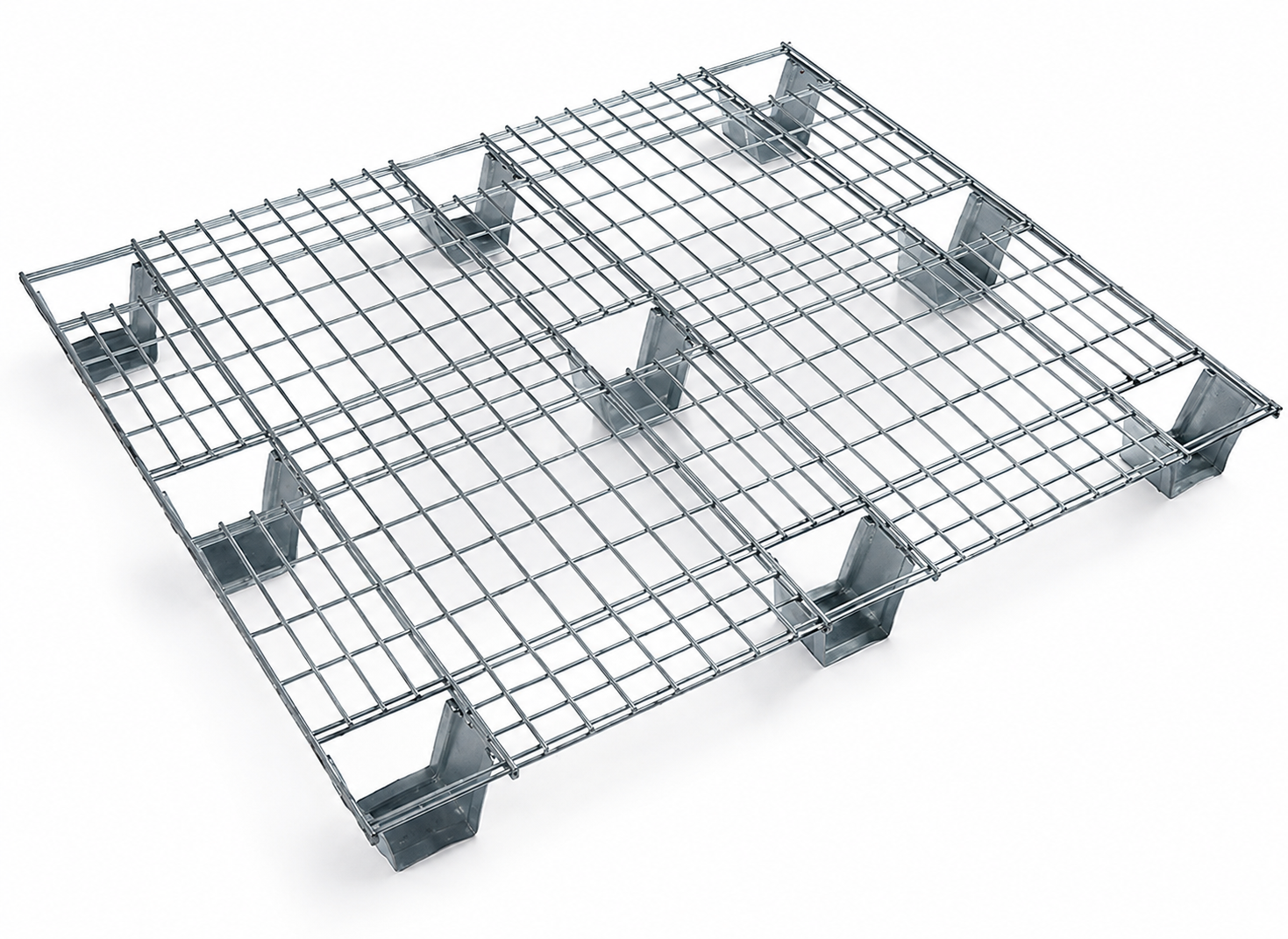
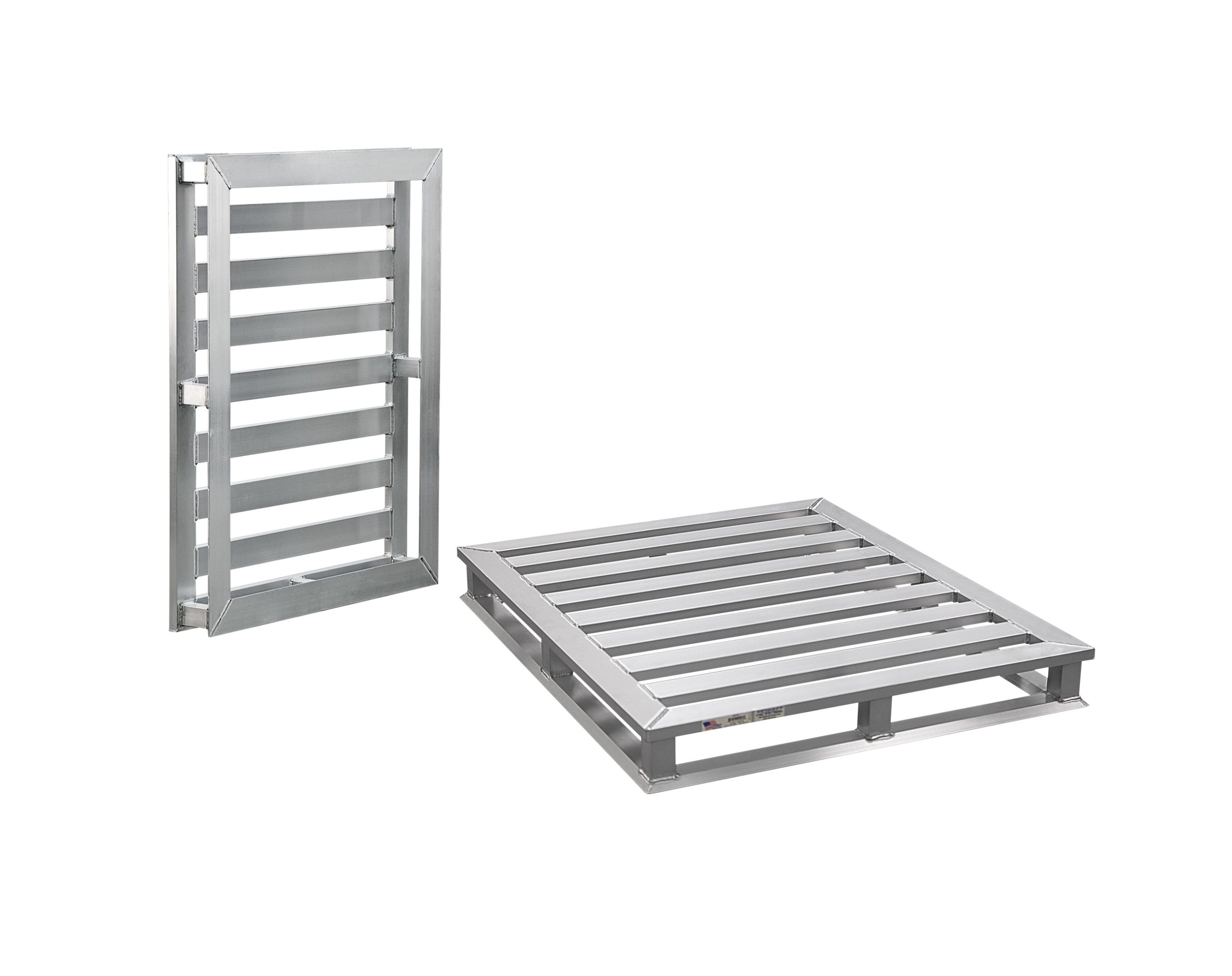
For unique warehouse requirements, Wire Pallets provide a high-strength, lightweight alternative that features an open-mesh deck. This design allows for excellent visibility, airflow, and overhead water penetration, making them highly compatible with standard fire safety protocols. Meanwhile, Heavy-Duty Rackable Aluminum Pallets offer the ultimate combination of high weight-to-weight ratios, sterile cleanability, and fireproof security. These aluminum models are engineered with specialized bottom runners that allow them to span open rack bays safely under full capacities without deflecting.
Frequently Asked Questions
What are the industry benchmark standards for pallet sizes and load capacities?
The global benchmark standard for pallet dimensions in North America is dictated by the Grocery Manufacturers Association (GMA), which specifies a standard footprint of 48″ x 40″. In terms of weight capacity, industry standards classify loads into dynamic capacity (weight while in motion on a forklift), static capacity (weight when resting on a flat floor), and rackable capacity (weight when supported only by the edges in a storage rack). Standard heavy-duty plastic or metal pallets are typically engineered to support dynamic loads of 3,000 to 5,000 lbs and rackable loads up to 3,000 lbs.
What are the general requirements and maintenance ideas for extending the lifespan of industrial pallets?
To maximize the service life of metal and plastic pallets, establish a routine visual maintenance program. Inspect plastic models for stress cracks, warped decks, or damaged entry corners caused by forklift tines. For steel and aluminum pallets, check weld points and runners for structural bends or impact deformation. While metal and plastic variants do not suffer from loose nails or splinters, damaged pallets should be pulled from rotation immediately to prevent load failure, product damage, or workplace injury.
Our Proven Experience
Anyone can sell a rack, but only a seasoned partner can demonstrate a history of real-world success. We have provided pallets for a wide range of industries, from food and beverage cold storage to automotive parts and third-party logistics (3PL). These are the tangible signs of a team that has consistently delivered results for businesses like yours.
- Contact Us for a Quote at 800-763-9020 or e-mail us at sales@rackandshelf.com
When you partner with Warehouse Rack & Shelf, you’re investing in a safer, more efficient, and more productive future for your business.
Contact us today to speak with a warehouse solutions expert and request a quote.




