
Collapsible Wire Container Sizes
Collapsible wire container sizes refer to the standardized and custom dimensional footprints available for industrial wire mesh bins designed to fold flat when empty. Defined by their external width, depth, and overall height, these sizes are engineered to maximize space efficiency during both active storage and transit. Typical industry standard sizes include footprints such as 20″ x 32″ x 22″ for smaller parts, up to high-capacity options like 40″ x 48″ x 36″ that align perfectly with standard North American shipping pallets and truck bed widths.
One big advantage of selecting the appropriate container size is the optimization of warehouse cube space and shipping efficiency. By matching the container dimensions to the specific volume and weight of your inventory, you eliminate the “shipping air” problem that occurs with oversized bins. Furthermore, because these sizes are built to standard freight dimensions, they can be tightly cube-loaded onto flatbeds and standard dry vans. This maximizes the number of units that can fit side-by-side and vertically stacked, significantly lowering freight costs per unit.
Another advantage is in the ergonomic handling and structural adaptability across different sizes. Smaller collapsible containers are ideal for line-side manufacturing operations, allowing workers easy access to small components without bending over deep walls, while larger sizes handle bulky or high-density bulk goods. Regardless of the footprint, the collapsible design allows any size container to fold down to a fraction of its open height. This allows a facility to stack up to four or five collapsed containers in the exact same footprint as a single open one, freeing up valuable floor space when inventory levels fluctuate.
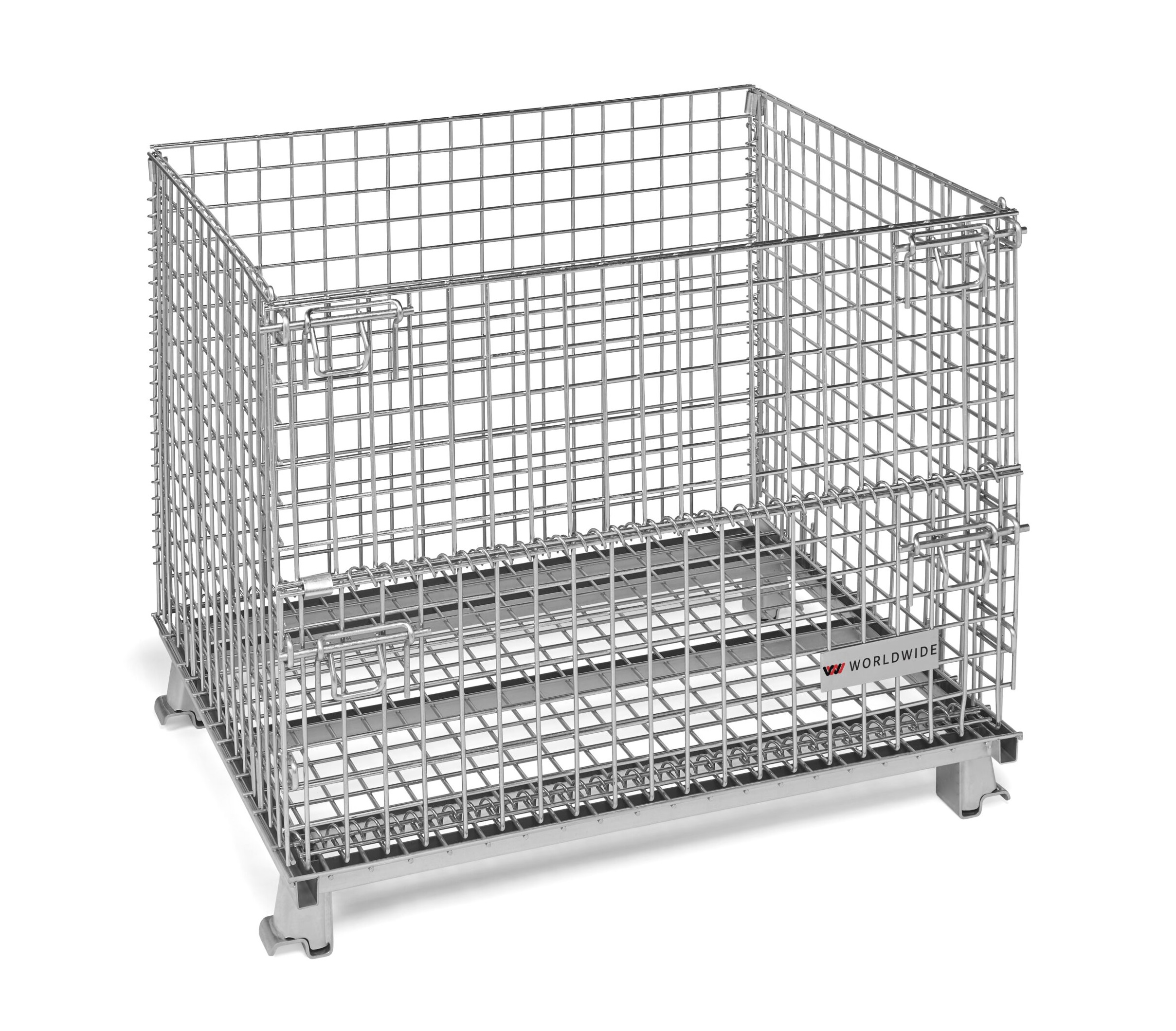
Showing all 5 resultsSorted by latest
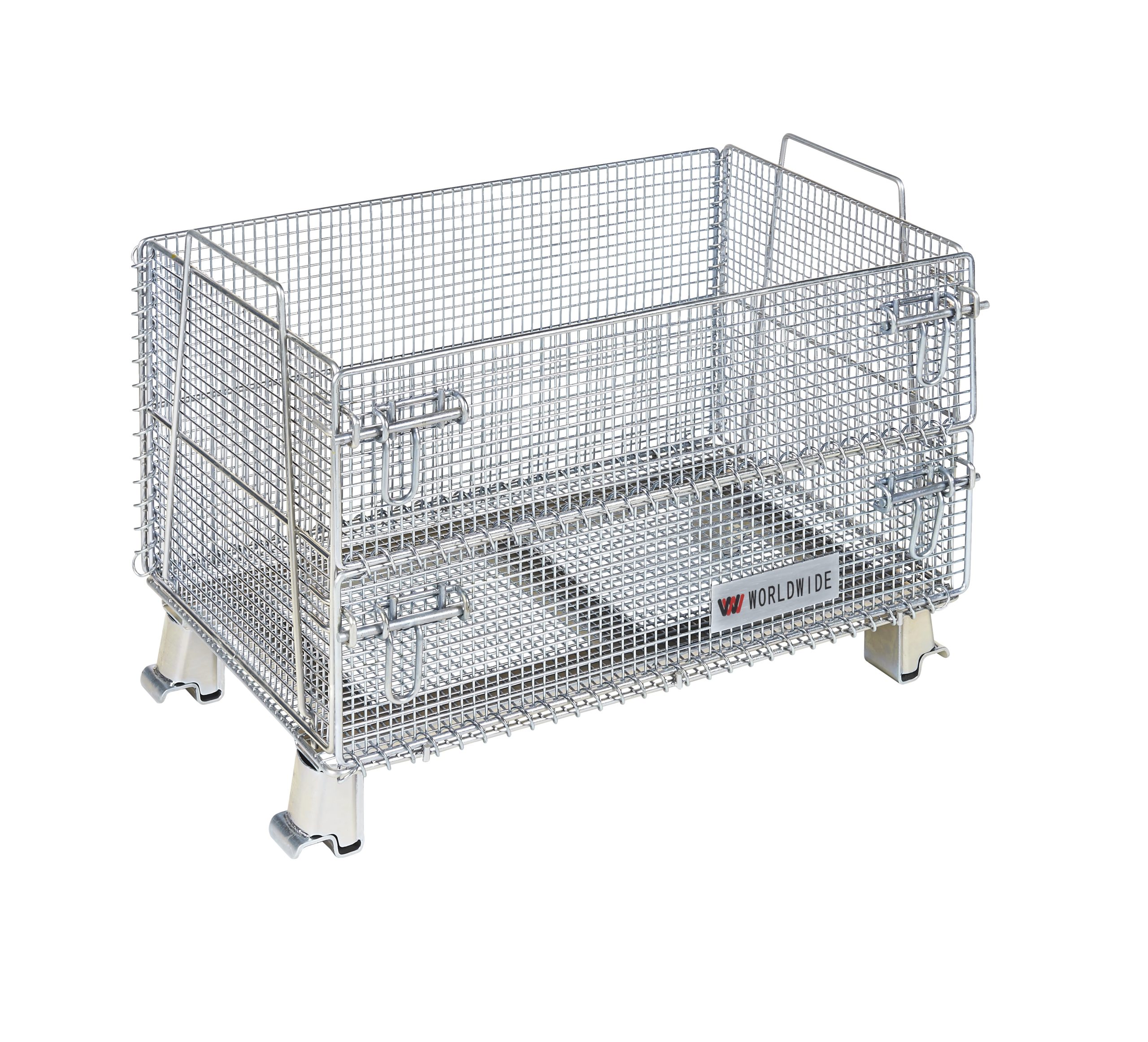
20″ x 32″ x 22″ Junior Wire Baskets & Containers
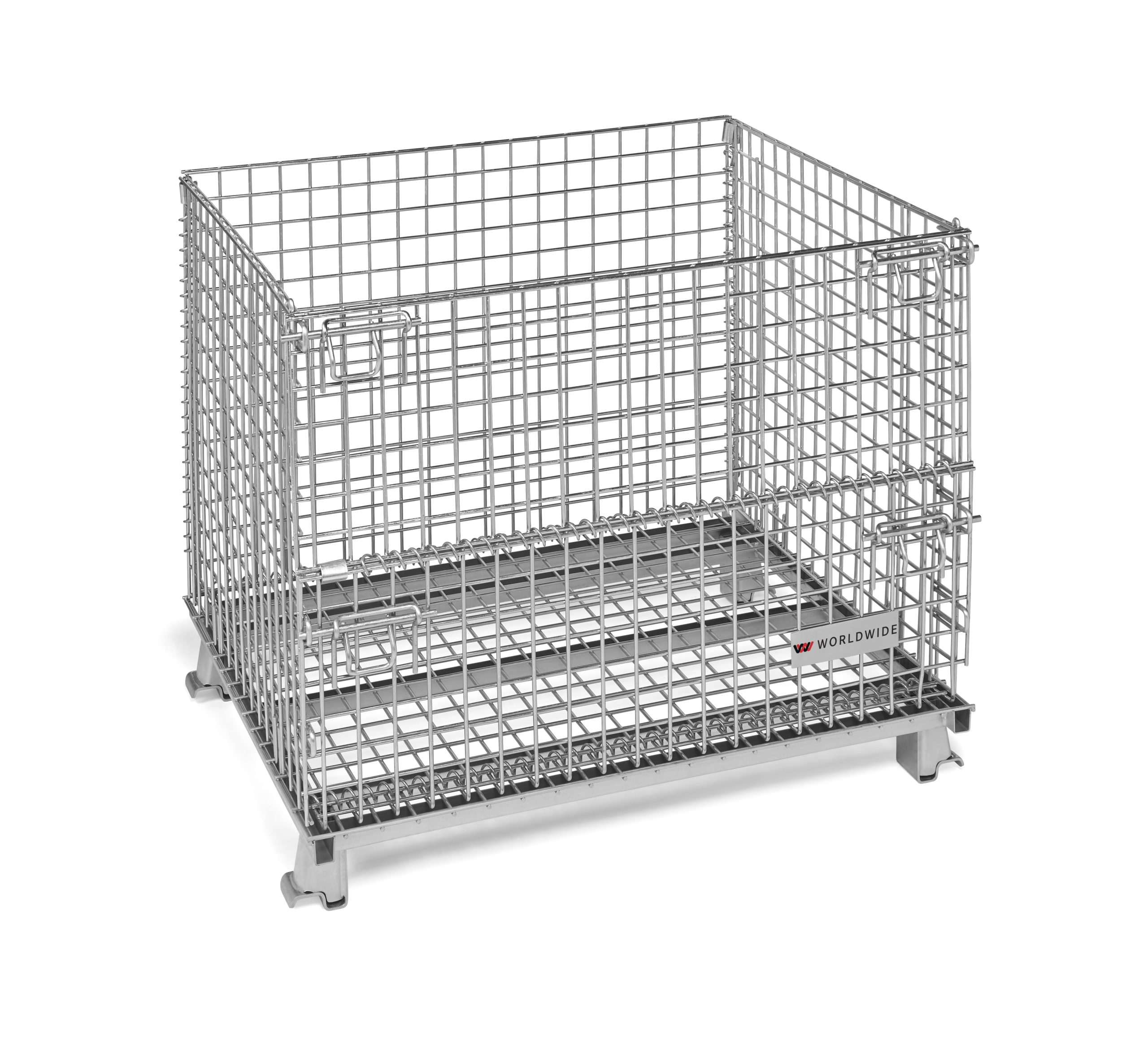
32″ x 40″ x 34″ Medium Wire Containers
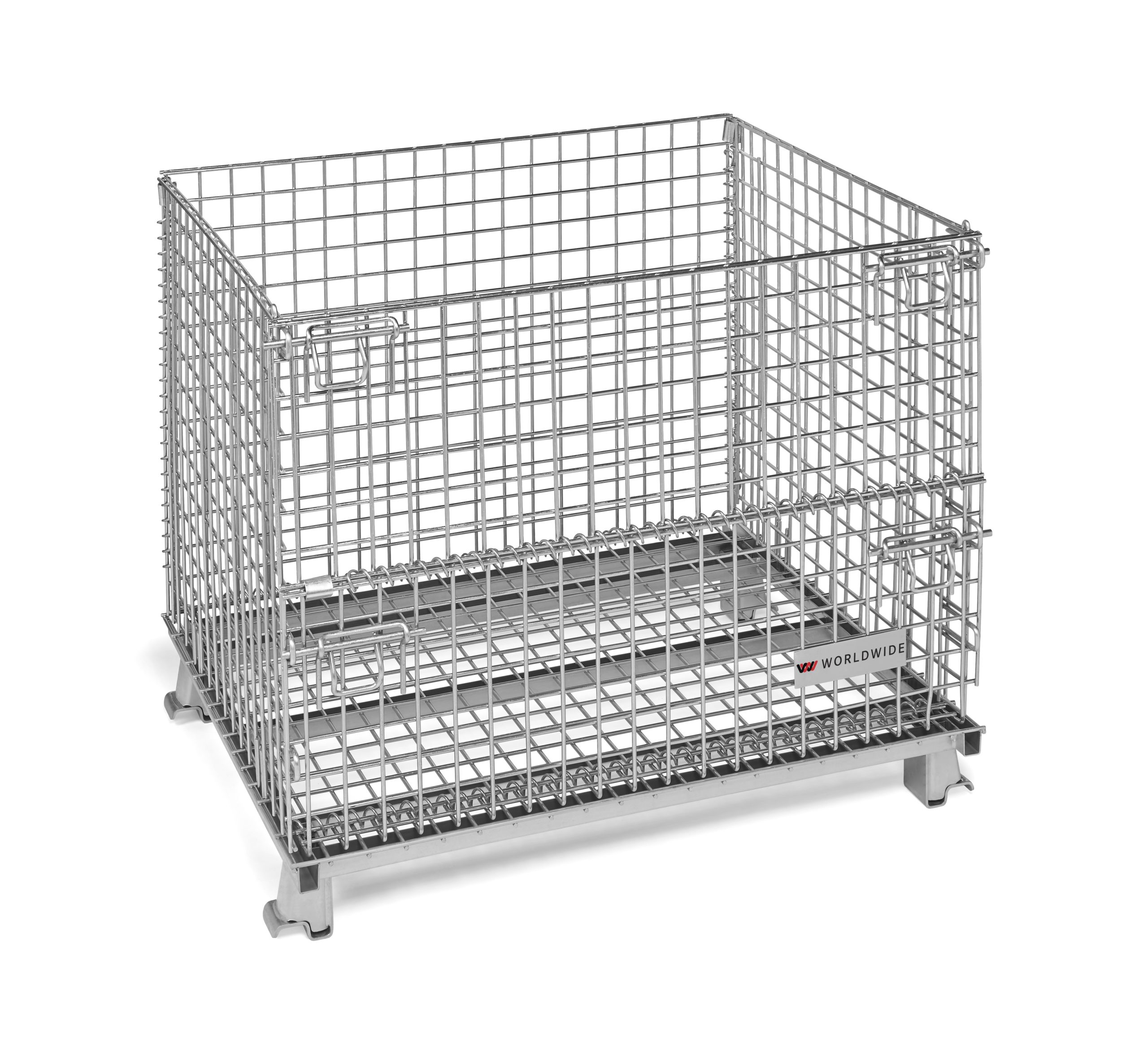
40″ x 48″ x 36″ Senior Wire Baskets & Containers
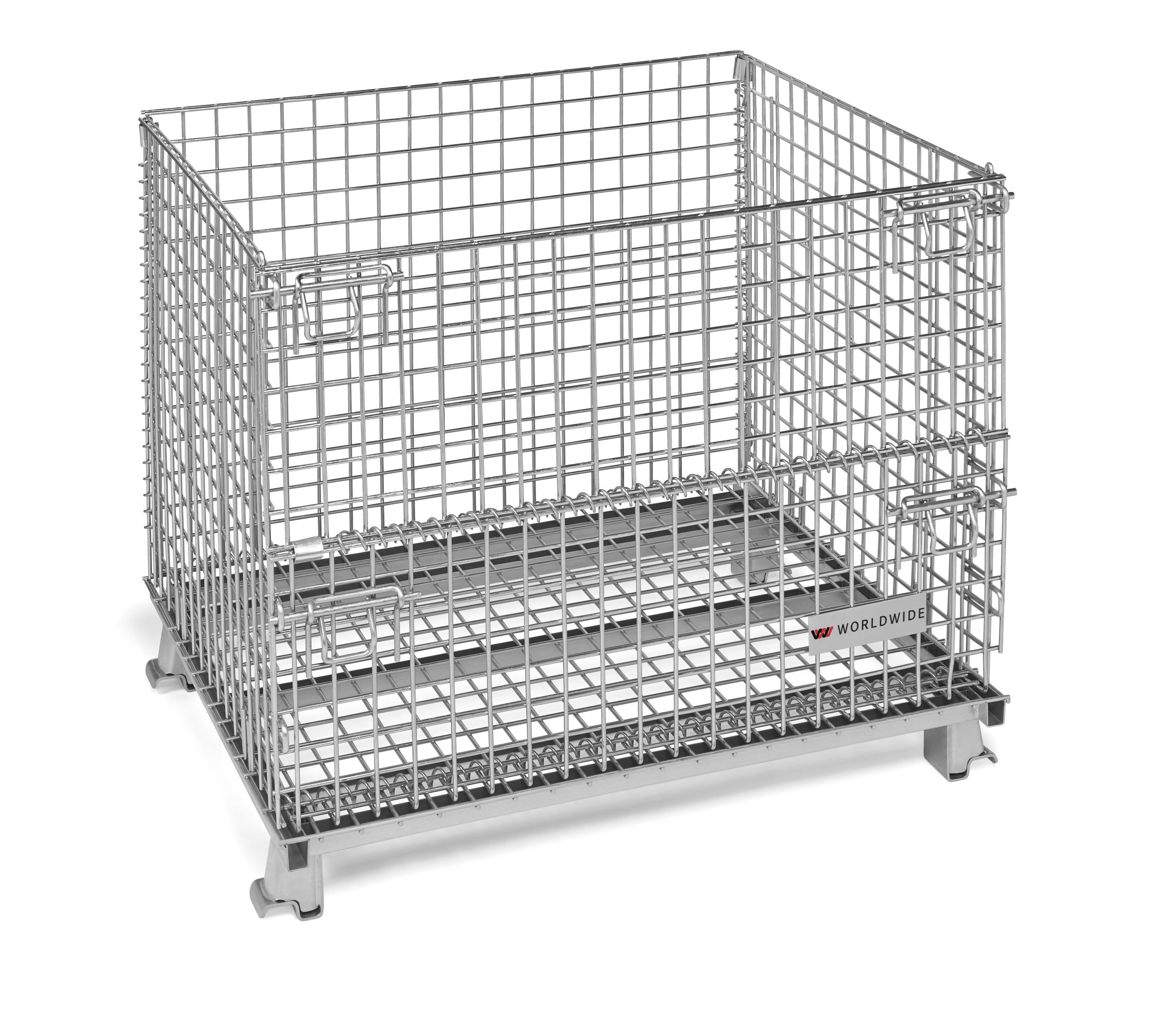
40″ x 48″ x 42″ Extra Large Wire Containers
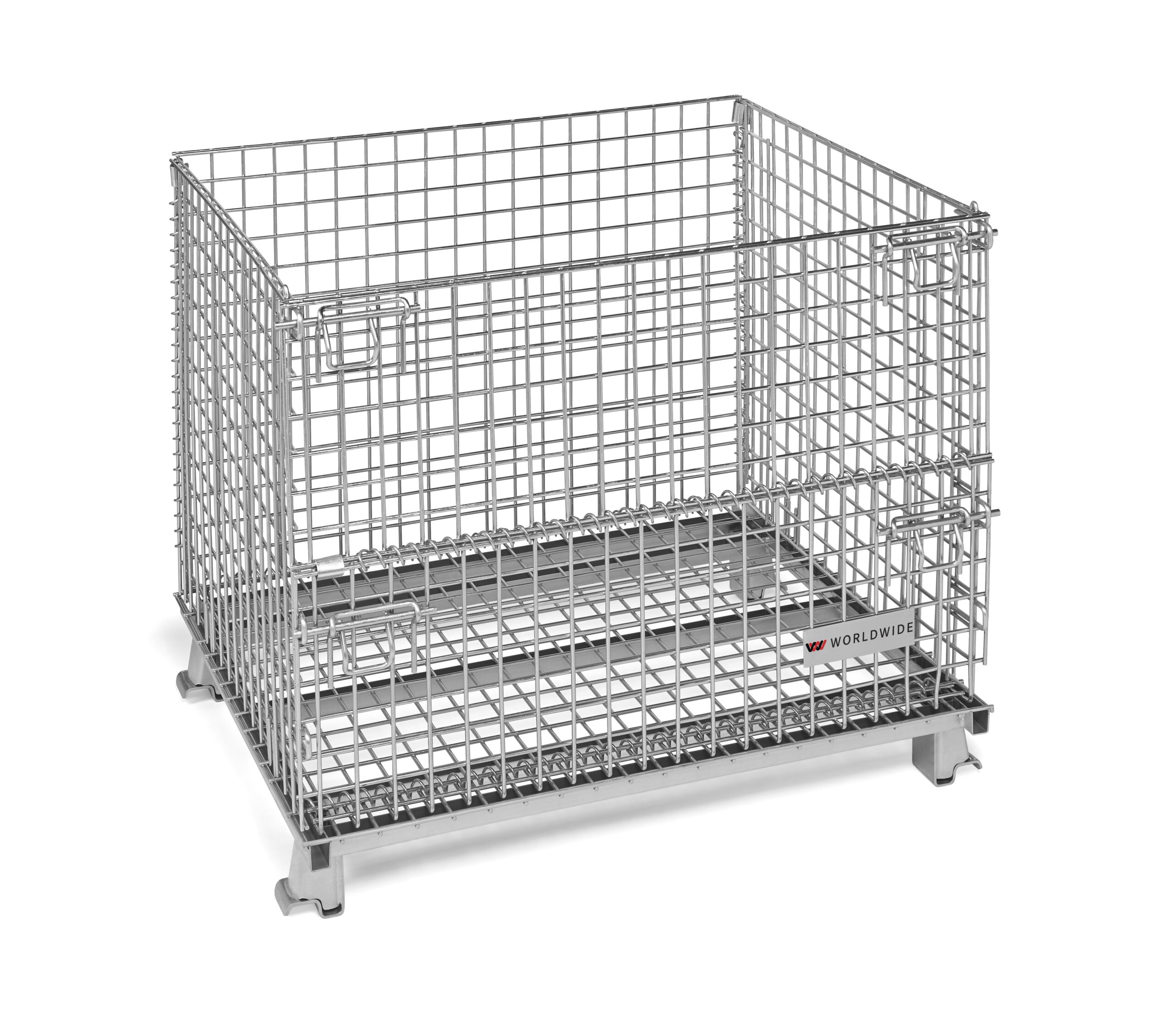
Collapsible Wire Container Sizes
Offering a wide range of container sizes improves overall inventory control and workplace organization. Warehouses can segregate goods by size and weight capacity, ensuring that heavy castings are placed in smaller, denser containers to prevent overloading, while lighter goods use high-volume baskets. This structured size management streamlines forklift retrieval, improves visibility during visual cycle counts, and ensures that the storage medium scales seamlessly with the production environment.




