Stack Rack Standard Features
Stack Rack Standard Features are the built-in components and design options that make portable steel stack racks a flexible alternative to fixed warehouse racking and floor stacking. A typical stack rack consists of a heavy-duty steel base, four corner pocket sockets, four removable corner posts, stacking targets or cups, and pin feet that allow compatible racks to stack vertically. Base patterns can provide two-way or four-way forklift entry, while optional or standard wire mesh decking creates a supportive storage surface for products that cannot sit directly on an open base. Stack racks are portable, stackable, and collapsible, allowing you to increase storage density when they’re loaded and recover valuable floor space when they’re empty. Standard capacities and dimensions are available, but one of their biggest advantages is that we can also design a stack rack around the size, weight, and handling requirements of your load.
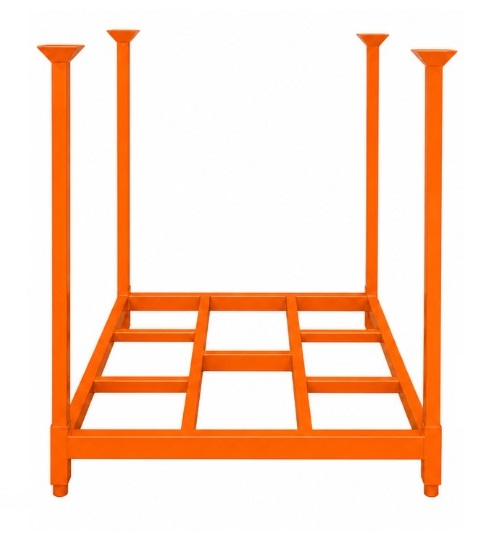
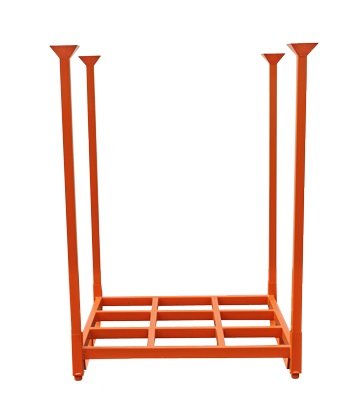
A Stack Rack with B-4 Base offers 4 Way Entry, giving forklift operators greater flexibility when moving racks throughout a warehouse or manufacturing facility. Instead of having to approach the rack from only two designated sides, the B-4 base is configured so the rack can be properly picked up from all four sides. That can make a big difference in tight aisles, staging areas, loading docks, and busy production environments. No more repositioning the forklift just to get to the correct side—approach, pick, and go.
The secret is in the base support pattern. When a stack rack is lifted, you want the forks properly positioned in relation to the structural support bars so the load is supported by the base. The B-4 pattern provides support for four-way forklift entry while also allowing products to be loaded from different directions. A modified B-4 design can use a combination of single and double support bars to provide similar four-way accessibility while reducing cost. The exact base configuration should always be matched to the rack dimensions, load, decking, and intended forklift handling.
Showing all 4 resultsSorted by latest
Stack Rack with B-4 Base offers 4 Way Entry
Stack Rack with B-2 Base offers 2 Way Entry
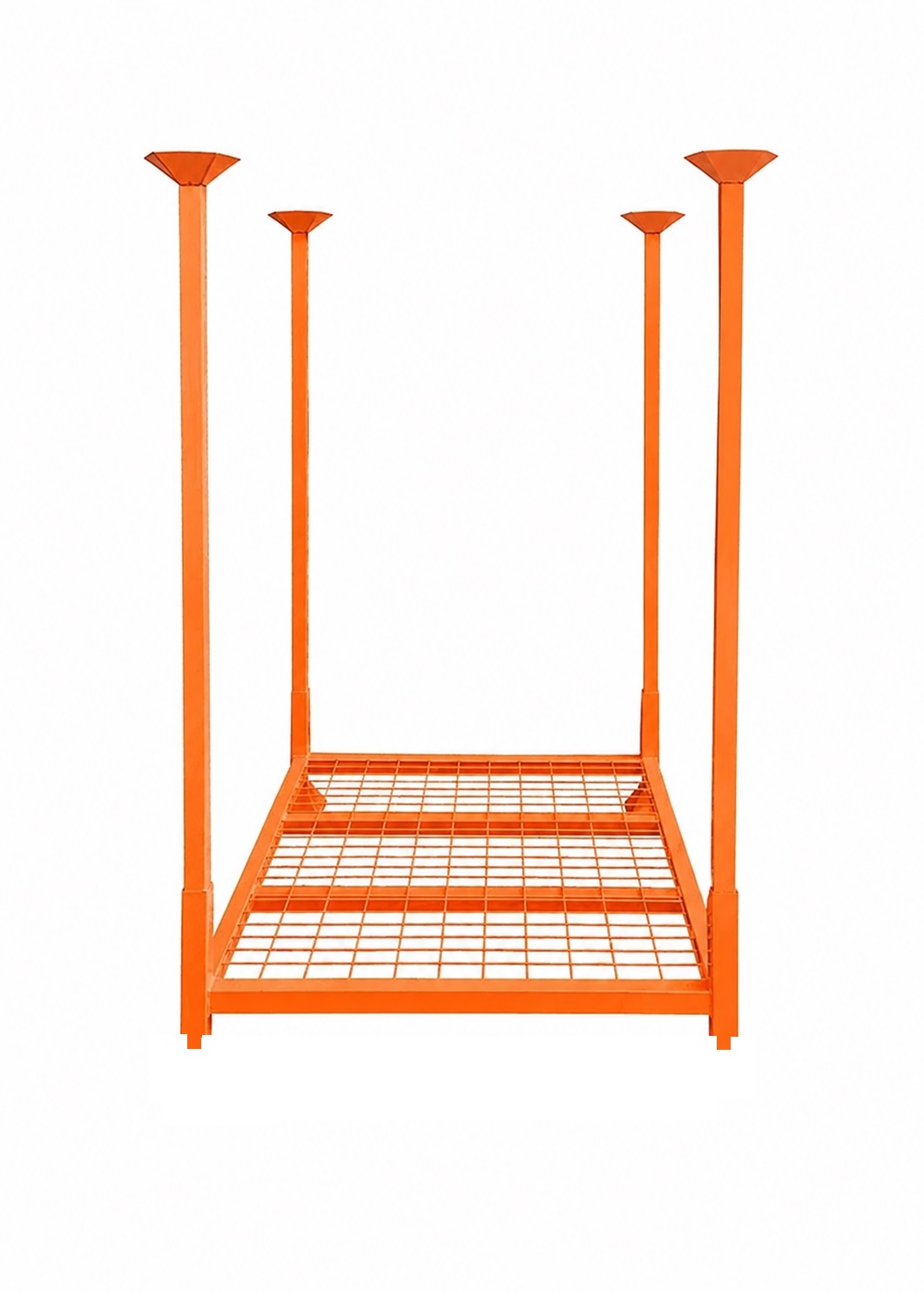
Stack Rack with Wire Mesh Decking
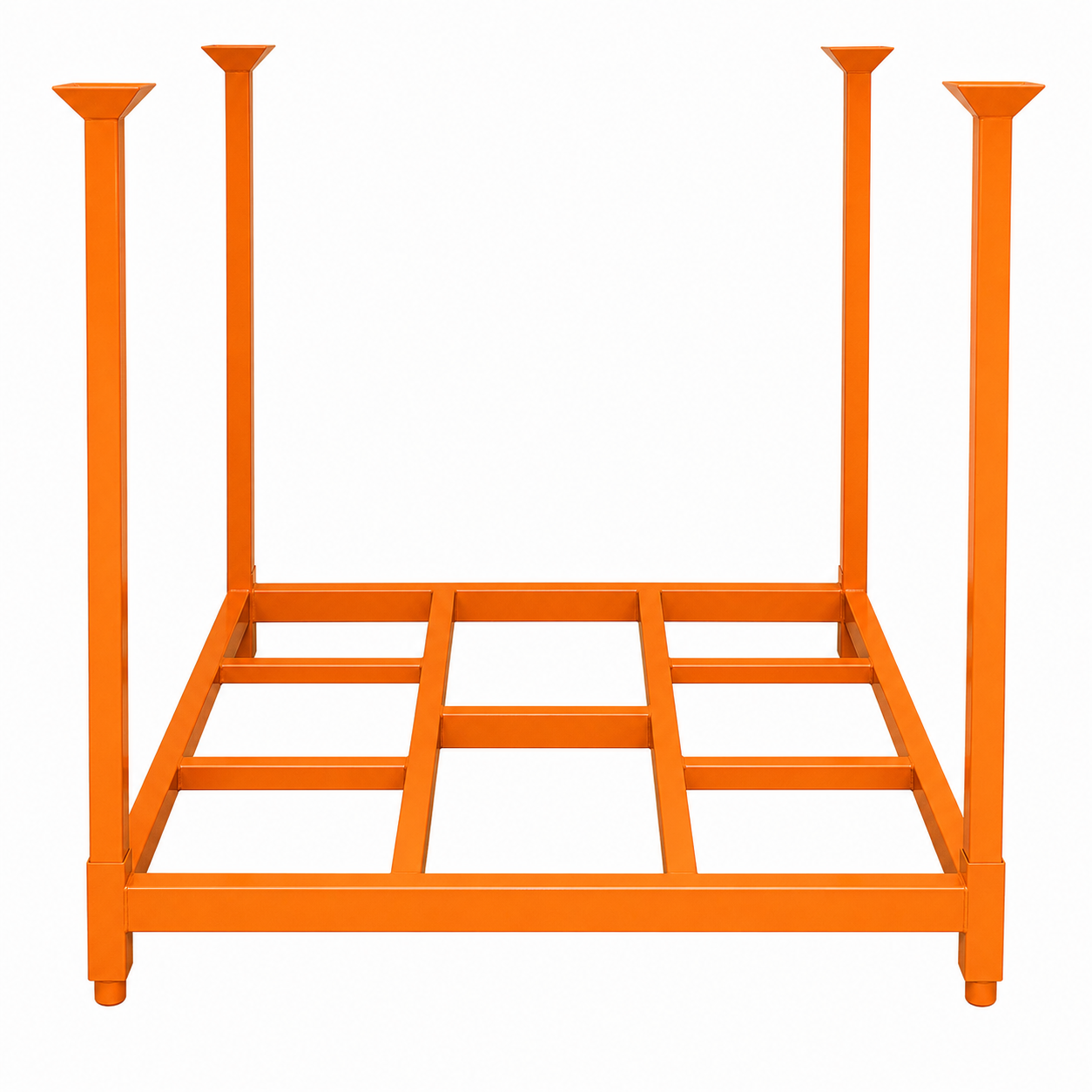
Stack Rack Standard Features
For operations where racks are frequently moved, rotated, staged, or approached from different directions, four-way entry can be well worth the upgrade. It gives forklift drivers more options and can reduce unnecessary maneuvering, particularly when floor space is limited.
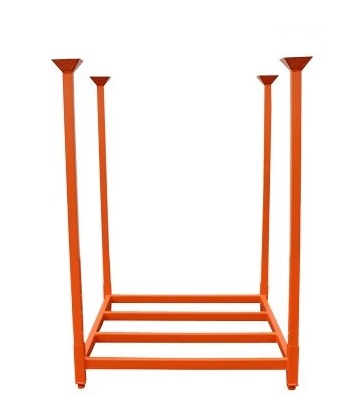
A Stack Rack with B-2 Base offers 2 Way Entry, which means the rack is designed to be picked up by a forklift from two opposite sides. An important point here is that forklift entry and product loading aren’t necessarily the same thing. Depending on the load, you may be able to place material onto the rack from multiple sides, but the forklift should approach a B-2 base from the designated lifting directions.
Why? Because the interior support bars need to cross the forklift forks to provide proper support. Picking up the rack from the wrong direction can result in poor base support and, where mesh is present, increase the possibility of a fork contacting or pushing through the decking. That’s why understanding the base pattern matters before the rack goes into service.
B-2 bases provide an economical solution, particularly for smaller stack racks where two-way forklift entry is sufficient for the workflow. The source configuration uses a B-2 base on the standard 48″ x 48″ stack rack, while larger stock sizes use upgraded four-way-entry base patterns. If your operation requires frequent access from every direction, however, a B-4, B-5, or custom base may provide better handling flexibility.
A Stack Rack with Wire Mesh Decking combines the portability and stackability of a steel stack rack with a more complete storage surface. Wire mesh decking has become one of our most popular stack rack options because it provides support for products that might not sit properly on an open steel base. It also gives you a durable all-steel alternative to plywood decking.
The open mesh has some practical advantages. It allows air and light to pass through the rack and provides drainage while reducing the broad surfaces where dust and dirt can accumulate. Better visibility can also make products easier to identify during inventory and picking. For facilities using stack racks repeatedly, steel wire mesh eliminates concerns about plywood eventually splintering, absorbing moisture, or breaking down through repeated handling.
Wire decking can be combined with heavier base patterns on larger racks to create a portable, stackable, and collapsible storage system. When the racks are loaded, they can utilize vertical warehouse space. When they’re empty, the removable posts can be taken out so the components require less storage space. As with any decked rack, the mesh, base, and complete rack should be selected for the actual load and its weight distribution.
At first glance, a stack rack is pretty basic: you’ve got a base and four removable corner posts. But look a little closer and you’ll see that several standard features are working together to make that rack portable, collapsible, and stackable.
The base is the foundation of the system. Standard configurations can include B-2 two-way entry, B-4 four-way entry, B-5 four-way entry with additional supports for longer racks, or a custom base configuration. An open base may be used when decking isn’t required, while wire mesh or another deck surface can be added when the product needs additional support. Standard capacities include 2,000, 2,500, 3,000, and 4,000 lbs. in the source product line, with the appropriate capacity selected for the specific rack and application.
Removable corner posts are what give stack racks much of their flexibility. They fit into corner pocket sockets located at each corner of the base and can be removed when the rack isn’t being used. A 60″ usable post height is a popular configuration, although other lengths can be supplied. Standard pocket sockets are 9″ high, with 12″ heavy-duty sockets available for applications requiring that configuration.
At the top of the posts, 6″ stacking targets or cups help guide the rack above into position, while pin feet or pintles at the bottom corners engage the stacking targets below. Together, these components allow compatible racks to be stacked vertically according to their rated design. An orange powder-coat finish is standard on the source product line, with other colors available. Standard stock sizes include 48″ L x 48″ W x 60″ H and 60″ L x 60″ W x 60″ H, but custom dimensions allow us to design the rack around your product instead of making your product fit the rack.
The beauty of a stack rack is that all these fairly simple features work together. You get portable storage when you need to move inventory, vertical storage when you need to increase density, and collapsible storage when the racks aren’t being used. Add the correct base pattern and decking, and the rack can be configured around the way your facility actually stores and handles products.
Frequently Asked Questions About Stack Rack Standard Features
Should I choose a B-2, B-4, or B-5 stack rack base?
Start with how your forklift needs to approach the rack. A B-2 base provides two-way forklift entry and can be a practical, economical choice for smaller racks or applications where access is predictable. A B-4 provides four-way entry for greater handling flexibility. A B-5 also provides four-way entry but incorporates additional base supports for longer rack configurations. Rack dimensions, load weight, load distribution, forklift fork length, and decking should all be considered before selecting the base.
How high can portable stack racks be stacked?
The source product line describes configurations designed to stack up to four high, but that should not be treated as a universal rule for every stack rack or application. Safe stacking height depends on the specific rack design and rating, load weight and distribution, floor condition, rack condition, stability, and other application factors. Follow the manufacturer’s rated stacking limits for the specific rack and never assume that one rack’s stacking height applies to another.
Do stack racks require installation or floor anchoring?
One of the advantages of portable stack racks is that they’re designed to remain portable, so they don’t install like conventional fixed pallet rack. Removable posts are inserted into the corner sockets and compatible racks can then be stacked according to the manufacturer’s instructions. Because the racks are intended to be moved, they generally aren’t treated as permanently anchored storage racks. The actual application should still be reviewed for safe clearances, floor conditions, handling procedures, and any facility-specific requirements.
What maintenance should stack racks receive?
Stack racks are relatively simple, but regular inspections are still important. Check the base, welds, support bars, pocket sockets, removable posts, pin feet, and stacking targets for bending, cracks, excessive wear, corrosion, or forklift damage. Wire mesh decking should be checked for broken welds, bent mesh, and damage from concentrated loads or forklift forks. Any rack with significant structural damage should be taken out of service and evaluated rather than simply straightened or modified without appropriate guidance.




