Keg Flow Racks
Keg flow racks are heavy-duty gravity-fed storage systems designed to densely store beer, wine, and beverage kegs while bringing them directly to the picking face. Built from pallet rack combined with heavy-duty rollers or keg flow beds, these systems can store kegs vertically or horizontally and can be designed for First-In, First-Out (FIFO) inventory rotation. Keg flow racks reduce handling, improve storage density, speed up order picking, and make better use of valuable warehouse and cooler space. They can be incorporated into new pallet rack or, in many cases, added to existing rack. If you’re storing a lot of kegs, the goal is pretty simple: store more of them and make them easier to pick.
Vertical Keg Flow Rack | Keg Storage Flow Racks
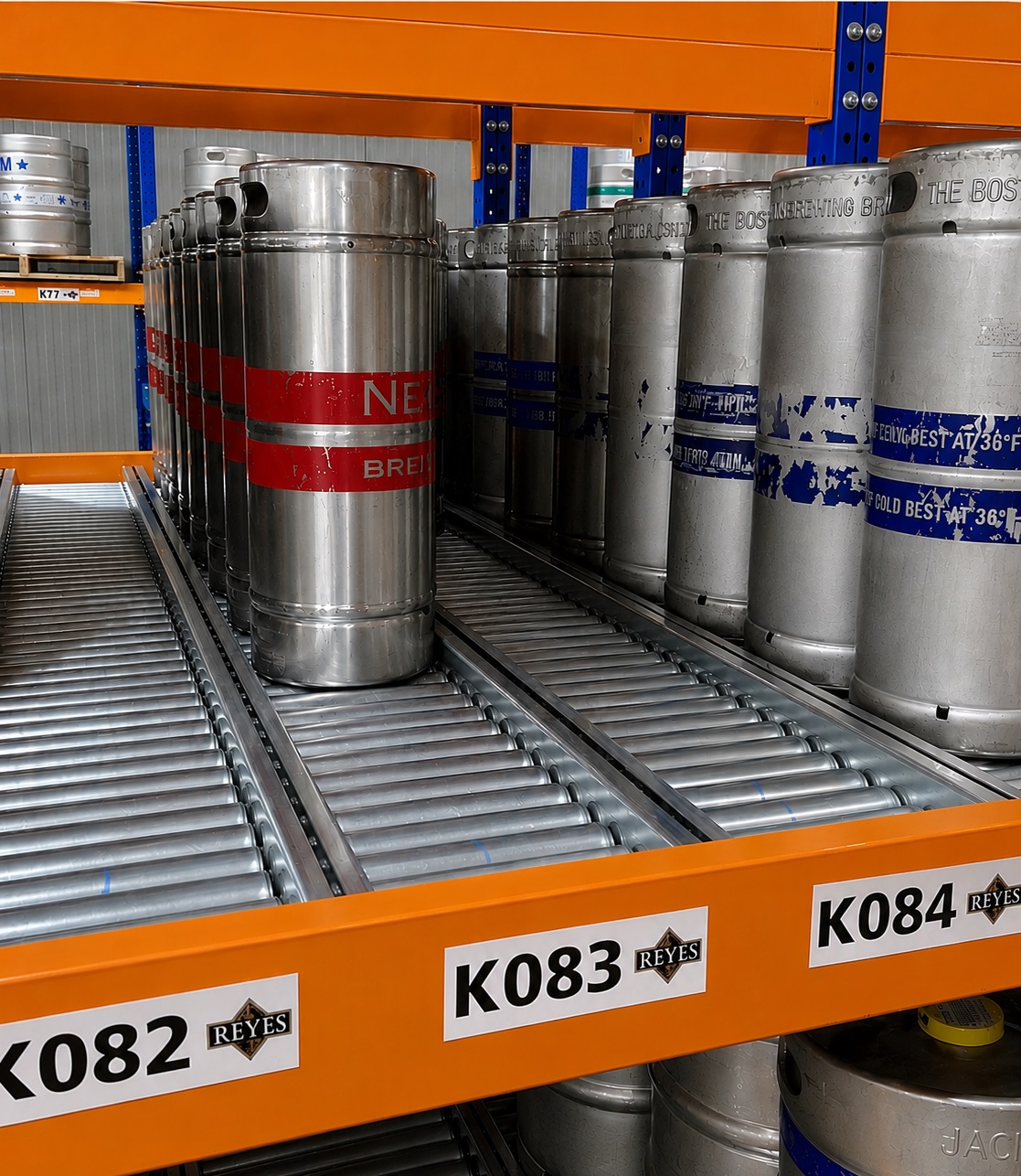
Vertical keg flow rack combines pallet rack with heavy-duty full-width rollers to create high-density storage for multiple keg sizes. Kegs can be loaded from the rear and picked from the front for FIFO inventory rotation or, depending on the design, loaded and unloaded from the same side. The roller system can be supplied with new pallet rack or designed to fit compatible existing rack.
Showing all 2 resultsSorted by latest
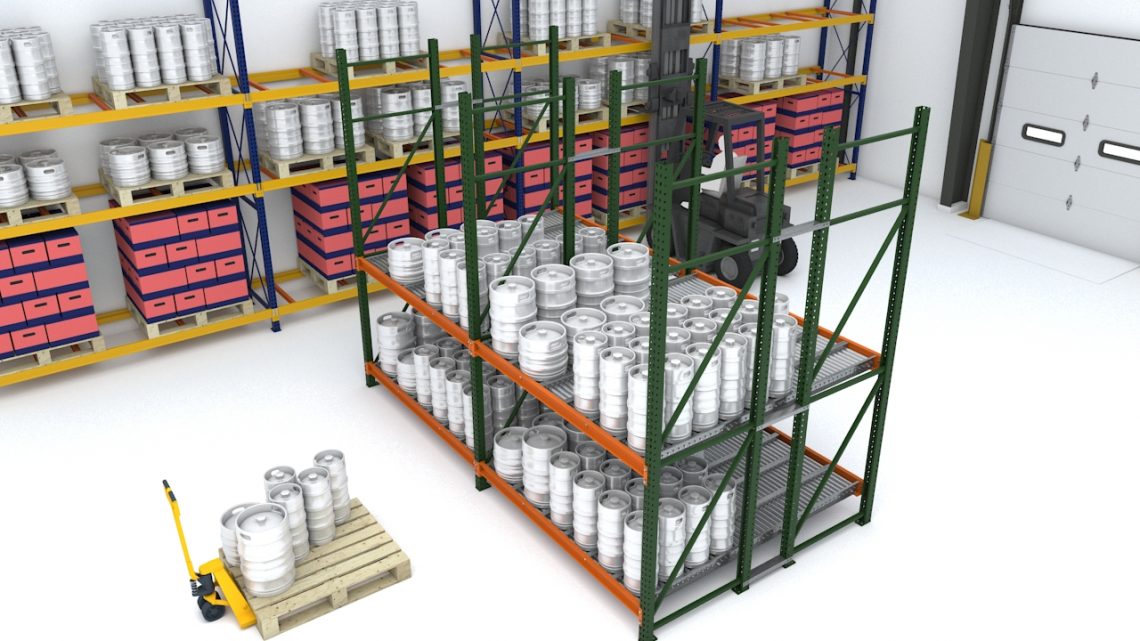

Individual lanes can be dedicated to different brands or SKUs, with some systems storing kegs up to eight deep. The rollers can be installed level or pitched so gravity automatically brings the next keg toward the picking face. Front beams or stops help keep kegs securely positioned at the discharge end. The system works well in dry warehouses, coolers, and freezer applications where storage space is valuable and fast order fulfillment matters.
Vertical keg flow becomes especially useful as SKU counts increase. A brewery or distributor that once handled a handful of keg varieties may now be managing dozens. Giving individual SKUs dedicated flow lanes keeps inventory organized and makes replenishment easier. With rear loading and front picking, older kegs naturally move through the system first. That’s good inventory control, and in the beverage business, freshness matters.
Horizontal keg flow racks store kegs on their sides across multiple pallet rack shelf levels. Keg flow beds fit between the rack beams and allow each keg to roll toward the front of the shelf as the keg ahead of it is removed. This creates dense storage while eliminating the need to constantly reach or work deeper into the rack to retrieve inventory.
One of the biggest advantages is that horizontal keg flow can turn standard pallet rack into a dedicated keg storage and picking system. Flow beds are available in different sizes and can be installed at multiple beam levels, allowing breweries, distributors, wholesalers, and retailers to use vertical space that might otherwise be wasted.
And really, that’s what keg storage comes down to: How many kegs can you store, and how quickly can you get them out the door? If you can put more kegs into the same amount of space while making them faster and easier to pick, you’re getting more out of your rack, your building, and your labor.
Keg Flow Rack FAQ
Should I use vertical or horizontal keg flow?
It depends on your keg sizes, available space, picking method, and how many SKUs you carry. Vertical flow can provide dedicated lanes for different keg brands and sizes while supporting deep storage. Horizontal flow uses multiple rack levels and can make excellent use of vertical warehouse or cooler space. Start with your keg inventory and picking process, then design the rack around them.
Can keg flow racks be added to existing pallet rack?
In many cases, yes. Keg flow beds and roller systems can be designed to fit compatible existing pallet rack. But don’t assume that any flow bed can simply be dropped into any rack. Rack width, depth, beam style, beam capacity, keg weight, roller configuration, clearances, and required pitch all need to be checked before installation.
Should keg flow lanes be level or sloped?
That depends on the system and how you want the kegs to move. A properly designed slope allows gravity to bring kegs toward the picking face automatically. The pitch has to provide reliable movement without allowing a heavy keg to move too quickly. Keg size, weight, roller type, lane depth, and stopping method should all be considered when determining the proper grade.




