Pipe Storage Racks
Pipe Storage Racks are industrial storage and material handling systems designed to organize, support, store, and transport long materials such as steel pipe, PVC pipe, tubing, bar stock, conduit, hose, poles, and other oversized products. Unlike conventional shelving designed around boxes or pallets, pipe racks provide the length, load support, containment, and open access needed for products that can be difficult to handle and store. Depending on the application, Pipe Storage Racks can be stationary, portable, stackable, towable, vertical, horizontal, cantilevered, or designed for loading with forklifts and overhead cranes. The right system helps get pipe off the floor, utilize vertical space, reduce product damage, improve inventory organization, and make long materials easier to move from storage to production or the jobsite.
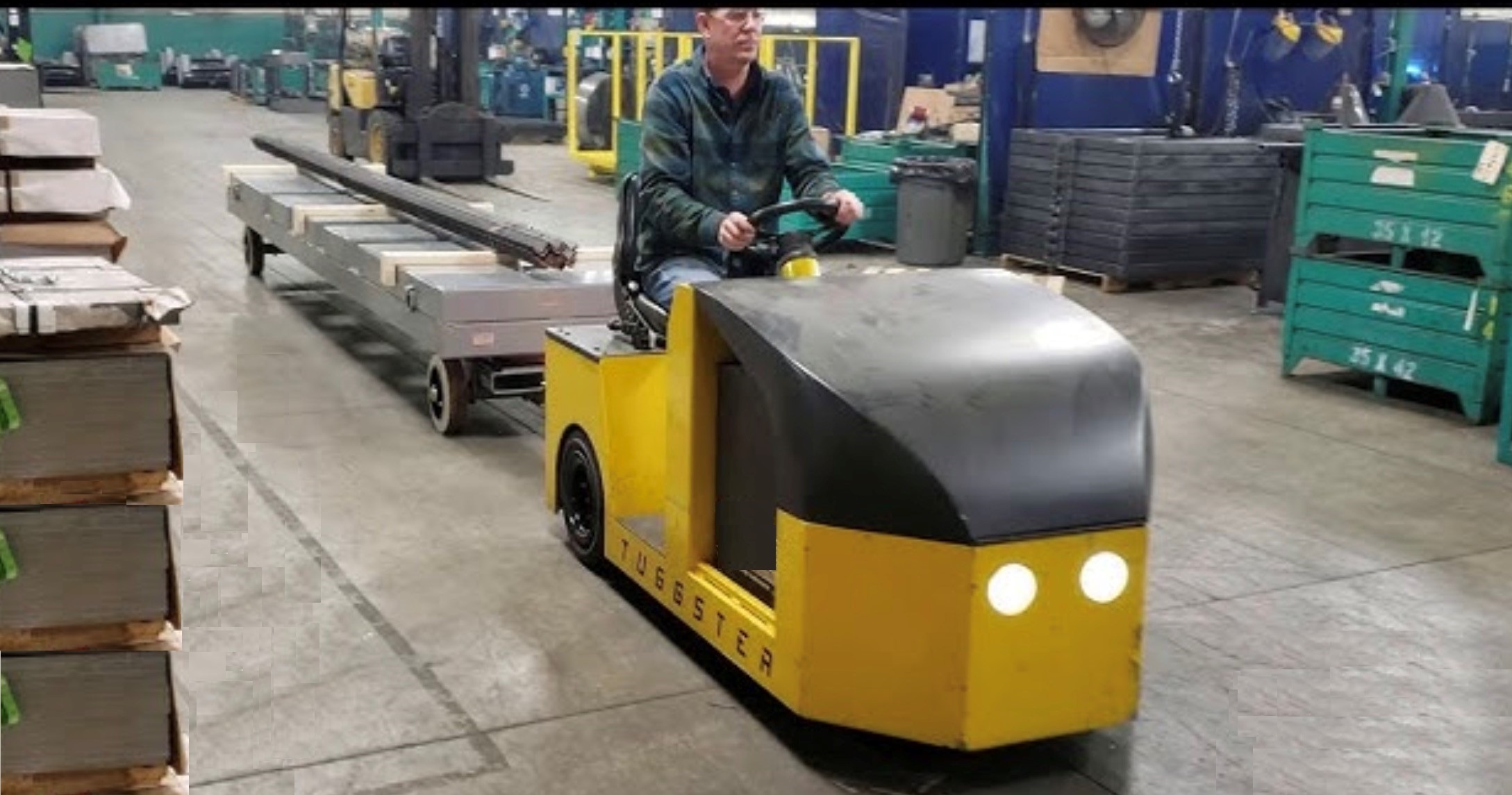
Our Pipe Transport Tow Trailers | Front Steer Pipe Carts give you two material handling solutions in one. One minute the unit can be towed behind a forklift, and the next it can be converted into a front-steer pipe cart by removing the tow bar, hitch, and coupler. Fork tunnels on the short sides provide another handling option when the cart needs to be picked up or repositioned by forklift.
These carts are designed to transport long, heavy products from storage to manufacturing or work areas, reducing repeated handling and helping keep production moving. Heavy-duty wheels and rotating front-wheel assemblies provide maneuverability in aisles, while available D-rings can provide tie-down points and removable side bars can help contain appropriate loads during transport. Different widths and lengths can be configured for materials such as steel pipe, steel angle, and other long products.
Showing all 12 resultsSorted by latest
Pipe Transport Tow Trailers | Front Steer Pipe Carts
Crank Out Cantilever Racking
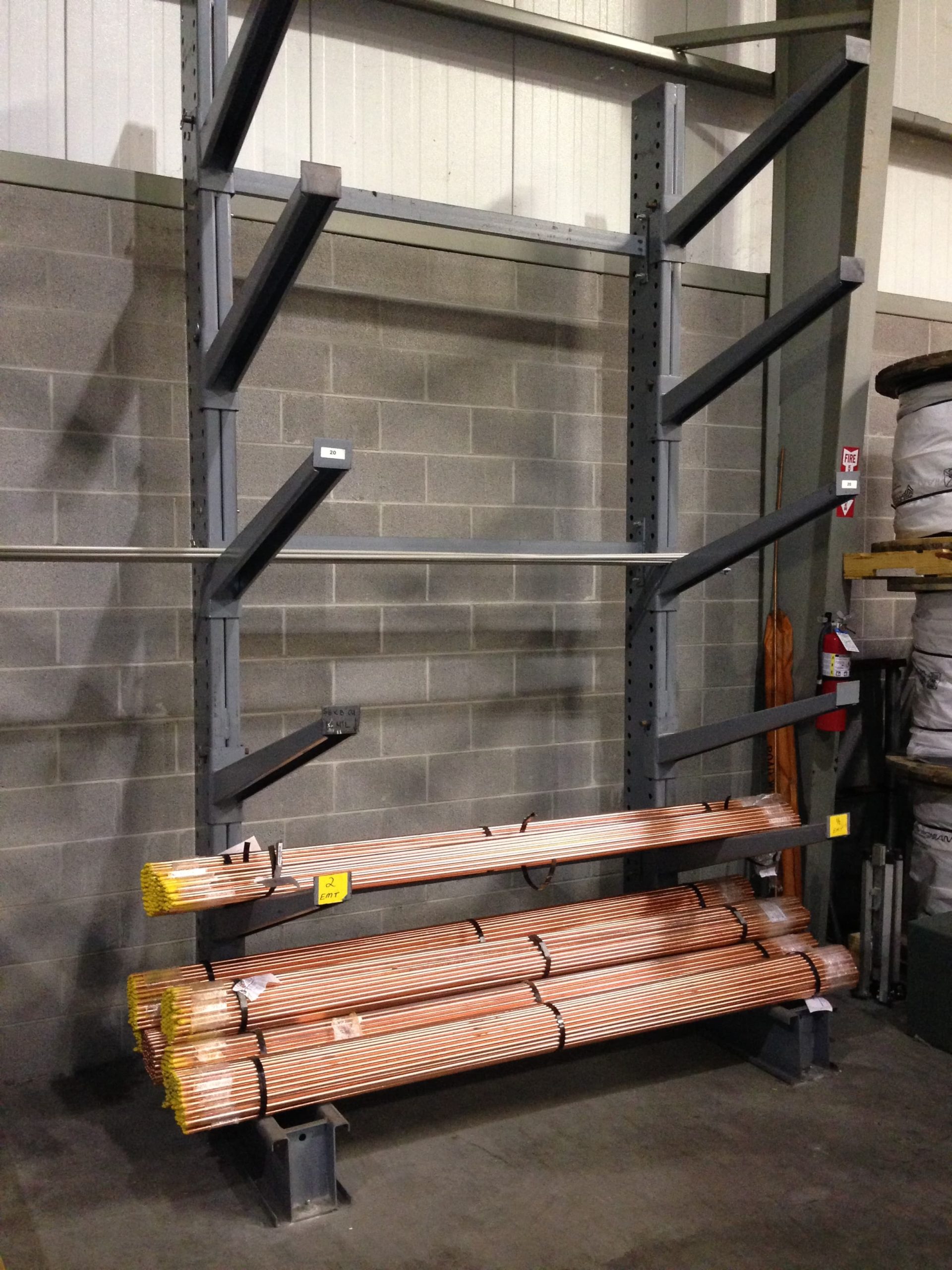
Cantilever Rack with Inclined Arms for Round PVC Pipe, Steel Bar & Wood Pole Storage
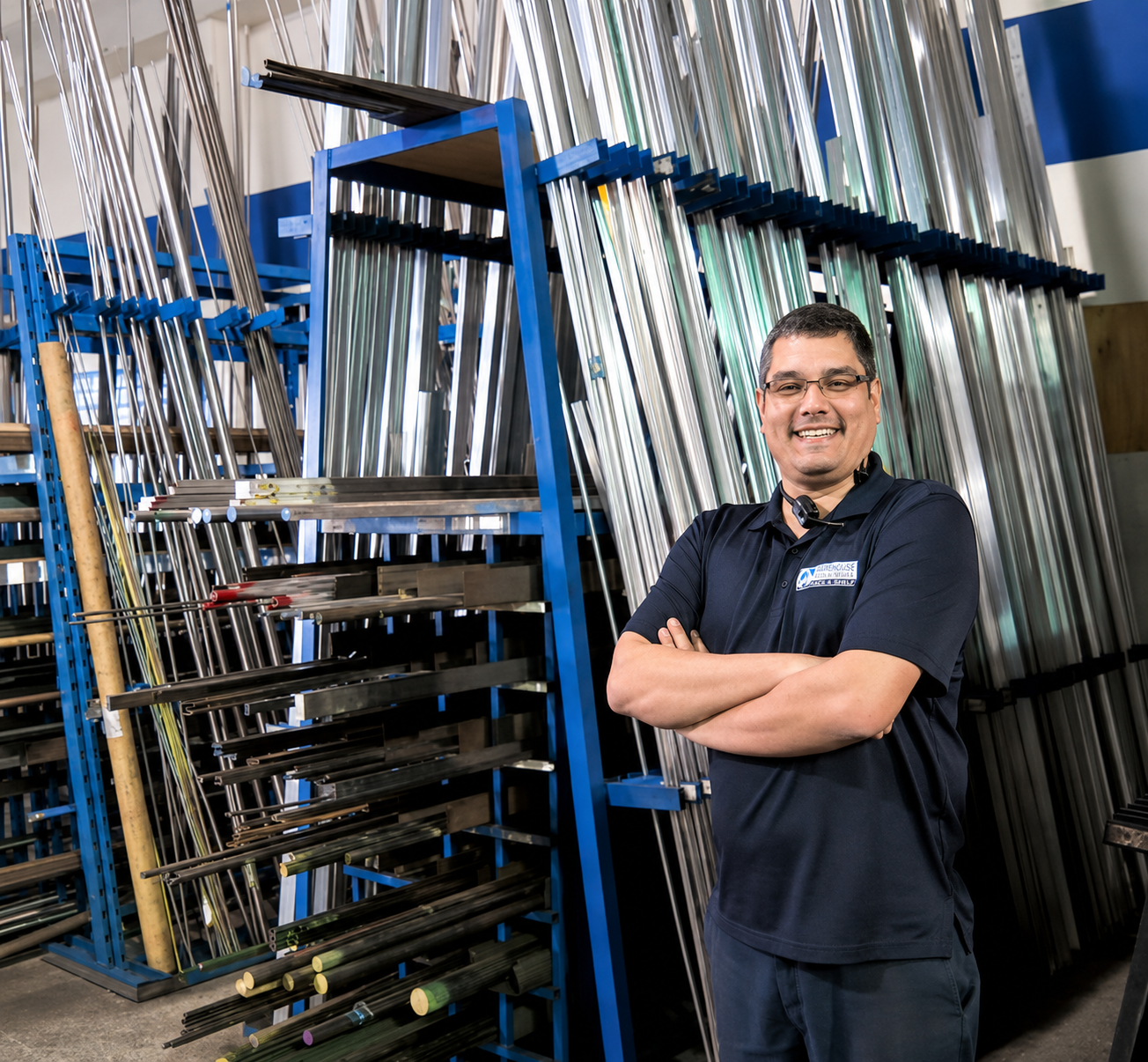
Heavy Duty Double Sided A-Frame Vertical & Horizontal Pipe Storage Rack

Stanchion Racks for Pipe Storage with Overhead Crane
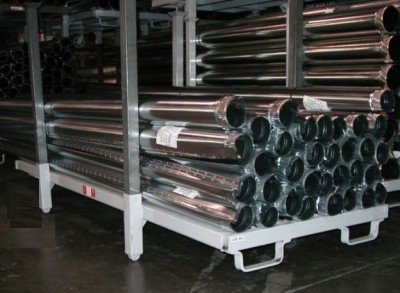
HVAC Duct Pipe & Fittings Storage Stack Racks
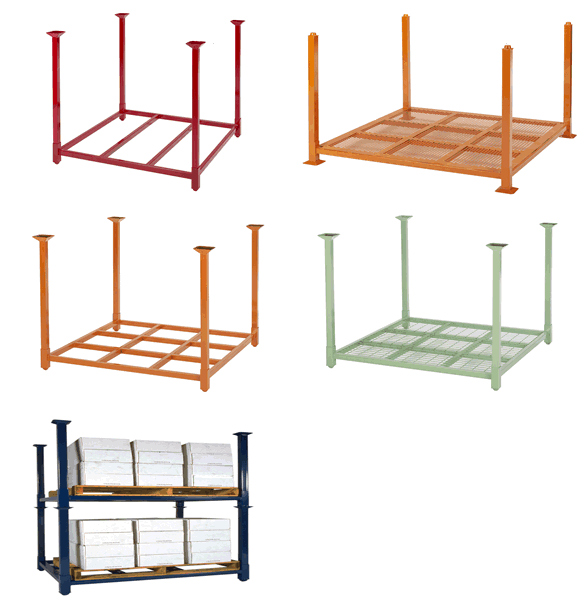
Portable Stack Racks
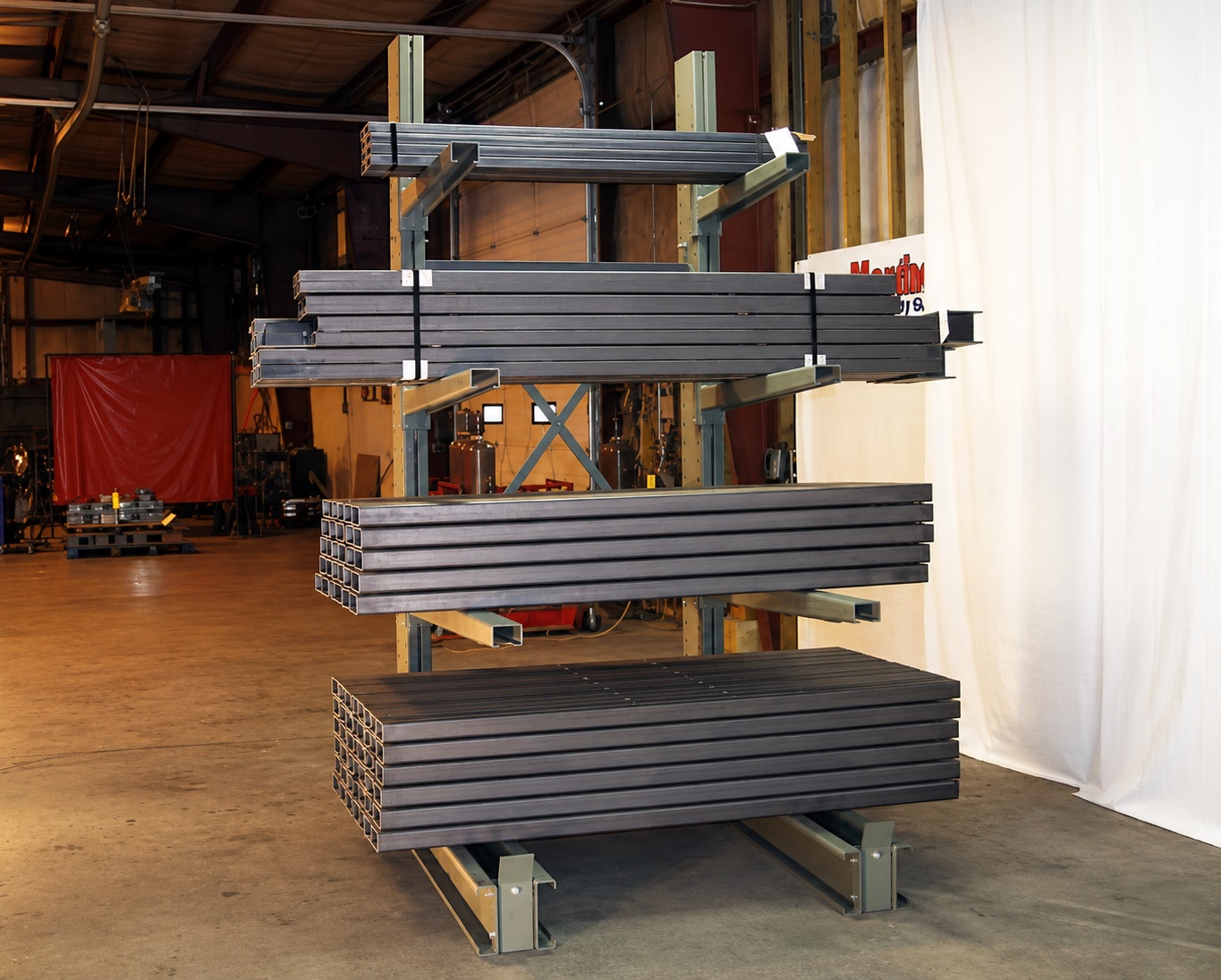
Cantilever Steel Bar, Tubing & Pipe Storage Racks
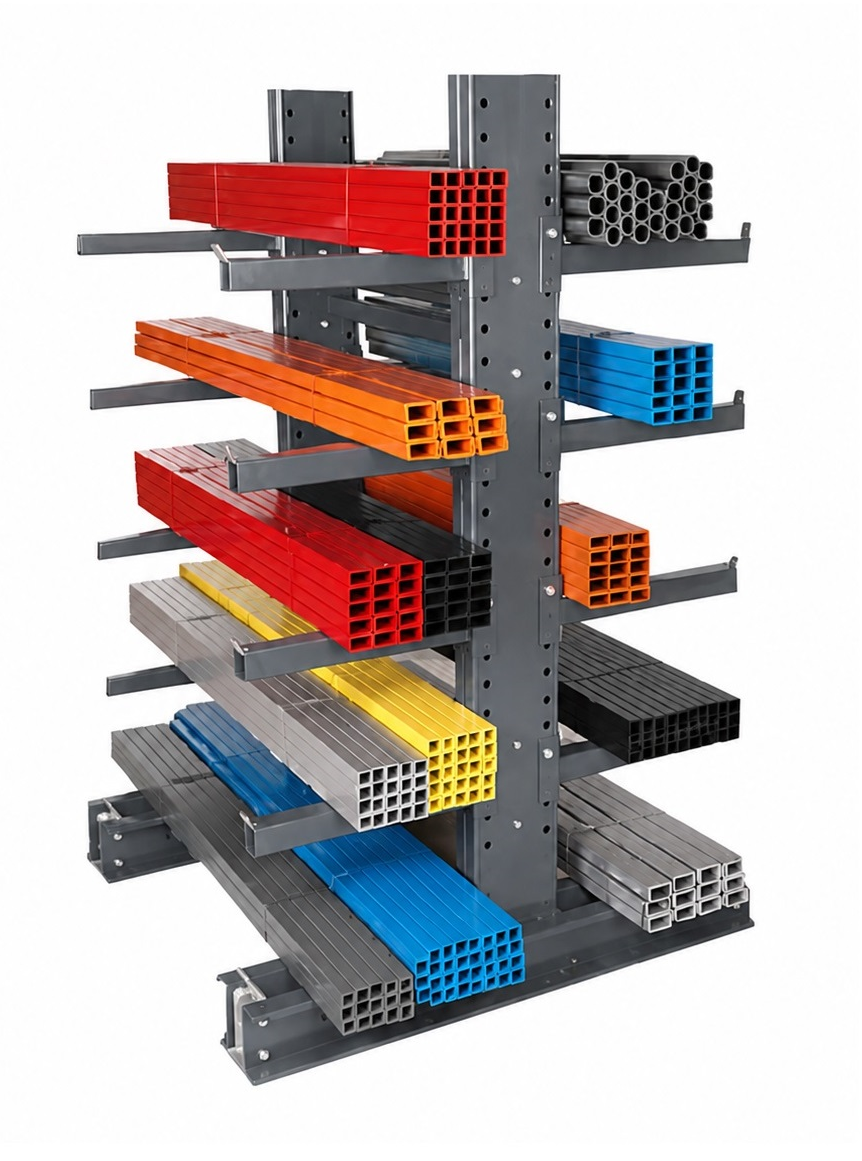
Cantilever Racks
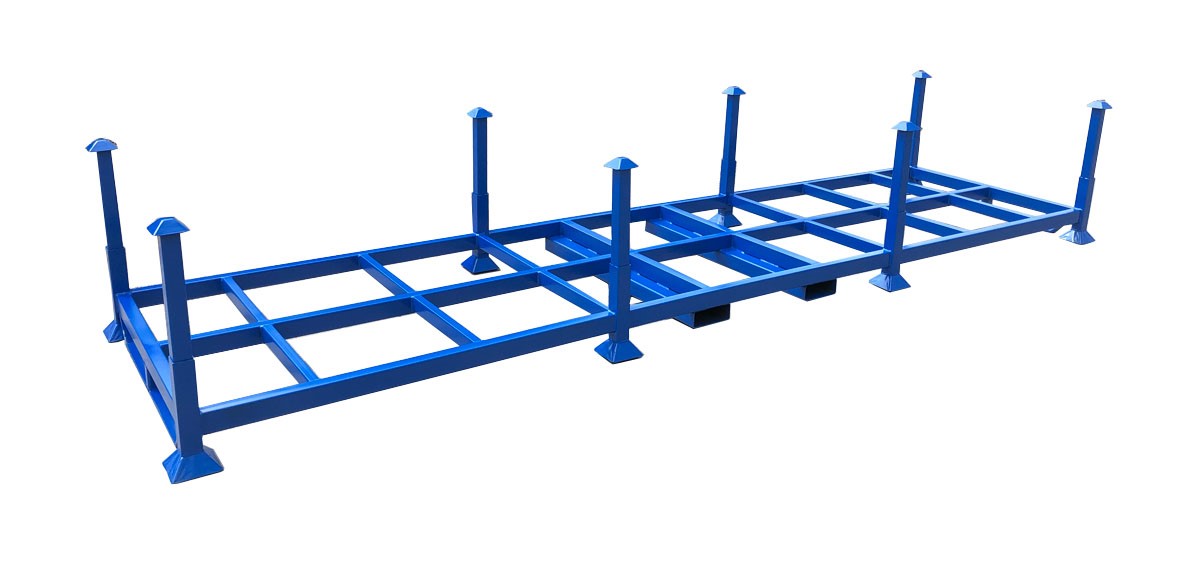
Pipe & Hose Transport Stack Rack with Removable Corner Posts
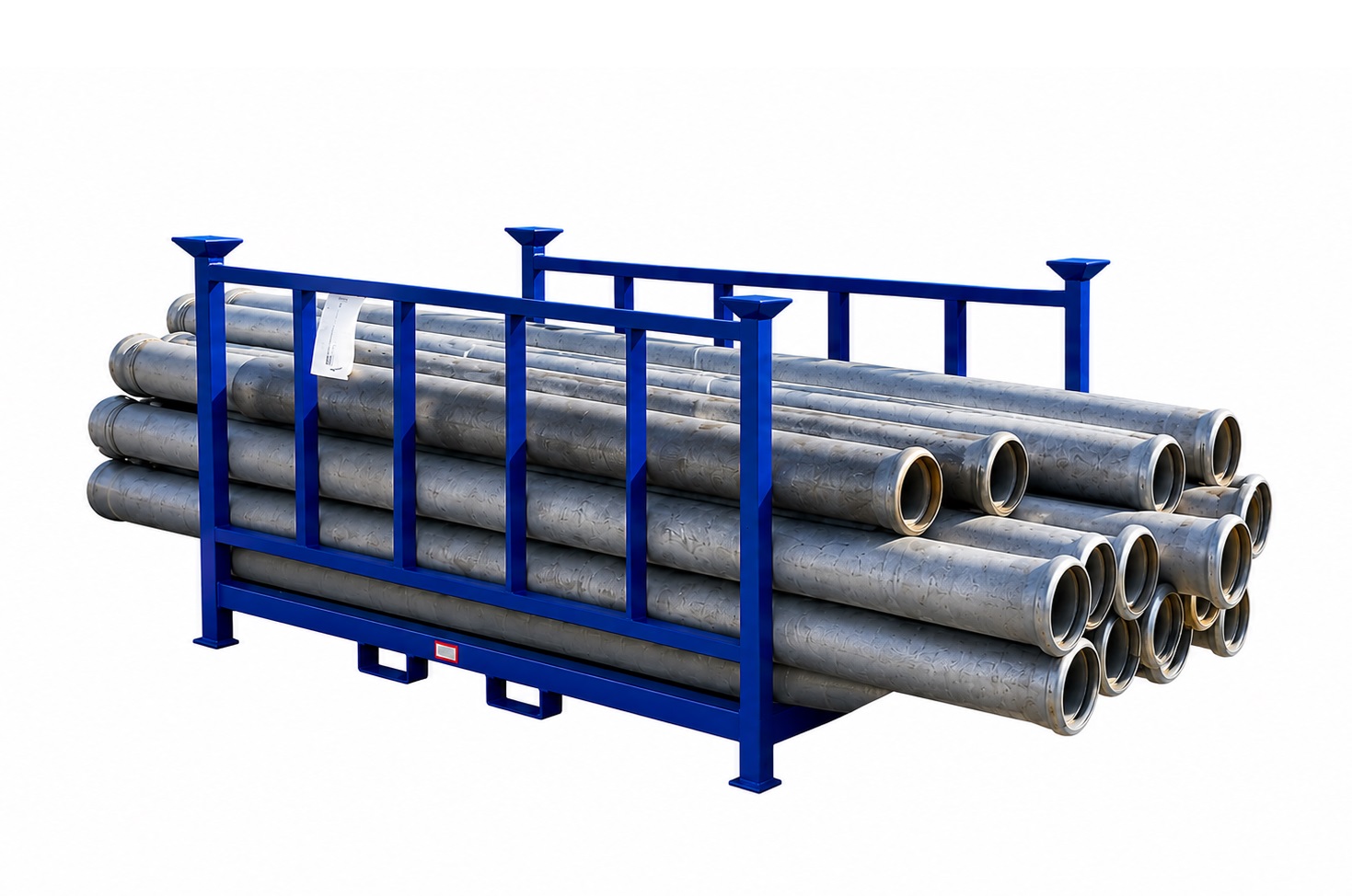
Portable Pipe Stacking Racks with Side Frames
Pipe Cart
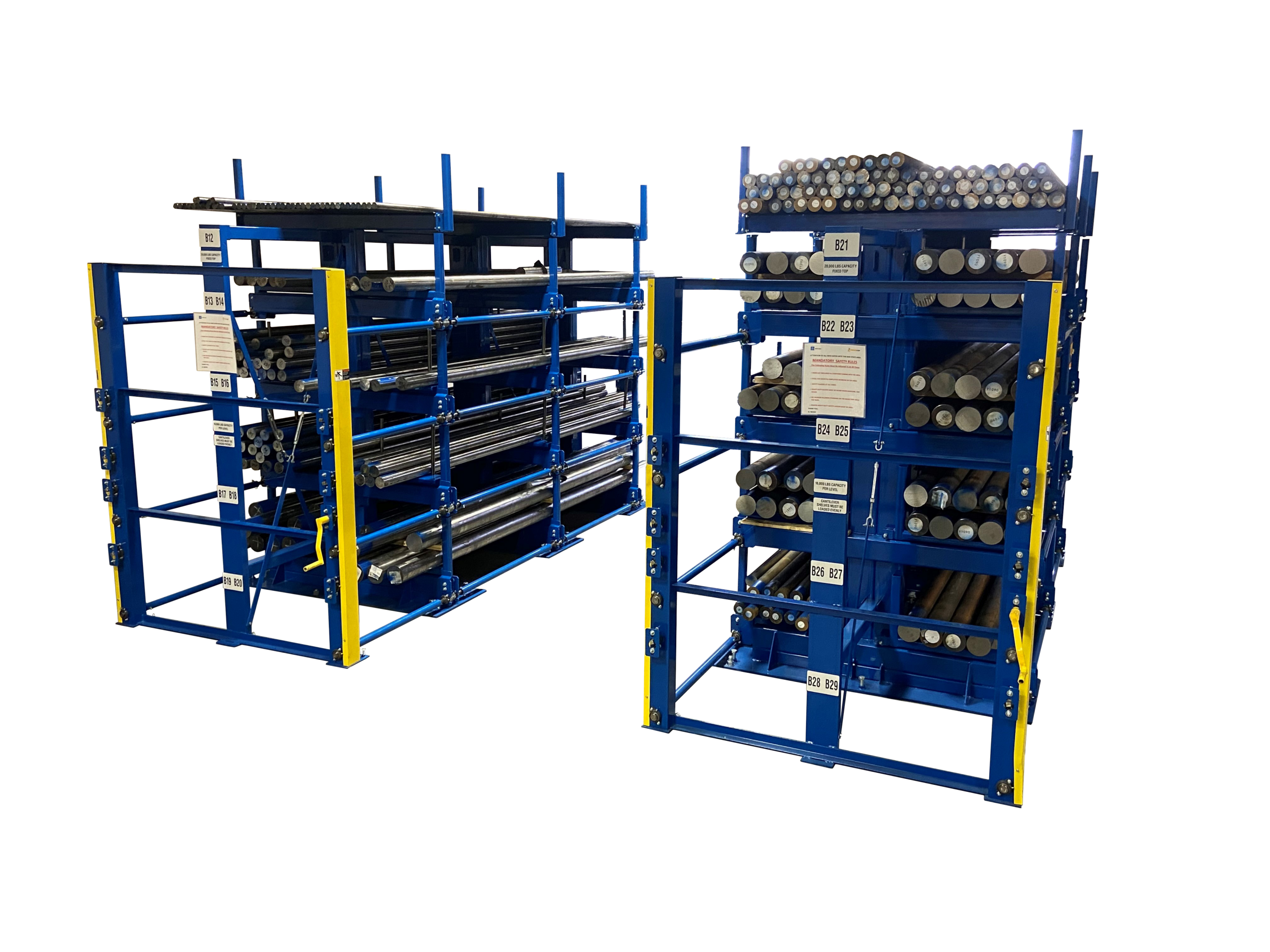
Crank Out Cantilever Racking takes long-material storage in a completely different direction. Instead of reaching into a conventional stationary rack, individual storage levels can be manually cranked outward to provide access to bar stock, tubing, conduit, extrusions, rollers, lumber, carpet rolls, and other long products. Fully extendable levels can make retrieval easier with a forklift or overhead crane, while lighter products may also be handpicked where appropriate.
This is an especially interesting solution for production environments because the rack can be positioned close to where material is actually being used. That can reduce time spent traveling back and forth for stock. Single- and double-sided configurations are available, along with options such as intermediate supports, trays for smaller pieces, stock dividers, and UHMW-lined arms to help reduce metal-to-metal contact. Units can also be designed for unusually long stock and higher-capacity applications.
Round products have an obvious storage problem: they roll. Cantilever Rack with Inclined Arms for Round PVC Pipe, Steel Bar & Wood Pole Storage addresses that problem by using arms that incline toward the rack upright. The design helps keep round PVC pipe, steel pipe, bars, poles, and similar products contained on the storage arms.
Inclined arms are available in several lengths to accommodate different load depths. Straight cantilever arms with a lip or removable pipe stop are another option when the application calls for a more conventional horizontal storage surface. The goal is simple—match the arm design to the shape and handling characteristics of the material instead of trying to make a standard rack work for every load.
Our Heavy Duty Double Sided A-Frame Vertical & Horizontal Pipe Storage Rack combines several storage ideas into one system. Its A-frame construction provides storage on both sides for long steel pipe, rods, angle, tubing, and other difficult-to-store materials. The short sides can incorporate pigeonhole-style compartments for additional organization, while an optional solid steel top can create another storage surface.
This design is all about getting more storage into the available footprint. Instead of leaving long steel products in piles on the floor, the A-frame rack organizes inventory vertically and horizontally while improving product identification and access. For warehouse managers trying to clear valuable floor space and take better advantage of building height, this type of rack can provide a very efficient storage layout.
Stanchion Racks for Pipe Storage with Overhead Crane provide flexible storage for bundled steel pipe, tubing, bar stock, and other long or irregular materials. Stanchions create individual storage bays, while overhead crane access allows bundles to be lifted vertically into or out of the rack. This can be particularly useful where the size, weight, or configuration of the load makes forklift handling difficult.
Stanchion systems can also be designed around the material rather than forcing every bundle into a predetermined shelf size. Different configurations can help separate inventory while making better use of vertical space. For facilities already using overhead cranes, the combination can improve handling efficiency, reduce floor-level bulk storage, and keep long materials better organized.
If you’ve got HVAC duct pipe, we’ve got a rack for it. HVAC Duct Pipe & Fittings Storage Stack Racks are portable, stackable, and collapsible systems designed for bulky ductwork and related components. Removable corner or side posts help contain round duct while also allowing the rack to be knocked down when it isn’t needed.
The open design makes it easier to identify and organize HVAC inventory by size instead of piling valuable ductwork on the floor. The racks can be moved by forklift and can also serve as reusable shipping racks for transporting duct between manufacturing facilities, warehouses, and jobsites. Different sizes and caster configurations can be considered depending on the application.
Portable Stack Racks are one of our most flexible choices for long and difficult-to-handle inventory. Unlike permanent pallet rack, stack racks can be moved with the product, stacked vertically when loaded, and knocked down or nested when they’re empty. That makes them useful when inventory levels fluctuate or when storage locations change frequently.
Options can include fork stirrups, fork tunnels, side frames, wire mesh, steel, or plywood decking depending on the application. Portable stack racks can also function as reusable shipping racks, reducing the product damage associated with uncontrolled bulk stacking. Maximum load and stacking height should always be based on the specific rack design, load, floor conditions, and manufacturer’s rating rather than assuming every portable rack can be stacked to the same height.
Cantilever Steel Bar, Tubing & Pipe Storage Racks are a natural fit for long materials because they provide full frontal access to every storage level. Horizontal arms extend from the uprights to support pipe, PVC, tubing, and bar stock without front columns getting in the way. This makes loading and unloading long products considerably easier.
Single-sided cantilever racks can be positioned along a wall, while double-sided systems can be placed in open areas and accessed from both sides. Arm length, spacing, capacity, upright spacing, and overall rack configuration should be selected around the material being stored. The big advantage is vertical storage: get the pipe off the floor and into organized storage levels so you can increase capacity without unnecessarily expanding the warehouse footprint.
Cantilever Racks aren’t limited to pipe. Their open-front design makes them useful for lumber, plywood, siding, extrusions, tubing, furniture, sheet goods, and many other products with non-uniform sizes and lengths. A typical cantilever system consists of uprights and bases, adjustable storage arms, and horizontal and diagonal bracing connecting the columns into a row.
Versatility is the reason cantilever racks are so popular. Long products can be loaded and unloaded without maneuvering around front columns, and adjustable arms allow storage levels to be configured around changing inventory. Instead of bulk stacking long materials on the floor, cantilever racking helps utilize overhead space, improves product visibility, and reduces unnecessary handling. Roll-formed and structural steel designs are available for different capacities and applications.
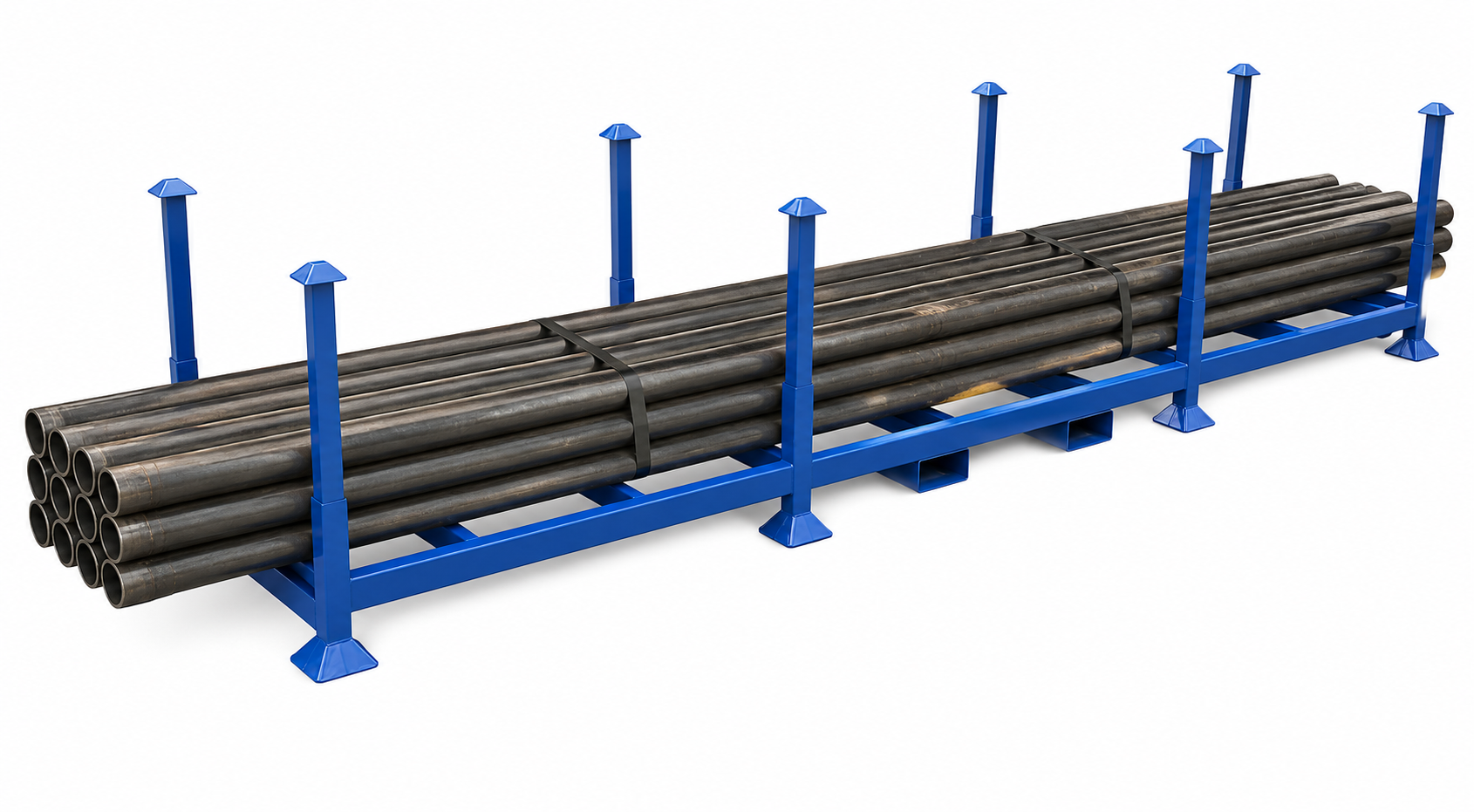
Our Pipe & Hose Transport Stack Rack with Removable Corner Posts combines storage, containment, transportation, and stacking in one reusable rack. It is designed for materials such as PVC pipe, steel pipe, tubing, bar stock, and industrial hose. Fork tubes provide controlled forklift entry, while the corner posts help keep suitable loads contained during storage and handling.
Those corner posts are removable for a reason. Taking them out provides easier access during loading and unloading and allows the rack to be knocked down when empty, which can reduce the space required for storage and return transportation. For companies moving pipe between facilities or jobsites, a reusable transport rack can eliminate a lot of unnecessary material handling.
Portable Pipe Stacking Racks with Side Frames offer another alternative to permanent cantilever storage. They combine side containment with portability and vertical stacking, making them especially useful for pipe manufacturers, distributors, and suppliers that experience changing inventory levels. During busy periods, the racks can provide dense pipe storage; when demand slows, empty racks can be collapsed and stored out of the way.
They can also serve as returnable shipping racks in closed-loop distribution systems. The source configuration includes removable side frames with vertical support bars and removable cross bars to help contain the pipe. Rather than unloading material into one storage system and then reloading it onto another shipping platform, the same rack can potentially stay with the product through multiple handling stages.
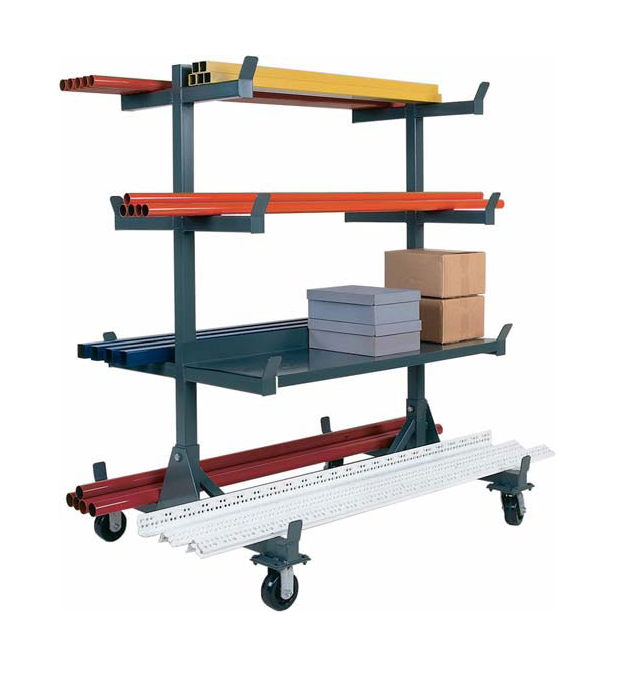
Sometimes the best pipe rack is one that comes directly to the work area. A Pipe Cart combines the open access of cantilever storage with the mobility of an industrial cart. Long arms create multiple storage levels for pipe, tubing, and bar stock, while stops at the ends of the arms help keep appropriate materials from sliding off.
A double-sided configuration provides storage and access from both sides. Heavy-duty casters allow the cart to be moved across suitable warehouse floors, making it possible to position commonly used material closer to production. Instead of employees repeatedly walking or driving to a stationary storage area, the pipe inventory can move closer to where the work is being performed. That’s a simple change that can make a noticeable difference in material handling efficiency.
Choosing the Right Pipe Storage Rack
There isn’t one pipe rack that’s best for every operation. If you need maximum selectivity and stationary vertical storage, cantilever racking may make the most sense. If your inventory needs to move around the facility, a Pipe Cart or Pipe Transport Tow Trailer may be a better fit. Stack racks make sense when portability, seasonal storage, shipping, and knock-down capability matter, while stanchion or crank-out systems can be considered when overhead crane access is part of the handling process.
That’s where our experience comes into play. Tell us the type of pipe or long material you’re storing, its length and weight, how much inventory you have, how you plan to load it, and how much floor and vertical space is available. We can help narrow down the options and configure a Pipe Storage Rack around the way your operation actually handles material.
Frequently Asked Questions About Pipe Storage Racks
How do I determine the best Pipe Storage Rack design?
Start with the material. We need to know the pipe diameter, length, weight, bundle dimensions, quantity, and whether you’re storing steel pipe, PVC, tubing, hose, bar stock, or another long product. Then consider how the material will be handled—forklift, crane, cart, or manually—and whether individual-product access or high-density bundle storage is more important. Those details help determine whether cantilever, stanchion, A-frame, portable stack rack, or mobile cart storage makes the most sense.
Do Pipe Storage Racks need to be anchored to the floor?
It depends on the rack design. Permanent cantilever and other fixed rack systems may require anchorage based on the manufacturer’s design, applicable building requirements, seismic conditions, and facility layout. Portable stack racks, carts, and transport racks are designed for mobility and are treated differently. Always follow the manufacturer’s installation instructions and have fixed systems evaluated for the actual application rather than assuming one installation method applies to every pipe rack.
What maintenance should Pipe Storage Racks receive?
Inspect racks regularly for bent arms or posts, damaged welds, loose or missing hardware, corrosion, forklift impact, damaged casters, and other signs of wear. Mobile equipment should receive additional attention at wheels, bearings, steering components, tow connections, fork pockets, and containment features. Damaged structural components shouldn’t simply be straightened or modified in the field without appropriate manufacturer or engineering guidance.
What general requirements should I consider when installing a Pipe Storage Rack system?
Consider rack capacity, load distribution, product containment, forklift or crane clearances, aisle width, floor condition, anchorage where applicable, and safe access around the system. Building and seismic requirements can vary by location, while workplace and material-handling requirements depend on how the rack is used. For permanent or high-capacity systems, coordinate the design with the rack manufacturer or qualified engineer and verify applicable requirements with the building official, safety personnel, insurer, and other authorities having jurisdiction.




