Wire Mesh Partitions
Wire Mesh Partitions are modular steel security systems designed to divide space, secure inventory, protect equipment, restrict access, and create enclosed storage areas without the expense and disruption of permanent wall construction. Built from heavy-duty welded or woven wire mesh panels, steel posts, doors, gates, ceilings, and locking hardware, these systems provide strength and security while maintaining visibility, ventilation, and existing lighting. Wire partitions can be configured as one-, two-, three-, or four-sided enclosures and customized for tool cribs, storage cages, lockers, machine guarding, data centers, evidence storage, pallet rack protection, and dozens of other applications. Their biggest advantage is flexibility. They install quickly, can be expanded or reconfigured as your operation changes, and give you a durable way to turn unused floor space into secure, organized, functional storage.
Wire Mesh Partition Configurations
One wall or four walls? A small tool crib or an entire secured storage room? That’s the beauty of wire mesh partitions. You build the system around the space instead of trying to make the space fit a standard enclosure.
Showing all 2 resultsSorted by latest
Wire Mesh Partition Configurations (4)
Wire Partition Applications (16)
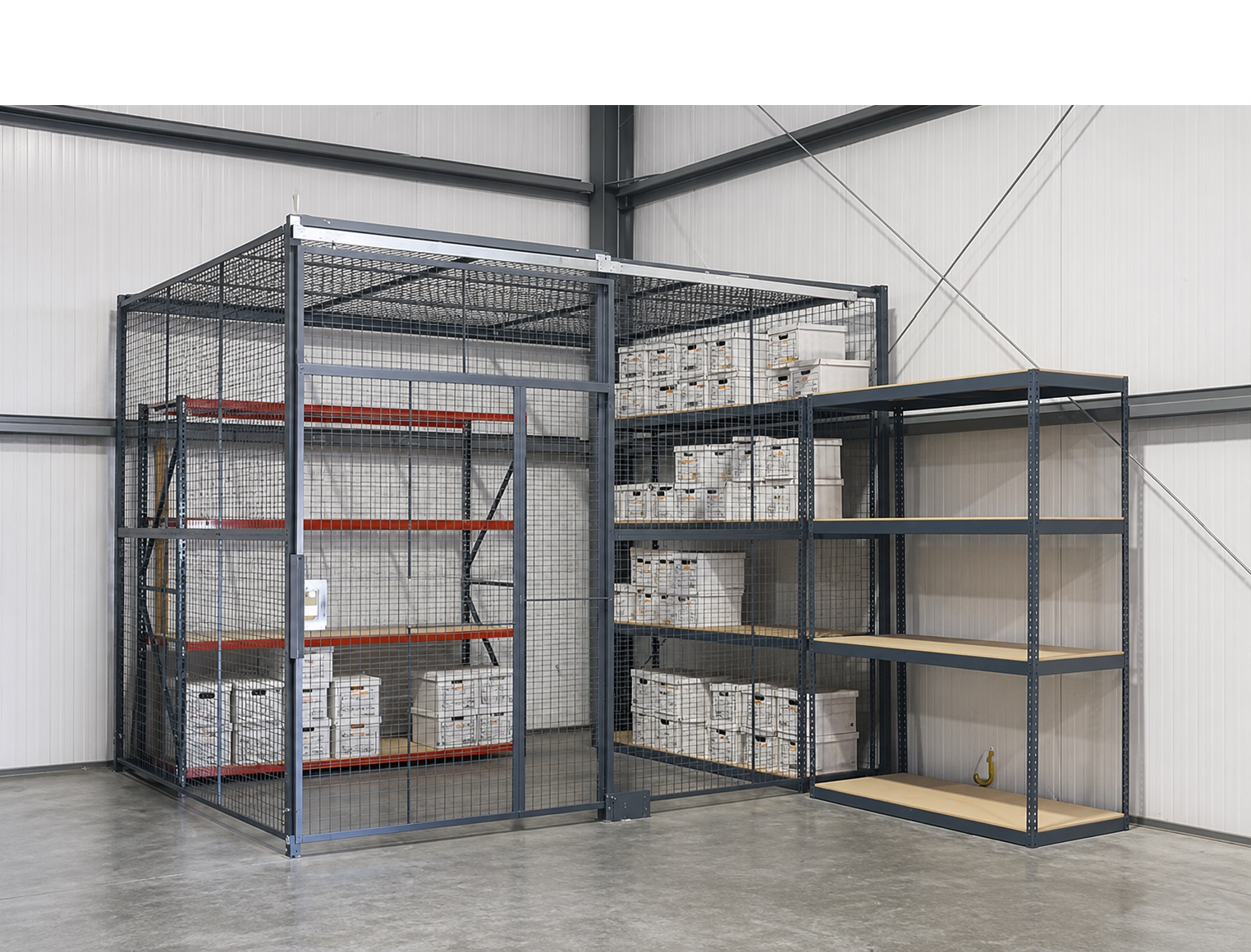
Benefits of Wire Mesh Partitions
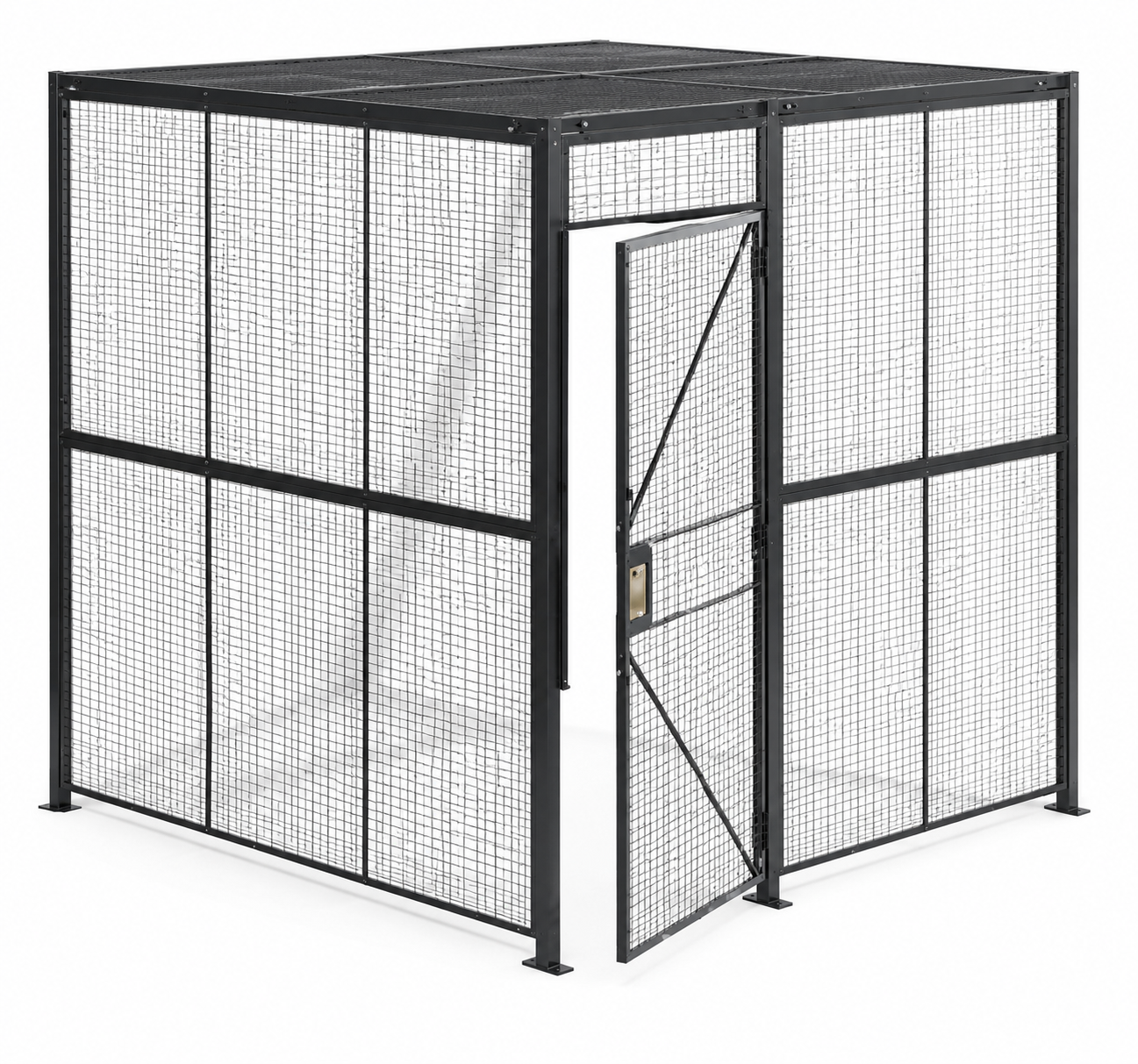
Woven Wire Partitions
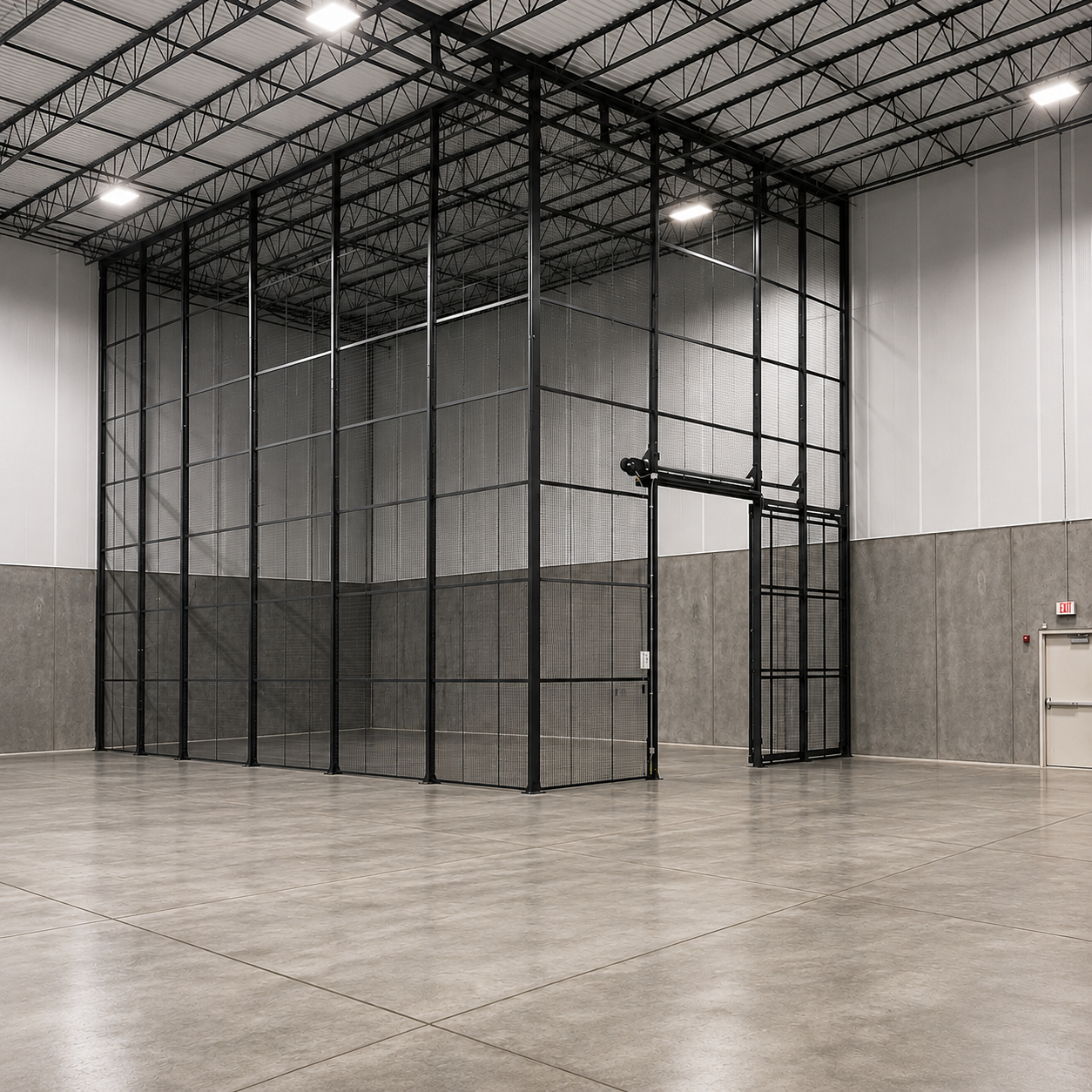
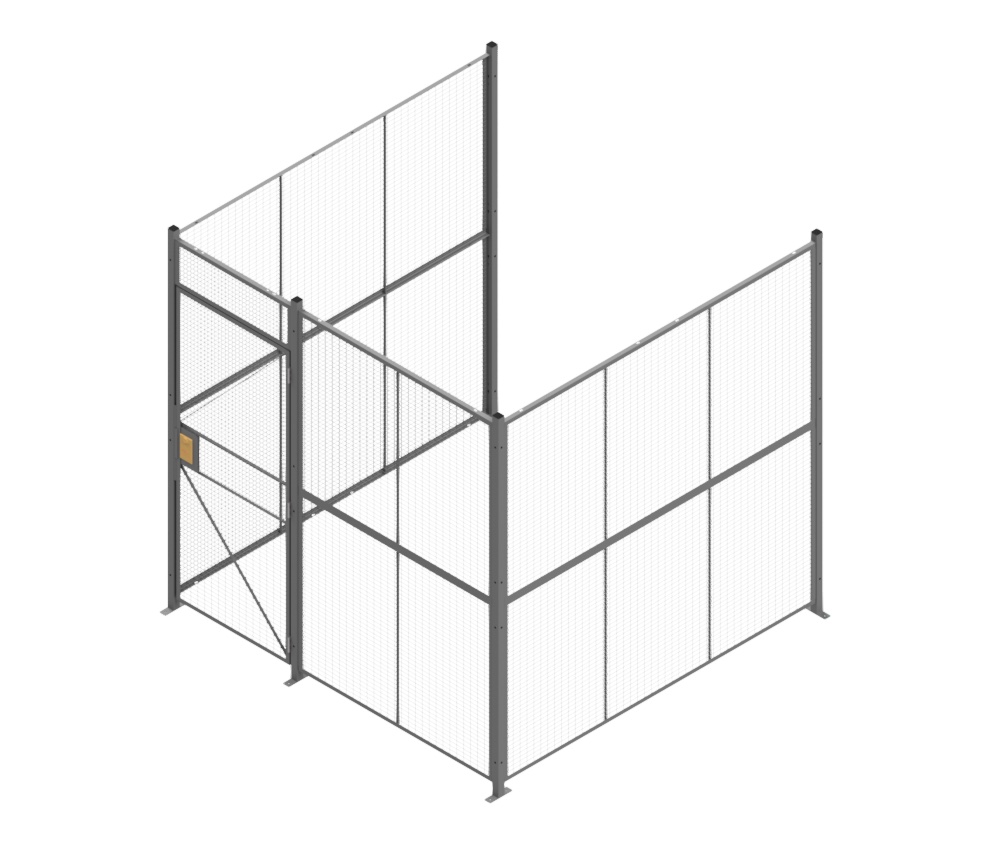
Wire mesh partitions can be configured as one-sided, two-sided, three-sided, or four-sided security cages. A one-sided partition might close off an existing alcove or create a barrier across a room. Two- and three-sided systems can take advantage of existing building walls, while four-sided cages create complete freestanding enclosures. Add ceiling panels when overhead security is needed and incorporate hinged, double-hinged, or sliding doors based on the type of access your operation requires.
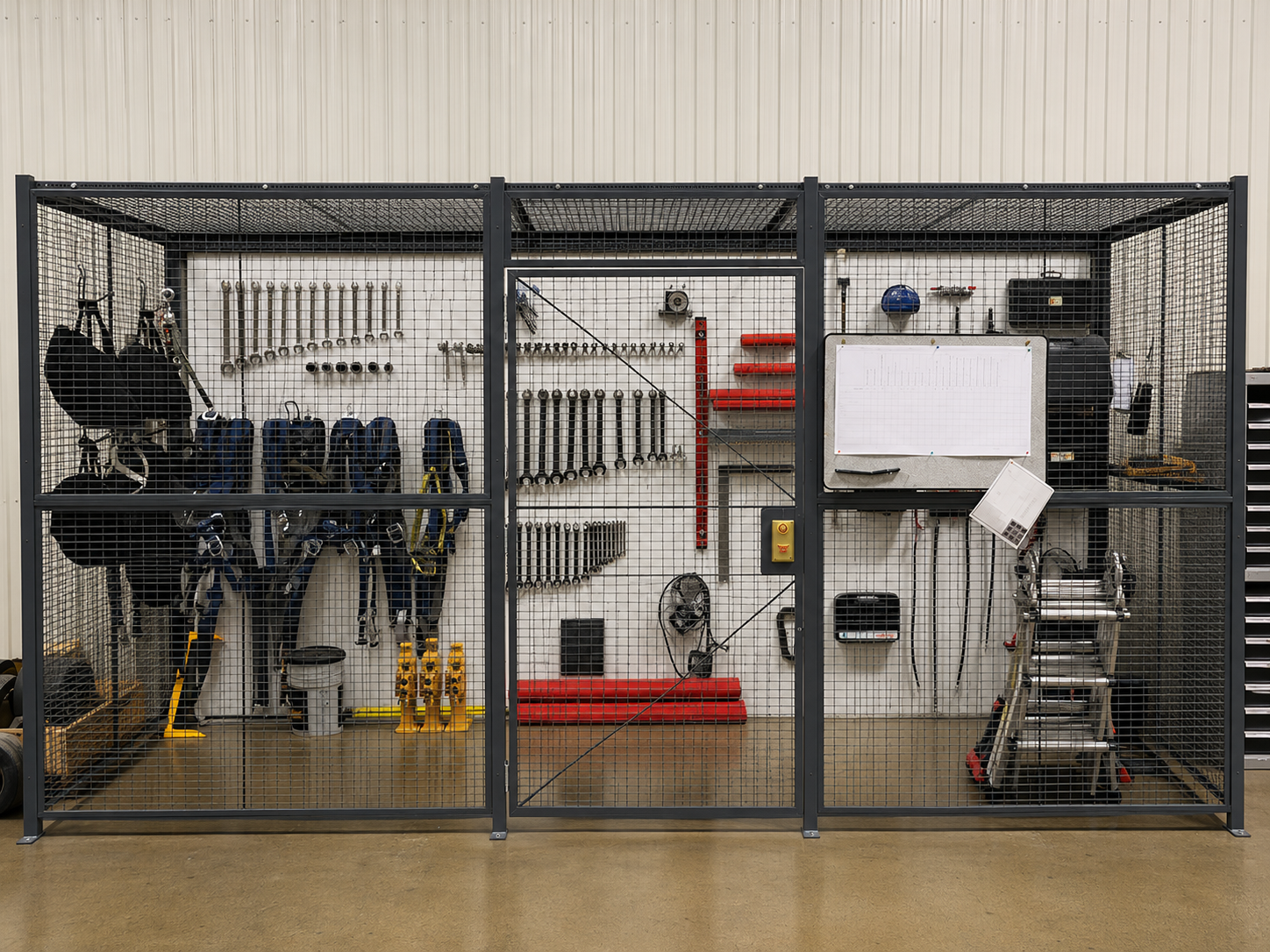
These configurations can be used for just about anything that needs to be separated, secured, protected, or organized. Common applications include tool cribs, equipment cages, data center server cages, evidence enclosures, temporary holding areas, controlled-substance storage cages, driver access checkpoints, industrial lockers, tenant storage lockers, athletic equipment storage, and mechanic and technician locker systems.
Wire partitions can also work together with pallet rack safety and security products. Rack protection guards, pallet rack gates, and RackBack panels can be incorporated into a broader warehouse plan to help secure inventory and protect employees and equipment.
The big advantage is that you’re not locked into one layout forever. If your operation expands or your storage requirements change, modular panels can often be added, removed, relocated, or reconfigured. That’s a lot easier than knocking down a permanent wall and starting over.
Wire partitions are one of those products with so many applications that once you start looking around your facility, you’ll probably find another place to use them.
Modular steel posts, welded or woven wire mesh panels, doors, gates, ceilings, lockers, and security hardware can be combined to create everything from a basic protective barrier to a completely enclosed security cage. They’re used in warehouses, manufacturing plants, distribution centers, data centers, athletic facilities, apartment buildings, pharmaceutical operations, maintenance departments, and other commercial and industrial facilities.
Need a tool crib? Build one with wire mesh. Need to keep unauthorized personnel away from expensive equipment? Create a security cage. Need to protect employees from automated machinery? Configure a machine guarding system. Need individual storage compartments? Add wire lockers. Need to protect the back of pallet rack? Install wire rack backing.
Wire partitions are also well suited for applications where visibility and airflow matter. The open mesh lets employees see what’s happening on the other side of the partition and allows existing lighting and ventilation to pass through the enclosure. Depending on the facility and design, the open construction can also avoid some of the issues associated with creating large solid barriers around storage areas.
Security is another major advantage. Doors, gates, ceilings, and different locking options allow access to be controlled around the needs of the operation. You can create a simple secured storage room or design a more specialized enclosure around a particular security requirement.
That’s why wire partition applications are so broad. You’re starting with a modular system instead of a single-purpose product.
Benefits of Wire Mesh Partitions
Why use wire mesh partitions instead of building permanent walls? For many industrial and commercial applications, the answer comes down to flexibility, visibility, durability, and cost.
Wire mesh partitions create secure areas without completely closing them off from the rest of the facility. The steel mesh allows you to see inventory, tools, equipment, and activity inside the enclosure. Light and air can pass through, which can make the space easier to monitor and work around.
They’re also highly customizable. Panels and posts can be arranged to fit different room dimensions and floor plans, while doors, gates, ceilings, lockers, and other components can be added around the application. Need to make the enclosure bigger later? A modular system gives you options that permanent construction may not.
Durability is another reason wire partitions are so popular in warehouses and manufacturing plants. Steel panels and posts are designed for industrial environments where lightweight residential-style partitions simply don’t belong.
Then there’s organization. Giving tools, inventory, supplies, employee belongings, or expensive equipment a designated secured location makes them easier to manage. Employees can see what’s inside without opening every cabinet or storage room, and restricted-access areas help control who can remove equipment or inventory.
Wire partitions can also perform double duty. The same basic system can be used for storage cages, lockers, machine guarding, rack protection, server cages, evidence storage, and many other applications. Instead of using a completely different construction method every time you need to secure another area, you can work with a familiar modular system.
And when your operation changes, your partitions can change with it. That’s one of the biggest benefits of all.
Woven Wire Partitions provide secured storage without turning your warehouse into a construction project.
These steel partition systems have been used for decades to secure tools, equipment, records, property, servers, evidence, inventory, and other valuable or sensitive materials. They provide the physical barrier you need while maintaining visibility through the enclosure.
That’s important when multiple employees use the same storage area. Instead of wondering whether a particular tool or piece of equipment is somewhere behind a solid wall, employees and supervisors can visually inspect the cage. Everything has a central storage location, making missing items easier to identify and inventory easier to organize.
Wire partitions can also improve safety by controlling access. Dangerous tools and equipment can be kept away from unauthorized personnel, while valuable products and sensitive materials remain inside a locked enclosure. Depending on the application, hinged doors, sliding doors, ceilings, service windows, shelving, and different locking options can be incorporated into the design.
Installation is another major advantage. You don’t necessarily need to shut down part of your operation for a major renovation just because you need another secured room. Modular wire panels and steel posts are assembled to create the required enclosure. Many standard systems can be installed using common hand tools by stacking and securing panels to the supporting posts according to the manufacturer’s layout and installation instructions.
Woven wire partitions are also designed with the future in mind. Need a larger cage next year? Need another door? Need to move the enclosure because your production line changed? Modular construction gives you options.
Systems can arrive professionally packaged with layout drawings and installation instructions, helping make installation more straightforward. For larger or more complicated projects, professional installation can also be used to get the enclosure in place and ready for service.
If you need to secure an area without permanently rebuilding it, woven wire partitions are hard to beat. They’re strong, visible, configurable, and built for industrial use.
Frequently Asked Questions About Wire Mesh Partitions & Panels
How should I design a wire mesh partition layout?
Start with what you’re trying to accomplish. Do you need to secure inventory, separate employees from equipment, build a tool crib, create lockers, or simply divide an existing room?
Next, look at what you already have. Existing building walls can often become part of the enclosure, which may reduce the number of wire panels required. A three-sided cage, for example, can use an existing wall as the fourth side. An alcove might only require one partition across the front.
Then consider height, doors, ceilings, locking requirements, aisle clearance, material flow, and how employees will actually use the enclosure. Don’t put a large swinging door where a forklift needs to travel all day. A sliding door might make more sense.
Good partition design isn’t just about fitting panels into a room. It’s about making the enclosure work with your operation.
Can wire mesh partitions be installed without professional installers?
Many standard modular wire partition systems are designed for relatively straightforward installation using common hand tools. Panels are typically connected to steel posts according to the supplied layout, and the system is anchored as required by the manufacturer’s instructions.
The complexity of the application matters, however. A basic storage enclosure is different from machine guarding, a controlled-substance cage, a detention enclosure, or another specialized security application. Professional installation may be appropriate when anchoring, door alignment, clearances, security hardware, or regulatory requirements are critical.
Measure carefully before ordering. Pipes, columns, overhead obstructions, uneven floors, existing equipment, and door locations can turn a simple installation into a headache if they’re discovered after the material arrives.
What maintenance do wire mesh panels and partitions require?
Wire partitions are relatively low maintenance, but they should still be inspected periodically.
Check panels, posts, floor anchors, doors, hinges, sliding tracks, locks, brackets, and connection hardware. Look for loose anchors, bent panels, broken welds, damaged mesh, worn door components, or anything that’s been hit by a forklift or other equipment.
Doors deserve extra attention because they’re moving components. Make sure hinged doors open and close correctly, sliding doors move freely, and locks or latches continue to operate as intended.
If a panel takes a hard impact, inspect the entire surrounding section instead of looking only at the obvious dent. A damaged post or loose anchor can affect more than one panel.
Are there special requirements for wire partition systems?
Requirements depend on what the partition is being used for. A basic industrial storage cage doesn’t necessarily have the same requirements as machine guarding, a data center enclosure, evidence storage, a detention cage, or a controlled-substance security area.
Depending on the application, you may need to consider building and fire requirements, emergency egress, workplace safety, machine guarding clearances, accessibility, locking hardware, sprinkler access, anchoring, or industry-specific security rules.
The best approach is to identify those requirements before designing the enclosure. That way the correct panel type, height, doors, ceilings, locks, clearances, and installation method can be incorporated from the beginning instead of trying to modify the cage after it’s installed.




