End of Rack Protectors
Here’s a fact every warehouse manager knows but not every facility acts on: the ends of pallet rack aisles are the most vulnerable points in your entire storage system. Forklifts turn there, swing there, and back up there—every shift, every day. End of rack protectors are safety devices installed at the ends of pallet rack rows to absorb and deflect forklift impacts before they reach your upright frames. Also known as end-of-row protectors or end-of-aisle protectors, these devices come in several configurations including pipe bollards, single-tier guard rail, L-shaped column guards for narrow aisles, and half-moon post protectors for standard aisle applications. Each type addresses the same fundamental problem from a different angle, and the right choice depends on your aisle width, traffic patterns, and the level of protection your operation requires. What they all have in common is that they’re far less expensive than repairing or replacing damaged rack—and far less costly than the downtime, workers’ compensation claims, and potential rack collapse that comes with ignoring the problem.
Pipe bollards are vertical steel posts anchored to the concrete floor to protect building infrastructure, dock doors, machinery, columns, and personnel from vehicle impact. Manufactured from thick structural steel pipe with pre-drilled base plates for concrete anchoring, these posts absorb impact and redirect traffic without yielding to repeated contact from forklifts, pallet jacks, and delivery trucks. The high-visibility safety yellow powder coat finish makes them visible to operators before contact occurs, which is the whole point—a bollard that prevents an impact is doing its job better than one that absorbs it.
Showing all 4 resultsSorted by latest
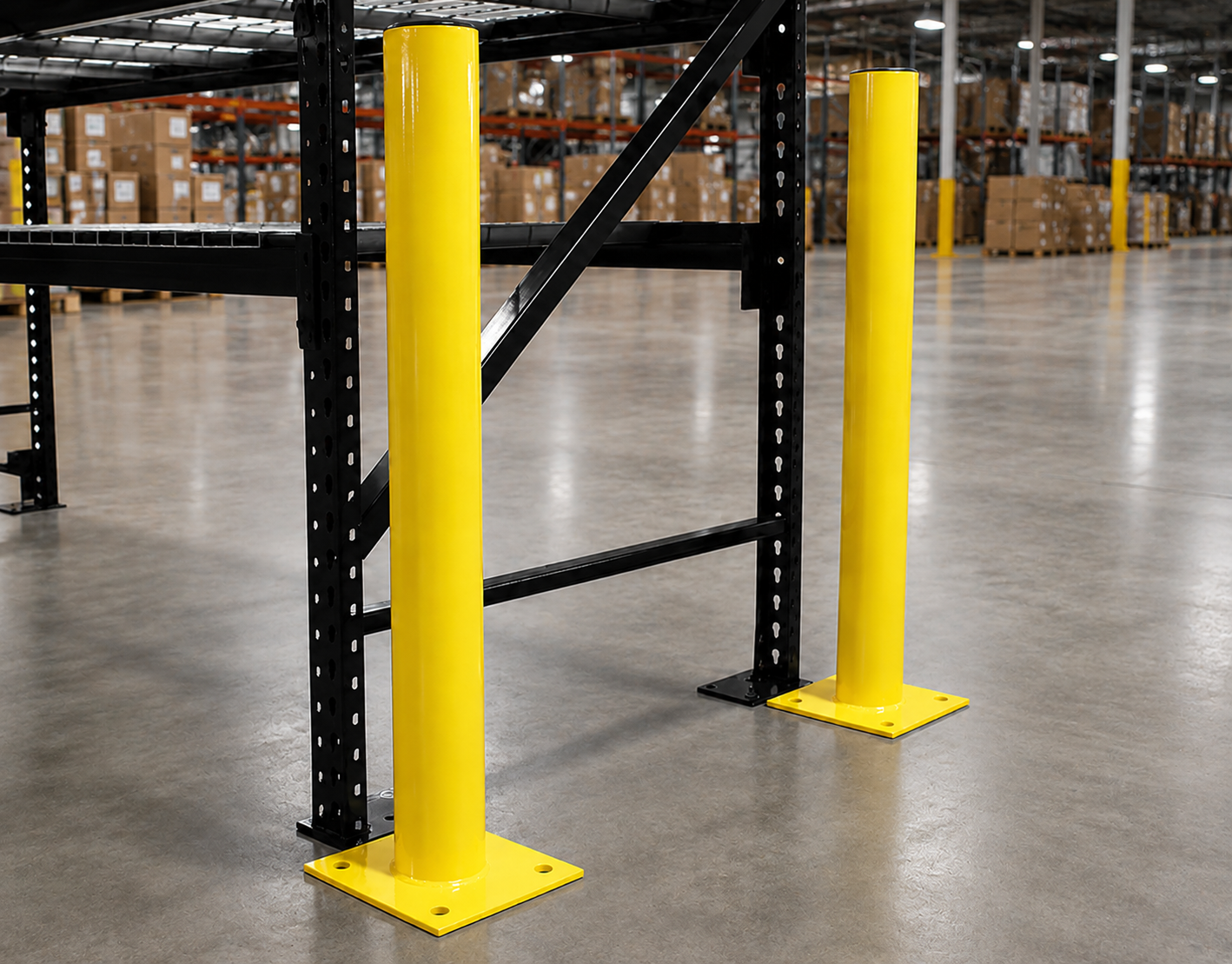
Warehouse Pipe Bollards (2)
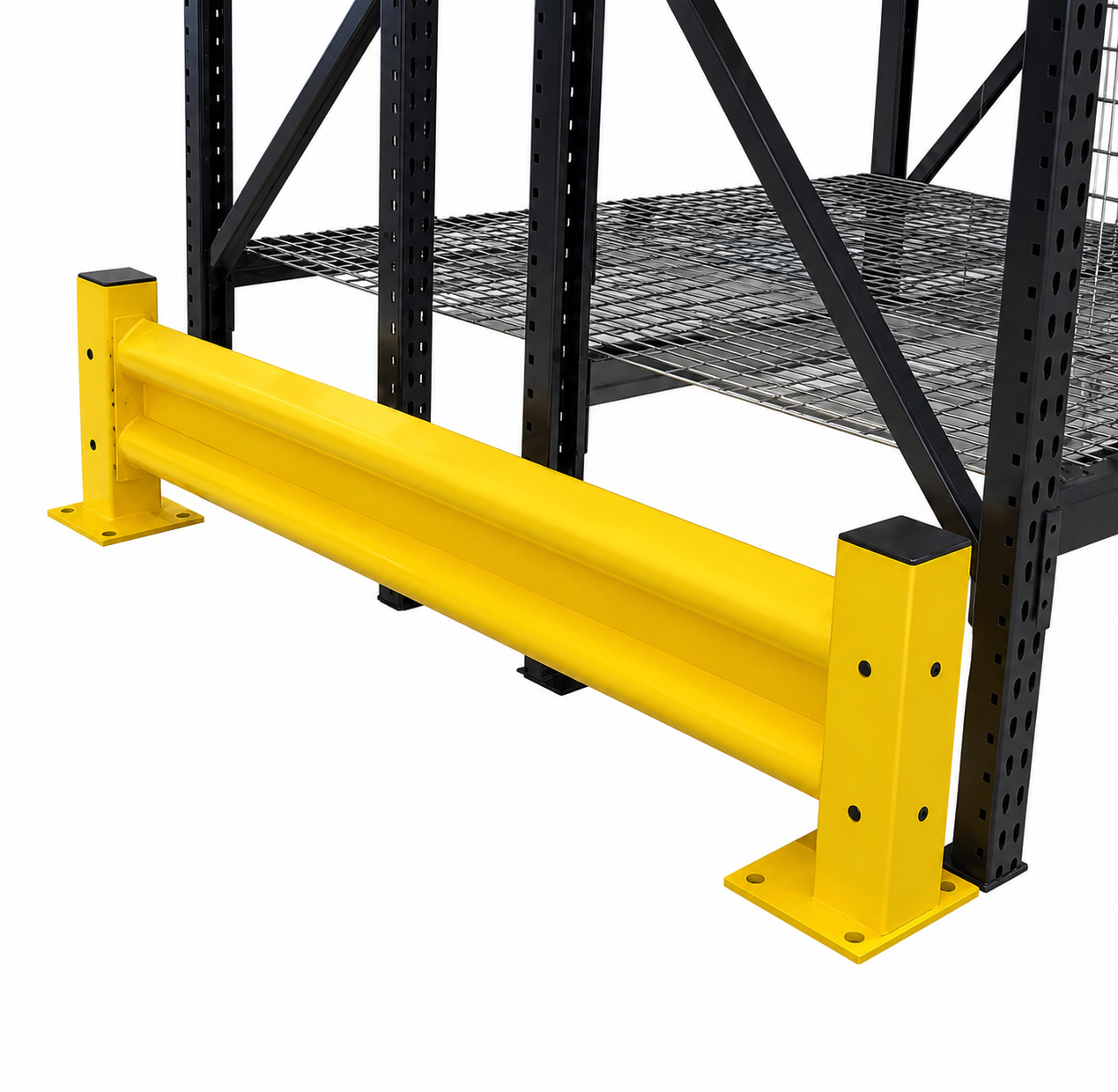
Single Tier Guard Rail for End of Aisle Protection
Low Profile End of Aisle Protector with L-Shaped Column Guard for Narrow Aisle Pallet Rack
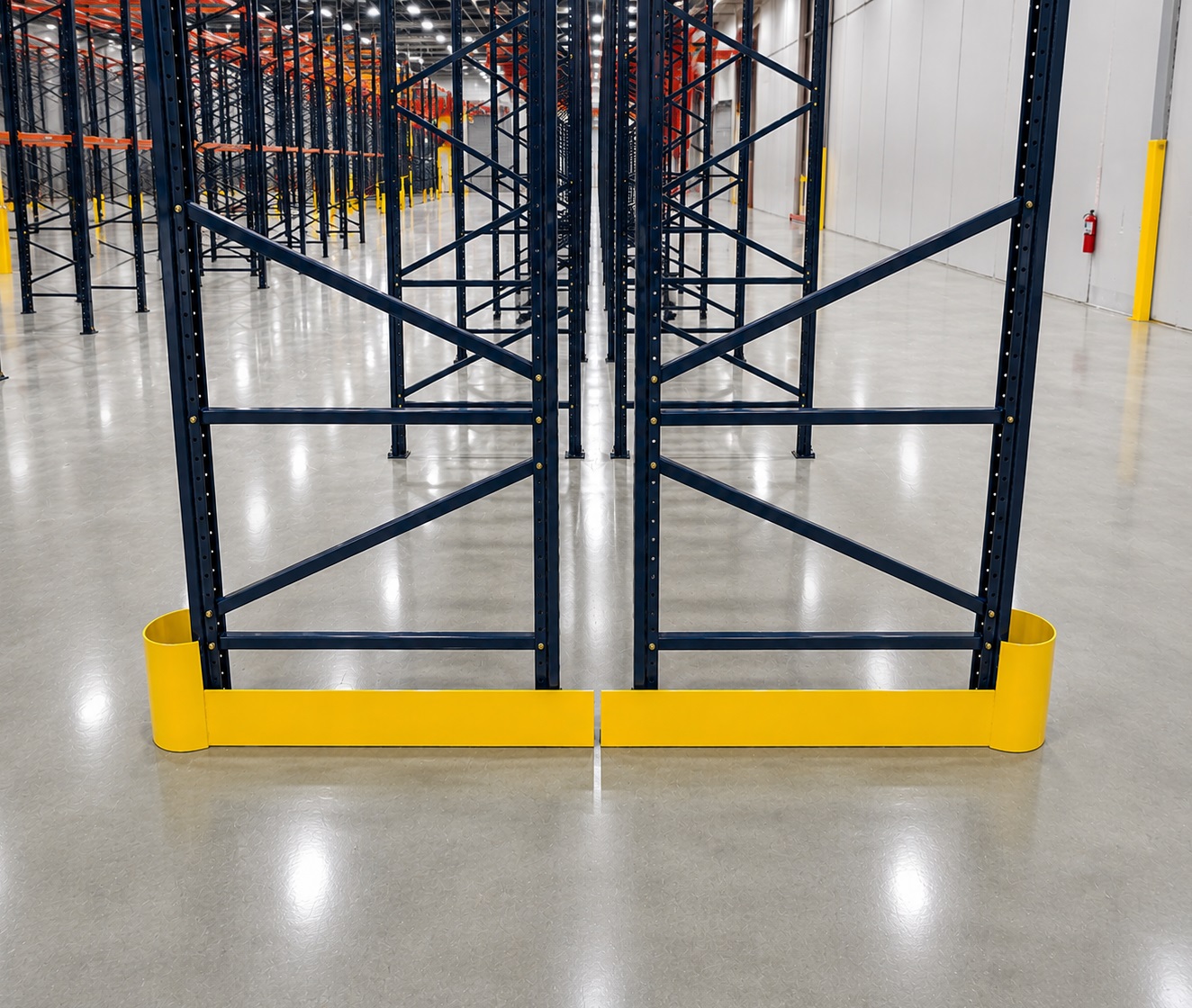
End of Aisle | End of Row Pallet Rack Protectors | Half Moon Protector
Benefits of End of Aisle Protectors on Pallet Racks
Bollards are the right choice when you need to protect a specific point—a building column, an electrical panel, a dock door frame, a fire suppression system riser—from vehicle traffic. They can also define pedestrian zones and traffic lanes in areas where physical separation between foot traffic and equipment is a priority. Installing bollards at critical protection points throughout your facility is one of the most cost-effective safety investments you can make, particularly in high-traffic manufacturing and distribution environments where the consequences of an unprotected impact can shut down operations for hours or days.
Single Tier Guard Rail for End of Aisle Protection
Single-tier guard rail provides a continuous barrier across the end of pallet rack rows, protecting exposed upright frames from forklift contact in back-to-back rack configurations. Our standard 96-inch wide single-tier guard rail spans the full end of a typical rack bay, absorbing and deflecting impacts that would otherwise transfer directly to the upright frame. The rail is anchored to the warehouse floor with base plates and bolts, creating a barrier that stays in place under repeated impact without requiring replacement after every hit.
Constructed from steel and finished in high-visibility yellow powder coat, single-tier guard rail is designed to take punishment and keep working. The modular design allows for installation in a variety of warehouse layouts and can be configured to fit non-standard bay widths when needed. If your facility has high-traffic end-of-aisle areas where forklifts are frequently making turns or reversing near rack frames, single-tier guard rail is one of the most effective barriers you can install to prevent the kind of progressive rack damage that starts with a single impact and ends with a compromised storage system.
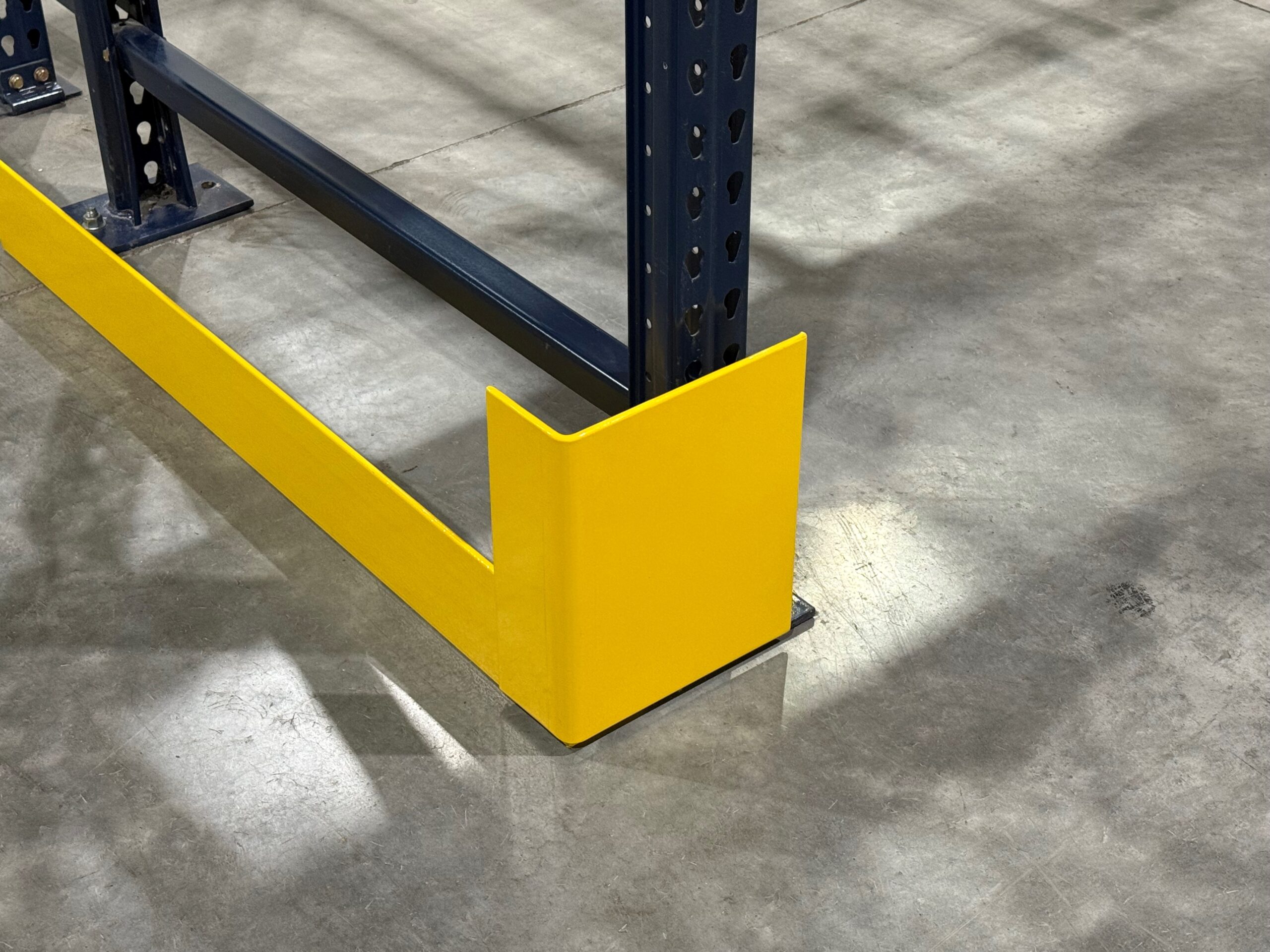
Low Profile End of Aisle Protector with L-Shaped Column Guard for Narrow Aisle Pallet Rack
Narrow aisle operations have a protection problem that standard end-of-aisle guards can’t solve—traditional half-moon protectors require floor space that narrow aisle configurations don’t have. Our L-shaped end-of-aisle protector is specifically engineered for high-density, narrow-aisle environments where every inch of aisle width matters. The narrow profile delivers the protection your uprights need without intruding into the aisle clearance that your reach trucks and order pickers require to operate safely.
The L-shaped design wraps around the exposed upright frame, creating a shield that absorbs and deflects the force of forklift contact at the most vulnerable location in the rack system. Damaged uprights don’t just cost money to repair—they weaken load capacity, create compliance issues, and in serious cases can lead to rack collapse that puts employees, inventory, and equipment at risk. Installing L-shaped protectors in narrow aisle applications is a proactive safety measure that costs a fraction of what a single upright repair requires, and it keeps your rack system OSHA-compliant and your operation running without interruption.
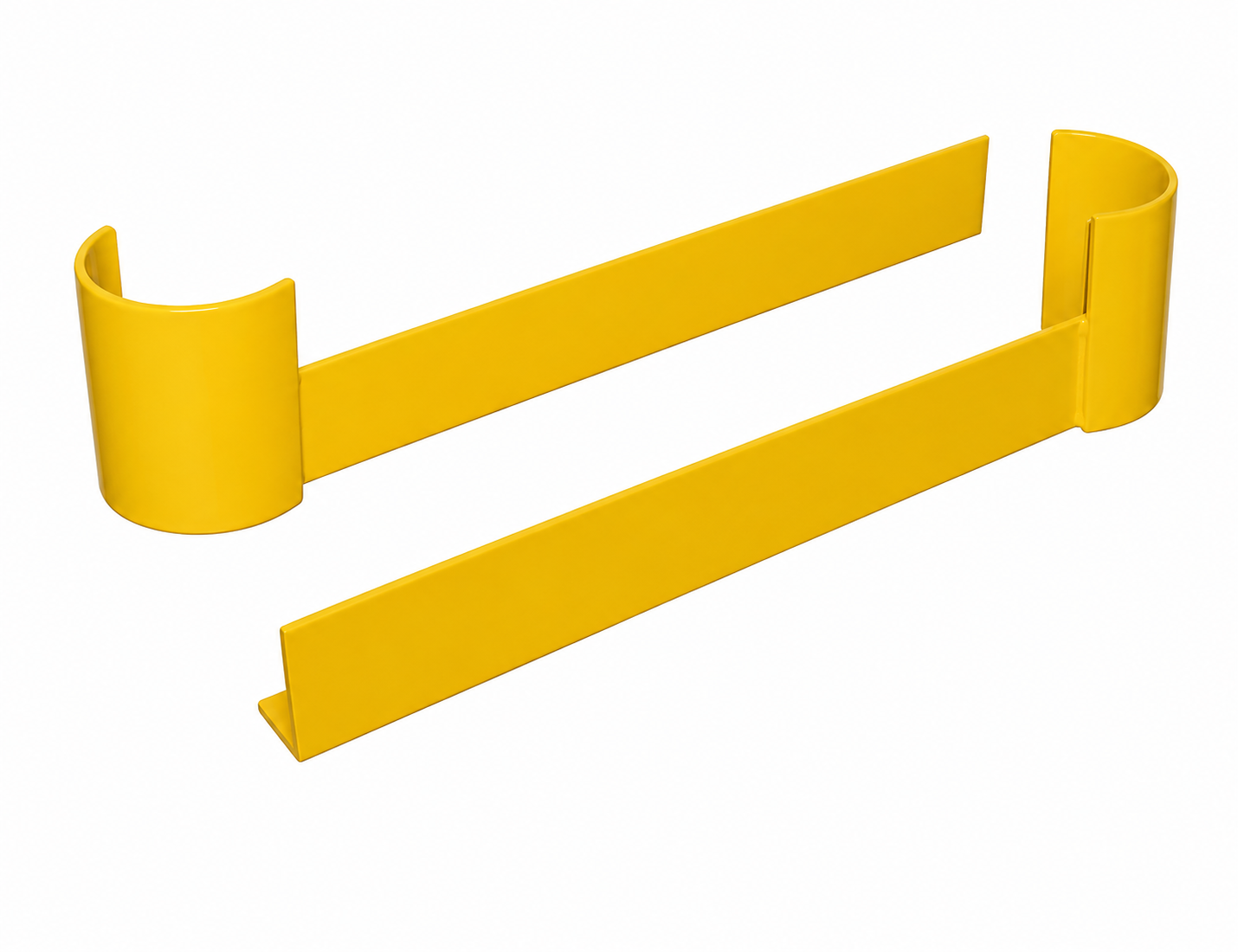
End of Aisle | End of Row Pallet Rack Protectors | Half Moon Protector
Half-moon end-of-aisle protectors are the standard solution for protecting upright frames at the ends of single and back-to-back pallet rack rows in conventional aisle configurations. Available as singles for single rows along walls and as pairs—left and right—for back-to-back rows, these 42-inch protectors anchor to the floor in front of your upright frames and take the hit so your rack doesn’t have to. Left curves left and right curves right, wrapping around the outside of the upright to provide coverage where forklift contact is most likely to occur.
The ends of your rack rows are where the forklifts turn, and that makes them the most accident-prone locations in your warehouse. A damaged upright isn’t just an inconvenience—it’s a structural problem that can compromise the entire rack bay, and repairing it means unloading and disassembling the section, which costs time and money you can’t afford to lose. These protectors are not a solution for rack that’s already damaged. They’re a preventive investment that extends the life of your racking system, protects your personnel, and keeps your bottom line intact. They’re affordable, they anchor directly to your concrete floor, and they work. Don’t wait for a collision to decide you need them.
Frequently Asked Questions: End of Rack Protectors
How do I determine which type of end of rack protector is right for my facility?
The right protector depends on your aisle width, forklift type, and the specific locations you need to protect. For standard selective rack aisles where conventional counterbalance forklifts operate, half-moon end-of-aisle protectors provide reliable protection for both single and back-to-back rows without consuming significant aisle space. For narrow aisle applications where reach trucks or order pickers operate in tighter configurations, L-shaped low-profile protectors are the right choice because they deliver protection without reducing the aisle clearance your equipment requires. Single-tier guard rail works well at the ends of high-traffic aisles where multiple forklift passes create repeated exposure to impact risk across the full width of the bay. Pipe bollards are the right solution for point protection of building columns, electrical panels, dock doors, and other fixed infrastructure that needs a dedicated barrier rather than a rack-specific protector. In many facilities, the right answer is a combination of protector types deployed at different locations based on the specific risk at each point.
What are the installation requirements for end of rack protectors and bollards?
All floor-mounted end of rack protectors and bollards require anchor bolts set into concrete to perform as designed. The concrete slab must be in good condition with adequate thickness to accept the anchor bolt embedment depth specified by the manufacturer—typically a minimum of 3.5 to 4 inches of embedment for standard protectors and deeper for heavy-duty bollards. Cracked, deteriorated, or thin concrete can prevent proper anchor engagement and compromise the protector’s ability to absorb and redirect impact forces. Before installation, verify that the concrete in the installation area is free of rebar conflicts, post-tension cables, conduit, and other embedded elements that could be damaged during drilling. Protectors and guard rail should be installed level and at the correct offset distance from the rack upright to provide protection without interfering with pallet placement or forklift operation in the aisle. In seismic zones, anchor bolt specifications may be subject to additional engineering requirements—consult with your local building official if your facility is in a seismic area.




