Warehouse Fire Safety
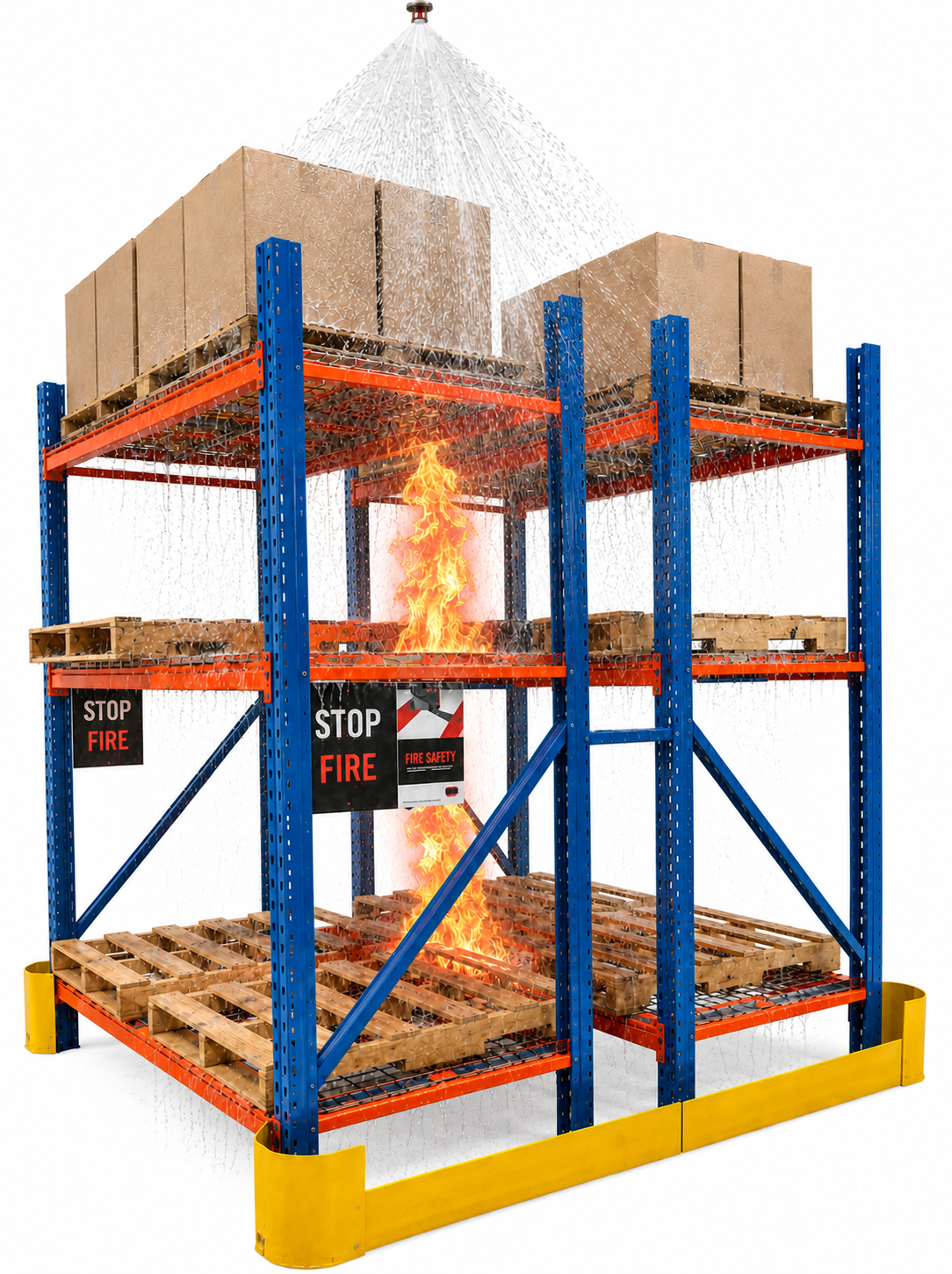
Warehouse fire safety, especially concerning pallet racks, has become a big issue for the nation’s largest manufacturers, retailers, distributors, and warehousing companies. Many of these companies are being required by local building inspectors, fire marshalls, and insurance companies to add Transverse Flue Space Dividers, Longitudinal Flue Space Dividers, Pallet Rack Flue Space Dividers and Pallet Stops to their warehoue pallet rack Systems.
These fire protection tools help ensure proper flue space between rack rows, allowing overhead sprinklers to operate at full capacity in the event of a fire. But warehouse fire safety requirements go much further. In fact, many companies are now being required to switch from wood decking, solid steel decking and plastic containers to perforated steel decking and wire bulk containers with 50% open sides and base. This allows overhead sprinklers to operate at full capacity and prevent fires from spreading throughout the warehouse.
Warehouse fire safety is the combination of storage equipment, rack accessories, material handling products, and good storage practices used to help maintain sprinkler access, preserve required flue spaces, control pallet and product placement, and reduce conditions that can interfere with a facility’s fire protection system. Products such as pallet stops, flue space dividers, open wire and punched decking, wire containers, steel pallets, and fire-rated shelf dividers are designed with features such as open construction, heavy-duty steel components, defined load spacing, stackability, and controlled product positioning. The advantage is a warehouse that’s easier to organize while supporting the fire protection strategy designed for the building. Fire safety requirements can vary considerably based on commodities, storage heights, rack configuration, sprinkler design, local codes, and the authority having jurisdiction, so products should always be selected as part of the facility’s overall fire protection plan.
Showing all 2 resultsSorted by latest

Pallet Stops (21)
Longitudinal Flue Space Dividers (7)
Transverse Flue Space Dividers (4)
Flue Space Shelf Dividers (7)
Wire Mesh Decking for Pallet Racks (11)
Punch Decking for Pallet Rack (11)
Wire Containers (11)
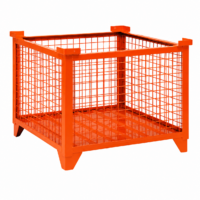
Rigid Wire Baskets (4)
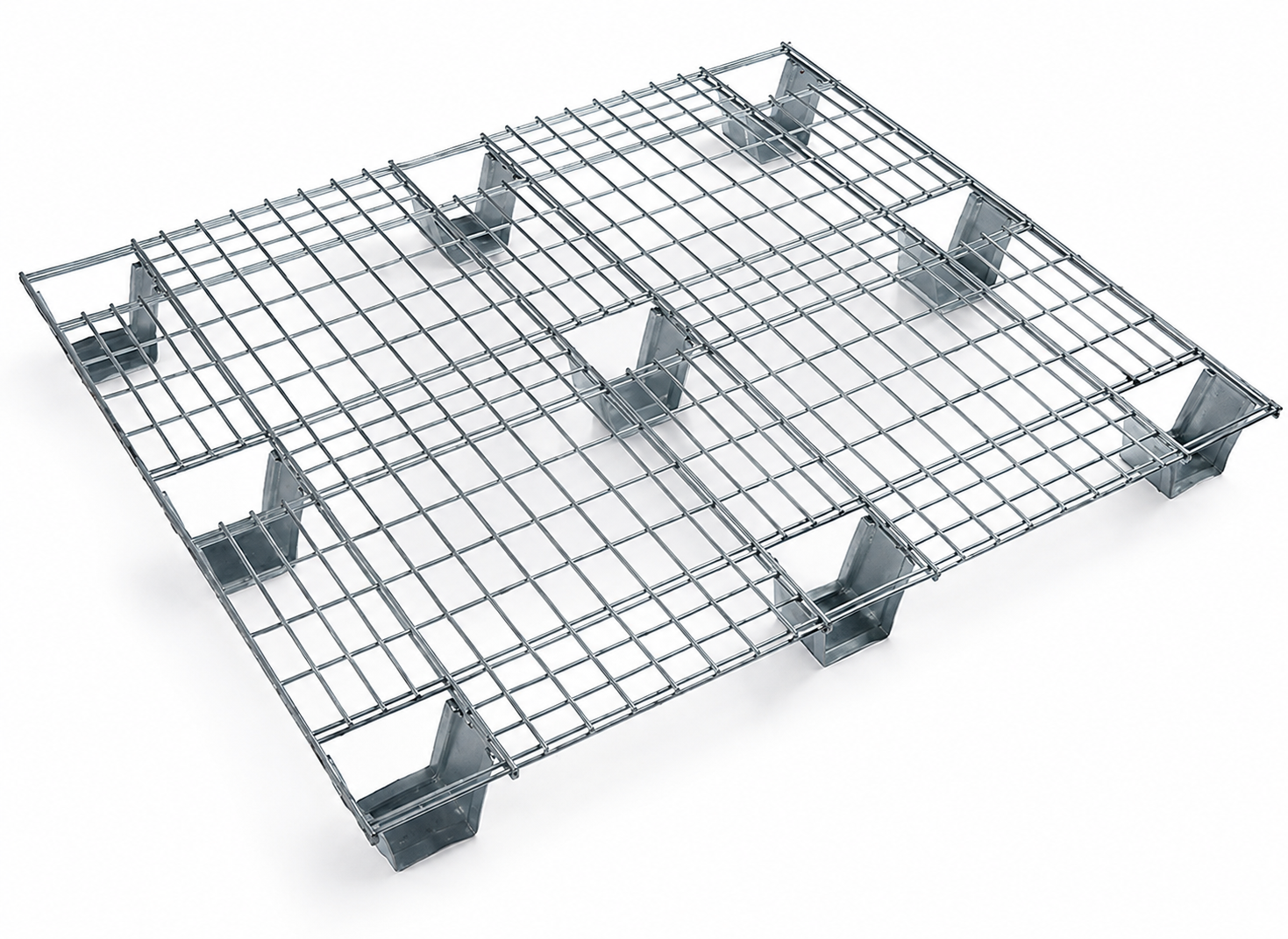
Wire Pallets (3)
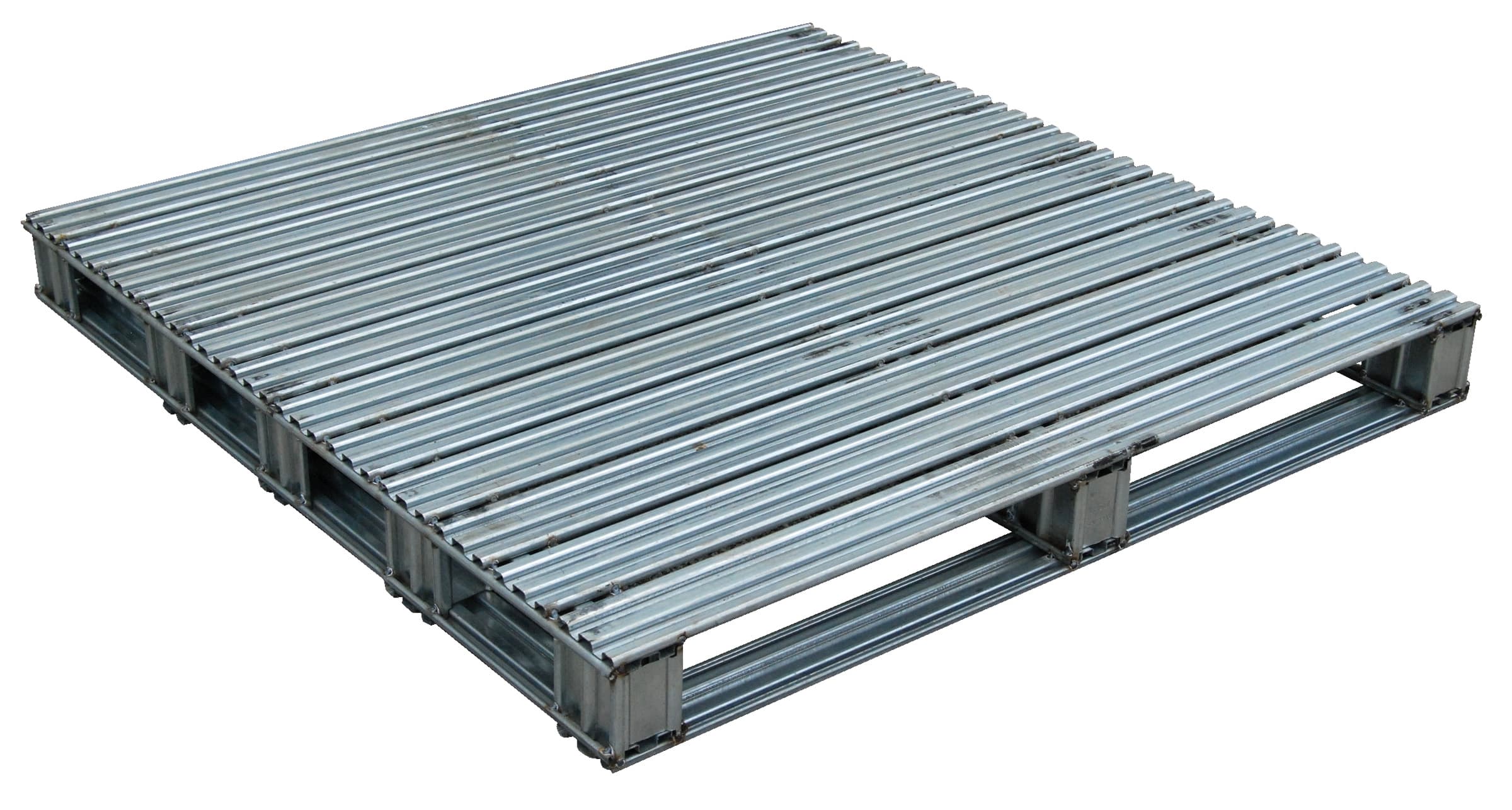
Steel Pallets (3)
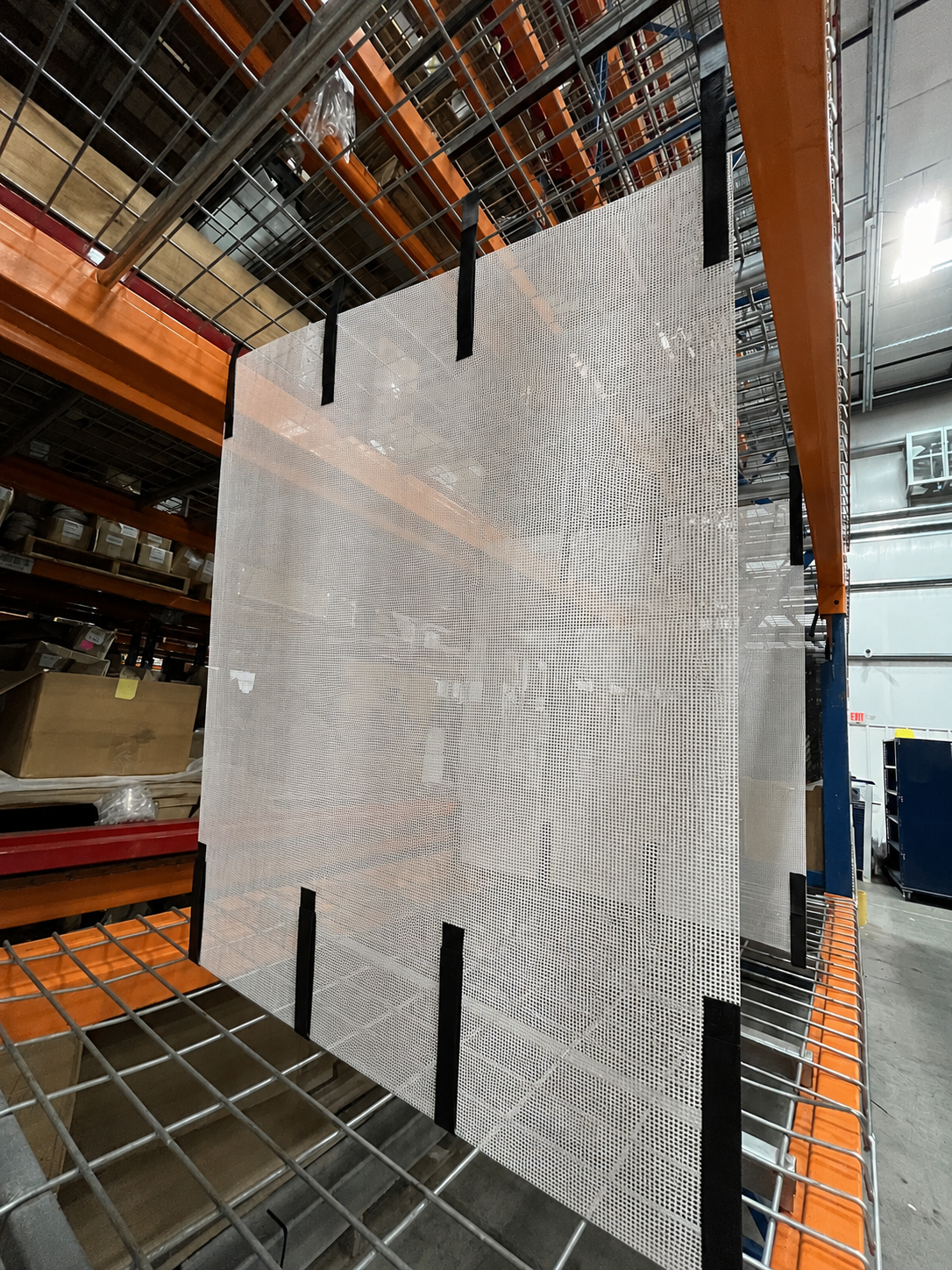
Hanging Vinyl Mesh Pallet Rack Shelf Dividers | Fire Rated NFPA 701 Compliant
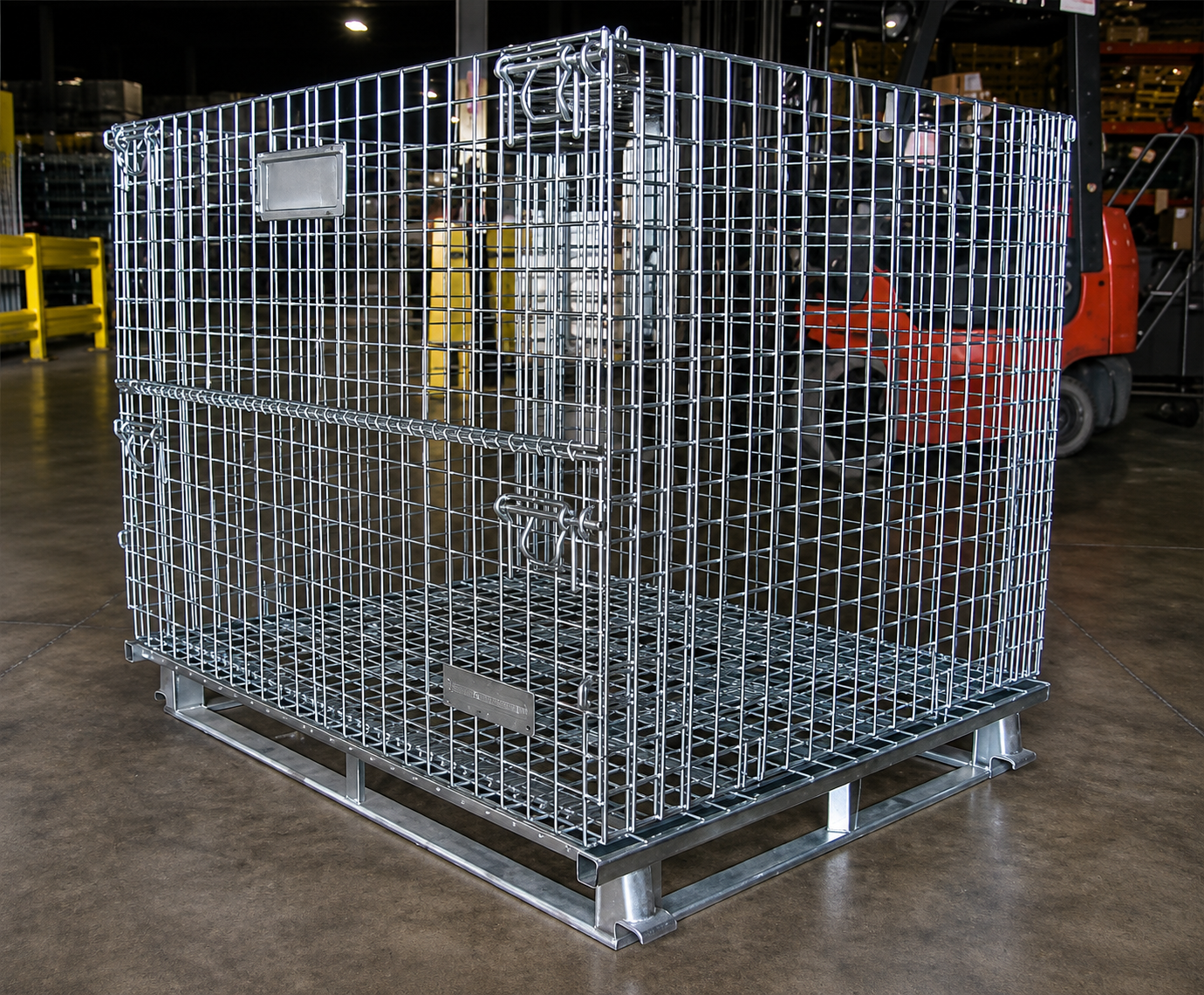
Convert Plastic Bulk Containers to 45″ d. x 48″ w. x 34″ h. Steel & Wire Bulk Containers for Fire Safety
Pallet stops do two important jobs. They help prevent pallets from being pushed too far through the back of the pallet rack, and they can help maintain the longitudinal flue space between loads in back-to-back rack rows.
That’s important for everyday warehouse safety. A forklift operator pushing a pallet too far into the rack can create a hazard on the opposite side of the row, damage inventory, or block space intended to remain open. Heavy-duty steel pallet stops provide a physical stopping point that helps operators position loads more consistently.
They’re also useful when maintaining flue space is part of the warehouse fire protection design. For example, a system may be designed around a 6″ longitudinal flue space between back-to-back loads. Properly designed and positioned pallet stops help keep pallets from creeping into that space.
Don’t confuse a pallet stop with a substitute for proper forklift operation. It’s a physical positioning aid that helps make consistent pallet placement easier while supporting the required rack layout.
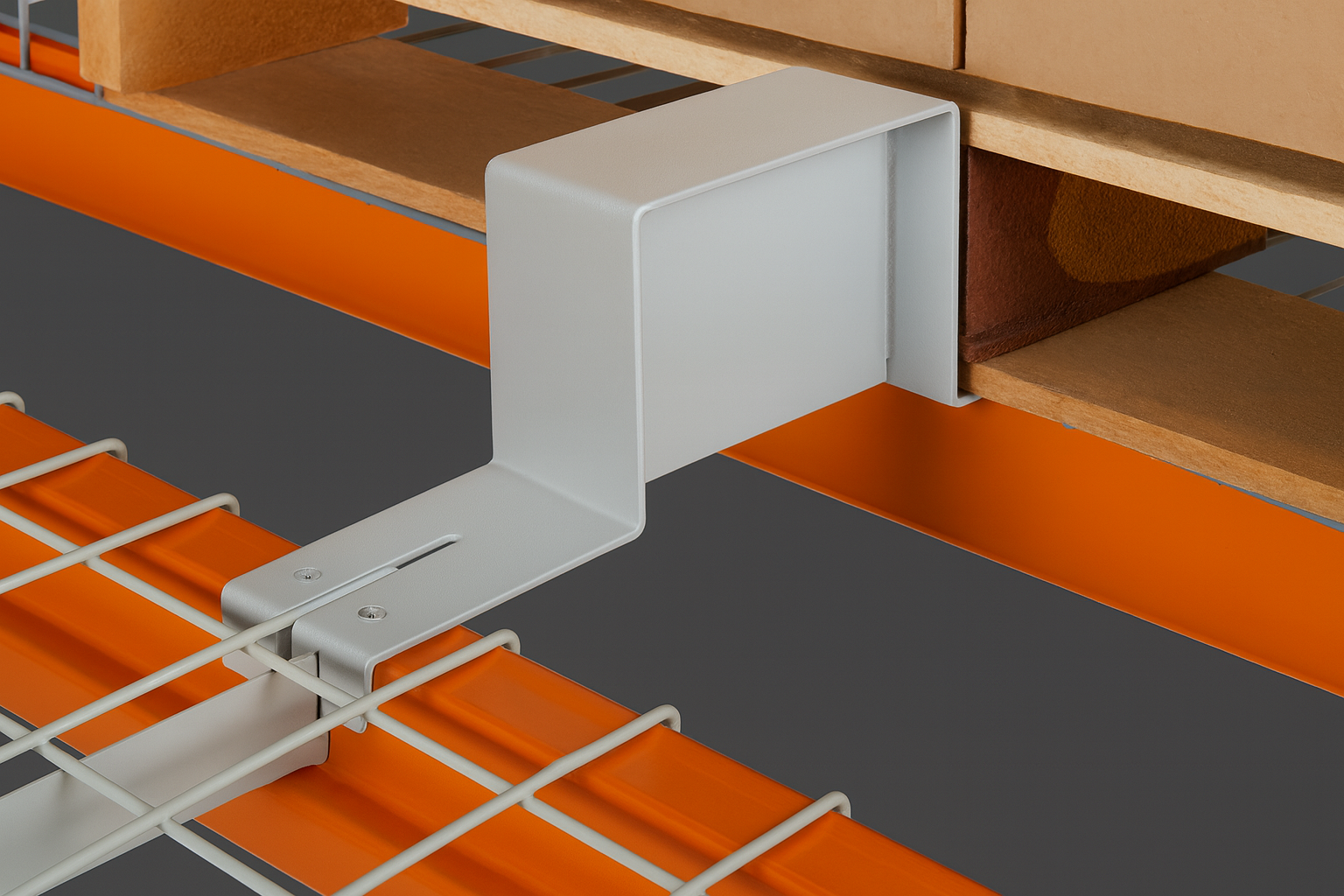
Longitudinal Flue Space Dividers are designed to help preserve the open vertical channel between pallet loads stored back-to-back.
Typically fabricated from steel and mounted toward the rear of the rack, these dividers create a physical boundary that helps prevent operators from pushing pallets too deeply into the storage position. Depending on the application, they can function as individual pallet stops, reinforced heavy-duty stops, or part of a larger flue-space management system.
The advantage is consistency. Instead of relying entirely on every forklift operator to judge pallet depth perfectly, the rack provides a physical reference point.
Maintaining that space can also be important to the warehouse fire protection system because open flue areas can allow heat to rise and sprinkler water to penetrate through rack levels. The exact dimensions required aren’t universal, however. They depend on the rack layout, commodity classification, storage arrangement, sprinkler design, and applicable requirements for the facility.
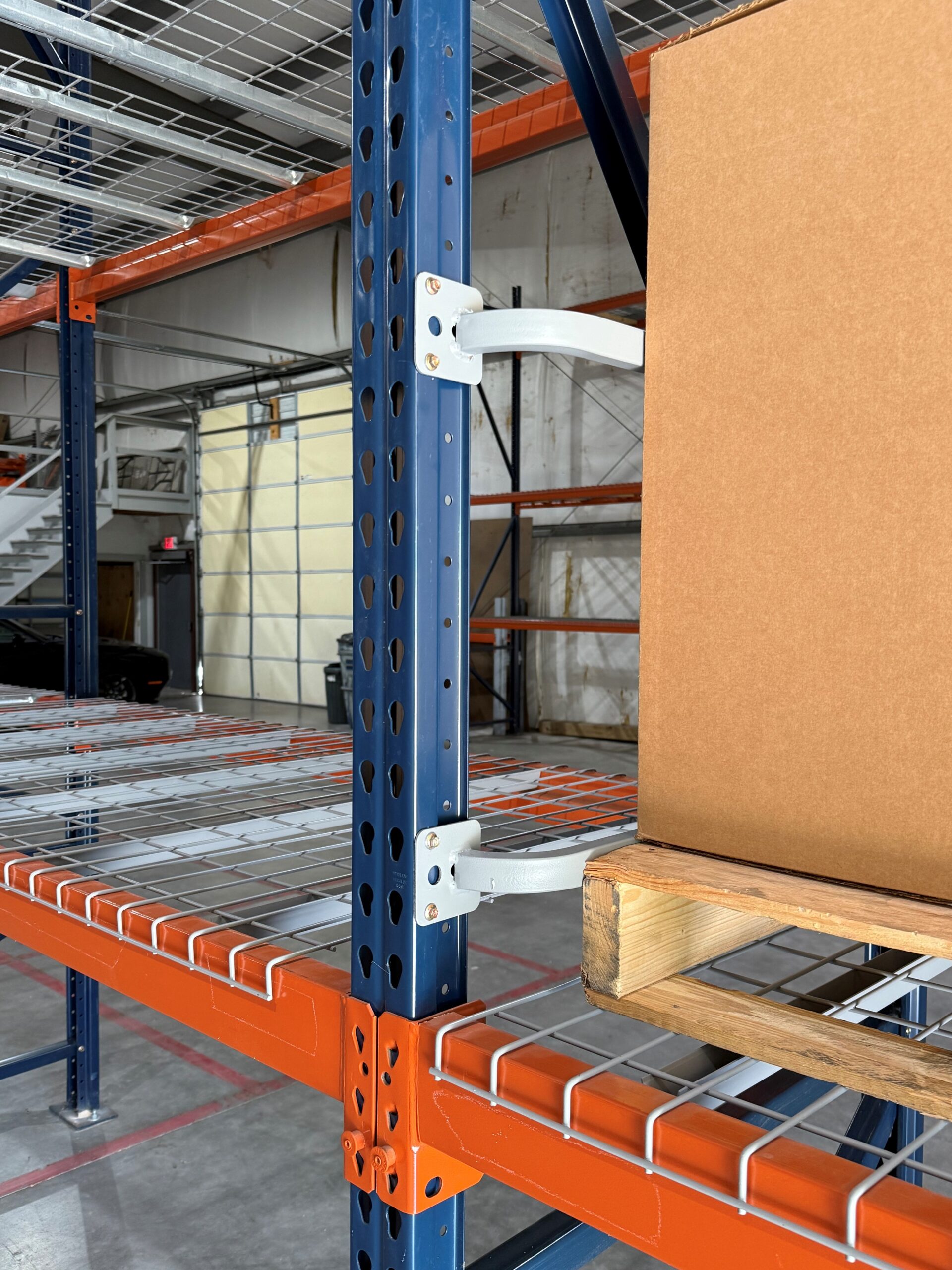
Transverse Flue Space Dividers address the space between adjacent loads on the same rack level. Rather than controlling how far a pallet travels toward the back of the rack, these dividers help keep neighboring loads separated side to side.
Often called U-dividers or pallet lane dividers, these steel accessories can be positioned front-to-back across a storage level to establish more consistent pallet lanes. They help prevent operators from setting loads too close together and blocking transverse flue spaces incorporated into the fire protection design.
Depending on the system, transverse spaces may be designed around clearances in the 3″ to 6″ range, but don’t assume those dimensions apply to every rack installation. Actual requirements depend on the storage configuration and approved fire protection design.
There’s another practical advantage: organization. Clearly defined pallet positions make loading easier to repeat from one bay to the next while reducing product crowding. You’re improving pallet placement at the same time you’re helping keep intended openings clear.
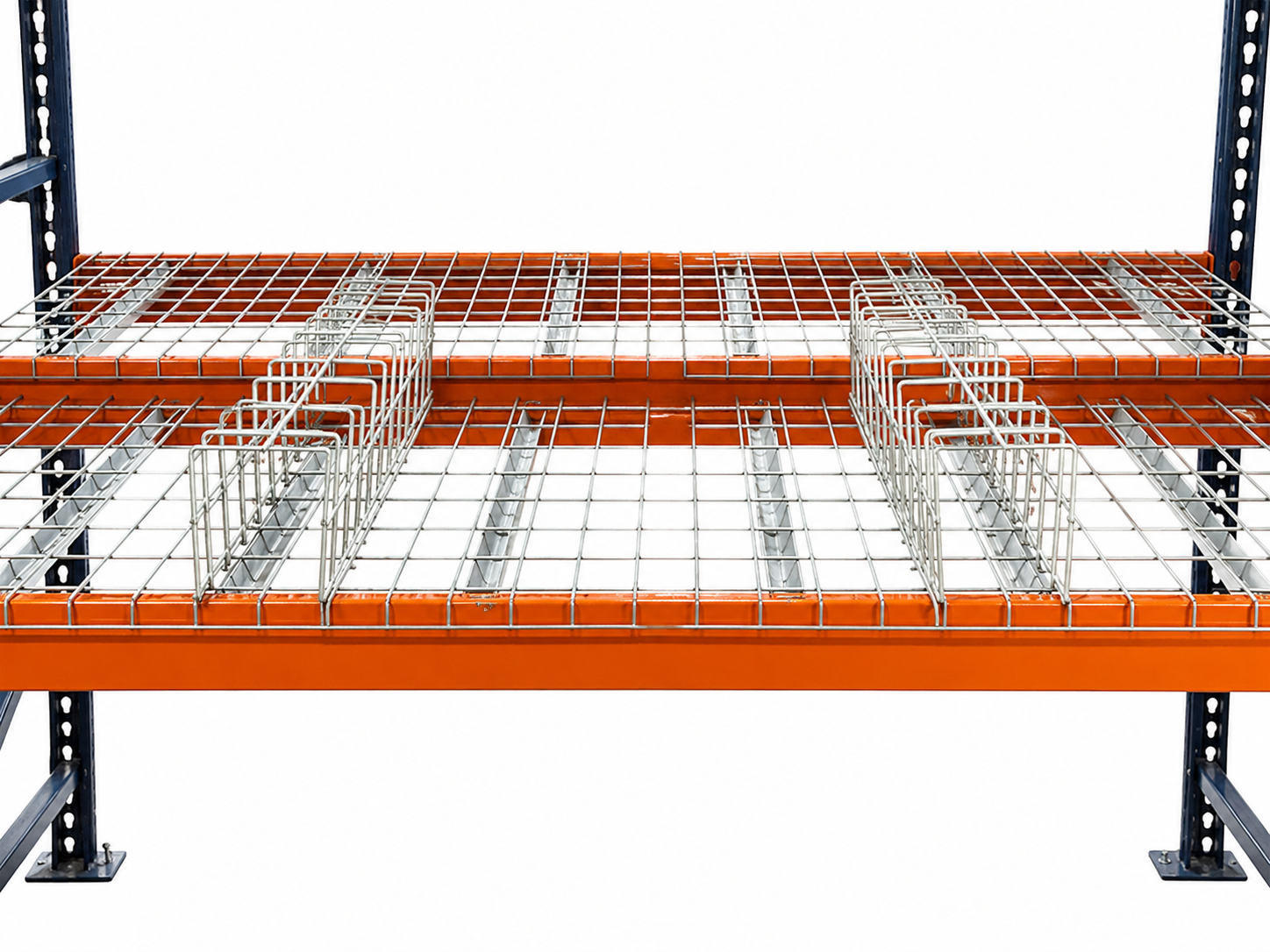
Flue Space Shelf Dividers help keep cartons, cases, pallets, and other stored products from drifting into areas that are supposed to remain open.
These dividers can be manufactured from structural steel tubing, heavy-duty wire mesh, stamped steel, or other appropriate materials and may attach to rack uprights, beams, or decking. Their job is straightforward: create a physical boundary so inventory stays where it’s supposed to stay.
That’s particularly useful with hand-stacked cartons. Pallets are relatively easy to position, but loose boxes have a habit of getting pushed backward or sideways as inventory is picked and replenished. Over time, those boxes can work their way into intended flue spaces.
Flue space shelf dividers make organization more automatic. Instead of constantly reminding employees where products shouldn’t go, you provide a physical divider that helps define the storage location.
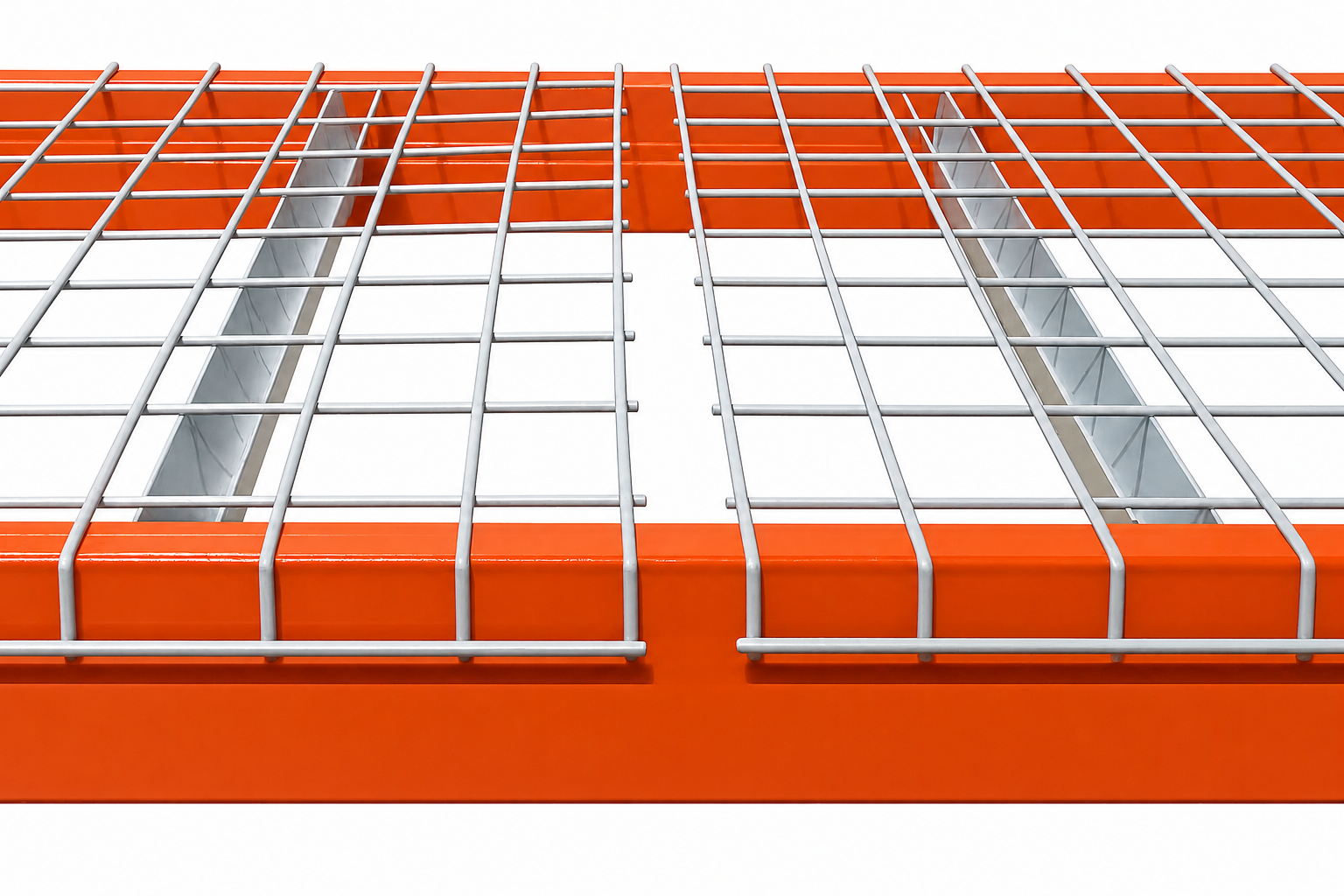
Wire mesh decking is one of the most widely used pallet rack accessories because it combines a stable storage surface with an open design.
Manufactured from welded steel wire, the decking rests across pallet rack beams and provides support for pallets, cartons, and other stored goods. The mesh construction improves product visibility and airflow while reducing the amount of solid surface underneath inventory.
That open construction is particularly useful when fire protection is a consideration. Unlike a completely solid shelf, wire mesh decking allows more sprinkler water to pass through rack levels. It also makes it harder for dust and debris to build up on large uninterrupted surfaces.
Wire decking is easy to install, requires relatively little maintenance, and can make rack levels more versatile for different types of inventory. The correct deck style and capacity should always be matched to the rack, beam configuration, load, and fire protection requirements.
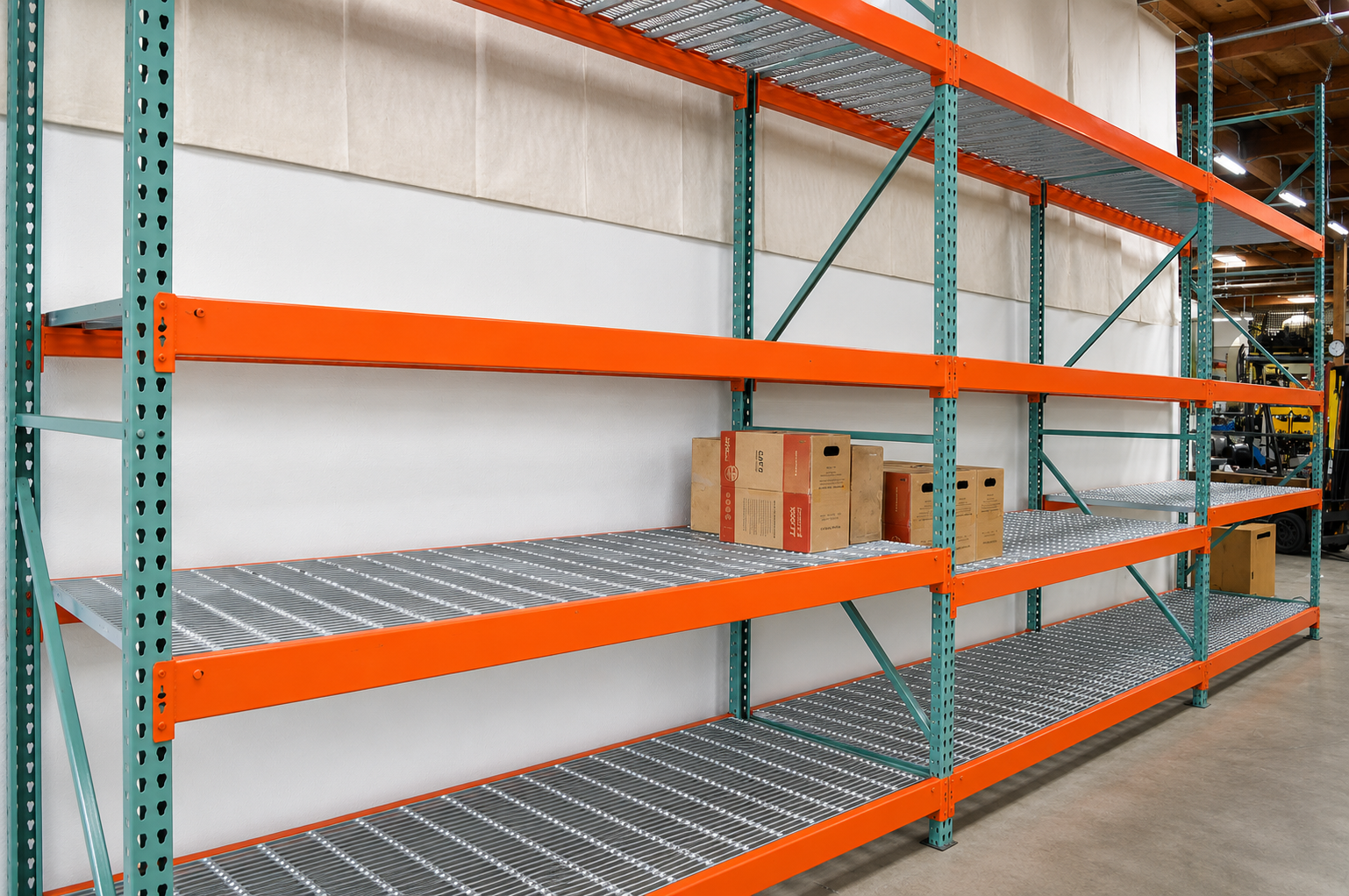
Punched steel decking gives you the smooth feel and durability of steel decking without creating a completely solid shelf.
The steel surface contains regularly spaced openings that promote airflow, improve visibility between rack levels, and allow sprinkler water to pass through the deck. Products such as 50% open punched decking are designed for applications where maintaining substantial open area is important.
That’s a big advantage when a warehouse needs a flatter storage surface than conventional wire mesh provides. Small cartons, containers, and other products can sit securely on the steel surface while the perforations maintain an open deck design.
Punched steel decking also resists many of the problems associated with wood or other solid shelf materials. It’s durable, easy to clean, and well suited for demanding warehouse environments. As always, the required percentage of open area and acceptable decking configuration should be confirmed for the specific fire protection design rather than assumed.
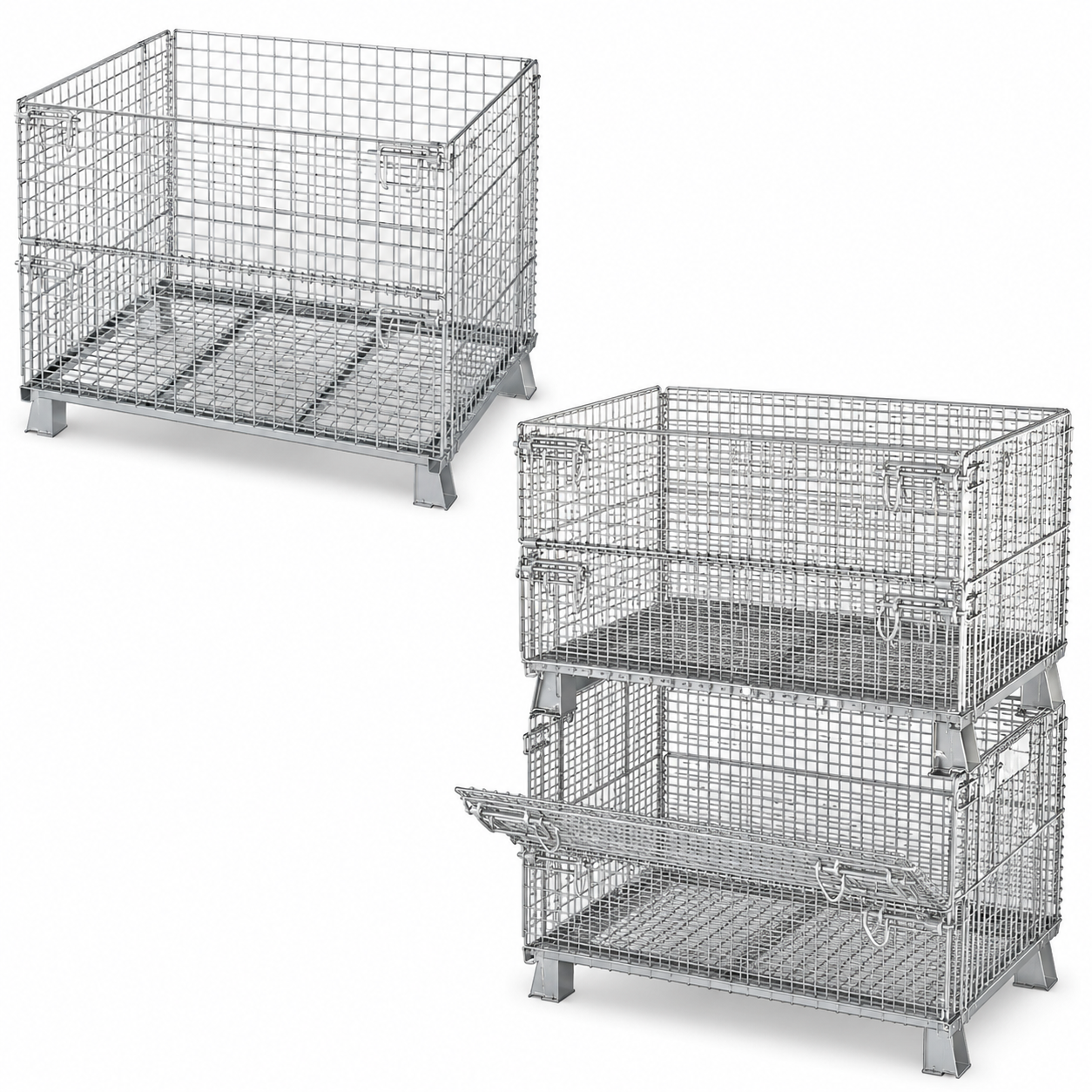
Heavy-duty wire containers combine industrial storage capacity with an open mesh design that makes inventory easy to see and allows air and sprinkler water to move through the container.
They’re commonly used in automotive, stamping, foundry, manufacturing, fulfillment, closed-loop distribution, recycling, warehousing, and transportation operations. Products stored in them range from aluminum castings and automotive parts to valves, fittings, tools, metal stampings, and heavy machined components.
Construction quality makes a difference. Automated welding, reinforced feet, and full welds at critical connections can reduce maintenance problems and extend container life under repeated forklift handling.
Wire containers are available in numerous sizes, including compact junior containers, medium containers, larger 40″ x 48″ footprints, and custom configurations. Collapsible designs provide another advantage by reducing the amount of space occupied by empty containers during storage and return transportation.
For fire-conscious warehouse design, their open construction is the big attraction. Instead of enclosing inventory behind large solid plastic walls, wire mesh maintains visibility and openness around the stored product.
Rigid Wire Baskets are built for operations that want the openness of wire mesh without the folding construction of a collapsible container.
These heavy-duty containers use permanently welded steel frames, wire mesh sides, reinforced bases, and stacking feet or targets. Depending on the application, they can also incorporate solid corrugated steel floors, drop gates, forklift runners, lifting provisions, and other custom handling features.
The rigid design makes these baskets particularly useful for heavy castings, machined parts, metal components, bulk materials, and other products that demand a tough reusable container. Standardized footprints can also make planning around pallet racks, forklifts, trailers, and production equipment much easier.
When specifying a rigid wire basket, don’t look at footprint alone. Consider usable interior dimensions, overall outside dimensions, load capacity, stacking height, floor construction, forklift access, and whether employees need a drop gate for ergonomic product access.
Their open wire sides provide excellent inventory visibility and airflow while reducing the amount of solid material surrounding the stored product.
Wire pallets offer a reusable alternative to traditional wood pallets while maintaining a highly open storage platform.
Constructed from welded steel wire, they can support palletized and non-palletized loads while providing excellent visibility and airflow. They don’t absorb moisture like wood, aren’t attractive to pests, and can help maintain a cleaner material handling environment.
The open design is also useful in warehouses where sprinkler penetration is an important consideration. Rather than creating another broad solid surface underneath inventory, the wire platform leaves much of the storage area open.
Heavy-duty nestable wire pallets are designed for higher load capacities and demanding industrial use. When empty, they nest together to save floor and trailer space. Light-duty nestable wire pallets offer the same basic storage advantages for moderate loads, consumer products, packaging operations, and general distribution.
They’re durable when loaded and compact when empty. That’s a hard combination to beat in a busy warehouse.
Steel pallets are designed for the jobs that chew through ordinary pallets.
Built to handle repeated forklift use, concentrated loads, moisture, and demanding industrial environments, steel pallets provide a durable platform for raw materials, finished products, fabricated components, and other heavy loads. They won’t crack or absorb moisture like wood and can provide a long service life in closed-loop applications.
Custom heavy-duty steel pallets and skids can be designed around specific products such as engines, dies, fabricated assemblies, machinery components, and other high-value loads. Features can be engineered around load dimensions, point loads, production equipment, and automated handling requirements.
Stackable steel pallets are another option for sheet materials such as steel, aluminum, wood panels, and composites. Instead of installing permanent rack, loaded pallets can be stacked vertically where the design permits, increasing storage density while retaining flexibility.
Where fire protection is part of the selection process, pallet construction and any solid surfaces need to be considered together with the commodity, rack arrangement, storage height, and sprinkler system. Steel is durable, but simply being made from steel doesn’t automatically make every pallet configuration appropriate for every fire protection design.
Hanging Vinyl Mesh Pallet Rack Shelf Dividers | Fire Rated NFPA 701 Compliant
Sometimes you need a shelf divider that provides more coverage than a standard wire divider but still works with a fire-conscious storage layout. That’s where hanging vinyl mesh dividers come in.
These custom white fire-rated vinyl mesh pallet rack shelf dividers are designed for applications calling for material that meets NFPA 701 flame-propagation testing requirements. They can divide rack shelves front-to-back or side-to-side while helping keep cartons and loose products organized.
Installation is simple. Velcro-style straps attach the divider to wire decking above and secure it to decking below. That makes the divider easy to position without building a permanent steel partition inside every storage location.
The hanging mesh also helps prevent boxes from being pushed into designated flue areas. Standard vinyl mesh may be suitable for many organizational applications, while fire-rated material can be specified where the project calls for that particular tested characteristic.
Keep in mind that an NFPA 701-compliant material doesn’t by itself make an entire rack installation “fire-code compliant.” The complete storage arrangement still needs to satisfy the requirements applicable to the facility.
If you’re reviewing warehouse fire safety, your bulk containers deserve a closer look.
Plastic collapsible containers are popular because they’re reusable, stackable, and easy to handle, but large quantities of combustible plastic can affect the fire protection considerations for a warehouse. Solid container walls can also restrict the movement of sprinkler water through stored loads.
A 45″ deep x 48″ wide x 34″ high steel-and-wire bulk container provides an alternative for operations looking to move toward more open, durable container construction. Wire sides increase visibility and openness, while the steel frame provides the strength needed for repeated industrial handling.
These containers can be combined with other storage products such as open punched steel decking, pallet stops, and longitudinal and transverse flue-space accessories as part of a broader warehouse storage strategy.
Before replacing an entire fleet of containers, however, confirm exactly what your facility requires. Commodity classification, plastic type, quantity, storage arrangement, rack height, sprinkler system, and local requirements can all affect the fire protection approach. The smart move is to coordinate container changes with your fire protection professional, insurer where applicable, and authority having jurisdiction rather than assuming one material change solves every issue.
Frequently Asked Questions About Warehouse Fire Safety
How do I design pallet rack storage so flue spaces stay open?
Start with the approved rack and fire protection design, then make it difficult for everyday warehouse activity to defeat that design.
Pallet stops and longitudinal flue space dividers can control how far pallets are pushed into back-to-back rows. Transverse dividers can help establish separation between neighboring loads, while shelf dividers keep loose cartons from migrating into spaces intended to remain clear.
Think about what happens six months after installation, not just what the rack looks like on opening day. A good design helps employees put inventory in the correct location without having to guess where every pallet or carton belongs.
Is wire mesh or punched steel decking better for warehouse fire safety?
Both can provide an open alternative to completely solid shelving, but they’re not interchangeable in every application.
Wire mesh provides excellent openness, visibility, and airflow. Punched steel provides a smoother storage surface while using perforations to maintain a percentage of open area. The right choice depends on what you’re storing, the required load capacity, the rack configuration, and the fire protection requirements established for the facility.
Don’t select decking based solely on a general rule such as “50% open.” Verify what your specific storage and sprinkler design requires.
Do flue space dividers and pallet stops require maintenance?
They’re low-maintenance products, but they shouldn’t be ignored. Include them in regular rack inspections and look for bent steel, broken welds, loose connections, displaced components, or damage caused by forklifts and pallets.
Also inspect the space they’re supposed to protect. A perfectly good divider isn’t accomplishing much if cartons, shrink wrap, loose packaging, or improperly positioned loads are blocking the intended opening.
What fire safety requirements apply to my warehouse storage system?
There isn’t one universal answer. Requirements can depend on the commodities being stored, packaging and plastics, storage height, rack configuration, aisle arrangement, ceiling height, sprinkler type and design, decking, containers, and locally adopted fire and building codes.
Products such as wire decking, pallet stops, flue space dividers, open containers, and fire-rated divider materials can support a warehouse fire protection strategy, but they don’t replace an engineered fire protection design. Before making major rack, decking, container, or storage-layout changes, confirm the applicable requirements with qualified fire protection professionals and the authority having jurisdiction.




