Rigid Wire Baskets
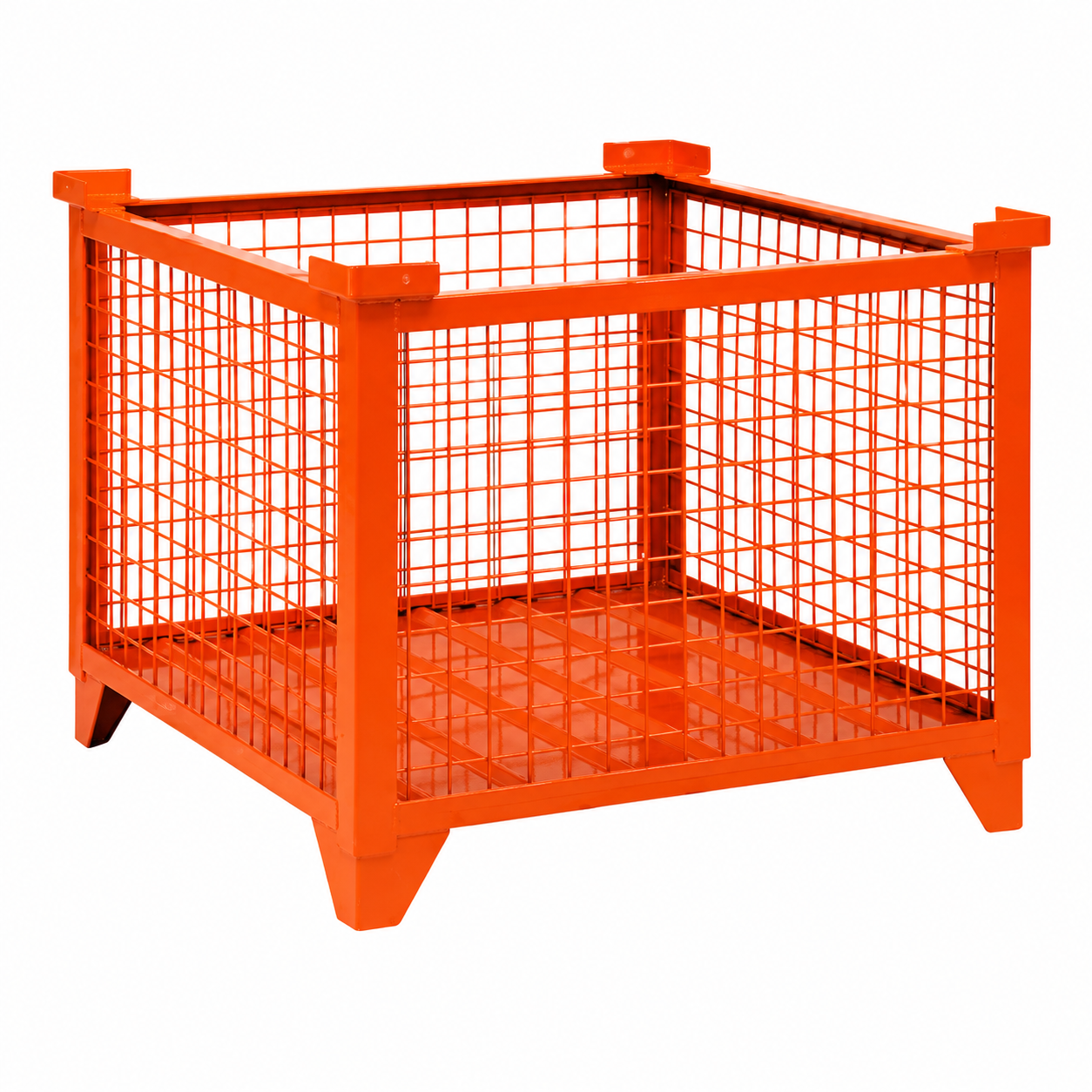
Rigid Wire Baskets are heavy-duty, non-collapsible steel containers designed to store, stack, transport, and protect industrial parts and bulk materials. Unlike lightweight wire baskets or folding containers, rigid models use permanently welded steel frames with wire mesh sides, reinforced bases, stacking feet or targets, and, depending on the design, solid corrugated steel floors. The open mesh provides immediate product visibility, airflow, and a more open storage configuration while reducing container weight compared with comparable solid-sided steel bins. Available with drop gates, forklift-handling features, runners, lifting provisions, custom dimensions, and different finishes, rigid wire baskets can be configured around the product and material-handling process. Their combination of strength, stackability, visibility, and reusability makes them especially useful in manufacturing, automotive, warehousing, metalworking, distribution, and returnable packaging applications.
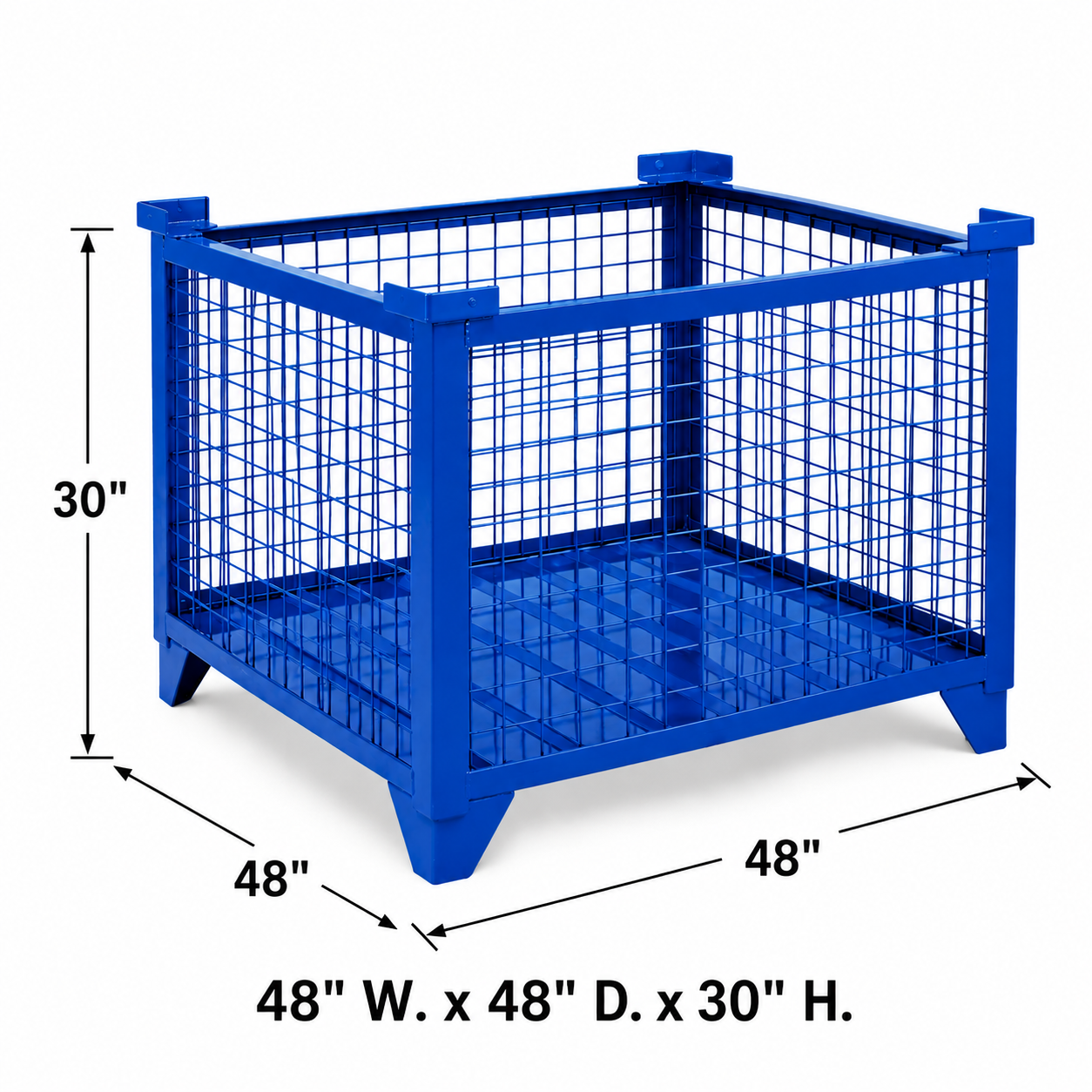
Rigid Wire Containers give manufacturers and warehouses choices for storing everything from smaller components to heavy castings and bulk materials. Standard sizes are useful because they simplify planning around forklifts, pallet racks, production areas, trailers, and existing material-handling equipment. These include containers ranging from approximately 35″ x 35″ through 48″ x 48″, with selected models rated for loads up to 4,000 lbs.
Size isn’t the only decision. You also need to consider usable interior height, overall outside dimensions, load capacity, stacking configuration, floor construction, and whether workers need access through a drop gate. Remember that stacking targets, feet, and structural framing can make the actual outside dimensions larger than the nominal usable footprint.
Showing all 4 resultsSorted by latest
Rigid Wire Container Sizes (8)
Rigid Wire Container No Drop Gate (4)
Rigid Wire Container with Drop Gate (5)
Rigid Wire Container Options & Accessories (5)
Custom Rigid Wire Container Sizes (3)
Automotive Rigid Wire Containers (5)
Specialty Rigid Wire Containers (5)
Rigid Wire Container Applications (5)
Collapsible Rigid Wire Baskets (3)
Benefits of Rigid Wire Baskets
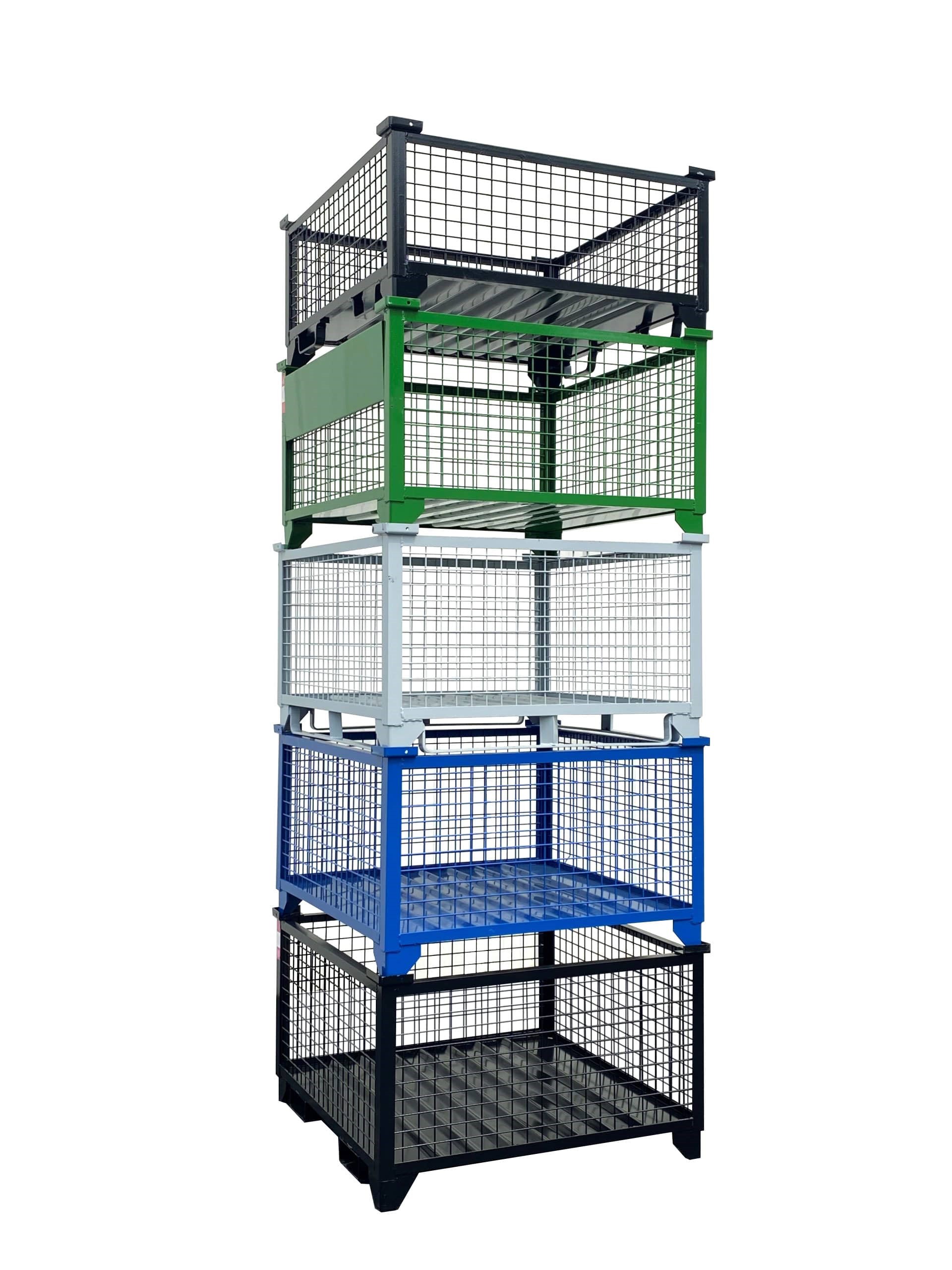
Stackable Rigid Wire Baskets | Containers | Bulk Bins
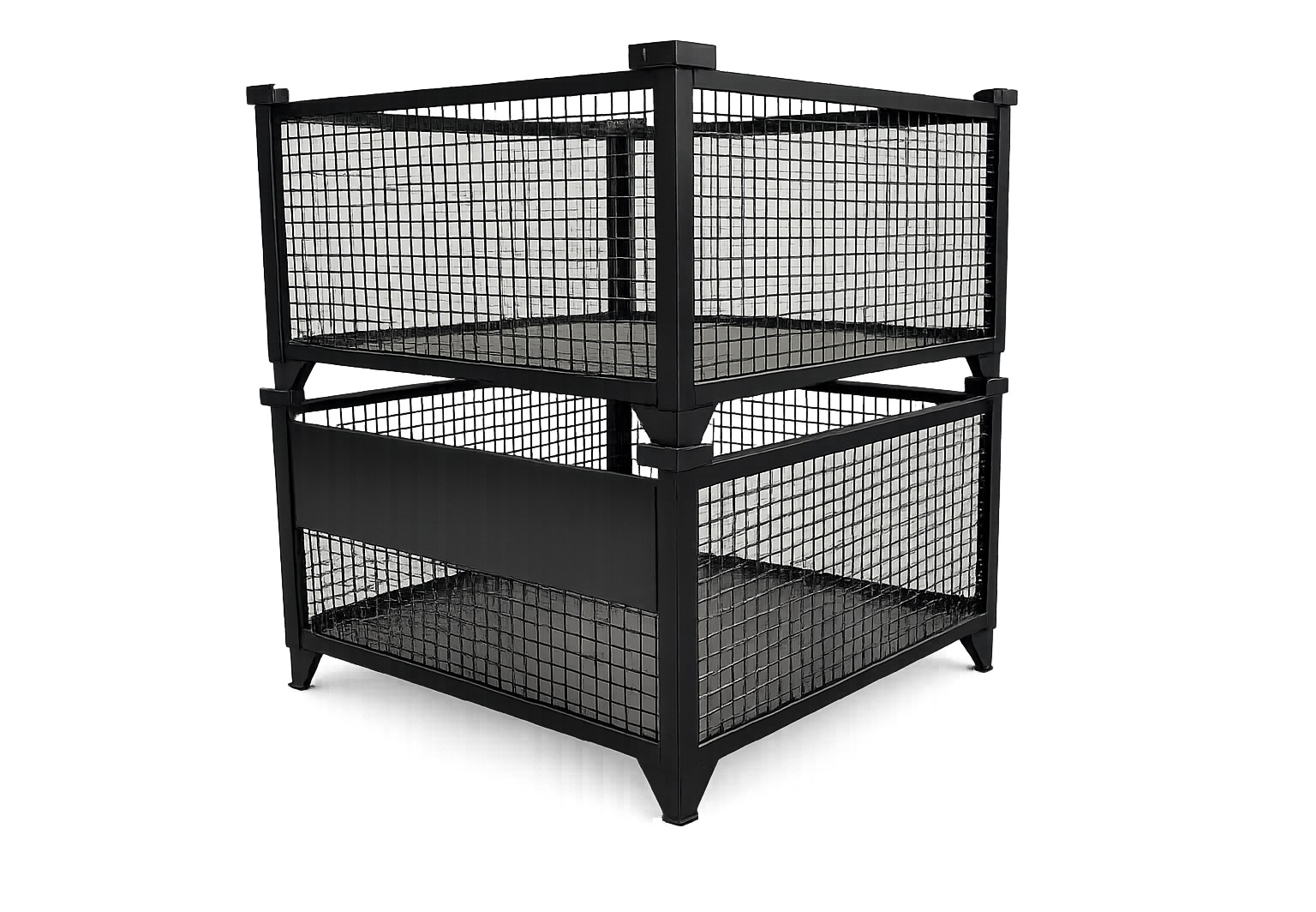
Rigid Wire Bins | Industrial Wire Mesh Pallet Containers
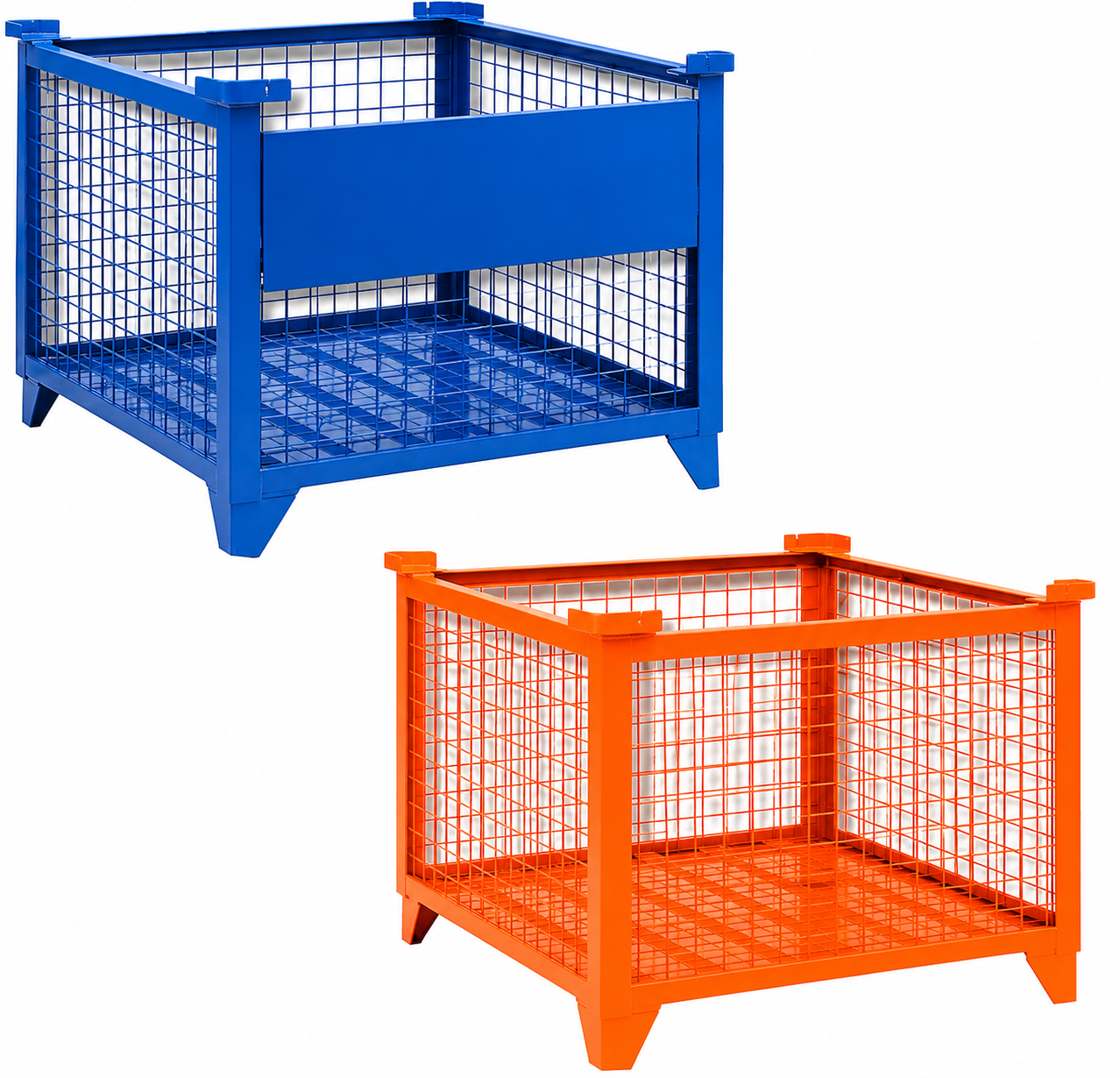
Rigid Wire Containers
For example, a 35″ x 35″ x 30″ model provides a relatively compact footprint while still supporting heavy industrial storage. Larger containers provide additional volume for bulky products. The right size is the one that supports the load properly without wasting warehouse or trailer cube.
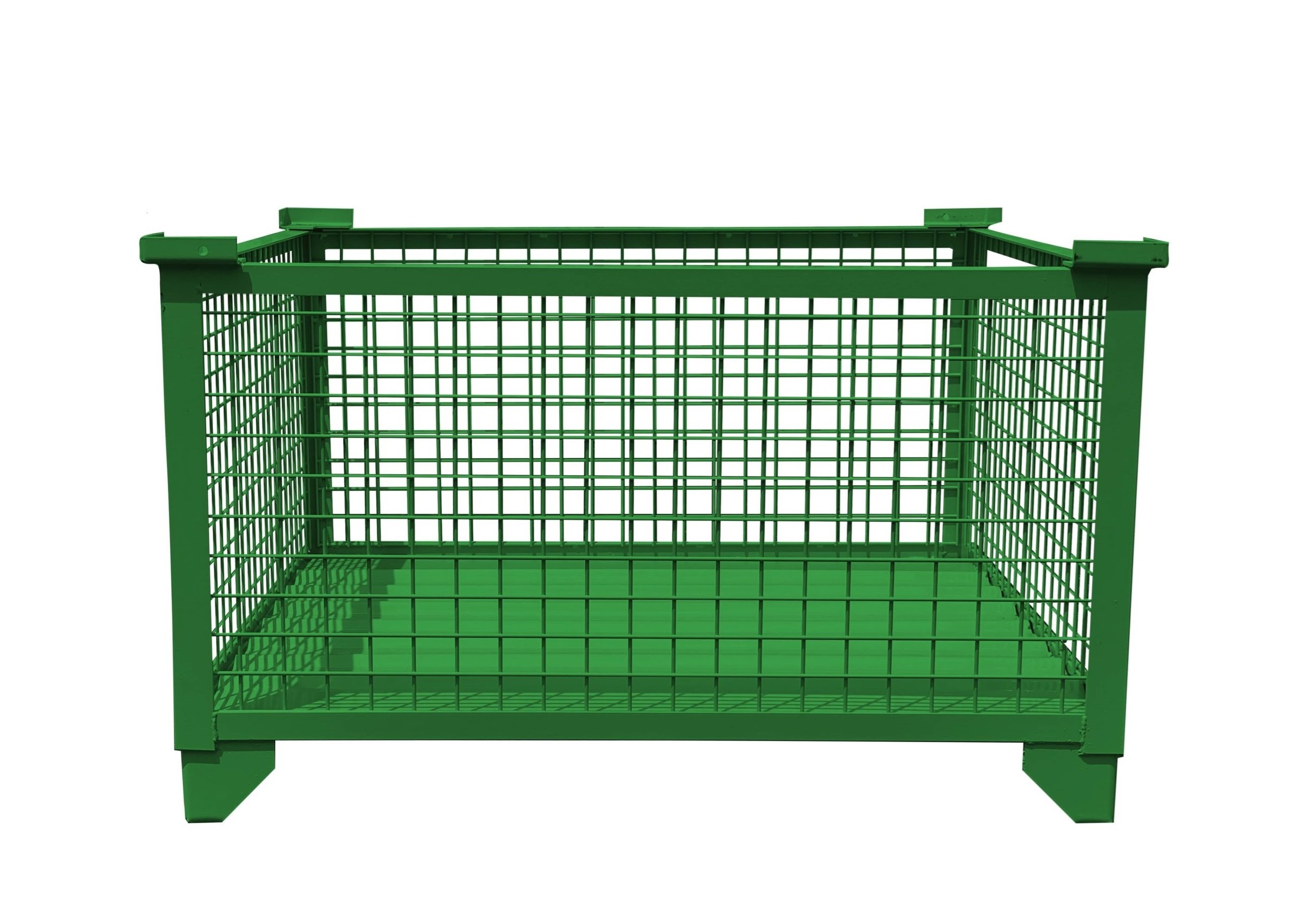
A Rigid Wire Container with No Drop Gate is about maximum containment and straightforward construction. All four sides remain fixed, creating a rigid perimeter around the load. There are no hinges, latches, or gate assemblies to operate, making the container well suited to products that are loaded and unloaded from the top or handled mechanically.
The open wire sides still let employees see what’s inside without opening the container or digging through inventory. Air and light can pass through the mesh, and the open construction reduces weight compared with a similarly constructed solid-sided steel container. For high-density storage, compatible containers can also be vertically stacked according to their rated design.
No-drop-gate containers make sense when access through the side isn’t necessary. If employees regularly hand-pick heavy components from the bottom of a tall basket, however, a drop-gate model may be the more practical choice.
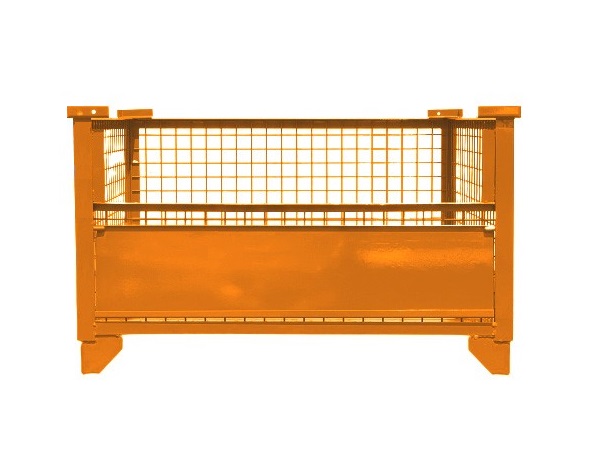
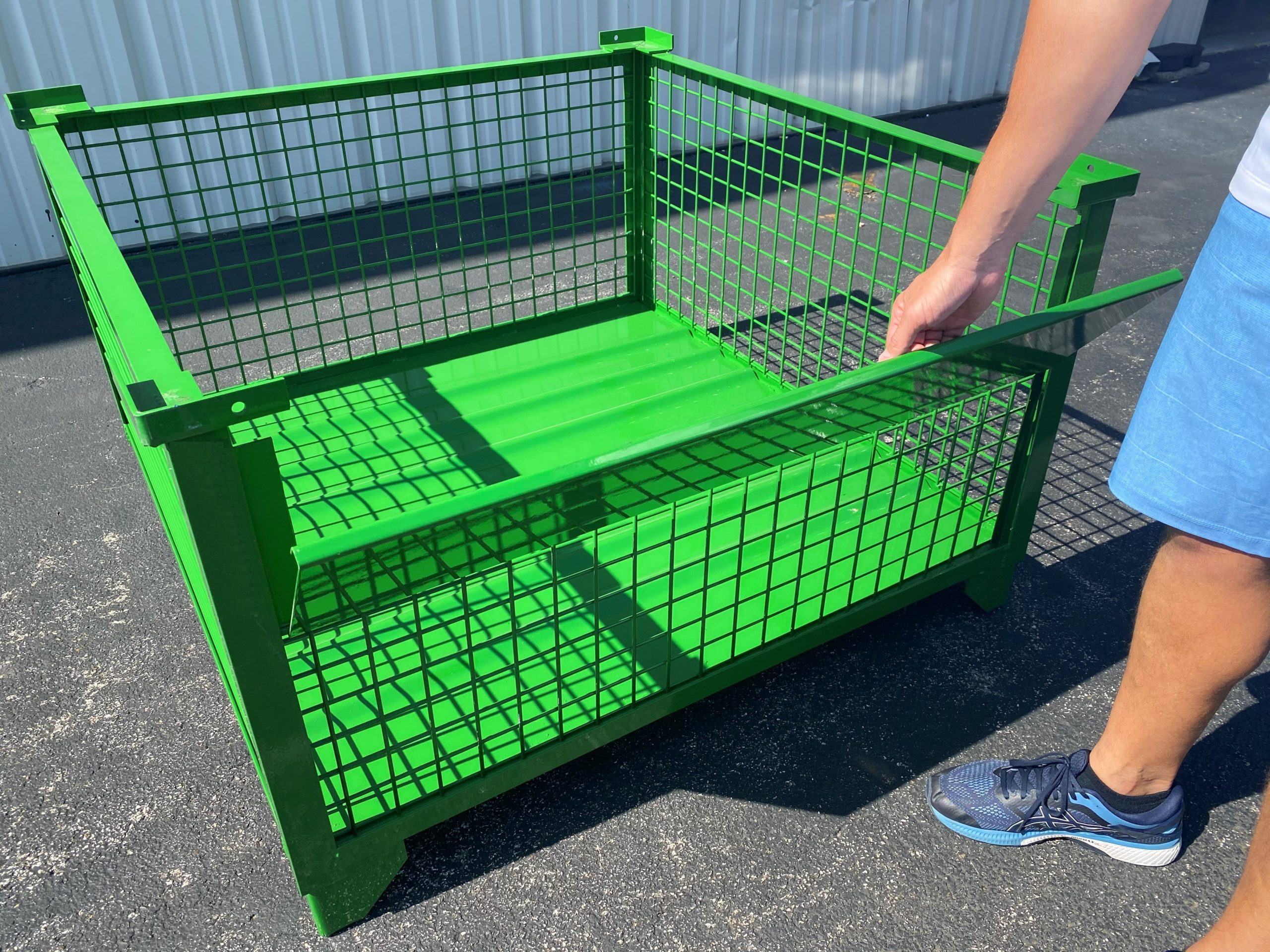
A Rigid Wire Container with Drop Gate gives you the strength of a permanently welded container with better access to the load. Instead of requiring an employee to reach over the full height of the basket, a half drop gate lowers a portion of the side so parts can be reached more easily.
That’s particularly useful with heavy castings, stampings, machined components, and other dense products. As inventory gets lower in the container, the remaining pieces can otherwise become difficult to reach. A drop gate creates another access point without giving up the advantages of a rigid, stackable steel basket.
The 35″ x 35″ x 30″ model, for example, has a half drop gate on the 35″ side, a 13-gauge corrugated steel floor, wire mesh sides, and a rated capacity of 4,000 lbs. The correct gate location should be considered during the design stage so it faces the aisle, workstation, or picking position where employees actually need it.
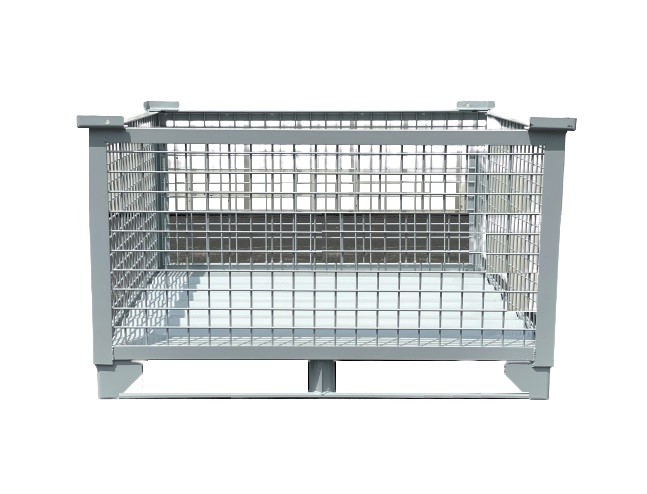
Rigid Wire Container Options & Accessories let you configure a basic wire basket around the way material actually moves through your operation. Fork stirrups can help locate and secure a container on forklift forks. Fork tunnels provide more controlled fork entry and can be useful in applications involving specialized handling. Steel runners can improve support when containers are placed on certain storage surfaces, while properly engineered crane lifting lugs provide another handling option where overhead lifting is required.
Finish is another choice. Not every basket needs to arrive painted. Raw, unfinished containers can make sense when the customer applies a proprietary coating, requires a special finish, or wants to avoid paint-chip contamination inside a container holding sensitive parts. Some custom applications can also combine a painted exterior with an unfinished interior.
The point isn’t to add every accessory available. It’s to look at how the container is loaded, transported, stored, emptied, and returned, then select the features that improve that particular process.
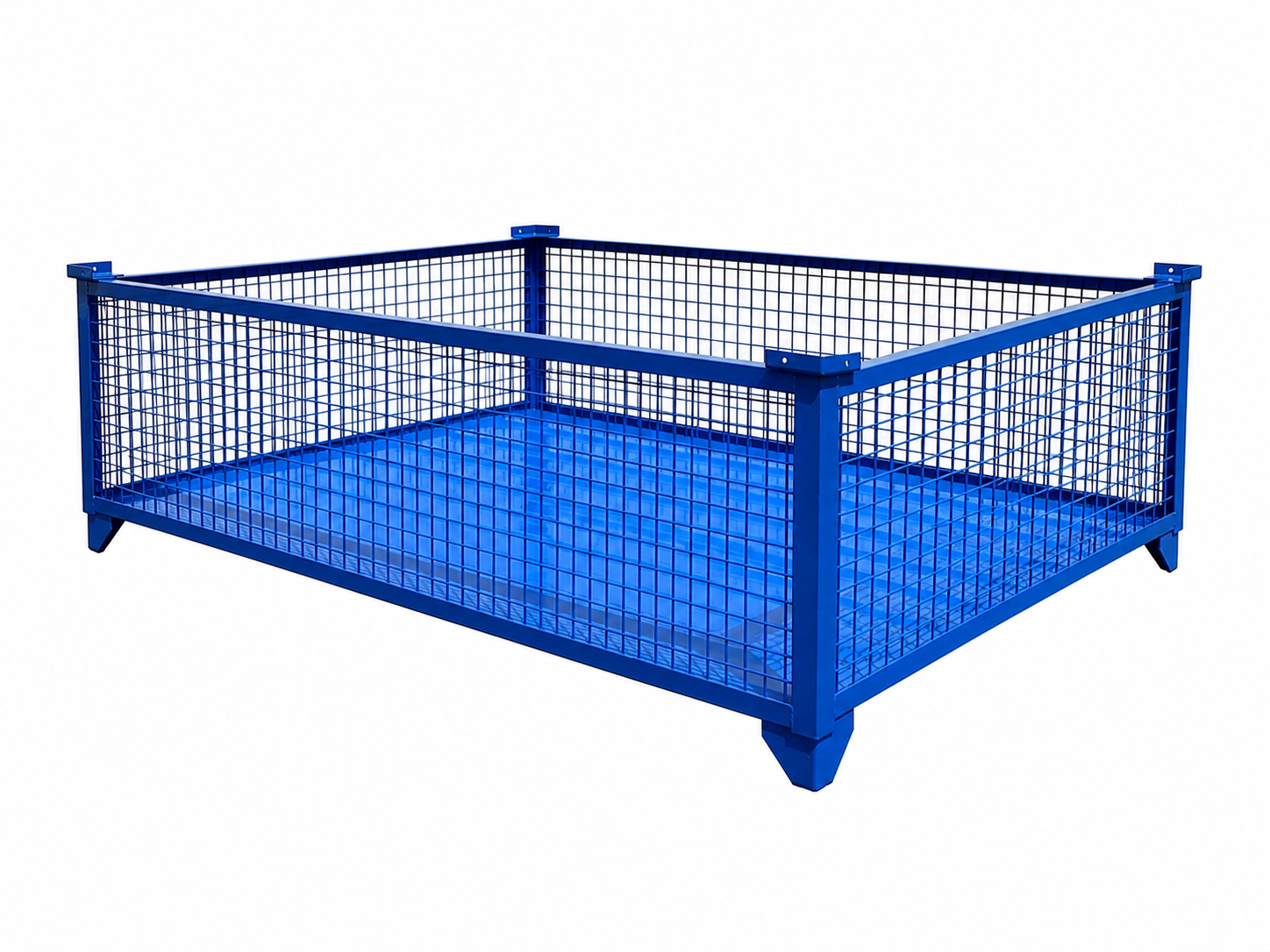
Sometimes the product simply doesn’t fit a standard basket. Custom Rigid Wire Container Sizes allow the length, width, usable height, gate location, floor, mesh, finish, and handling features to be designed around unusual components or a specific manufacturing process.
Extra-long containers are particularly useful for stampings, assemblies, fabricated parts, and products that exceed conventional pallet dimensions. This includes custom 48″ x 96″ containers for long products and 48″ x 60″ containers for heavy industrial loads. These larger designs can incorporate reinforced steel framing, corrugated steel floors, wire mesh sides, and drop gates.
Custom sizing can also improve trailer and warehouse cube. A container that’s unnecessarily large wastes space, while one that’s too small can damage the product or make handling difficult. Give us the part dimensions, weight, quantity per container, stacking requirements, and handling method, and the basket can be designed around the load instead of making the load fit the basket.
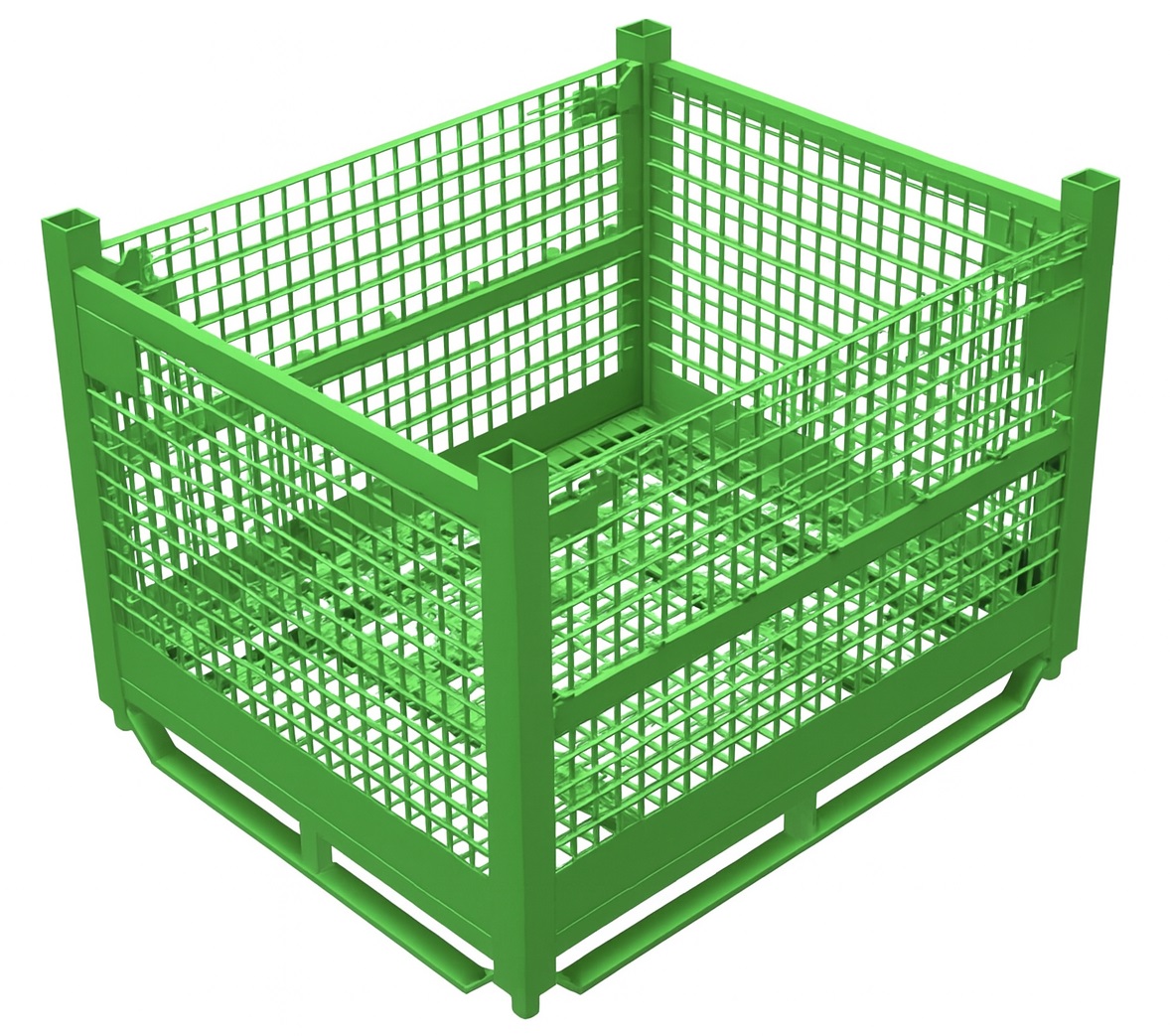
Automotive Rigid Wire Containers are designed around an industry where consistency matters. Parts move between stamping plants, suppliers, distribution points, and assembly facilities on tightly controlled schedules. Containers need to work with the forklifts, storage systems, conveyors, and other material-handling equipment used throughout that process.
Standardized footprints can help parts travel through multiple facilities without unnecessary repacking. Open mesh also gives operators quick visual identification of the contents, which is useful for inventory control, line-side staging, and work-in-process material.
Automotive containers can be configured around specific parts, loads, and customer requirements. The important thing is dimensional consistency. When hundreds or thousands of returnable containers circulate through a supply chain, even small differences in dimensions, stacking points, or handling features can create problems.
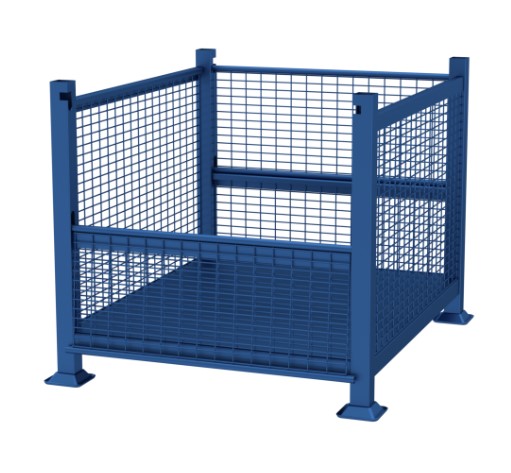
Specialty Rigid Wire Containers are where the standard basket stops and application-specific design begins. These heavy-duty containers can incorporate heavier mesh, reinforced floors, solid or perforated steel panels, drop gates, swing-out gates, runners, fork pockets, stacking features, and lifting provisions.
The Davco R2GW-01 is a good example. It measures 40-1/2″ x 34-1/2″ x 32″, provides 18 cubic feet of storage, and has a listed 3,200-lb. capacity. Heavy 9-gauge 2″ x 1″ wire mesh provides containment and visibility, while a solid sheet-metal floor supports dense or irregular components. A half drop gate provides side access.
Specialty containers make sense when an ordinary wire basket almost works, but not quite. Rather than compromising your handling process, the container can be configured around the load and the way employees and equipment interact with it.
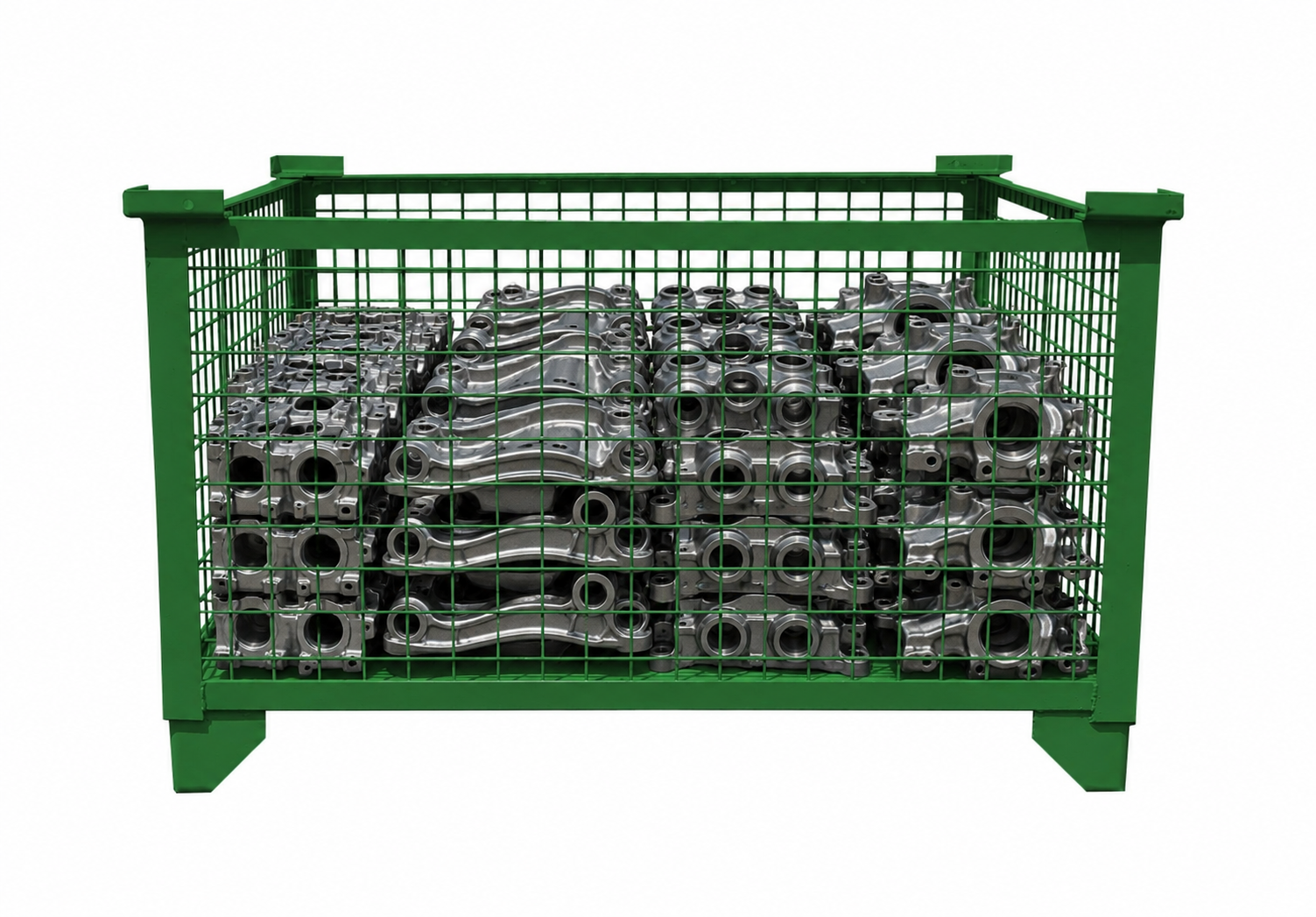
Rigid Wire Container Applications include automotive manufacturing, metal stamping, foundries, machining, warehousing, distribution, work-in-process storage, returnable packaging, and other operations handling heavy industrial components. A rigid wire container can move with the product from production to staging, into warehouse storage, and eventually onto a truck.
Metal stamping is a particularly demanding application. Blanks, stampings, fabricated pieces, and finished metal parts can be heavy and hard on storage equipment. A welded steel frame and reinforced floor provide the support these loads require, while wire sides allow employees to see the contents.
The ability to stack compatible loaded containers also helps facilities use vertical space instead of spreading work-in-process inventory across the floor. Add the right gate, divider, runner, or handling feature and the basket becomes more than a container. It becomes part of the material flow.
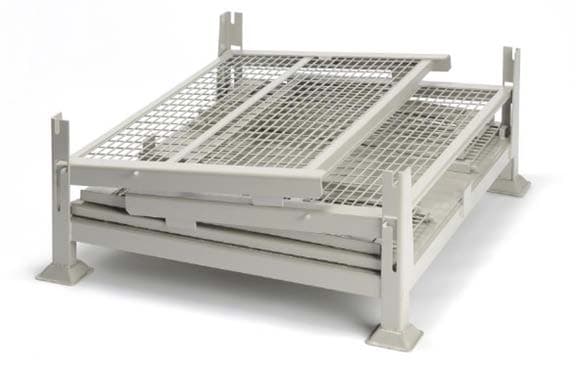
Collapsible Rigid Wire Baskets address one of the biggest headaches in returnable packaging: what do you do with all those containers when they’re empty? The sides fold down so empty baskets occupy considerably less space in the warehouse and on return shipments.
Once assembled, these heavy-duty collapsible designs provide many of the same practical benefits associated with traditional wire containers, including steel construction, stacking capability, forklift handling, and compatibility with application-specific accessories. Depending on the model, options can include drop gates, fork stirrups, fork tunnels, dividers, and lifting provisions.
The real payoff comes during the return trip. Instead of filling a trailer with empty containers containing nothing but air, collapsed baskets can be consolidated into a much smaller footprint. In a closed-loop system running hundreds or thousands of cycles, better return-trailer utilization can make a significant difference in freight and storage costs.
Stackable Rigid Wire Baskets, Containers, and Bulk Bins are designed to get inventory off the floor and into unused vertical space. Heavy steel angle framing, wire mesh sides, steel bottom panels, and formed stacking components create a reusable container that can handle repeated warehouse and manufacturing use.
Open mesh provides another advantage: visibility. Employees can identify products during inventory or staging without opening a solid container. The mesh also creates a more open storage configuration than solid corrugated steel sides. Where fire protection is a consideration, however, don’t assume that choosing wire automatically makes the storage arrangement compliant. Sprinkler performance and code requirements depend on the commodity, container configuration, storage height, sprinkler system, adopted codes, and local authority having jurisdiction.
The product line includes models rated for loads in the 2,500-lb. range and others up to 4,000 lbs., with selected configurations designed to stack four or five high. Those ratings are product-specific, so capacity and allowable stacking height should always be confirmed for the exact container being used.
Rigid Wire Bins | Industrial Wire Mesh Pallet Containers combine the rugged framing of a steel bulk container with open wire mesh sides. The result is a container that provides heavy-duty support while making parts easier to identify and reducing the amount of solid material around the load.
These portable bins work well throughout the manufacturing process. Place one at an assembly line, fill it with parts, move it to warehouse storage with a forklift, stack compatible units vertically, and then use the same container to protect those parts during shipment. That eliminates unnecessary repacking and keeps the product in the same reusable container through multiple stages of handling.
Depending on dimensions and base configuration, some containers may also be compatible with pallet-jack handling. Fork stirrups, runners, or other options can be added when the application calls for them. The important thing is to design the base around the actual handling equipment rather than assuming every rigid wire container can be picked up the same way.
Rigid Wire Containers are built for businesses where disposable or lightweight storage simply doesn’t hold up. Heavy components, repeated forklift movement, stacking, production environments, and transportation can quickly expose weaknesses in an ordinary container. A properly selected rigid wire container is intended to provide years of reusable service while protecting inventory and keeping parts organized.
The benefits go beyond durability. A well-designed container can reduce product damage, make inventory easier to identify, improve line-side organization, increase storage density, and eliminate unnecessary repacking between production, storage, and shipping. Stackability helps recover floor space, while gates and handling accessories can make parts easier to access and move.
The best container starts with the application. We look at what you’re storing, how heavy it is, how many pieces go into each basket, how employees access those pieces, what equipment moves the container, whether it goes into pallet rack, and whether it travels between facilities. From there, standard or custom Rigid Wire Containers can be matched to the way your operation actually works.
Frequently Asked Questions About Rigid Wire Baskets
How do I choose the right Rigid Wire Basket design?
Start with the product. Determine its dimensions, weight, quantity per basket, required usable height, and whether small pieces could pass through the mesh. Then look at how the container will be loaded, unloaded, moved, stored, stacked, and shipped. Those details determine the appropriate container dimensions, mesh, floor, drop-gate configuration, base, capacity, and accessories.
Can Rigid Wire Baskets be stored in pallet rack?
They can be used with pallet rack when the container and rack system are properly matched. Check the basket footprint, runner or foot locations, rack beam spacing, decking, load distribution, and total loaded weight. Container feet can create concentrated loads, so don’t assume ordinary wire decking will support a heavy basket just because its overall capacity sounds sufficient. Verify compatibility and capacity with the container manufacturer and rack/decking supplier.
What maintenance do Rigid Wire Containers require?
Inspect them regularly for broken welds, bent mesh, distorted corner posts, damaged stacking targets or feet, worn gates and latches, corrosion, and forklift damage. Pay particular attention to the base and stacking components because they repeatedly carry and transfer loads. Containers with structural damage should be removed from service and evaluated rather than straightened or welded without appropriate guidance.




