Rigid Wire Container Options & Accessories
Rigid wire container options and accessories let you take a standard heavy-duty wire basket and configure it around the way your operation actually handles material. The basic container gives you strength, visibility, stacking capability, and a durable steel structure. Options such as fork stirrups, fork tunnels, steel runners, and crane lifting lugs add another level of functionality by controlling how the container is lifted, transported, tilted, dumped, or hoisted. You can also order rigid wire baskets raw and unfinished when painting or coating will be handled after delivery. The point isn’t to load a container up with accessories. It’s to choose the features that make handling safer, easier, and more efficient for your particular application.
Not every rigid wire basket needs to arrive painted. Raw, unpainted, unfinished wire baskets are a practical option for customers who plan to apply their own paint, powder coating, galvanizing, or other finish after the container is manufactured.
There are several reasons you might want to do this. Your company may have its own color requirements. You may need a specialized coating because of the environment where the basket will be used. Or you may simply have an established finishing process and would rather handle that part yourself. Why pay us to paint a container if you’re going to turn around and paint it again?
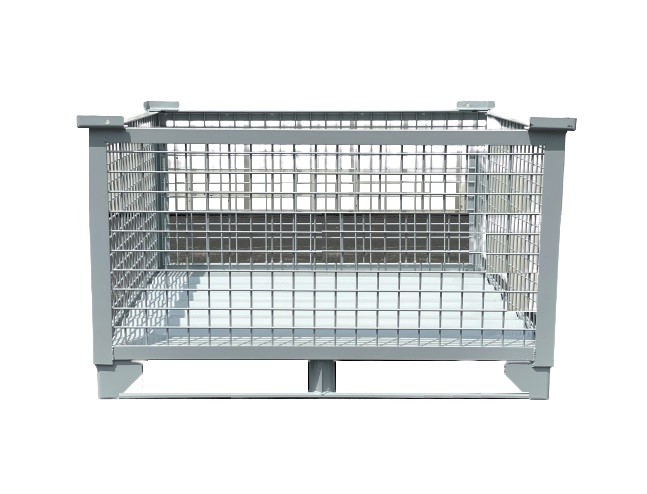
Showing all 5 resultsSorted by latest
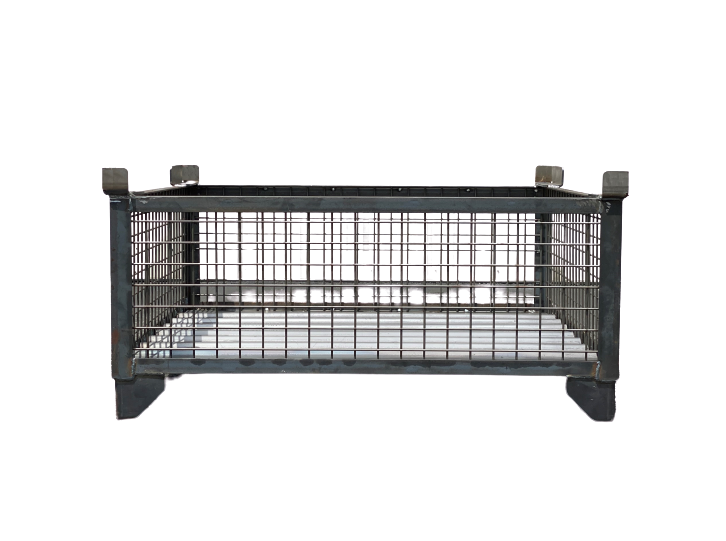
Rigid Wire Baskets | Raw, Unpainted, Unfinished
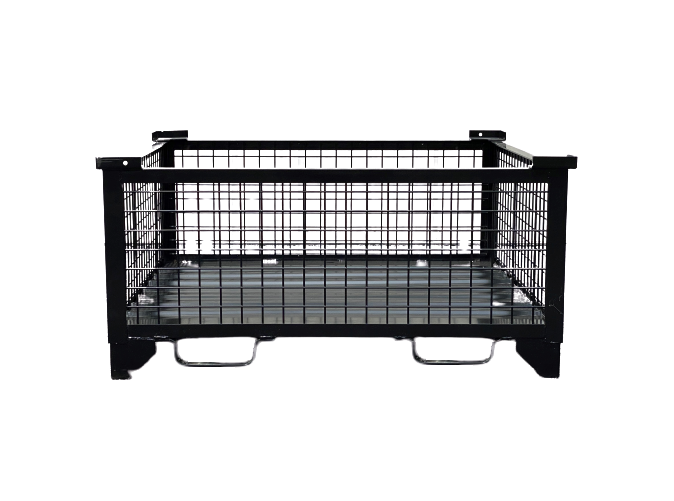
Rigid Wire Baskets with Fork Stirrups | Fork Guides | Fork Straps
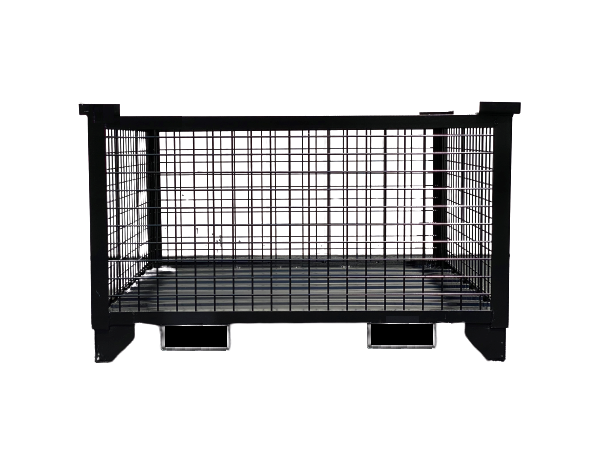
Rigid Wire Baskets with Fork Tunnels | Fork Pockets for Tilting and Dumping
Rigid Wire Baskets with Steel Fork Runners | Skid Bars
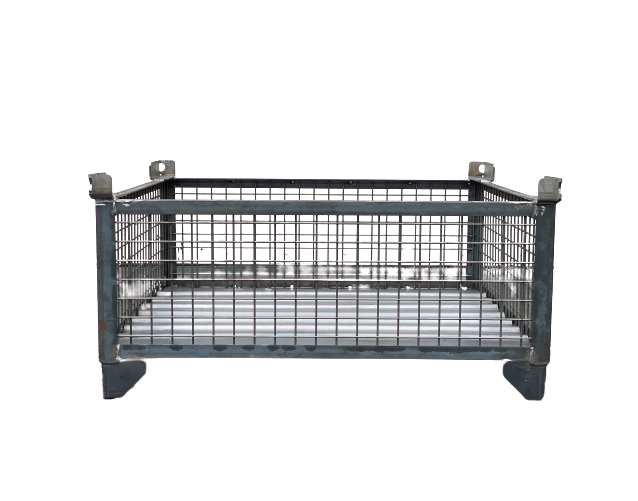
Rigid Wire Baskets with Crane Lifting Lugs | Hoisting Hooks
Raw steel also gives you a good look at the container itself. Welds, framing, mesh, and other components aren’t hidden underneath a finish. Just remember that unfinished carbon steel is exactly that—unfinished. It needs to be protected appropriately if corrosion is a concern, particularly in damp, outdoor, washdown, or corrosive environments.
Rigid Wire Baskets with Fork Stirrups | Fork Guides | Fork Straps
Fork stirrups, also called fork guides or fork straps, help forklift operators position the forks correctly underneath a rigid wire basket. Instead of approaching a container and guessing where the forks need to go, the stirrups provide a defined location for fork entry.
It’s a simple accessory, but it can make everyday handling more predictable. Proper fork positioning helps keep the container centered on the lift truck and can reduce the chances of a fork striking the basket frame, floor, or stored product. In a busy manufacturing plant where containers are being moved all day long, those little impacts add up.
Fork stirrups are particularly useful when you want better fork alignment but don’t need the forks completely enclosed. They guide the operator while still providing relatively open access underneath the container. If you need positive fork containment for tilting or dumping, that’s when you should start looking at fork tunnels.
Rigid Wire Baskets with Fork Tunnels | Fork Pockets for Tilting and Dumping
Fork tunnels, sometimes called fork pockets, take forklift handling a step beyond simple fork guides. Instead of merely helping position the forks, tunnels surround and contain them underneath the container. That makes them useful for applications where the basket may need to be tilted, rotated, or dumped.
This is an important distinction. A standard rigid wire basket may be perfectly suitable for lifting and transporting a load, but dumping creates a different set of forces. Once you start tilting a loaded container, you need to think about how the basket is retained on the forks and how the load shifts during the dumping cycle.
Fork tunnels can be designed around the intended forklift and handling method. Fork dimensions, spacing, container weight, load weight, center of gravity, and dumping requirements all matter. Don’t design the tunnels first and then hope your forklift fits. Start with the equipment and the application and build the container around them.
Rigid Wire Baskets with Steel Fork Runners | Skid Bars
Steel fork runners, also called skid bars, provide continuous steel support along the bottom of a rigid wire basket. Depending on the configuration, runners can provide two-way or four-way entry and create a more substantial base for repeated forklift handling.
Runners can be especially useful when containers are moved frequently or travel through demanding manufacturing and distribution environments. Instead of forklift contact being concentrated at a few points underneath the basket, the runners provide a defined handling surface. They can also help protect the bottom structure from the everyday abuse that comes with forklift traffic.
The right runner configuration depends on how the container moves through your facility. Two-way entry may be all you need when containers are always approached from the same direction. Four-way entry provides more flexibility when operators need to pick up the basket from multiple sides. More access isn’t automatically better. The best design is the one that matches your material flow.
Rigid Wire Baskets with Crane Lifting Lugs | Hoisting Hooks
Sometimes a forklift isn’t the best way to move a container. Rigid wire baskets can be equipped with crane lifting lugs or hoisting points when the application requires overhead handling.
Lifting lugs provide designated attachment points for properly selected lifting equipment. This can be useful in manufacturing plants, foundries, fabrication facilities, construction operations, and other environments where containers need to be moved by crane or hoist rather than—or in addition to—a forklift.
But crane lifting lugs aren’t just another accessory you weld onto a basket because they look useful. Overhead lifting changes the forces placed on the container and its frame. The container, lifting points, load, attachment method, and lifting equipment need to be considered together. If you’re going to lift a loaded rigid wire basket overhead, tell us that during the design process. That’s when you want to solve the problem, not after the container arrives.
Rigid Wire Container Options & Accessories FAQ
How do I decide which accessories I need?
Start by following the container through your operation. How is it loaded? How does the forklift pick it up? Does it need two-way or four-way access? Will it ever be tilted or dumped? Does a crane or hoist move it? Where is it stored when loaded and empty? Once you answer those questions, the useful accessories usually become pretty obvious. Don’t add features simply because they’re available.
What’s the difference between fork stirrups, fork tunnels, and steel runners?
Fork stirrups primarily guide the forks into the correct position. Fork tunnels surround the forks and provide more positive engagement, making them better suited for properly engineered tilting and dumping applications. Steel runners create a continuous handling surface underneath the basket and can provide two-way or four-way forklift entry. They solve different problems, so the best choice depends on how the container will actually be handled.
Can crane lifting lugs be added to any rigid wire basket?
Crane lifting capability needs to be considered as part of the container design. Overhead lifting places different loads on the frame than ordinary forklift transport. Container weight, payload, lifting-point location, load distribution, attachment hardware, and the intended lifting method all need to be evaluated. If overhead lifting is part of the application, specify it before the container is manufactured.
Do raw, unfinished rigid wire baskets require maintenance?
Raw carbon steel can rust when exposed to moisture, chemicals, outdoor conditions, or other corrosive environments. If you order containers unfinished, have a plan for painting, powder coating, galvanizing, or otherwise protecting the steel when the application requires it. Regardless of finish, periodically inspect the frame, welds, mesh, stacking points, runners, fork accessories, and lifting components for impact damage, deformation, excessive corrosion, or other signs of wear. A wire basket may be built to take abuse, but that doesn’t mean you should ignore the abuse it takes.




