Steel Shelving Styles
Steel shelving is an industrial storage system built with steel posts, shelves, clips, braces, backs, sides, and dividers that can be configured around the products being stored. Unlike boltless shelving, traditional steel shelving uses shelf clips or bolted connections and can be built as open shelving, closed shelving, bin shelving, high-bay storage, record shelving, or extra-heavy-duty units. Adjustable shelf heights, multiple sizes, solid steel construction, and the ability to add backs, sides, and dividers make steel shelving especially useful for parts, boxes, tools, records, and thousands of individual SKUs. It costs more than basic boltless shelving, but sometimes you need the capacity, containment, and flexibility that only steel shelving provides.
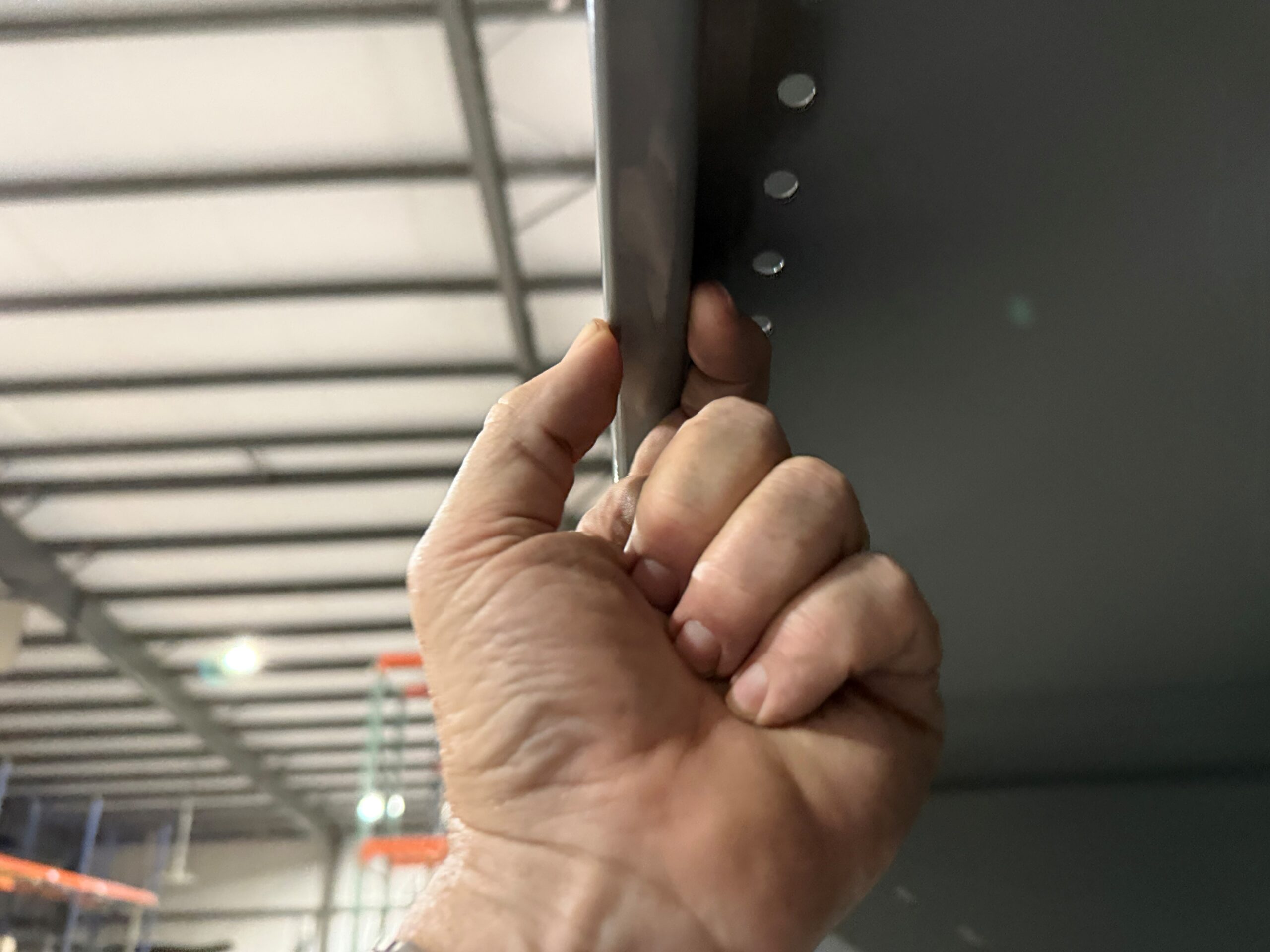
Deluxe Steel Shelving uses a boxed-edge shelf design that increases shelf strength without simply adding more steel. The boxed profile reinforces the shelf edge, providing support for heavier warehouse storage while maintaining 1″ vertical shelf adjustability. That makes it easier to fit shelf spacing around the inventory instead of wasting space between levels.
Deluxe shelving can be configured as open units with sway bracing, closed units with metal backs and sides, or bin units with adjustable dividers. Open shelving provides visibility and access, while closed shelving provides greater containment and product protection. Bin shelving takes it another step by dividing each shelf into individual SKU locations. Same basic shelving system, three very different ways to use it.
Showing all 8 resultsSorted by latest
Deluxe Steel Shelving – The Original Boxed Edge Steel Shelf – The Strongest Shelf in America
Bin Shelving with Closed Backs, Sides & Dividers Create Storage Bins for Picking
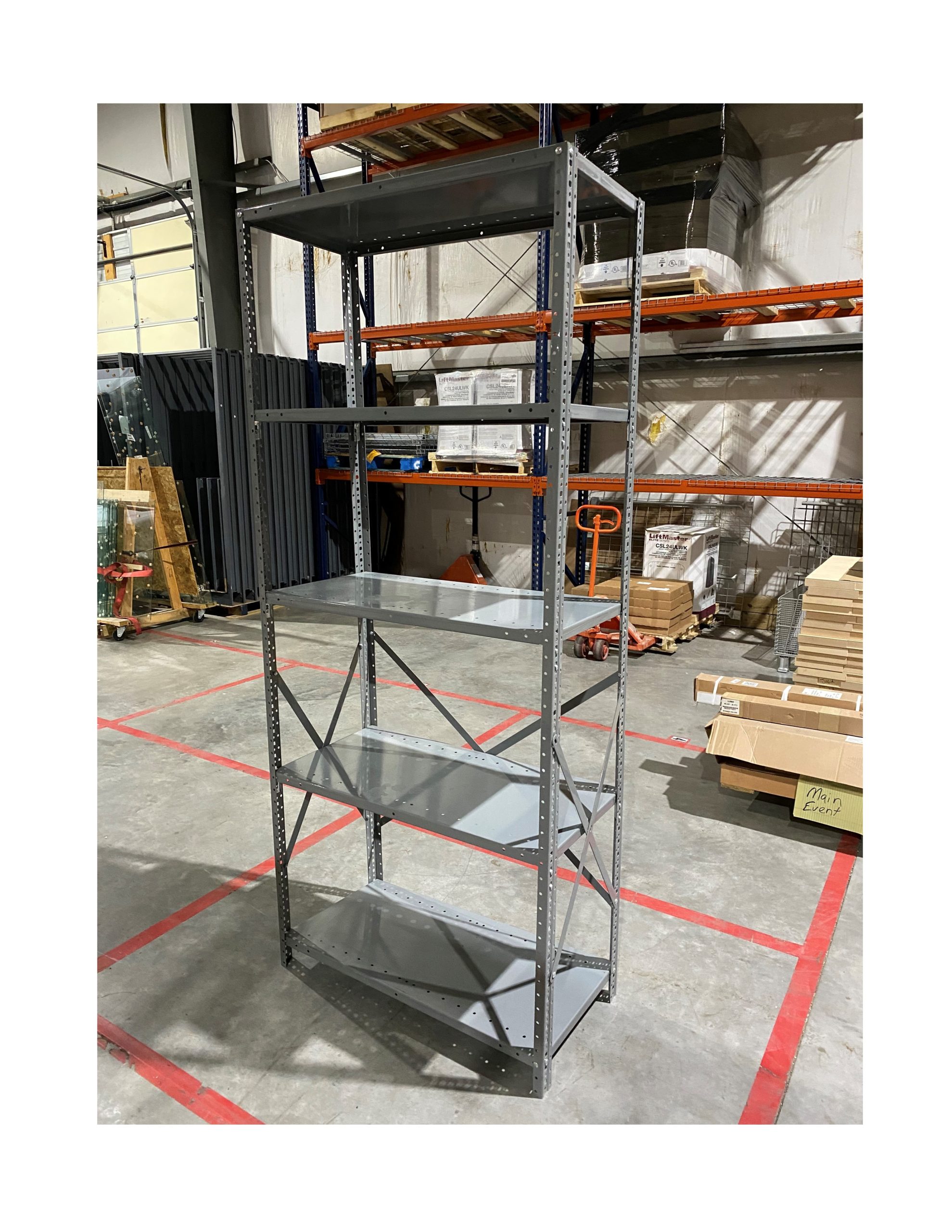
Clip Shelving | Industrial Steel Shelving

High Bay Industrial Steel Shelving
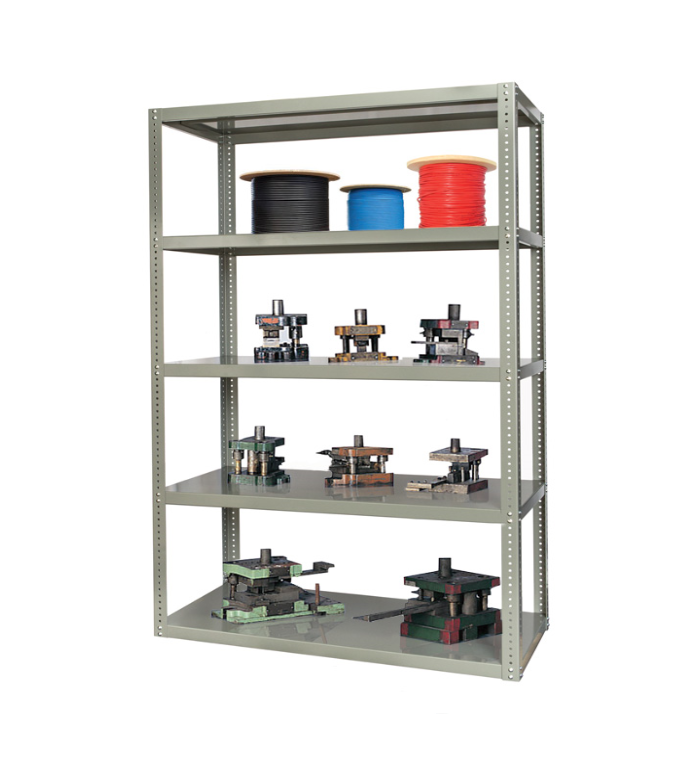
Extra Heavy Duty Steel Shelving | High Capacity Die Shelving
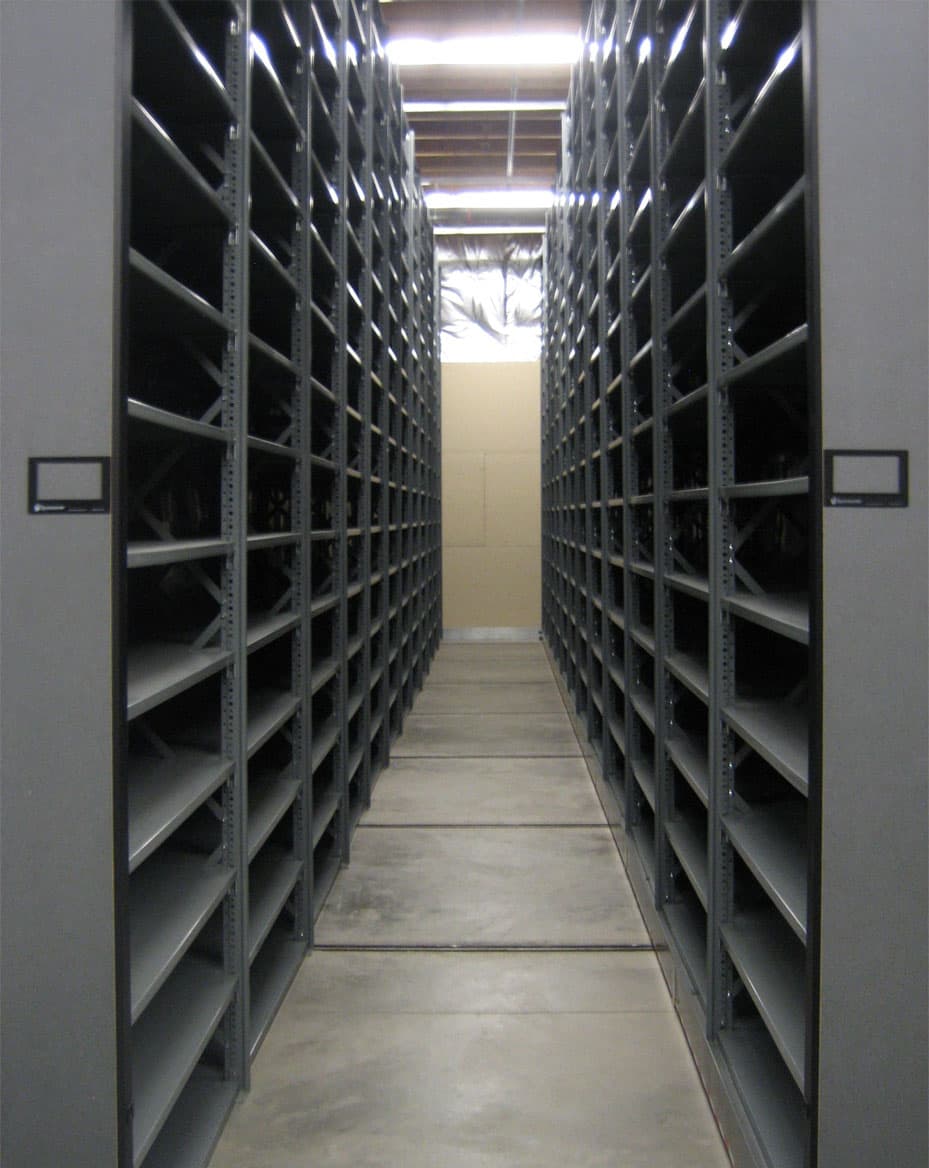
Pacific Shelving – MO, TX & CA
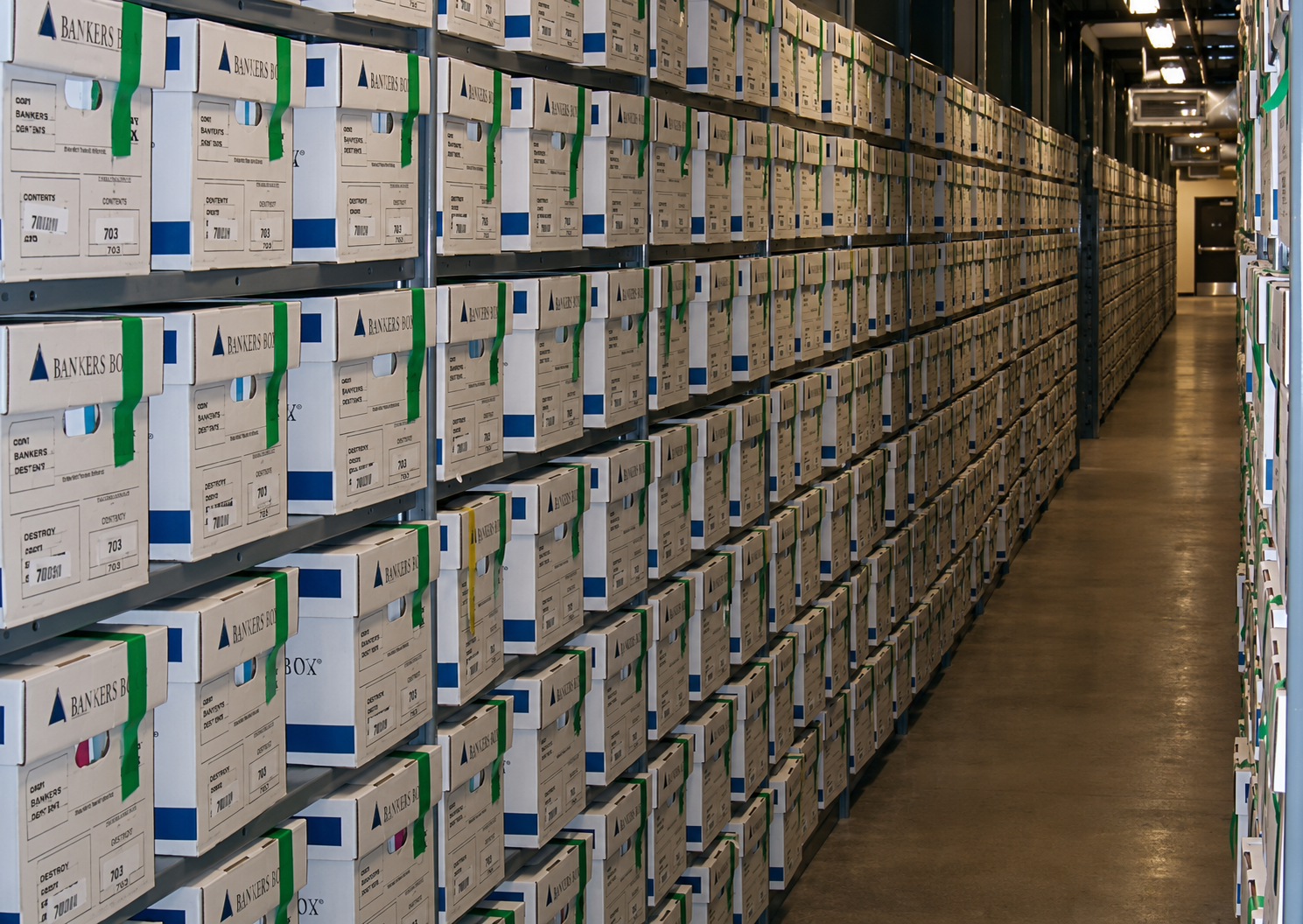
Steel Record Archive Shelving
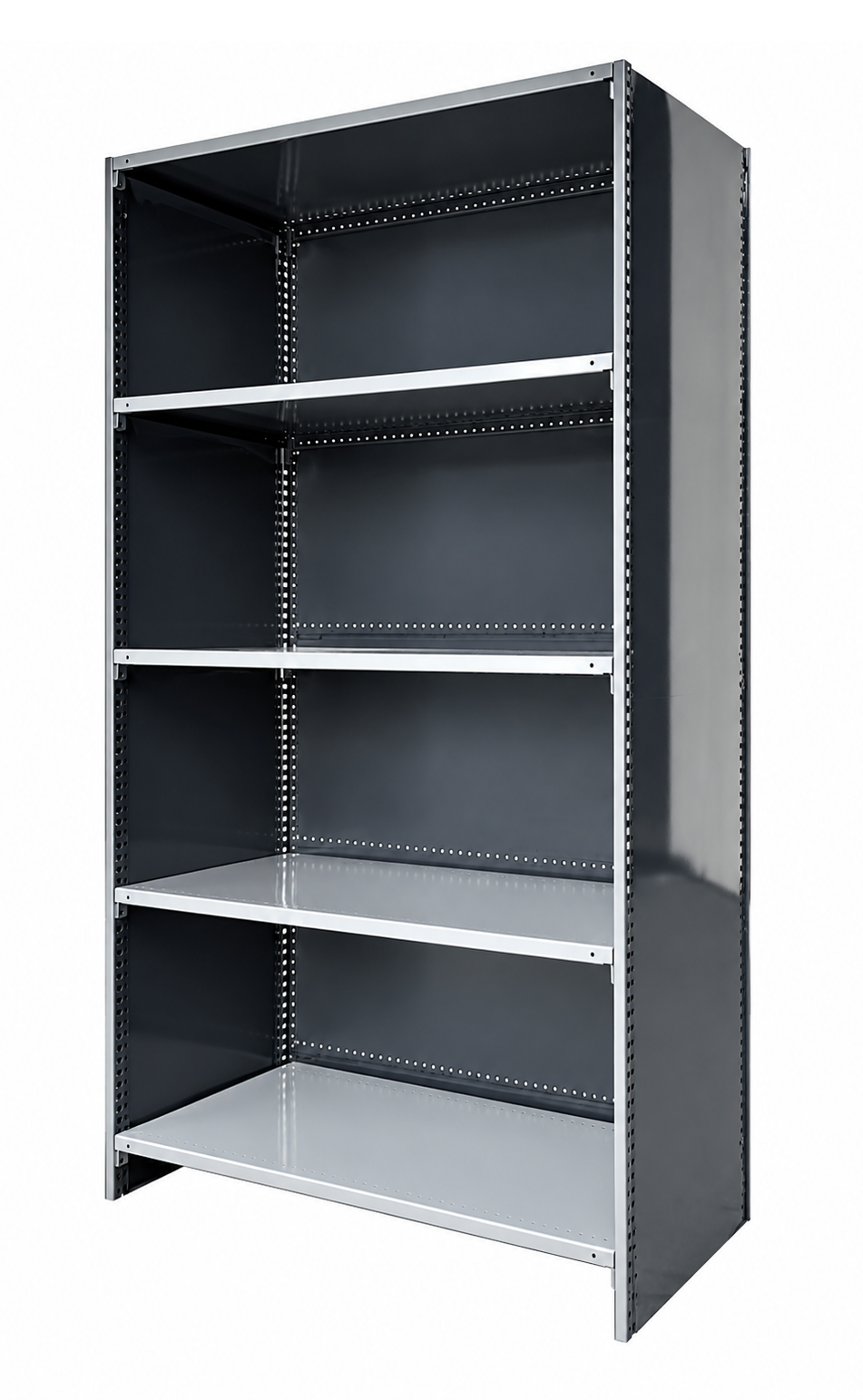
Closed Steel Shelving
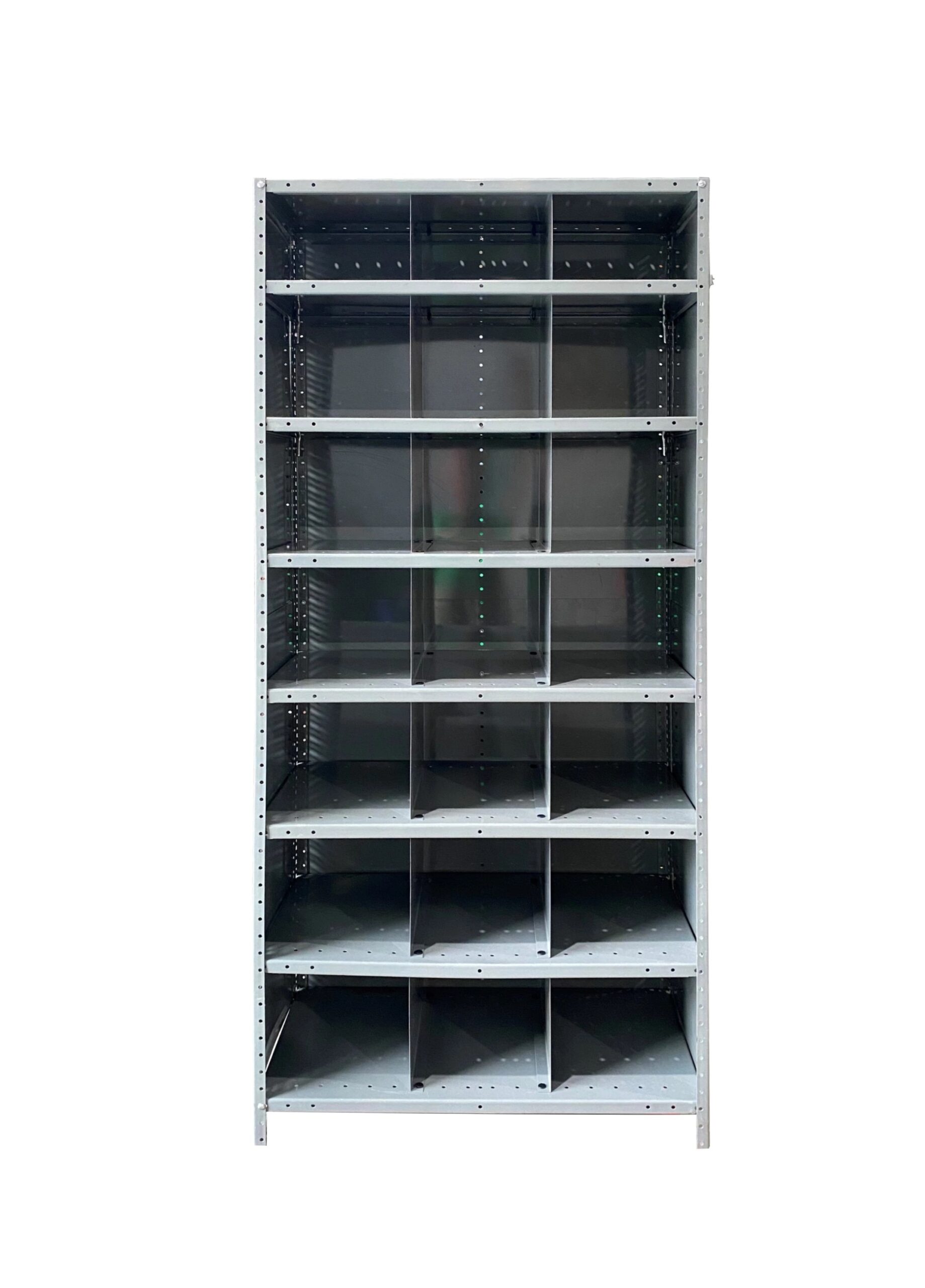
Steel shelving originally was bin shelving. Before everything arrived neatly packaged in boxes, storekeepers needed a way to organize loose nuts, bolts, hardware, and other small products. Steel backs, sides, and dividers turned ordinary shelves into individual storage bins. Today we’re doing basically the same thing in some of the largest distribution centers in the country—we just call the products SKUs now.
Bin shelving is especially useful for e-commerce and high-volume order picking because every SKU can have its own location. Dividers are often concentrated in the “gold zone” between the knees and shoulders where most picking takes place, while upper and lower shelves can hold reserve inventory or larger products. Adjustable dividers can also be added to existing compatible steel shelving. If products are constantly getting mixed together on the shelf, sometimes the answer is as simple as giving each one its own bin.
Clip shelving is heavy-duty industrial steel shelving with shelves supported by compression clips. It’s common in warehouses, distribution centers, automotive operations, retail facilities, and other applications requiring adjustable steel shelves. Compared with boltless shelving, clip shelving generally costs more, so start by asking two questions: Do you need the additional capacity, and do you need to close off the backs or sides? If the answer to both is no, less expensive boltless shelving may do the job.
Steel clip shelving is available in a wide range of sizes. Common widths include 36″, 42″, and 48″, with 60″ units also available. Common depths range from 12″ to 36″, while post heights commonly include 60″, 72″, 84″, and 96″. Back and side panels can be added to help contain products and keep inventory from falling between rows. For order picking and small-parts storage, that flexibility is one of the biggest reasons steel shelving continues to earn its floor space.
High-bay steel shelving takes the same basic concept and goes vertical. Low-bay systems are commonly available in 6′, 7′, and 8′ heights, while high-bay systems can reach approximately 12′, 16′, 18′, or 20′ depending on the design and application. Taller systems can be accessed with appropriate ladders, order-picking equipment, or other material handling equipment.
Before designing high-bay shelving, start with the building and the inventory. What is the clear ceiling height? What are the dimensions and weights of the products? How much inventory needs to be stored? How will employees access the upper shelves? And are you trying to store a specific quantity or squeeze the maximum amount of storage into the building? Going higher can save a lot of floor space, but only when the rest of the operation is designed to work with it.
Sometimes standard steel shelving just won’t cut it. Extra-heavy-duty steel shelving is designed for dies, tooling, fixtures, and other concentrated loads that can damage conventional shelving. These standalone units use reinforced steel shelves with welded channels and bolted connections to provide additional support and control shelf deflection.
Standard configurations can include five shelves adjustable on 1″ increments, with capacities ranging from approximately 2,000 to 2,800 pounds per shelf depending on the specific design and evenly distributed load. These aren’t lightweight modular shelves that you string together in a long row. They’re built for applications where the load is the whole point. If you’re storing several thousand pounds on a shelf, buy the shelving for that load from the start instead of finding out afterward that ordinary shelving wasn’t ordinary enough.
Steel record archive shelving is designed for banker boxes, files, and other archive storage where both density and accessibility matter. Open shelving keeps boxes visible and easy to retrieve, while closed shelving can provide additional containment. Systems can range from a few sections in an office or backroom to warehouse-sized archive installations.
For larger operations, record shelving can also be incorporated into taller systems with catwalks or multi-level configurations to take advantage of vertical space. That’s important because records have a habit of multiplying while nobody is looking. Whether the priority is fast retrieval or maximum storage density, the shelving should be designed around the number of boxes, box dimensions, access method, and available building height.
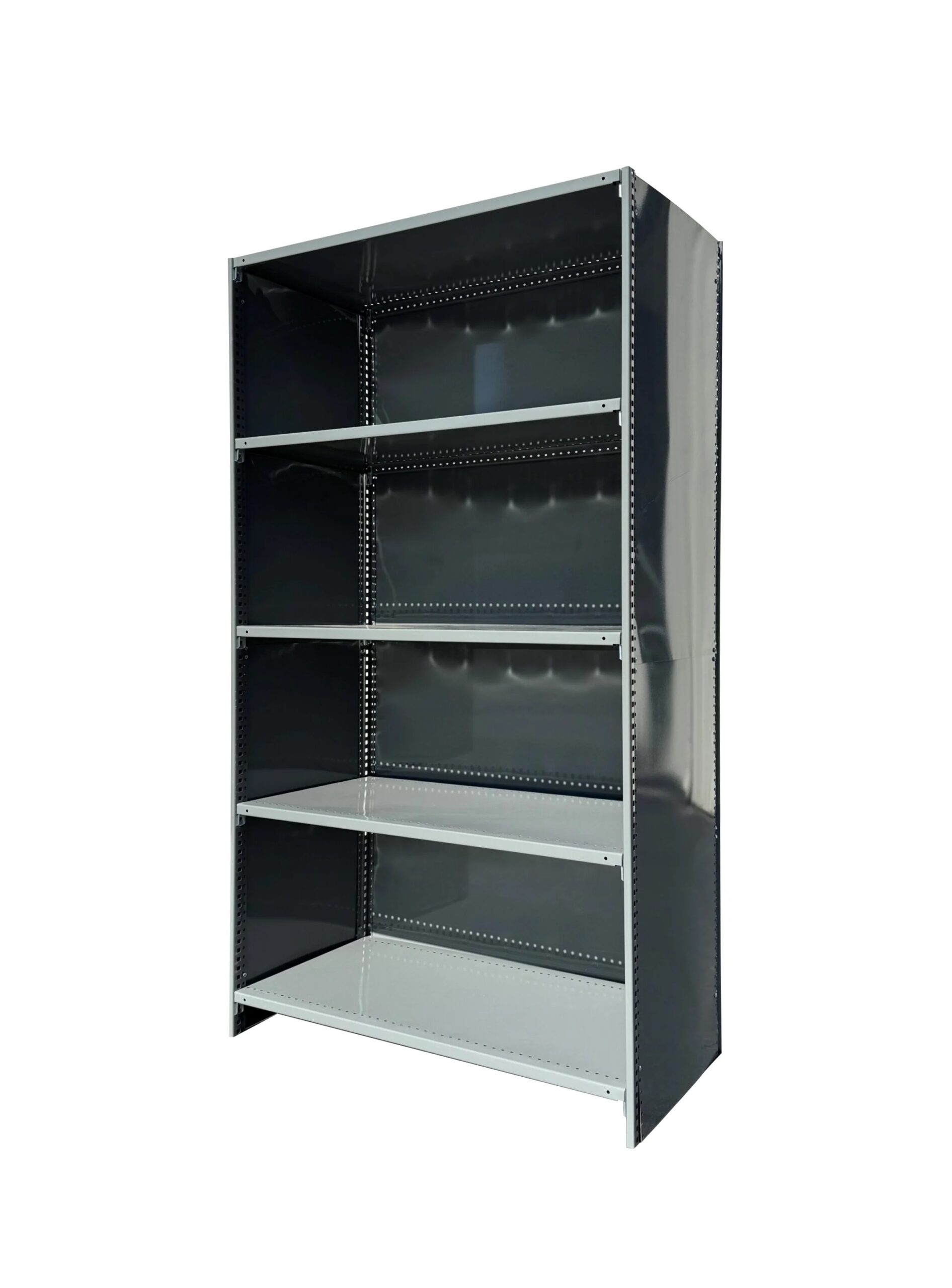
We’ve got your back—the back of your shelving unit, anyway. Closed steel shelving adds metal back and side panels to help contain inventory, reduce exposure to dust and dirt, and prevent products from falling off the shelves. Units can be configured as starter and add-on sections to create long rows and can also be installed back-to-back to increase storage density.
Closed shelving is commonly used in warehouses, manufacturing facilities, distribution centers, and offices where products need more containment than an open shelf provides. Units typically ship knocked down and are assembled from posts, shelves, side panels, back panels, clips, and fasteners. If open shelving gives you too much access, closed shelving gives you boundaries. Sometimes that’s exactly what the inventory needs.
Steel Shelving Styles FAQ
Should I choose open, closed, or bin steel shelving?
Start with the product and picking process. Open shelving provides visibility and access from multiple directions. Closed shelving adds backs and sides to help contain inventory and separate adjoining sections. Bin shelving adds dividers when individual SKUs need their own locations. If employees spend time sorting mixed products on a shelf, bin shelving may pay for itself in picking accuracy alone.
When should I use steel shelving instead of boltless shelving?
Use steel shelving when you need features boltless shelving doesn’t provide as easily—closed backs and sides, adjustable dividers, smaller shelf increments, or greater capacity in certain configurations. If you’re simply storing lightweight boxes and don’t need those features, boltless shelving may be the more economical choice. Don’t buy more shelving than the application requires.
What should I consider when designing high-bay steel shelving?
Start with clear ceiling height, product dimensions and weights, shelf capacity, aisle width, picking equipment, and required access. Taller isn’t automatically better. Employees still have to put inventory away and get it back down. The shelving, aisles, access equipment, floor, and applicable building and fire-protection requirements all need to work together.




