Pallet Flow Racks
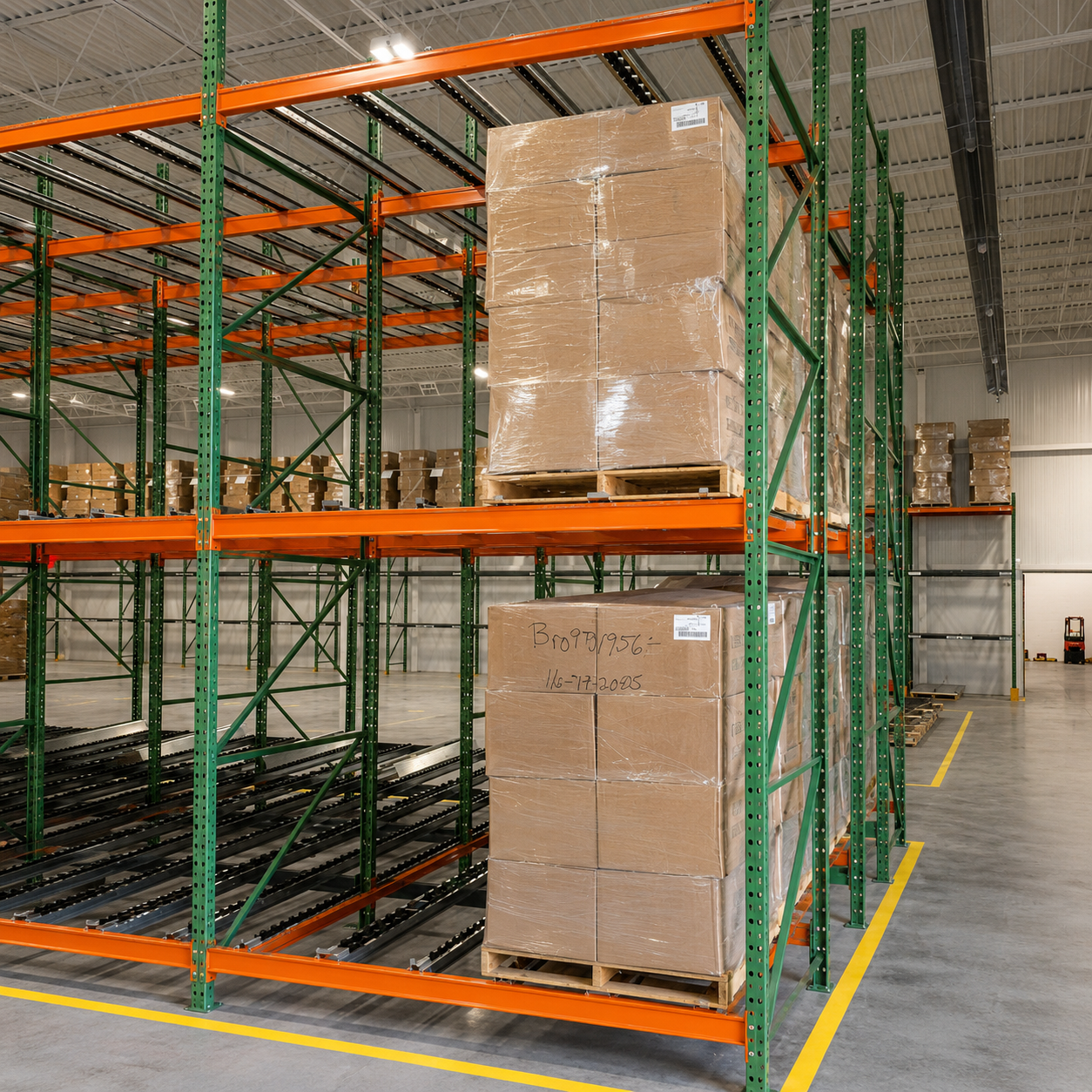
Pallet flow racks, or gravity flow racks, are high-density dynamic storage systems engineered for high-volume warehouses and first-in, first-out (FIFO) inventory management. This type of pallet rack uses a sloped framework equipped with specialized wheel or roller tracks, creating an inclined lane that allows pallets to glide automatically from the loading side to the picking side. By harnessing the natural force of gravity, these systems eliminate the need for mechanical operations or electricity within the lanes, providing a continuous, self-contained flow of materials that maximizes floor space by reducing the number of forklift aisles required.
One big advantage of gravity flow racks is their superior space use and operational efficiency. Because multiple pallets are stored deep within a single lane, facilities can recover up to 50% or more floor space compared to standard selective racking. Forklift operators load pallets at the higher end of the lane, and as a pallet is retrieved from the lower picking face, the next pallet moves forward to take its place. This separation of loading and picking activities eliminates traffic congestion, shortens travel distances, and accelerates order fulfillment in high-throughput environments.
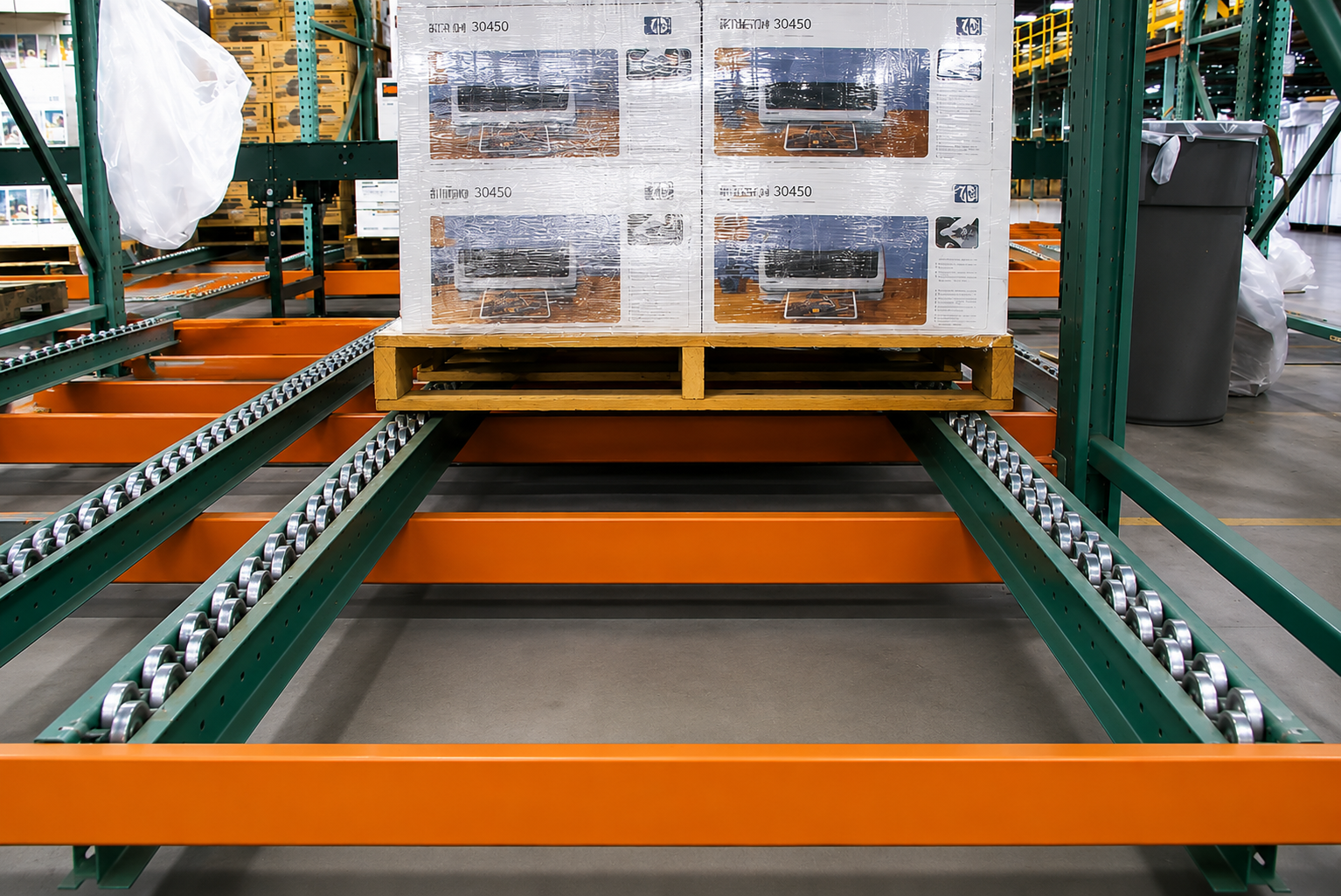
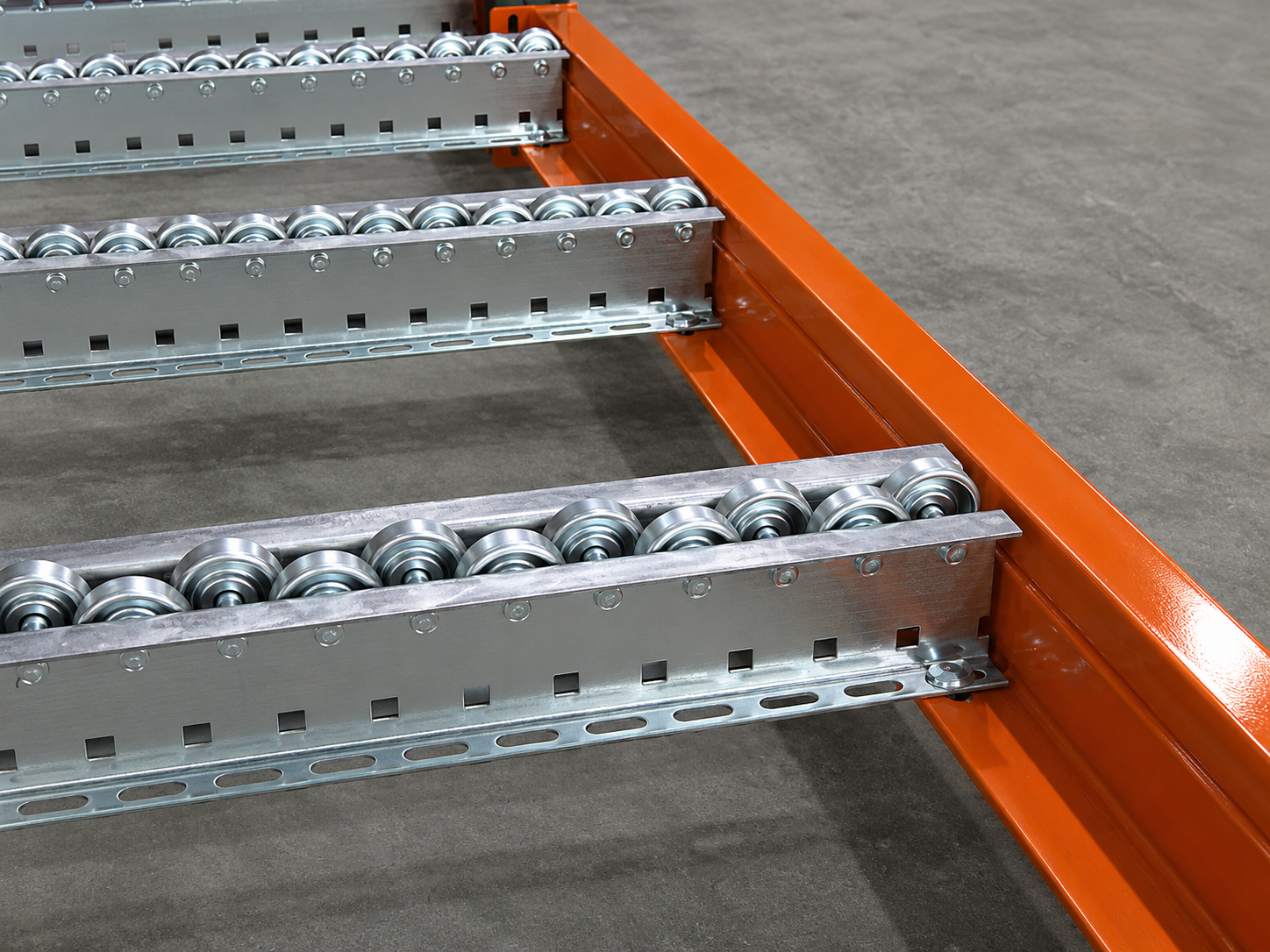
At the core of this system are the pallet flow rails, which must be precisely engineered based on the weight and type of pallets being stored. These rails consist of staggered polycarbonate wheels or full-width steel rollers mounted on a pitch, combined with speed controllers or centrifugal brakes that regulate the descent velocity of heavy loads. Ramp stops are also installed at the exit face to securely hold the front pallet in place until it is ready for removal. For operations requiring a different inventory rotation, the system can be configured for reverse pallet flow, or push-back flow, which operates on a first-in, last-out (FILO) basis by using forklifts to push the pallets up the incline against gravity.
Showing all 5 resultsSorted by latest
Benefits of Pallet Flow Racking in Warehousing
Pallet Flow Rails for a Pallet Flow Rack System
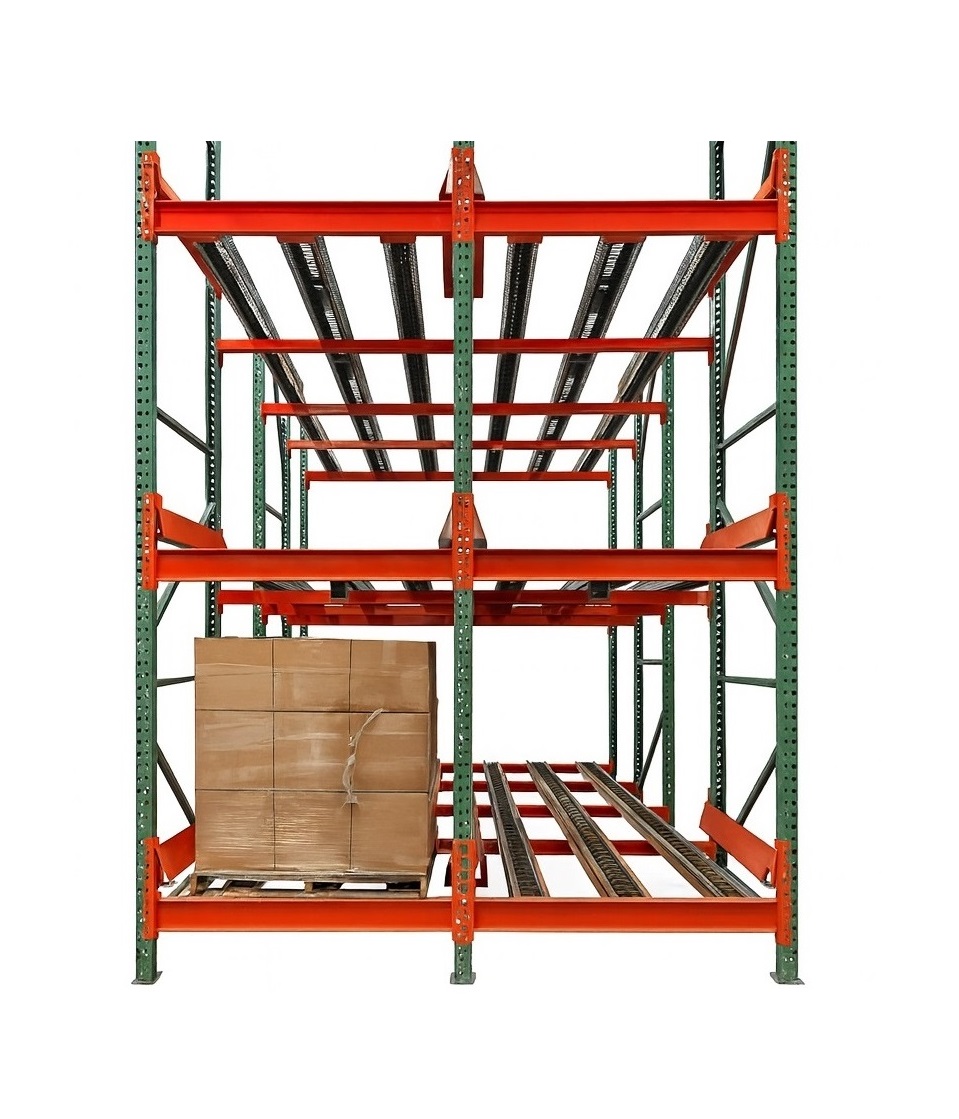
Pallet Flow Rack
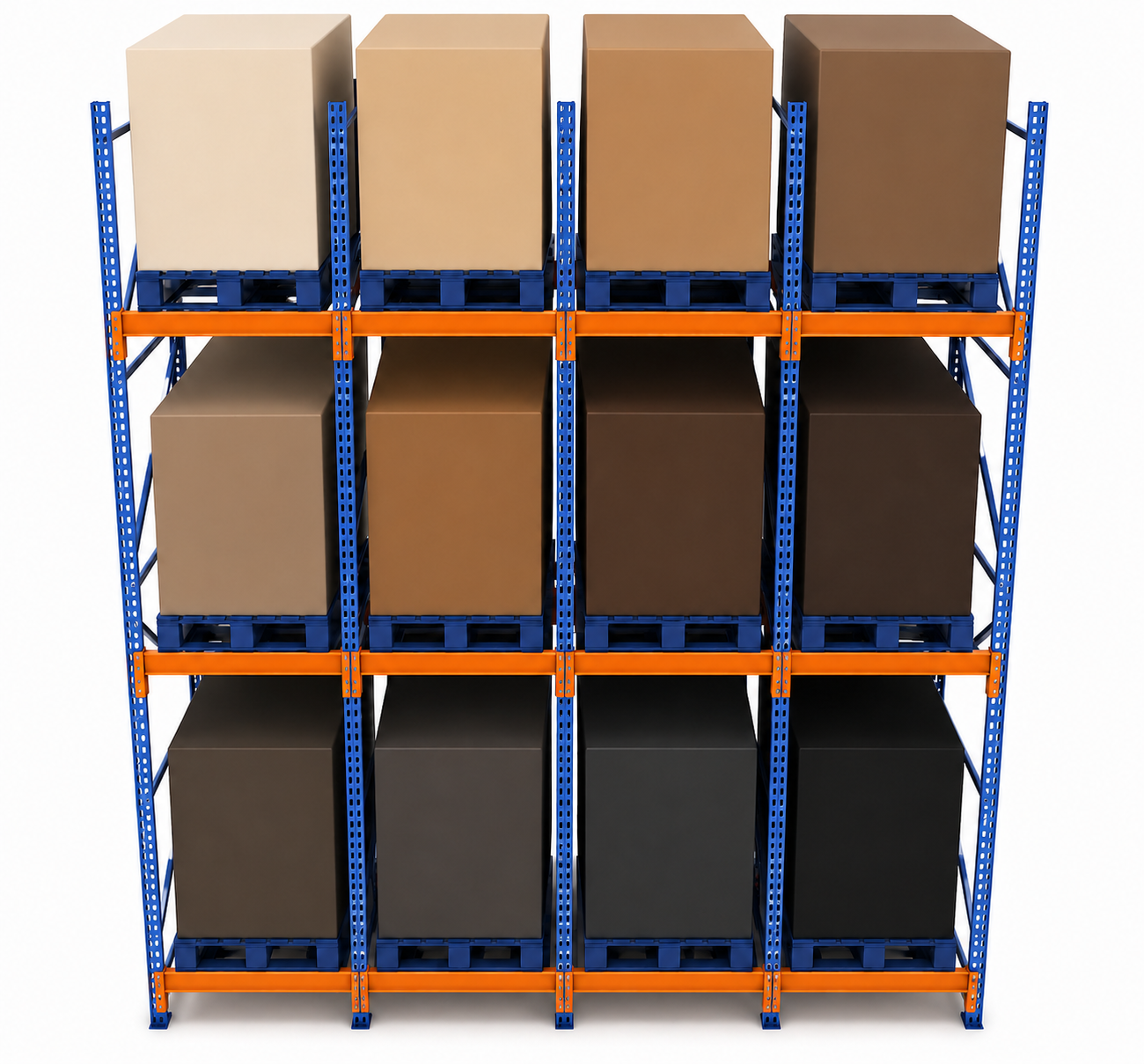
Warehouse Pallet Flow | Gravity Flow Racks for FIFO
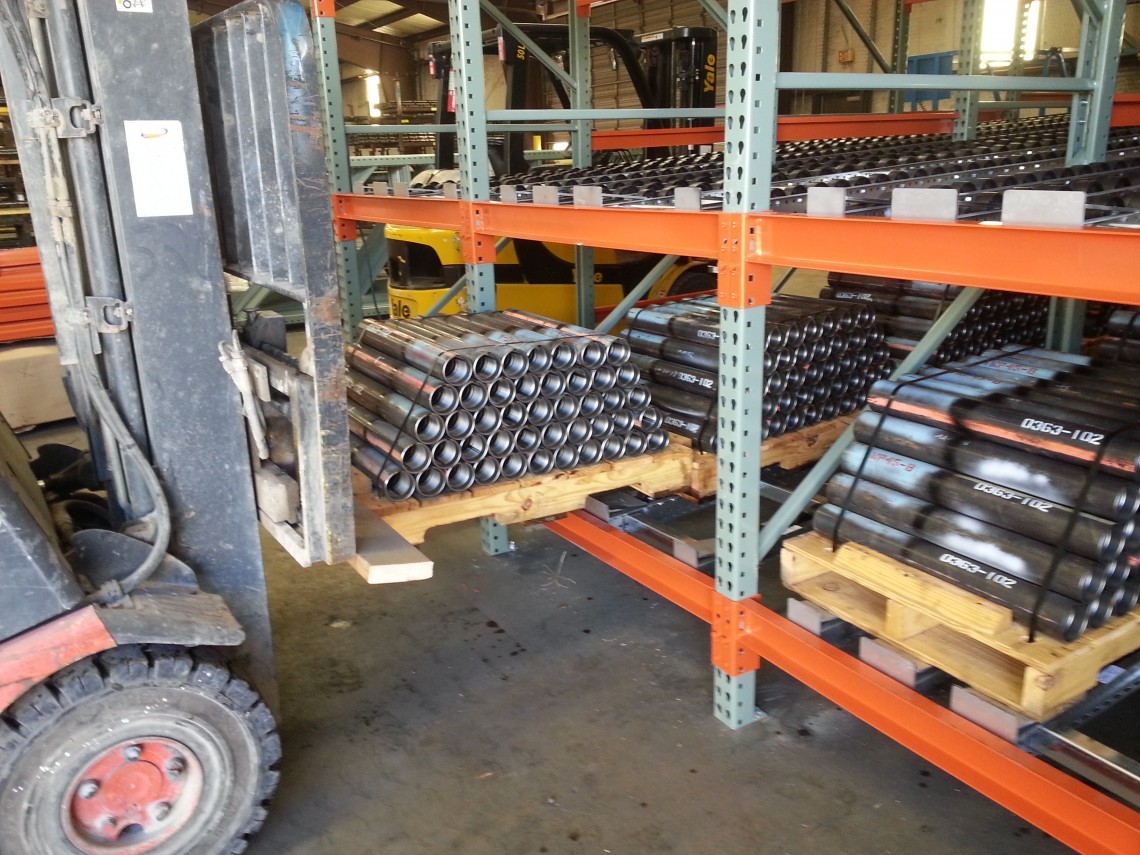
Reverse Pallet Flow | Pallet Flow Used as Pushback
Made from heavy-duty roll-formed or structural steel, pallet flow racks are highly scalable and can be configured from 2 to over 20 pallets deep. This structural stability makes them ideal for deep-lane staging, cold storage, food and beverage distribution, and fast-moving consumer goods facilities.
Get a Quote Today
Investing in the right storage solution is an investment in the efficiency, safety, and profitability of your business. With our extensive experience, engineering expertise, and commitment to trustworthiness, we are confident we can provide a pallet flow rack solution that exceeds your expectations.
Call us at 800-763-9020 or e-mail us at sales@rackandshelf.com to discuss your requirement.
Frequently Asked Questions
What are the industry benchmark standards for pallet flow rack pitch and speed control? The industry benchmark standard for the incline of gravity flow racks typically ranges between 3/8″ to 1/2″ of drop per linear foot of rail. This pitch ensures that standard pallets flow consistently without stalling or gaining dangerous speeds. To maintain control over heavier payloads (often up to 3,000 lbs or more), standard engineering guidelines mandate the installation of dynamic speed controllers every 4 to 6 feet along the pallet flow rails to regulate descent and prevent high-impact collisions at the picking face.
What are the best installation suggestions for testing and deploying a gravity flow system? Prior to full-scale deployment, a critical installation practice is to perform “live test lanes” using the exact pallets, wrap, and weight profiles that will be used in daily operation. Wood pallets must be inspected for missing, cracked, or warped bottom boards, as damaged pallets can easily jam or derail on the pallet flow rails. During installation, the rack must be anchored to a perfectly level concrete slab; any slope or variation in the facility floor can alter the engineered pitch of the rails and compromise the system’s safety.
What product maintenance ideas are required to prevent system jams and failures? To maximize system longevity and safety, establish a routine preventive maintenance schedule. Regularly inspect the pallet flow rails for debris, broken plastic wrap, or wood splinters that can jam the wheels. Visually check the speed controllers and entry/exit ramp stops to ensure they rotate freely and have not suffered forklift impact damage. Keeping the lanes clear and replacing damaged rollers or structural beams immediately prevents costly operational downtime and minimizes the risk of runaway pallets.




