Pallet Rack Protection
Pallet Rack Protection is a combination of steel guards, barriers, stops, dividers, backing, and repair products designed to protect pallet rack systems, stored inventory, employees, and surrounding work areas from common warehouse hazards. Forklifts are responsible for much of the damage found around rack uprights, end-of-aisle frames, and lower structural components, while poorly positioned pallets and loose cartons can create additional risks at the rear of the rack. Pallet Rack Protection addresses these problems with products such as end-of-rack guards, column protectors, warehouse guard rail, pallet stops, flue space dividers, wire backing, guide rails, and engineered repair kits. The advantages are straightforward: reduce forklift impact damage, prevent pallet push-through and falling products, maintain intended storage clearances, extend the life of expensive racking, improve traffic control, and create a safer, better-organized warehouse.
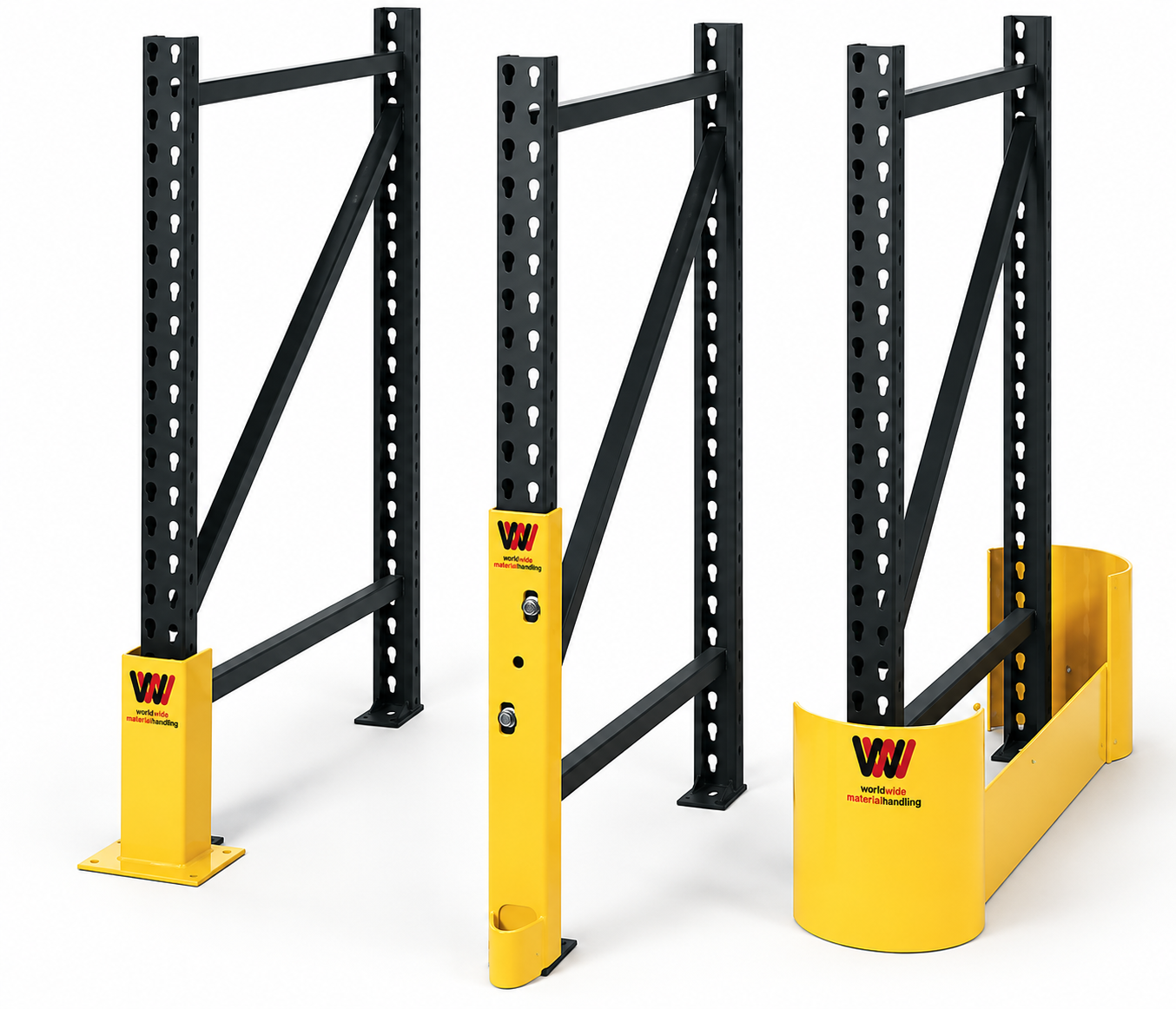
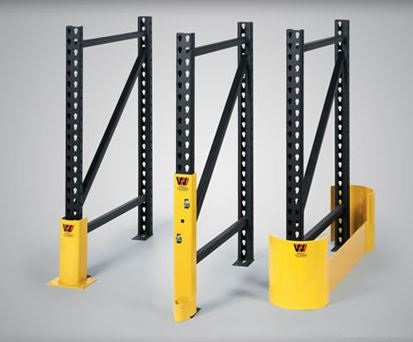
Protecting your pallet rack is protecting a large investment. A post protector is designed to prevent damage to pallet rack upright columns during loading and removal of pallets. Post protectors are typically anchored into the flooring directly in front of the upright. Bolt-on pallet rack post protectors are typically attached directly to the rack column.
Warehouse pallet rack damage is a major occupational health and safety issue as rack is not designed to withstand an impact from a lift truck. Post protectors provide increased safety for both people and product.
Showing all 2 resultsSorted by latest
Column Protectors (20)
End of Rack Protectors (4)
Warehouse Guard Rails (7)

Pallet Stops (21)
Flue Space Shelf Dividers (7)
Pallet Rack Repair Kits (5)
Pallet Rack Backing (4)
Benefits of Pallet Rack Protection
Steel Angle Guide Rail – Rub Rail – Bumper Rails
When an upright frame is damaged it has to be replaced or repaired which can prove costly in both time and man power. The most common benefit experienced in using column protectors is the lower cost of replacing a protector unit vs. an entire column.
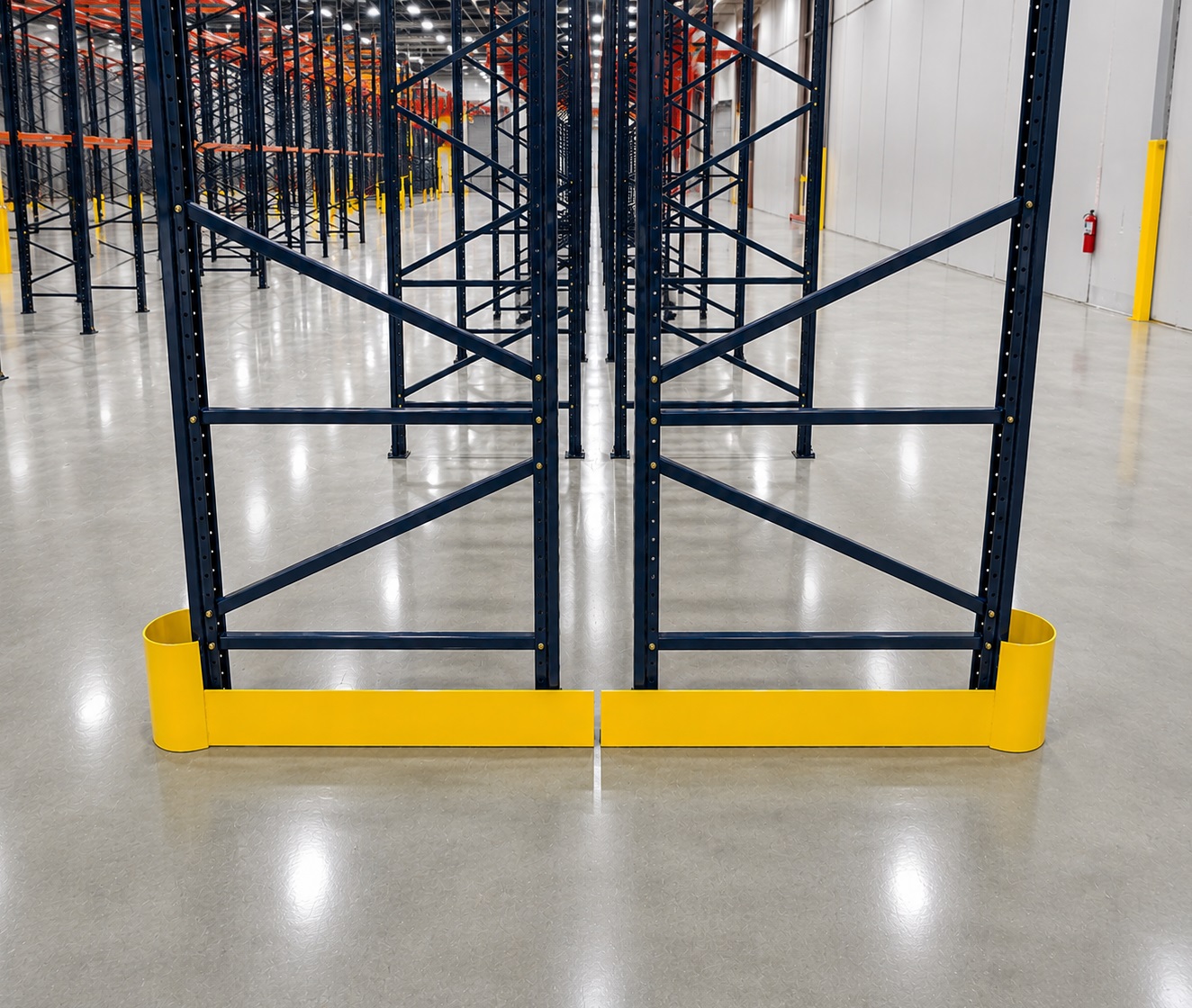
End of Rack Protectors defend one of the most vulnerable areas in a pallet rack system. Think about what happens at the end of every aisle. Forklifts enter, exit, turn, swing, and reposition loads, which means exposed end frames have a greater opportunity to get hit. A properly placed steel protector creates a physical barrier between lift-truck traffic and the rack.
Our L-shaped end-of-aisle protectors are particularly useful in high-density and narrow-aisle warehouses. Traditional half-moon-style protectors can take up valuable floor space, while the L-shaped profile provides protection with a narrower footprint. That helps maintain aisle clearance without giving up the impact protection needed around exposed rack frames.
Protecting the end frame is a relatively small investment compared with repairing damaged uprights, replacing rack components, unloading inventory, and interrupting warehouse operations. More importantly, bent or twisted rack components can affect structural performance. End-of-rack protection helps stop that damage before it starts.
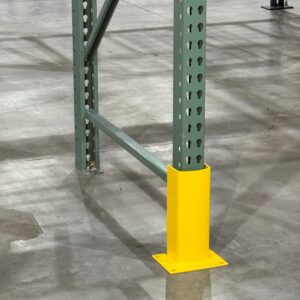
You can’t afford to ignore the front columns of your pallet rack. Column Protectors, also called column guards or post protectors, create a barrier around the lower portion of the upright where forklift impacts are most likely to occur.
Rack columns located at row ends and other high-traffic positions are especially vulnerable. Forklift forks, outriggers, pallets, and lift-truck bodies can strike the column during everyday operation. Repeated impacts can bend or twist the upright and damage the footplate or anchors. Once structural rack damage occurs, you’re dealing with a much bigger problem than a scratched column guard.
Many column protectors use enlarged base plates with predrilled holes for anchoring to a suitable concrete floor. This allows the protector to absorb or deflect incidental impact before the forklift reaches the upright. Different configurations are available depending on column dimensions, footplate size, forklift clearances, and available floor space.
Experienced warehouse managers understand the economics. Protecting an upright today is generally easier than unloading a rack bay and dealing with structural repairs tomorrow. Column guards won’t prevent every possible accident, but they’re an effective first line of defense in areas where lift trucks operate close to pallet rack.
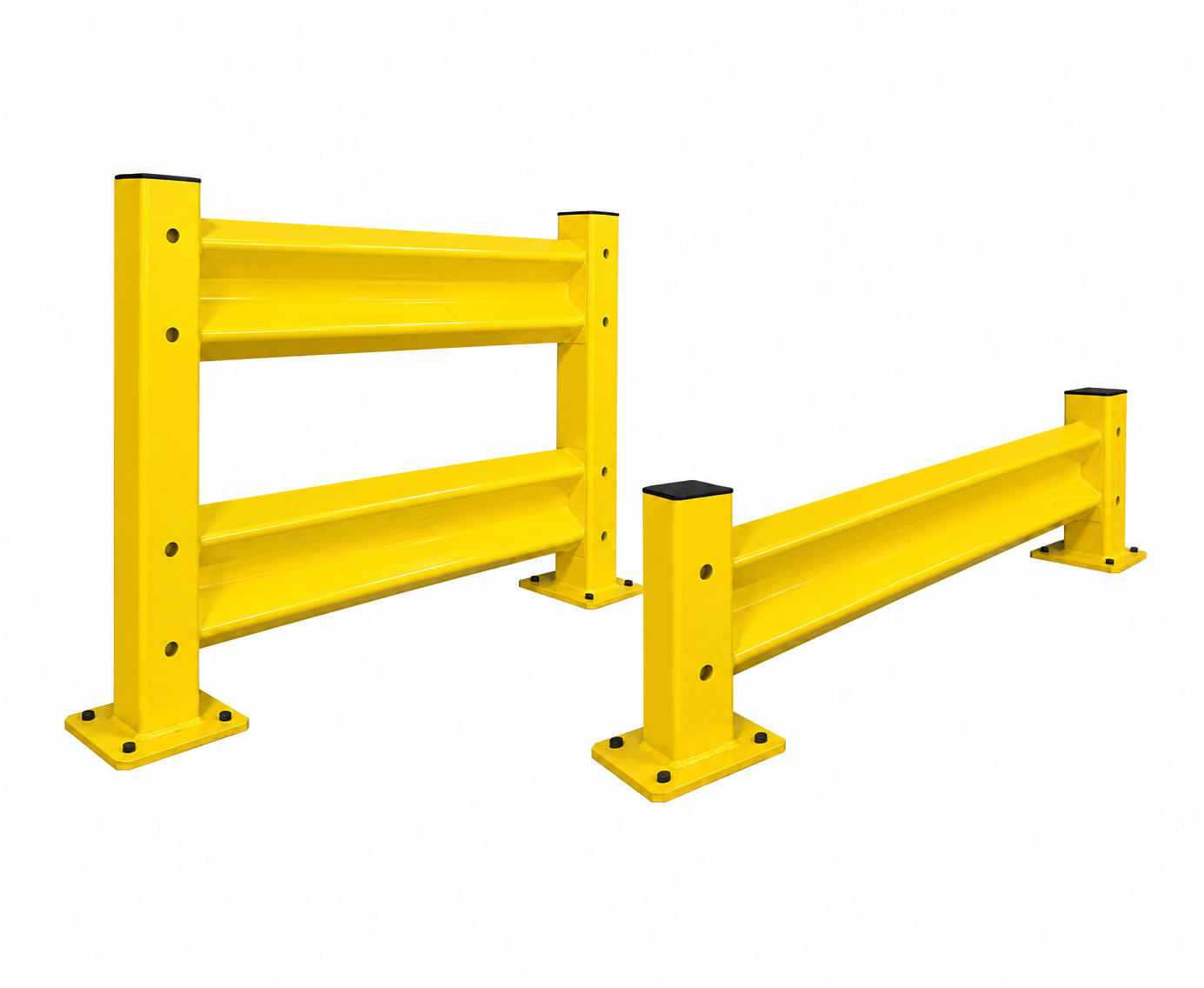
Warehouse Guard Rails take rack protection beyond individual columns. A guard rail system uses steel posts and horizontal rails to create a physical barrier between forklifts and the people, equipment, inventory, offices, or pallet rack behind it.
Common configurations include approximately 21″ high single-tier systems and 42″ high double-tier systems, although dimensions and construction vary by product. Posts may use square tubing or structural sections, with heavy steel rails connecting them to create a continuous barrier. Modular designs allow the protection to follow the layout of the facility.
Guard rail is especially useful where vehicle traffic and pedestrian or equipment areas come close together. It can protect rack ends, machinery, electrical equipment, building columns, in-plant offices, workstations, and designated walkways. It also makes restricted areas easier for forklift operators to recognize.
The right system depends on what you’re protecting and the vehicles operating nearby. Forklift size, speed, turning radius, aisle width, floor construction, anchor requirements, and expected impact exposure should all be considered when designing the layout.
Pallet Stops provide two useful functions: they help prevent pallets from being pushed too far through the back of the rack, and they can help maintain the intended longitudinal clearance between back-to-back pallet loads.
Pallet push-through is more than an inventory problem. A pallet extending too far beyond the rack can create a hazard for people or equipment on the opposite side. It can also interfere with the open space that was intended to remain between back-to-back loads. Steel pallet stops create a physical positioning point that helps forklift operators place loads more consistently.
In back-to-back rack, pallet stops can also function as longitudinal flue-space protectors. The exact space that needs to remain open shouldn’t be assumed to be 6″ in every warehouse. Required clearances can vary with the rack arrangement, commodity, pallet dimensions, storage height, sprinkler design, and requirements of the authority having jurisdiction.
Pallet stops should be positioned and attached for the specific rack and pallet configuration. They’re designed as positioning and push-through devices, not as barriers that forklift operators should repeatedly slam pallets against.
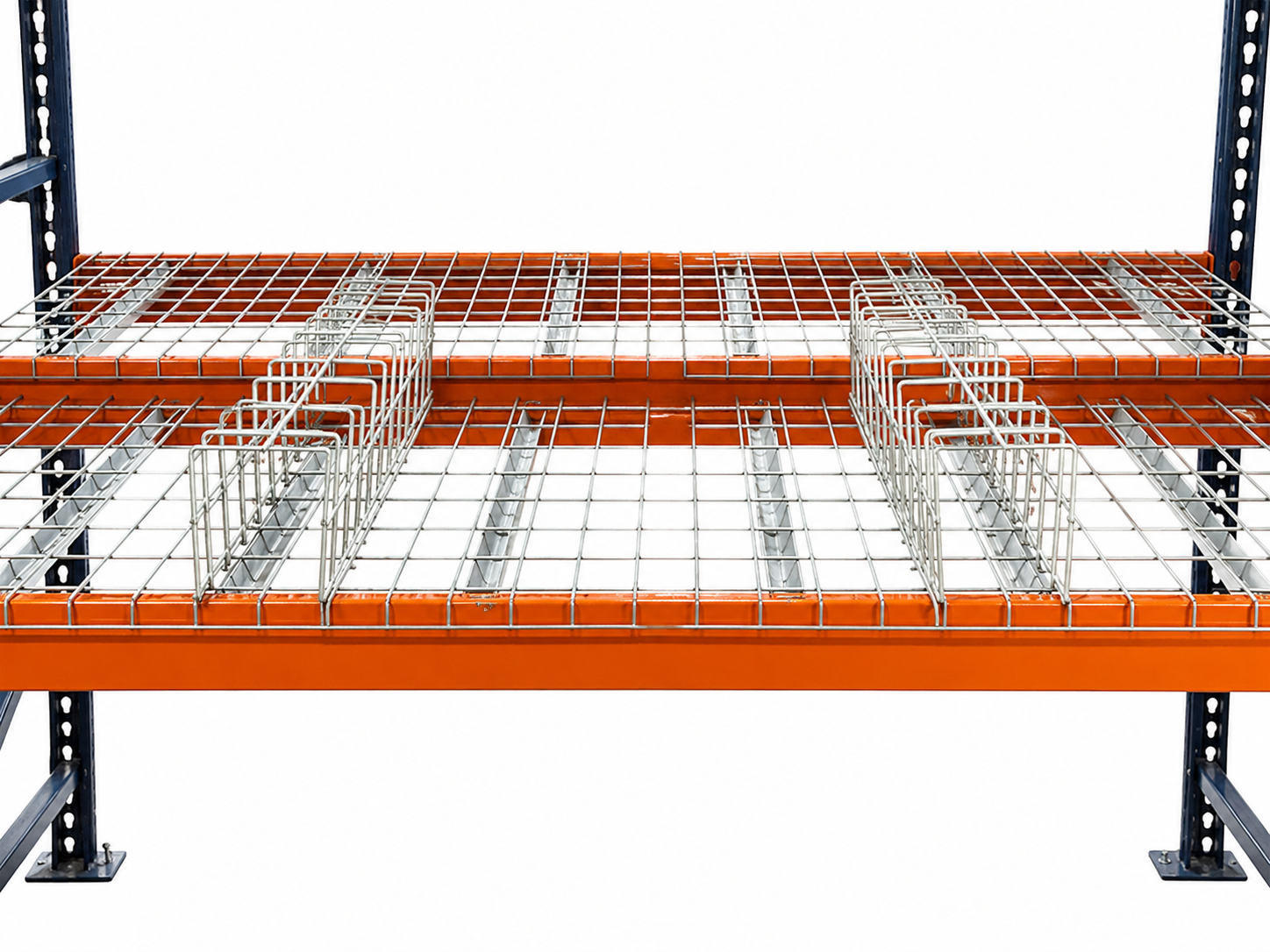
Flue Space Shelf Dividers help maintain open spaces between stored products by physically limiting how far pallets, cartons, and other loads can shift into designated gaps. Depending on the design, they may help maintain transverse spaces between adjacent loads or longitudinal spaces associated with back-to-back rack arrangements.
Dividers can be manufactured from steel wire, tubing, or formed steel and may attach to compatible wire decking, beams, or other rack components. Besides maintaining separation, they can make pallet and carton positions easier to identify, improving organization and creating more consistent storage from one bay to another.
The fire-protection benefit is one reason these products receive so much attention. Open vertical spaces through rack storage can allow heat and smoke to rise and sprinkler water to penetrate through the storage arrangement. But there’s no single divider dimension or layout that’s automatically right for every warehouse.
Requirements depend on the complete storage and sprinkler design. Commodity classification, storage height, rack configuration, pallet type, sprinkler system, and locally adopted codes all matter. Flue Space Shelf Dividers can help maintain required clearances, but the appropriate spacing should be established by the applicable design and confirmed with the fire protection professional and authority having jurisdiction.
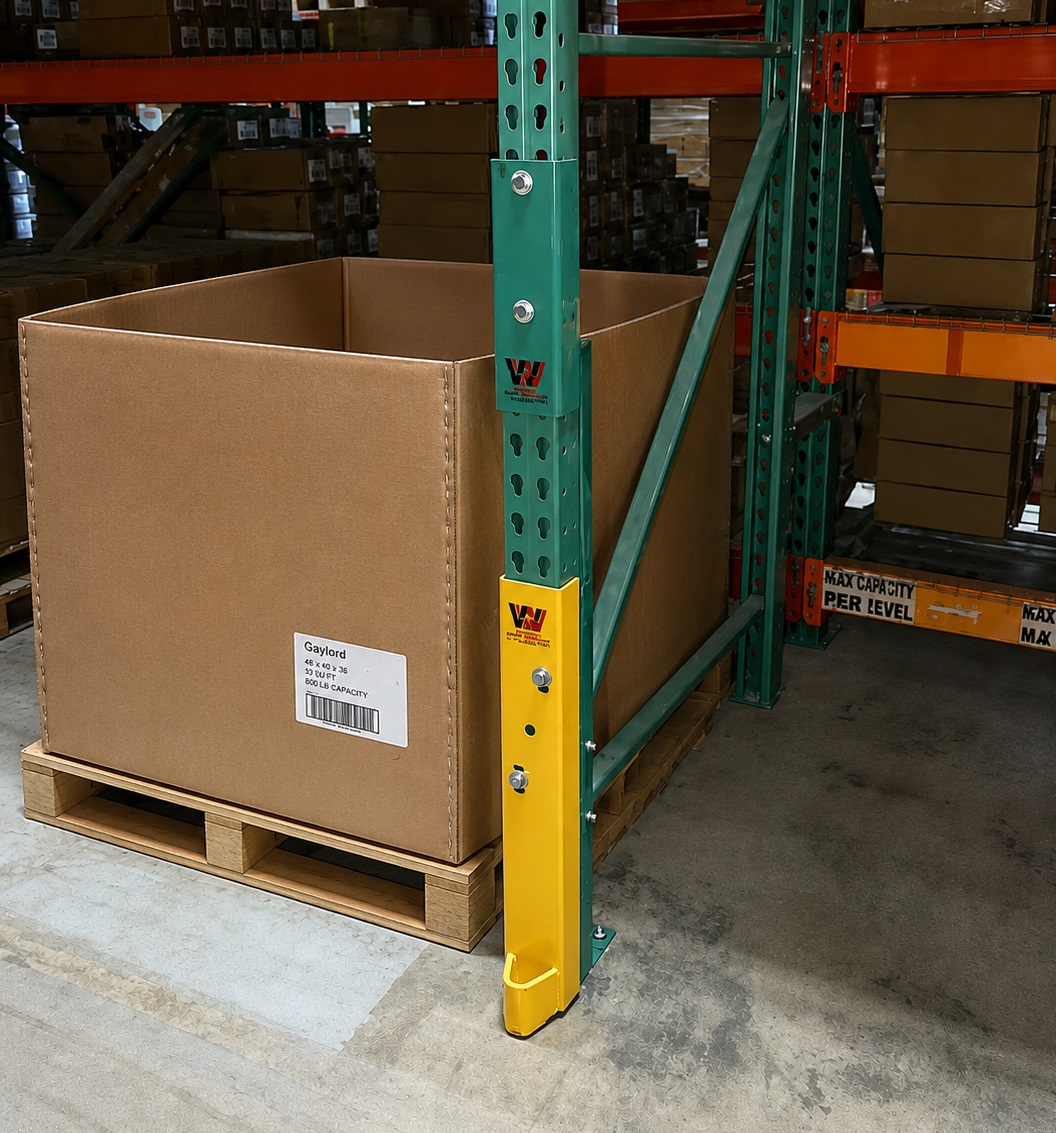
Sometimes protection comes after the impact. Pallet Rack Repair Kits are engineered steel components designed to repair certain types of damaged pallet rack uprights without automatically replacing the entire frame. Because forklift damage frequently occurs near the bottom of the front column, many repair systems concentrate on replacing or reinforcing that vulnerable lower section.
The S-Series Front Column Pallet Rack Repair Kit, for example, is available in 24″ and 36″ repair heights and uses a 3″ x 3″ structural steel replacement column with a 1-5/8″ backer. A teardrop-style hole pattern provides compatibility with applicable rack configurations, while a heavy footplate creates the new connection at floor level.
The big advantage is avoiding unnecessary replacement. If the damage is suitable for an engineered repair, the usable portion of the existing frame can remain while the damaged section is addressed. That can reduce material, labor, and disruption compared with removing an entire upright.
Rack repair isn’t ordinary field fabrication, however. Damage to columns, anchors, footplates, bracing, or beam connections needs to be evaluated before deciding on a repair. The correct repair kit and procedure should be selected for the rack system and actual damage, with installation performed according to the repair manufacturer’s requirements.
Pallet Rack Backing creates a physical barrier behind stored products to help keep cartons, loose products, and palletized loads from falling into work areas or aisles behind the rack. Heavy-gauge welded wire mesh is particularly useful because it provides containment without creating a solid wall behind the inventory.
Wire mesh backing maintains visibility through the rack, which can help with inventory inspection and general warehouse visibility. The open construction also allows air and light to pass through. Adjustable offset brackets can position the backing behind the rack while accommodating the storage configuration.
Compared with flexible netting, rigid steel wire backing provides a durable solution for applications where long service life and physical containment are priorities. Modular panels can also make it easier to expand or reconfigure the system when the rack layout changes.
Backing needs to be designed around the actual load. Panel dimensions, offset distance, attachment points, rack configuration, pallet overhang, product size, and the required space behind stored loads should all be considered. Pallet rack backing shouldn’t be positioned in a way that unintentionally interferes with required flue spaces or sprinkler performance.
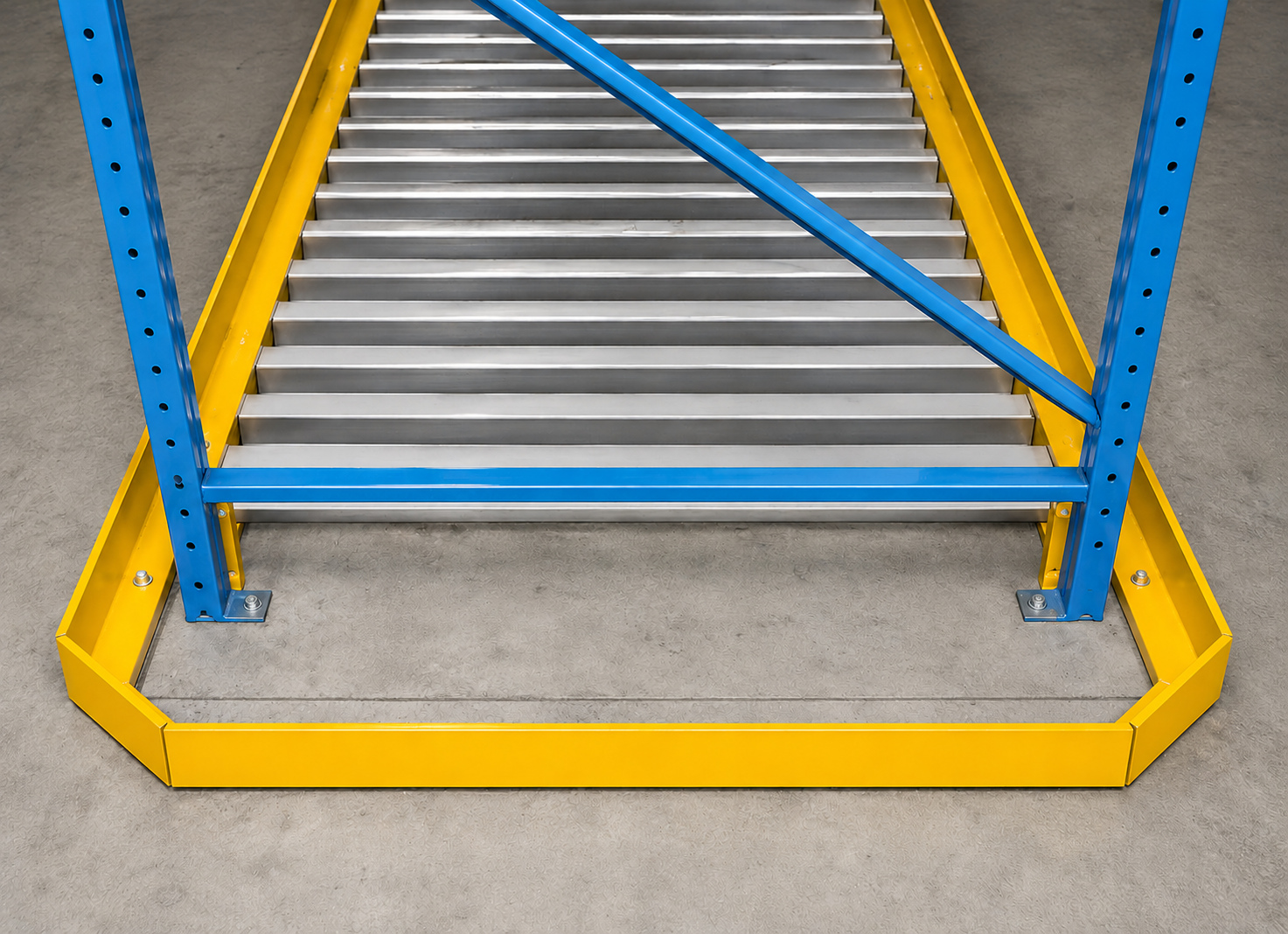
Steel Angle Guide Rail, Rub Rail, and Bumper Rails provide floor-level protection by creating a steel boundary between lift trucks and pallet rack, offices, machinery, or other areas you don’t want forklifts entering.
Our structural steel angle guide rail uses a 4″ x 3″ x 3/8″ steel angle anchored to the concrete floor. Instead of waiting for a forklift to contact the rack, the guide rail establishes a path along the aisle and helps keep the vehicle away from vulnerable uprights and other structures.
These rails are particularly useful in narrow-aisle and drive-in rack applications. Forklifts, narrow-aisle vehicles, and equipment with guide rollers operate with relatively little clearance, so even a small steering error can result in rack contact. A properly designed guide rail gives the truck a physical reference and helps keep it aligned through the aisle.
Guide rails can also protect in-plant offices, work areas, equipment, and other fixed assets. They’re relatively simple pieces of steel, but properly positioned floor-mounted protection can prevent expensive impacts and help keep vehicle traffic where it belongs.
Building a Pallet Rack Protection System
The best Pallet Rack Protection system usually isn’t one product. It’s a combination of products selected around the actual risks in your warehouse. Column guards protect individual uprights. End-of-rack protectors defend exposed row ends. Guard rails separate forklifts from larger areas. Pallet stops and dividers control load positioning. Rack backing contains products. Guide rails control lift-truck travel. Repair kits address qualifying damage that’s already occurred.
Walk your aisles and look at where the damage is actually happening. Pay attention to turning areas, narrow aisles, rack entrances, row ends, loading zones, pedestrian areas, and columns that already show signs of contact. Protecting those high-risk locations first can provide a practical starting point without unnecessarily placing barriers everywhere.
Frequently Asked Questions About Pallet Rack Protection
What Pallet Rack Protection products should I use?
Start with the hazard you’re trying to control. If forklifts are hitting individual uprights, consider column protectors. If damage occurs at row ends, use end-of-rack protection. Guard rails work well when an entire area needs separation, while guide rails can help control forklift travel in narrow aisles. Pallet stops, flue dividers, and rack backing address load positioning and falling-product hazards. Many warehouses benefit from combining several types rather than relying on one product.
How should Pallet Rack Protection be installed?
Installation depends on the product. Floor-mounted column protectors, guard rails, and guide rails require suitable anchors and a concrete floor capable of supporting the installation. Rack-mounted accessories need to be compatible with the rack and installed without compromising structural components. Avoid drilling, welding, or modifying pallet rack uprights unless the modification is specifically approved by the rack manufacturer or a qualified rack engineer.
How often should rack protection be inspected?
Include protection products in your normal warehouse and pallet rack inspection program. Look for bent steel, damaged welds, loose or missing anchors, displaced barriers, damaged fasteners, corrosion, and evidence of repeated forklift impacts. Also inspect the rack behind the protector. A badly damaged guard may have absorbed an impact large enough to affect the upright or anchors behind it.




