Automotive Steel Containers & Bins
Automotive steel containers and bins are reusable containers designed to store and transport parts between suppliers, stamping plants, and assembly facilities. Built with steel side panels, corner posts, reinforced bases, stacking points, and forklift access, they handle stampings, castings, fasteners, and assemblies through repeated shipping cycles. Options include solid or perforated sides, drop gates, four-way fork runners, pin feet, stenciling, and rigid or collapsible construction. Their standard footprints simplify stacking and handling while helping protect parts throughout the automotive supply chain.
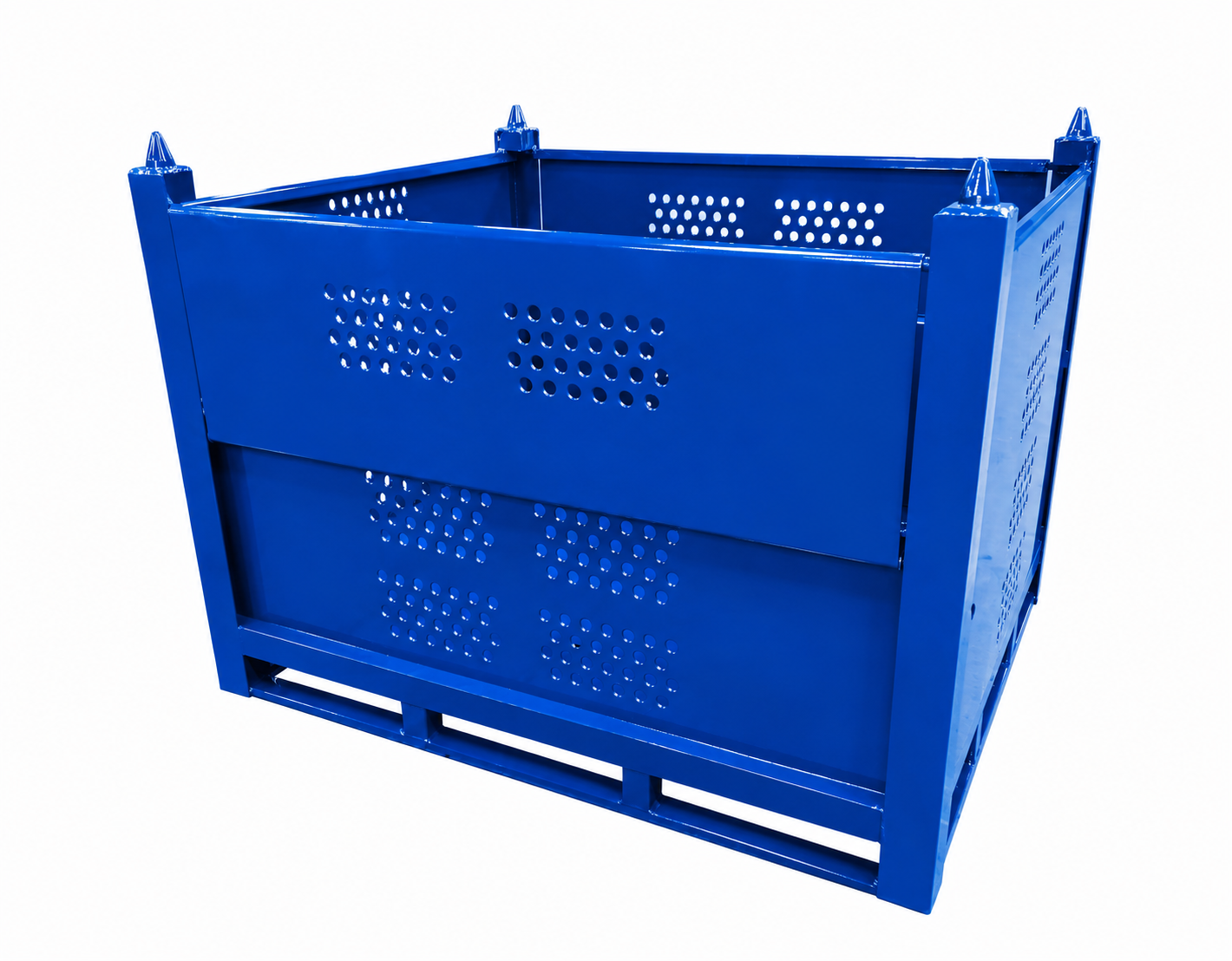
Chrysler Heavy Duty Rigid Steel Baskets & Containers are based on Chrysler OCC, CC, CS, and OCS Series specifications. They typically include tubular steel corner posts, solid or perforated side panels, stacking pins, and four-way fork runners. Models are available with or without drop gates.
These containers are commonly used to move metal stampings and components from Tier 1 and Tier 2 suppliers to assembly plants. Depending on the model and load rating, they can stack four to five high in warehouse storage and two high in trailers. Drop gates provide easier access to parts when containers are stacked or positioned along a production line.
Showing all 4 resultsSorted by latest

Chrysler Heavy Duty Rigid Steel Baskets & Containers
General Motors GM Rigid Steel Automotive Containers & Bins
FORD SMF1-SMF10 / MB1-MB10 Compatible Steel Shipping Containers
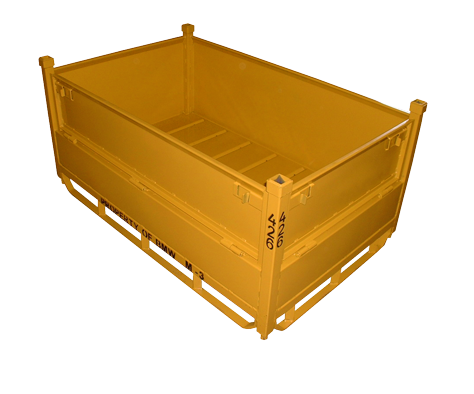
BMW M-1 thru M-8 Compatible Rigid Steel Containers
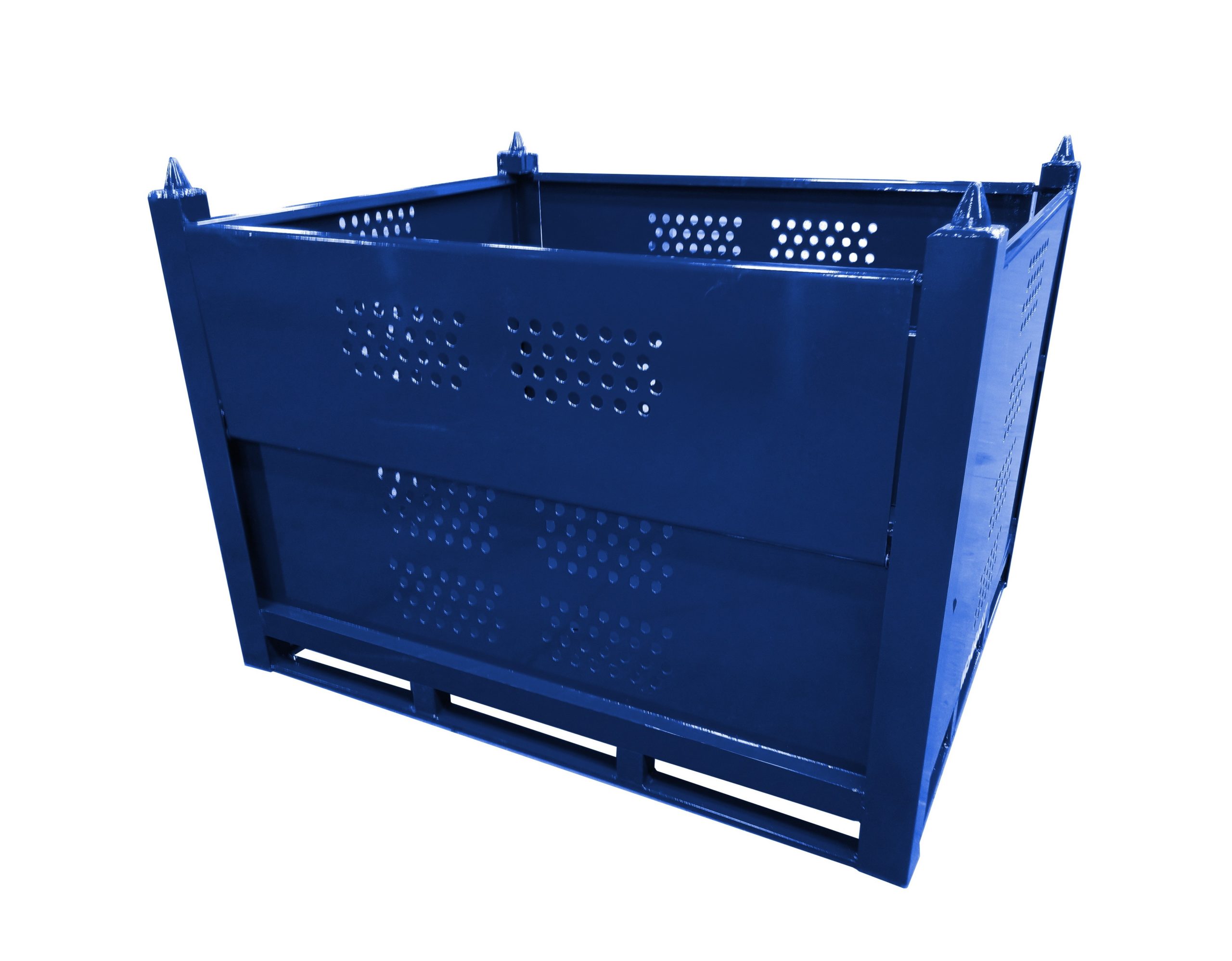
General Motors GM Rigid Steel Automotive Containers & Bins are based on container designs used throughout GM supply chains. Steel panels contain parts during handling, while pin stacking points and four-way runners simplify forklift movement and stacking.
Many GM-style containers use perforated sides to provide airflow and allow workers to see whether a bin is full or empty. Solid panels can also be used when those features are not required. Models can be produced to match existing GM-style containers, allowing new units to integrate with an established fleet.
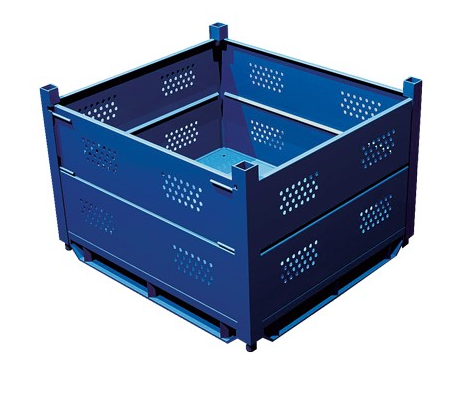
FORD SMF1 through SMF10, also known as MB1 through MB10 compatible steel shipping containers, provide ten container sizes for Ford automotive applications. SMF1 is the smallest and SMF10 the largest, with SMF4 and SMF6 among the models commonly used by automotive suppliers.
These containers typically feature steel sides, tubular corner posts, steel bases, four-way runners, and pin stacking feet. They can be ordered with solid or perforated sides and with or without drop gates. Rigid models work well for in-plant use, while collapsible versions reduce the space required for empty return shipments. Depending on the configuration, significantly more collapsed containers can fit on a trailer than upright containers, reducing return freight costs.
BMW M-1 through M-8 compatible rigid steel containers provide a range of sizes for storing and transporting automotive components. They are built with steel panels and bases, corner posts, stacking sockets and pintles, and four-way steel runners.
These containers are commonly used by Tier 1 suppliers, stamping plants, and component manufacturers. Sizes and configurations can be matched to existing container fleets or modified around a specific part or assembly. Powder-coated finishes and stenciling can also be added for identification.
Solid or Perforated Steel Sides?
Let us know if you want perforated holes in side walls of container. Perforated side panels provide airflow and make it easier for forklift operators to see whether a container is loaded. If neither feature is necessary, solid sides may reduce the cost of the container. Perforations can also be arranged as letters or initials to provide permanent identification.
Frequently Asked Questions
How do I choose the right automotive steel container?
Start with the OEM specification, then consider part dimensions, weight, forklift access, stacking requirements, gates, and trailer space. If you are adding to an existing fleet, make sure the new containers have compatible footprints and stacking points.
Should I choose rigid or collapsible containers?
Rigid containers work well for in-plant storage and shipping programs where empty returns are limited. Collapsible containers are useful when empties must be returned because more containers can fit on each return trailer.
Can new containers stack with our existing containers?
Yes, provided the dimensions and stacking components match. When duplicating an existing container, drawings, specifications, or a sample container can help confirm compatibility before manufacturing.




