
Collapsible Rigid Wire Baskets
Every warehouse eventually runs into the same problem: empty containers. When they’re full, they keep production moving and inventory organized. Once they’re empty, they take up floor space, reduce trailer capacity on return shipments, and clutter facilities. Collapsible rigid wire containers solve this challenge by combining the strength and durability of a standard rigid wire basket with a fold-down design that dramatically reduces storage space when containers are not in use. The sidewalls collapse inward, allowing multiple empty containers to stack within the footprint normally occupied by a single assembled unit.
Unlike lightweight collapsible containers that sacrifice strength for convenience, collapsible rigid wire containers are built for tough industrial applications. Once assembled, they perform just like a traditional rigid wire container. They provide the same load capacity, stacking strength, and durability. Their steel construction allows them to support large loads while remaining compatible with forklifts, pallet jacks, overhead cranes, and automated material handling equipment. Many models also accept the same accessories available on standard rigid wire baskets. This includes drop gates for ergonomic picking, fork stirrups, fork tunnels, divider systems, and crane lifting lugs.
A big advantage of collapsible rigid wire containers is clear after the product has been delivered. In returnable packaging systems, empty containers must be returned to suppliers, manufacturing plants, or distribution centers before they can be reused. Shipping partially empty trailers full of rigid containers increases freight costs and reduces transportation efficiency. Because collapsible wire containers fold flat, significantly more empty containers fit on return trips. Over hundreds or even thousands of shipping cycles, those freight savings can become substantial.
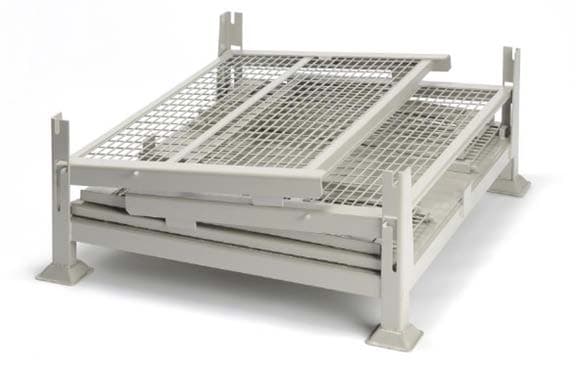
Showing all 3 resultsSorted by latest
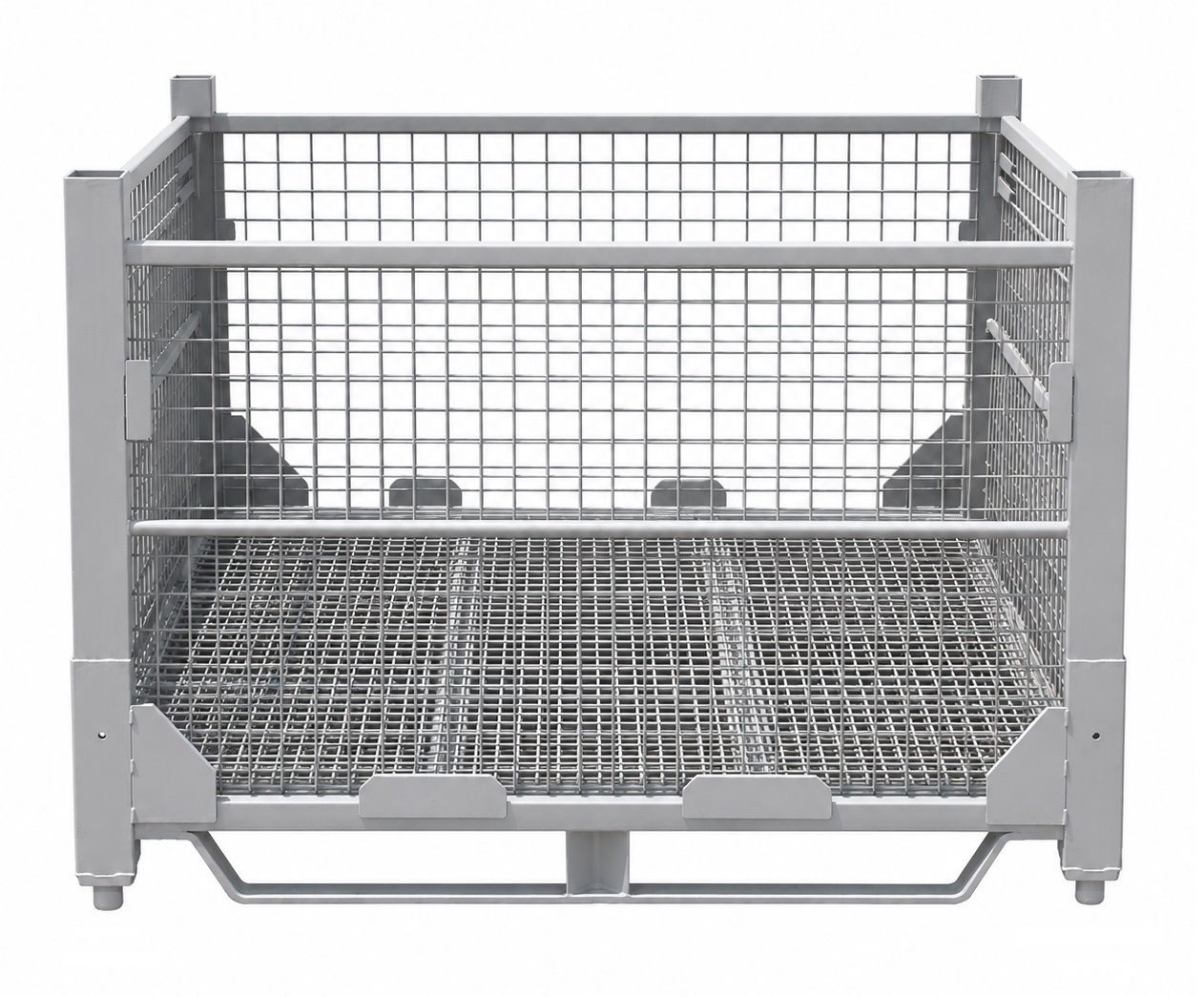
Collapsible “Knock Down” GM 5131 Compatible Wire Bins offer Freight Savings
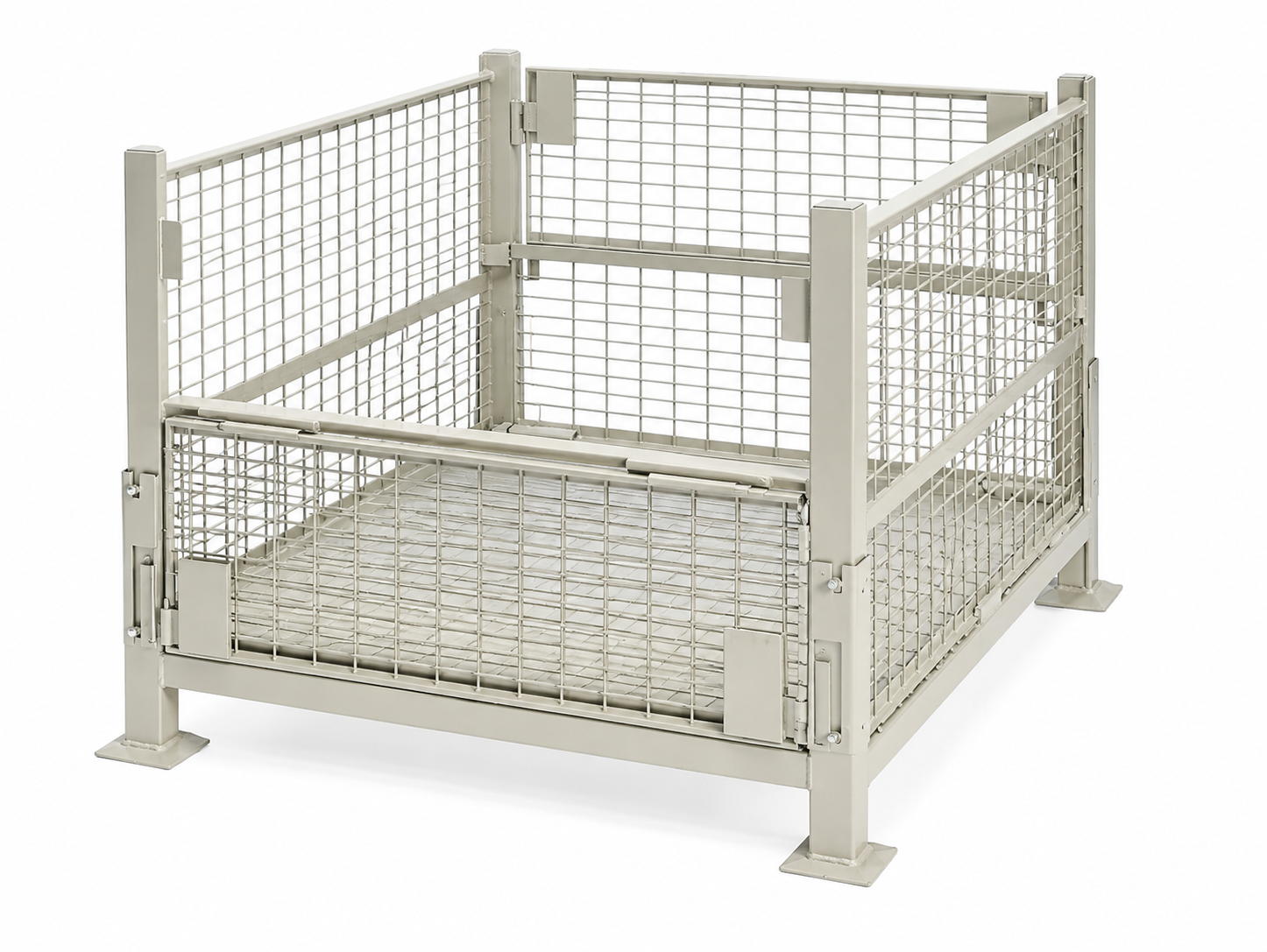
Collapsible Rigid Wire Containers with Targets on Feet | KD2GW-01
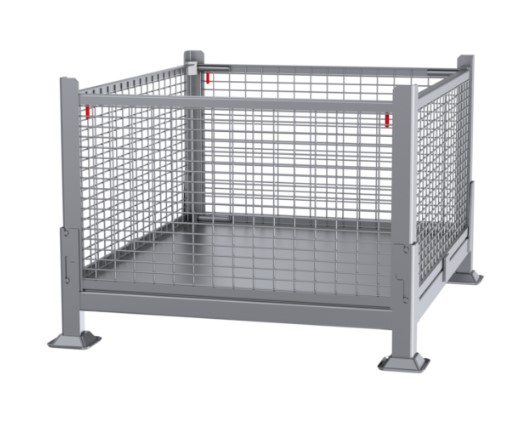
Collapsible “Knock-Down” Wire Mesh Containers & Bins | KDW-01
Automotive manufacturers have relied on collapsible wire containers for decades because reusable packaging is a critical part of their supply networks. Many containers are built to meet OEM specifications, including GM 5131 and other manufacturer-specific standards. These containers are also widely used in metal fabrication, industrial manufacturing, appliance production, food processing, recycling operations, and general distribution.
Selecting the right collapsible rigid wire container begins with understanding the application. Container footprint, inside dimensions, load capacity, stacking requirements, and compatible accessories should all match the products being stored and the equipment used throughout the facility. Standard footprints such as 32″ × 40″, 40″ × 48″, and 48″ × 48″ integrate easily with most pallet rack systems and trailers, while custom sizes are available for specialized applications.
Frequently Asked Questions
What are collapsible rigid wire containers used for?
Collapsible rigid wire containers are designed for storing, transporting, and staging bulk materials while reducing the amount of space required when containers are empty. They are commonly used in automotive manufacturing, industrial production, distribution centers, food processing facilities, and recycling operations where returnable packaging programs are used. Their ability to collapse between uses makes them especially valuable in closed-loop supply chains.
Are collapsible rigid wire containers available to automotive OEM specifications?
Yes, many collapsible wire containers are made to meet OEM standards established by automotive manufacturers. One of the most widely recognized is the GM 5131 specification, which defines dimensional, structural, and performance requirements for containers used in General Motors’ supply chain. Other manufacturers have similar standards to ensure containers remain compatible with their handling equipment, storage systems, and logistics operations.
Do collapsible rigid wire containers comply with fire safety requirements?
Wire mesh construction is often preferred in warehouses because the open design allows water from overhead sprinkler systems to pass through the container. Facilities should still follow applicable NFPA 13 requirements, local fire codes, insurance guidelines, and required flue space recommendations when storing containers in pallet rack systems. Fire marshal and insurance requirements may vary depending on storage height, commodity classification, and rack configuration.
How should collapsible rigid wire containers be inspected and maintained?
Containers should be inspected regularly for bent frames, broken welds, damaged wire mesh, worn hinges, and malfunctioning latches or collapse mechanisms. Any structural damage that affects load capacity or stacking integrity should be repaired or the container removed from service. Establishing a routine inspection schedule helps extend service life, improves workplace safety, and reduces the risk of equipment failure during handling or transportation.




