Smooth-Sided Steel Containers
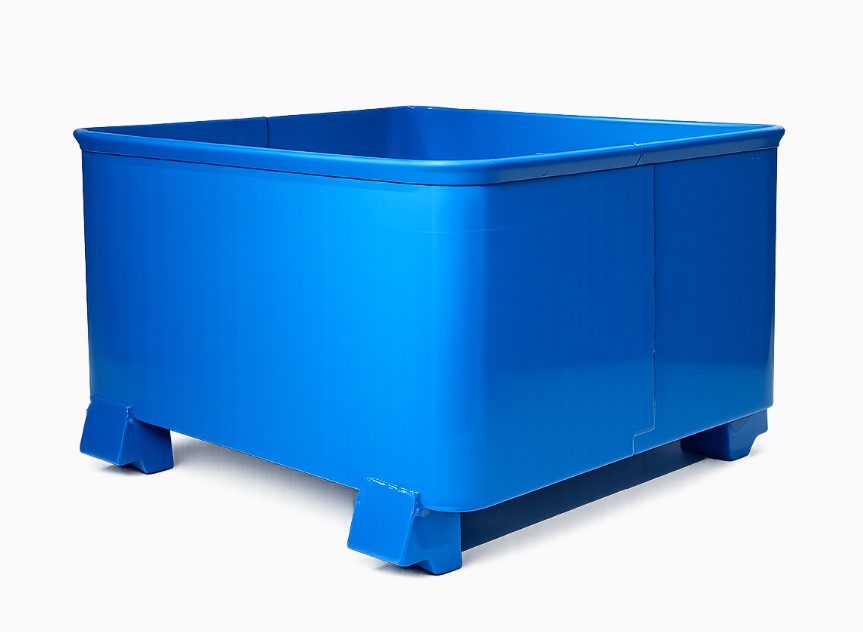
Smooth-sided steel containers are bulk storage and transport containers made with sheet steel panels, welded seams, stacking legs, and forklift-access bases. The smooth walls and enclosed seams reduce places where parts can lodge, help prevent one part from mixing with another, and make containers easier to empty and clean. They can be stacked to use vertical space and moved by forklift between production, storage, and shipping areas. Options include drop gates, fork tunnels, lifting points, runners, identification stencils, paint, and changes to steel gauge. These containers are used for parts, stampings, castings, fasteners, assemblies, and other materials that move through manufacturing and distribution operations.
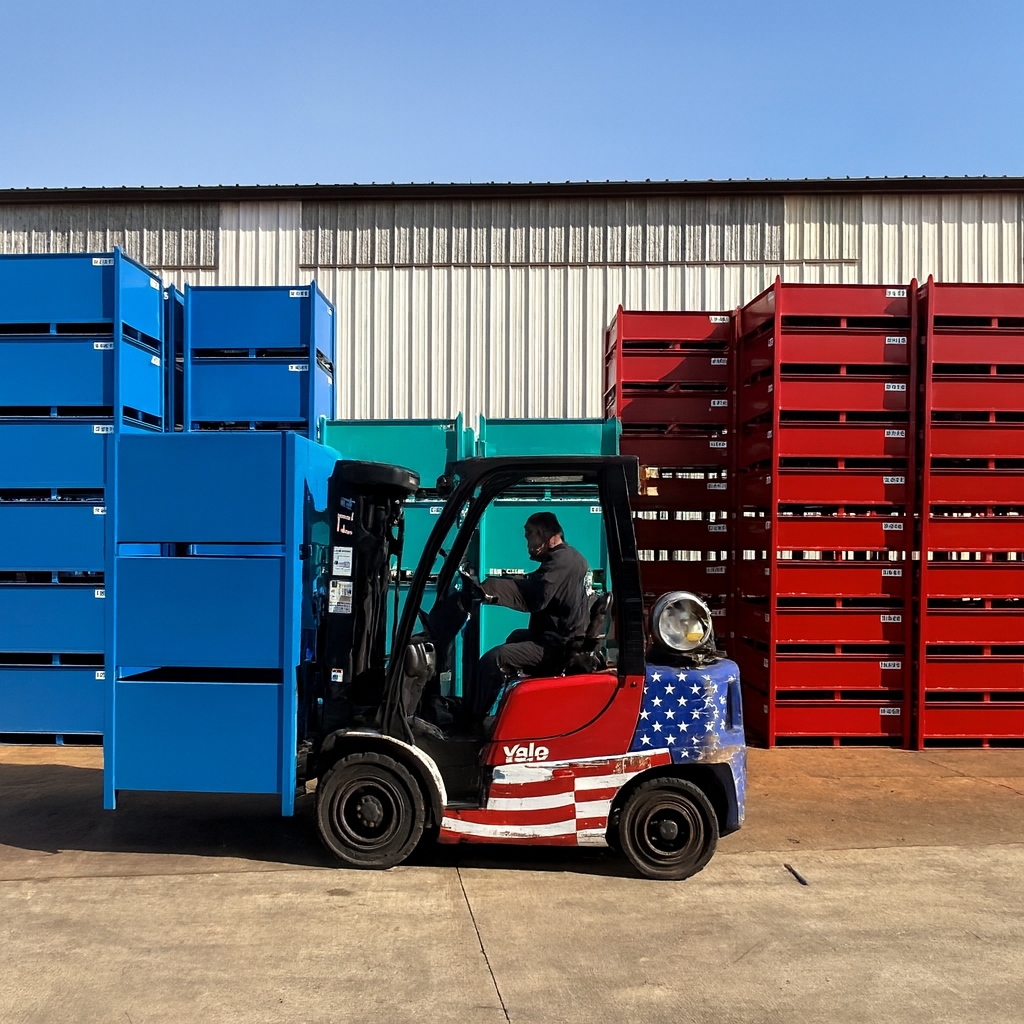
Smooth-sided stackable steel parts bins provide storage for parts and materials on production floors, in warehouses, and during transport. Their sheet steel walls help prevent parts from catching on mesh, seams, or corrugations. Stacking legs allow one bin to sit on another, increasing storage capacity without using more floor space. Drop gates can also be added when workers need access to contents while containers are stacked.
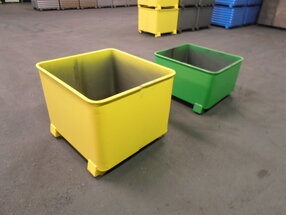
Smooth-sided steel containers with rounded corners are designed for applications where part contamination is a concern. Rounded corners, capped legs, and welded seams reduce spaces where fasteners and other parts can become trapped. This helps prevent a part from one load remaining in the container and mixing with the next load. These containers are often used by automotive manufacturers and suppliers for fasteners, stampings, and other components.
Showing all 5 resultsSorted by latest
Smooth Sided Stackable Steel Parts Bins
B-3 Smooth Sided Steel Containers Eliminate Cross Contamination of Parts
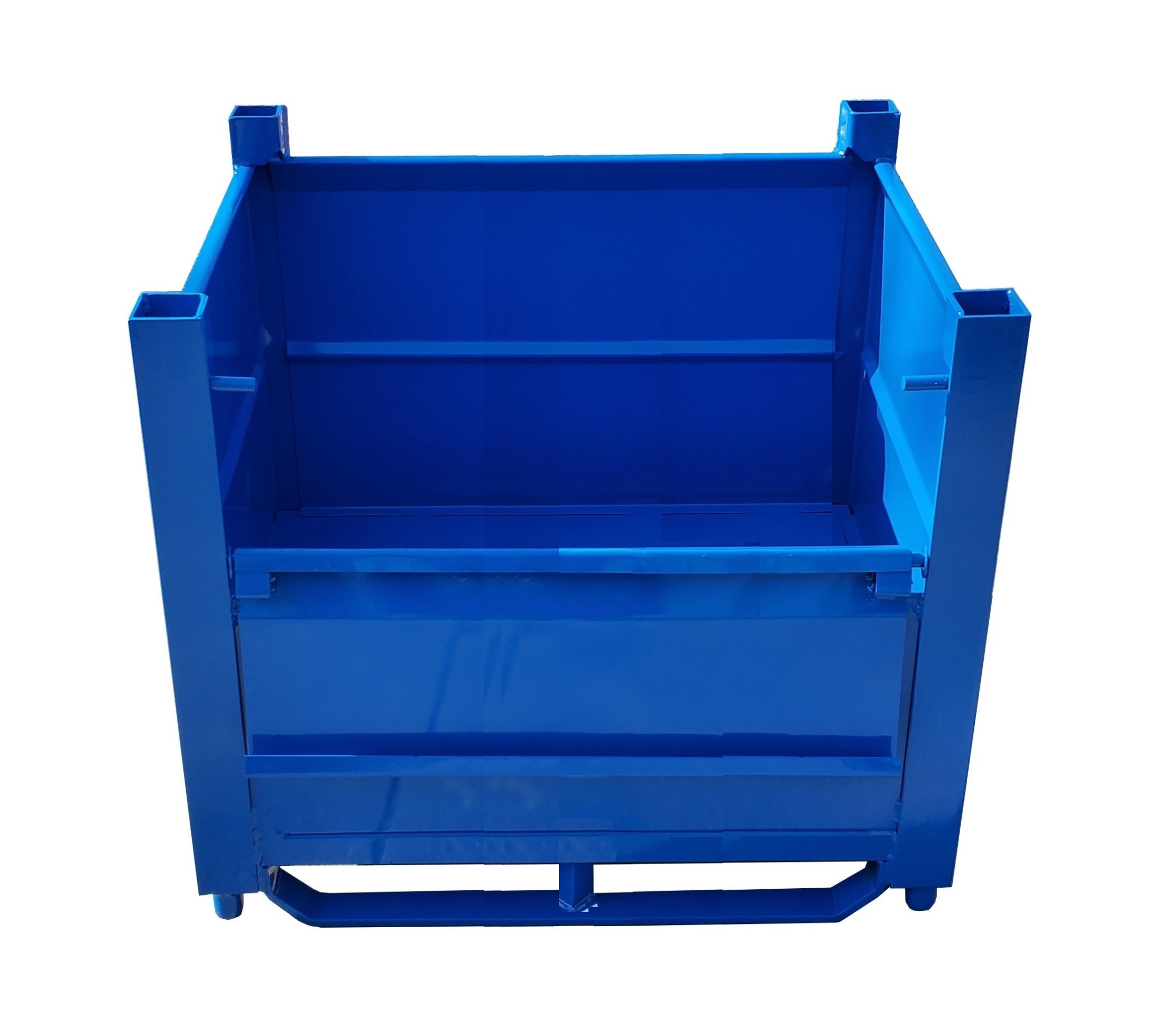
Rigid Steel Bulk Containers | Industrial Metal Containers | Heavy Duty Metal Bins
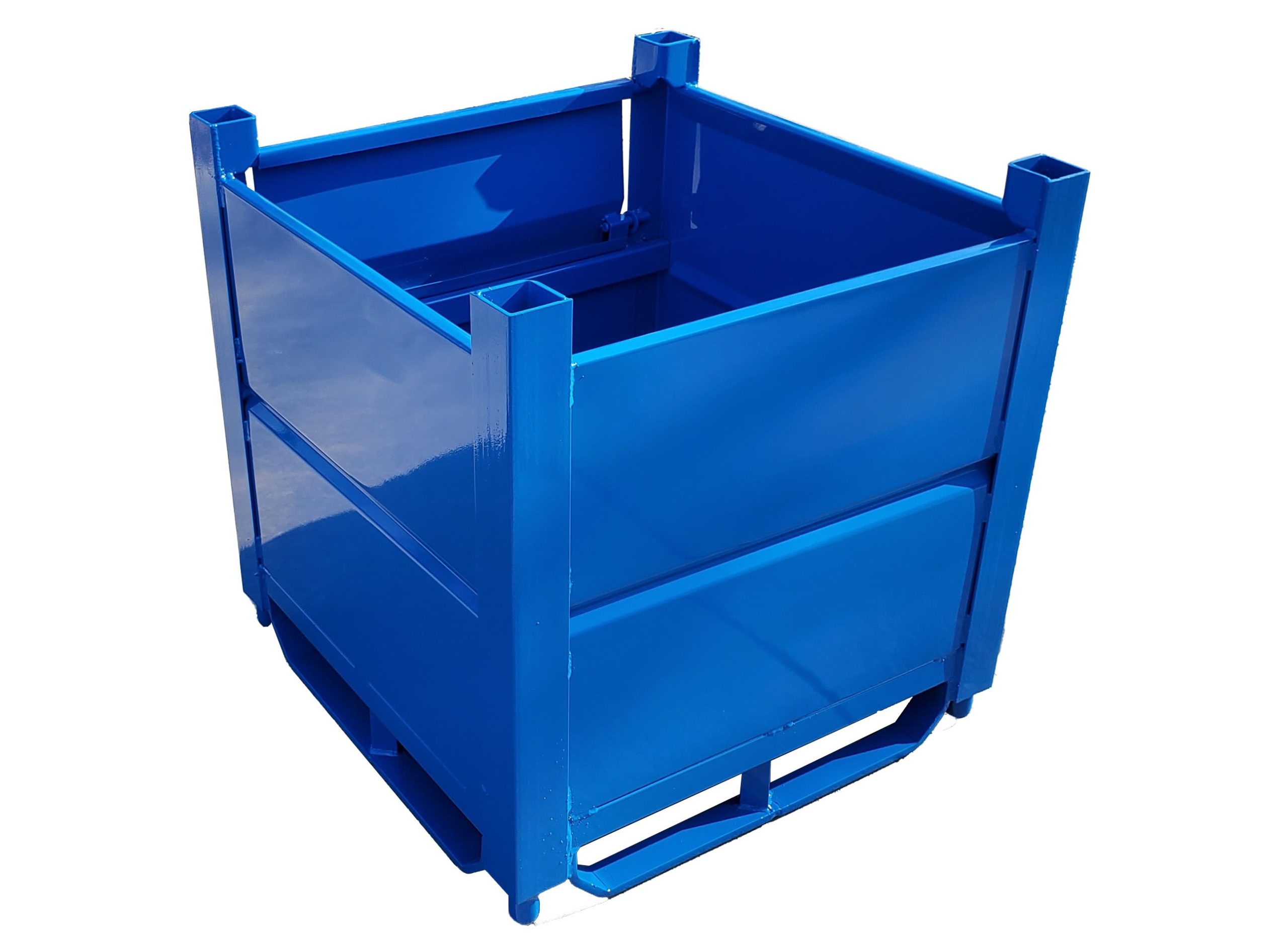
Heavy Duty Rigid Sheet Metal Bins & Steel Containers
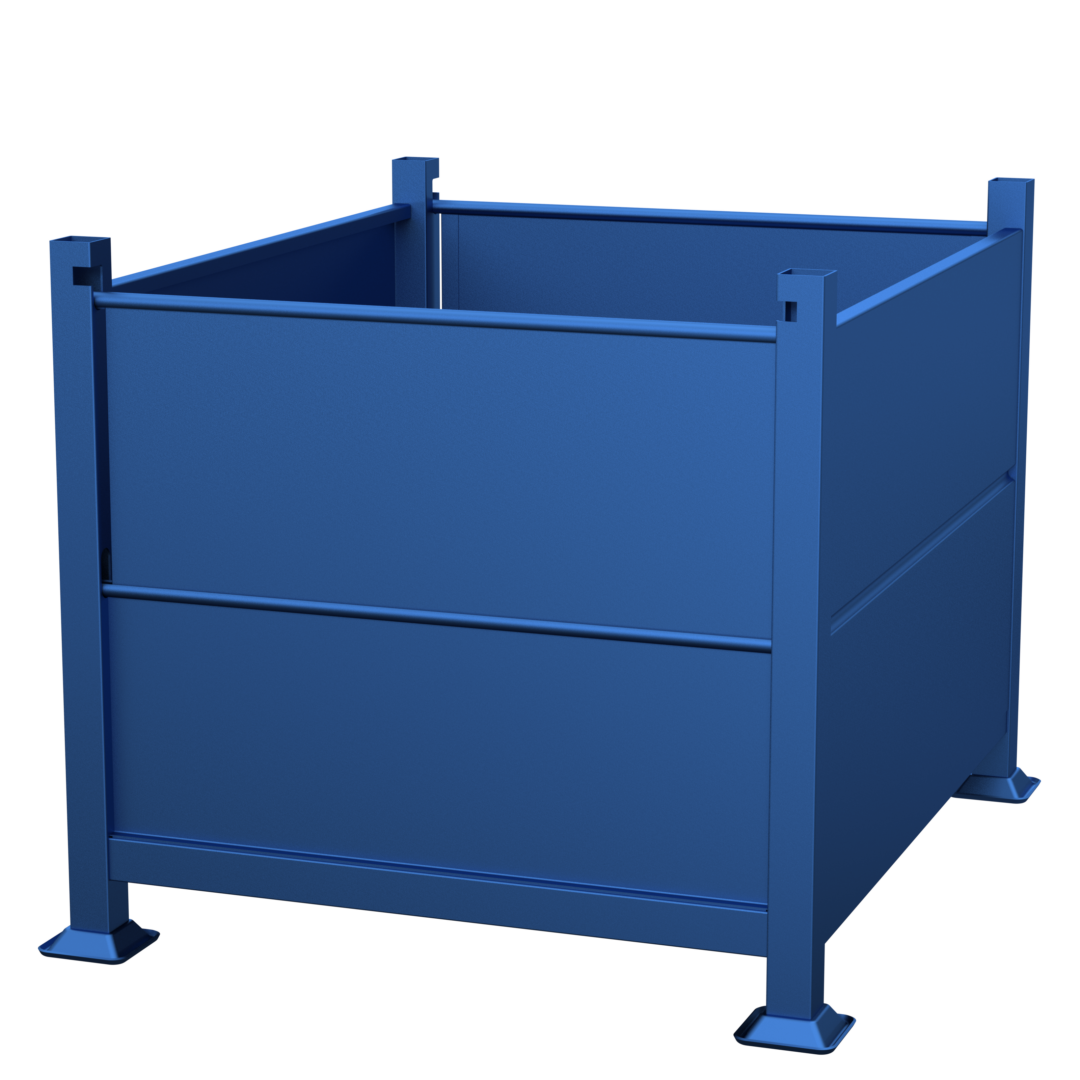
Rigid Steel Container PN. R2GS-01
Rigid steel bulk containers use fixed walls to store and transport materials without folding or assembly. They can be moved by forklift and stacked when the container and load ratings permit. Options such as drop gates, fork tunnels, identification markings, and changes in dimensions allow the container to match the application. They are used in automotive, agriculture, construction, logistics, mining, warehousing, and manufacturing.
Rigid sheet metal bins are used to store and transport steel parts, castings, stampings, fasteners, and components. Sheet steel sides and bottoms contain materials that may not work well in wire containers. Pin feet or pintles can be positioned to match existing containers so bins can be stacked together. Steel gauge can also be changed by application, with more material used in areas that receive more impact and less material used for gates when reduced gate weight is needed.
Rigid steel containers provide fixed-wall storage for materials moving between suppliers, manufacturing plants, warehouses, and assembly operations. They are available in multiple dimensions and can include one or more drop gates for access to contents. For example, a 40.5″ L × 34.5″ W × 32″ H model can include two half-drop gates, a 3,200-lb. capacity, an 18-cu.-ft. volume, and stacking up to five containers when used according to its rating. Configurations can also be produced to match existing container fleets and stacking requirements.
Steel containers can replace packaging that must be discarded after use and can remain in service through repeated shipping and handling cycles. When selecting a container, consider the dimensions and weight of the parts, forklift access, stacking requirements, rack dimensions, gate location, and how the container will move through the facility. Matching these factors to the container design helps improve storage, handling, and container use throughout your operation. Call us at 800-763-9020 to talk to one of our friendly and knowledgeable salespeople. We would love to discuss your bulk container requirements.
Frequently Asked Questions
How do I choose a steel container design?
Start with the size and weight of the parts, then consider forklift access, stacking, rack storage, gates, and dumping requirements. If containers must stack with an existing fleet, match the footprint and stacking points before ordering.
Can steel containers be stored in pallet racks?
Yes, when the container and rack system are designed for the application. Verify the loaded container weight, rack capacity, support points, and container dimensions before placing containers in the rack.
What requirements should be checked before using steel containers?
Confirm container load and stacking ratings, forklift or crane requirements, rack capacities, and any fire code or insurance requirements that apply to the facility. For containers made to match an existing system, verify dimensions and stacking compatibility before production.




