Coil Storage Racks
Warehouse Rack & Shelf LLC offers the widest variety of steel coil racks in the industry. Whether it’s stationary, portable, rackable, or stackable, we can design a coil storage solution that fits your needs. You can choose to store coils eye to the sky or eye to the aisle. Our most popular steel coil rack allows you to store coils up to 10,000 LBS 3 high in your warehouse. Free up valuable floor space by utilizing one of our storage solutions.
Coil storage racks are industrial steel storage systems designed to organize and support steel coils while making better use of warehouse floor and vertical space. Systems can be stationary, portable, rackable, or stackable and configured for coils stored eye to the aisle or eye to the sky. Structural steel frames, reinforced beams, coil cradles, and heavy-duty shelf supports can be designed around coil diameter, width, weight, and handling requirements.
If your steel coils are spread across the shop floor, we need to talk. Floor storage takes up valuable space, makes inventory harder to organize, and can require additional material handling. A properly designed steel coil rack gets coils off the floor, gives them dedicated storage locations, and keeps them accessible for manufacturing and distribution.
Showing all 2 resultsSorted by latest
Slit Coil Racks (6)
Steel Coil Racks (4)
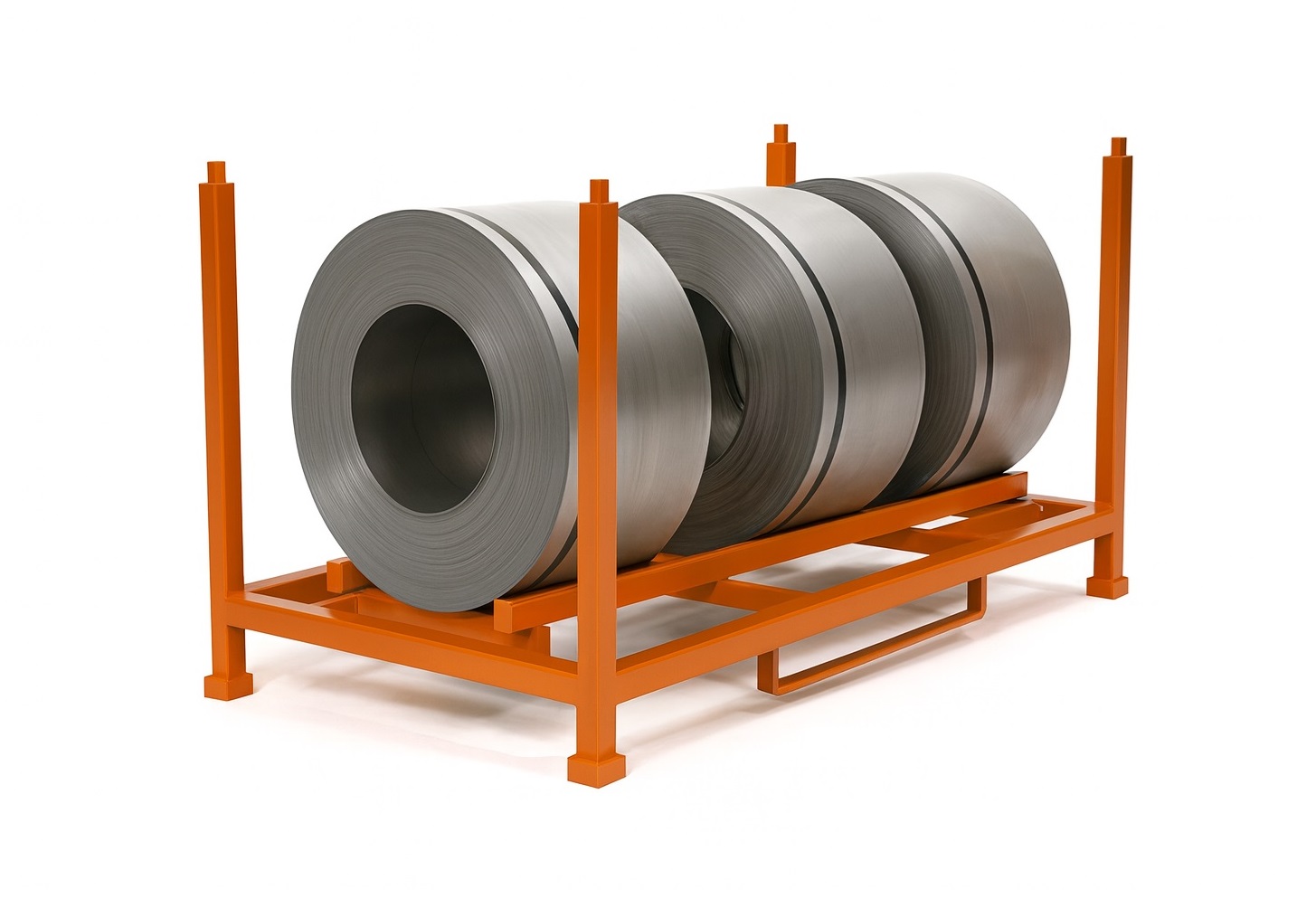
Stackable Coil Pallets | Coil Stack Racks for Steel Coil Storage
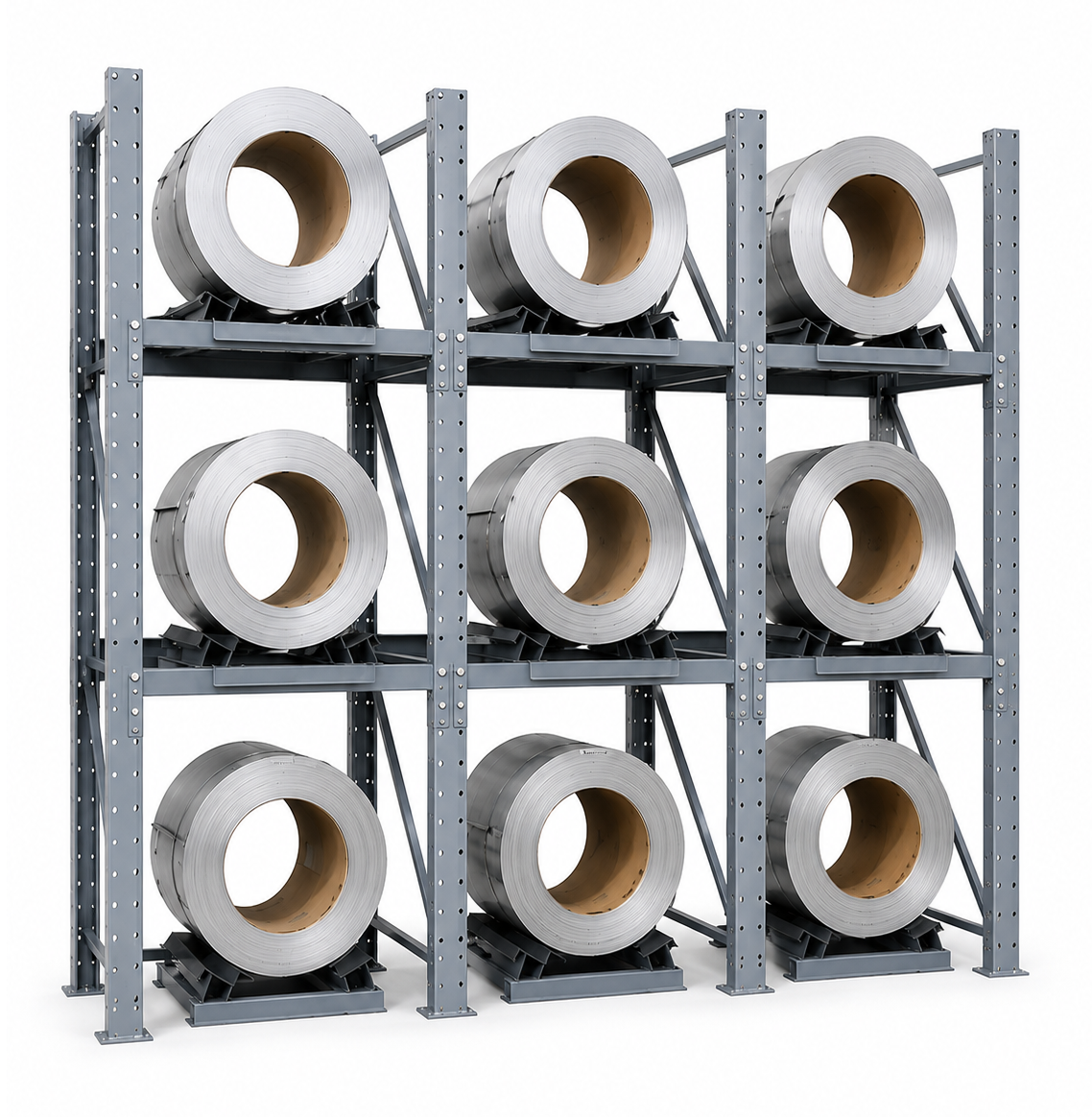
Steel Coil Storage Racks
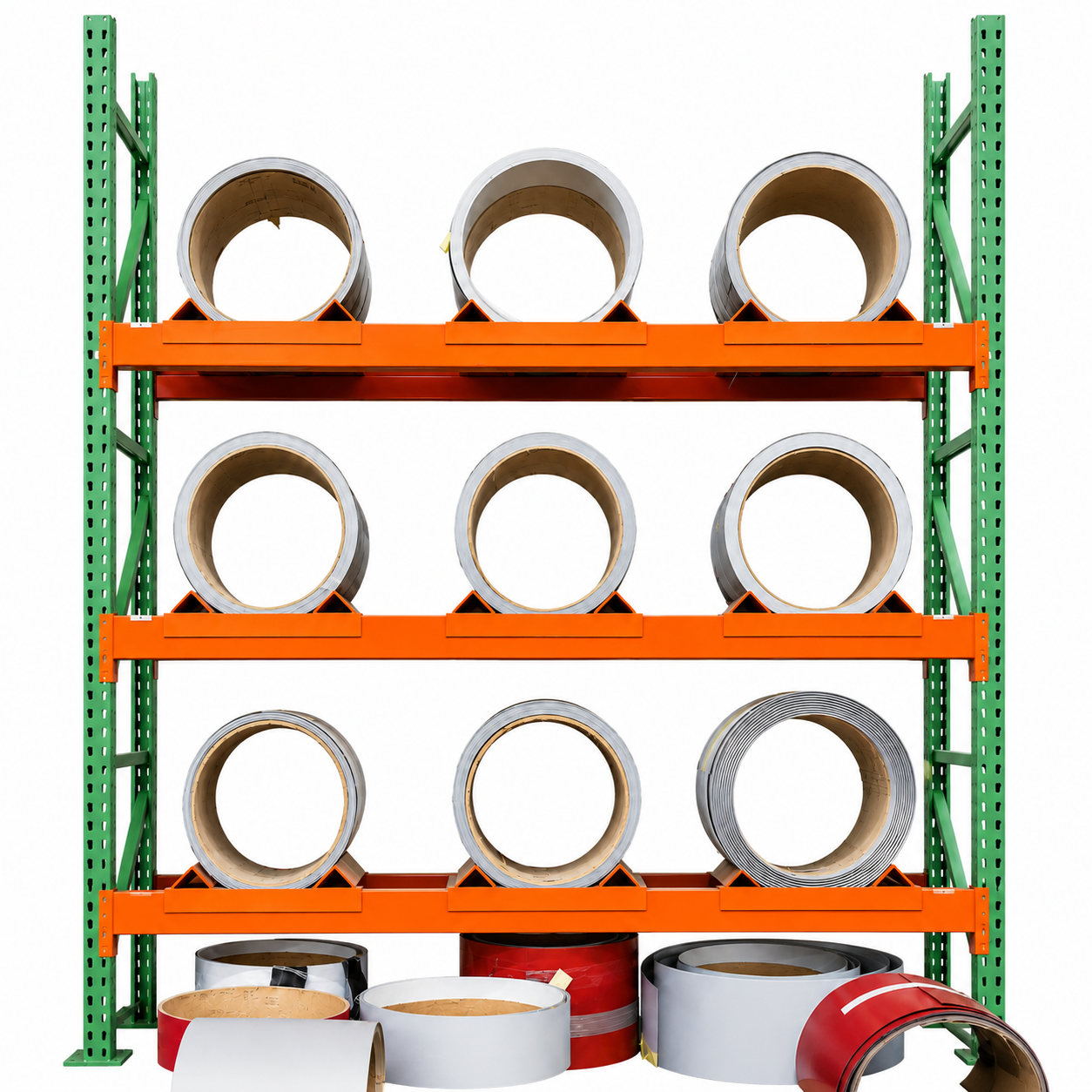
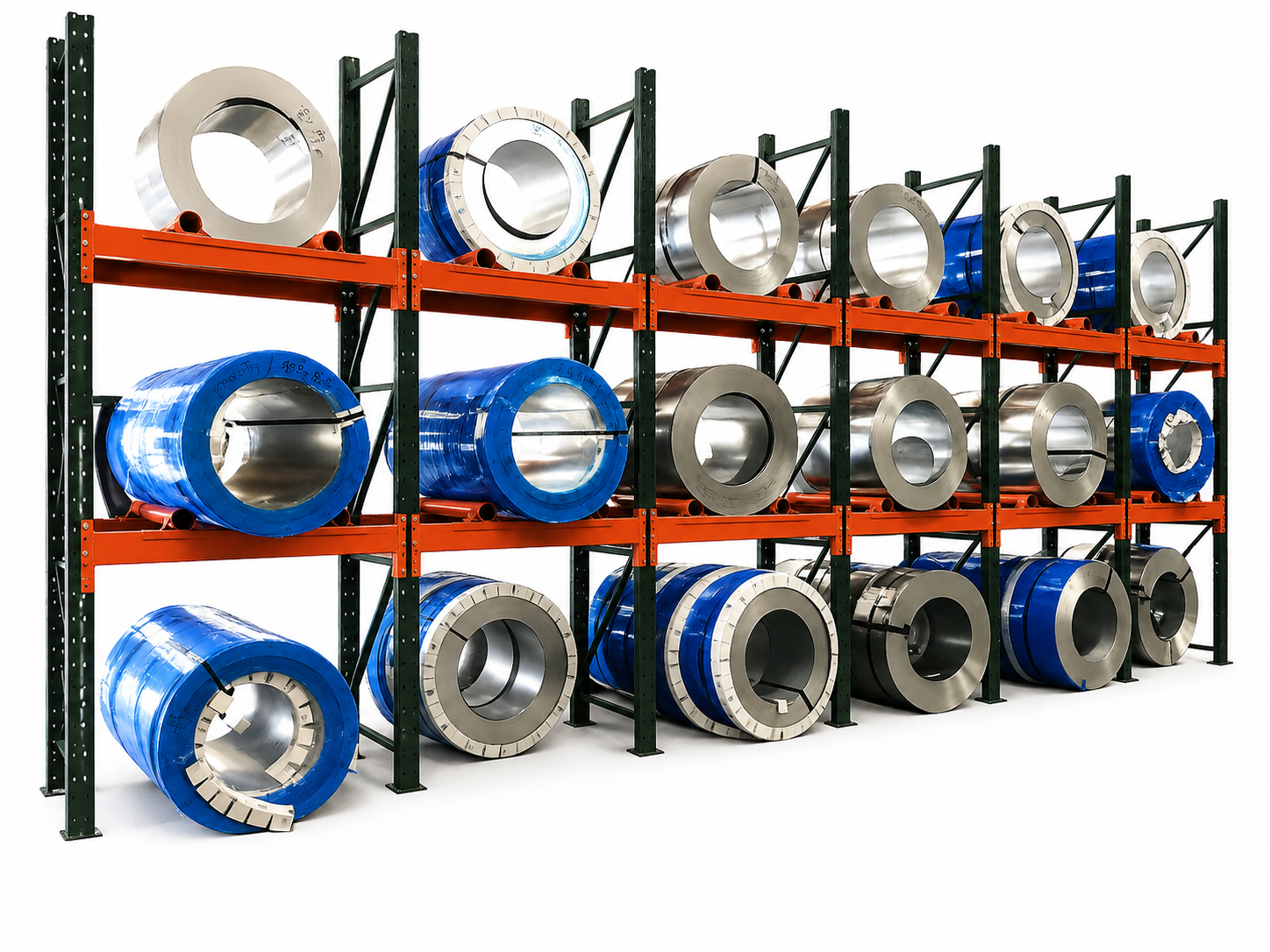
Steel coil racks are commonly used for master or mother coils in steel mills, steel service centers, press rooms, manufacturing plants, and metalworking facilities. Coils are typically supported in cradles and stored eye to the aisle so individual coils can be accessed without moving other inventory.
There are different rack designs for different loads. Roll-formed systems can be used for smaller, lighter coils, while structural steel racks provide greater capacity for heavier applications. Structural I-beam coil racks can be engineered for master coils weighing tens of thousands of pounds. With loads like these, coil size, weight, rack configuration, floor conditions, and handling equipment all need to be considered.
Heavy-duty structural coil racks bridge the gap between lighter roll-formed rack and the largest structural I-beam systems. These racks can be designed with structural steel uprights, beams, and coil cradles for loads that exceed the capabilities of conventional warehouse rack.
Coils are typically stored one wide per shelf and multiple levels high, depending on the engineered design. Each coil remains accessible from the aisle. That’s important because storage density doesn’t do you much good if you have to move three coils to reach the one you need.
Structural I-beam coil racks are designed for the heaviest master coils and concentrated loads. Heavy structural members, bolted connections, reinforced supports, and engineered coil cradles allow the rack to be designed around the actual coil load.
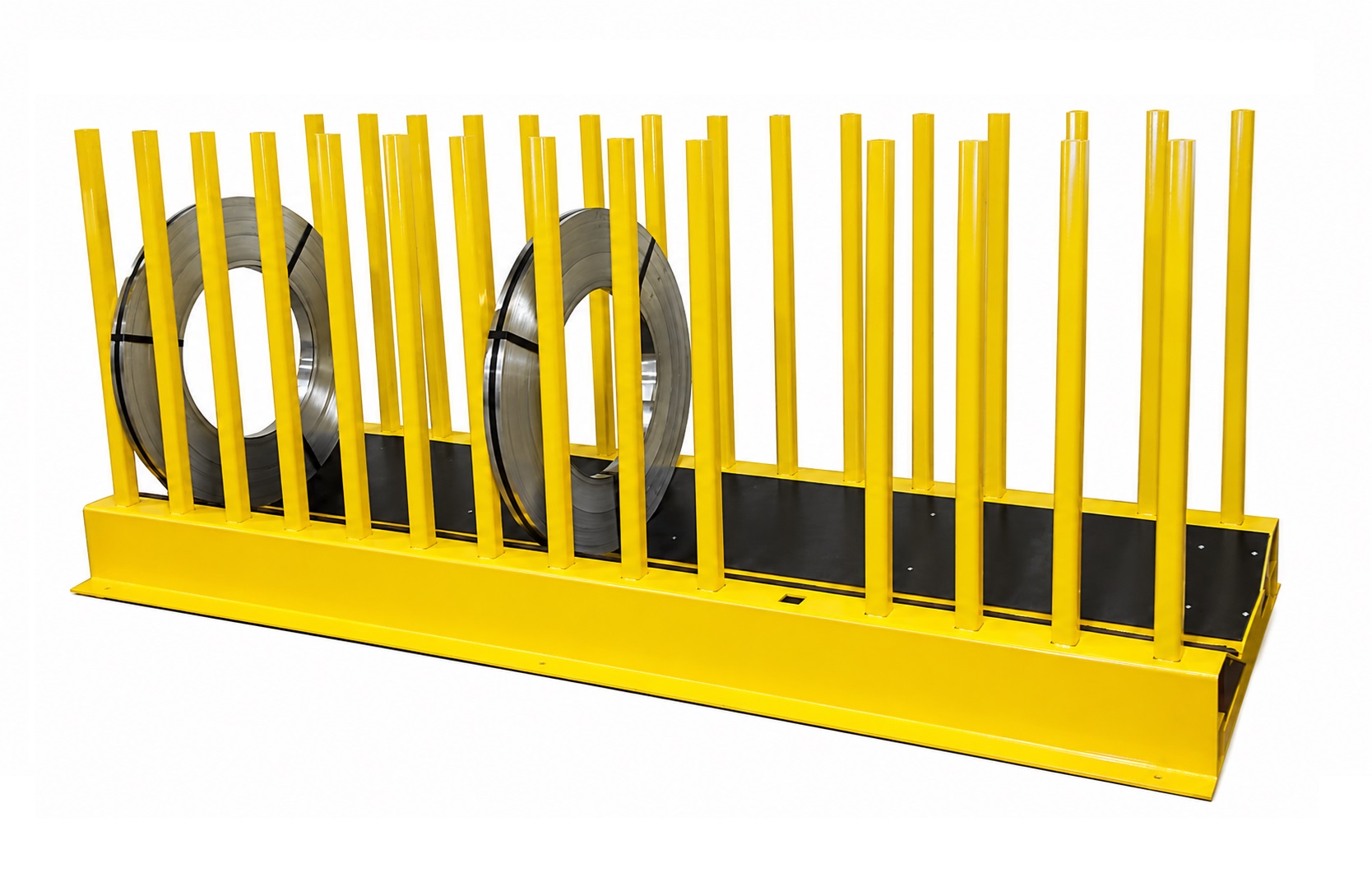
Slit Coil Racks: Slit coils present a different storage challenge because they’re often narrow, tall, and heavy. Depending on the application, they may be stored in stationary floor-mounted slit coil racks or eye to the sky on properly designed pallets or supports within an engineered rack system.
Heavy slit coils can create concentrated point loads that standard pallet rack and decking may not be designed to support. Structural I-beam slit coil racks can incorporate reinforced shelf supports and steel plate surfaces designed around these loads. Dedicated slit coil storage also makes coils easier to organize, identify, and trace back to the original mother coil.
Stackable coil pallets and coil stack racks provide a portable alternative to permanent rack systems. They support individual coils while allowing loaded units to be stacked vertically, depending on the rack design and load.
Because they’re portable and modular, coil stack racks work well when production schedules or inventory requirements change. They can help increase storage density without committing floor space to a permanent rack installation.
Eye-to-the-aisle storage positions the coil opening toward the aisle and is commonly used with cradle-style master coil racks. It provides direct access to individual coils from the aisle. Eye-to-the-sky storage positions the coil flat with the opening facing upward. This configuration may be used for slit coils and other applications where upright storage isn’t appropriate.
The right orientation depends on coil dimensions, weight, stability, handling equipment, and the engineered storage system.
Benefits of Coil Storage Racks
- Gets steel coils off the warehouse floor
- Uses vertical space to increase storage density
- Keeps individual coils organized and accessible
- Reduces unnecessary coil movement and handling
- Accommodates master coils and slit coils
- Available in stationary, portable, and stackable designs
- Can be designed for eye-to-the-aisle or eye-to-the-sky storage
- Structural steel systems accommodate heavy coil loads
- Coil cradles provide dedicated support for master coils
- Custom systems can be engineered around coil dimensions and weight
Coil Storage Racks FAQ
How do I choose the right coil storage rack?
Start with the coil. You’ll need the minimum and maximum diameter, width, maximum weight, quantity, and desired storage orientation. Handling equipment, available floor space, ceiling height, and the number of storage levels should also be considered.
Can steel coils be stored multiple levels high?
Yes, when the rack is specifically engineered for the coils and application. The appropriate number of levels depends on coil dimensions and weight, rack design, floor conditions, handling equipment, and other engineering requirements.
Can slit coils be stored in standard pallet rack?
Don’t assume they can. Heavy slit coils can create concentrated loads that standard rack beams and decking may not be designed to support. An engineered structural rack, reinforced supports, or steel decking may be required.
Are portable coil racks available?
Yes. Coil pallets and stackable coil racks provide portable storage for applications where coils need to move through a facility or storage layouts change frequently. The rack and stacking configuration should always be selected for the specific coil size and load.




