Boltless Shelving Styles
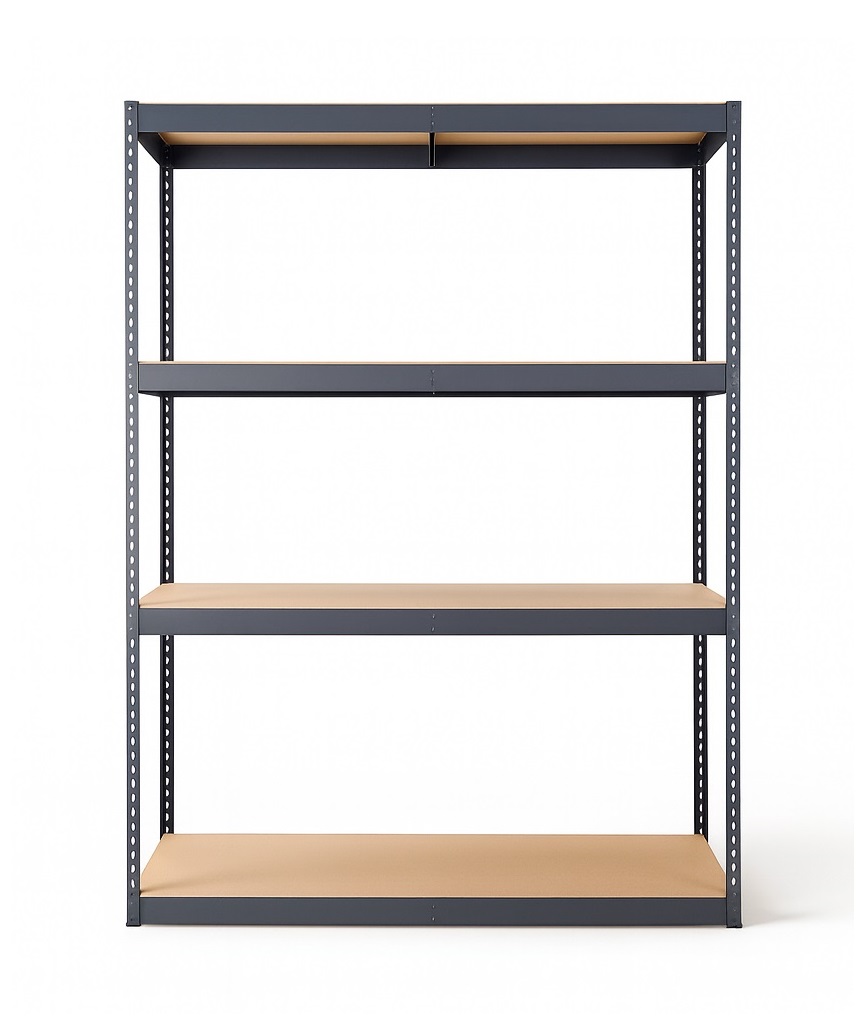
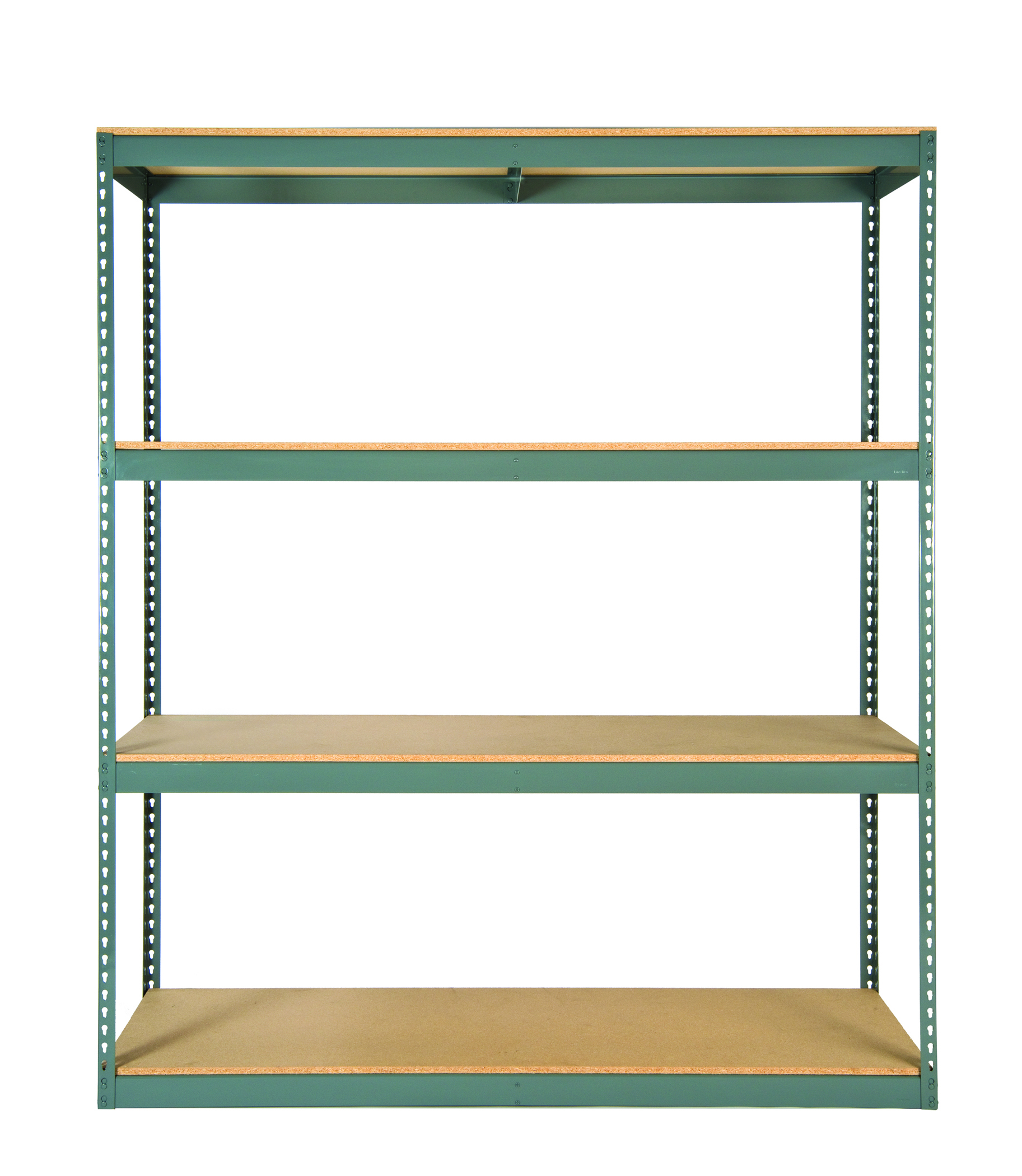
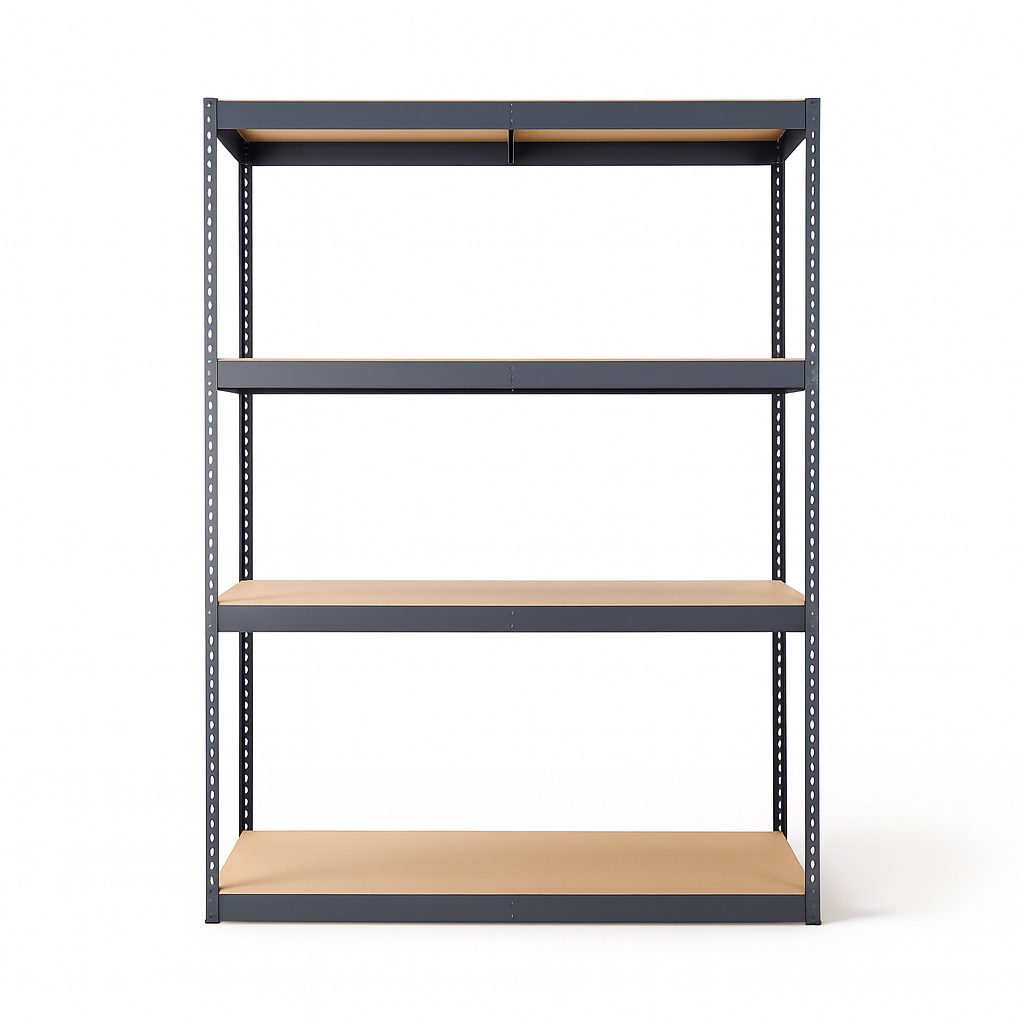
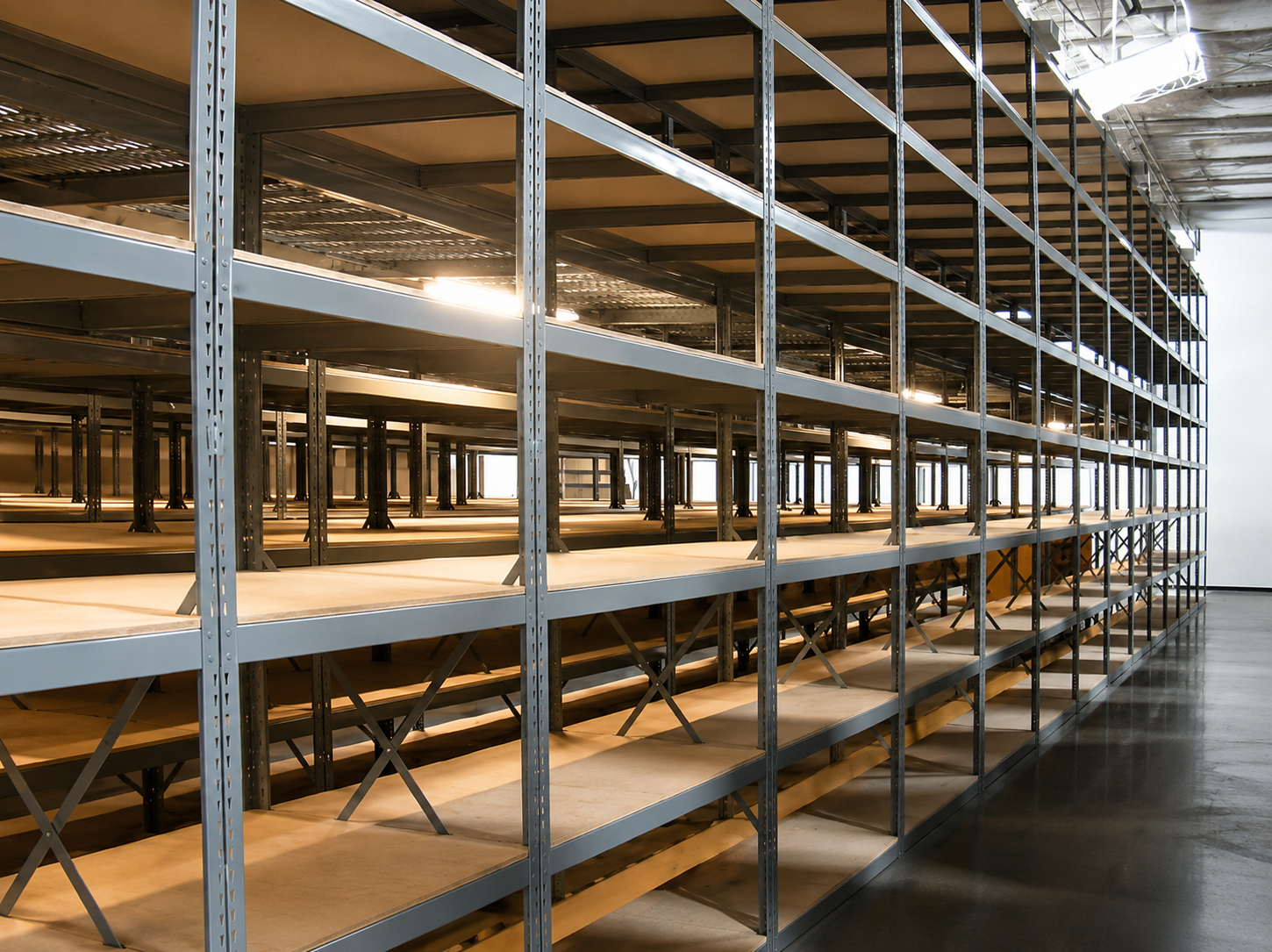
Boltless shelving is an open steel shelving system designed for economical storage, easy assembly, and access from all sides. Instead of nuts, bolts, clips, or complicated bracing, the posts and beams use rivet connections that lock together with a rubber mallet. Shelves can be adjusted as storage requirements change, and decking options include particle board, wire mesh, melamine, and steel. Boltless shelving is commonly used for boxes, cartons, records, parts, clothing, tires, and other hand-loaded products in warehouses, stockrooms, backrooms, garages, and distribution centers. The biggest advantage? Cost. Boltless shelving can cost considerably less than conventional steel shelving while still providing the capacity and flexibility needed for a wide range of storage applications.
Rivet Shelving is Affordable & Easy to Install
Rivet shelving, also called boltless shelving, doesn’t need side panels, back panels, or cross bracing. That leaves all four sides open for loading and picking while also reducing the amount of steel required to build the system. Fewer parts also mean faster installation. Four posts create a freestanding starter unit, while add-on sections share common posts to create long rows of shelving.
Showing all 5 resultsSorted by latest
Rivet Shelving is Affordable & Easy to Install
Boltless Shelving
RiveTier Boltless Rivet Shelving
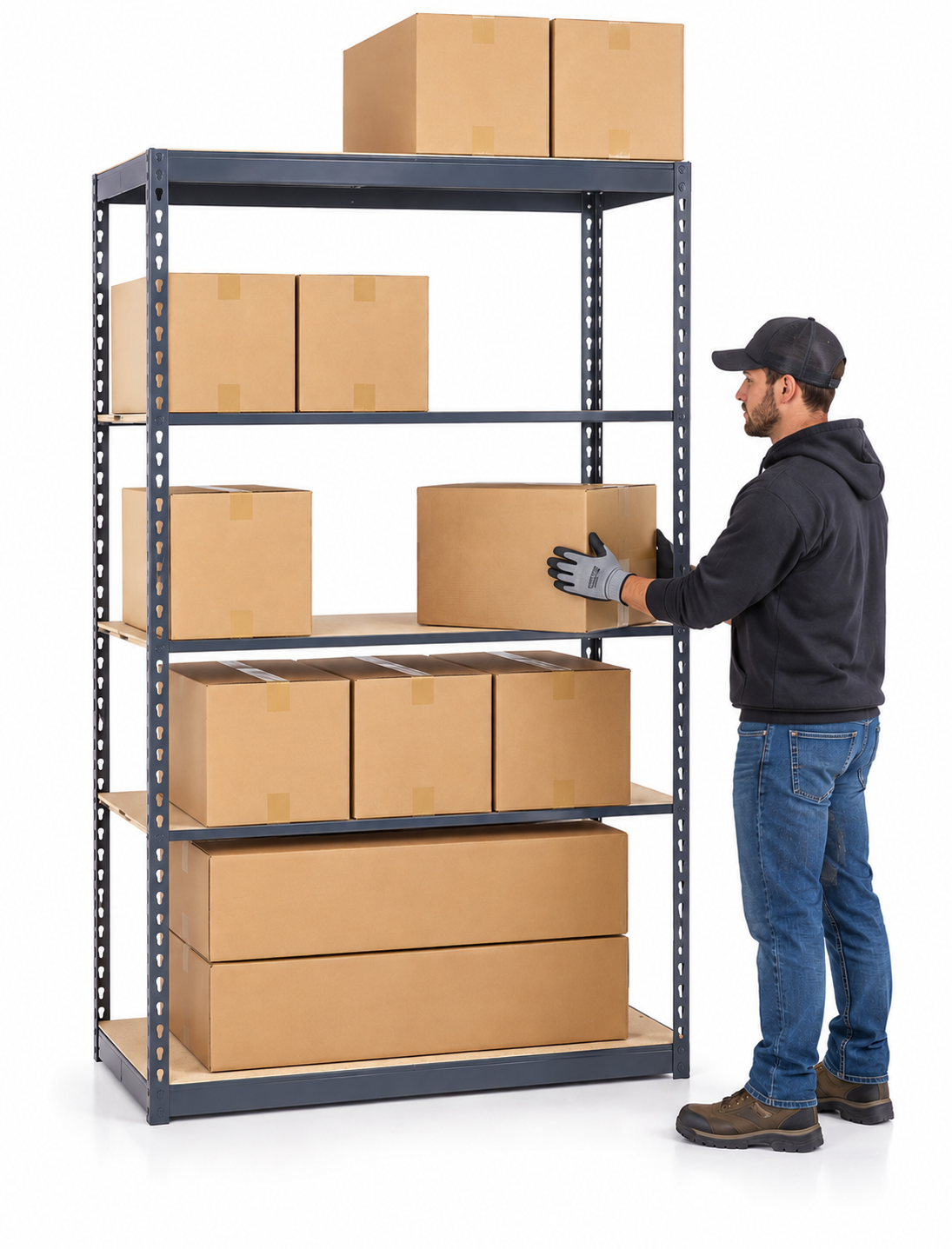
Low Profile Boltless Shelving
Z-Beam Shelving
There are several beam styles to choose from. Double Rivet Beams have a taller profile for heavier loads and greater lateral stability. Single Rivet Beams have a lower 1″ profile that increases usable clearance between shelves. Z-Beams combine a lower profile with additional capacity and allow particle board decking to sit flush with the top of the beam. Pick the beam based on what you’re storing. There’s no reason to pay for a heavier beam if you’re storing light boxes, and there’s no reason to undersize the beam when you’re storing heavier products.
Boltless warehouse shelving is about as simple as industrial shelving gets. Posts, beams, shelf supports, and decking snap together without nuts and bolts. Use a rubber mallet, set your shelf heights, install the decking, and you’re in business. Shelves are adjustable on 1-1/2″ centers, making it easy to change the configuration when your inventory changes.
The open design works especially well for boxes, cartons, and bulk goods that are loaded by hand. Depending on the shelving configuration, capacities can range from approximately 600 to 1,000 pounds per shelf, with heavier-duty systems available for higher capacities. Decking can include particle board, laminated particle board, wire mesh, or steel. Particle board remains the economical choice, while wire or steel may make more sense depending on the product and facility requirements.
RiveTier Boltless Rivet Shelving
RiveTier is the original boltless shelving system, and the basic design has been around for decades for a reason. It’s simple, economical, and it works. Solid-steel rivet connections eliminate much of the hardware and extra steel associated with conventional shelving while still creating a strong storage system.
RiveTier can be configured for everything from shoe boxes, clothing, files, and records to auto parts and other heavier products. Heavy-duty configurations can provide capacities up to 2,400 pounds per shelf, shelf sizes up to 4′ x 8′, and heights up to 21′ without splicing. Particle board, melamine, wire grating, corrugated metal, and steel shelf surfaces are available. That’s a lot of storage capacity from a shelving system you can put together with a rubber mallet.
The advantage of low profile boltless shelving is right there in the name: more clearance between shelves. Single rivet beams use less vertical space than larger double-rivet beams, allowing you to squeeze more usable storage into the same overall shelving height.
Low profile shelving is a good choice for lighter boxes, archive cartons, containers, and other hand-loaded products that don’t require high shelf capacities. Shelves adjust every 1-1/2″, and the open back and sides provide access from multiple directions. Particle board, plywood, or wire mesh can be used for decking. If you’re storing lightweight boxes, why pay for more steel than you need? That’s where low profile shelving earns its keep.
Z-Beam shelving gives you another way to increase usable shelf clearance without giving up the benefits of boltless construction. The Z-shaped beam allows particle board decking to sit flush with the top of the beam instead of on top of it, reducing the amount of vertical space consumed by each shelf level.
Shelves adjust on 1-1/2″ centers, and units can be purchased complete or configured from individual components. Z-Beam shelving is particularly useful when you’re trying to fit more shelf levels into a limited height. An inch here and an inch there doesn’t sound like much—until it gives you room for another entire shelf of inventory.
Boltless Shelving FAQ
Should I use single rivet, double rivet, or Z-Beams?
It depends on what you’re storing. Single rivet beams have a low profile and work well for lighter products where maximizing vertical clearance is important. Double rivet beams provide more capacity and lateral stability for heavier loads and longer spans. Z-Beams provide a lower profile while allowing decking to sit flush with the beam. Start with the shelf load, shelf width, and required clearance, then select the beam.
What type of decking should I use?
Particle board is usually the least expensive and remains a popular choice for general storage. Wire mesh provides an open shelf surface and may be preferred where facility or fire-protection requirements call for greater openness. Steel decking provides another option for applications where wood products aren’t desirable. Always match the decking capacity and construction to the load and your facility requirements.
Is boltless shelving difficult to install?
No. That’s one of its biggest advantages. Rivet connections fit directly into the posts and are seated with a rubber mallet, eliminating nuts, bolts, and shelf clips. Starter units use four posts, while add-on units share posts with the adjoining section. Just make sure the shelving is assembled according to the manufacturer’s instructions, properly leveled, and configured for the intended loads.




