Glass Storage Racks
Glass storage racks are heavy-duty material handling racks designed to safely store, stage, move, and transport glass sheets, windshields, stone slabs, metal panels, acrylic sheets, and other fragile or oversized flat materials. Typically manufactured from all-welded steel, these racks use angled layback supports, dividers, cradles, tie-down points, fork pockets, casters, or stackable frames to keep materials organized and protected. Depending on the application, glass racks are available in A-frame, L-shape, and specialized horizontal configurations. Their biggest advantages are improved material protection, easier loading and unloading, better use of warehouse and trailer space, and safer handling of products that are difficult to move with conventional pallets or shelving.
A-Frame Glass Storage Rack | A-Frame Glass Transport Rack
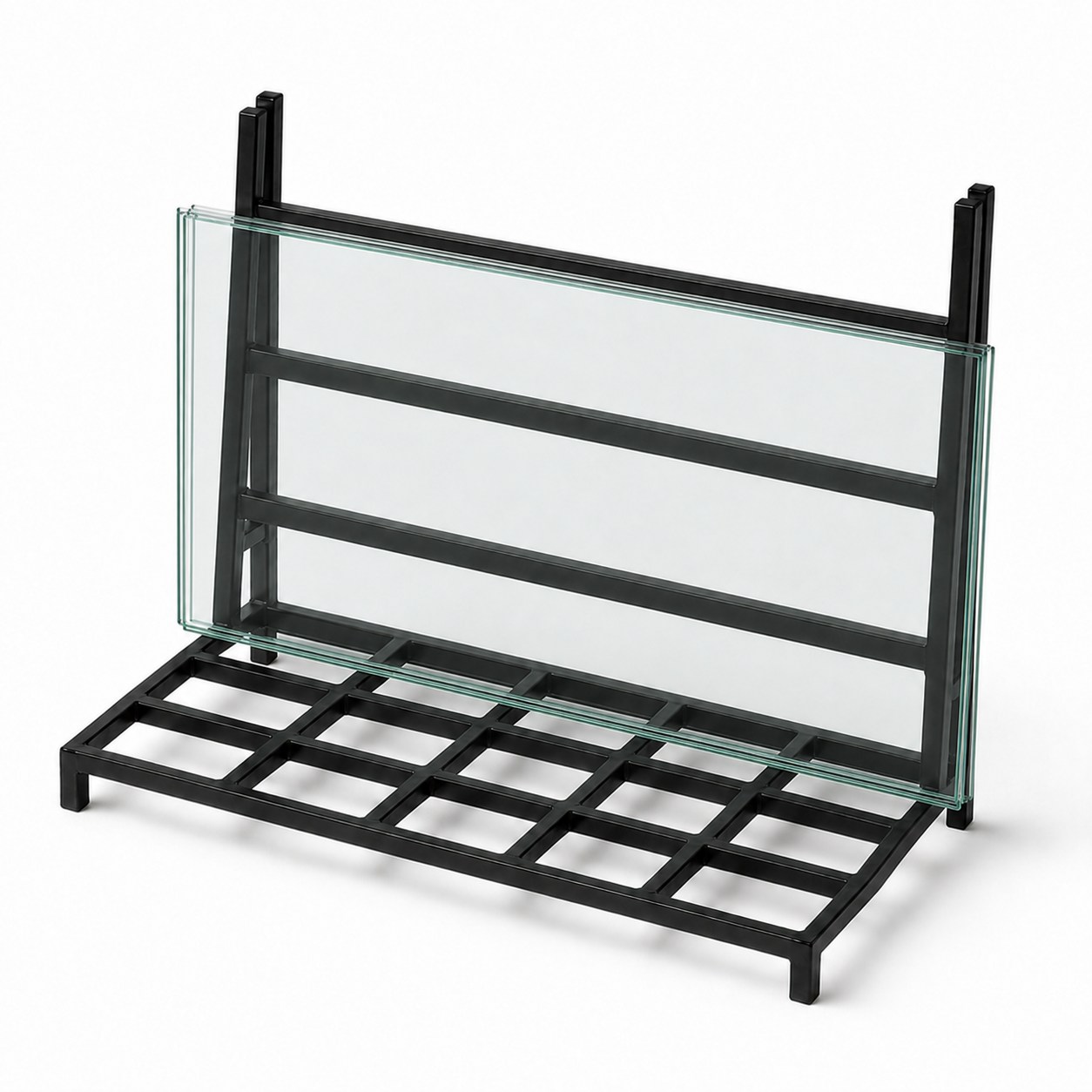
Our A-Frame Glass Storage Racks are designed to safely store and transport sheets of glass and other flat materials. Built from heavy-duty, all-welded steel, these racks provide the strength and stability needed for demanding manufacturing, fabrication, warehouse, and construction environments.
Showing all 3 resultsSorted by latest
A-Frame Glass Storage Rack | A-Frame Glass Transport Rack
L-Shape Glass Storage Rack | L-Shaped Glass Transport Rack
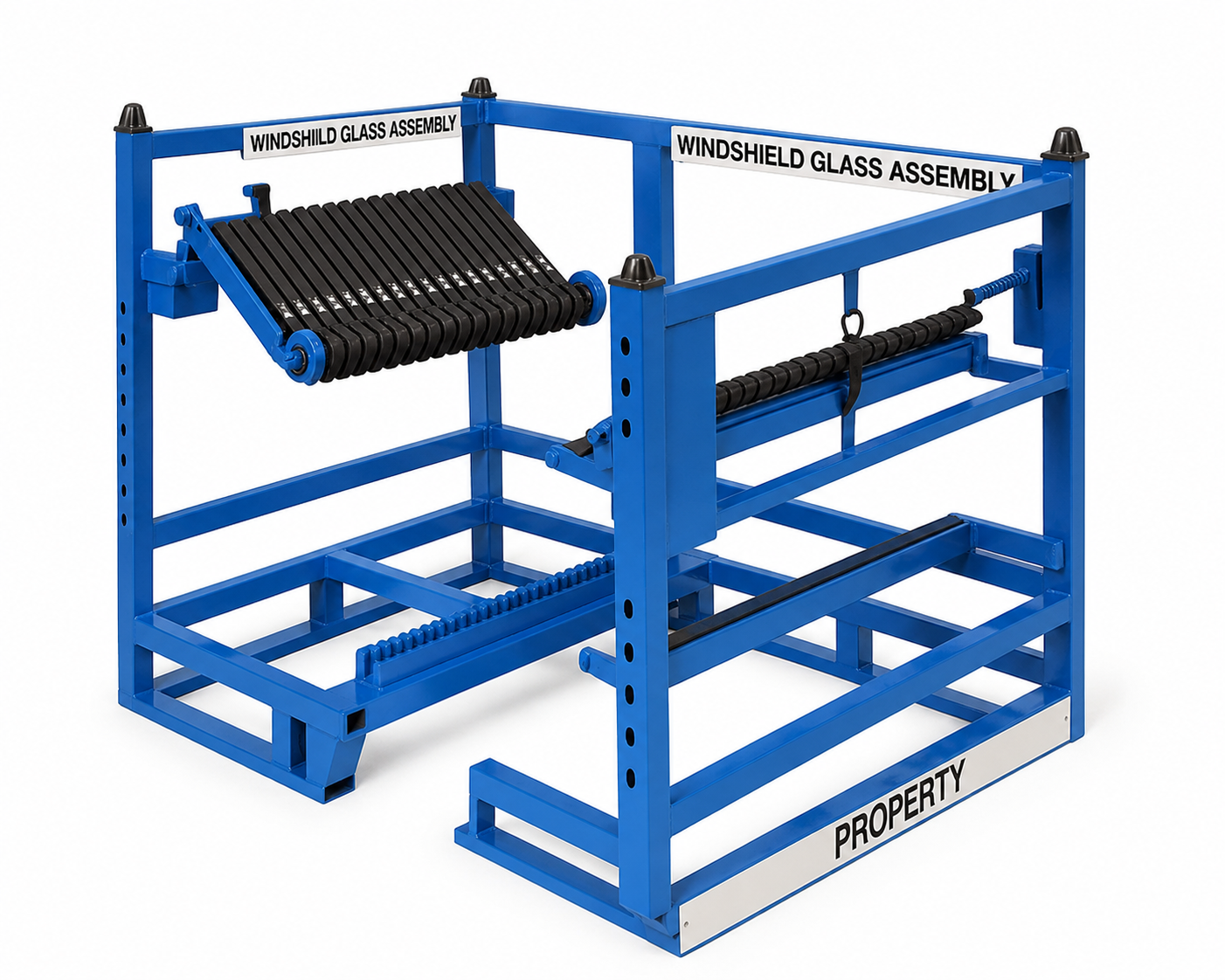
Universal Horizontal Auto Windshield Glass Returnable Shipping Racks
The A-frame layback design lets you load material on both sides of the rack. Sheets rest against angled supports that help keep the load upright and stable while making efficient use of the rack’s footprint. Integrated ratchet strap hooks provide convenient tie-down locations so materials can be secured during movement or transportation.
A-frame racks are an excellent choice when you need to handle more than glass. They can also be used for stone slabs, metal sheets, acrylic panels, and other large sheet goods that are difficult to store vertically without proper support.
One of the big advantages is flexibility. Racks can be supplied with or without casters depending on how they’ll be used. Stationary racks work well for organized storage and staging areas, while racks equipped with casters can be moved around the facility as inventory, production, and loading requirements change. Brakes help keep mobile racks securely positioned during loading and unloading.
The angled layback design also helps reduce the risk of material tipping. When combined with properly secured ratchet straps, the rack creates a controlled way to handle fragile and expensive sheet goods instead of leaning material against walls, columns, or whatever else happens to be nearby.
Our A-frame glass racks ship fully assembled from our Atlanta, GA, facility. There’s no complicated assembly process when the rack arrives. Put it into service and get to work.
With different sizes and configurations available, these racks can be matched to your material dimensions, load requirements, and handling operation. Whether you’re outfitting a new glass shop, expanding warehouse storage, or adding transport racks to a fleet, we can help you find the right configuration.
L-Shape Glass Storage Rack | L-Shaped Glass Transport Rack
L-Shape Glass Storage Racks provide many of the same advantages as an A-frame rack but use a single-sided layback design. That makes them a great choice when floor or trailer space is at a premium.
The rack supports glass, stone slabs, metal panels, and other flat materials on one side. The angled surface helps keep materials stable while providing easy access for loading and unloading. Because you’re not loading both sides, the rack can often be positioned more efficiently against designated areas or inside transportation equipment.
These racks are manufactured from all-welded steel construction for strength and long service life. Integrated ratchet strap hooks provide secure tie-down points so loads can be restrained during handling and transportation. Optional casters can also be added when you need to move material around a plant, warehouse, fabrication shop, or staging area.
The L-shape design is particularly useful when material needs to be loaded and unloaded frequently. Operators have access from one side, making it easier to stage sheets for production, organize different materials, or prepare finished products for shipment.
You’ll find L-shaped glass racks in glass fabrication facilities, stone shops, metal fabrication operations, construction environments, warehouses, and distribution centers. Anywhere large sheets need to be stored without taking over the floor, an L-shaped rack is worth considering.
Like our A-frame racks, these units ship fully assembled from our Atlanta, GA, facility. They’re built to arrive ready for use without wasting your crew’s time putting together another piece of equipment.
The result is a simple, durable storage system that protects valuable sheet goods, improves organization, and makes material easier to handle.
Universal Horizontal Auto Windshield Glass Returnable Shipping Racks
Windshields are fragile. Very fragile. That makes them difficult to store and even more challenging to ship. You need a rack that’s heavy duty enough to survive an industrial supply chain but gentle enough to protect a piece of curved automotive glass.
That’s exactly what Universal Horizontal Auto Windshield Glass Returnable Shipping Racks are designed to do.
These specialized auto glass racks safely store and transport front, side, and back automotive glass between suppliers, manufacturing plants, warehouses, and other points in the supply chain. Rather than stacking glass directly against glass, the rack uses dividers, supports, and cradles to separate individual pieces and keep them properly positioned.
Heavy-duty windshield racks are built around rigid steel stack-rack construction. Drop-down dividers cradle and separate the glass, while rigid corner posts and stacking pins allow loaded racks to be stacked vertically. A heavy-duty base provides stability, and fork stirrups or other forklift-access features make the racks easier to handle.
Stackability is one of the biggest advantages. Depending on the rack design, units can be stacked up to four high. Instead of spreading inventory across the warehouse floor, you can take advantage of vertical cube and increase storage density.
That same advantage carries over to transportation. Stackable racks can help use trailer space more efficiently, reducing the amount of wasted cube associated with bulky, difficult-to-package automotive glass.
Just as important is product protection. Windshield glass racks keep individual pieces separated and restrained, reducing movement that can result in scratches, chips, cracks, or complete breakage. Preventing broken glass doesn’t just protect inventory. It also helps keep floors and work areas clear of dangerous shattered material.
These racks are returnable and reusable, making them well suited for closed-loop shipping programs between Tier 1 suppliers and automotive manufacturing plants. Instead of relying entirely on disposable packaging, racks can make repeated trips through the supply chain.
And they’re not limited to one standard configuration. Depending on the application, windshield racks can incorporate steel dividers, cradles, supports, holding blocks, fork pockets, fork stirrups, fork tunnels, steel runners, casters, steel decking, wire mesh decking, or plywood decking. Rigid or removable stacking posts, side frames, and removable side bars can also be incorporated.
Compatibility is especially important when adding racks to an existing returnable fleet. If you have manufacturing drawings, photographs, or a sample of an existing rack, those details can be used to help match dimensions and stacking requirements. That’s a lot better than discovering after the racks arrive that the stacking pins don’t line up.
Returnable steel shipping racks are widely used throughout automotive and related manufacturing industries, including automotive, motorcycle, ATV, snowmobile, military equipment, and agricultural equipment applications. The product being carried may change, but the objective remains the same: protect expensive components while improving storage and transportation efficiency.
Frequently Asked Questions About Glass Storage Racks
Should I choose an A-frame or L-shaped glass storage rack?
It depends on how you plan to use the rack. A-frame racks provide angled storage surfaces on both sides, making them a good choice when you want to maximize the amount of sheet material stored on a single rack. L-shaped racks store material on one side and can be a better choice where floor space, trailer space, or one-sided loading access is important. Also consider how frequently materials will be loaded and unloaded, whether the rack will remain stationary, and how it needs to fit into your existing material flow.
Should I add casters to a glass storage rack?
Add casters when the rack needs to move regularly within your facility. Mobile glass racks can make it much easier to move sheets between receiving, storage, fabrication, staging, and shipping areas.
Stationary racks may be the better choice when material stays in a dedicated storage location. If casters are used, make sure their capacity is appropriate for the loaded rack and use the braking or locking system as intended during loading, unloading, and storage.
How should glass be secured to a storage or transport rack?
Use the rack’s intended restraint system. On A-frame and L-shaped racks, integrated hooks provide attachment points for appropriate ratchet straps or tie-downs. Loads should be restrained so the sheets remain stable without creating excessive pressure that could damage the material. Windshield racks work differently. Individual pieces may be separated and supported with purpose-designed dividers, cradles, blocks, and other components. Whatever the rack style, don’t assume gravity alone is enough to secure fragile sheet material during movement or transportation.
What maintenance do glass storage racks require?
All-welded steel glass racks generally require minimal maintenance, but they should still be inspected regularly. Look for bent or cracked steel components, damaged welds, worn casters, loose hardware, damaged tie-down points, and problems with dividers, cradles, stacking pins, fork pockets, or other load-supporting components. Pay special attention to surfaces that come into contact with the glass. Damaged, worn, or contaminated contact areas can scratch or chip material even when the steel rack itself is still structurally sound. Returnable shipping racks should also be inspected between trips so damaged units can be repaired or removed from service before they’re loaded again.




