Wire Container Standard Features
Wire containers are the built-in design elements that make industrial wire baskets strong, stackable, collapsible, easy to handle, and efficient to store. Heavy-duty steel wire mesh construction provides visibility and airflow, while tubular steel bases, stacking feet, drop gates, and locking latches give the containers the strength and flexibility needed for everyday material handling. Most standard wire containers can be moved by forklift, stacked vertically when loaded, and collapsed when empty. The result is a simple storage container that protects inventory, improves warehouse organization, and saves space both in your facility and on return shipments.
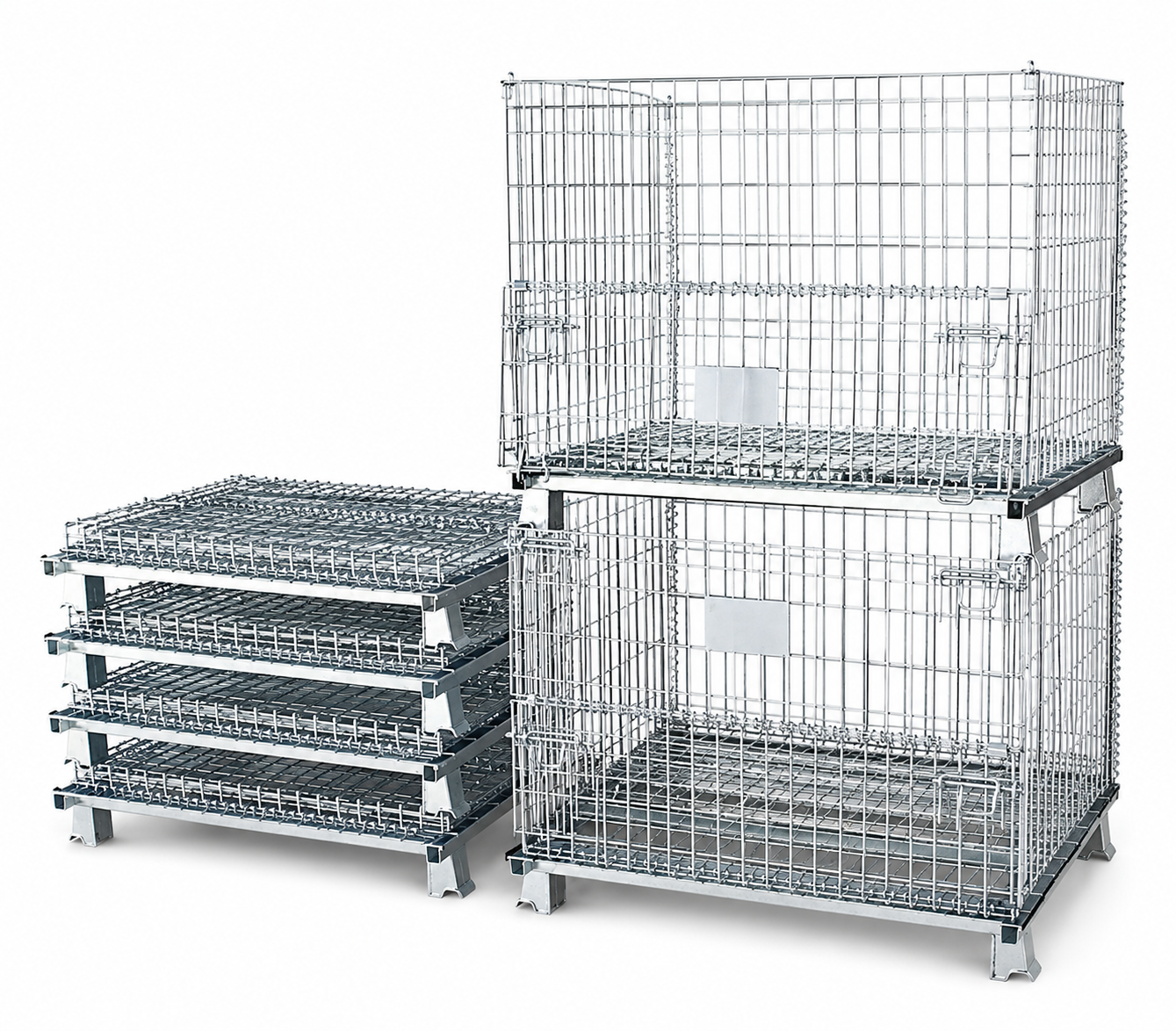
Collapsible, Stackable Wire Mesh Bulk Bins, Baskets and Containers. Call them wire bins, wire baskets, or wire containers. Whatever name you use, they share three important characteristics: they are collapsible, stackable, and durable.
Manufacturers use wire mesh containers for parts storage, work-in-process inventory, and transporting components between plants. Standard containers can be stacked up to four high, allowing you to use vertical warehouse space instead of spreading inventory across the floor. Compared with corrugated boxes, steel wire containers also provide better protection for parts during storage and transportation. When the containers are empty, simply collapse them to reduce the space required for storage and return freight.
Showing all 7 resultsSorted by latest
Collapsible, Stackable Wire Mesh Bulk Bins, Baskets & Containers
Wire Basket with Half Drop Gate
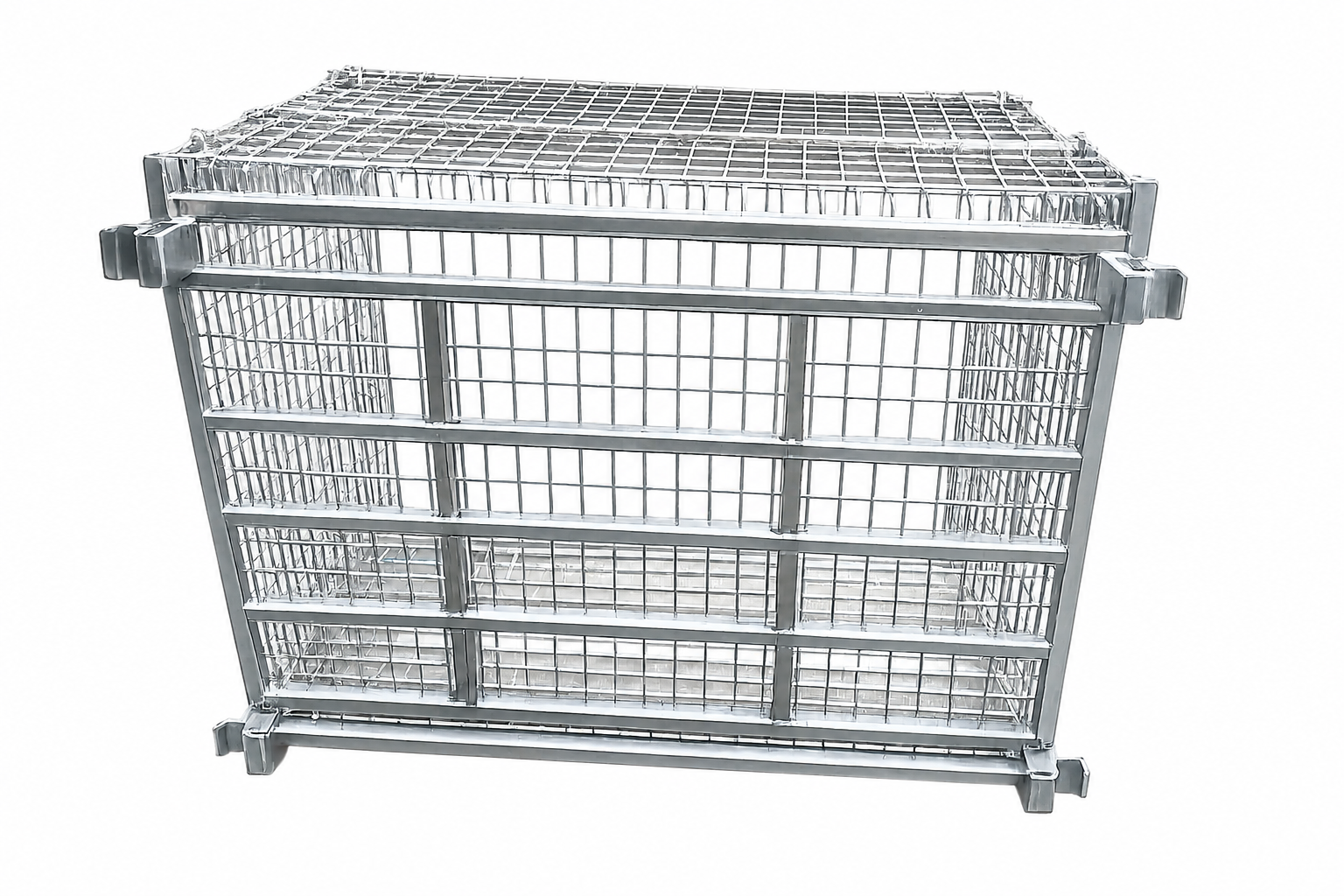
Wire Container Base / Bottom
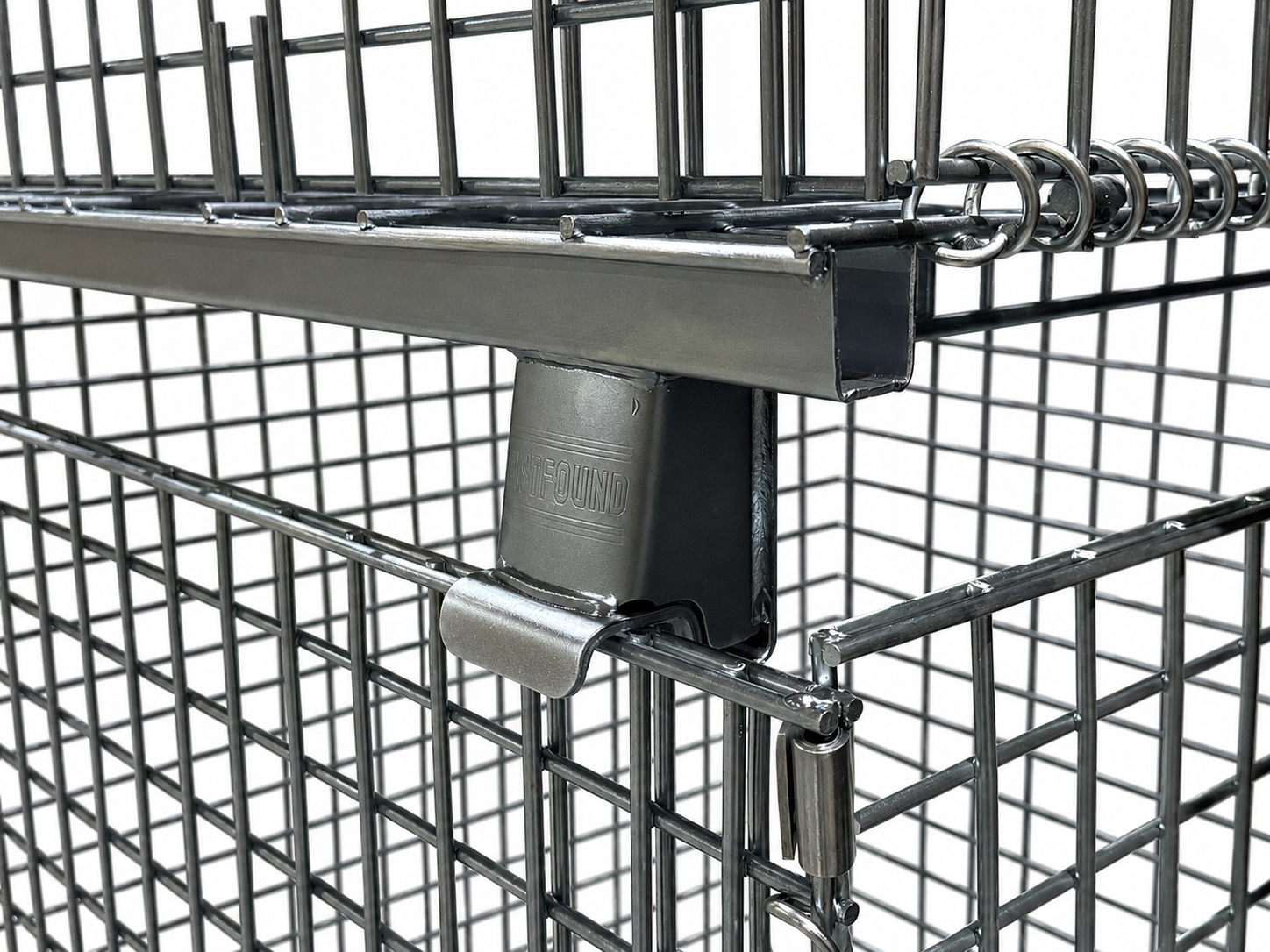
Wire Baskets with Stackable Feet
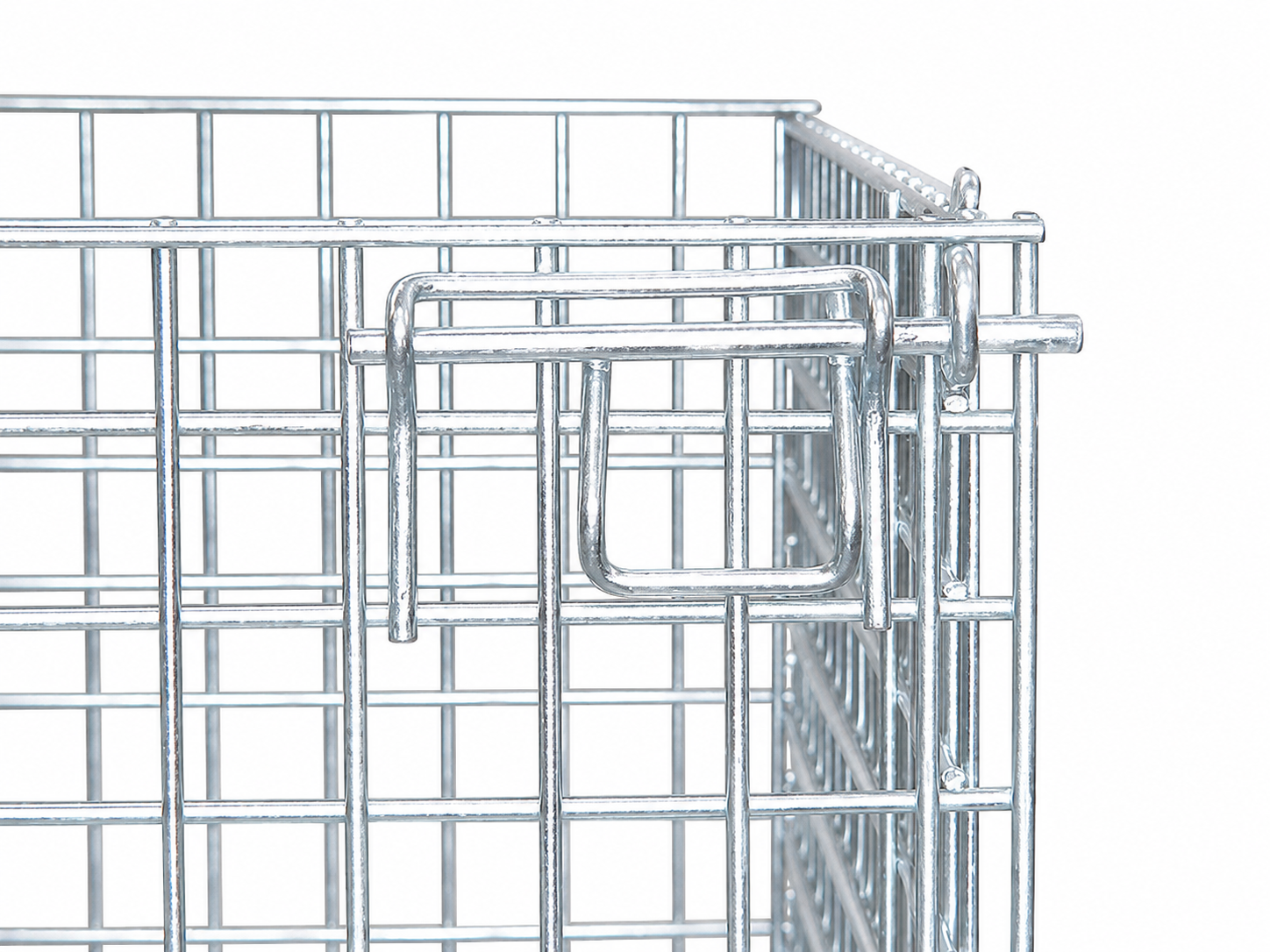
Wire Container Gate Locking Latch
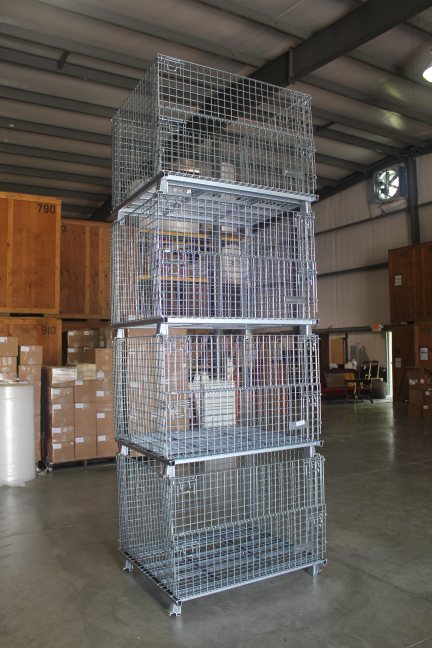
Stackable Wire Baskets
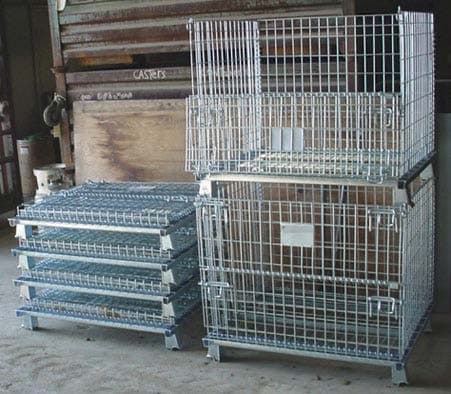
Collapsible | Folding Wire Containers
Wire baskets aren’t limited to manufacturing. Hotels, hospitals, laundries, and other facilities use them for towels, linens, tablecloths, and soft goods. The open wire mesh makes inventory easy to see and provides airflow around the stored material.
Quality matters with a container that may be loaded, moved, stacked, collapsed, and reopened thousands of times. Automated robotic welding helps produce consistent welds throughout the basket. Better welds and a stronger understructure translate into a container that can remain in service for years.
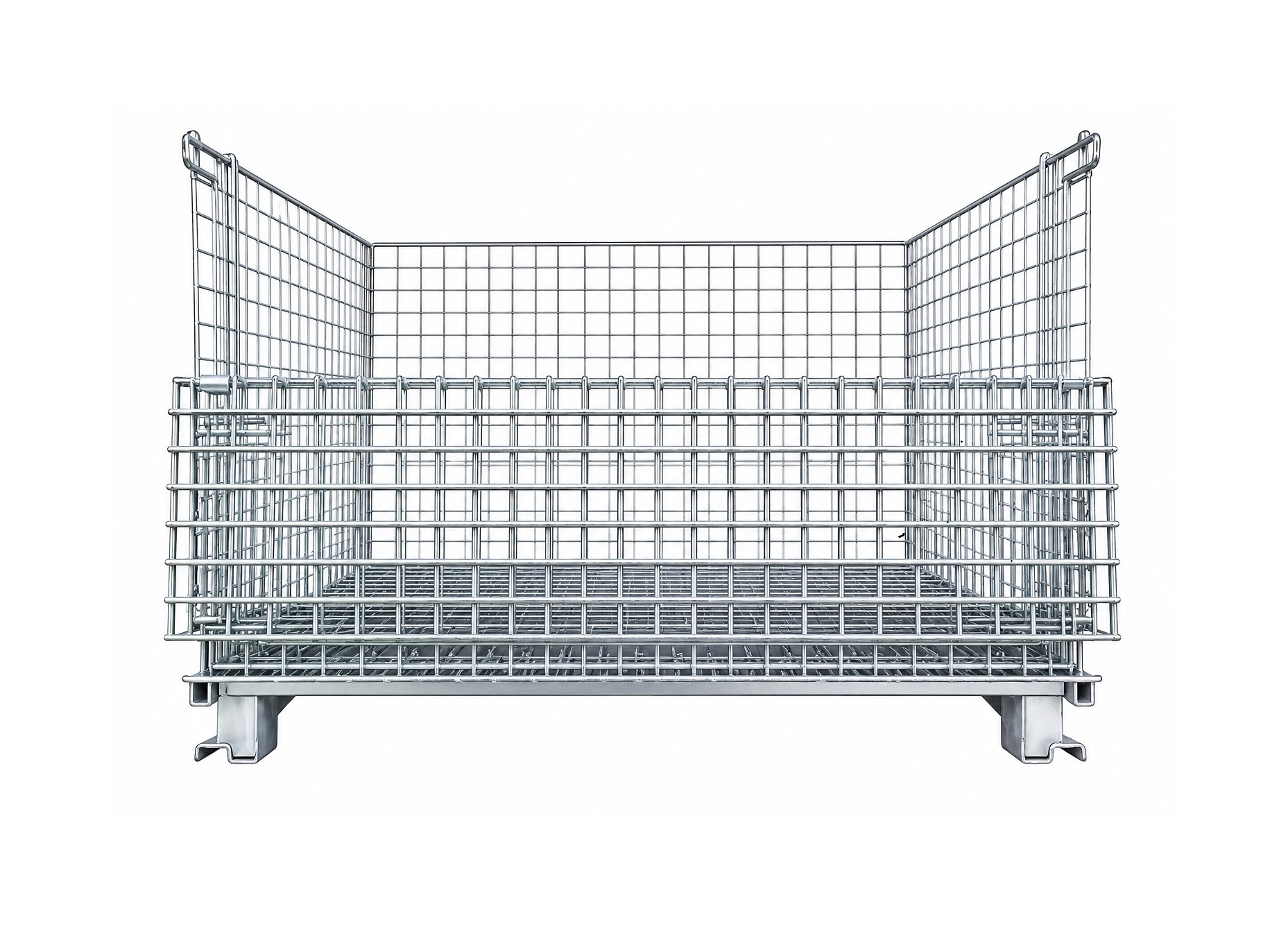
A wire basket with half drop gate is one of those simple features you appreciate every time you use it. Instead of reaching over the top of a deep basket to get to stored parts, workers can lower the gate and access the contents from the side. That means less reaching, bending, and straining. The gate also plays a role in allowing the wire basket to collapse. Depending on the design, gates can be opened to a half-drop or full-drop position. Safety latches secure the gate during normal use and help maintain the structural integrity of the basket when it is stacked.
Standard drop gates are typically located on the long side of the container. If your application works better with a gate on the short side, that can be done as a custom configuration. One important rule: drop gates should always be closed and securely latched when wire baskets are stacked.
The wire container base is where much of the strength of an industrial wire container comes from. Our standard wire containers use a heavy-duty tubular steel base combined with four stacking feet. This understructure is designed to support heavy loads while allowing containers to be moved and stacked efficiently. Depending on the model and application, containers can handle loads up to 4,000 lbs. and stack up to four high. Custom base features can include standard or heavy-duty feet, reinforcing gussets, and two-way or four-way steel runners.
Don’t overlook the bottom of the basket when comparing wire containers. A basket can look pretty much the same from the outside while having a very different understructure underneath. Consistent automated welds and a properly designed base make a difference when containers are repeatedly loaded, lifted by forklifts, transported, and stacked.
Wire baskets with stackable feet are what allow wire containers to safely take advantage of vertical warehouse space. The feet nest onto the upper frame of the basket below, helping keep the containers properly positioned when stacked.
Foot size varies by container size. Junior containers use smaller feet, while medium, senior, and large containers use larger stacking feet designed for their size and capacity. The basic concept remains the same: provide a solid connection between stacked baskets while keeping the load aligned.
This is also one of the areas most likely to take abuse from forklifts. Clean, consistent welds help the feet withstand repeated use, and heavy-duty feet can be added for applications where forklift impact is a concern. It may seem like a small detail, but stronger feet can add years to the useful life of a wire basket.
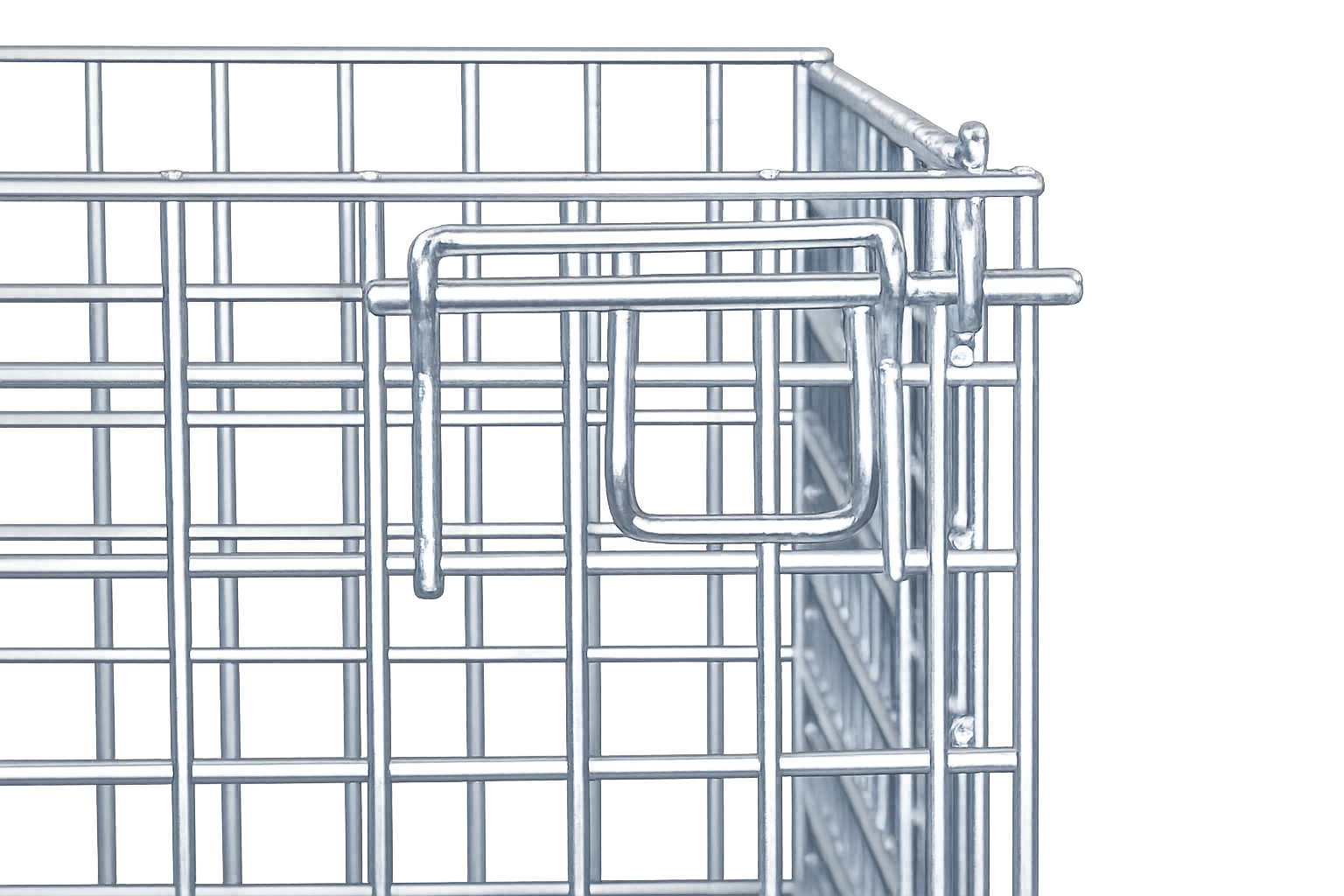
Wire Container Gate Locking Latch: The locking latch is another small component doing an important job. Locking latches secure the drop gate or swing gate during storage, transportation, and stacking. Pull the upper latch to open the half drop gate for easier access to stored goods. Release the additional latches when setting up or collapsing the basket.
When closed, the latches help secure the side walls and give the container the rigidity it needs in the upright position. That is especially important when containers are stacked. We don’t recommend opening the gates or releasing the locking latches while baskets are stacked. Before stacking a loaded wire container, make sure the side walls are completely upright and all gate latches are properly closed and secured.
Stackable wire baskets let you turn unused overhead space into usable storage space. Instead of lining containers across the warehouse floor, you can stack compatible baskets vertically. Standard models can stack up to four high while carrying loads up to 4,000 lbs. per container, depending on the model and application.
Forklifts can lift, move, and position the baskets, while the large stacking feet nest onto the basket below. The open wire construction provides quick visual inventory, so employees can see what is inside without opening boxes or searching through containers. Stackable wire baskets are particularly useful in manufacturing plants, warehouses, distribution centers, and closed-loop supply chains where containers are constantly being filled, moved, emptied, and returned. They increase storage density without making inventory harder to access.
Collapsible folding wire containers are designed to do two things very well: provide high-density storage when loaded and take up very little room when empty. They arrive collapsed, typically stacked together in bundles, and can be quickly opened and placed into service.
When assembled, folding wire containers provide the same basic advantages as other industrial wire baskets: visibility, durability, forklift access, stacking capability, and a half drop gate for easier access to stored products. Standard models can provide capacities up to 4,000 lbs. and stack up to four high, depending on container size and application.
The real payoff comes after the container has been emptied. Instead of shipping or storing a full-size empty container, fold it down. Multiple collapsed baskets can occupy the space that would otherwise be required for only a few erected containers. If you’re paying to return empty containers between plants, that space savings can translate directly into lower freight costs.
Wire Container Standard Features FAQ
Should I choose a collapsible or rigid wire container?
It depends on how the container will be used. If empty containers need to be stored or shipped back to another facility, collapsible wire containers can save a considerable amount of space. If the container stays in one location and is constantly loaded, a rigid design may make more sense. Start by looking at your entire material handling cycle, not just what happens when the basket is full.
How high can wire baskets be stacked?
The standard wire containers described here can be stacked up to four high, with capacities up to 4,000 lbs. per container depending on the model and application. Always follow the manufacturer’s capacity and stacking requirements for the specific basket you purchase. Make sure the stacking feet are properly seated and never stack a container with a drop gate open or unsecured.
What parts of a wire container should I inspect regularly?
Pay attention to the stacking feet, base, welds, gates, hinges, and locking latches. Forklift impacts can damage feet and bases over time, while repeated opening and closing can put wear on gates and latches. If a component is bent, cracked, broken, or no longer operates correctly, take the container out of stacking service until it has been evaluated.
Can standard wire containers be customized?
Yes, standard containers work for a lot of applications, but sometimes a small change makes a big difference. Options can include heavy-duty feet, reinforcing gussets, two-way or four-way runners, and different gate configurations. Before customizing anything, consider the load weight, product dimensions, forklift handling, stacking requirements, picking method, and whether the containers will travel between facilities. The goal isn’t to add features. It’s to add the features your operation actually needs.




