Corrugated Steel Container Sizes
Corrugated steel containers are rigid bulk storage and transport containers fabricated from corrugated steel panels welded to a structural steel angle frame. The corrugated construction increases panel stiffness without adding significant weight. This allows containers to handle repeated impacts from heavy parts, castings, forgings, and bulk materials. We offer these containers in a range of sizes to accommodate different pallet footprints, storage configurations, and material handling requirements.
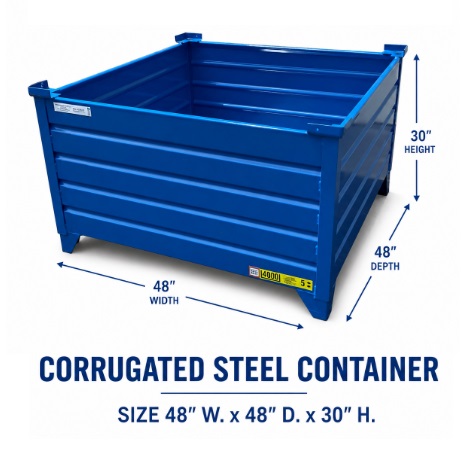
The solid steel construction of these corrugated containers provides full enclosure that protects contents from contamination and environmental exposure during storage and transport. The most popular corrugated steel container size is the 48″ x 48″ footprint, which aligns with standard pallet dimensions and integrates directly into pallet rack systems, trailer configurations, and forklift handling equipment designed around the 48″ x 48″ standard.
Other corrugated steel container sizes include 30” x 35” x 30”, 42” x 42” x30”, 42” x 48” x 30”, 48” x 48” x 24”, and 48” x 48” x 30”. Topper Stackable Corrugated Steel Containers in this footprint are available in multiple heights to accommodate materials of different sizes. The most common overall height of 30″ provides 24″ of inside usable depth and 32 cubic feet of storage capacity rated for 4,000 lb. loads. These containers stack five high when loaded. The standard 48″ x 48″ footprint also simplifies logistics planning by ensuring containers fit consistently in trailers, on dock plates, and within rack bays without requiring custom handling or equipment modifications.
Showing all 12 resultsSorted by latest
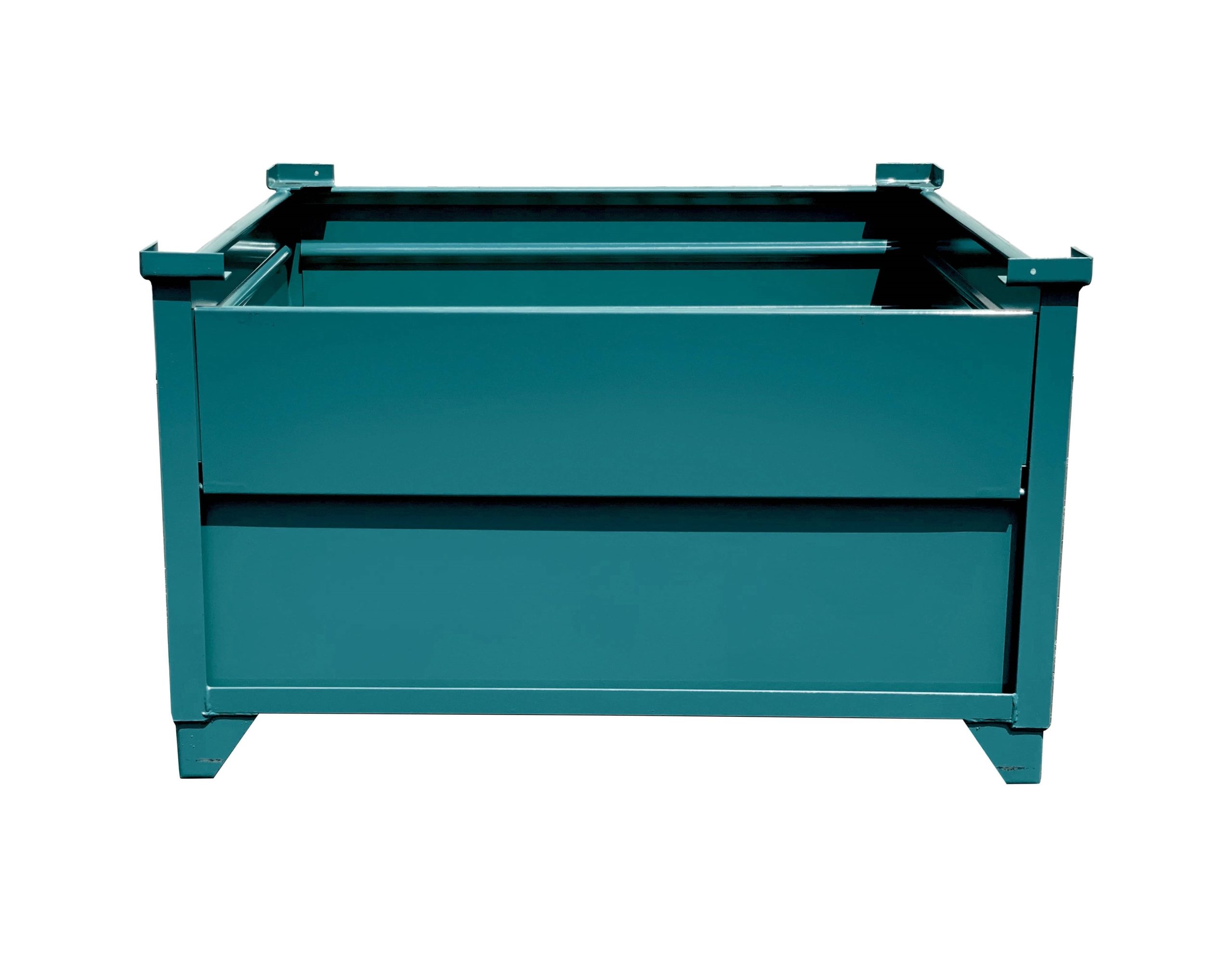
30″ x 35″ x 30″ Topper Stackable Corrugated Steel Container with Half Drop Gate PN. 51017-DG35-T

35″ x 35″ x 30″ Topper Stackable Corrugated Steel Container with Half Drop Gate PN. 51006-DG35-G

35″ x 35″ x 30″ Topper Stackable Corrugated Steel Container PN. 51006-G

42″ x 42″ x 30″ Topper Stackable Corrugated Steel Container with Half Drop Gate PN. 51009-DG42-X

42″ x 42″ x 30″ Topper Stackable Corrugated Steel Container PN. 51009-X
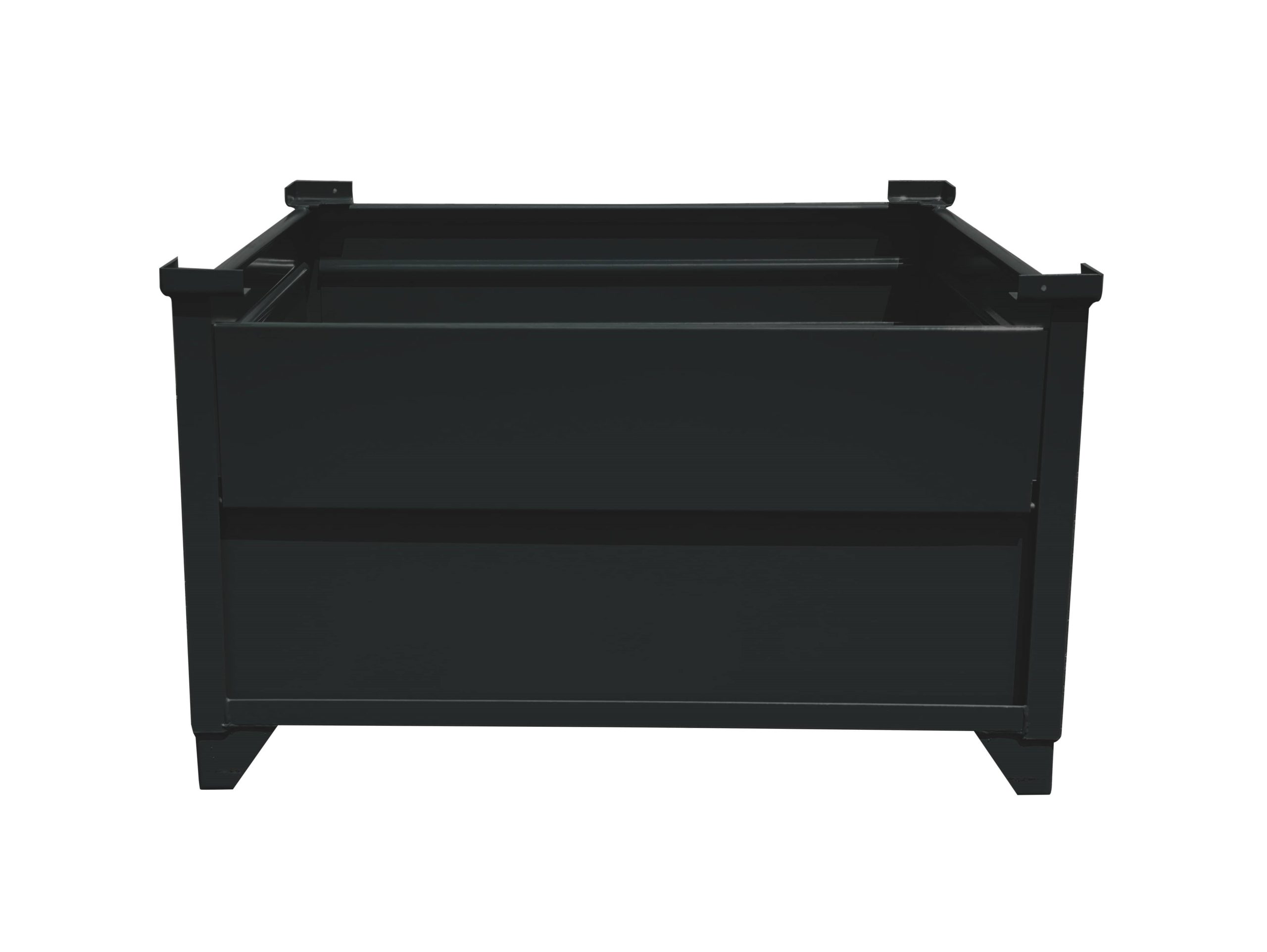
42″ x 48″ x 30″ Topper Stackable Corrugated Steel Container with Half Drop Gate PN. 51010-DG48-Z

42″ x 48″ x 30″ Topper Stackable Corrugated Steel Container PN. 51010-Z

48″ x 48″ x 30″ Topper Stackable Corrugated Steel Container with Half Drop Gate PN. 51011-DG48-B

48″ x 48″ x 30″ Topper Stackable Corrugated Steel Container PN. 51011-B

48″ x 48″ x 24″ Topper Stackable Corrugated Steel Container PN. 51005-B

Most Popular 48″ x 48″ x 30″ Rigid Corrugated Steel Bins | Stackable Steel Bulk Containers
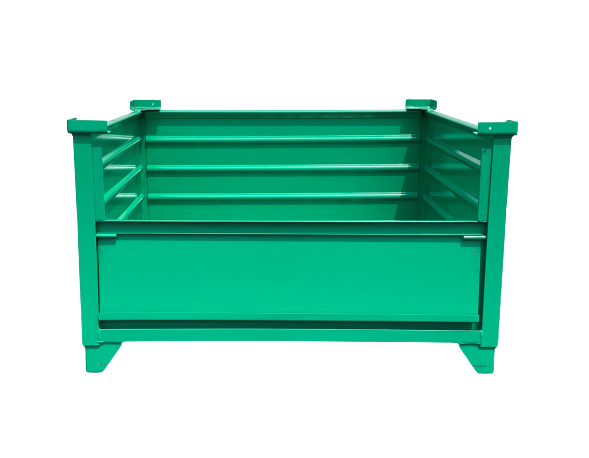
Most Popular 48″ x 48″ x 30″ Corrugated Steel Bulk Container with Half Drop Gate
Topper Stackable Corrugated Steel Containers with Half Drop Gate add a critical access feature to the standard corrugated container design. The half-drop gate folds down on one side of the container, allowing workers to reach contents at a lower height without lifting material over the full container wall. The gate latches securely to maintain container integrity during transport and stacking. And the corrugated steel construction of the gate panel matches the structural performance of the container walls. For operations that need frequent access to container contents without fully unloading or repositioning the container, the half drop gate configuration delivers an improvement in handling. Half-drop gate sizes include 30” x 35” x 30”, 35” x 35” x 30”, 42” x 42” x30”, 42” x 48” x 30”, and 48” x 48” x 30”.
We have these corrugated steel containers in sizes beyond the standard 48″ x 48″ footprint to accommodate oversized materials, specialized storage requirements. Larger footprints provide additional capacity for bulky materials. Taller configurations accommodate longer parts or deeper storage requirements. Smaller containers serve applications where a full 48″ x 48″ footprint exceeds the space available in the storage or handling area, or where lighter loads don’t justify the weight of a full-size container. The range of available sizes allows you to select containers that match your specific material dimensions, weight requirements, and handling equipment capabilities.
Tap into our expertise. Let us help you select the right combination of footprint, height, capacity, and gate configuration you need for the materials being stored, the handling equipment in use, and the storage and logistics systems the containers must integrate with. Call us at 800-763-9020 or e-mail us at sales@rackandshelf.com to discuss your requirement.
Frequently Asked Questions: Corrugated Steel Container Sizes
What industry standards apply to corrugated steel containers used in warehouse and manufacturing applications?
Corrugated steel containers are subject to several standards and guidelines depending on their application and storage environment. The Rack Manufacturers Institute (RMI), operating under ANSI, publishes guidelines for storage equipment compatibility and load ratings that apply when corrugated steel containers are stored in pallet rack systems, covering beam capacity requirements, container weight distribution, and stacking height limitations. For automotive supply chain applications, OEM-specific standards from manufacturers including GM, Ford, Chrysler, and Daimler define dimensional and structural requirements that containers must meet for acceptance in closed-loop logistics programs. The Material Handling Industry of America (MHIA) provides general performance benchmarks for bulk containers that cover load capacity testing and structural integrity requirements applicable across industries. Container load ratings should always be verified against the actual weight of contents and the capacity ratings of the rack system or storage infrastructure where containers will be used, ensuring the complete storage system operates within safe load limits at every level.
What should facilities consider when selecting corrugated steel container sizes for pallet rack storage?
Selecting the right corrugated steel container size for pallet rack storage requires matching container dimensions to rack bay width, beam capacity ratings, and forklift handling equipment to ensure safe and efficient operation. Container footprint should fit within the rack bay without overhang that could interfere with adjacent bays or create unstable stacking conditions, with the standard 48″ x 48″ footprint offering the broadest compatibility with North American rack infrastructure. Container weight when fully loaded must not exceed the beam capacity rating of the rack level where the container is stored, requiring verification of both container tare weight and maximum load weight against rack specifications. Containers stored on wire decking must be equipped with steel runners or skid bars that distribute weight evenly across decking channels and onto rack beams, preventing point load failures caused by container feet concentrating weight on small areas of the mesh surface. Stack height should be planned based on ceiling clearance, forklift reach, and the container’s rated stacking capacity, with most standard corrugated containers rated for stacking five high when loaded.
How should corrugated steel containers be maintained to ensure long-term performance and safe operation?
They should be regularly inspected to identify structural damage that could compromise load capacity, stacking stability, or container integrity. Inspections should evaluate corrugated panel condition for dents, cracks, or deformation that could weaken the panel’s structural contribution to the container. Check both side panels and the bottom panel which bears the full weight of container contents during storage and handling. The structural steel angle frame at the corners should be checked for bent or cracked welds that could affect container squareness and stacking stability, since deformed corners prevent containers from stacking flat. Drop gate hinges, latches, and gate panels should be inspected for proper function and secure attachment.


