Specialty Flow Racks
Specialty flow racks are gravity-fed storage and picking systems designed for products and applications that standard carton or pallet flow can’t always handle. Depending on the design, they can support heavy tools, dies, molds, palletized case goods, cartons, automotive batteries, and other products that need to move smoothly from the loading side to the picking face. Heavy-duty rollers, pallet separators, lift-and-rotate tables, staggered wheel beds, and adjustable flow lanes can all be incorporated into the system. The advantage is simple: gravity brings the product to the picker instead of making the picker go after the product. That can increase storage density, reduce travel and reaching, improve ergonomics, and move more product through the same amount of space.
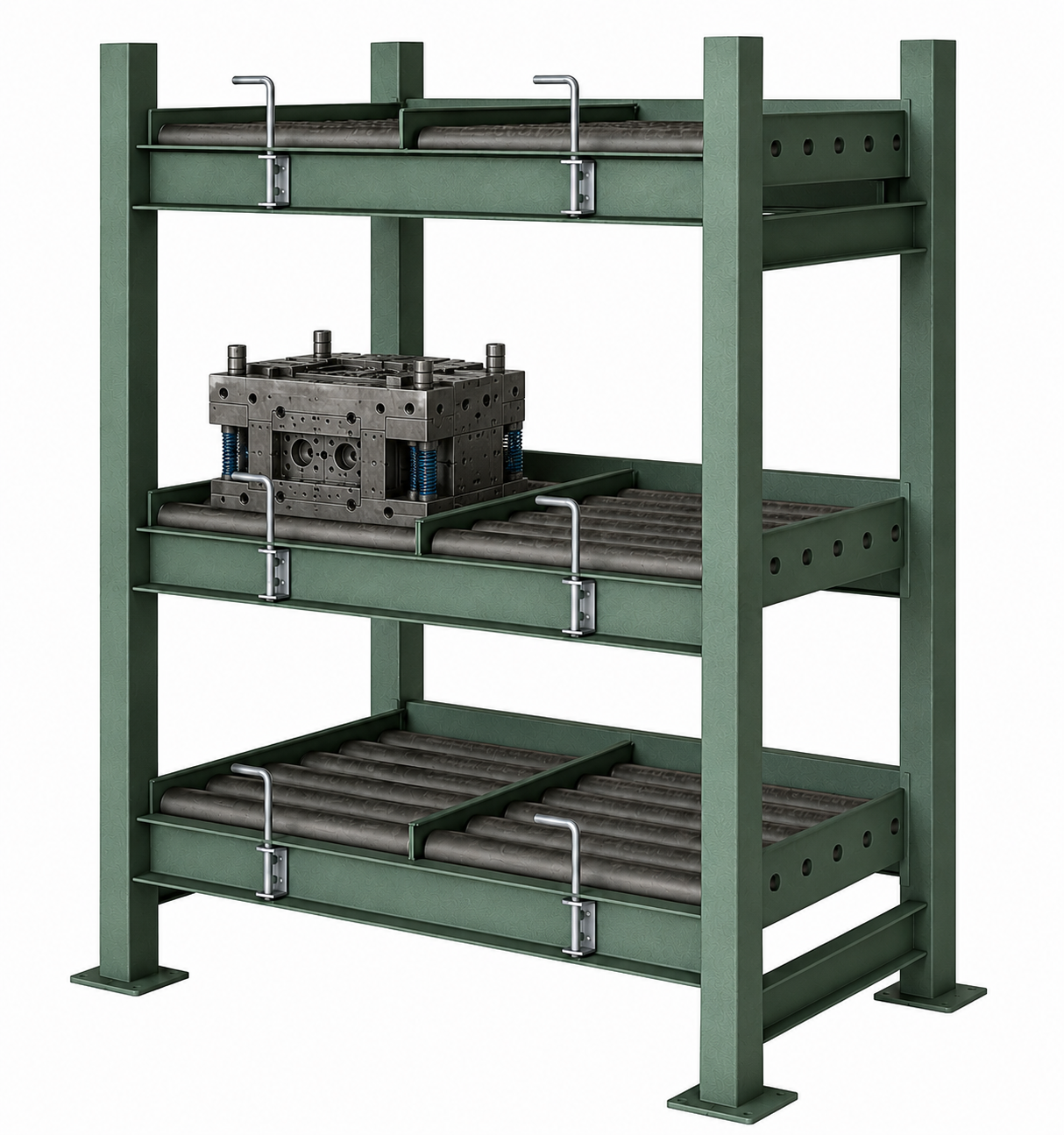
Heavy tools, dies, and molds aren’t going onto ordinary carton flow. When you’re dealing with loads this heavy, you need a rack and roller system specifically designed to handle the weight. Our heaviest-duty gravity flow rack combines a heavy structural storage system with roller conveyor shelves that allow tools, dies, and molds to be rolled on and off the rack instead of manually dragged or repositioned.
Showing all 6 resultsSorted by latest
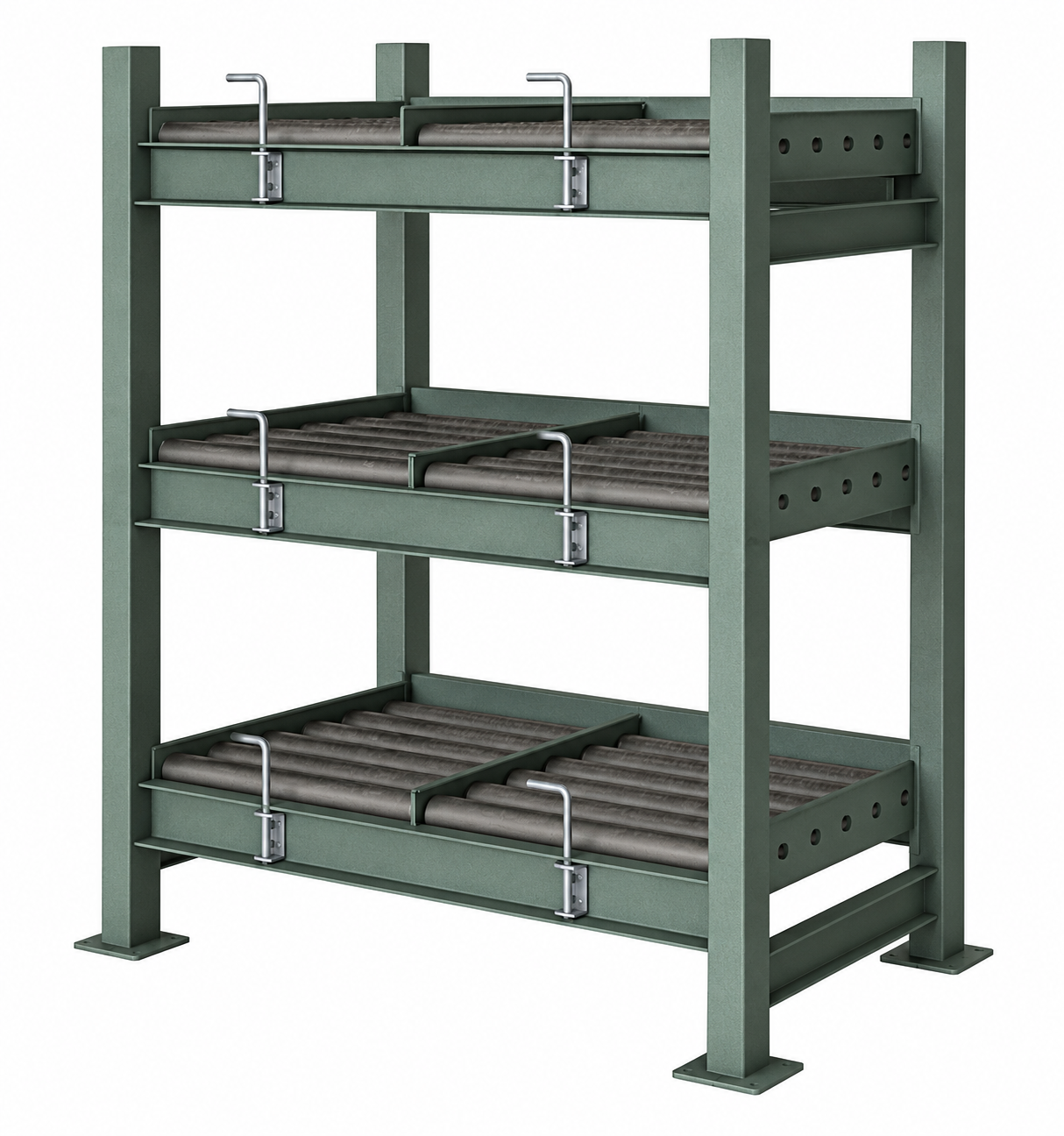
Heaviest Duty Gravity Flow Rack with Roller Conveyor Shelves for Storage of Heavy Tools, Dies & Molds
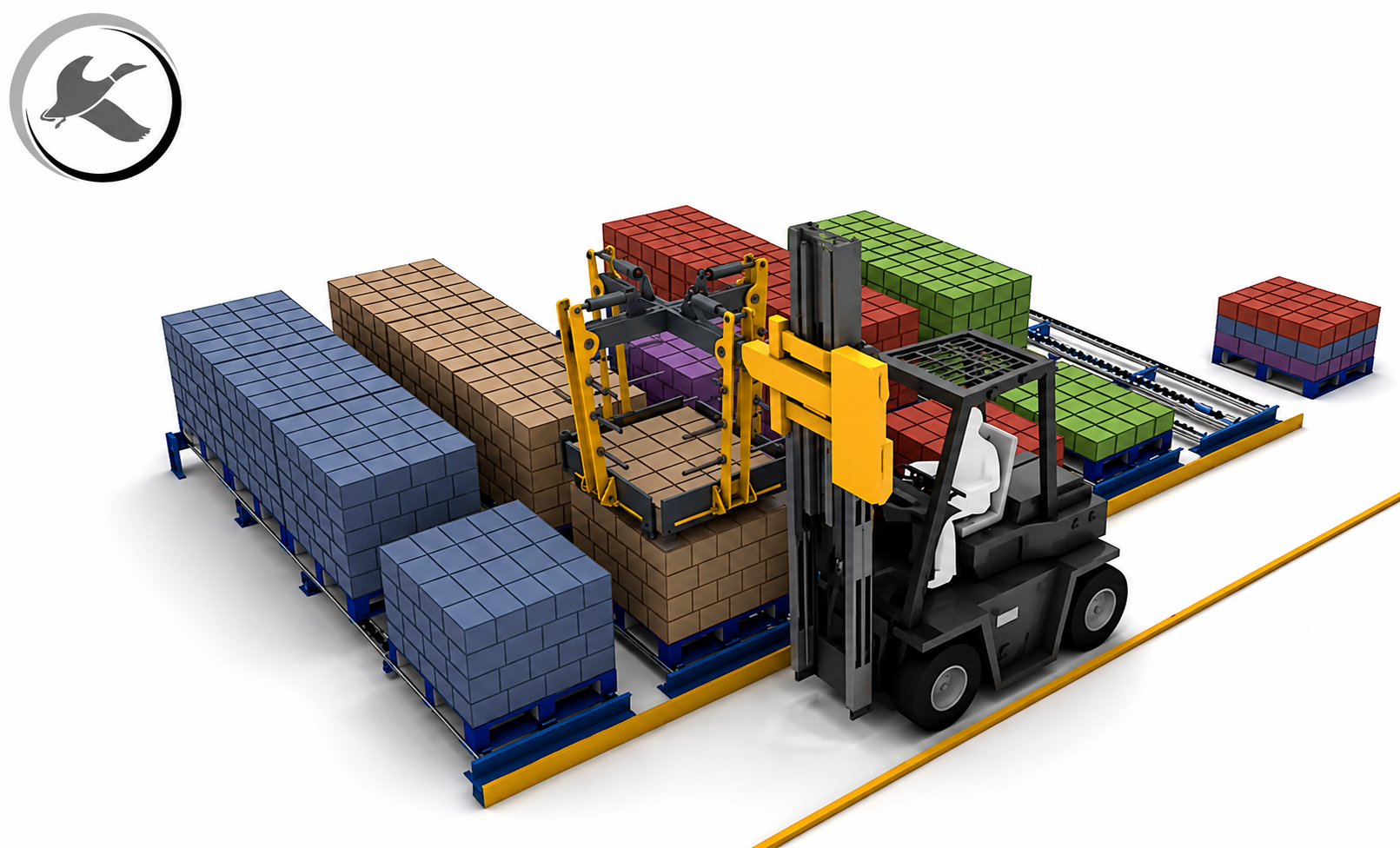
Layer Picking | Pallet Flow with Layer Pick Separator
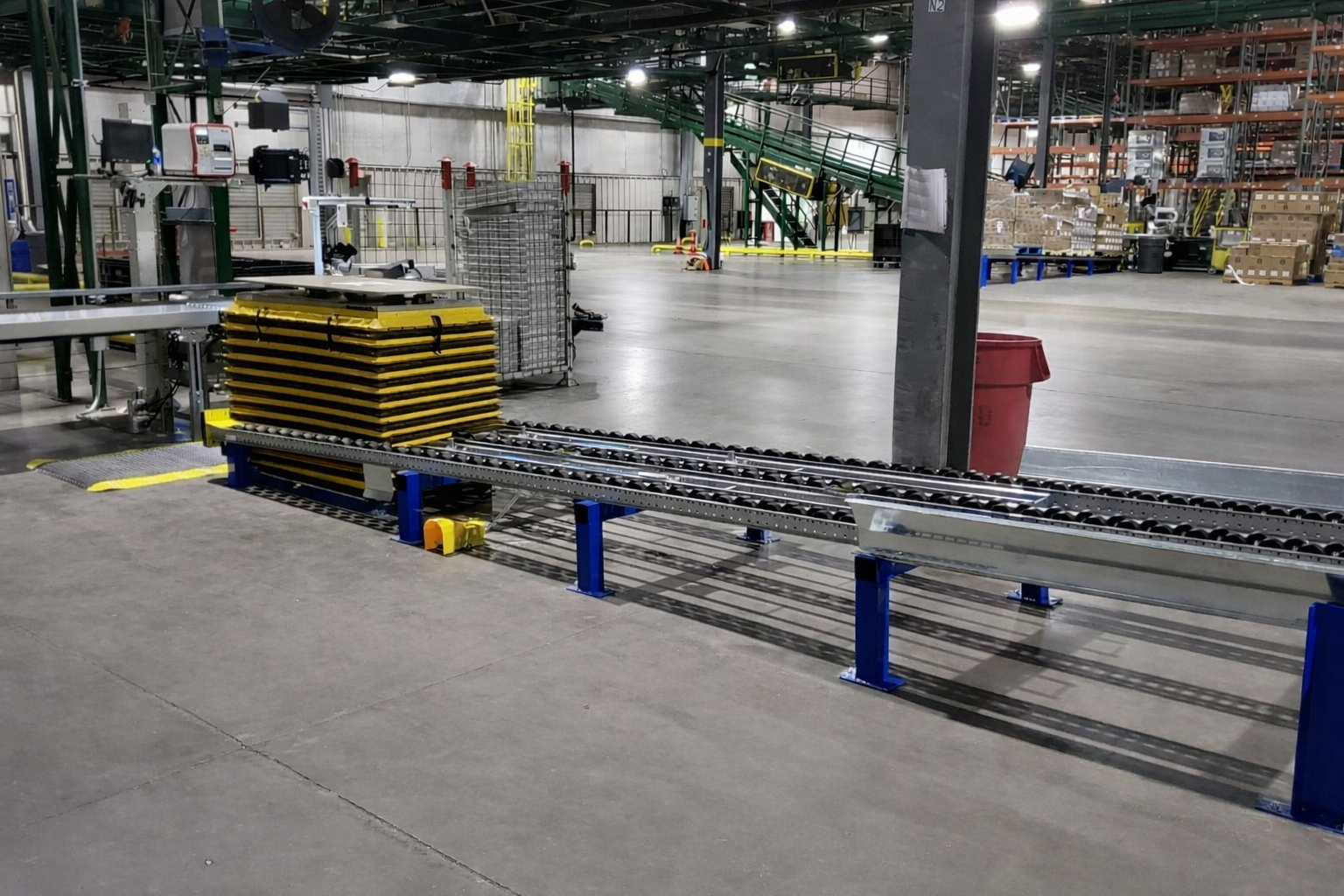
Ergo Lanes | Ergonomic Pallet Flow Pick Lanes
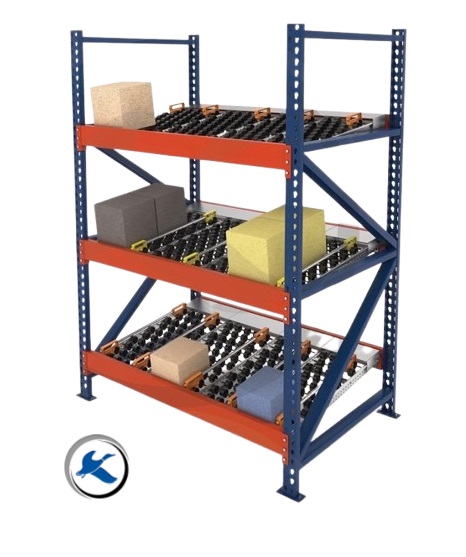
Heavy Duty Gravity Flow Racks
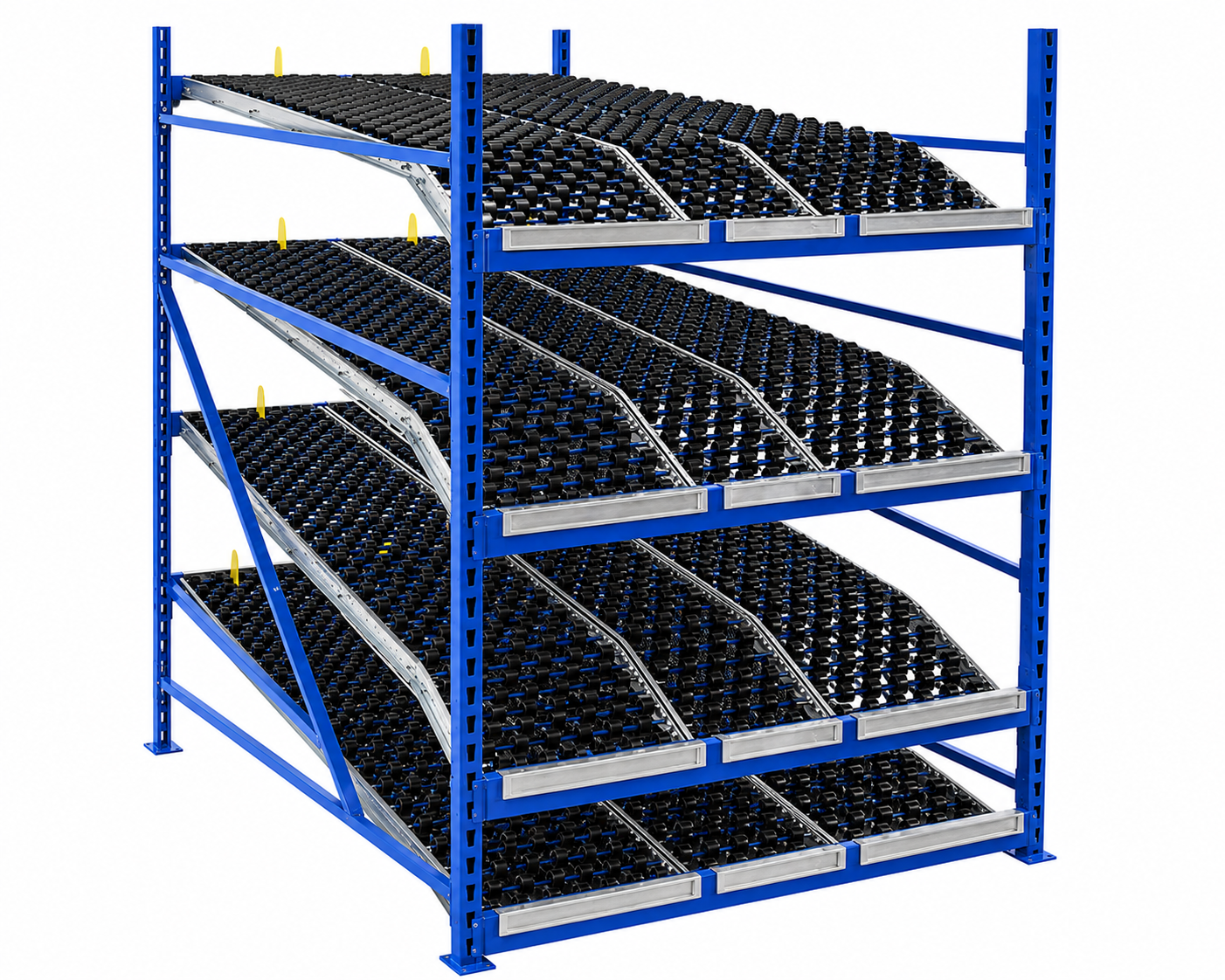
Flow Cells with Staggered Plastic Wheel Flow Beds
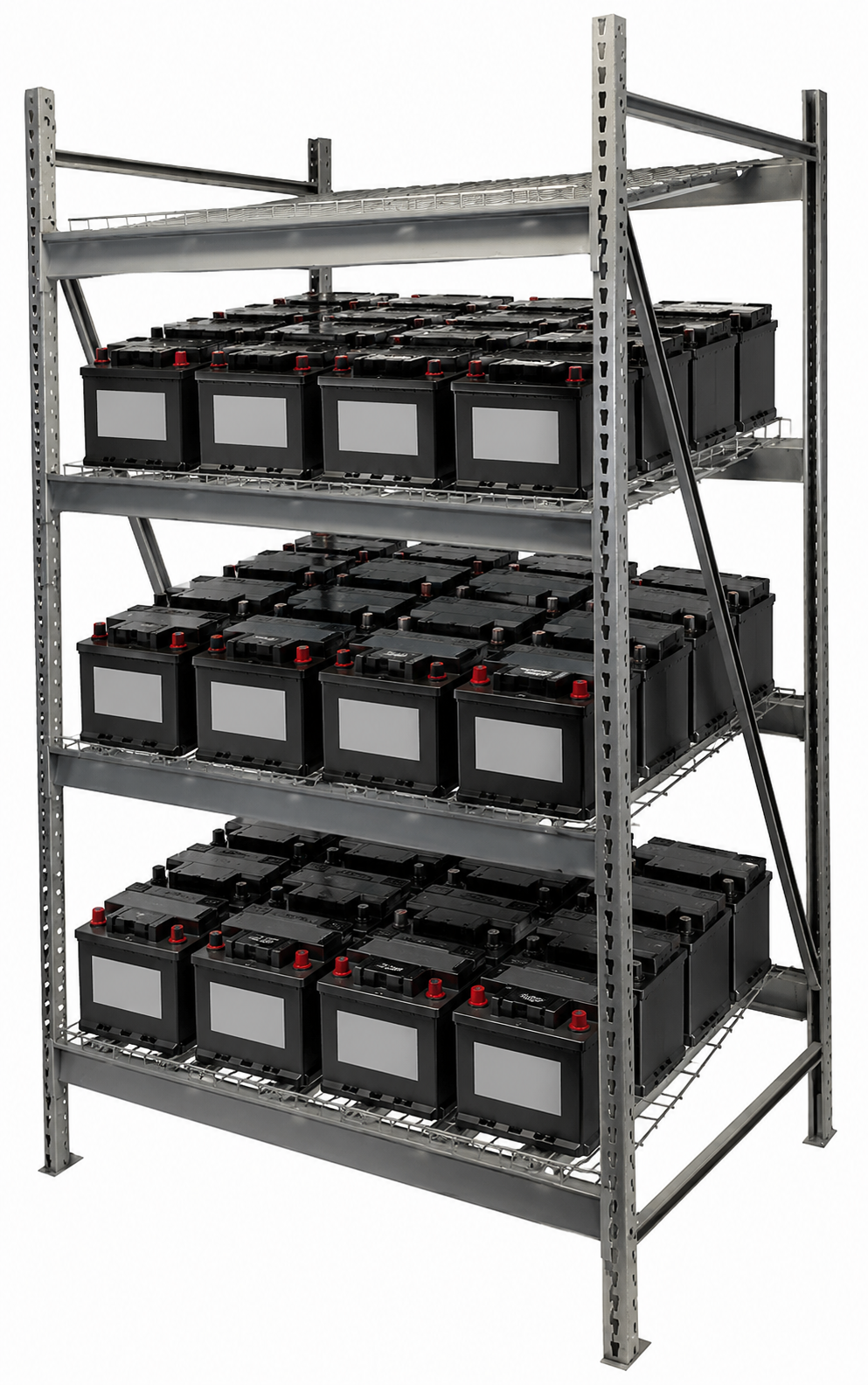
Automotive Battery Flow Rack
This is a custom system and it isn’t cheap. The source system can cost in excess of $13,000 per bay. But it solves a very specific problem. When floor space is limited and your tooling is heavy, the ability to store vertically while still providing easy access can make the investment worthwhile. Systems can be designed in different lengths, widths, heights, and numbers of shelf levels, with options including multiple lanes, multi-directional flow, locking devices, and front shelf stops.
Layer Picking | Pallet Flow with Layer Pick Separator
Layer picking lets high-volume operations build mixed pallets one layer at a time instead of manually picking individual cases. The system typically uses floor-mounted pallet flow lanes loaded with multiple pallets of the same SKU. A forklift equipped with a special layer-picking attachment removes an entire layer of cases at once and uses those layers to build customized mixed or “rainbow” pallets.
The special sauce is the pallet separator. It holds the rear pallet back and creates a gap between it and the front pallet, giving the layer-picking attachment access to all four sides. Once the front pallet is removed, the separator releases the next pallet and allows it to flow forward. A complete system requires three things: pallet flow with separators, multiple pallet loads of the same SKU, and the proper forklift attachment. Put those pieces together and you can build mixed pallets with a lot less manual handling.
Ergonomic Pallet Flow Pick Lanes
Ergonomic pallet flow pick lanes—or Ergo Lanes—address one of the biggest problems with floor-level case picking: bending over all day to pull heavy boxes off a pallet. Instead, the front of the pallet flow lane raises the pallet to a more comfortable picking height. The worker comes to the product, but the product also comes up to the worker.
The lift table starts in the lowered position and uses an airbag system to raise the pallet. A rotating table underneath allows the pallet to turn so workers can pick from different sides without constantly reaching and walking around it. Ergo Lanes are commonly used for case picking, palletizing, and depalletizing and are usually floor mounted rather than installed inside pallet rack. Systems can run 8 to 14 pallets deep, with overhead rack used for reserve storage and separate return lanes used to move empty pallets away from the picking area.
Standard carton flow works great until somebody starts dropping heavy boxes and totes onto it all day. That’s when you find out whether the system was actually designed for the load.
Heavy-duty gravity flow racks provide the same basic advantage as conventional carton flow: pick the front box and the one behind it flows forward. The difference is in the construction. Heavy-duty systems can use larger-diameter steel rollers designed to support heavier loads and withstand the impacts that would damage lighter carton flow tracks. They cost more than standard carton flow, but replacing an undersized system after employees beat it up isn’t exactly cheap either.
Flow Cells with Staggered Plastic Wheel Flow Beds
Staggered plastic wheel flow beds are all about flexibility. Instead of forcing every carton into a fixed lane, the staggered wheel bed creates a broader flow surface that can handle boxes and cases of different widths. That makes it useful when SKU sizes change frequently or when one picking area needs to handle a wide range of cartons.
Complete flow cells can include the uprights, beams, and flow tracks needed to create a freestanding picking unit. The heavy-duty plastic wheels are spaced on 2″ centers and staggered to create a dense flow bed that promotes reliable movement. These systems are commonly used in production work cells and pick-and-pack areas because cartons automatically advance to the front, reducing the reaching and leaning required to retrieve products from the back of a shelf. Staggered wheel beds may cost more than some full-width roller systems, but you gain the ability to flow a much wider variety of carton sizes without constantly rearranging fixed lanes.
Automotive batteries are heavy, compact, and available in a lot of different sizes. A battery flow rack uses gravity to store them densely while keeping individual batteries visible and accessible. Pick one battery from the front and the next battery gently moves forward into position. That improves storage density, reduces handling, and keeps the picking face full.
Battery flow racks can be installed between a storage area and retail space so employees replenish from the rear while customers or workers pick from the front. That supports First-In, First-Out inventory rotation while reducing restocking and handling. Shorter-depth systems are also available for placement against a wall. Adjustable shelves and lanes accommodate different battery sizes, while steel uprights, beams, and flow rails provide the strength needed for high-density battery storage.
Specialty Flow Rack FAQ
How do I know which type of specialty flow rack I need?
Start with the product. What does it weigh? What are its dimensions? Does it have a flat bottom? Is it a carton, pallet, battery, die, or mold? Then look at how it needs to be picked. Heavy dies may require steel conveyor rollers, mixed-SKU pallet building may call for layer picking, and variable-size cartons may work better on staggered wheel beds. Don’t start with the rack. Start with what you’re trying to flow.
How much slope does a gravity flow rack need?
There isn’t one pitch that works for every product. Weight, dimensions, bottom surface, roller or wheel type, rack depth, and desired flow speed all affect the slope. The goal is controlled, reliable movement—not sending a heavy box, battery, or tool flying toward the picker. Testing the actual product before finalizing a large system is always a good idea.
Can specialty flow racks be installed in existing pallet rack?
Some can, but others are designed as standalone floor-mounted systems. Heavy-duty carton flow may be incorporated into rack, while Ergo Lanes and layer-picking pallet flow are commonly floor mounted. Existing rack capacity, beam spacing, depth, clearances, and connection details all need to be evaluated before adding a flow system. Don’t assume that because an insert physically fits, the rack is automatically suitable for the application.




