Collapsible Steel Containers
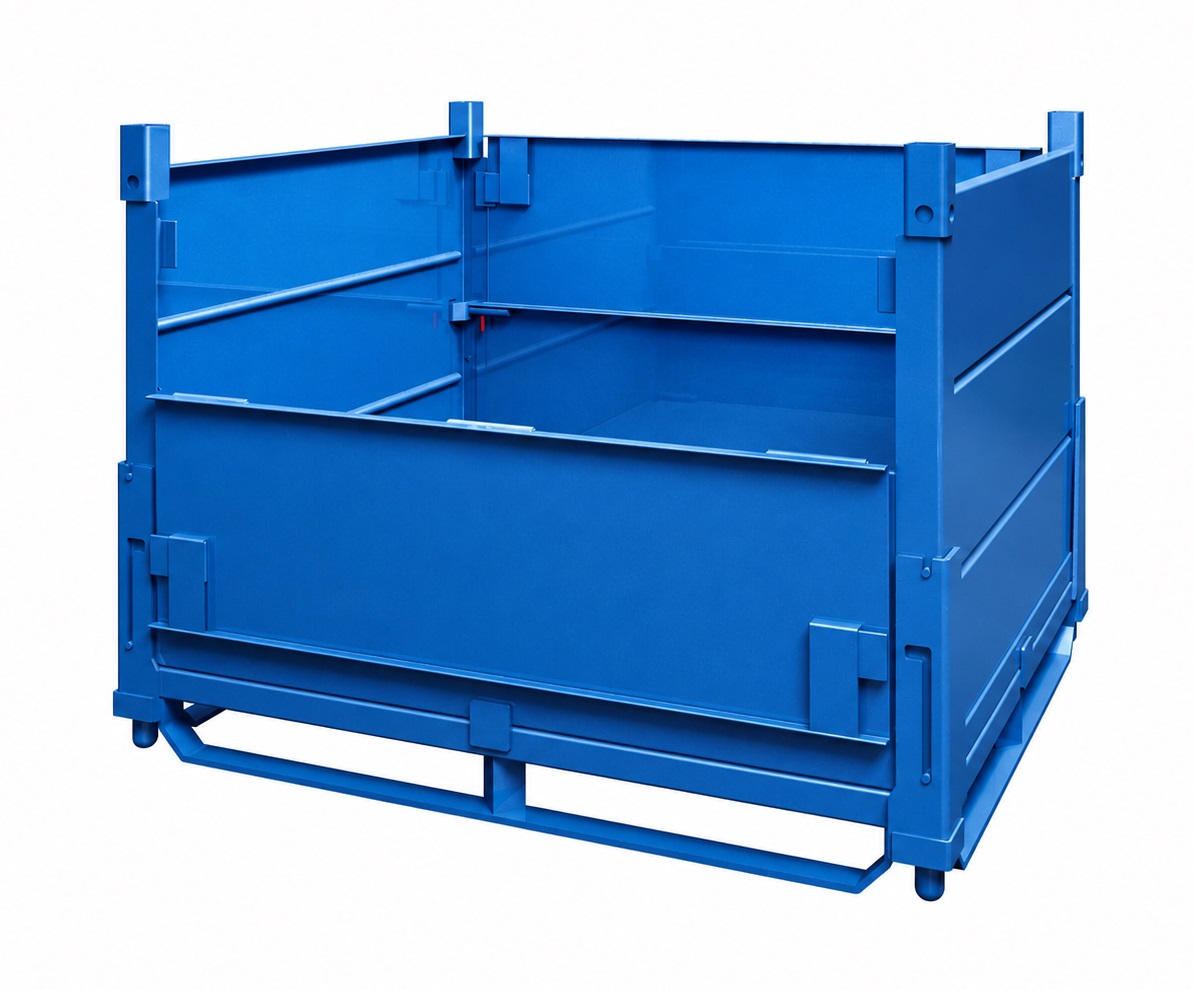
Collapsible steel containers are reusable bulk containers designed to store, stack, and transport parts, materials, liquids, and other products while taking up less space when empty. They combine steel side panels, a steel base, stacking points, and forklift access with a knock-down design that allows the walls to fold when the container is returned or stored. When loaded, they provide the containment and load capacity of a steel bin. When empty, they collapse so more units fit in a warehouse or trailer. Options can include drop gates, runners, pin feet, stacking cups, galvanized or powder-coated finishes, and configurations for specific automotive applications. For manufacturers running closed-loop shipping programs, that combination can reduce return freight costs while keeping the protection of a steel container.
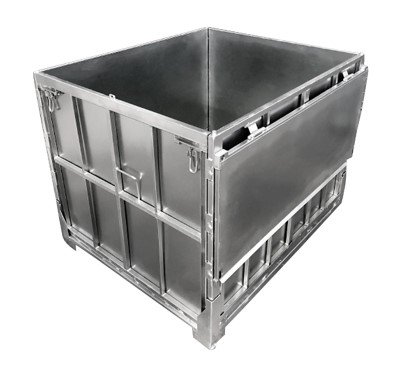
Collapsible Steel IBC Intermediate Bulk Containers are designed for storing and transporting liquids and semi-solids. These IBC containers hold 310 gallons and are available for purchase rather than rental. For companies that use IBCs on a regular basis, ownership can eliminate recurring rental costs and provide a return on the investment over years of use.
The containers are available with galvanized or powder-coated finishes to help protect the steel from rust and corrosion. Unlike IBC models made from stainless steel, these containers provide another option for applications that do not require stainless construction. They are pallet-mounted and can be moved with forklifts or pallet jacks, allowing them to work with material handling equipment already used in many facilities.
Showing all 5 resultsSorted by latest
Collapsible Steel IBC Intermediate Bulk Containers
Collapsible Steel Container with Pin Feet
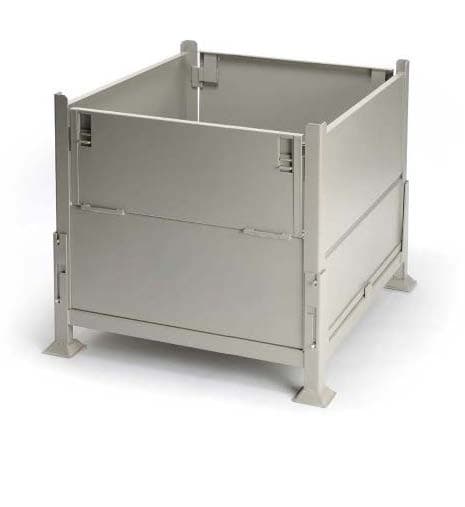
Collapsible Steel Containers & Bins | KD2GS-01

Collapsible “Knock-Down” Steel Container & Bin | KDS-01
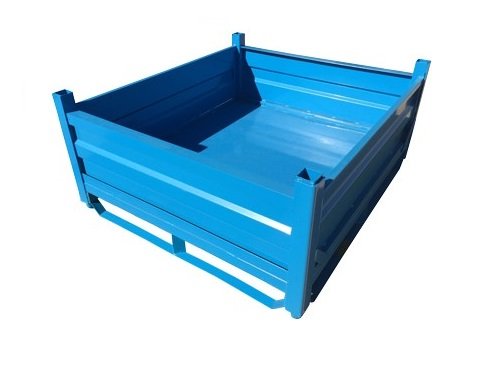
Chrysler CC 71 CS-120 & CS 125 Compatible Collapsible KD Corrugated Steel Containers
Space savings are another reason to consider a collapsible IBC. Containers can be stacked four to five high when in use and up to 12 high when collapsed, subject to the manufacturer’s ratings and application. This makes it easier to store empty containers and fit more of them on return shipments. For operations that reuse IBCs between facilities, that can make a big difference in trailer use and return freight costs.
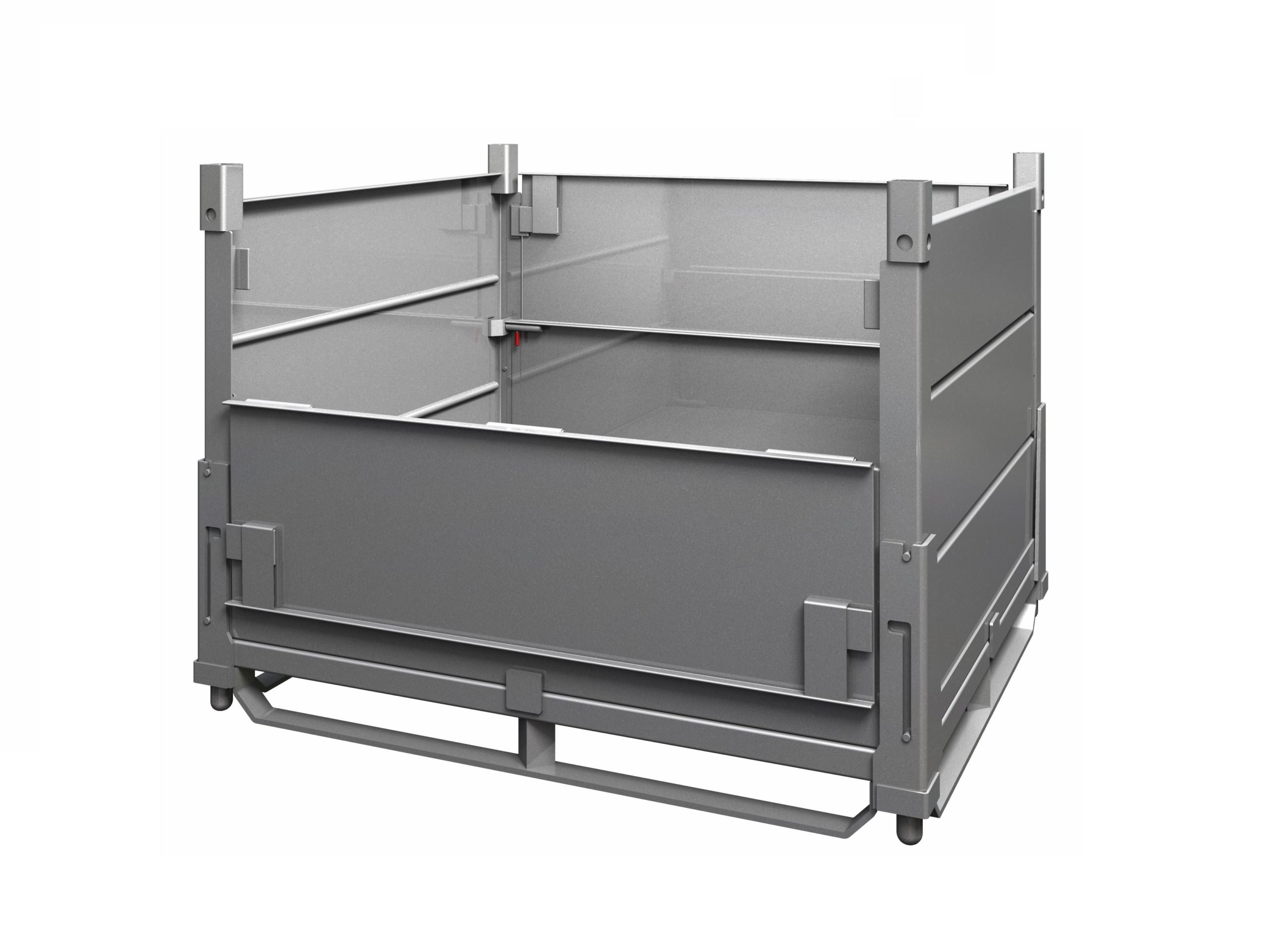
Steel containers with pin feet use pintles at the corners to position one container on another during stacking. This configuration is common in automotive manufacturing, where containers often need to match an existing fleet and move between suppliers and assembly plants. Pin locations and container dimensions can be designed around the containers already being used in the operation.
These containers are available in rigid or collapsible configurations. A collapsible model can provide an alternative for companies that like the footprint and stacking arrangement of containers such as the GM 5131 but need solid steel sides instead of wire mesh. Solid panels contain parts that could catch on wire and provide separation between the load and surrounding materials. For facilities adding containers to an existing program, stacking compatibility should be considered before ordering. Make sure to match the pin feet, stacking points, footprint, and height so that new containers will work with the equipment and container fleet already in place.
Heavy duty collapsible steel containers and bins are made for loads that require steel construction but also need to travel back through the supply chain after unloading. They can be equipped with runners, stacking cups, or pin feet and used for parts, stampings, castings, scrap, and other materials found in manufacturing and recycling operations.
The main advantage shows up when the containers are empty. Instead of returning a trailer filled with containers that take up the same amount of space empty as they do loaded, the bins can be knocked down and stacked. For one configuration, about 108 upright containers can fit on a 53-foot trailer compared with about 252 when collapsed. The actual quantity will depend on container dimensions and trailer configuration, but the principle is simple: ship less empty space.
Some collapsible steel bins can also be converted to a rigid configuration. Pre-drilled holes in the corner hinge sockets allow the container to be secured with nuts and bolts when a fixed-wall configuration is preferred. That gives an operation the option to use the same basic container as either a collapsible or rigid bin. These containers also help make better use of warehouse space. When loaded, they stack vertically rather than spreading inventory across the floor. When empty, they collapse for storage until they are needed again. For operations managing hundreds of returnable containers, those space savings add up quickly.
Collapsible “Knock-Down” Steel Containers & Bins combine sheet metal walls with a folding design for storage and return shipping. One example measures 40-1/2″ L × 34-1/2″ W × 26″ H, with a 19″ usable height and 14 cubic feet of inside volume. It has a 3,000-lb. capacity, stacks five high when assembled, and collapses to 11-1/2″ high. This model uses 16-gauge steel side and bottom panels, a tubing base structure, and a zinc-galvanized finish. It does not include a drop gate. At 141 lbs., the container is designed to handle loads while still providing the space savings of a knock-down system.
The return shipping numbers show why collapsibility matters. About 144 upright bins fit on a 53-foot trailer, while 324 collapsed bins can fit in the same trailer. For a company sending containers back and forth between plants, suppliers, or customers, fewer return loads can translate directly into lower transportation costs.
Chrysler CC 71 compatible corrugated steel containers are designed for automotive suppliers that store and transport component parts to Chrysler manufacturing operations. They are used by stamping plants and Tier 1 suppliers to move metal parts from production through shipping and into assembly operations.
These containers use corrugated steel side panels, steel bases, tubular steel corner posts and understructures, pin stacking feet, and four-way runners. They can be ordered with a drop gate on the long side or without a gate and are available in rigid or collapsible configurations. The drop gate gives workers access to parts without having to reach over the container wall, which can make loading and unloading easier at the production line.
Corrugated steel construction also works well for stamped metal parts. Edges on stampings can catch on the openings of wire mesh containers, potentially damaging the part or making unloading more difficult. Steel panels eliminate the mesh openings and keep the parts contained as they move from the stamping operation to the assembly plant.
Automotive returnable packaging programs can keep containers in circulation for years, so compatibility matters. Chrysler CC 71 compatible containers provide the footprint, stacking arrangement, and handling features required for these applications while collapsible versions reduce the space occupied by empty containers on the trip back to the supplier.
Collapsible steel containers make sense when an operation needs the containment of steel without paying to transport empty space. The right configuration depends on what is being stored, how much it weighs, how the container will be handled, and where it goes after unloading. For closed-loop manufacturing and automotive supply chains in particular, a container that stacks when loaded and collapses when empty can improve storage and transportation on both ends of the trip.
Please email sales@rackandshelf.com or call 800-763-9020 to speak to a friendly salesperson. We would love to discuss your requirement.
Frequently Asked Questions
How do I choose the right collapsible steel container?
Start with the size, weight, and shape of the material being stored. Then consider forklift access, stacking requirements, drop gates, runners or pin feet, and whether the container needs to match an existing fleet. For returnable packaging programs, collapsed height and the number of containers that fit on a trailer should also be considered.
How much space can collapsible steel containers save on return shipments?
It depends on the container design and trailer configuration. Because the walls fold down, two or more times as many empty containers may fit on a return trailer compared with containers in their upright position. This can reduce the number of return trips and lower freight costs.
Can collapsible steel containers be stacked?
Yes. Most are designed for stacking when loaded and for denser stacking when collapsed. Always follow the manufacturer’s load and stacking ratings, and make sure pin feet, stacking cups, or other stacking points are seated before adding another container.




