
Wire Shelf Dividers for Pallet Rack
Wire shelf dividers for pallet rack are vertical wire partitions designed to separate boxes, cartons, parts, and individual SKUs stored on pallet rack shelving. Available in snap-in and hanging styles, they attach to compatible wire decking or punched steel decking to create individual storage compartments without adding permanent walls or replacing the rack. Wire construction keeps inventory visible while allowing airflow through the shelf, and movable dividers make it easy to change compartment widths as inventory changes. They’re inexpensive, easy to install, and surprisingly effective. Your pallet rack already gives you the storage space. Wire shelf dividers help you organize what’s inside it.
Warehouse Rack & Shelf supplies wire shelf dividers for warehouses, distribution centers, manufacturing facilities, e-commerce operations, retail stockrooms, and other hand-pick applications. Whether you need a few defined SKU locations or hundreds of pick compartments, the first question is pretty simple: Are you dividing a short shelf opening or a tall one? That usually tells us whether you should be looking at snap-in or hanging dividers.
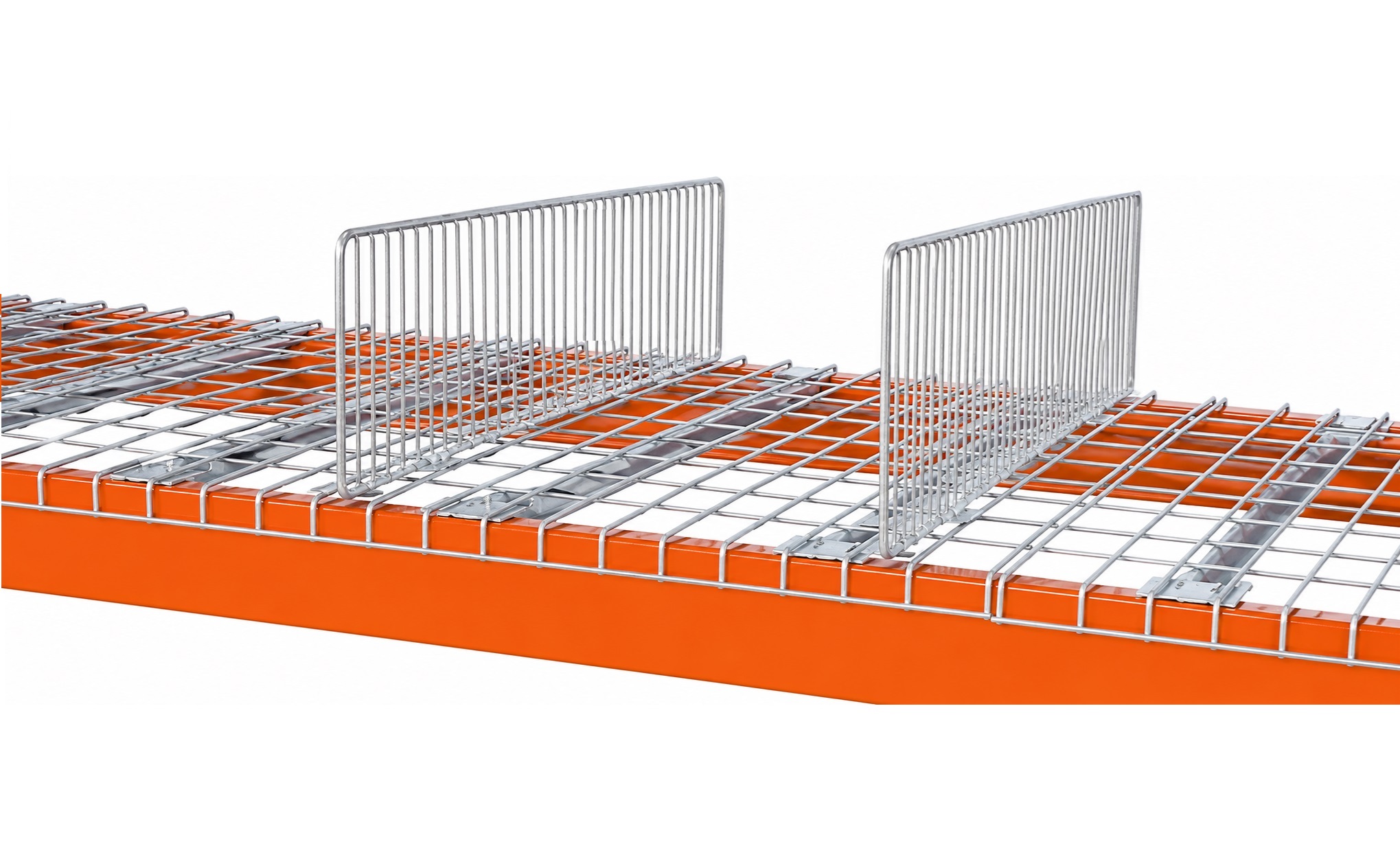
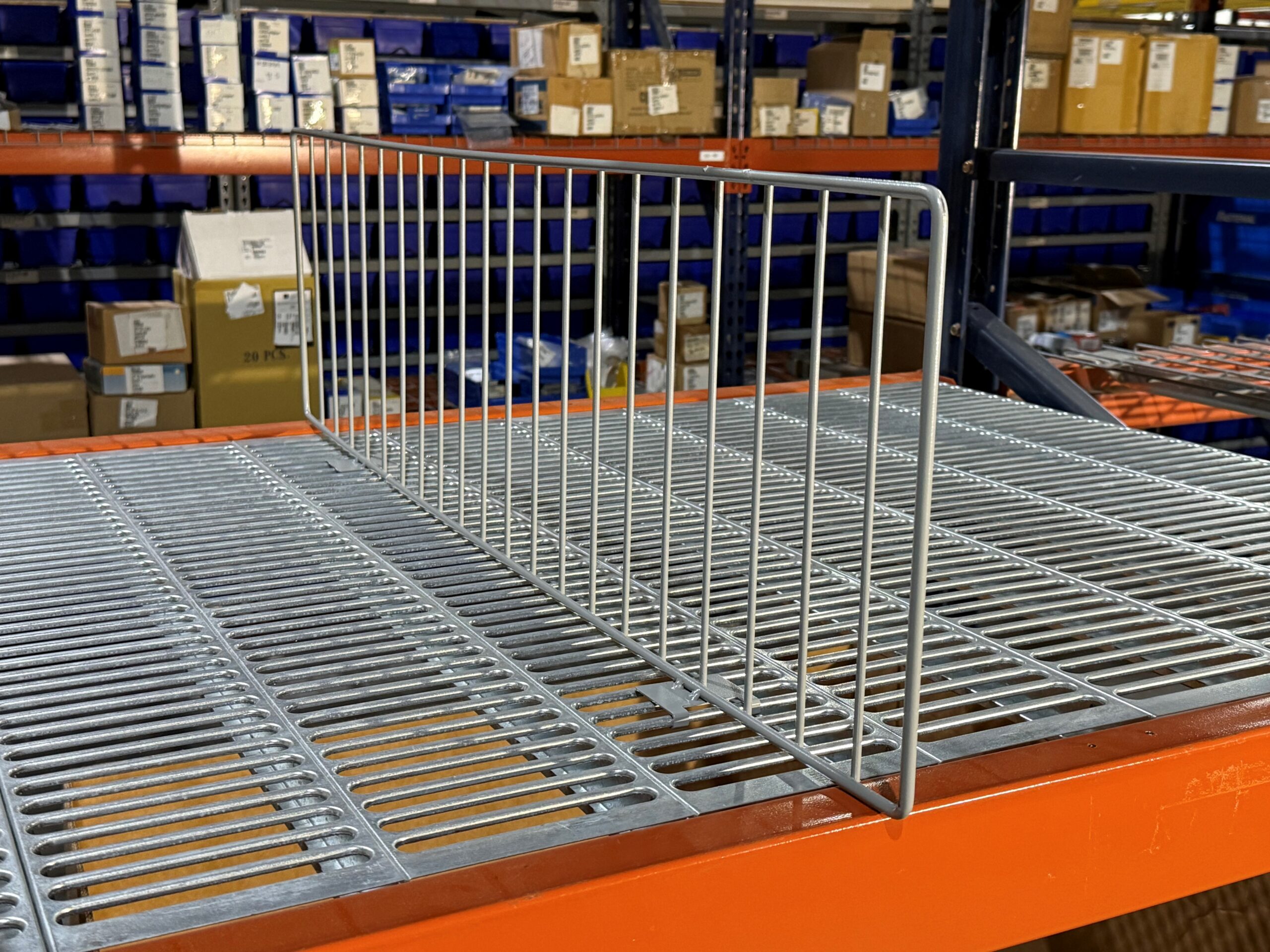
Snap-in wire shelf dividers can be used with compatible ProDeck50 punched steel pallet rack decking to create individual storage lanes across a rack level. The dividers clip into the punched openings without drilling, bolting, or modifying the deck. When SKU sizes change, simply reposition the dividers and create a new layout.
Showing all 8 resultsSorted by latest
Shelf Dividers for ProDeck50 Punched Steel Pallet Rack Decking
Snap-In vs. Hanging Wire Shelf Dividers for Pallet Rack
Snap-In Wire Divider Specification Sheet
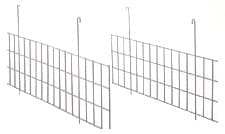
Hanging Wire Divider Specification Sheet
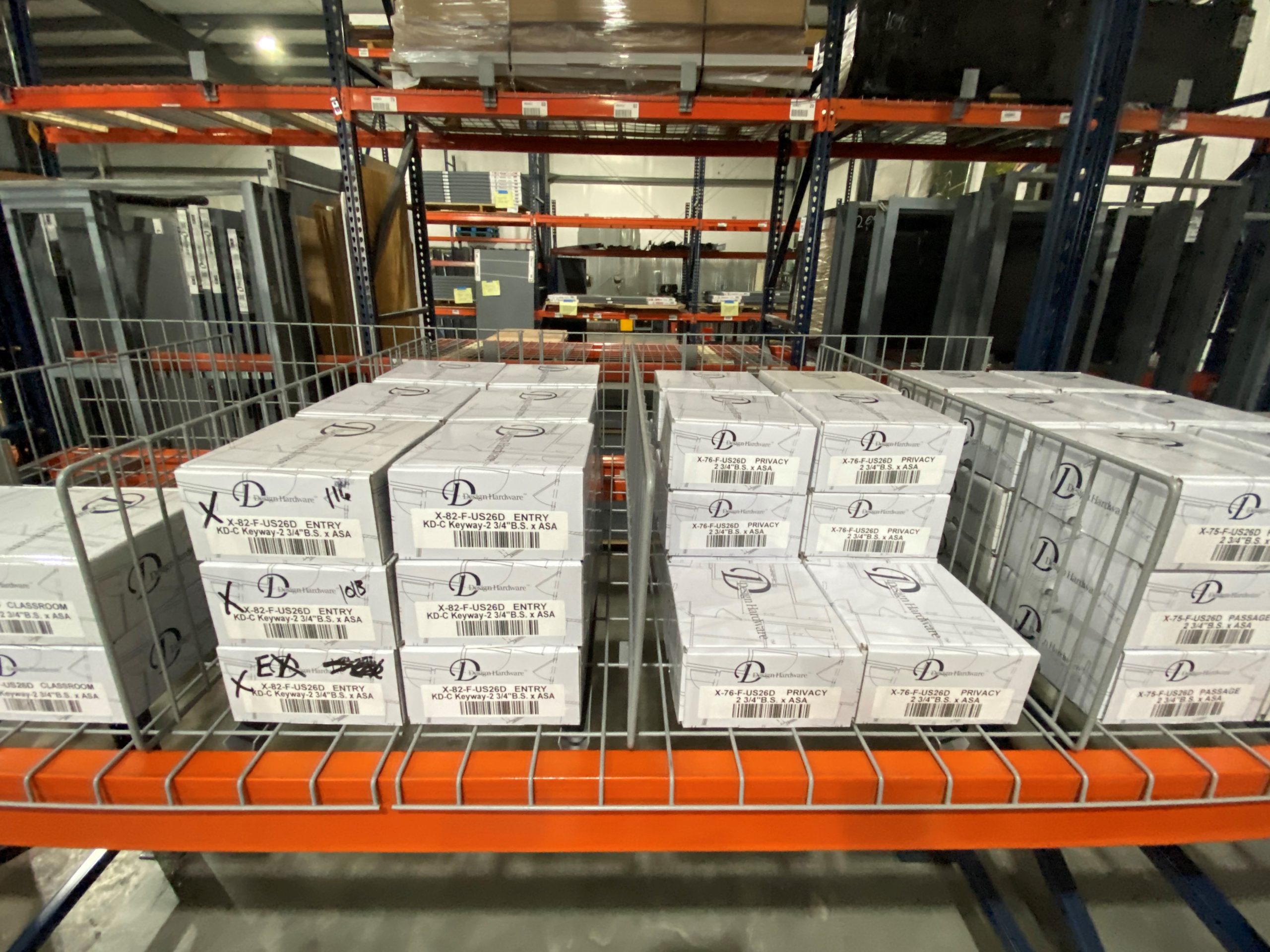
Pallet Rack Shelf Dividers | Clip-On Dividers for Wire Decking
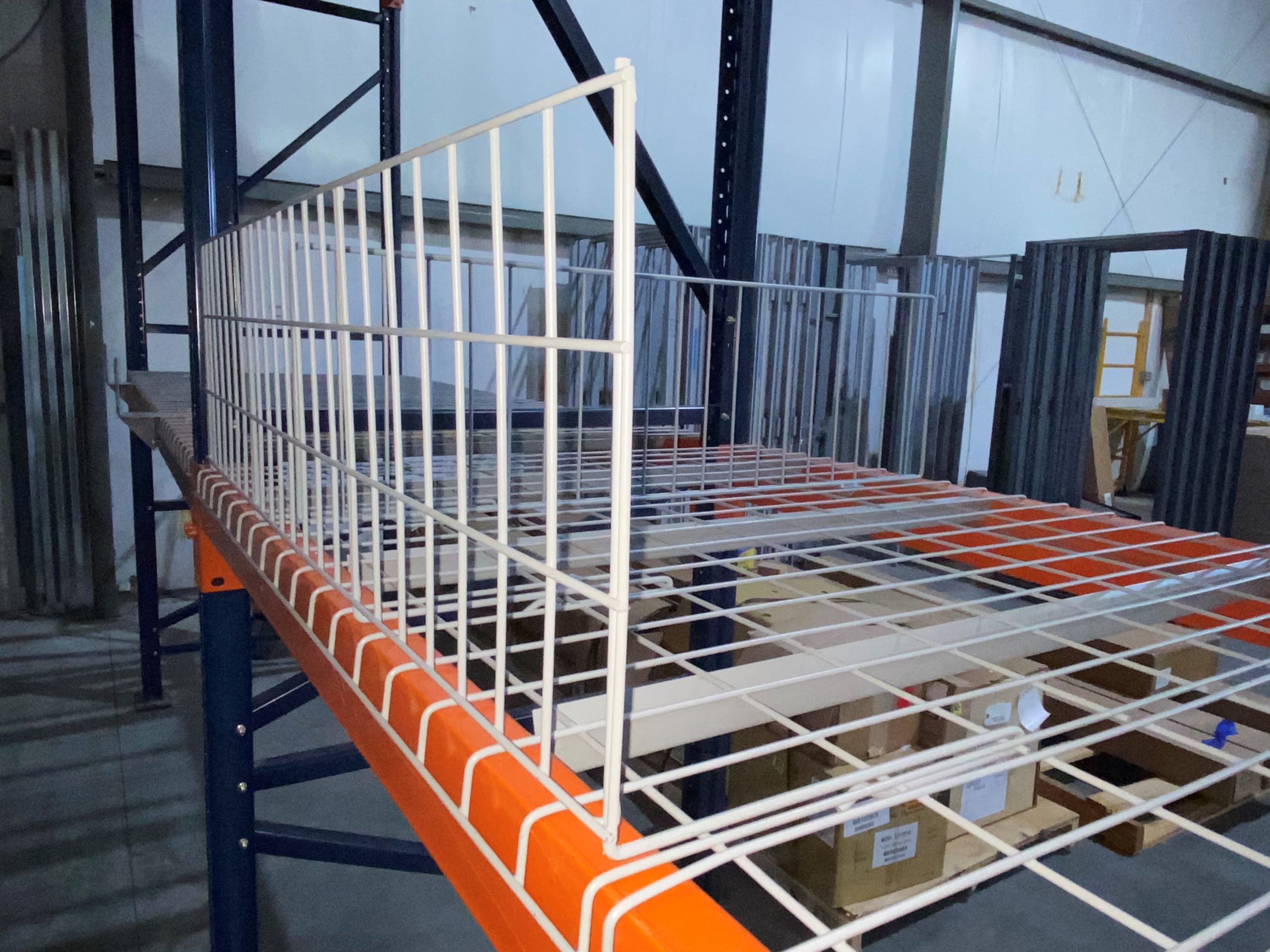
Snap-In Wire Mesh Backstops for Pallet Rack Wire Decking
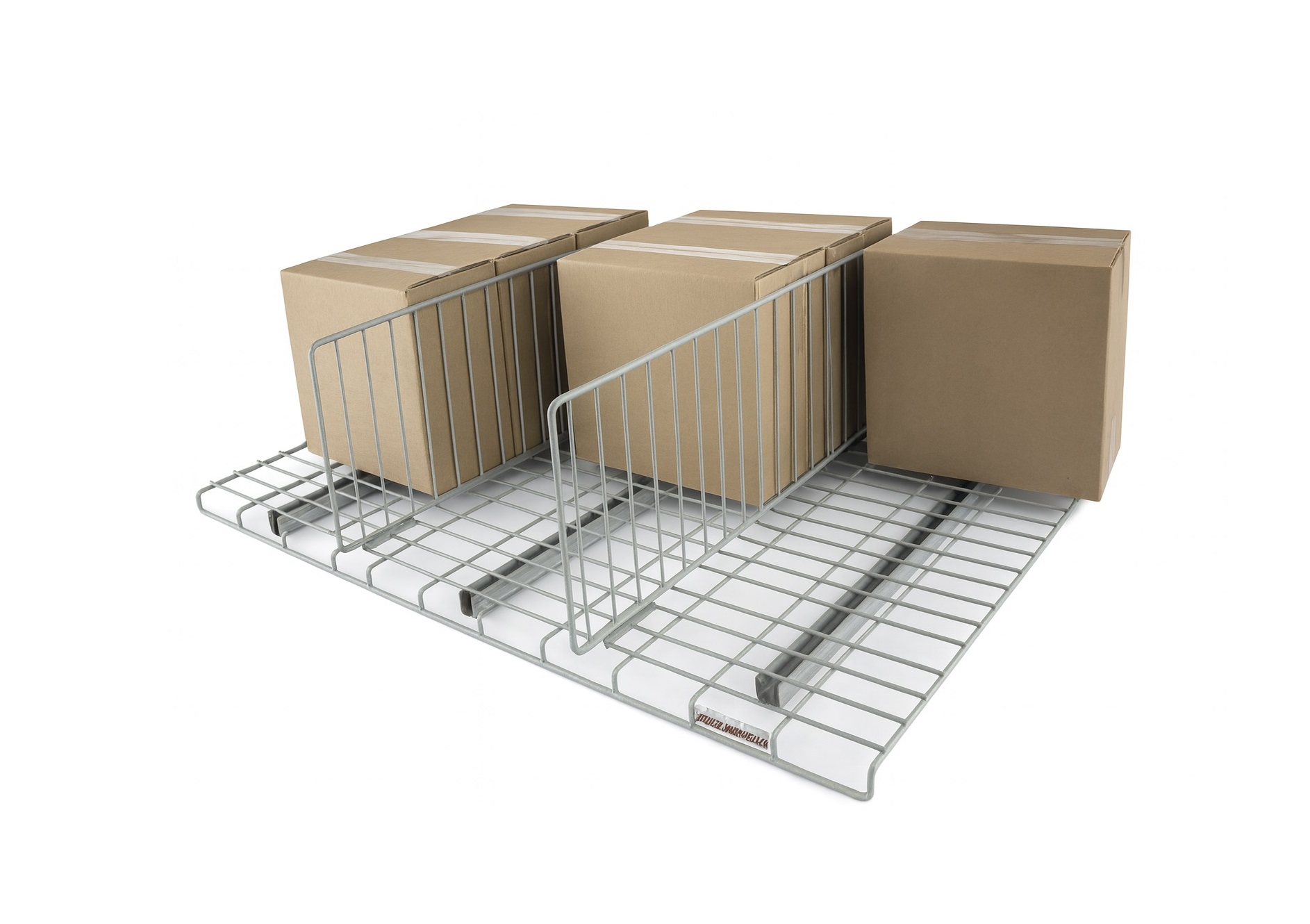
Snap-In Wire Dividers for Wire Decking
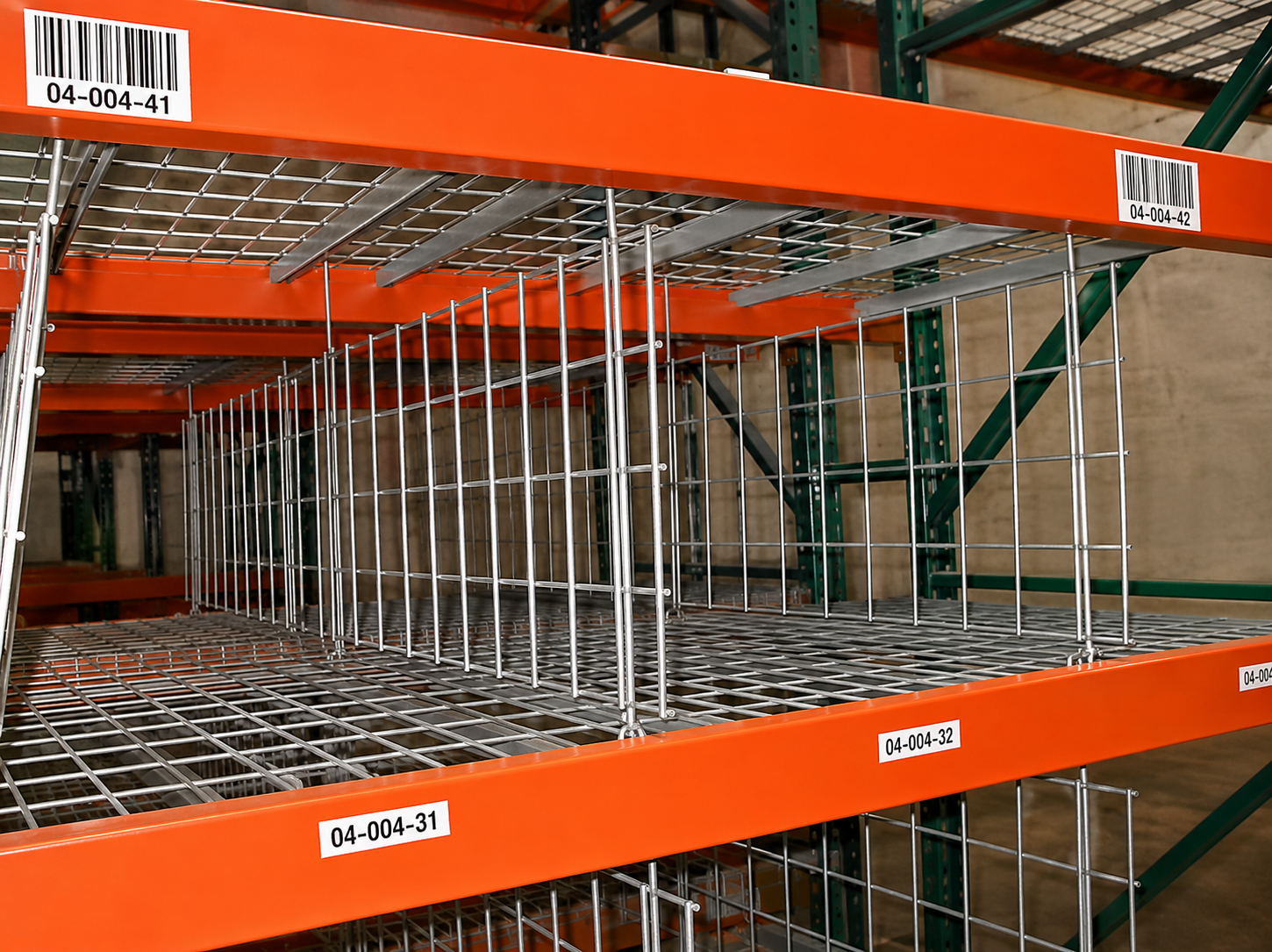
Hanging Wire Dividers For Pallet Rack
The combination gives you a steel shelf surface with vertical wire separation. The open punched design also maintains airflow and sprinkler water penetration through the rack level, which can be an important consideration in the overall fire-protection design. Fire-code and insurance requirements vary by facility, commodity, storage arrangement, and sprinkler system, so deck selection should always be verified for the specific application. Organization matters. So does everything happening above the rack when the sprinklers turn on.
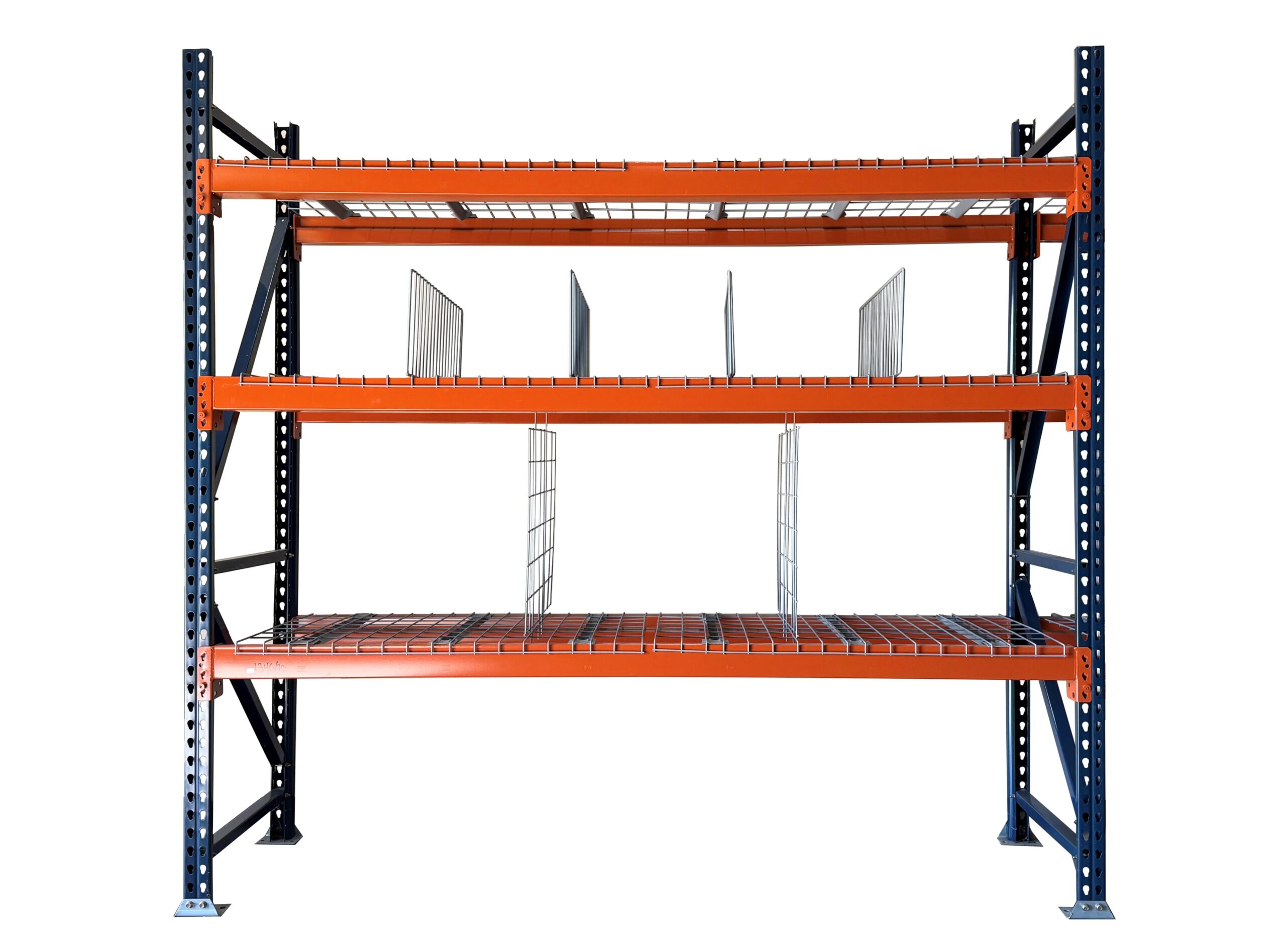
There are two primary styles of wire shelf dividers: snap-in dividers and hanging dividers. Which one you need depends largely on the height of your stored product and the distance between rack beam levels.
Snap-in dividers are the simple, economical choice for shorter products and rack levels with relatively close vertical spacing. They attach directly to compatible wire decking and can be repositioned as inventory changes. Hanging dividers are custom-made for taller shelf openings. They attach to the wire deck above and extend down to the deck below, providing support at both the top and bottom.
Here’s the short version: short product, snap-in divider; tall product, hanging divider. There’s no reason to buy a large custom divider when a 12-inch-high stock divider will do the job.
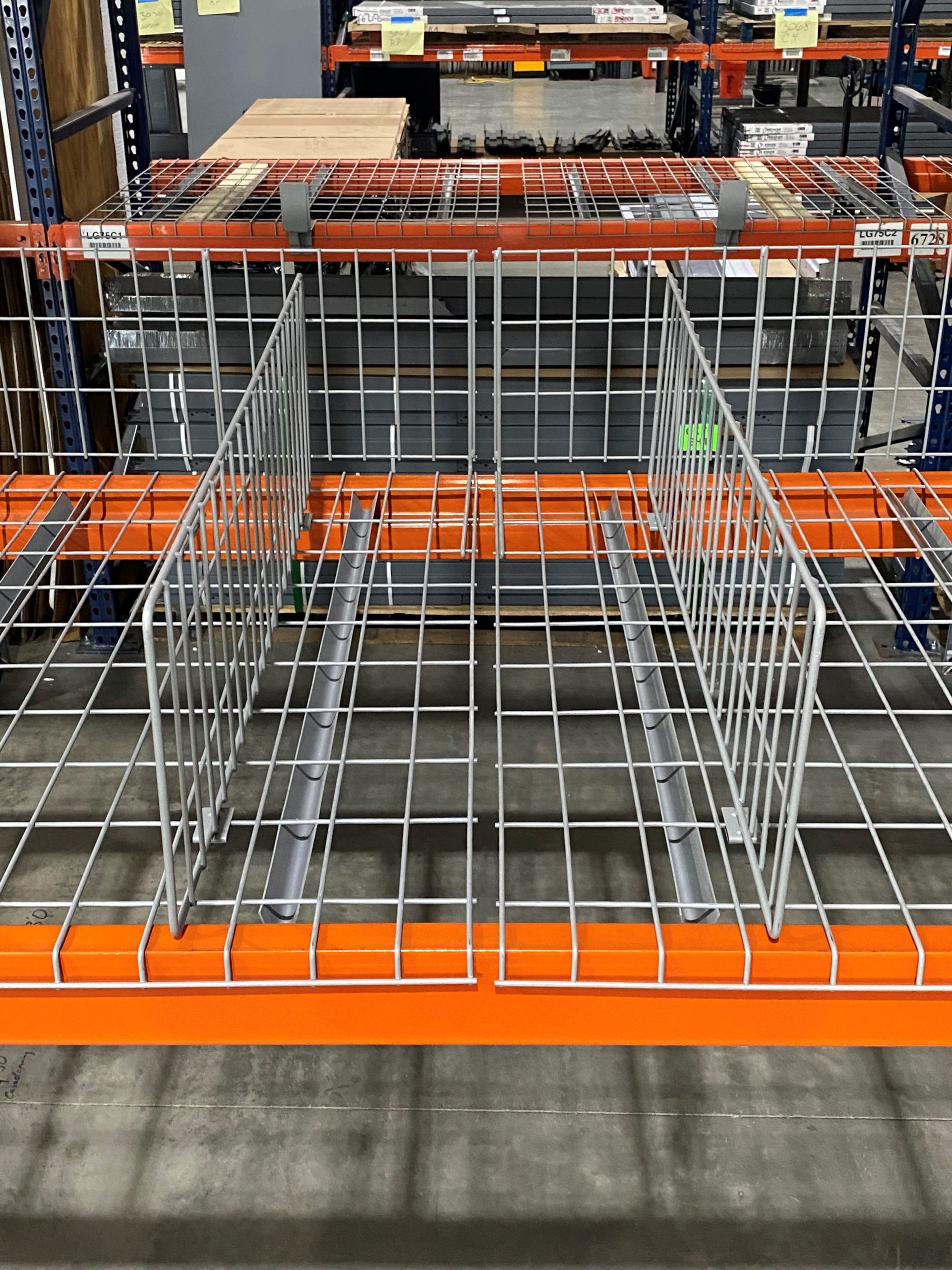
Clip-on wire shelf dividers may be one of the simplest pallet rack accessories we sell. They snap directly onto compatible wire mesh decking and run from the front toward the back of the shelf, creating defined locations for individual SKUs.
Standard dividers are constructed from 6-gauge wire and are approximately 12 inches high. Stock depths include 34″, 40″, and 46″ for use with compatible decking on 36″, 42″, and 48″ deep pallet rack. They’re designed around specific wire deck mesh dimensions, so compatibility matters. The source specifies decks with a 2″ or 2.5″ wide by 4″ deep mesh pattern. Before ordering a truckload of dividers, test one on your existing deck. Return freight is an expensive way to find out your mesh pattern is different.
Because the dividers clip into place rather than bolt to the rack, you can change the layout without tools. Move one divider over a few inches and you’ve got a wider SKU location. Move another and you’ve created two smaller pick locations. That’s useful in warehouses where inventory never seems to stay the same size for very long.
Wire shelf dividers organize inventory from side to side. Snap-in wire mesh backstops help control it from front to back. The backstop clips onto compatible wire decking at the rear of the shelf and helps keep hand-stacked boxes from being pushed off the back of the rack.
Combine dividers with a backstop and you can create individual storage compartments within a pallet rack shelf. That’s especially useful for carton and piece-pick operations where employees are constantly loading and retrieving smaller boxes. These backstops are intended for hand-stacked products—not as stops for pallet loads. A box stop and a pallet load stop are two very different things.
Sometimes the simplest warehouse products make the biggest difference. Snap-in wire dividers don’t require you to replace your pallet rack, rebuild the shelf, or create an entirely new picking system. They simply snap onto compatible existing wire decking and divide the shelf into individual storage locations.
That makes them particularly useful for warehouses handling a lot of SKUs. Instead of three different boxes slowly migrating into each other’s territory, each SKU gets its own location. Employees can see inventory through the wire mesh, replenish the right compartment, and pick without digging through a pile of mixed cartons.
Hanging wire dividers are the better choice when 12-inch-high snap-in dividers aren’t tall enough. These dividers are custom-made around the depth of the rack and the vertical clearance between beam levels, allowing the divider to extend from one shelf level to the next.
A candy-cane-style hook at the top hangs from the wire decking above, while formed wires at the bottom engage the deck below. Supporting the divider at both ends helps keep a taller panel in position and provides separation throughout the full shelf opening.
Hanging dividers work well for tall cartons, bags, packaged products, and other inventory that might lean over a short divider. They’re custom rather than stock, so expect more lead time and cost. But if your product is three feet tall, a 12-inch divider isn’t going to suddenly grow another two feet because you bought the cheaper one.
Wire Shelf Divider Features and Benefits
- Separates individual SKUs on pallet rack shelves
- Creates defined pick locations and storage compartments
- Snap-in and custom hanging styles available
- Installs on compatible wire or punched steel decking
- Snap-in styles require no drilling or bolting
- Dividers can be repositioned as SKU sizes change
- Wire construction maintains product visibility and airflow
- Stock sizes available for common pallet rack depths
- Hanging dividers accommodate taller shelf openings
- Backstops can be added to help contain hand-stacked boxes
- Helps reduce mixed inventory and misplaced products
- Improves visibility for picking and replenishment
- Works well for warehouses, distribution centers, manufacturing, and e-commerce picking
Wire Shelf Dividers for Pallet Rack FAQ
Should I use snap-in or hanging wire shelf dividers?
Start with the height of your product and the distance between beam levels. For shorter cartons and closely spaced shelves, a 12-inch snap-in divider is usually the simpler and less expensive option. If products are tall or beam levels are spaced farther apart, a custom hanging divider provides separation from the upper deck to the lower deck.
Will snap-in dividers fit my existing wire decking?
Maybe—and that’s why you should check before ordering a large quantity. Snap-in dividers are designed for specific deck depths and mesh patterns. Measure the rack depth, wire deck depth, and mesh spacing and compare them with the divider specifications. Better yet, test a sample on each type of existing wire deck in your facility before placing a bulk order. Wire decking that looks identical from the aisle isn’t always identical when you put a tape measure on it.
Can wire shelf dividers be moved after installation?
Yes. That’s one of the biggest advantages of snap-in dividers. They can be removed and repositioned as product sizes and SKU locations change. Hanging dividers are also removable, but because they’re custom-sized to the rack depth and vertical shelf opening, they offer less flexibility if beam spacing changes substantially.




