Boltless Shelving Applications
Boltless shelving applications range from tire and record storage to workbenches and mobile under-rack storage systems. The same basic design makes all of them work: steel posts and beams connect with rivets instead of nuts and bolts, creating an economical, adjustable storage system that is easy to assemble and reconfigure. Boltless shelving can be designed around different loads, shelf sizes, decking materials, and access requirements, making it useful in warehouses, distribution centers, automotive facilities, retail backrooms, manufacturing plants, and garages. Sometimes you don’t need a complicated storage system. You just need shelves that are strong, affordable, and easy to put together.
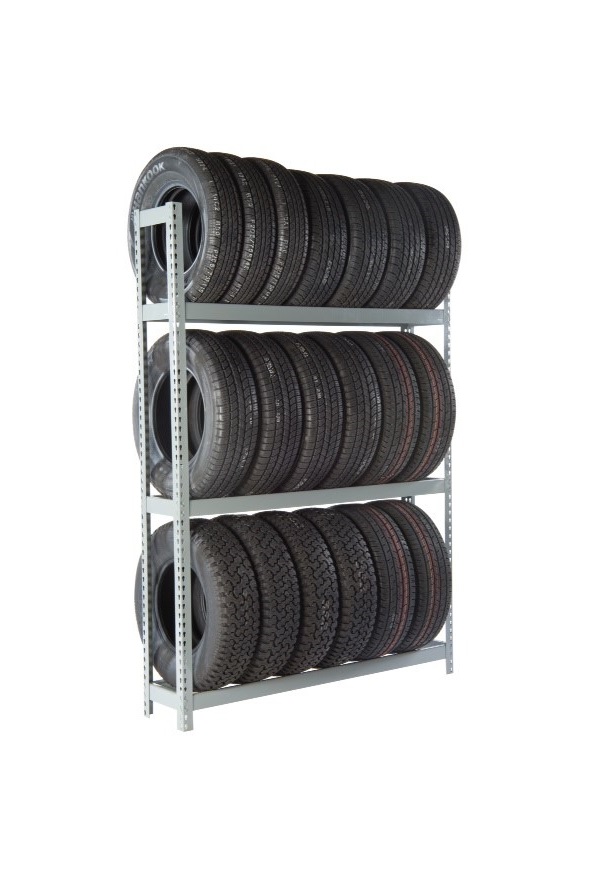
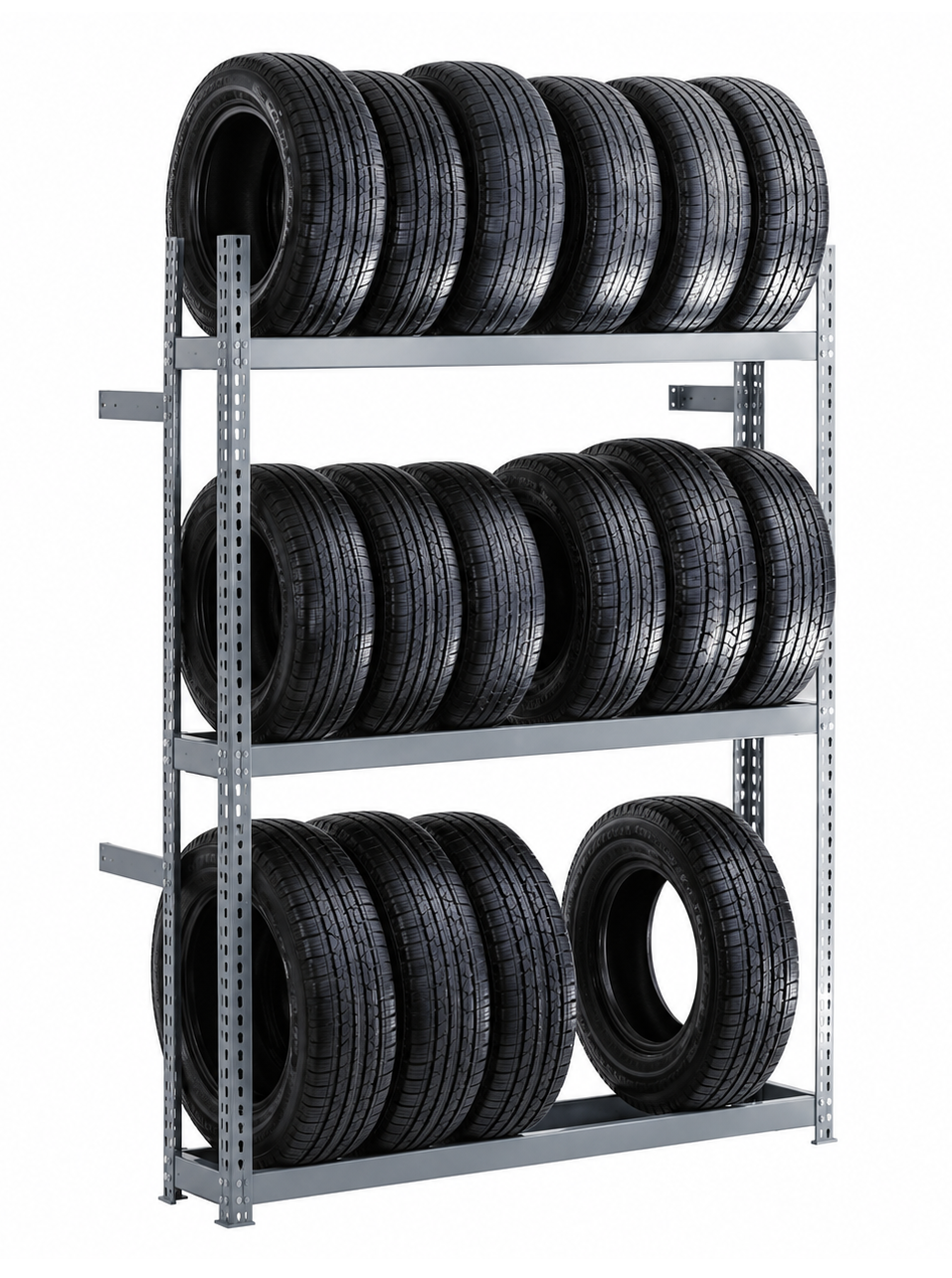
RiveTier boltless tire racks provide an economical way to store passenger tires while improving organization and access. They’re used by tire distributors, tire shops, automotive repair facilities, and even residential garages. Heavy-duty steel construction provides a more permanent and professional alternative to wood racks, while the boltless rivet connections make installation simple. The beams have rivets on each end that lock into key-shaped openings in the uprights. No nuts and bolts required.
Tire racks are available three, four, five, or six tiers high and in single- or double-entry configurations. Single-entry racks work well along walls, while double-entry racks can be installed in rows with access from both sides. Starter and add-on units make it easy to create long runs, and angle-shaped beams help keep tires positioned on the shelf while still allowing quick removal.
Showing all 5 resultsSorted by latest
RiveTier Tire Racks | Boltless Tire Storage Racks
Boltless Record Shelving for Banker Box Storage
Boltless Tire Rack
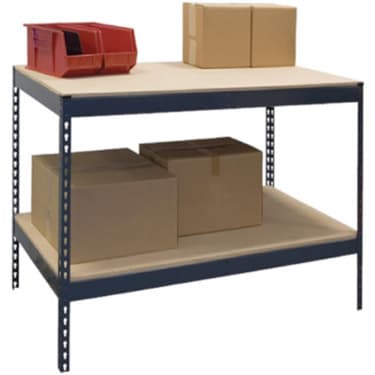
Boltless Workbench
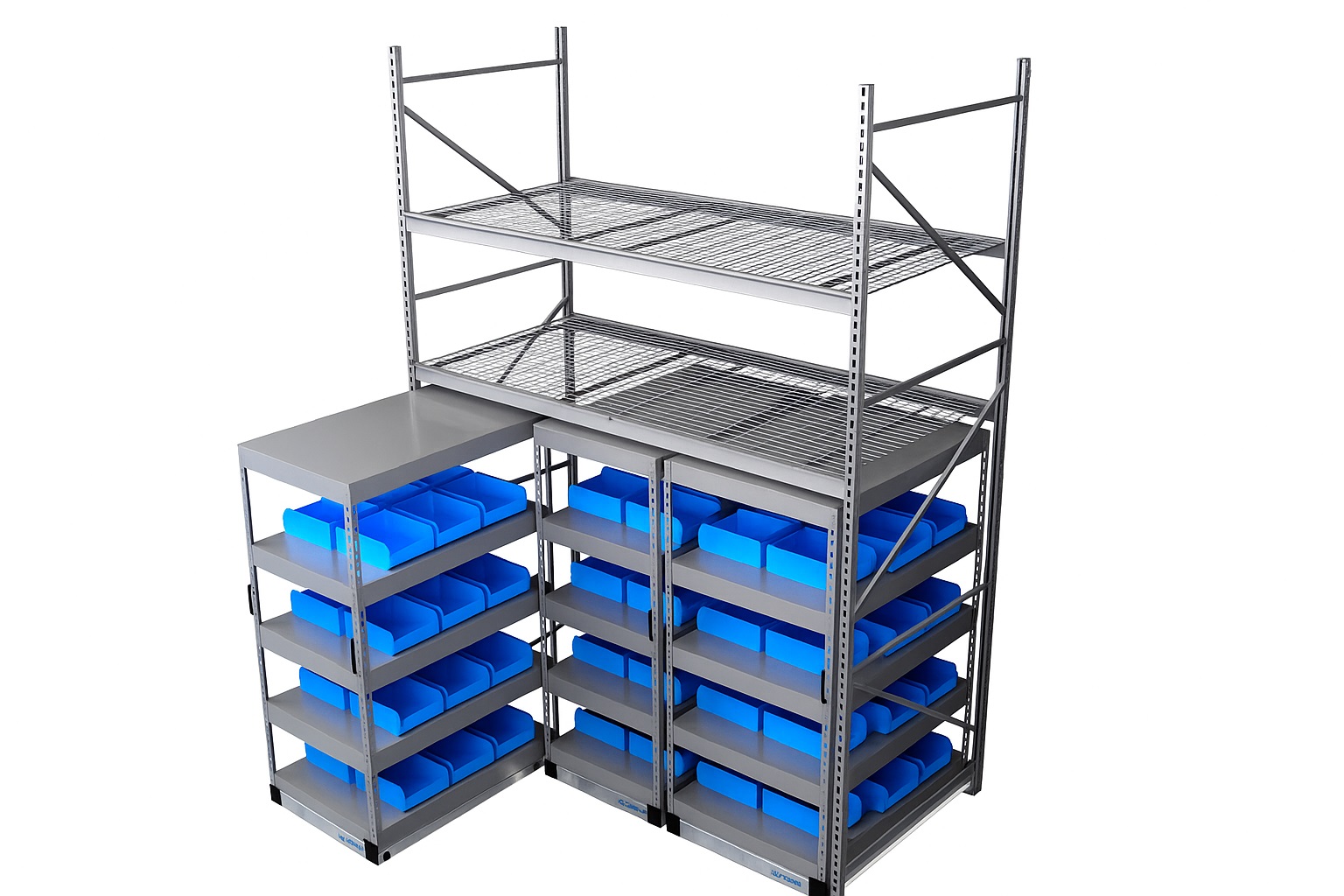
SpeedCell Aisle-Free Under-Rack Mobile Storage Shelving System
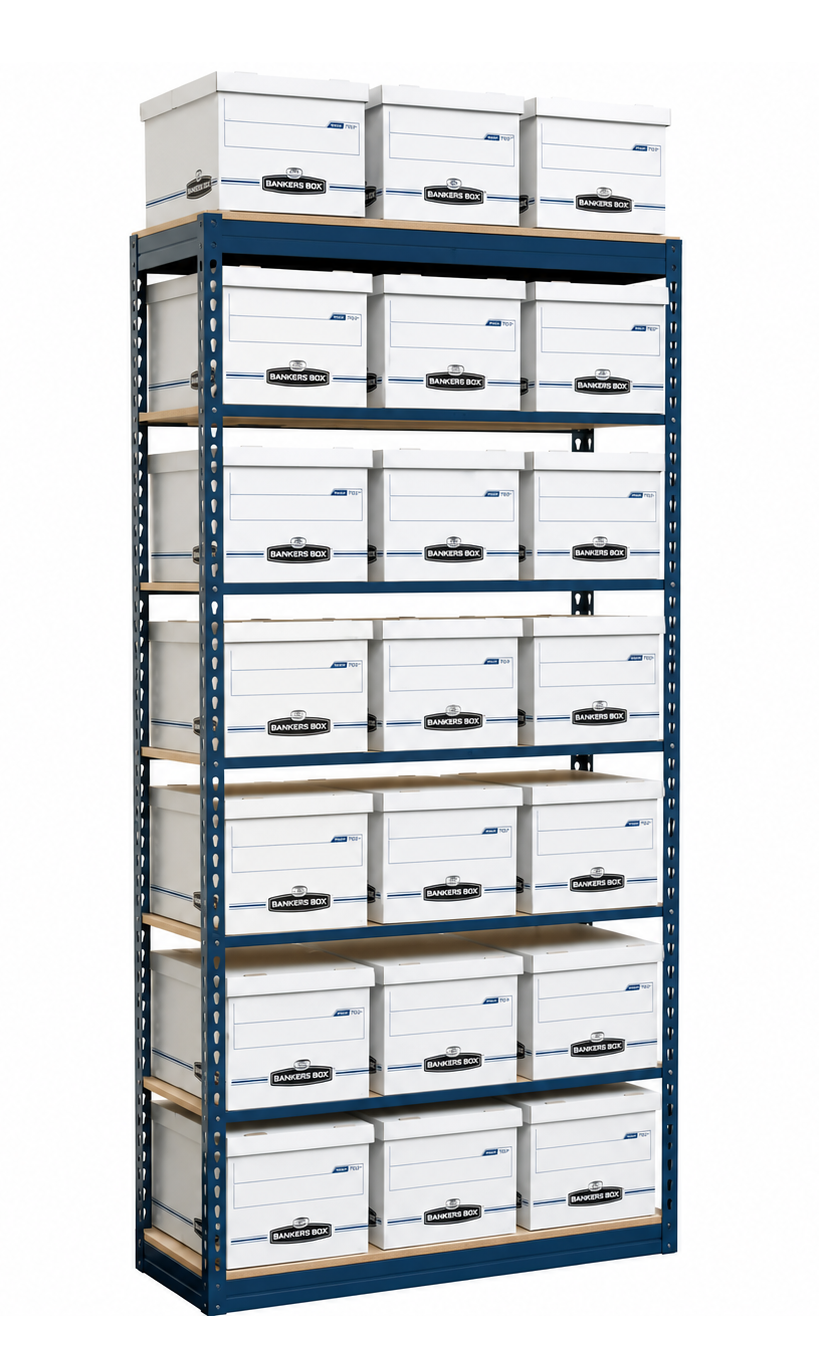
Record storage is a perfect application for boltless shelving. Archive boxes are relatively light, dimensions are predictable, and facilities often need to store a lot of them in a limited amount of space. Boltless record shelving provides open access without sway braces getting in the way and costs less than many conventional steel shelving systems.
A popular configuration uses 69″ wide shelving with depths of 15″, 24″, or 30″ and heights around 84″. Deeper shelves can provide double-sided or multiple-box storage depending on the layout. For larger archive operations, boltless shelving can also be incorporated into multi-level systems with mezzanines, catwalks, or order-picking equipment. The system is modular, so you can start with what you need today and add more shelving as the boxes keep coming. And somehow, the boxes always keep coming.
Boltless tire racks aren’t limited to passenger tires. Systems can be designed for motorcycle, ATV, automobile, and truck tires, making them useful for manufacturers, distributors, dealers, repair shops, and other automotive operations.
Fixed boltless shelving provides excellent selectivity because individual tires can be picked directly from the rack instead of moving stacks around on the floor. Portable tire racks are another option when mobility or seasonal storage is important. Stackable and collapsible designs can be used to transport tires and then knocked down when empty to recover floor space.
And before you decide to build tire racks out of lumber because it looks cheaper, figure in the labor. By the time somebody buys the wood, cuts it, builds the racks, and reinforces them, you may find that an industrial boltless tire rack wasn’t so expensive after all.
A boltless workbench takes the same simple rivet shelving design and turns it into an industrial work surface. Steel frames provide the support, while particle board, plywood, or laminated decking creates the work surface. Like boltless shelving, assembly requires no nuts and bolts. In most cases, a rubber mallet is about as complicated as the tool list gets.
Boltless workbenches are commonly used in manufacturing plants, warehouses, distribution centers, shipping and receiving areas, packaging operations, and assembly areas. Work surfaces can be configured approximately 31″ to 36″ high, with options including lower storage shelves and elevated shelves above the work surface. If you need a workbench and storage in the same footprint, this is a pretty economical way to get both.
The SpeedCell Aisle-Free Under-Rack Mobile Storage Shelving System takes unused space underneath pallet rack and puts it to work. Boltless shelving is mounted on a mobile base that travels along a low-profile guide system beneath the rack. Pull the shelving unit into the aisle when you need access, pick or replenish the product, and push it back underneath the rack when you’re finished. The aisle goes right back to being an aisle.
The big advantage is that you don’t need a permanent aisle between every row of shelving. The main warehouse aisle becomes the temporary access aisle, allowing small parts and other hand-picked inventory to be stored underneath pallet rack that might otherwise go unused. A urethane front wheel allows the shelving to move across the floor while the concealed guide track keeps the unit aligned.
Shelves are adjustable on 1-1/2″ increments and can provide approximately 400 to 600 pounds of capacity per shelf depending on the size and configuration. Decking options include particle board, solid steel, perforated metal, and wire mesh, with open or closed end panels available. It’s a simple idea: if you already paid for the floor space underneath your pallet rack, you might as well use it.
Frequently Asked Questions
What are the key design parameters to evaluate when configuring boltless record shelving for archive boxes? When engineering a boltless record storage layout, calculate the total box count per shelf to optimize bay width and depth. The standard 69″ wide by 24″ deep bay is widely recognized as the most efficient footprint, holding 20 standard banker boxes per level across a 4-box wide by 2-box deep configuration. Additionally, verify that floor slab loading capacities can support the concentrated weight of high-density paper archives, especially when building tall runs or integrating multi-tier mezzanine catwalks over 84″ in height.
How do angled tire rack beams improve picking efficiency and safety compared to flat shelving? Specialized boltless tire racks utilize custom-formed angle beams rather than flat step beams. The angled edge cradles the tread profile of the tire, locking it into a stable, upright position. This prevents tires from leaning, twisting, or rolling off the shelf while stored. Ergonomically, the open angle allows technicians to slide tires in and out of the rack smoothly without lifting them over a raised front beam ledge, accelerating order selection and reducing physical strain.
What installation suggestions apply to implementing aisle-free under-rack mobile shelving systems? Installing under-rack mobile shelving requires a level concrete slab to ensure that mobile bases glide smoothly without binding or rolling unexpectedly. The low-profile floor track must be anchored flush beneath the host pallet rack uprights, ensuring that the front urethane wheels clear all structural footplates and aisle clearance lines. Installers should set the 1.5″ adjustable shelf levels to match specific SKU bin sizes before loading the mobile carriages to maintain a balanced center of gravity during operation.




