Corrugated Steel Containers with Drop Gate
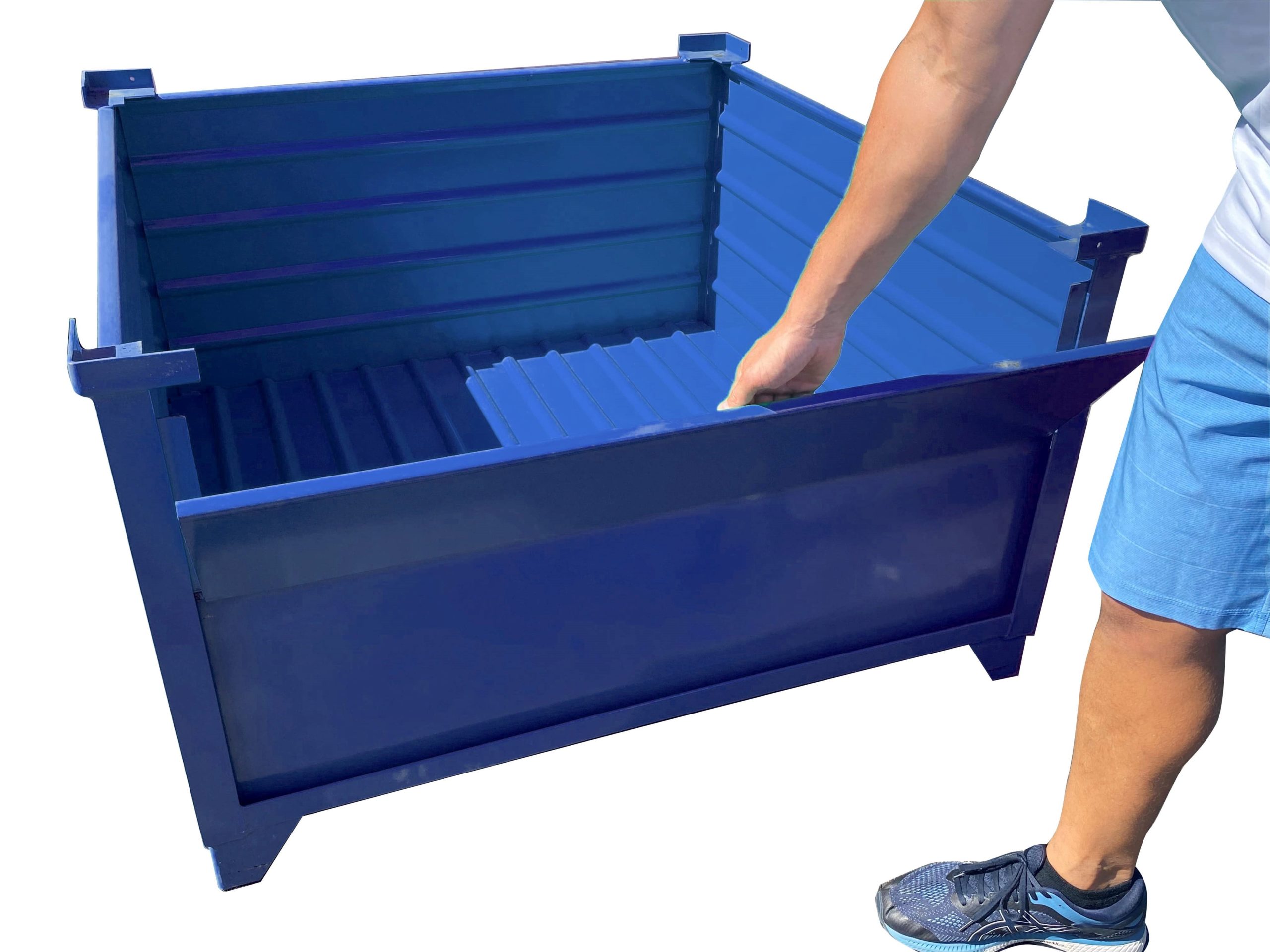
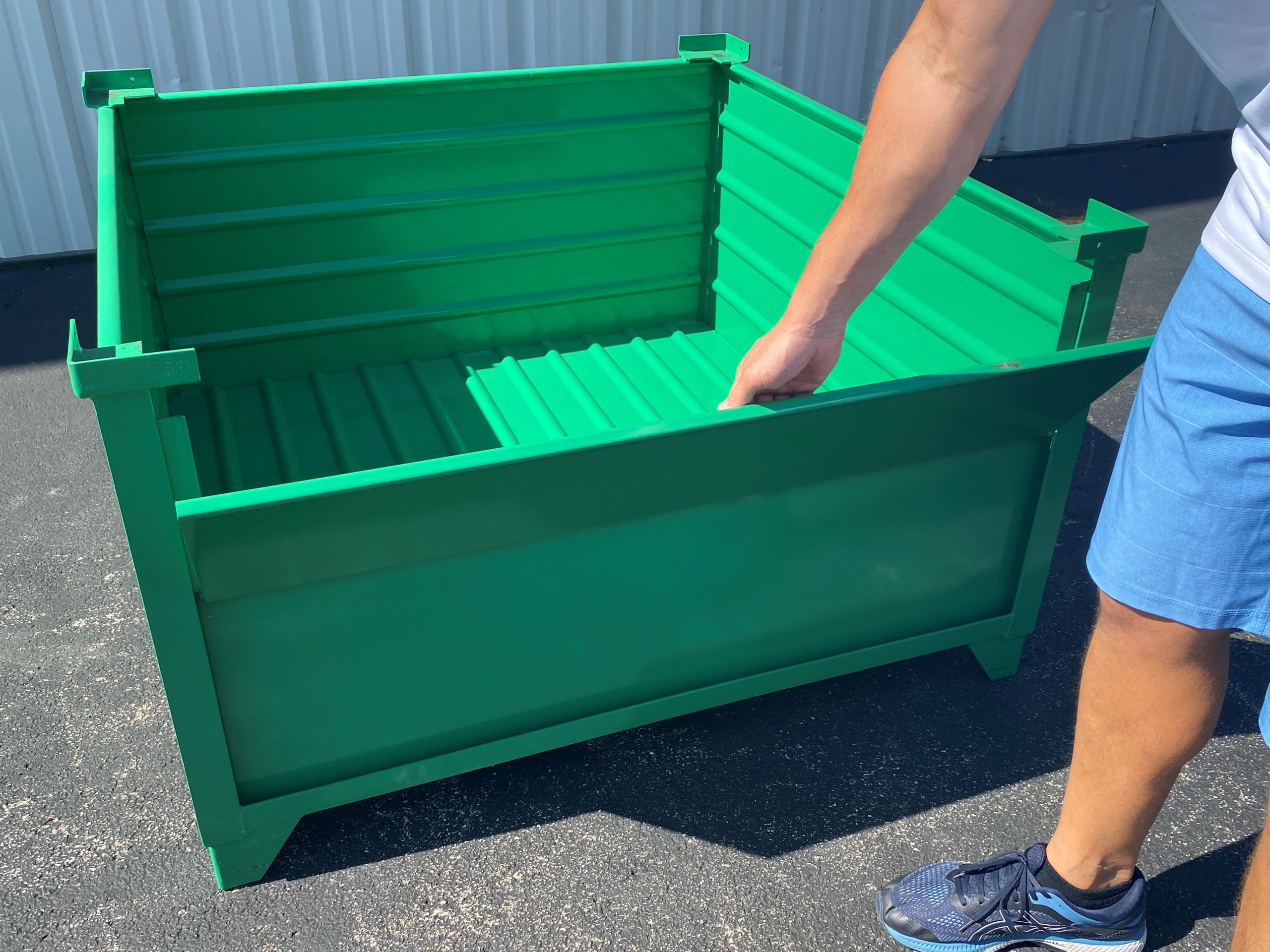
Corrugated steel containers with a drop gate are heavy-duty, industrial-grade storage bins constructed from sheet steel that features alternating ridges and grooves (corrugations) for enhanced structural strength. These rugged containers are equipped with a hinged, fold-down gate typically located on one of the long side walls. This design combines the weight capacity of solid steel containment with the ergonomic accessibility of an open-front bin, making them a staple in heavy manufacturing, automotive stamping, and scrap metal processing facilities. Half-drop gate sizes include 30” x 35” x 30”, 35” x 35” x 30”, 42” x 42” x30”, 42” x 48” x 30”, and 48” x 48” x 30”.
The primary advantage of the corrugated steel design is its strength-to-weight ratio. The rolling or pressing of corrugations into the steel sheets creates natural structural ribs that drastically increase the container’s resistance to bending, twisting, and bowing under massive internal pressures.
Having an integrated drop gate introduces an advantage for high-volume assembly lines and material handling workflows. When these containers are stacked vertically to maximize warehouse floor space, operators can still fold down the upper portion of the gate to access the materials inside without needing to unstack the units.
Showing all 6 resultsSorted by latest
Benefits of Corrugated Steel Bulk Containers
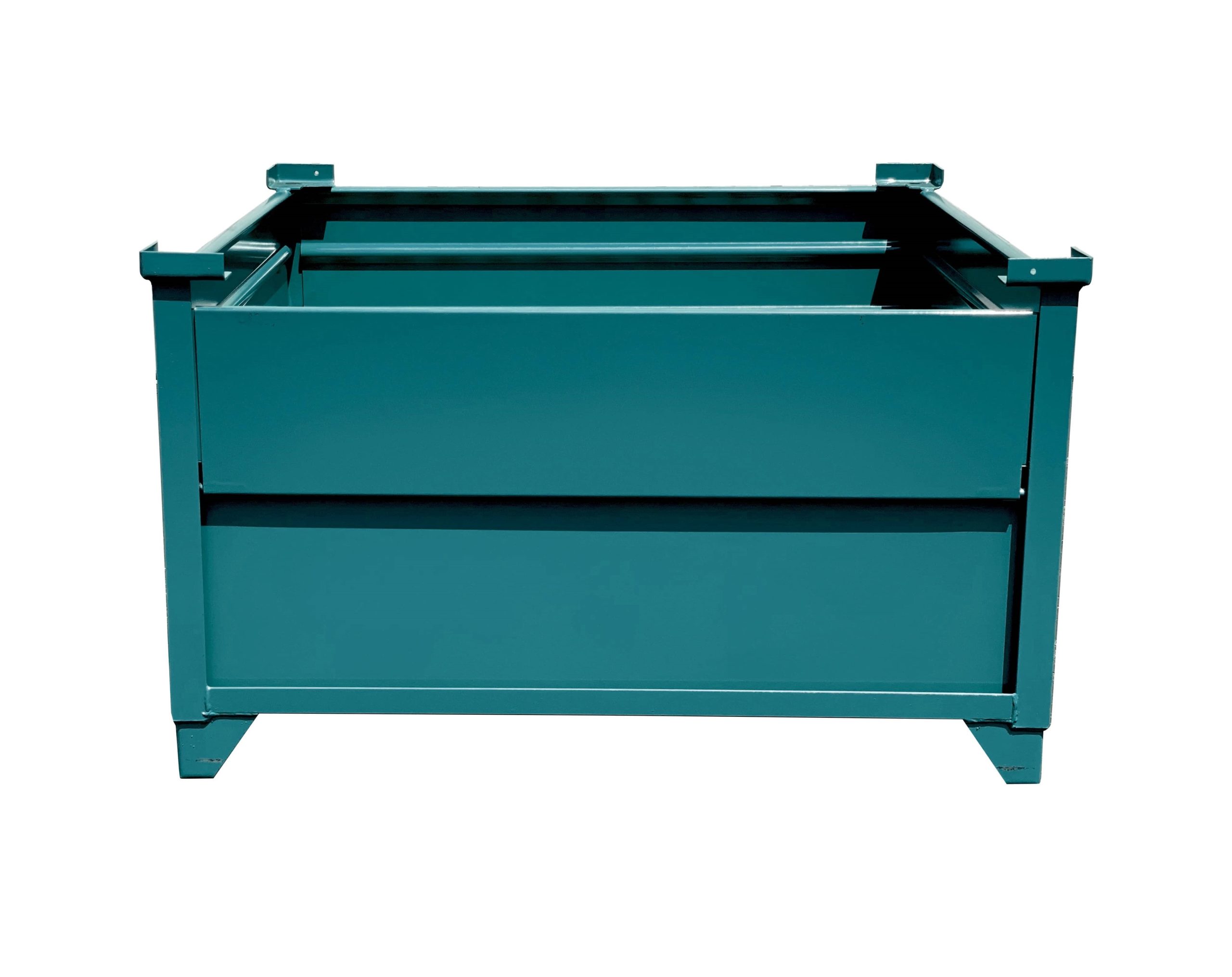
30″ x 35″ x 30″ Topper Stackable Corrugated Steel Container with Half Drop Gate PN. 51017-DG35-T

42″ x 42″ x 30″ Topper Stackable Corrugated Steel Container with Half Drop Gate PN. 51009-DG42-X
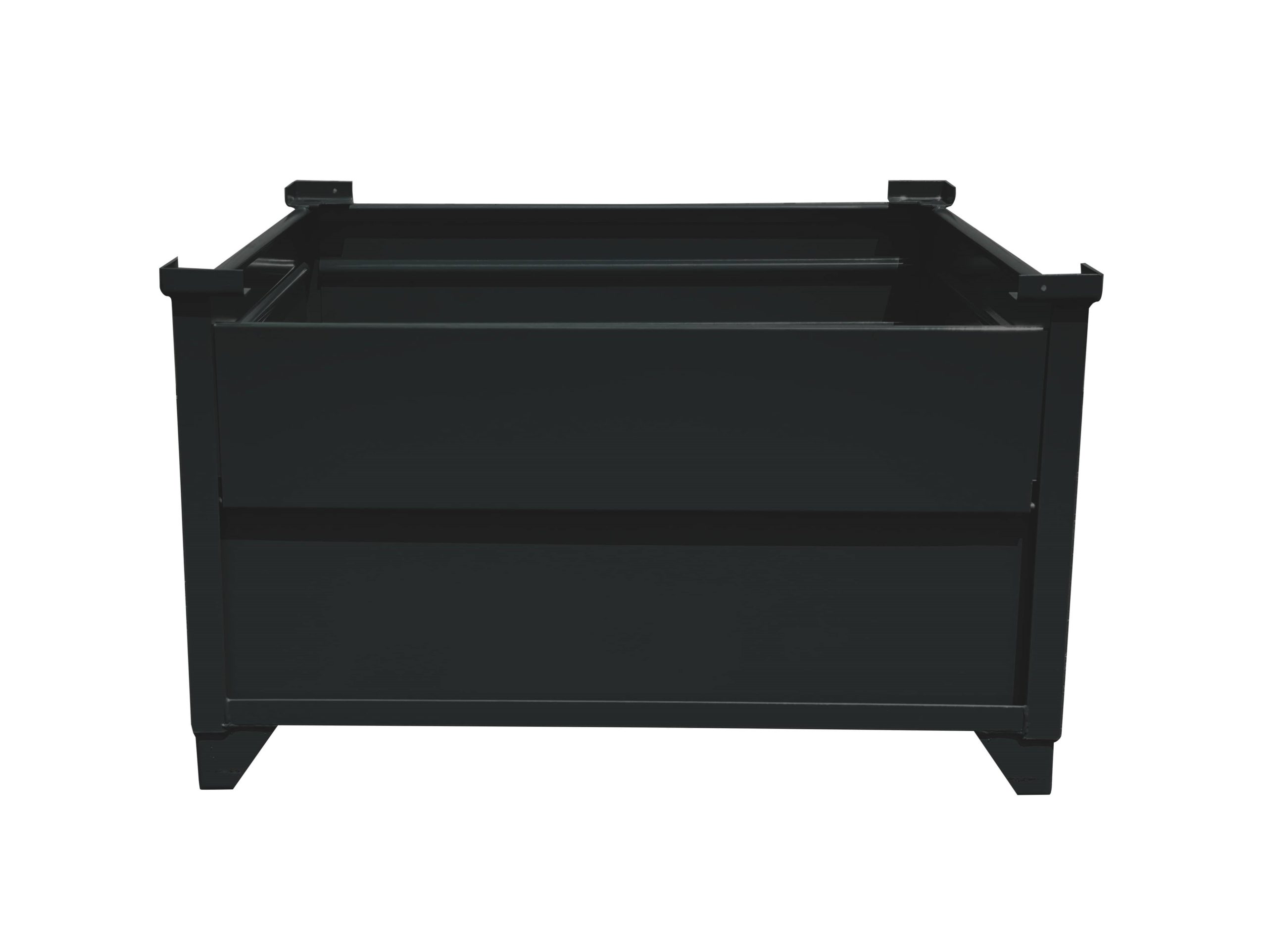
42″ x 48″ x 30″ Topper Stackable Corrugated Steel Container with Half Drop Gate PN. 51010-DG48-Z

48″ x 48″ x 30″ Topper Stackable Corrugated Steel Container with Half Drop Gate PN. 51011-DG48-B
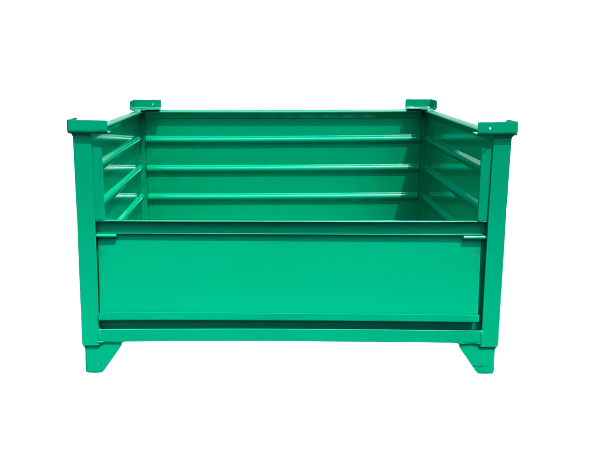
Most Popular 48″ x 48″ x 30″ Corrugated Steel Bulk Container with Half Drop Gate
Corrugated steel containers with drop gates have a long operational lifespan compared to alternative materials. They are built to withstand severe forklift impacts, extreme temperature fluctuations in heat-treating or foundry environments, and exposure to industrial oils and fluids. When equipped with heavy-duty corner tiering lugs or stacking pockets, these containers can be safely stacked up to four or five units high while fully loaded.
Call us at 800-763-9020 or e-mail us at sales@rackandshelf.com to discuss your requirement.
Frequently Asked Questions
What are the industry benchmark standards for steel thickness and capacity in corrugated containers?
The standard industrial benchmark for heavy-duty corrugated steel containers typically ranges between 11-gauge and 7-gauge sheet steel, depending on the intended weight load. Bins engineered for standard manufacturing environments are generally rated for weight capacities between 2,000 lbs and 6,000 lbs each. To meet rigorous industrial standards, the lower base assembly must feature heavy-duty, roll-formed channel steel legs or continuous runners that permit safe stacking up to 4 or 5 units high under full capacity.
What maintenance routine is required to keep drop gates functioning safely over time?
Drop gates bear the brunt of mechanical wear and forklift impacts during daily operations. To maintain a safe work environment, establish a quarterly inspection protocol focusing on:
- Latching Mechanisms: Ensure slide bolts, pin locks, or spring-loaded latches are perfectly straight and engage completely. Damaged latches can fail unexpectedly when the container is under pressure from heavy internal loads.
- Hinge Inspections: Clean out metal shavings, dirt, and industrial grease from the gate hinges, and apply a heavy lubricant to prevent binding.
- Deformation Checks: Look for severe bowing in the drop panel. If a gate is bent from a forklift tine strike, it may not close flush, compromising the structural integrity of the container when units are stacked above it.
What design ideas can we implement to make these containers more compatible with forklifts and automated systems?
To maximize the utility of your corrugated containers, consider specifying four-way fork entry bases rather than standard two-way entries; this gives forklift operators the flexibility to approach and pick up the bin from any side in tight aisles. For facilities utilizing overhead crane hoists, adding crane lifting eyes or heavy-duty corner tiering lugs is essential for safe vertical transport. Additionally, if you plan to integrate the bins into automated guided vehicle (AGV) workflows or standard roller conveyors, you can specify custom target plates, barcodes, or flat bottom runners to ensure seamless mechanical transit and automated tracking.




