Bottle Flow Rack
Bottle flow rack is a gravity-fed storage and picking system designed to keep bottles and containers organized, protected, and moving toward the picker. Flow lanes or bottle support bars can be installed in existing pallet rack to create dedicated picking positions for wine bottles, glass bottles, plastic containers, and other packaged products. As a bottle is removed from the front, the next bottle moves forward into position. The result is faster picking, better use of rack space, less searching and reaching, and fewer loose bottles sitting around where they can be damaged. Better yet, many bottle flow systems retrofit the pallet rack you already own, so you don’t necessarily need an entirely new rack system.
Plastic Container & Wine Bottle Flow & Pick Racks: Our bottle flow and pick racks were originally designed to handle high-end wine bottles, but it didn’t take long to figure out that the same concept works for a lot more than wine. These racks can be used for glass and plastic bottles, containers, protein powder bottles, hand sanitizer bottles, and other products that need to be stored individually and picked quickly.
The system uses individual flow lane inserts that drop over the beams of standard selective pallet rack. Bottle pick racks are available for two common rack depths, with 42″ and 48″ deep flow lanes. They can retrofit structural C-channel beams or roll-formed beams with a 1-5/8″ step. The tracks are constructed from 14-gauge pre-galvanized steel with rolled edges for safer handling and can be secured to the rack beam with optional Tek screws.
Showing all 2 resultsSorted by latest
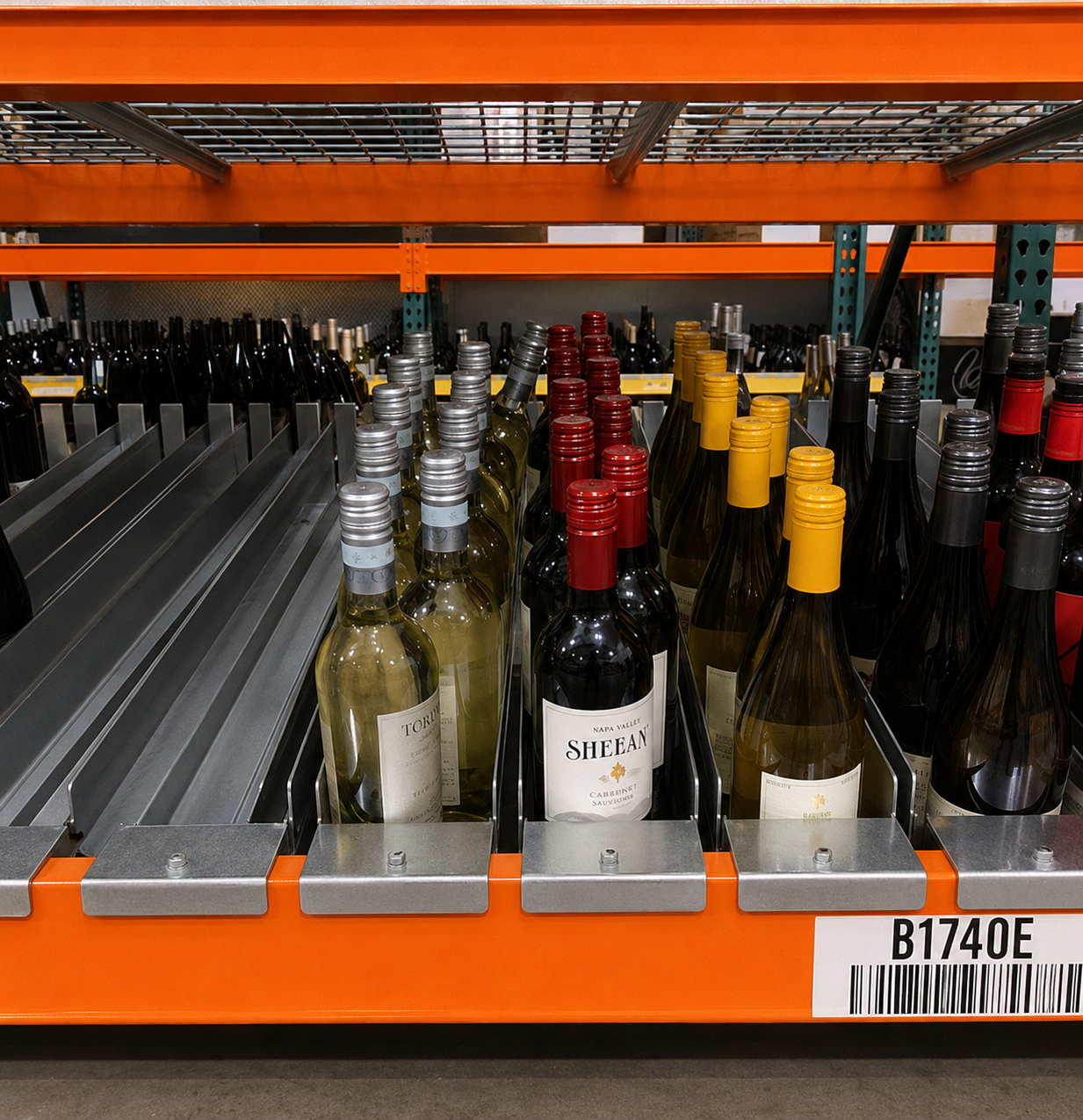
The concept is simple. Pick a bottle from the front and the bottles behind it move forward. No reaching to the back of the shelf and no constantly rearranging inventory. The rack can be configured for front loading and picking or loaded from the rear and picked from the front for First-In, First-Out (FIFO) inventory rotation.
Another advantage is that you don’t have to dedicate the entire rack to bottle picking. Many customers convert the lower levels into bottle flow picking positions while keeping the upper levels for full pallet storage. Now you have reserve inventory above and individual bottle picking below, all within the same pallet rack footprint.
Flow lanes are available in different sizes, including small and medium configurations and larger 6″ wide troughs. But don’t assume every bottle flows the same. Plastic creates more drag than glass and may require a steeper pitch. That can often be accomplished by raising the rear pallet rack beam. Before designing the system, we need to know what you’re flowing—glass or plastic—along with the bottle or container dimensions and weight. Those details matter.
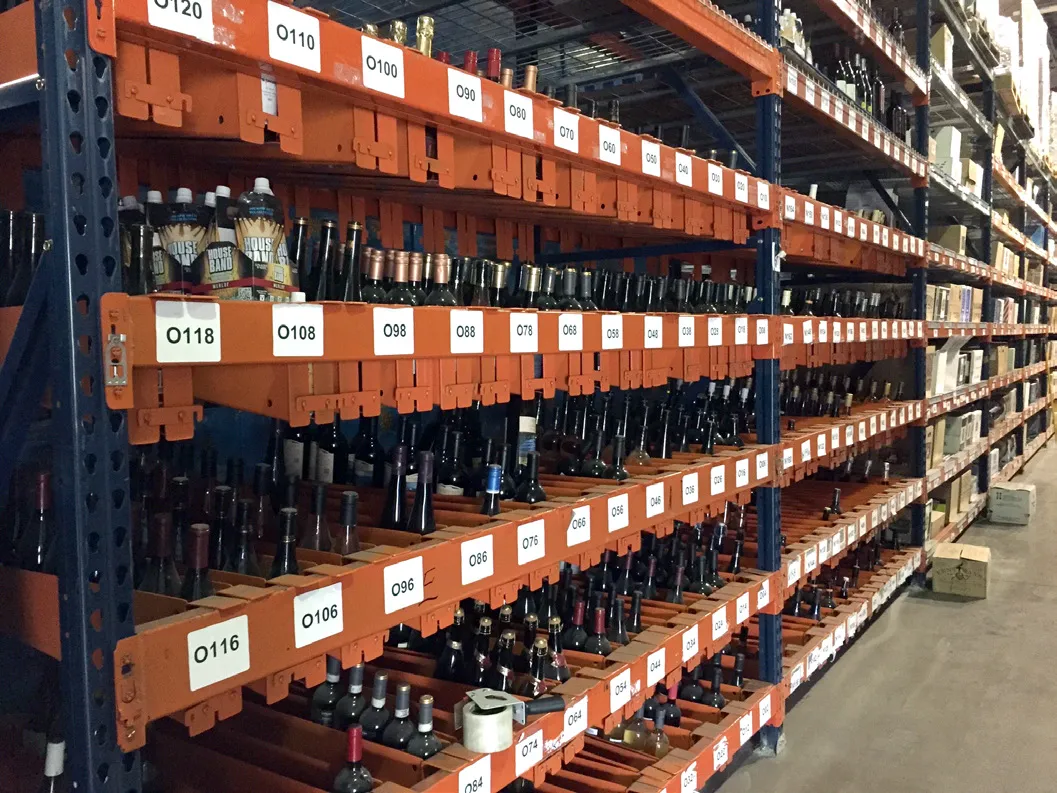
Wine Bottle Flow Rack is designed to store and pick individual bottles while making better use of existing pallet rack space. It is particularly useful for split cases, broken cases, specialty wines, and individual bottles that can be difficult to organize and protect on a conventional pallet rack shelf.
The goal is storage density and picking efficiency. Instead of having loose bottles spread across shelves or sitting in partially opened cases, individual bottles have dedicated storage positions. Pick a bottle and the next one is ready to go. That helps protect inventory while allowing employees to pick more bottles with less reaching and searching.
The wine bottle flow rack itself is surprisingly simple. You could call the bottle support bar a pallet rack accessory, and you wouldn’t be wrong. The system uses drop-in wine bottle support bars that retrofit standard 42″ deep pallet rack. Install the supports at the beam level and you can turn ordinary pallet rack into dedicated bottle storage without replacing the rack.
That’s the beauty of the system. You are taking rack space you already own and making it work harder. Lower levels can be used for individual bottle picking while upper levels remain available for case or pallet storage. For wine distributors and other beverage operations dealing with individual bottles and split cases, that can mean more bottles stored in the same space and faster picking when orders need to get out the door.
Bottle Flow Rack FAQ
Can bottle flow rack be added to my existing pallet rack?
In many cases, yes. Bottle flow lanes and wine bottle support bars are designed to retrofit common selective pallet rack systems. Available options include systems for standard 42″ and 48″ rack depths as well as structural C-channel and roll-formed beams. Before ordering, verify your rack depth, beam style, beam spacing, and the dimensions of the bottles or containers you plan to store.
How much slope does a bottle flow rack need?
That depends on the product. Glass bottles generally roll or slide differently than plastic containers, which tend to create more drag. Plastic bottles may require a steeper pitch to provide reliable gravity flow. In many pallet rack systems, the pitch can be adjusted by raising the rear beam. Don’t guess at the slope. Bottle material, dimensions, weight, and bottom design should all be considered when selecting and setting up the flow lane.
Can bottle flow rack be set up for FIFO inventory?
Yes. Load the bottles from the rear and pick them from the front and you have a First-In, First-Out (FIFO) system. This configuration keeps older inventory moving toward the picking face as new inventory is loaded from behind. The system can also be configured for loading and picking from the same side when FIFO rotation isn’t required.
What should I check before installing bottle flow rack?
Start with the rack and then look at the bottle. Confirm pallet rack depth, beam type, beam condition, available vertical clearance, and how the flow tracks or support bars will attach to the rack. Then provide the bottle material—glass or plastic—along with its dimensions and weight. After installation, periodically inspect the tracks, attachment points, support bars, and rack beams for damage or movement. And test the actual bottle before committing to a large system. A bottle flow rack only works if the bottle actually flows.




