FAQs about Pallet Rack Protection
Are guard rails required by OSHA or insurance carriers?
While OSHA doesn’t explicitly mandate guard rail in every application, it requires employers to protect workers from recognized hazards, including forklift traffic. As a result, guard rail is often the simplest and most effective way to meet OSHA’s “duty to protect.”
Insurance carriers and risk managers frequently recommend or require guard rails in high-risk impact zones to reduce claims and protect property. Installing properly rated guard rail can also lower risk-assessment scores and support liability reduction.
Where should guard rail be installed in a warehouse or distribution center?
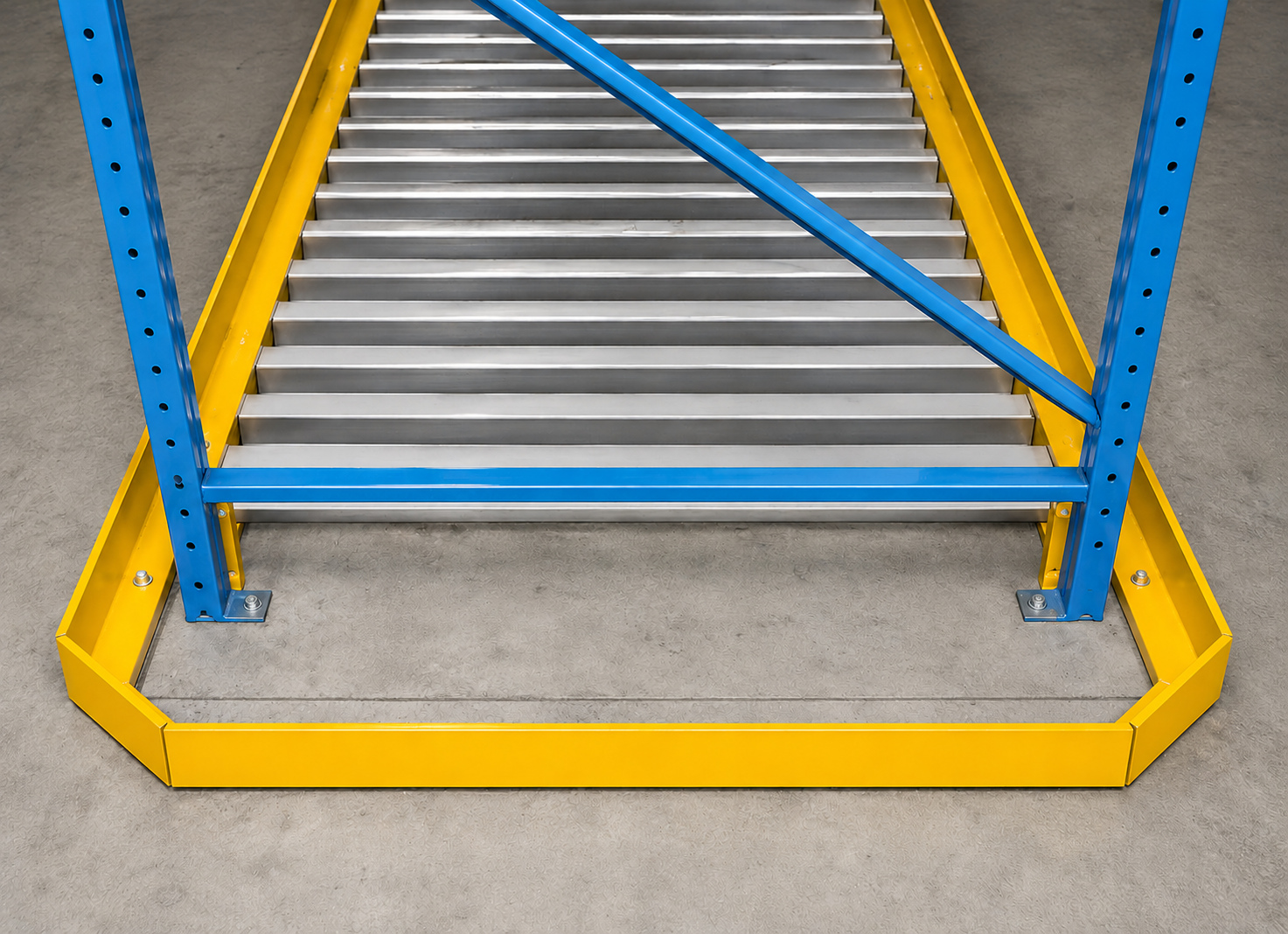
Guard rail should be installed in any location where pedestrians, equipment, or critical assets need protection from moving forklifts or pallet jacks. Common installations include:
- Perimeter protection around pallet rack and rack uprights
- Around machinery, robotics, conveyors, and workstations
- Along pedestrian aisles or walkways
- Surrounding electrical panels, control boxes, compressors, and HVAC units
- Protecting dock doors, dock levelers, and overhead door tracks
- Around in-plant offices or modular office structures
- Near inventory staging areas or traffic lanes
Safety managers often perform facility-wide hazard assessments to determine the right guard rail layout.
How strong is industrial guard rail and what impact can it withstand?
Industrial guard rail is engineered to withstand significant forklift impact—often 10,000 lbs. or more at 4 mph, depending on the system and configuration. Heavy-duty rails and posts use thick-gauge steel, reinforced mounting plates, and energy-absorbing shapes designed to deform slightly under extreme load without failing.
Many manufacturers publish independent impact-rating tests, helping safety managers match the guard rail strength to the hazard level. We recommend only buying maximum impact resistance guard rail for high-traffic or high-risk areas. When employee safety is at risk, you do not sacrifice quality and strength for low prices.
What types of guard rail systems are available?
Most facilities choose one of the following standard guard rail designs:
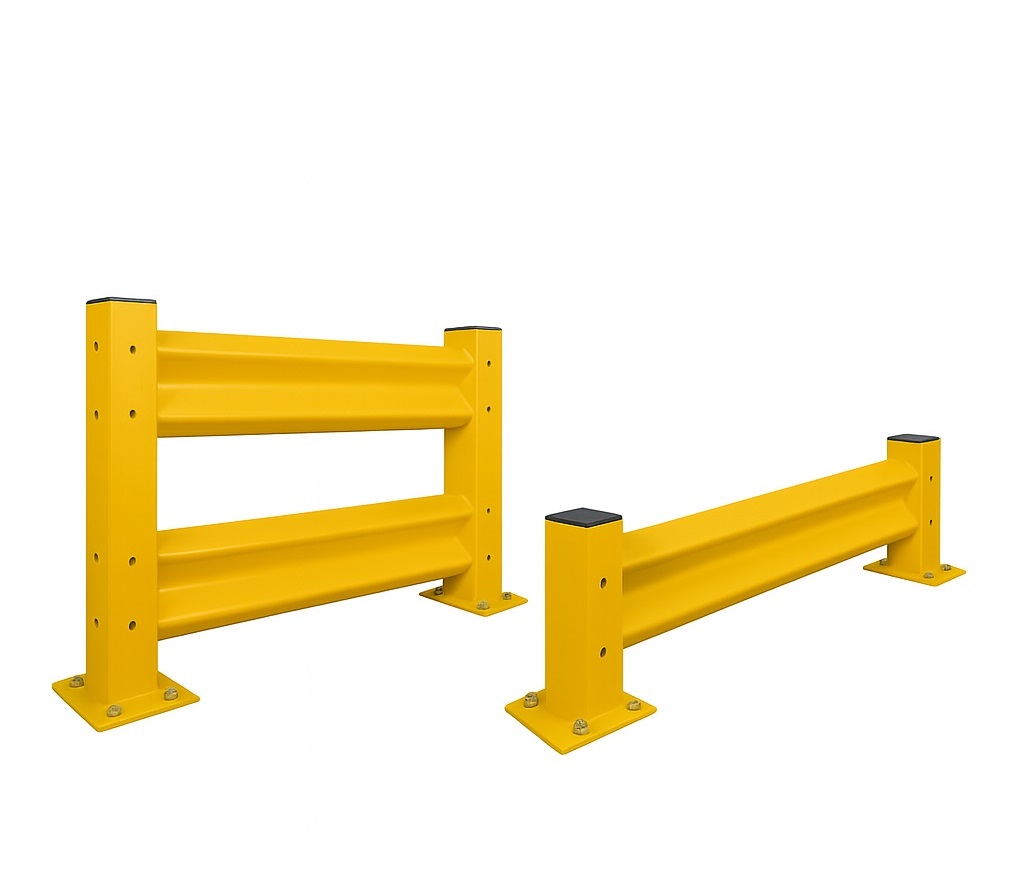
- Single-rail/ single-tier systems – ideal for pedestrian walkways, end of aisles, and light-impact zones
- Double-rail/ double-tier systems – recommended for forklift aisles and high-impact areas
- Lift-out guard rail – removable sections for occasional equipment access and pass through
- Heavy-duty guard rail – Although guard rail is offered with different impact ratings, we recommend only buying maximum impact resistance guard rail for high-traffic or high-risk areas. Don’t cut corners on safety.
Posts are typically surface-mounted with anchors and accept rails that bolt into place.
What is industrial guard rail and why is it used in warehouses and manufacturing facilities?
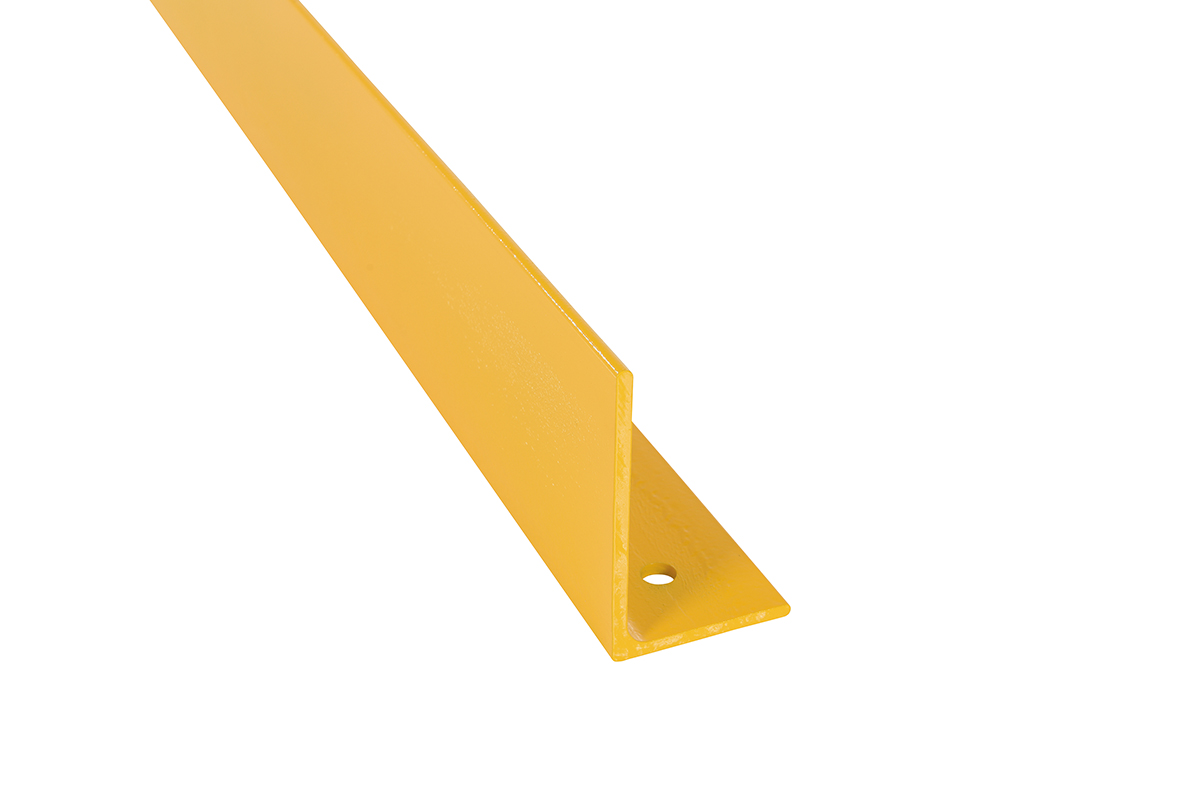
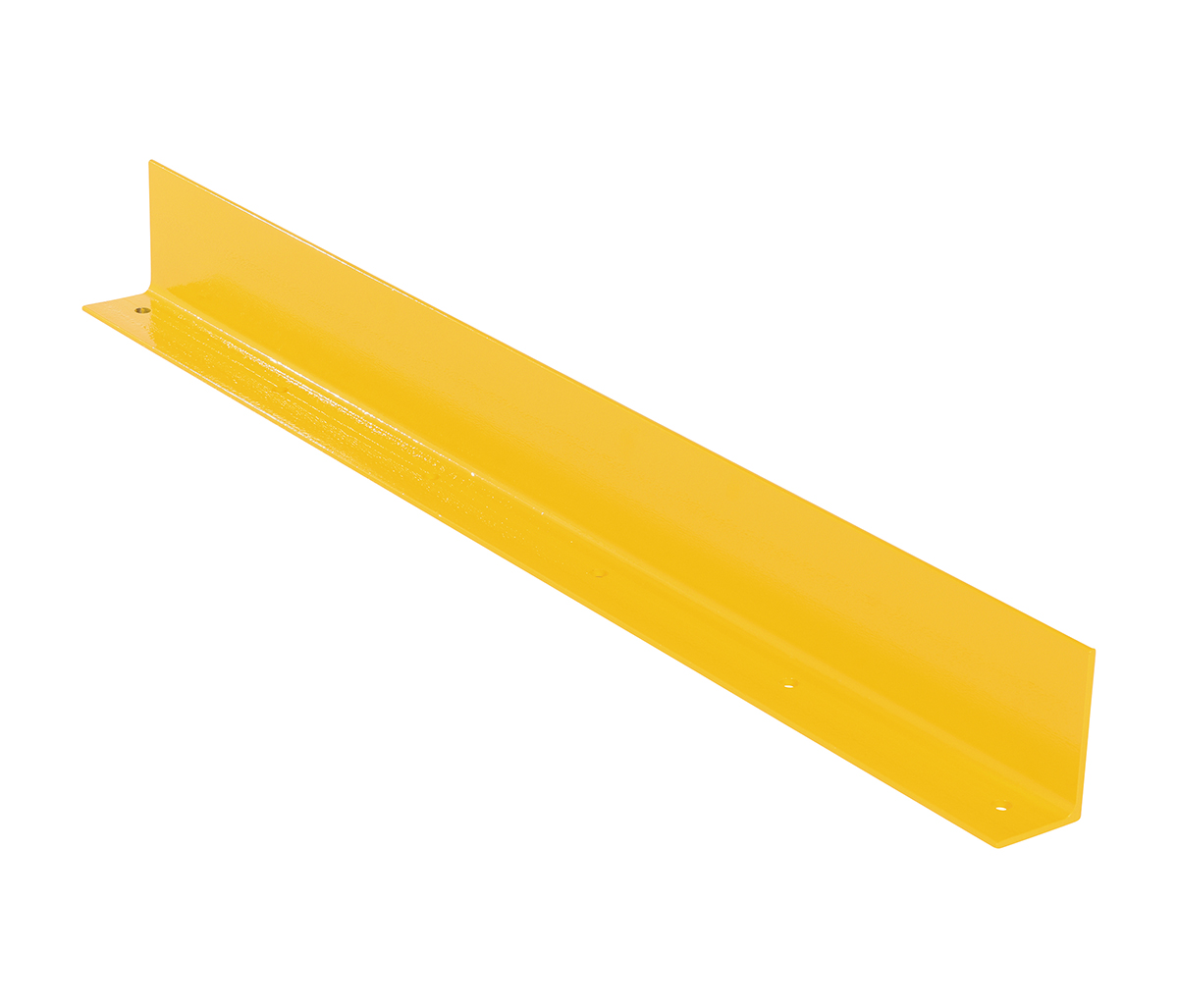
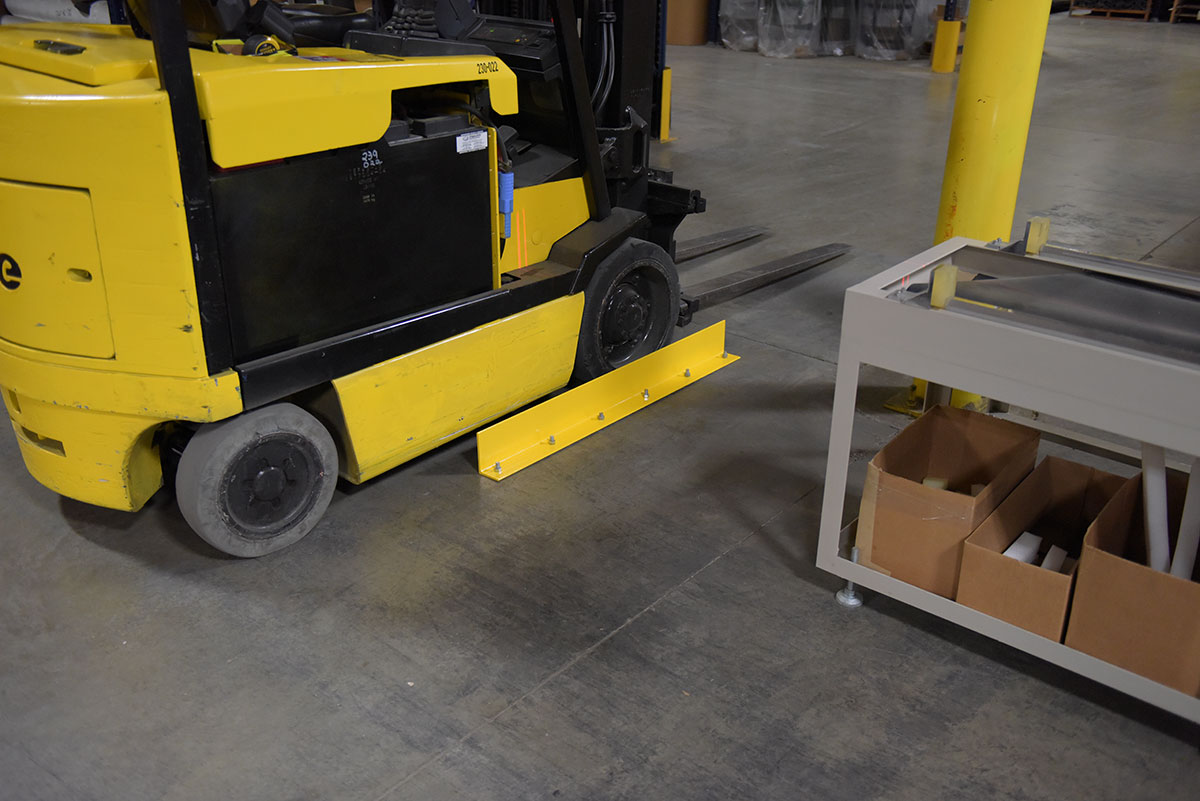
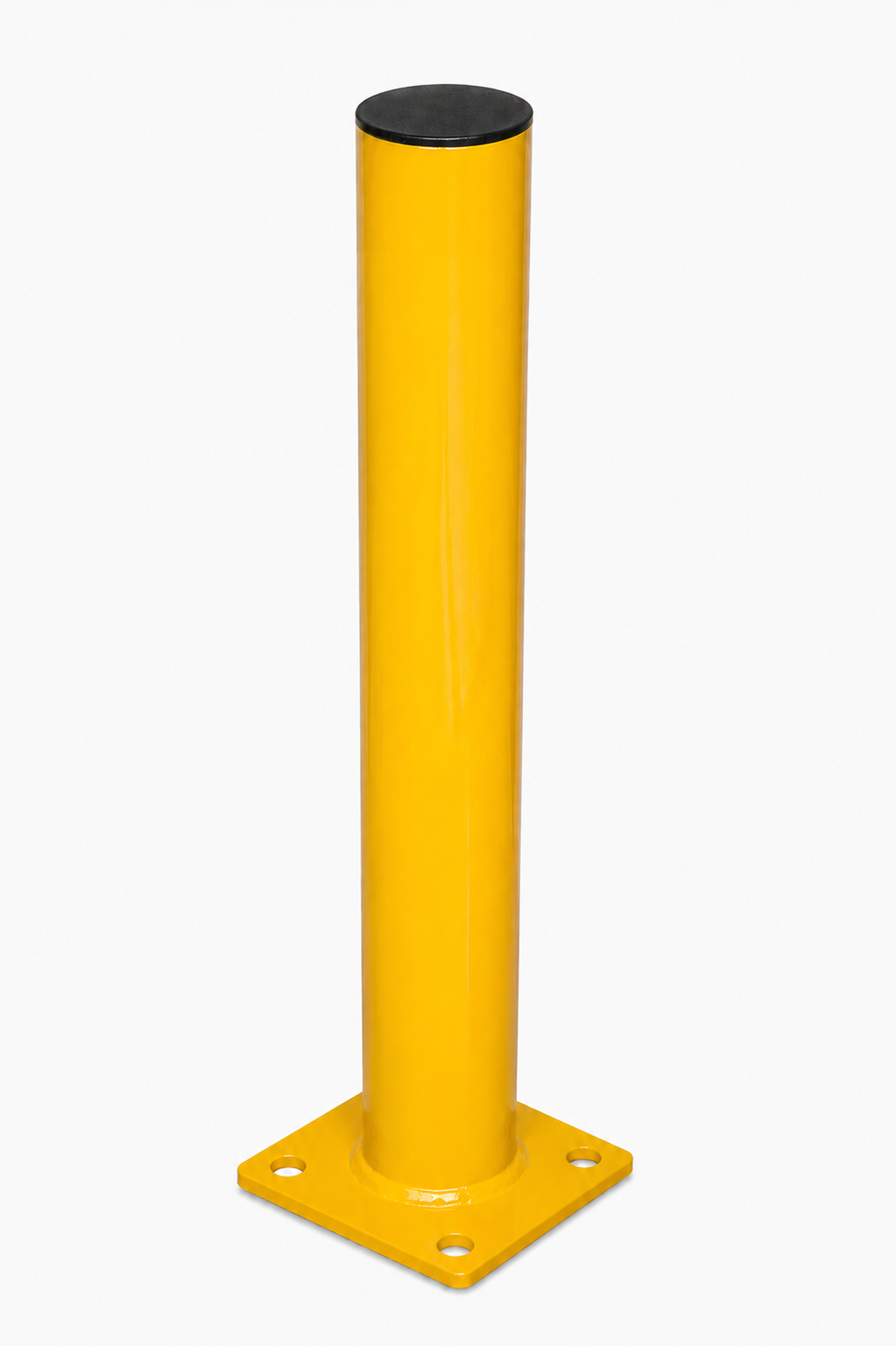
Industrial guard rail is a heavy-duty steel safety barrier designed to protect people, equipment, inventory, and building infrastructure from forklift impacts and traffic accidents. Guard rail creates a clearly defined safety zone around pedestrian walkways, machinery, pallet racks, workstations, electrical panels, offices, and loading-dock areas. It acts as a physical shield, absorbing the force of forklift collisions and preventing costly damage or injuries.
Can U-Dividers be customized for different pallet types, rack styles or applications?
Absolutely. Many warehouses use non-standard pallet sizes, GMA pallets with heavy overhang, large bulk bins, drums, or mixed-load SKUs. Custom options include
- Custom depths (32″ to 60″+)
- Extra-wide or narrow channels for larger or smaller flue space
- Heavy-duty reinforcement for high-weight pallets
- Powder-coated color options for inventory zoning
- Special brackets to fit structural rack or all major rack brands
Custom U-Dividers are common and often inexpensive compared to the cost of a failed fire inspection or damaged product.
Do U-Dividers help with fire-code compliance?
Yes, this is one of their primary functions. U-Dividers help maintain the transverse flue space required under most modern fire codes (NFPA guidelines and jurisdiction requirements). Proper flue space ensures:
- Vertical water penetration from sprinklers
- Heat release and smoke evacuation
- Reduced fire spread across pallet loads
While U-Dividers don’t guarantee compliance by themselves, they help create a consistent, code-friendly flue space that inspectors and insurance carriers prefer.
What standard sizes and styles of U-Dividers are available?
U-Dividers come in a variety of depths and mounting styles to match different racking systems. Common features and options include:
- Standard depth models for 42″ and 48″ deep racks
- Rounded ends on U-Dividers for easier pallet entry
- Bolt-on, screw-on or clip-on mounting designs to match brand or style of rack
- Heavy-duty U-Dividers for high-impact applications
Custom sizes are available to fit non-standard rack depths or unique pallet profiles.
How do U-Dividers install on the rack?
U-Dividers typically bolt to the sides of the upright frame or connect using Tek screws or clip-style brackets. Installation is simple and doesn’t require altering the rack structure. Most facilities install one or more U-Dividers per pallet position depending on:
- Rack depth (36″, 42″, 44″, 48″ etc.)
- Pallet & load type
- Required transverse flue spacing (usually 3 to 6 inches based on local code
Once installed, the U-Divider forms a rigid channel that keeps pallets aligned in the correct position on all levels.
What are U-Dividers (aka Flue Keepers, Pallet Rack Flue Guards) and why are they used in pallet rack?
U-Dividers (aka Flue Keepers, transverse flue space protectors) are U-shaped tubular steel devices that bolt or clip on pallet rack upright frames to maintain a consistent flue space between upright frame and pallet loads, ensuring mandated 6” flue space for fire safety.
Their primary purpose is to ensure pallets don’t shift or push into the flue space, which is required for fire-code compliance, sprinkler performance, and safe airflow in high-pile storage systems. They eliminate human error by physically preventing pallets from drifting into the flue.
Are pallet stops required by fire code or insurance carriers?
Pallet stops aren’t required by code everywhere, but they are frequently recommended or mandated by jurisdictions, Fire Marshals, and insurance inspectors to maintain flue space.
They are especially valuable when:
- Pallet overhang varies
- Forklifts frequently push pallets deep into rack
- Back-to-back rack rows lack a physical separator
- Loads are unstable or heavy
By preventing push-through accidents and preserving longitudinal flue spacing, pallet stops often become an easy, low-cost way to maintain code-compliant high-pile storage.
How do pallet stops install on pallet rack?
Single & Double Pallet Stops (AKA WorldStops) attach directly to the rear horizontal load beams. Installs easily and securely with included Tek screws through pre-punched countersunk holes.
Installation is often just a few minutes per level and doesn’t require modifying the rack structure. For flue-space applications, stops can be installed at a precise setback distance for the required gap. Note rack must be fully unloaded before pallet stopsare installed.
What styles of pallet stops are available for push-through protection and flue control?
There are several styles designed for different rack layouts and fire-code requirements:
Many warehouses choose single pallet load stops as they are the most cost-effective solution and easiest to install. They meet pallet push through safety initiatives and ensure that proper flue space is maintained for their specific pallet load and rack depth.
How do pallet stops help maintain longitudinal flue space for fire safety?
Fire codes (NFPA and many local jurisdictions) require a longitudinal flue space (typically 6 inches) between back-to-back pallet rack rows. This space allows water to cascade vertically from the sprinklers to lower rack levels. Pallet stops create a physical barrier that keeps pallets positioned correctly and prevents them out of flue space. By maintaining the required gap, pallet stops help:
- Improving sprinkler coverage
- Slowing fire spread between rows
- Reducing insurance risks
- Satisfying fire code inspection requirements
What are pallet stops and why are they used on pallet rack?
Pallet stops (also known as WorldStops, pallet stoppers or pallet rack back stops) are steel brackets that mount to the rear beams of pallet racks to prevent pallet push-through. They stop forklifts from accidentally pushing pallets too far, which can cause loads to fall into the next aisle.
Pallet stops also help maintain longitudinal flue space, which is required in most fire codes to ensure proper sprinkler water penetration and airflow between back-to-back rack rows.
Are pallet supports required by code or recommended by insurance companies?
While not always code-mandated, pallet supports are strongly recommended by safety auditors, insurance carriers, and rack engineers whenever:
- Pallet quality is inconsistent
- Overhang is excessive
- Loads are heavy or uneven
- Workers need added protection from pallet failure
- Flue-space ventilation is required (supports offer a high open area)
They help prevent pallet collapse, product drops, and rack damage, which are major risk factors in warehouse safety assessments.
What sizes and capacities do pallet supports come in?
Pallet supports are built to match standard rack depths of 36″, 42″, 44″, 48″ deep racks.
Typical capacity ranges from 1,500 to 3,500 lbs. per support bar, depending on gauge and profile. Many rack levels use two supports per pallet position, though some heavy applications use three.
Custom lengths and heavier gauges are available for high-density and industrial applications.
What styles of pallet supports are available?
The most common styles include:
- Double flanged pallet supports – 1.5” flange on both ends of support help hold it in place while pre-drilled hole in flange allows you to Tek screw and secure it to beam.
- Hat shaped/ Hat style pallet support – pallet support (with profile shaped as a top hat) have no flange on ends allow this pallet support to set down in step of beam, flush with top of beam, leaving beam face unobstructed for labeling and product ID.
- Roll-in pallet supports – quick-install styles that locks into Interlake slotted step beams
- Structural pallet supports – heavy-duty pallet supports designed to fit structural c-channel beams for high capacities
- Custom pallet supports – built for non-standard racks, custom depths or beams with unique profiles.
Most supports include a safety tab or clip to prevent movement during pallet placement.
When should pallet supports be used instead of wire decking or punched deck?
Pallet supports are ideal when:
- You store heavy pallets (1,500 to 3,000 lbs.)
- You use non-standard or poor-quality pallets
- You need to maintain fire-code-required open area without a full deck
- You want maximum forklift clearance for loading
- You use deep overhang or pallets smaller than the beam spacing
Unlike wire decking, pallet supports provide direct support under the pallet runners, making them a preferred choice for high-capacity or high-impact environments.
What are pallet supports and why are they used in pallet rack?
Pallet supports (also called pallet support cross bars) are steel channels that sit front-to-back between pallet rack beams to safely support pallets, especially when handling wood pallets, CHEP pallets, weak pallets, or undersized loads. They prevent pallets from breaking or falling through the rack and help ensure even weight distribution across the shelf level. Pallet supports add a crucial layer of safety and stability for full-pallet storage.
What is ProDeck50 Punch Deck and how is it used in pallet rack systems?
ProDeck50 is a punched steel pallet rack decking system engineered with 50% open area for superior airflow, fire protection, and load support. It provides a solid, smooth top surface that allows small cartons, cases, and non-palletized items to sit on pallet rack without falling through.
Unlike wire decking, ProDeck50 is made from formed steel panels that provide a strong and flat deck surface that still lets water, heat, and smoke travel vertically through the rack.
What sizes and heights should I choose for my rack and traffic patterns?
The correct protector height depends on forklift type, impact points, and aisle configuration:
A general rule: Higher traffic requires taller, heavier steel protectors. Light traffic and mixed equipment calls for rubber or lower-height steel column protectors.
When should I use floor-mounted vs. bolt-on vs. rubber protectors?
Each style is optimized for different impact types:
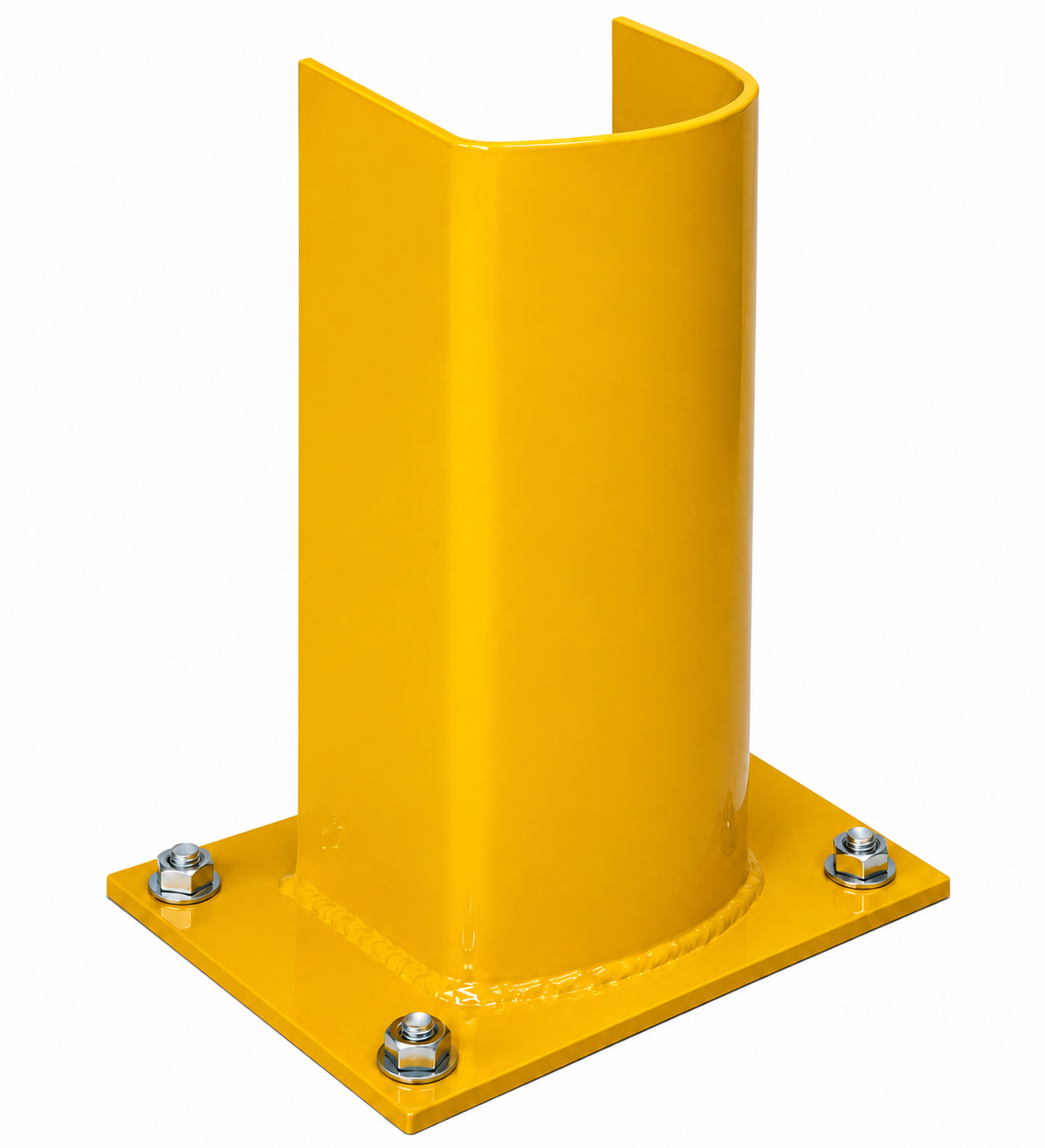
- Floor-Mounted Steel Protectors: Best for heavy-duty forklift traffic and direct impact zones. Ideal for high-throughput warehouses and distribution centers.
- Bolt-On Column Protectors: Great for retrofits, seismic footplates, or rack systems where baseplates prevent standard floor-mounted installation. Excellent for medium to heavy-duty protection.
- Rubber (WorldRam/ RamGuard) Protectors: Perfect for environments with frequent impacts from pallet jacks and forklifts. Rubber flexes to absorb energy and reduce damage while protecting painted uprights from scratches.
- V-Nose Protectors: Specifically designed for reach-truck outriggers that strike the front of the upright during turning or extraction.
- Guard Rail: Used when you want to prevent contact entirely. Best for high-risk areas, end-of-aisle protection, and pedestrian zones.
What types of column protectors and rack protection products are available?
Common rack protection products include:
Steel Floor-Mounted Column Protectors:
- 12″ high Column Protectors
- 12″ H x 5.75″ Opening Seismic Column Protectors (fits 5” wide seismic footplates)
- 12″ H x 8.5″ Opening Seismic Column Protectors (fits 8” wide seismic footplates)
- 18″ and 24″ High Column Protectors for heavy-traffic areas
- 16″ high Mecalux Column Protectors (OEM-specific fit for Mecalux uprights)
Bolt-On Column Protectors
- 24″ high Bolt-on Column Protectors with Bull Nose for direct upright attachment – ideal for retrofit applications or seismic uprights with oversized footplates
- 24” high Bold-on V-Shaped Column Protector/ Deflector deflects forklift forks away from column preventing damage
Rubber Impact-Absorbing Protectors
- 5″ and 12″ high WorldRam/ RamGuard Rubber Column Protectors -flexible, non-marring, vibration-absorbing protection for light–medium impacts.
Specialty Protectors
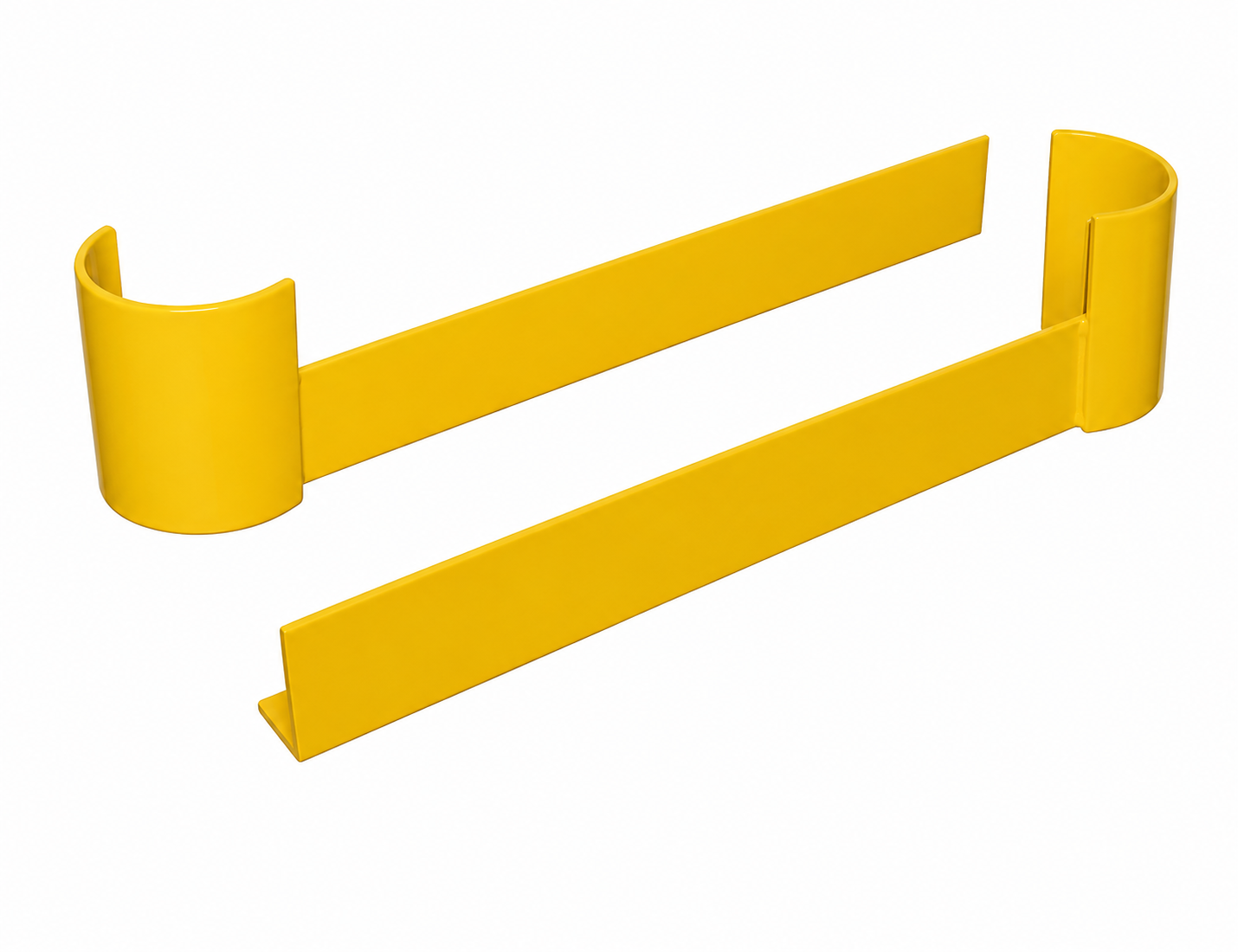
End of Aisle Protectors
- 2-Piece heavy-duty steel barriers protect pallet rack upright frames at ends of aisle from forklift damage.
Guard Rail Systems
- Provide perimeter protection around rack rows or high-impact areas
- Stop heavy forklift traffic from contacting the rack
What are pallet rack protection products and why are they important?
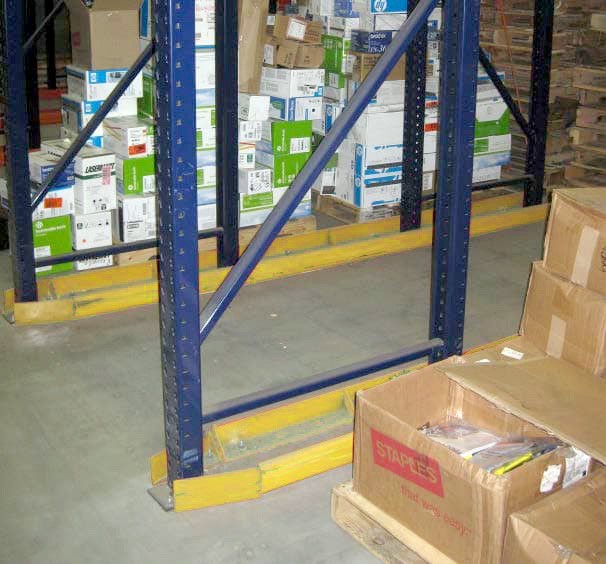
Pallet rack protection products, such as floor-mounted column protectors, bolt-on column protectors, rubber impact guards, V-nose guards, and guard rail, are designed to prevent forklift damage to the front columns and bases of pallet rack uprights.
Because rack uprights carry the full vertical load of the system, even a minor impact can compromise structural integrity, leading to dangerous rack failure, expensive repairs, product loss, OSHA violations, and injury risks. Installing proper rack protection is the most cost-effective way to extend rack life, reduce downtime, and improve warehouse safety.