

Structural Drive In Racking
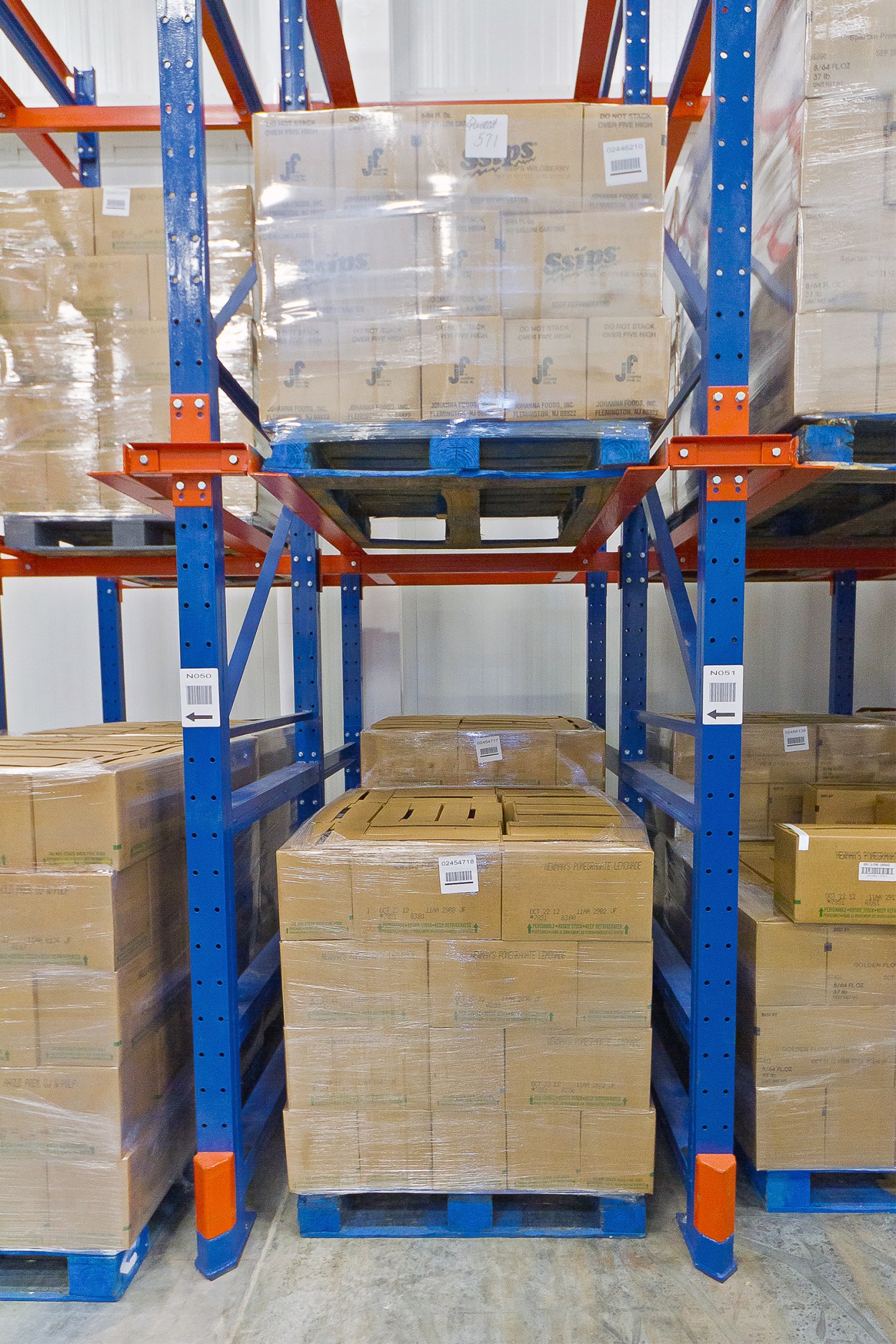
AREA 1: Structural Steel Drive In Rack System. New. Proposed layout: (26) Pallet wide x (5) pallets deep x (5) pallets high = (650) pallet positions. Breakdown of Main Components used per One Set: 81 – 26′ h. x 44″ d. Structural Steel upright frames with 4″ wide column (Model DB-4SZ), front and rear boxed column to 72″ in height w/ spot welded sloped cap, in color Std. Blue, 364 – 50″ long Drive in overhead tie beams, 400 – Drive in arm Double, 16 – Drive in Arm Left, 16 – Drive in Arm Right, 104 – 220″ x 4″ x 3″ Drive in rail supports in color orange, 162 – Leveling shims, 324 – Anchors. NOTE: Includes these popular options: front angle impact defector on all uprights, interior channel row guides, rear stops and rub rails at bottom of frames that stiffen it up. Weight: 73,251 LBS.
AREA 2: Structural Steel Drive In Rack System. New. Configured (4) Pallet wide x (3) pallets deep x (3) pallets high = (36) pallet positions. Breakdown of Main Components per One Set: 10 – 16′ h. x 44″ d. Structural Steel upright frames with 3″ wide column (MODEL C3″ x 3.5), front and rear column boxed to 72″ high w/ spot welded sloped cap, std. blue, 16 – 50″ Overhead tie beam, 16 – 50″ Drive in tie beam, 12 – Drive in arm Double, 4 – Drive in arm Left, 4 – Drive in arm Right, 8 – 132″ x 4″ x 3″ Drive in support rail in color orange, 20 – leveling shims, 40 – Anchors, NOTE: Includes popular options front angle impact deflectors on all uprights, interior channel row guides, rear stops and run rails at bottom of frames that stiffen it up. Total Weight: 6533 LBS.
NOTES: Estimated Lead Time: 6-8 Weeks. FOB: Chicago, IL, Pottsville, PA, Lamar, SC, Dallas, TX, Mexico or San Diego, CA. Ships best way pre-paid and add or customer to provide name of carrier. Requires shipping on Flatbed Trucks. Let us design a structural drive in rack system to meet your specific needs.
Structural drive in rack offers you the double D’s: Density and Durability. You can’t top the storage density you get with a drive in pallet racking system. And when you combine a high density drive in pallet racking system with the strength of hot rolled structural steel, you get structural pallet racking that is designed and built to last.
Food and Grocery distributors are notoriously rough on their drive in pallet racking and you will be hard pressed to find a system that doesn’t use high bay structural pallet racking. We offer a variety of structural pallet rack systems including selective pallet rack, drive-in rack, pushback rack and pallet flow rack. Food distributors also find that the structural c-channels are easier to wipe down and clean which helps them meet FDA requirements.
Structural pallet racking is a popular choice for ALL warehouses and distribution centers because it is more durable than roll form drive in rack and can last many years longer if properly protected. Don’t get me wrong, it is more expensive then roll formed drive in pallet racking, but that’s because it has a lot more steel.
Home Depot switched over from roll form to structural drive in pallet racking at all of their distribution centers and they have seen an estimated $400,000.00 annual savings in rack maintenance cost. When pallets are stored at high elevations, structural pallet racking is a no-brainer.
Structural C-Channel uprights and beams offer greater capacity and greater rigidity.
Structural pallet racking is more expensive, more durable and longer lasting than roll formed racking, but pays you back in reduced maintenance cost!
Popular options for structural drive in racking include:
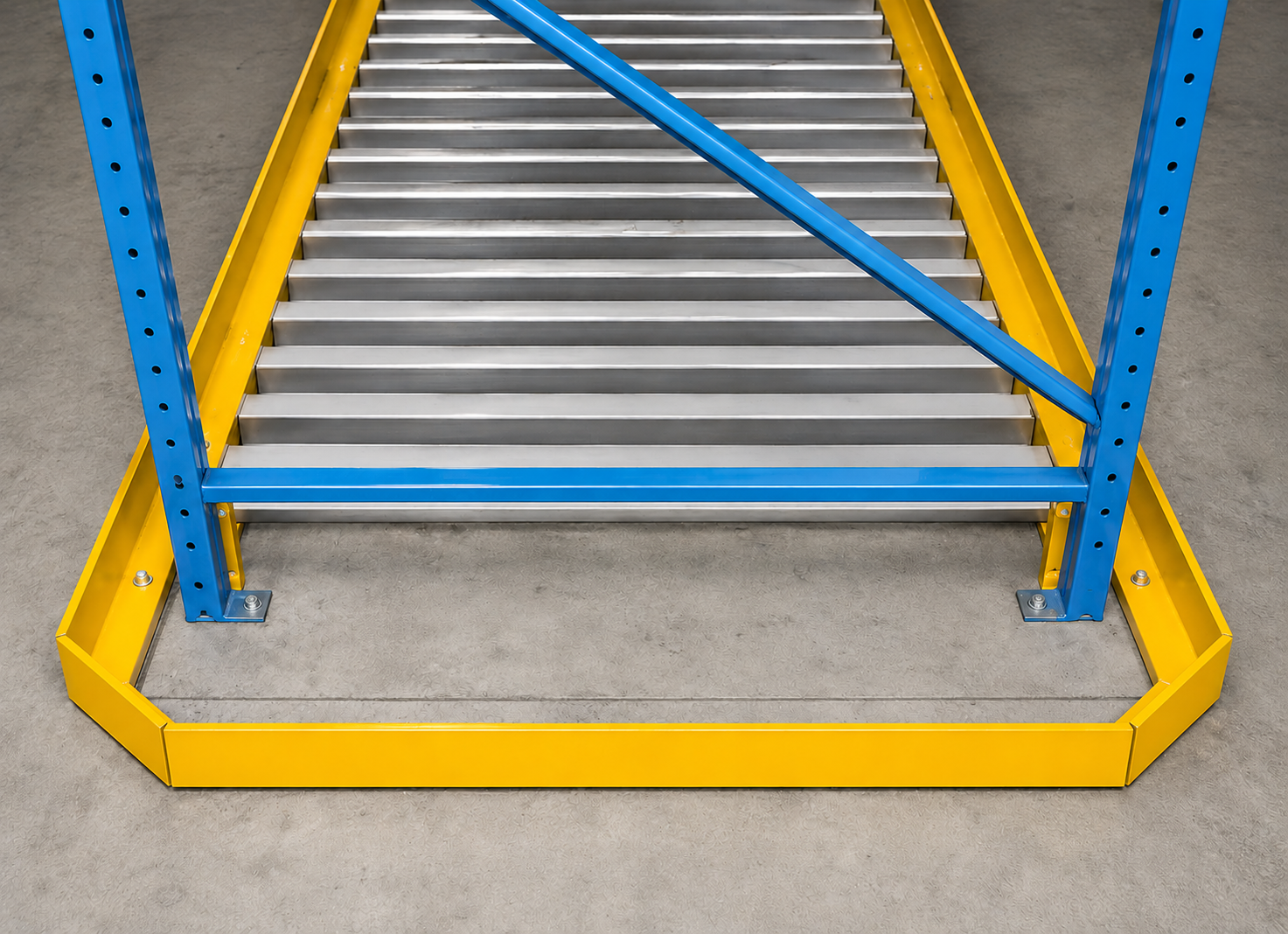
• Deflectors – ALL front columns have a 12 inch Angle Deflector to deflect forklift impact.
• Load Stops – All levels have 2 rear load stops bolted to uprights to keep from pushing out loads on the rear of the system.
• Guide Rails / Rub Rail – All bays shave interior guide channel to guide forklifts thru bays and minimize damage due to hitting interior upright frames.
• Column Reinforcement – All uprights have double / boxed column up 72” high on BOTH front and back columns.
FAQs about Structural Drive In Racking
What is a drive-in pallet rack system?
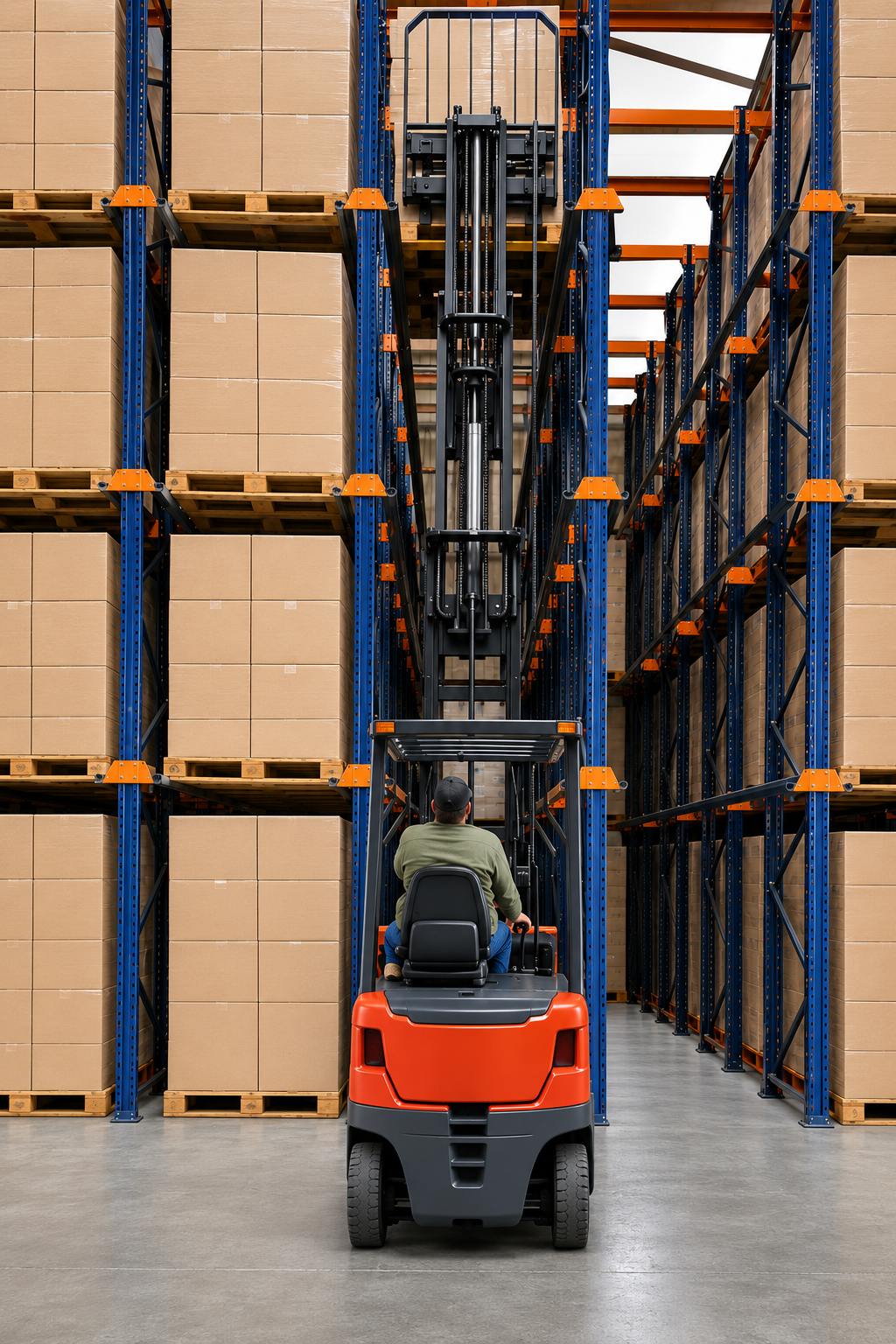
Drive-in pallet rack is a high-density storage system that allows forklifts to drive directly into the rack structure to place and retrieve pallets. Instead of using beams and open aisles, drive-in racks use structural lanes with rails that support pallets in multiple deep positions. This design maximizes cubic storage capacity and is ideal for operations with large quantities of the same SKU.
How do drive-in racks differ from drive-through racks?
Drive-in rack has one entry/exit point, following a LIFO (Last-In, First-Out) storage pattern. It’s perfect for storing products that are not time sensitive. Drive-through rack, on the other hand, has two entry points on opposite sides of the rack system, allowing forklifts to pass through and enabling a FIFO (First-In, First-Out) workflow. Both systems share the same structural concept but differ in how pallets flow through the rack.
What types of products or industries benefit most from drive-in pallet racks?
Drive-in rack is ideal for high-volume, low-SKU applications where maximizing storage density is more important than selectivity. Industries that commonly use drive-in racking include food and beverage, cold storage, frozen goods, building materials, chemicals, and seasonal inventory. It’s especially popular in freezers and coolers, where every cubic foot of space is valuable and cost per square foot is high.
What type of pallets and forklifts are required for drive-in racks?
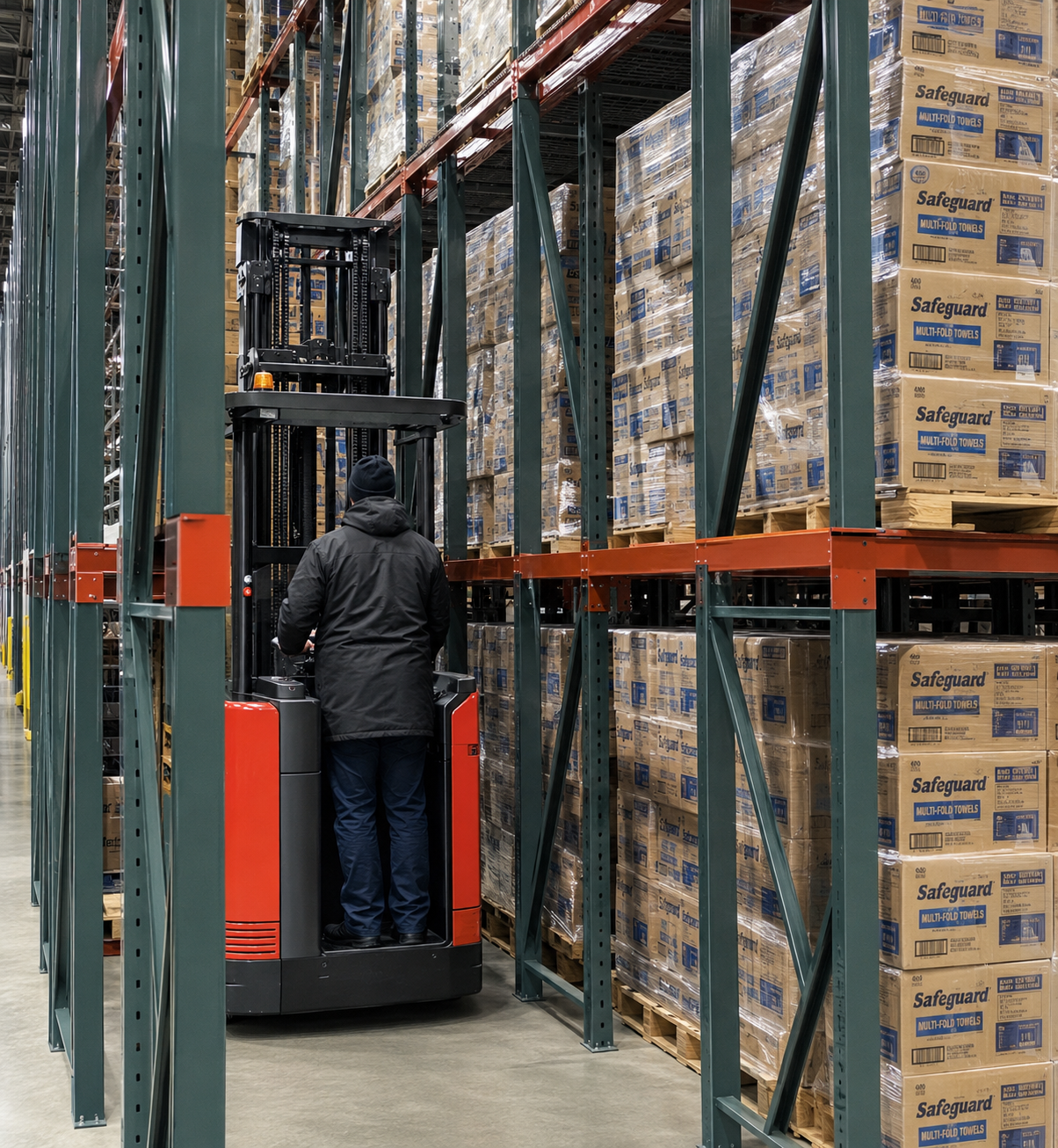
Drive-in rack requires high-quality, consistently sized pallets that can safely rest on the side rails. GMA-style pallets are commonly used. Because forklifts must enter the rack lanes, a stand-up counterbalance or reach truck with excellent driver visibility is recommended. It’s also important that operators are trained specifically on driving into storage lanes and reversing out safely to prevent rail and post damage.
Are drive-in pallet racks safe, and what features help prevent damage?
Yes. A drive-in rack is safe when properly designed and operated. To increase durability and impact resistance, most systems use heavy-duty structural steel, cantilevered arm supports, reinforced footplates, and guide rails. Adding column protectors, guard rails, and guide angles further reduces forklift impact damage. Proper maintenance, pallet quality, and driver training are essential for preventing rack failure in high-density environments.