FAQs about Wire Mesh Decking for Pallet Racks
What size wire decking do I need for my pallet rack?
Wire decking is sized by rack depth and beam length.
- Standard depths include 36″, 42″, 44”, and 48″ deep
- Standard widths are designed to fit 8′, 9′, 10′ and 12’ beams (e.g., 46″ W, 52″ W, and 58” W decks)
A quick rule of thumb:
- 8′ beams = two 46″ W decks
- 9′ beams = three 52″ W decks
- 10′ beams = two 58″ W decks
- 12’ beams – three 46” W
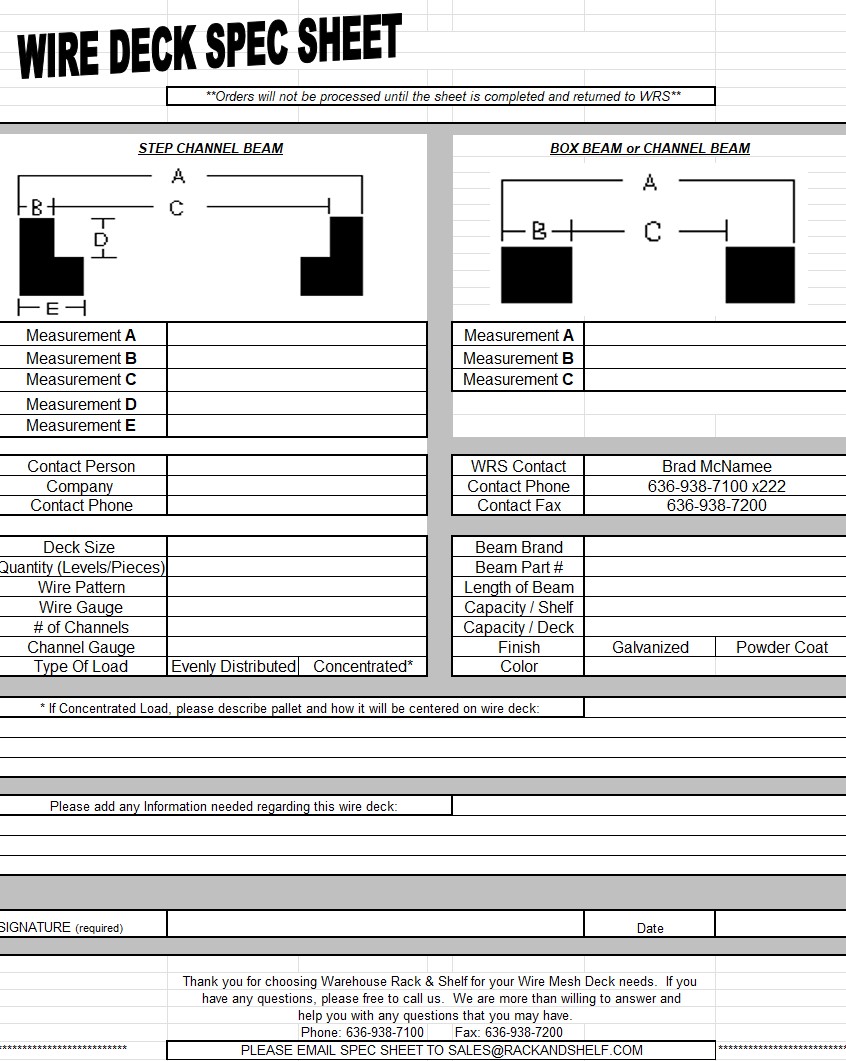
To ensure an accurate fit, measure beam length (clear opening between uprights), depth of upright and the inside step dimension if using step beams.
Does wire decking meet fire-safety requirements?
Yes. Most jurisdictions prefer or require wire mesh decking because the open mesh design allows water from overhead sprinklers to flow through to lower levels. Many AHJs (Authorities Having Jurisdiction) require a 50% or greater open-area design, which standard wire decking meets. Always verify with local fire-code officials and your insurance company, especially for high-pile storage.
What styles of wire decking are available?
The three most common styles are:
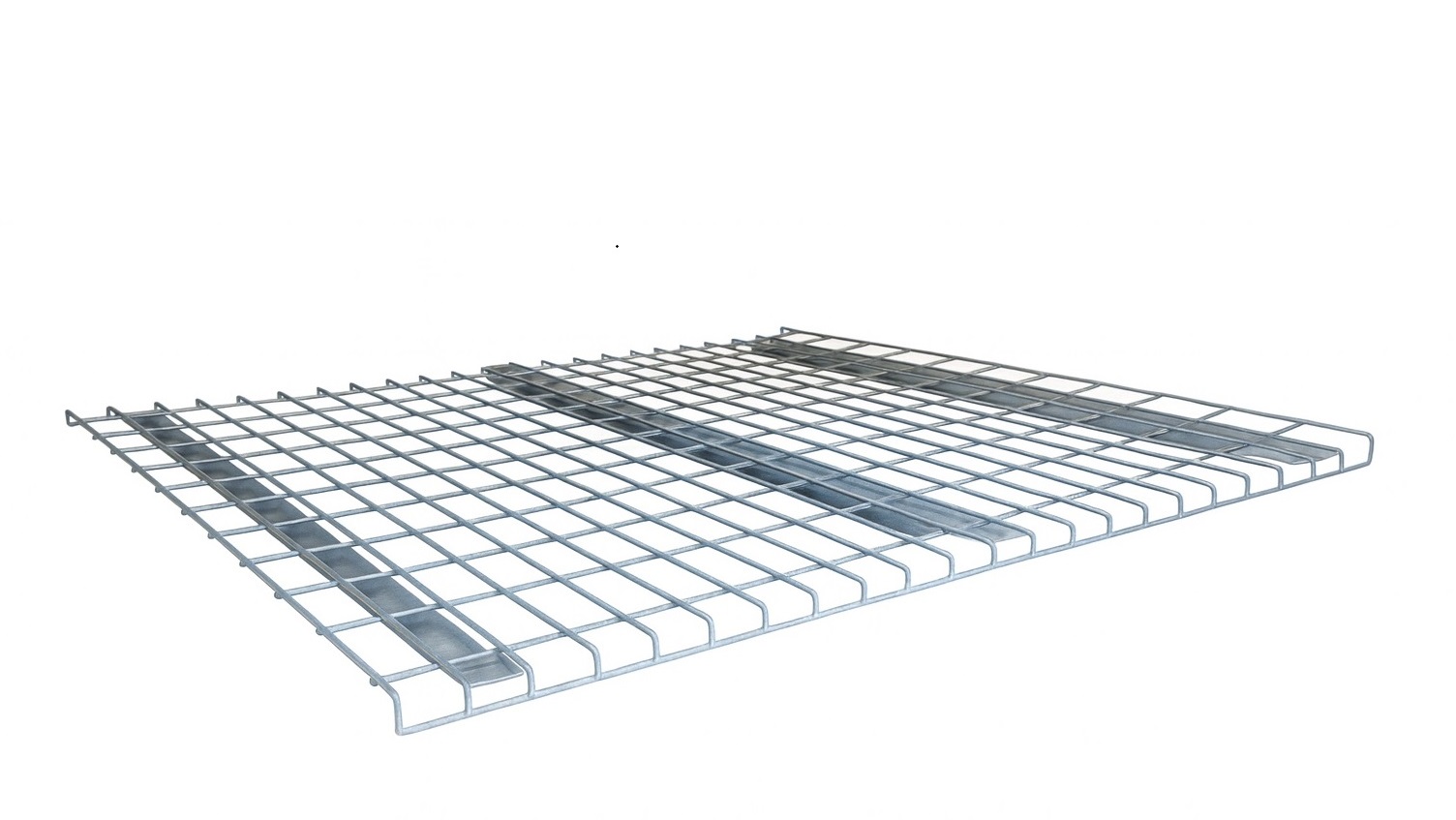
- Step-channel wire decking – Most common wire deck with u-shaped channels that sit inside the standard 1-5/8” step of step beams and is most prevalent. Includes 1.5” waterfall on front and back.
- Flared-channel wire decking – has a universal fit with flared channel supports that sit on top of beam. Designed to fit structural channel beams, box beams and standard 1-5/8” step beams. Includes 1.5” waterfall on front and back.
- Inside waterfall wire decking – has specialized edges that fit inside the step with no waterfall, leaving the beam face unobstructed for ID labels. No waterfall prevents products from snagging.
You can also specify galvanized, powder-coated in a variety of colors, or custom-mesh patterns and inverted channels for specialty applications such as food storage and freezers.
What capacity does wire decking have?
Standard wire decking capacities range from 2,000, 2,500 to 3,500 lbs. per deck when the load is uniformly distributed. Capacity depends on the depth, width, wire gauge, and number of support channels of a deck. Custom heavy-duty decks can reach 5,000 lbs. (UDL) with the addition of extra channel supports.
The most common type of decking is 42″ D x 46″ W with three channels and typically carries about 2,500 lbs. (UDL). Always confirm the manufacturer’s capacity specifications based on your rack beams and load type.
What is wire decking and why is it used on pallet racks?
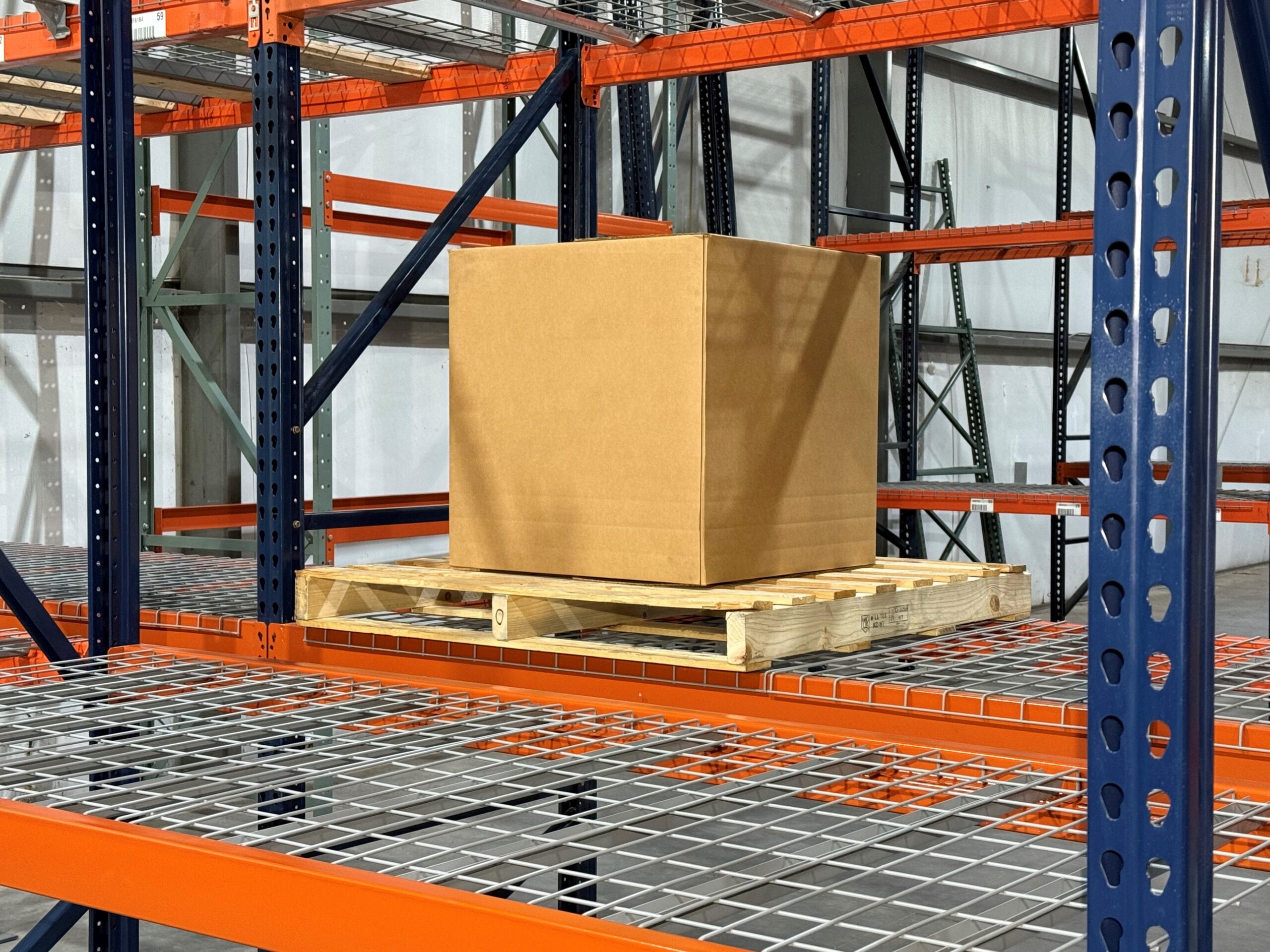
Wire decking is a welded wire mesh platform with support channels welded to the bottom that sits on pallet rack beams to create a surface for storing items. It improves safety, load distribution, visibility, and fire-code compliance. It prevents pallets or cartons from falling through, allows sprinklers to pass water through the rack levels, so it meets most local fire codes, and turns open beams into a safe and usable shelf.