FAQs about Full-Width Steel Roller Carton Flow
What types of products or industries benefit most from the pushback rack?
Pushback rack is ideal for operations that need a balance of selectivity and density. It’s widely used in food and beverage, third-party logistics, grocery distribution, manufacturing, building materials, and consumer goods. Any warehouse storing multiple pallets of the same SKU per lane, without strict FIFO requirements, can benefit from the speed and efficiency of pushback storage.
Are pushback pallet racks safe, and what features help ensure reliable operation?
Yes, pushback systems are engineered with heavy-duty structural steel rails, high-strength carts, welded stops, and control mechanisms that regulate the pallet’s movement. By keeping forklifts out of the racking structure, pushback significantly reduces column and rail damage. As with any high-density rack system, operator training, pallet quality, and routine inspections are essential for safe, long-term performance.
What types of pallets work best with a pushback rack?
Pushback rack requires consistent, high-quality pallets, typically GMA-style or similar, that can safely rest on the carts. The pallet bottom must be strong enough to support the load and maintain stability during the pushback and gravity-roll process. Damaged or inconsistent pallets can cause uneven movement or operational issues, so it’s important to use good pallets and regularly inspect them for safety.
What are the advantages of using a pushback rack compared to a selective or drive-in rack?
Pushback racking provides up to 90% more storage density than selective rack while offering greater selectivity than drive-in rack. Forklifts never enter the rack structure, which reduces rack damage and increases safety. The system provides multiple SKUs per aisle, fast load/unload cycles, and excellent space utilization, making it a popular choice for warehouses seeking higher density without sacrificing productivity.
What is a pushback pallet rack, and how does it work?
Pushback pallet rack is a high-density storage system that stores pallets 2 to 6 deep on nested carts that ride on inclined rails. When a pallet is loaded, it pushes the pallet behind it back one position. When unloading, the front pallet is removed, and the pallets behind it automatically roll forward to the pick face. Pushback operates on a LIFO (Last-In, First-Out) system and offers excellent storage density while maintaining multiple picking faces.
What industries benefit most from a pallet flow rack?
Pallet flow is ideal for operations with high-volume, fast-moving, date-sensitive products. It is widely used in food and beverage, cold storage and freezer warehouses, grocery distribution, consumer goods, manufacturing, and 3PL operations. Any facility that relies on FIFO rotation or needs to maintain tight inventory control can significantly improve productivity with a pallet flow rack.
Is a pallet flow rack safe, and what features ensure controlled pallet movement?
Yes, pallet flow rack is engineered for safety and smooth operation. Systems include in-lane speed controllers, end-of-lane stops, and reinforced flow tracks that regulate pallet speed and prevent impact at the pick face. Forklifts do not enter the rack structure, reducing the risk of rack damage and accidents. Proper installation, periodic lane testing, and routine maintenance help keep pallet flow systems operating safely and efficiently.
What pallet types and conditions are required for a pallet flow rack to work properly?
Pallet flow systems require high-quality, uniform pallets with smooth, structurally sound bottom boards. GMA-style pallets are most common. Damaged, broken, or inconsistent pallets can cause hang-ups, uneven flow, or premature wear of the rollers. Many warehouses perform regular pallet inspections or use CHEP-style rental pallets specifically for flow rack to ensure consistent, reliable performance. If you have pallets in poor condition we recommend you use a more costly full width roller design that insures proper support and smooth flow.
What are the advantages of using a pallet flow rack over other storage systems?
Pallet flow rack offers exceptional storage density, excellent product rotation, and dramatically improved picking efficiency. Because lanes can be several pallets deep, you maximize cubic space and reduce the number of aisles required. Gravity-fed movement reduces forklift travel time, allowing operators to load from one aisle and pick from another. Pallet flow also helps warehouse operations meet FIFO compliance, reduce labor, and maintain consistent throughput.
What is a pallet flow rack, and how does it work?
Pallet flow rack (also called gravity flow rack) is a high-density storage system that uses inclined roller or wheel tracks to move pallets automatically from the loading side to the picking side. When a pallet is placed into the lane, gravity carries it forward at a controlled speed. As the front pallet is removed, the next pallet flows into position. This creates a FIFO (First-In, First-Out) storage pattern that is ideal for date-sensitive inventory. Pallet flow rack systems can be designed to go 4-20 pallets deep.
What industries benefit most from carton flow rack?
Carton flow is widely used in e-commerce fulfillment, retail distribution, grocery and food service, pharmaceuticals, manufacturing, and third-party logistics. Operations with high-volume of small-item picking can improve productivity with carton flow rack. It’s especially popular in pick modules, conveyor-fed zones, and multi-level mezzanine systems where fast-moving SKUs and ergonomic picking are necessary.
What types of cartons or totes work best with carton flow systems?
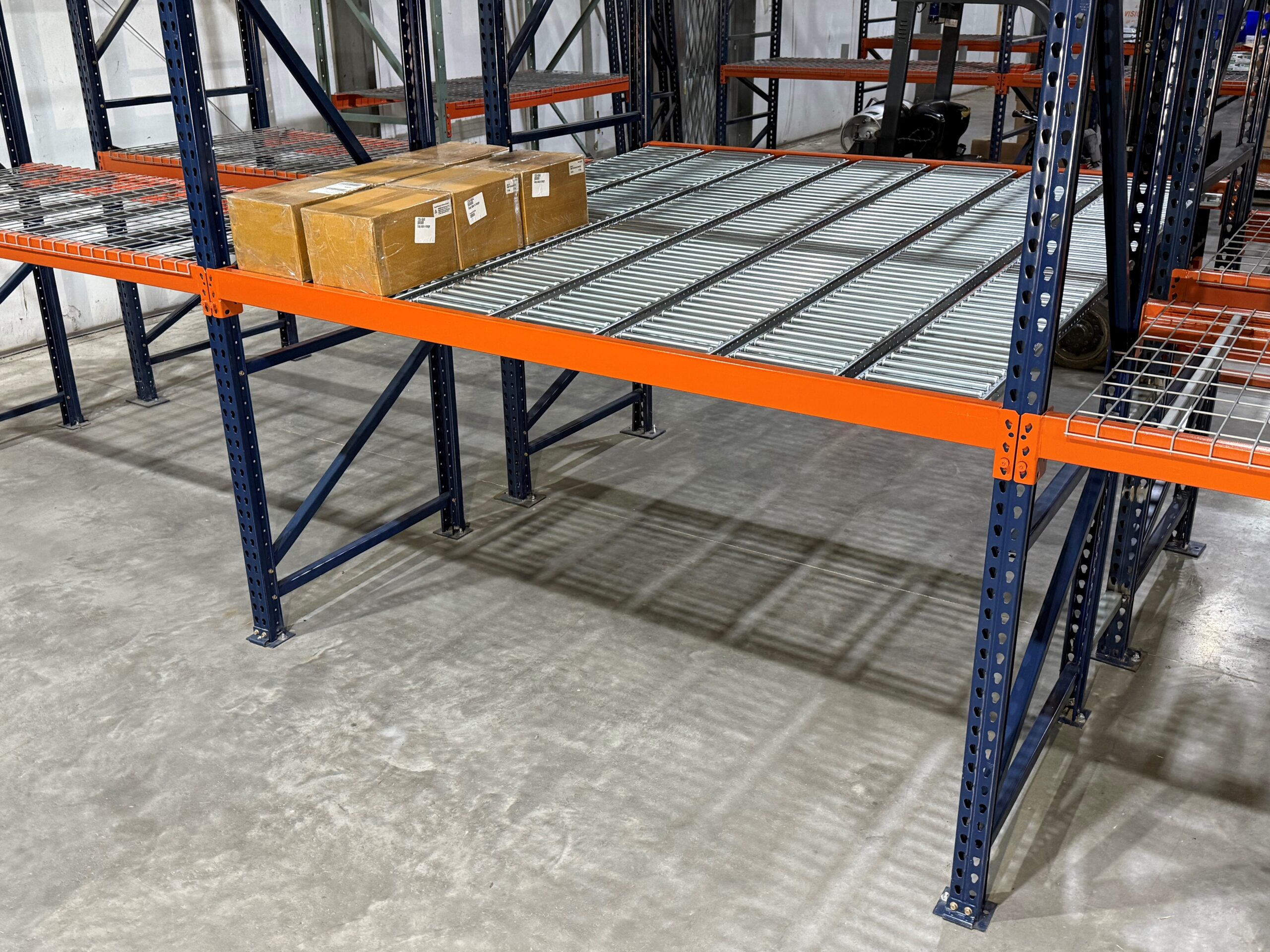
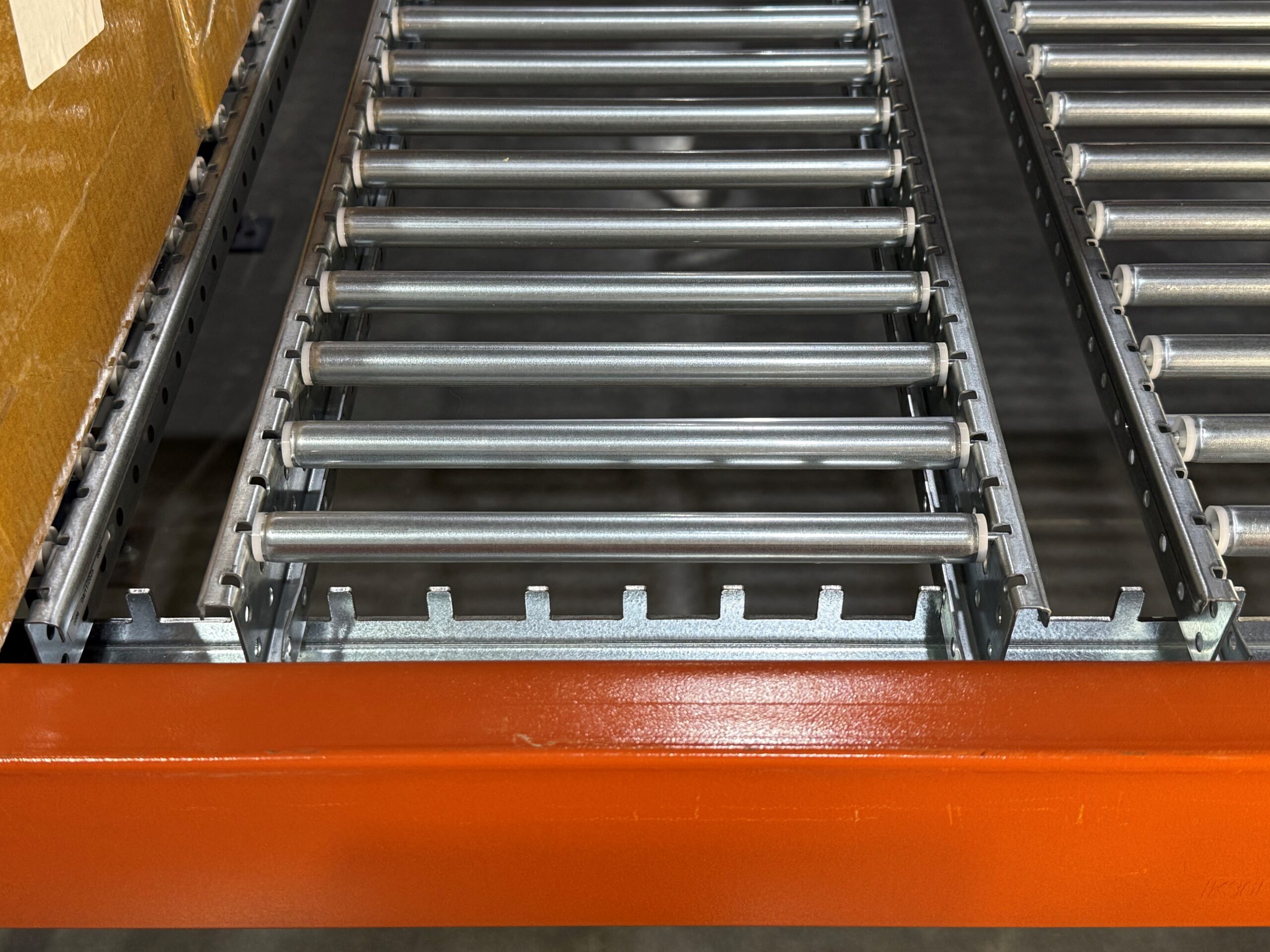
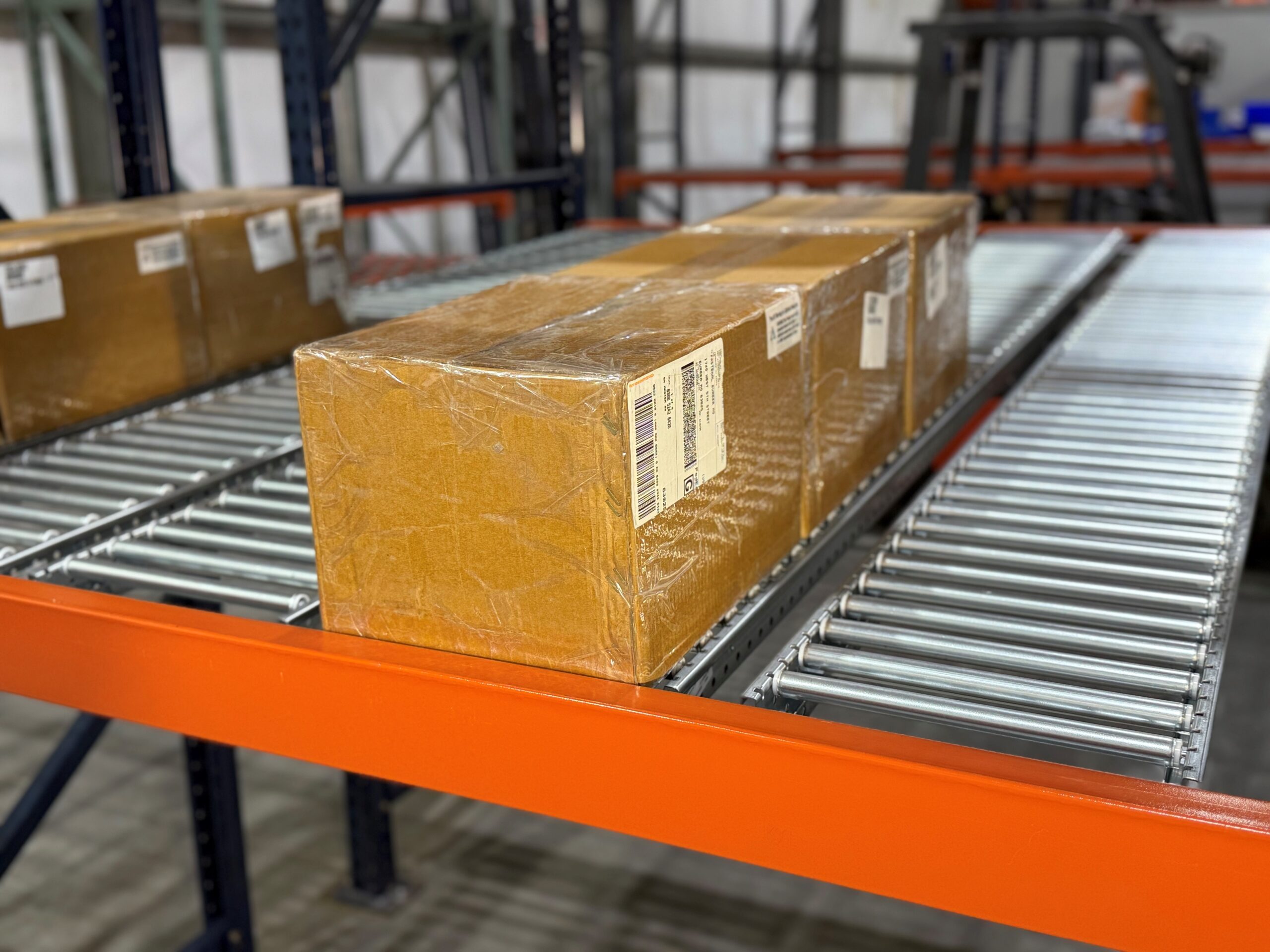
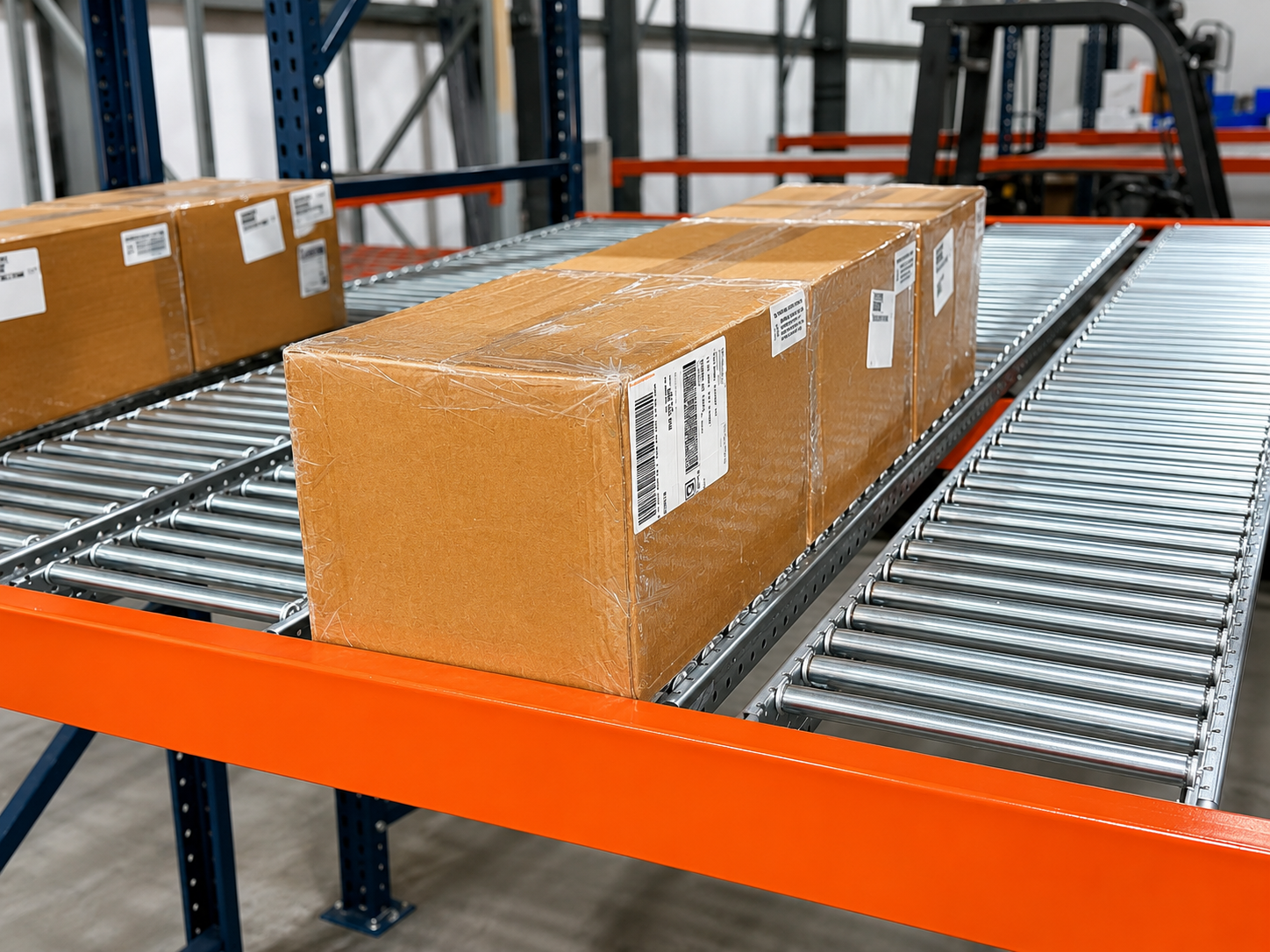
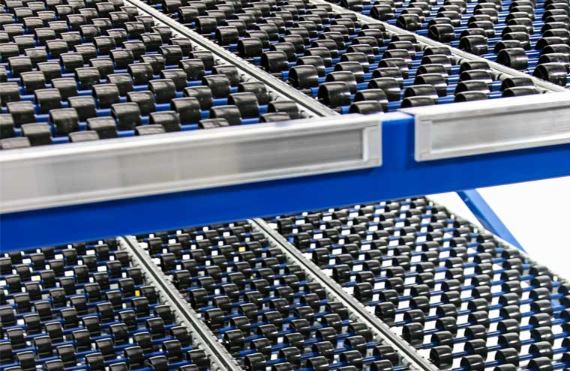
Carton flow rack works with most corrugated cartons, plastic totes, bins, and small containers. Full-width Span Track rollers are ideal for heavy boxes, inconsistent carton bottoms, or oversized items that need full support. Dyna-Flow wheel beds are perfect for operations with frequent SKU changes because the staggered wheel pattern allows a variety of carton sizes and weights. If cartons have flat, stable bottoms, they will flow smoothly across rollers or wheels.
What are the advantages of using carton flow rack?
Carton flow rack improves picking efficiency by presenting products to the pick face automatically. This reduces worker travel time and minimizes labor restocking. FIFO rotation ensures better inventory control, especially for perishables or date-sensitive products. The system also increases storage density by using deep flow lanes, which can free up valuable floor space. When paired with Span Track or Dyna-Flow wheel beds, you also gain better throughput, less carton hang-up, and improved ergonomics at the pick line.
What types of carton flow systems are available?
The two most common styles are:
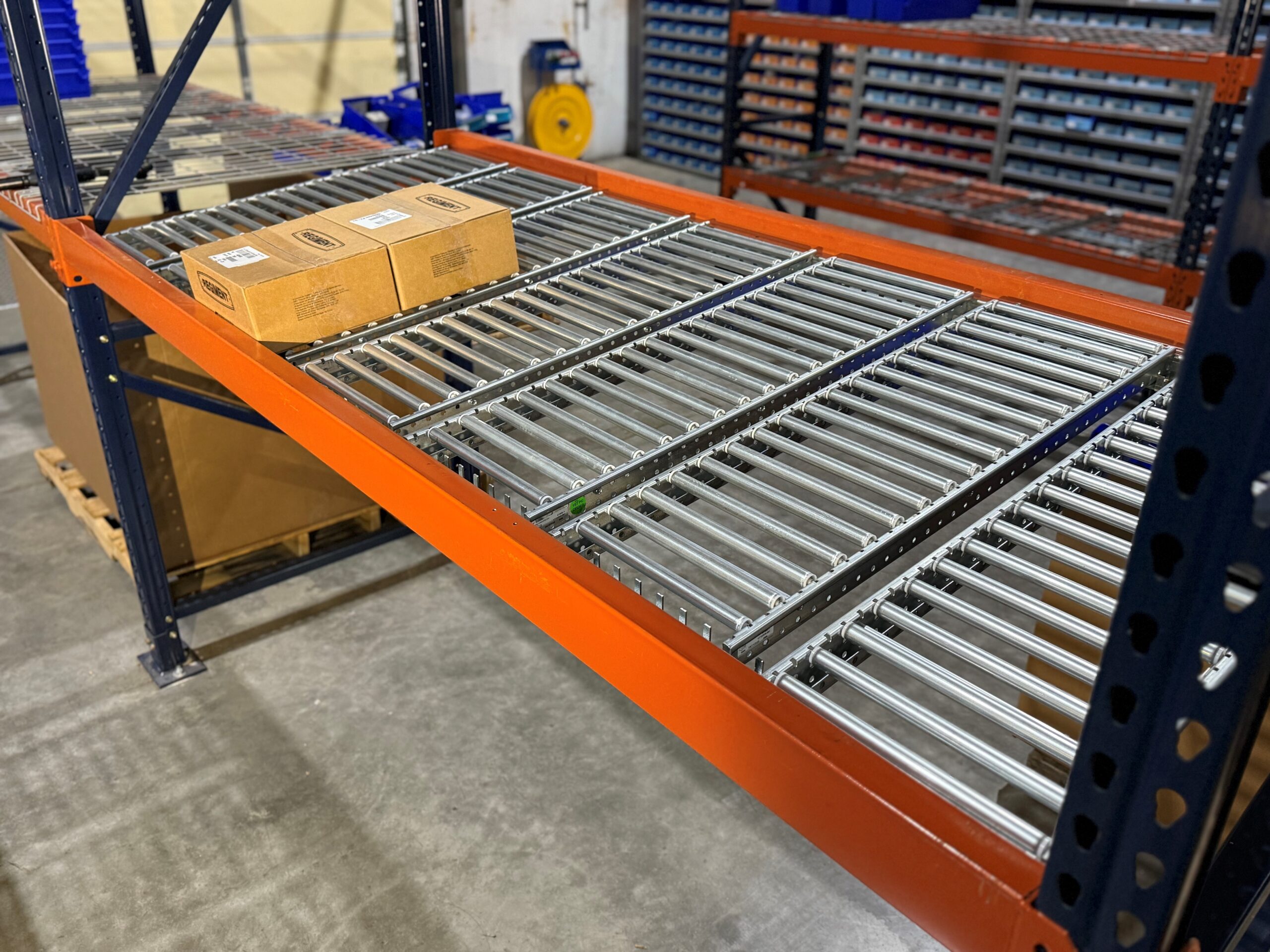
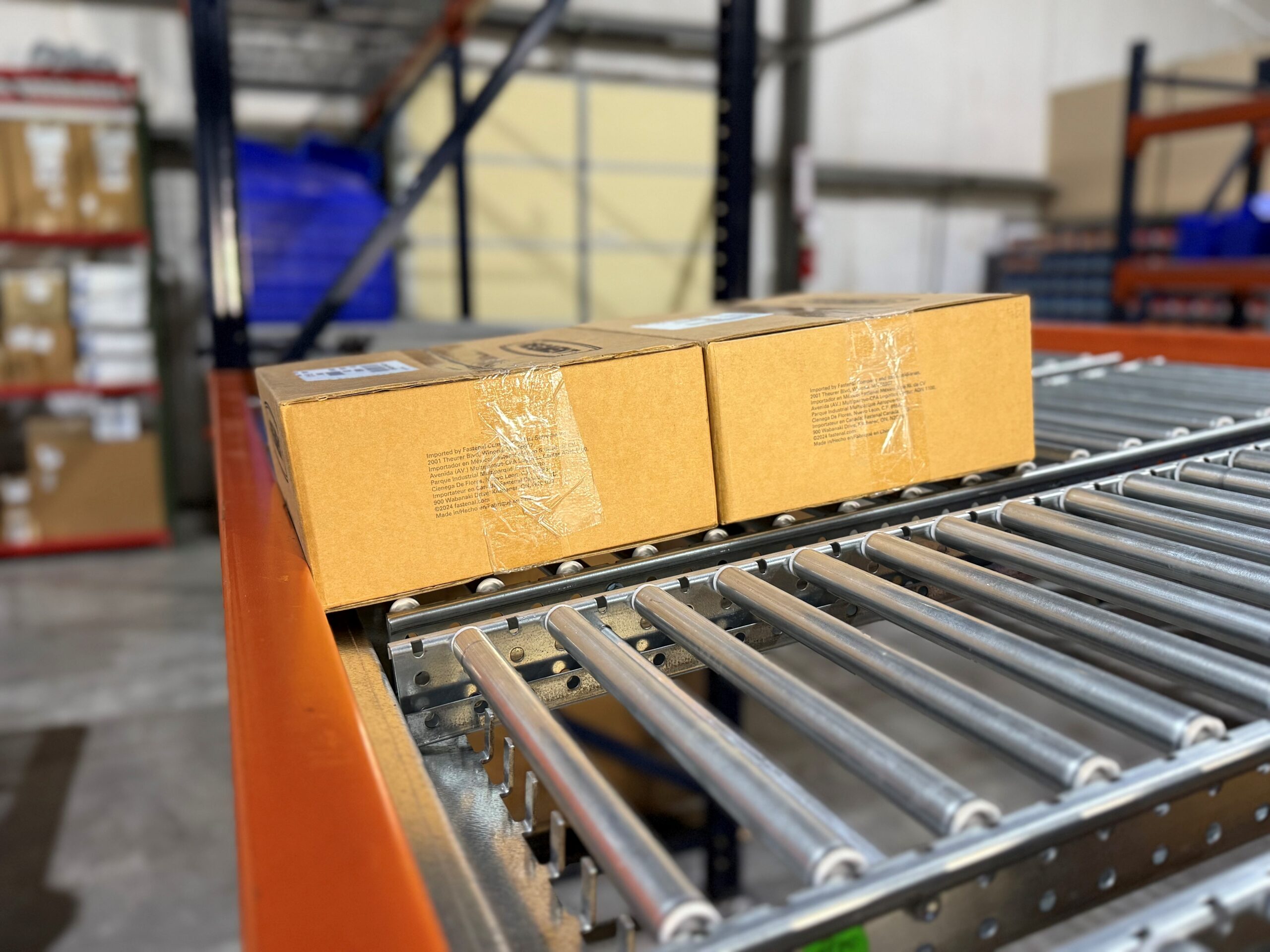
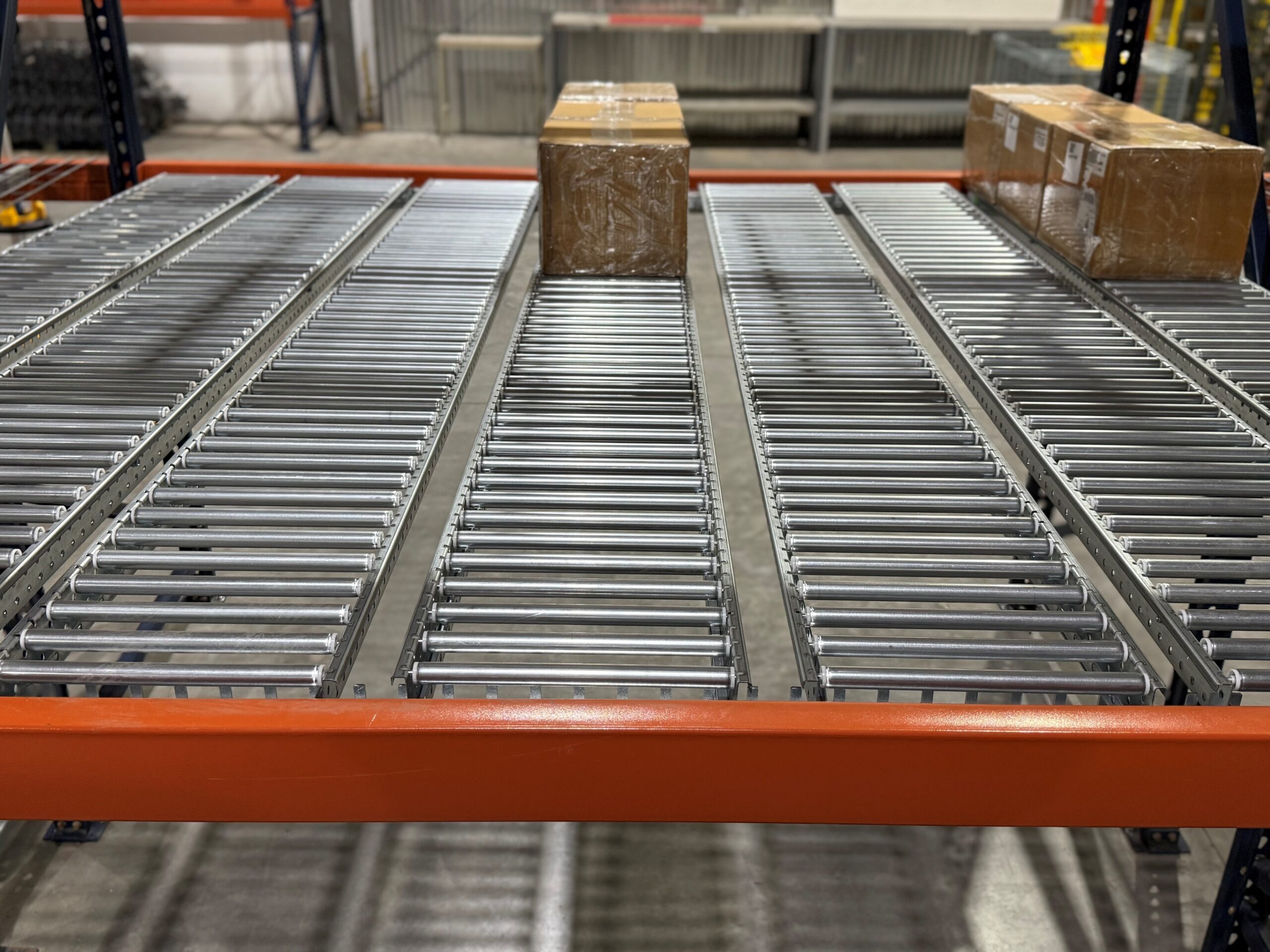
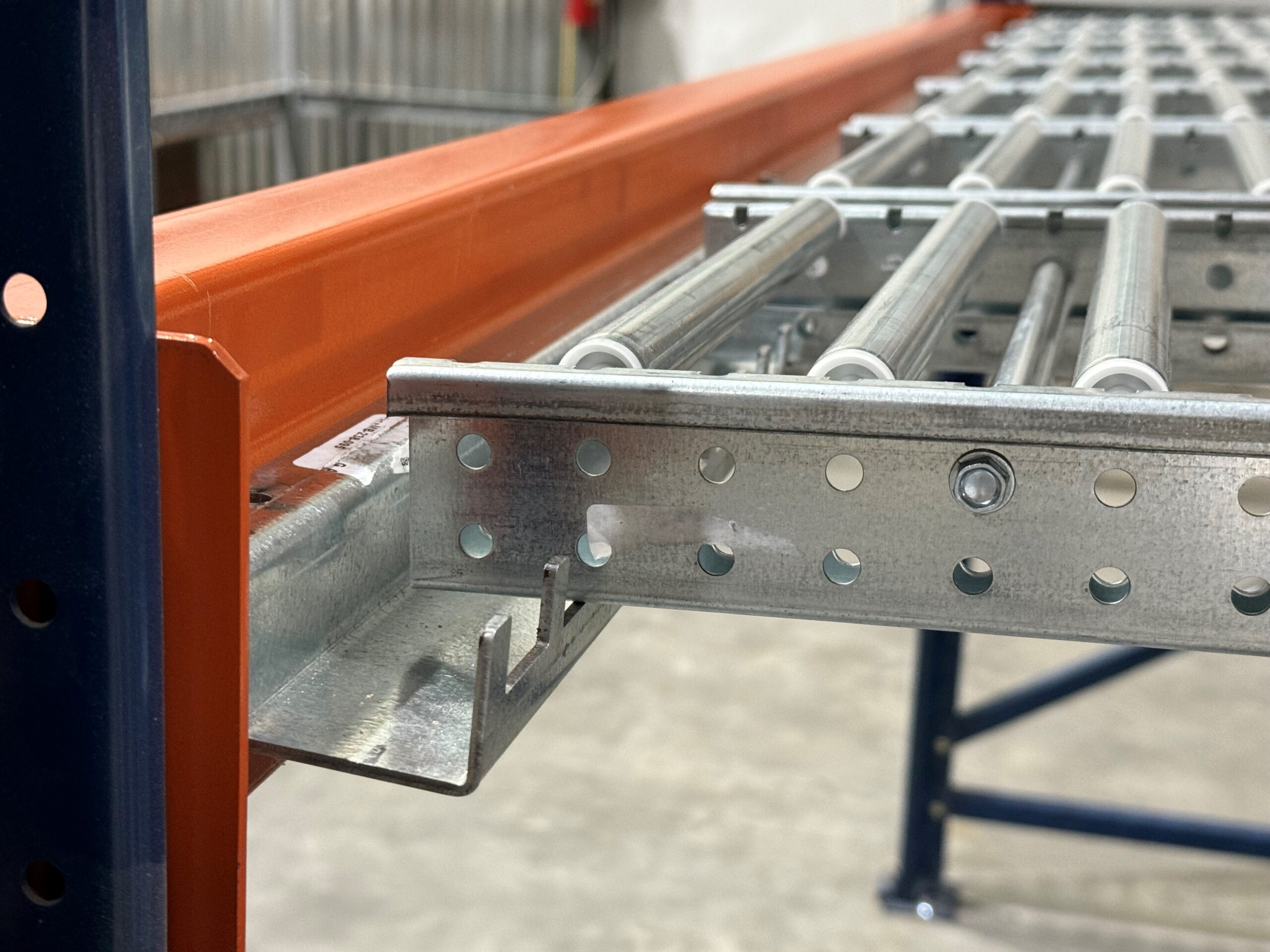
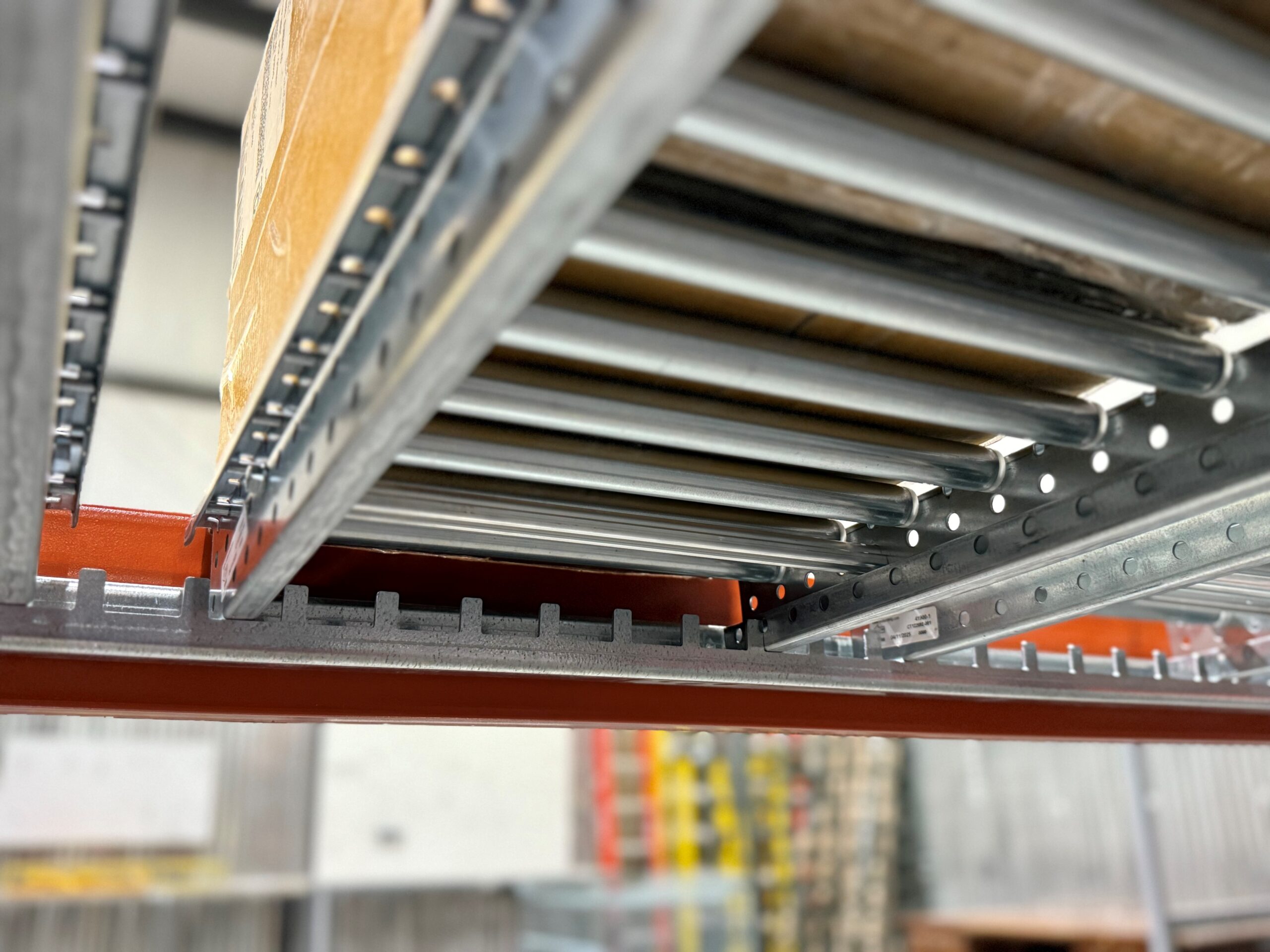
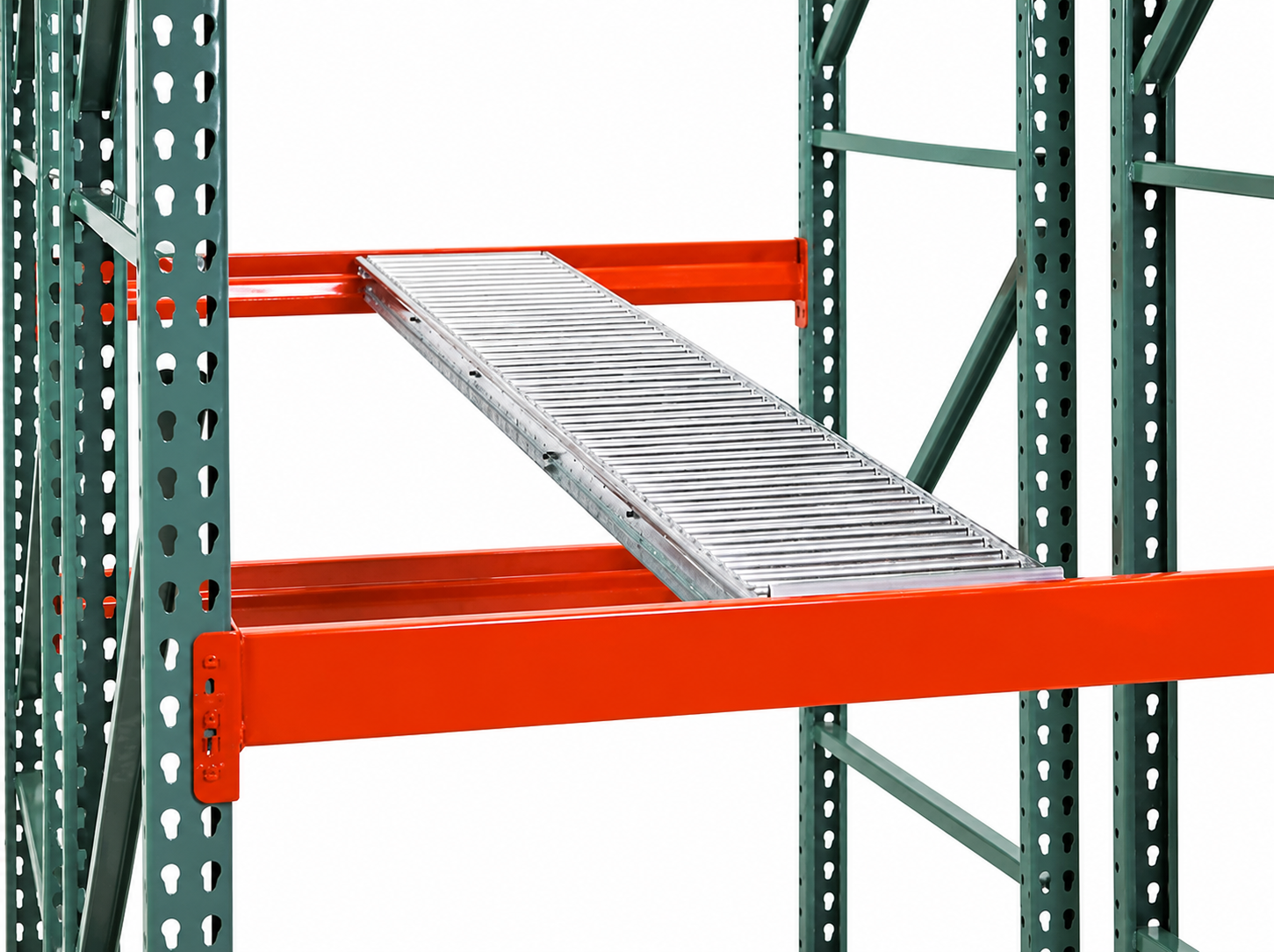
- Cart-Trak / Span Track Full-Width Roller Tracks (steel or aluminum): Heavy-duty, full-width rollers provide continuous support for cartons, ideal for heavier items, odd-sized cartons, and high-throughput picking lines.
- Dyna-Flow Poly Plastic Staggered Wheel Beds (wheel beds): Made up of staggered plastic wheels that allow cartons of varying sizes to flow smoothly across the surface. Wheel beds maximize flexibility and SKU versatility while offering excellent economy.
- Both styles can retrofit into existing single deep or double deep pallet rack systems, making carton flow one of the easiest ways to convert static shelving into a high-productivity pick module.
What is a carton flow rack and how does it work?
A carton flow rack is a picking system that uses gravity-fed roller tracks or wheel beds to automatically move cartons, totes, and boxes from the loading side to the picking side. When a carton is picked, the next one flows forward, creating a smooth FIFO (First-In, First-Out) inventory rotation. This design improves picking speed, accuracy, and space efficiency in order-picking operations.