FAQs about Plastic Bulk Containers
What is the biggest disadvantage to collapsible bulk containers?
Plastic bulk containers are flammable and may not meet Fire Inspector Codes and Insurance company requirements. For that reason, some customers are switching from plastic to steel and wire bulk containers. Please check with your local Fire Marshall and Insurance company before investing in plastic bulk containers.
What industries most commonly use collapsible bulk containers?
These containers are widely used across many sectors, especially where durability, cleanliness, and reusability are important:
- Automotive & OEM suppliers — ideal for parts, components, stampings, returnable packaging
- Manufacturing & assembly plants
- Food and beverage processing (non-food-contact versions)
- Agriculture and produce handling
- Retail distribution & e-commerce fulfillment
- Pharmaceutical and chemical plants
- Recycling and waste collection applications
Their combination of lightweight construction, long life cycle, and collapsibility makes them one of the most economical reusable containers on the market.
What features make these containers user-friendly and durable?
Plastic bulk containers offer a wide range of performance and ergonomic benefits:
- Two half-drop gates for easy access when stacked or staged
- 2,000-lb. dynamic capacity for industrial-grade loads
- Reinforced corner posts and walls for long service life
- Smooth interior surfaces that prevent part damage and allow easy cleaning
- Four-way forklift and pallet jack entry for fast material handling
- Weather and chemical resistance, unlike wood or metal bins
These features make them ideal for closed-loop systems and high-cycle use environments.
How do collapsible bulk containers help save space and reduce shipping costs?
One of the biggest advantages of collapsible bulk bins is their knock-down design. When empty, they fold down to a 12.75″ collapsed height, allowing you to stack multiple empty containers in the footprint of a single unit. This dramatically reduces:
- Return freight costs
- Backhaul shipping charges
- Storage space required for empty bins
Facilities using collapsible containers often reclaim up to 70%–80% floor space compared to rigid bins or wood crates.
What sizes are available and which ones are most popular?
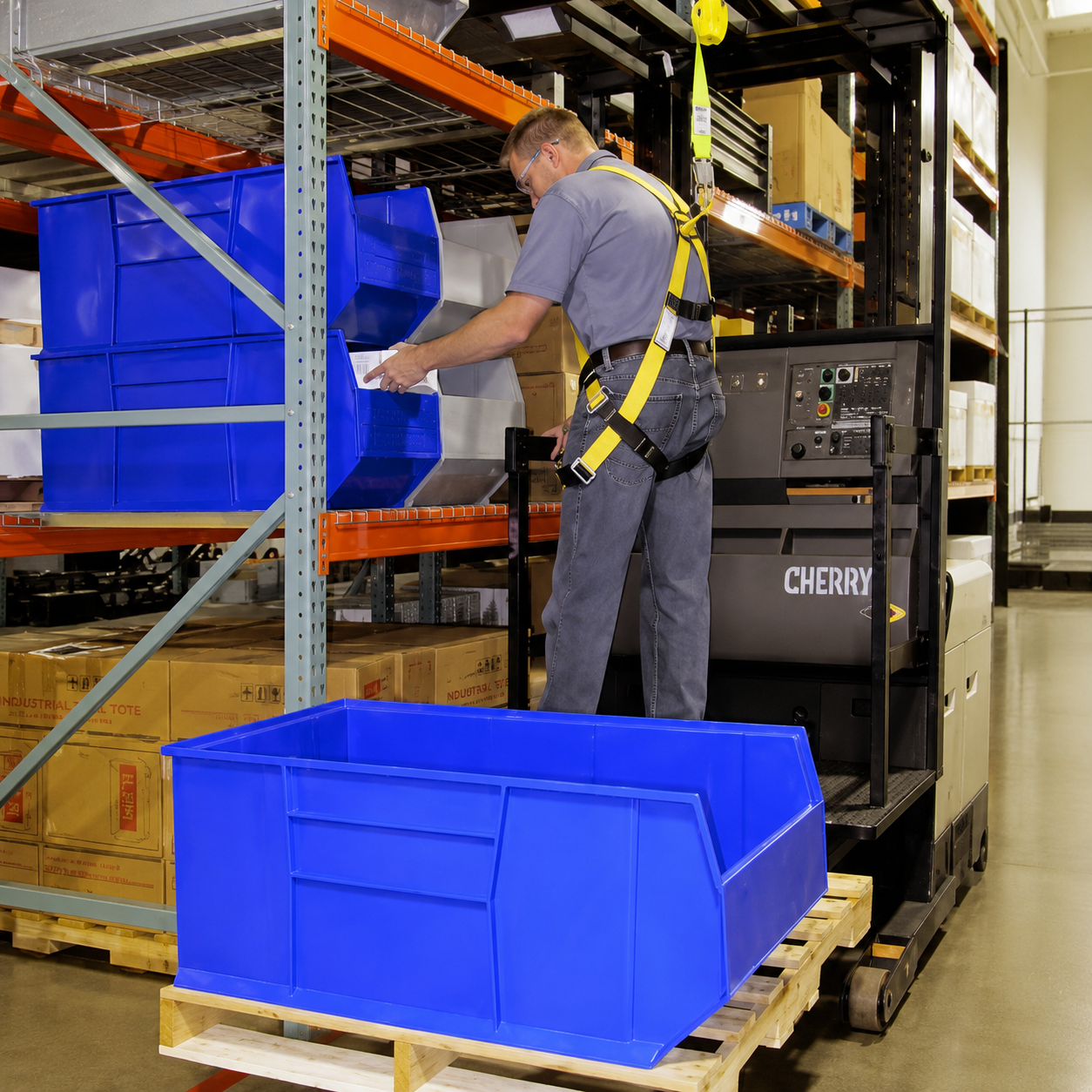
Plastic collapsible bulk containers are heavy-duty, reusable bins designed for storing and transporting parts, components, and materials in manufacturing, automotive, food processing, agriculture, distribution, and general warehousing. Their rigid yet lightweight plastic construction protects inventory, reduces product damage, and improves handling efficiency. Because they collapse flat when empty, they significantly reduce return freight and storage costs, making them a cost-effective alternative to wood or disposable packaging.
What are plastic collapsible bulk containers used for?
Plastic collapsible bulk containers are heavy-duty, reusable bins designed for storing and transporting parts, components, and materials in manufacturing, automotive, food processing, agriculture, distribution, and general warehousing. Their rigid yet lightweight plastic construction protects inventory, reduces product damage, and improves handling efficiency. Because they collapse flat when empty, they significantly reduce return freight and storage costs, making them a cost-effective alternative to wood or disposable packaging.