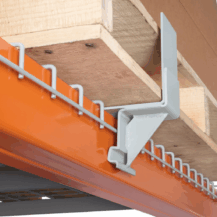
Pallet stops aren’t required by code everywhere, but they are frequently recommended or mandated by jurisdictions, Fire Marshals, and insurance inspectors to maintain flue space.
They are especially valuable when:
By preventing push-through accidents and preserving longitudinal flue spacing, pallet stops often become an easy, low-cost way to maintain code-compliant high-pile storage.
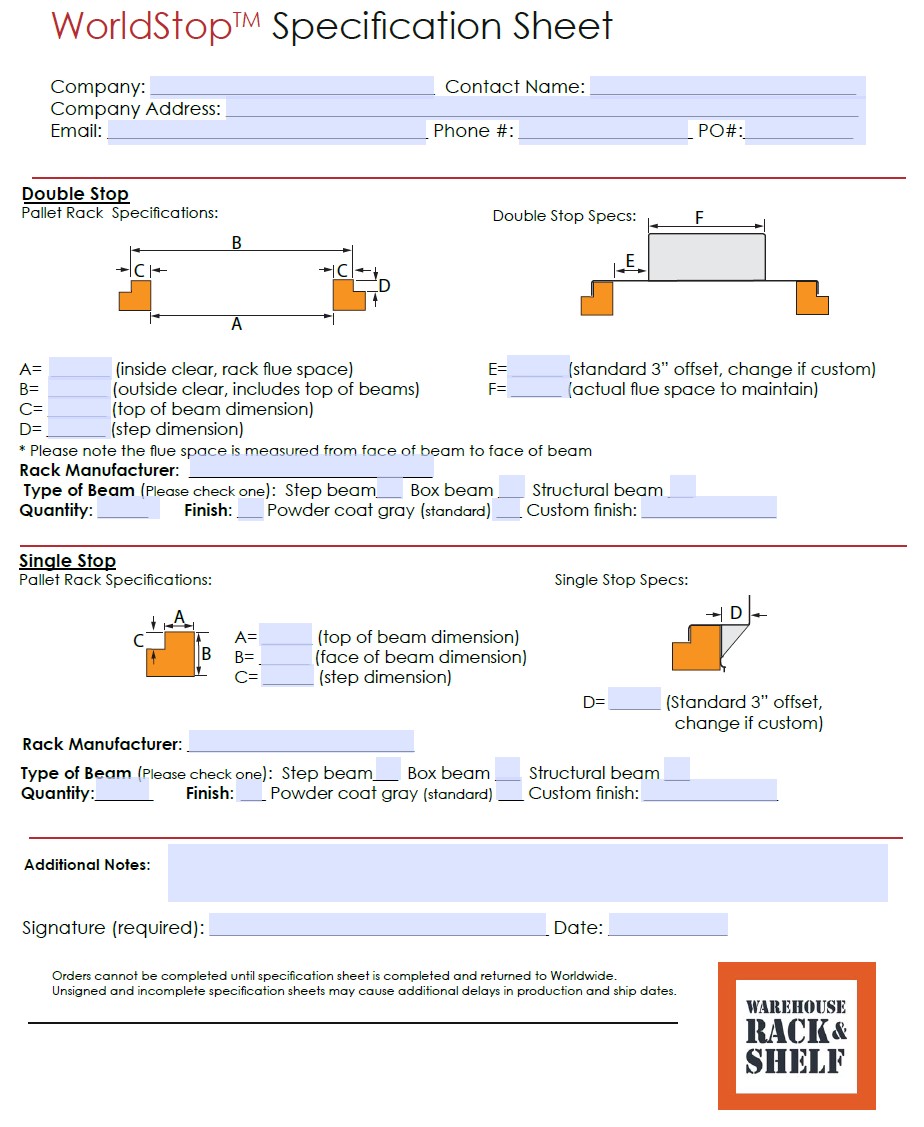
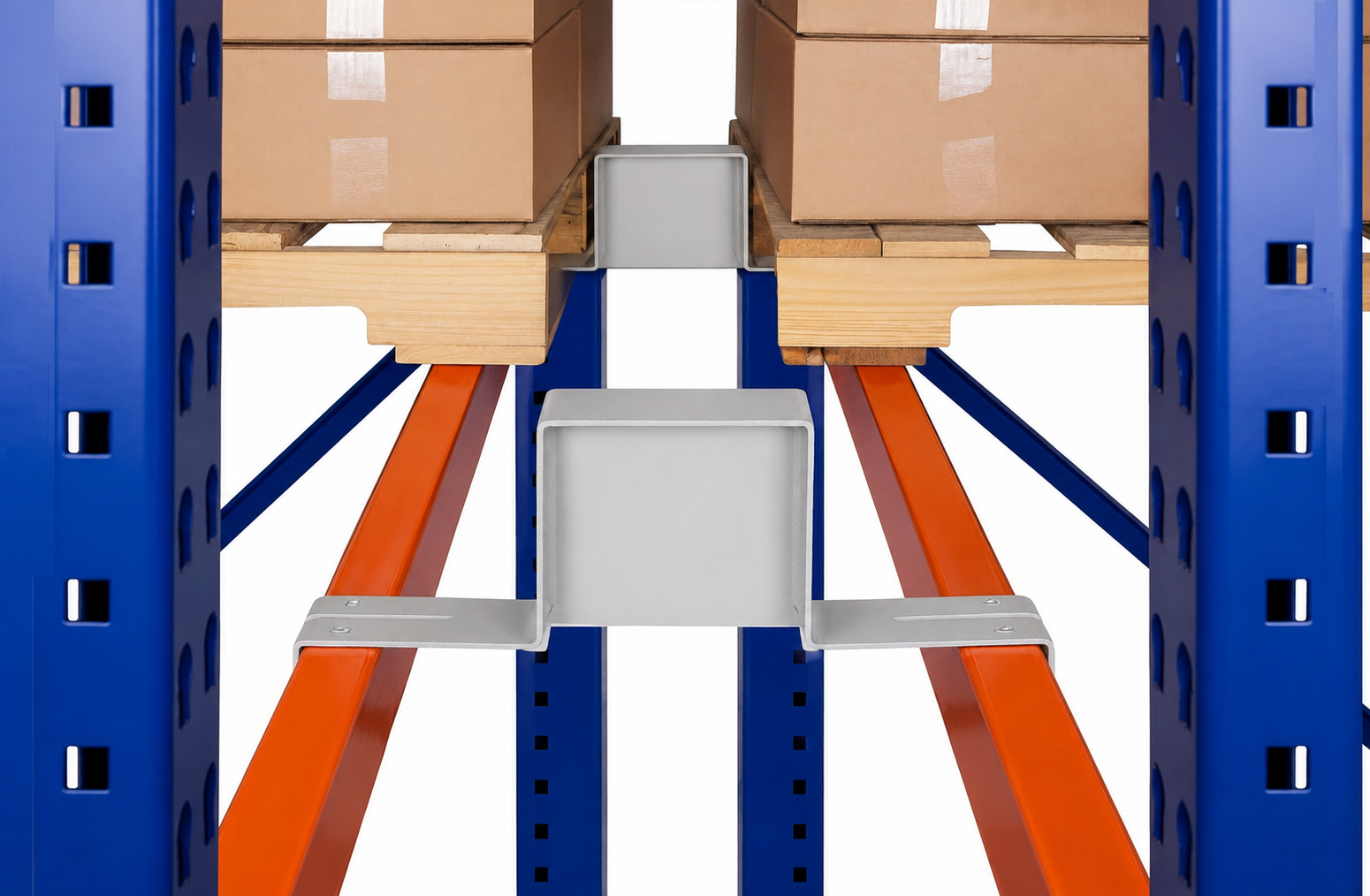
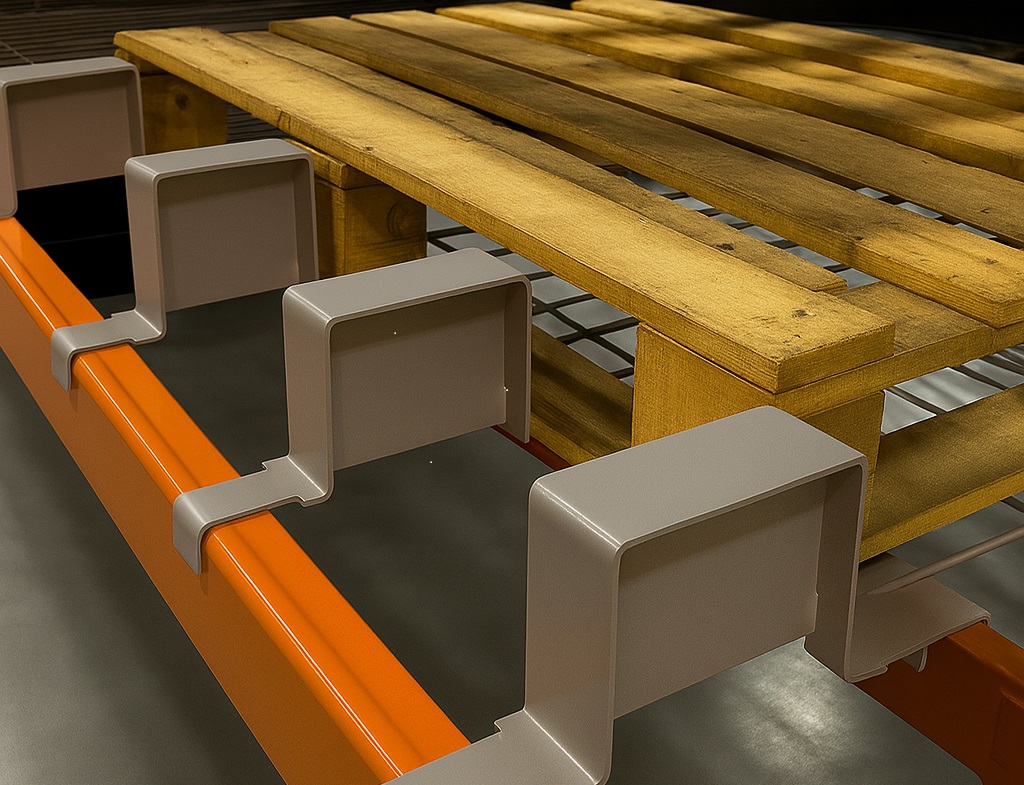
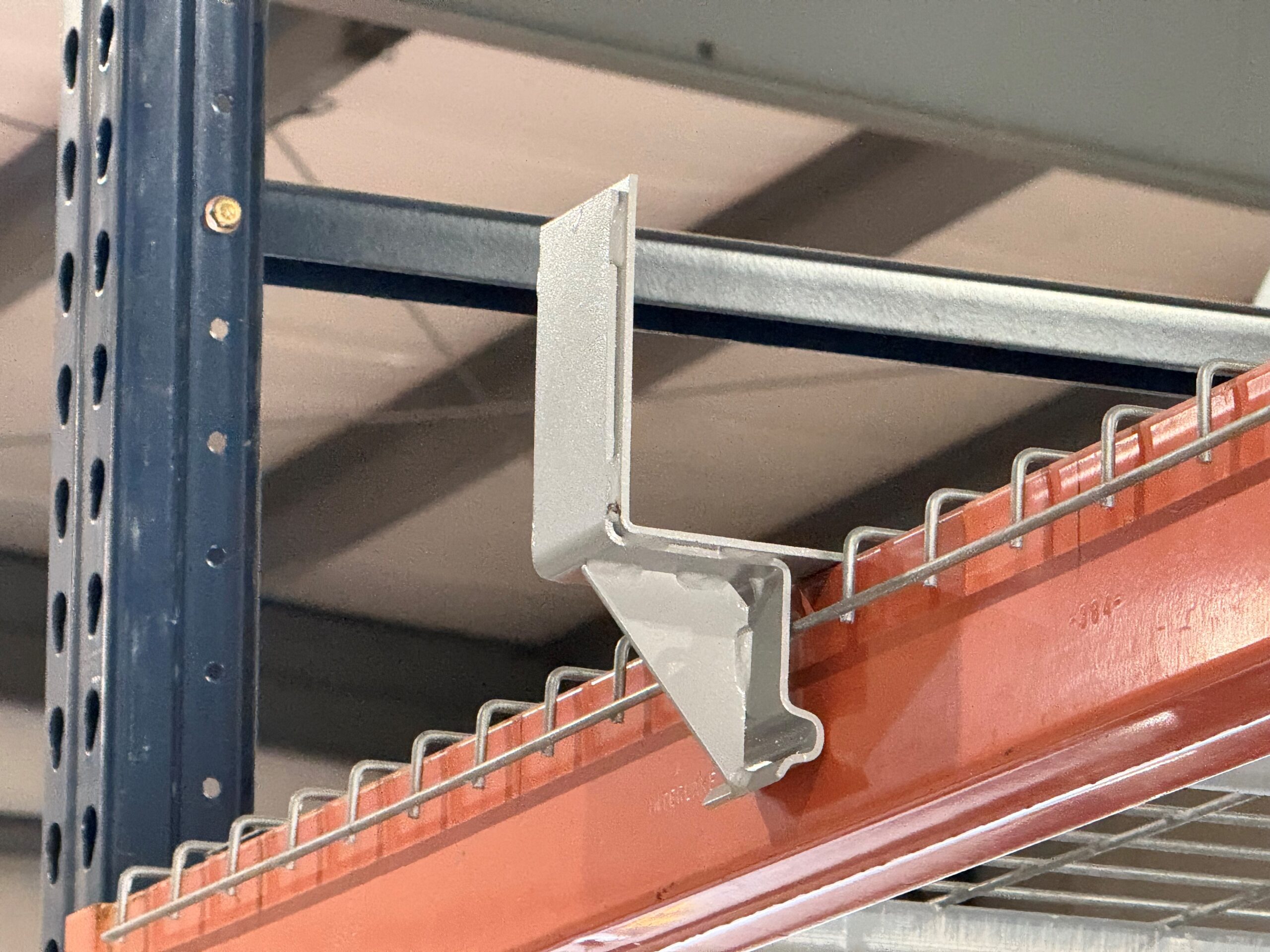
Single & Double Pallet Stops (AKA WorldStops) attach directly to the rear horizontal load beams. Installs easily and securely with included Tek screws through pre-punched countersunk holes.
Installation is often just a few minutes per level and doesn’t require modifying the rack structure. For flue-space applications, stops can be installed at a precise setback distance for the required gap. Note rack must be fully unloaded before pallet stopsare installed.
There are several styles designed for different rack layouts and fire-code requirements:
Many warehouses choose single pallet load stops as they are the most cost-effective solution and easiest to install. They meet pallet push through safety initiatives and ensure that proper flue space is maintained for their specific pallet load and rack depth.
Fire codes (NFPA and many local jurisdictions) require a longitudinal flue space (typically 6 inches) between back-to-back pallet rack rows. This space allows water to cascade vertically from the sprinklers to lower rack levels. Pallet stops create a physical barrier that keeps pallets positioned correctly and prevents them out of flue space. By maintaining the required gap, pallet stops help:
Pallet stops (also known as WorldStops, pallet stoppers or pallet rack back stops) are steel brackets that mount to the rear beams of pallet racks to prevent pallet push-through. They stop forklifts from accidentally pushing pallets too far, which can cause loads to fall into the next aisle.
Pallet stops also help maintain longitudinal flue space, which is required in most fire codes to ensure proper sprinkler water penetration and airflow between back-to-back rack rows.