In busy warehouses and manufacturing facilities, forklifts are essential, but they’re also one of the leading causes of facility damage and workplace injuries. A momentary distraction, tight aisle, or blind corner can quickly turn into an impact. That’s why properly engineered guard rail systems are considered the first line of defense against forklift damage. By creating a physical barrier between moving equipment and vulnerable assets, guard rails reduce the risk of structural damage and employee injury.
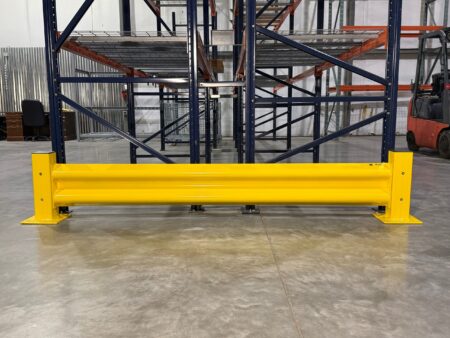
Industrial guard rails are designed to absorb and deflect impact, protecting pallet rack uprights, machinery, electrical panels, workstations, and pedestrian walkways. Instead of allowing a forklift to strike infrastructure directly, the guard rail takes the hit. In high-traffic areas such as workstations, dock doors, rack frames, and building columns, guard rail protection is a proactive investment in safety and operational continuity.
Guard rails play a role in employee safety beyond equipment protection. Clearly defined pedestrian lanes separated by steel safety railing create visual and physical boundaries that reduce the likelihood of forklift-to-person accidents. In facilities where foot traffic and lift trucks operate in close quarters, these barriers provide peace of mind for management and workers. Safety in steel is a practical strategy that protects your most valuable asset: your people.
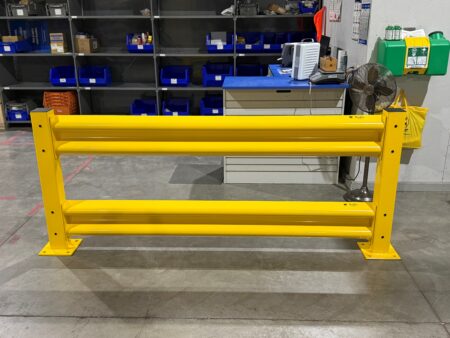
Warehouses shouldn’t wait for an accident to justify protection. Implementing guard rail systems as part of a comprehensive impact protection plan protects high-value automation and shields building infrastructure. When properly specified and installed, guard rails don’t just prevent damage, they reduce liability and strengthen your overall safety.




