FAQs about Automotive Storage Solutions
How Popular Are GM-5131 Bins in the Automotive Industry?
The GM-5131 is extremely popular and widely adopted:
- GM-5131 style rigid wire bins are considered an automotive industry standard for heavy parts handling and bulk storage.
- They have been sold in thousands of units to Tier 1 and Tier 2 suppliers across North America over decades.
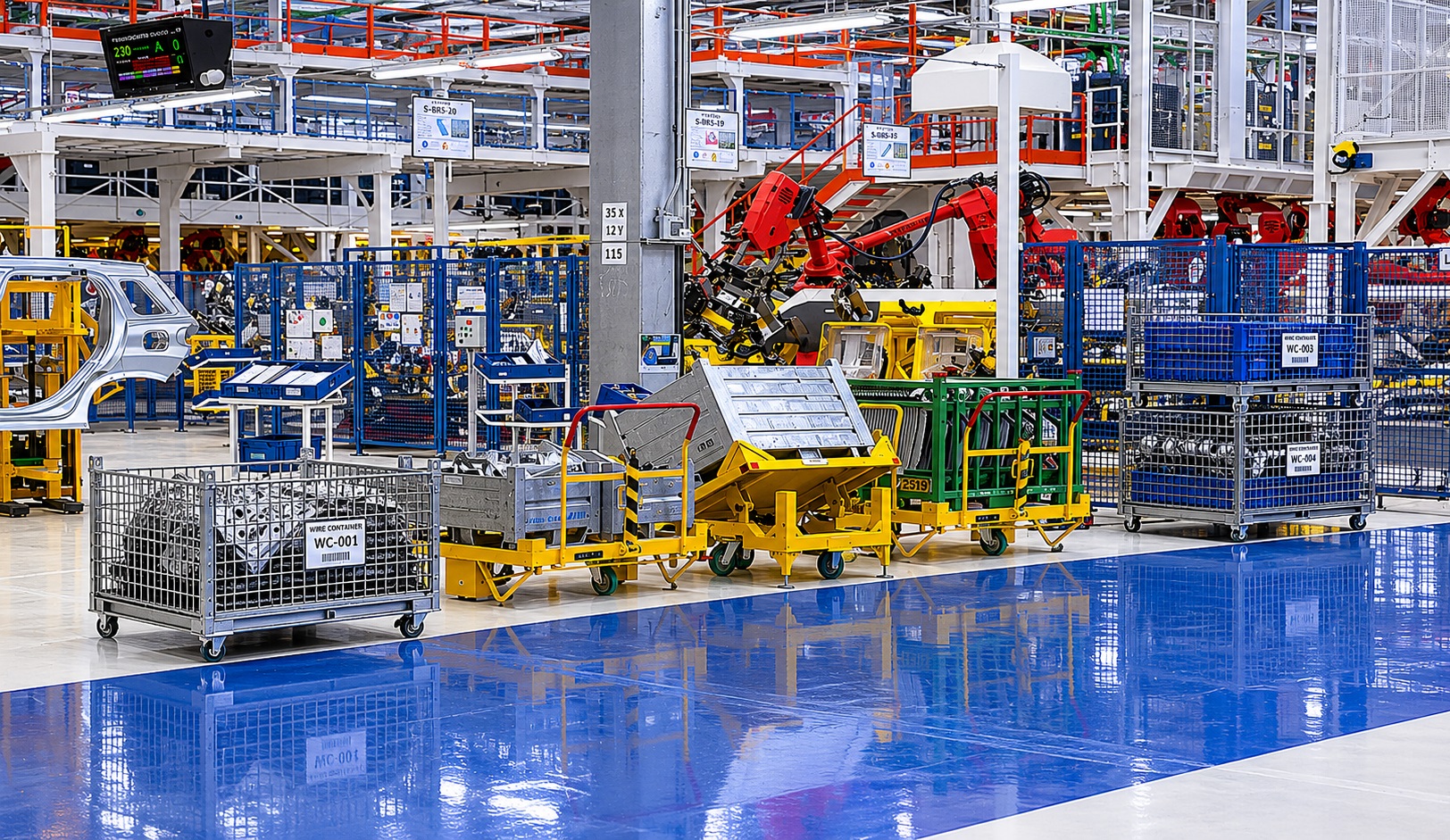
- Their standardized footprint and rugged design mean they’re used in stamping shops, machining centers, subassembly and final assembly lines, both for in-plant storage and trailed transport to OEM facilities.
GM-5131 bins are among the most trusted and widely used rigid wire containers in automotive manufacturing supply chains. They are a favorite because of their strength, compatibility, reusability, and long service life.
How durable are these bins in heavy industrial automotive environments?
These containers are built with heavy gauge welded wire mesh and reinforced steel construction that withstands years of abuse in rugged environments. They are known for long service life, low maintenance, and minimal replacement costs relative to lighter options. Their durability directly impacts safety and total cost of ownership.
Can the GM-5131 bins be stacked and integrated into automated workflows?
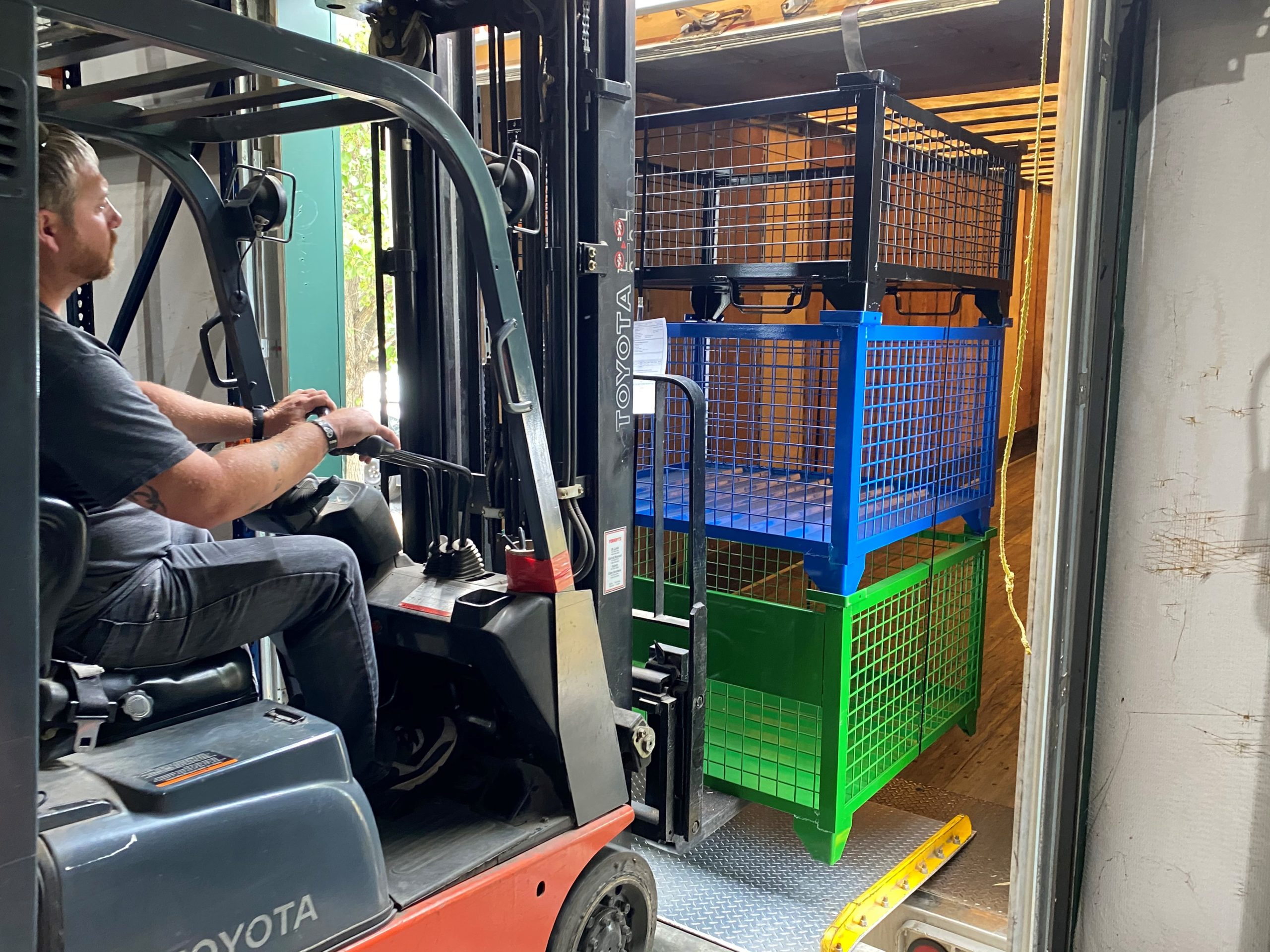
Yes, GM-5131 bins are designed to be stacked safely. They can often be stacked up to 4–5 high depending on load and they are fitted with positive stacking features like pin feet and fork access on all sides. Compatibility with forklifts and conveyors supports automated lean-manufacturing flows.
How does the GM-5131 support storage and transportation between suppliers and OEMs?
GM-5131 bins are engineered for both in-plant storage and over-the-road transport of automotive parts. Their heavy-duty wire mesh construction ensures visibility of contents, ventilation (important for metal parts and stamped components), and secure containment during multi-leg transports (warehouse to truck to production line). Automotive parts (stampings, assemblies, forgings) are heavy and sensitive to handling damage. These rigid bins reduce risk and improve fulfillment reliability.
Why is the GM-5131 considered an industry standard for automotive parts handling?
The GM-5131 style container is widely recognized and adopted across automotive suppliers, particularly Tier 1 and Tier 2 companies, because it was originally engineered to meet demanding industrial requirements for storing and transporting heavy and irregular automotive components. These bins are often referred to generically as “GM-5131’s” in North America, because of their wide adoption and industry-standard status in automotive material handling. Standardization simplifies logistics, rack planning, forklift handling, and cross-plant parts movement, which is a big advantage in automotive supply chains.
What are the key specifications of the GM-5131 rigid wire mesh bin?
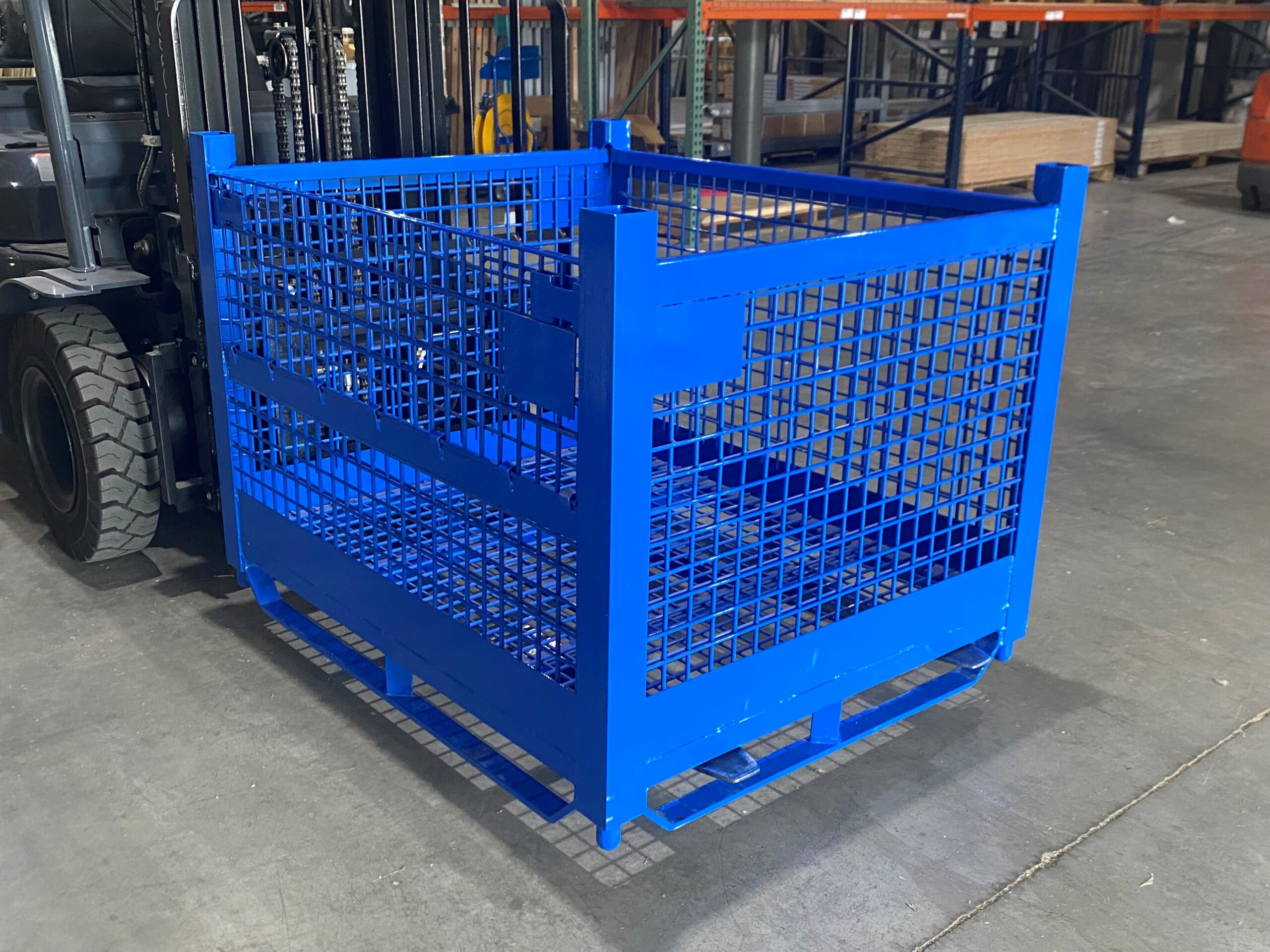
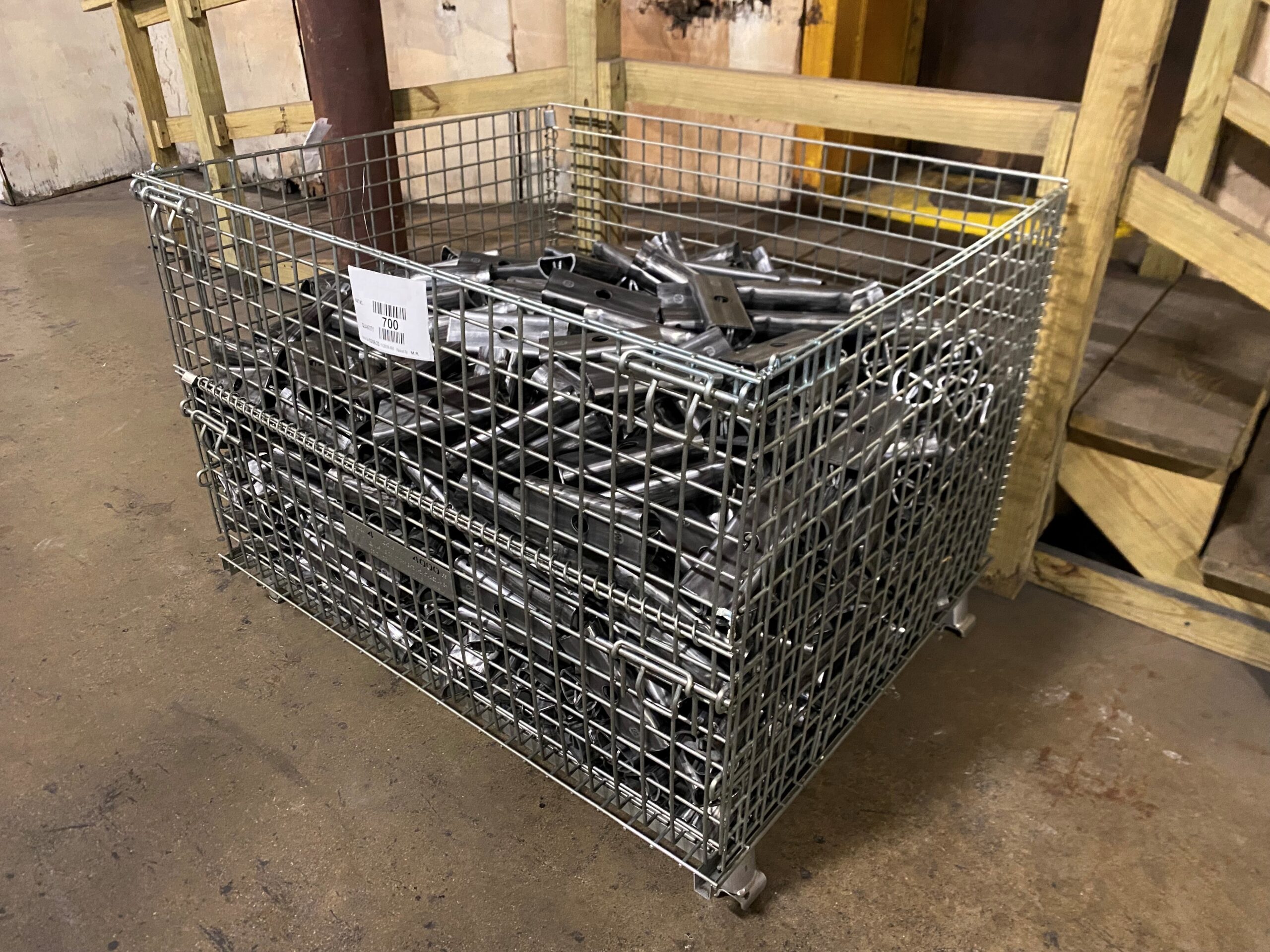
The GM-5131 is a heavy-duty rigid wire mesh steel bin with a standard footprint of about 54″ x 44″ x 40″ and an inside usable volume of about 45 cu ft. It features reinforced welded wire mesh on all four sides with a half-drop gate on the long side and a structural base capable of handling heavy industrial loads, which is typically 4,000 – 5,000 lbs. UDL (uniformly distributed load). These specs make the GM-5131 one of the best rigid wire bins available for automotive supply chain operations.
Can these automotive containers be customized or supplied in OEM-specific configurations?
Yes. While these containers follow established OEM styles, many options are available, including custom heights, capacities, drop gates, labeling plates, finishes, part-specific dunnage, and stacking configurations. This allows Tier 1 and Tier 2 suppliers to optimize part protection, maximize cube utilization, and remain compliant with OEM packaging requirements. Our team routinely works with automotive suppliers to match existing OEM container programs or support new packaging rollouts.
How durable are these containers for long-term automotive use?
These containers are built for high-cycle, multi-year service life in demanding automotive environments. Heavy-gauge wire mesh, structural steel construction, reinforced corners, and welded assemblies allow them to withstand repeated forklift handling, stacking, and transport between suppliers and OEM facilities. Many of these container styles, especially the GM-5131 wire bins and rigid steel OEM containers, are considered industry benchmarks for strength and longevity in automotive manufacturing and logistics operations.
Are these containers OEM-approved and compatible with automotive handling systems?
Yes. These automotive containers are designed around OEM-recognized footprints and styles, making them compatible with standard forklifts, pallet jacks, conveyor interfaces, racking systems, and automated handling equipment used throughout automotive plants. They are widely accepted in closed-loop returnable packaging programs and are commonly specified in OEM and Tier 1 packaging guidelines for GM, Ford, Chrysler (Stellantis), and BMW supply chains.
What is the difference between rigid wire bins, rigid steel containers, and collapsible steel containers?
Each container style serves a specific logistics purpose.
- Rigid wire bins (GM-5131, Ford ZE-13) provide excellent product visibility, airflow, and lighter tare weight while maintaining extreme strength for repetitive automotive use.
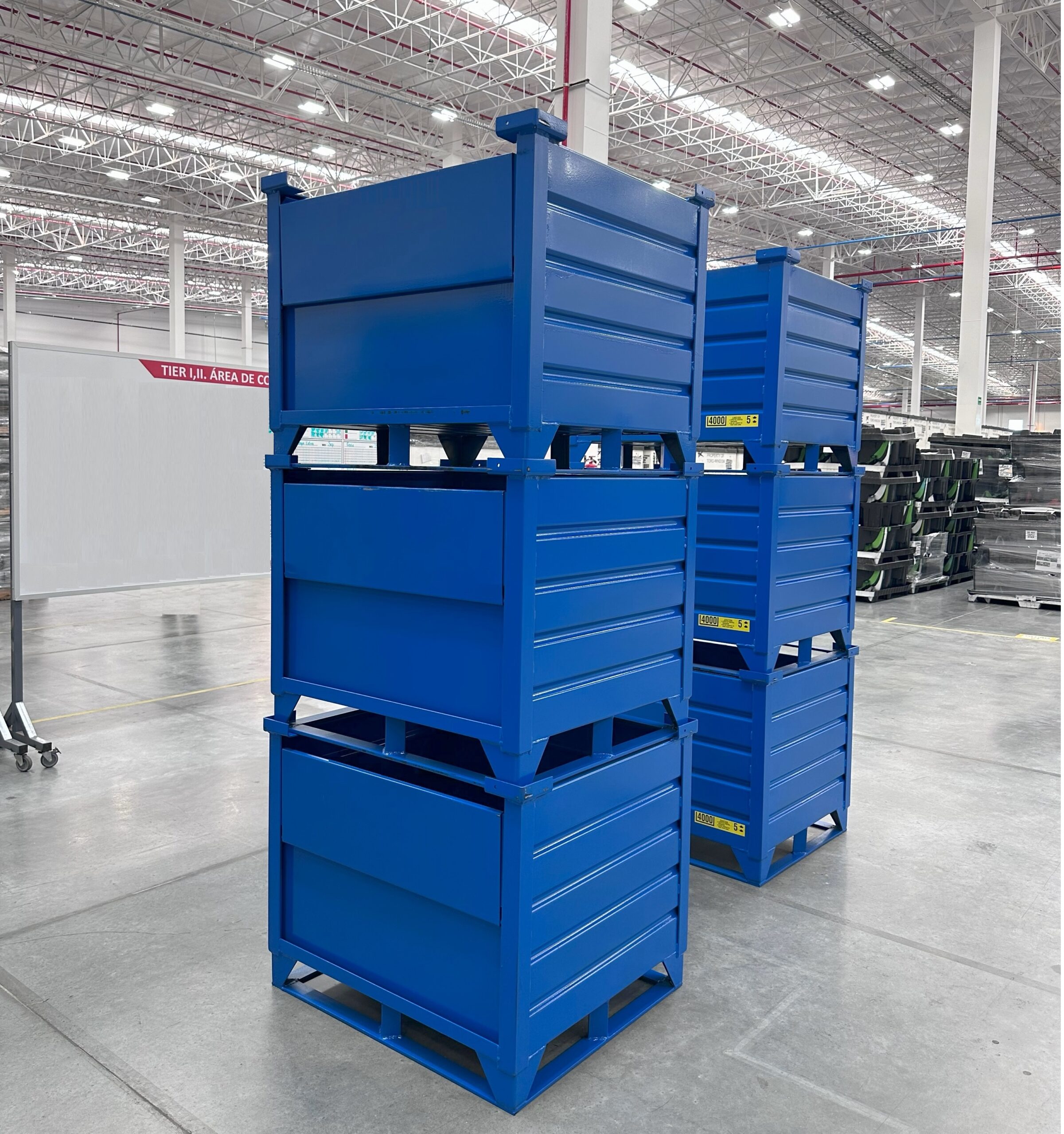
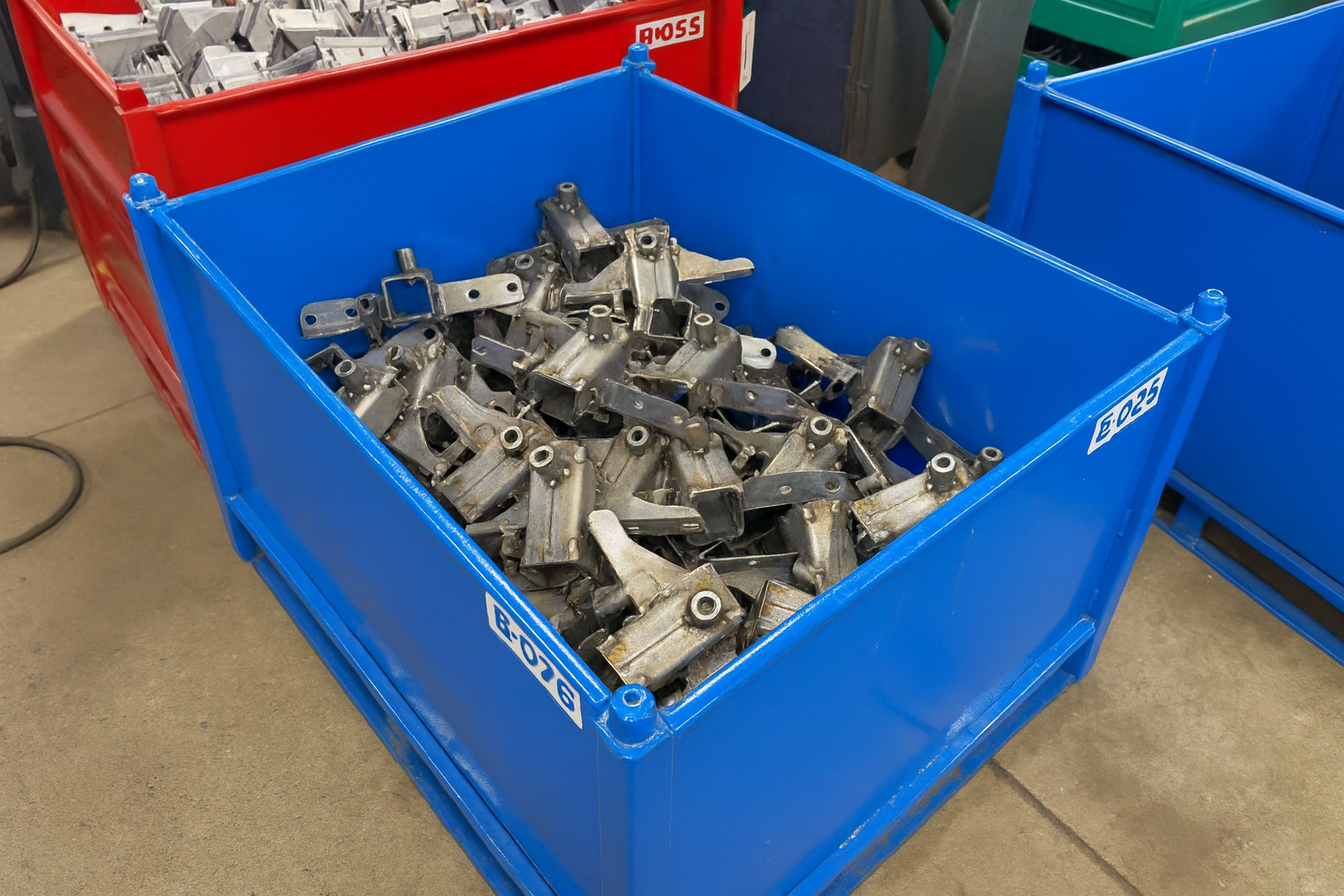
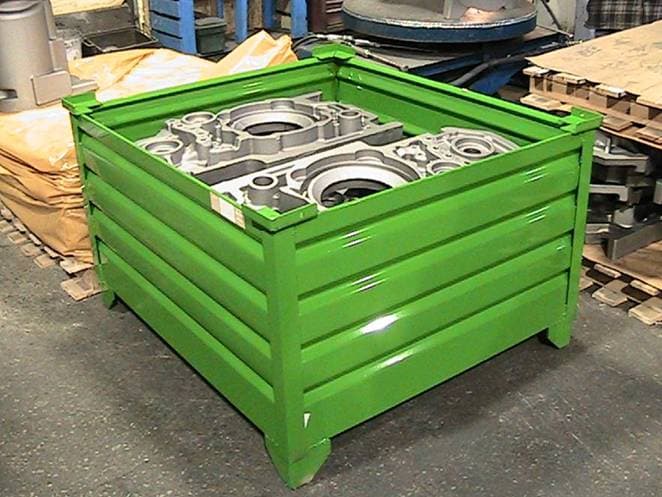
- Rigid steel containers (GM, Chrysler, BMW styles) offer maximum protection for heavy, high-value, or dense parts where impact resistance and load stability are critical.
- Chrysler collapsible steel containers reduce return freight and storage costs by folding down when empty, making them ideal for closed-loop OEM programs focused on logistics efficiency.
What automotive applications are these containers designed for?
Our automotive containers are engineered specifically for storing, protecting, and transporting automotive parts moving through the OEM supply chain. This includes stampings, castings, machined components, brackets, assemblies, powertrain parts, and sub-assemblies shipped from Tier 1 and Tier 2 manufacturers to OEM automotive plants. Models such as the GM-5131 rigid wire bins, Ford ZE-13 wire bins, and GM, Chrysler, and BMW steel containers are built to meet the durability, handling, and standardization requirements commonly specified by major automotive manufacturers.
What materials and construction standards are typical for automotive shipping racks?
Most automotive shipping racks are constructed from steel or heavy-gauge metal, ensuring durability and repeated reuse in industrial environments. High-quality racks may have corrosion-resistant coatings (powder coating or galvanizing) and engineered load ratings for stackability and safety. Often HDPE hard plastic or foam is used on support arm to help protect parts from damage.
Can automotive shipping racks be designed for specific parts or workflows?
Yes, these racks are frequently custom designed using part specifications (dimensions, weight, handling requirements) so that each rack securely cradles and positions components. Custom options can include removable posts, folding columns, dunnage, casters, fork tubes, and protective padding to support production line flows or container loading/unloading.
What are the key benefits of using custom automotive shipping racks?
Custom automotive shipping racks deliver advantages such as:
- Superior protection for delicate or heavy parts during handling and transport
- Reduced product damage and associated costs
- Improved space utilization in trailers, containers, and warehouses
- Returnable/reusable design, lowering long-term packaging expense and waste
- Tailored fit for unique part geometry or production flow needs
What are automotive shipping racks
Automotive shipping racks are heavy-duty, engineered metal frames designed to securely hold, protect, and transport automotive parts and assemblies (engines, transmissions, bumpers, headliner, and body panels) during manufacturing, distribution, and logistics operations. They replace disposable containers and pallets, providing a returnable solution that enhances part safety, organization, and efficiency in transit. Popular racks in this Automotive Shipping Racks category include: